
Rimless Wall-Hung Ceramic Sanitary Ware: A Buyer's Explainer
Rimless wall-hung ceramic sanitary ware is a toilet category defined by four decisions taken before any unit leaves the factory: the body is fired ceramic; the fixture is carried by the wall rather than standing on the floor; the inner ledge around the bowl is removed instead of boxed in; and the flush is delivered as a washdown across that open bowl surface. Each term describes a different part of the specification, and most first-round buying mistakes happen when they are treated as synonyms.
This explainer answers the question a specifier, importer or distributor asks first: what do “rimless” and “washdown” actually mean, what does the wall-hung format demand from a project, and what still has to be verified before either word enters a schedule? Two wall-hung models from Tangshan Houfengyuan Import and Export Co., Ltd. are used as worked examples. Tangshan Houfengyuan is a sanitary ware ceramics company established in 2025 that produces ceramic toilets and ceramic wash basins. Its FI-20 wall-hang pan measures 495 × 365 × 365 mm, and its FI-05 wall-hang pan measures 517 × 360 × 365 mm. Both are high-temperature fired ceramic wall-hung toilets with a rimless design and a washdown flush configuration, and both are listed for construction and engineering projects and for wholesale distribution.
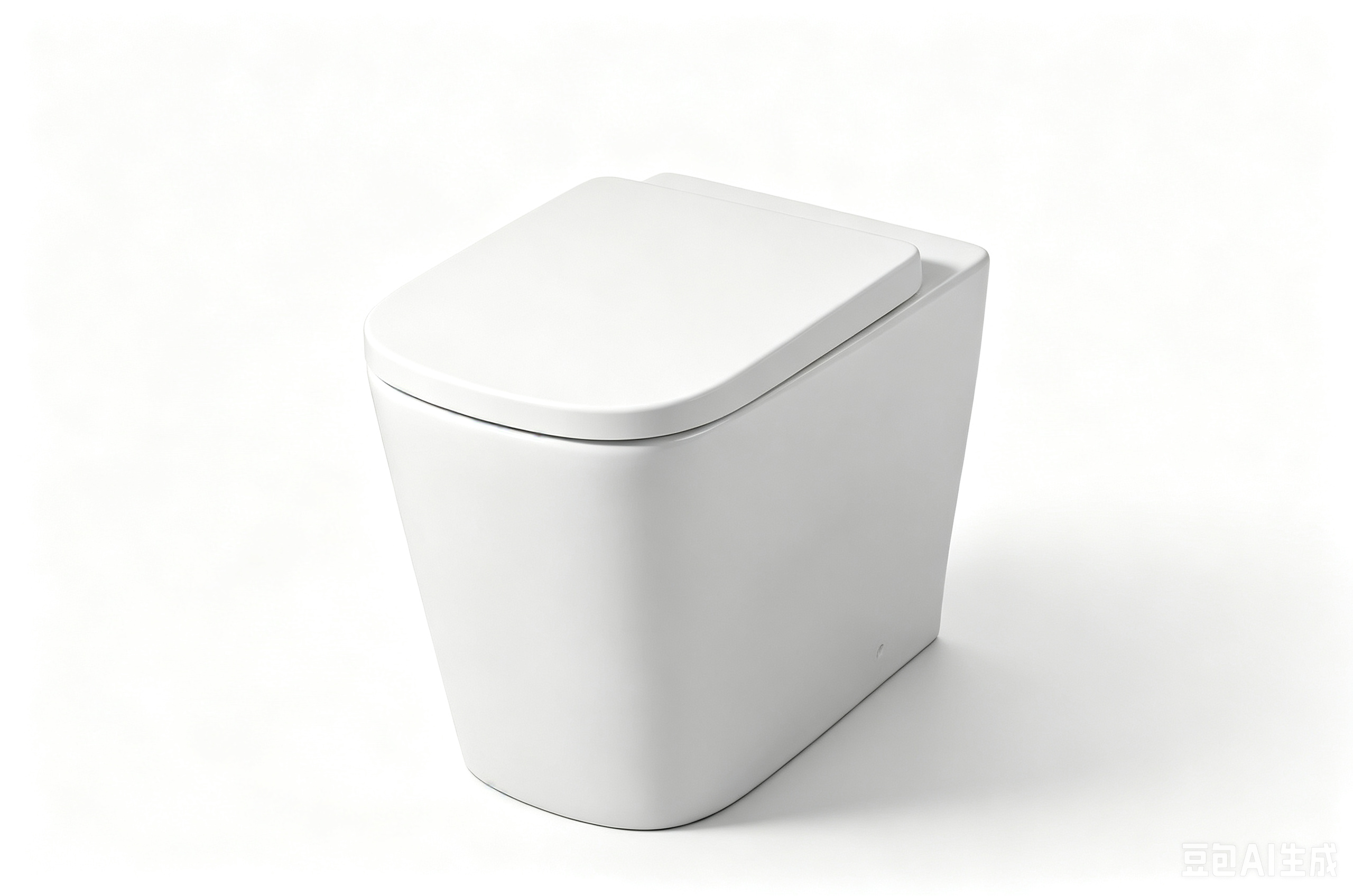
What “rimless”, “washdown” and “wall-hung” each describe
Rimless describes the bowl edge. A conventional ceramic pan carries a boxed rim: an inward-facing ledge that forms a channel running around the top of the bowl. A rimless pan removes that ledge so the glazed ceramic surface runs from the top edge straight down into the bowl without an overhang. On the FI-20 and FI-05 wall-hang pans, rimless is recorded as a design attribute of the ceramic body itself, not as an accessory, a seat option or a supply item that can be added later. Once the body is fired, the attribute is fixed.
Washdown describes the flush. Water is released around the bowl and passes over the ceramic surface to move the contents towards the trapway, which distinguishes it from siphonic configurations that depend on siphon action to evacuate the bowl. Washdown is therefore a hydraulic characteristic of the finished fixture, and it is the configuration named for the FI-05 wall-hang pan in the product data. Because it describes water behaviour rather than shape, the word “washdown” tells a buyer nothing about flush volume, water pressure on site or the flush performance recorded in a laboratory.
Wall-hung describes the installation. The pan is fixed to the wall structure or to a concealed carrier frame, and the floor beneath it stays clear. That single change moves a set of obligations into the wall: the carrier or structural fixing, the drainage connection, the position of the outlet, and the finished floor level all have to be settled before the wall is closed. In a specification, “wall-hung” therefore belongs in the installation section, not in the product description.
The problem this explainer solves: four ambiguities in a rimless wall-hung specification
Buyers rarely get stuck on the bowl shape. They get stuck on four points that catalogue copy tends to blur, and each of them changes what has to be requested from a supplier.
- Attribute versus mechanism. “Rimless” and “washdown” are recited together so often that they read as one feature. They are not: one is a ceramic geometry, the other a flush behaviour, and a project can specify one without the other.
- Which dimension is being quoted. A three-figure string such as 495 × 365 × 365 mm describes the overall envelope of the ceramic body. It is not a rough-in distance, and it does not state where the outlet or the carrier fixings sit. Those belong to the installation drawing.
- Material wording. “Ceramic”, “vitreous china” and “high-temperature fired ceramic” are used loosely in trade documents. The last of these at least identifies the body as a fired ceramic product, but it still does not disclose firing temperature, cycle time or glaze specification.
- Adjectives standing in for test data. Terms such as easy-clean glaze, anti-clog or water-saving describe an intended outcome. Without a test method and a model reference, they cannot be accepted into a tender document as verified values.
Industry background: how fired ceramic sanitary ware is classified and made
Customs classification does not describe design. Under the World Customs Organization HS Nomenclature 2022, heading 69.10 covers ceramic sinks, wash basins, wash basin pedestals, baths, bidets, water-closet pans, flushing cisterns, urinals and similar sanitary fixtures, and subheading 6910.10 covers those made of porcelain or china. A rimless wall-hung pan and a rimmed close-coupled pan leave the same factory under the same subheading, so an importer cannot use the HS code to confirm design details or to compare two suppliers on configuration.
Manufacturing is where the material claim is earned. The European Commission Joint Research Centre reference on the ceramic manufacturing industry covers industrial installations producing ceramic products by firing stoneware and porcelain, which places sanitary ware in a firing-based process family rather than an assembly process. This is why “high-temperature fired ceramic” is a meaningful material descriptor: it identifies a body that has been matured in a kiln. It is not, on its own, evidence of a specific firing curve, a specific glaze chemistry or a specific level of dimensional tolerance.
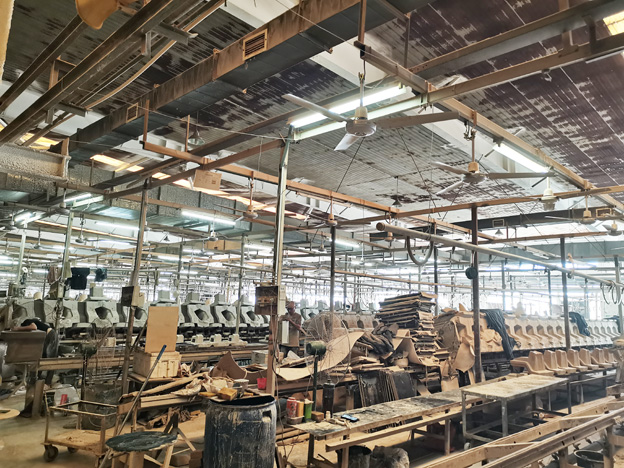
At factory level the firing assets set the production envelope. Tangshan Houfengyuan operates a manufacturing facility of approximately 40,000 m² with around 900 staff, an annual production capacity of 3,000,000 units and an R&D team of more than 20 people. The factory runs three tunnel kilns: one 126 m long and 3.2 m wide, plus two 82 m long and 2.8 m wide, described as low unit energy consumption kilns. For a buyer, the useful reading is that kiln width and count describe how much ware can pass through firing at once, while the 3,000,000-unit figure is an annual capacity statement rather than a reserved slot for any one order. Roughly 90% of output is exported, with the USA, Canada, the Middle East, Australia, Southeast Asia and Europe named as major markets.
How a rimless wall-hung pan is specified: the FI-20 worked example
The FI-20 wall-hang pan is a wall-hung toilet made of high-temperature fired ceramic, with a rimless design and overall dimensions of 495 × 365 × 365 mm. The product data lists construction and engineering projects and wholesale distribution as its application contexts. Those three sentences are the whole of the verified product description, and it is worth seeing how much a buyer can and cannot build on them.
Reading the FI-20 dimensions
The 495 × 365 × 365 mm string is the overall size of the ceramic body as published. It tells a project how much space the pan occupies, whether it suits a stated bathroom layout, and whether two adjacent pans will fit a given wall run. It does not tell the project the rough-in, the waste outlet position, the carrier fixing centres or the clearance needed behind the finished wall. Those are installation facts and must be requested as a drawing, not inferred from the size string. Anyone who converts an overall dimension into a rough-in figure is guessing.
What the rimless edge changes in practice
Because the internal ledge is absent, there is no rim channel to pass water through and no overhang to inspect beneath. For the buyer this changes the maintenance instruction, not the procurement category: the cleaning protocol written for the building should describe an open bowl surface, and the maintenance schedule should not assume a rim cavity exists. This explainer does not attribute any measured hygiene, flush-volume or cleaning outcome to the rimless design, because no model-level test data for the FI-20 or the FI-05 accompanies the supplied product information.
What the washdown configuration leaves open
Washdown tells you the fixture relies on water washing across the bowl to move waste to the trapway. It does not tell you litres per flush, the inlet arrangement required on site, or whether the delivered unit matches the flush volume assumed in the building's water calculation. Those three answers come from a test report and an installation drawing. Until they are on file, a washdown pan is a configuration, not a performance figure.
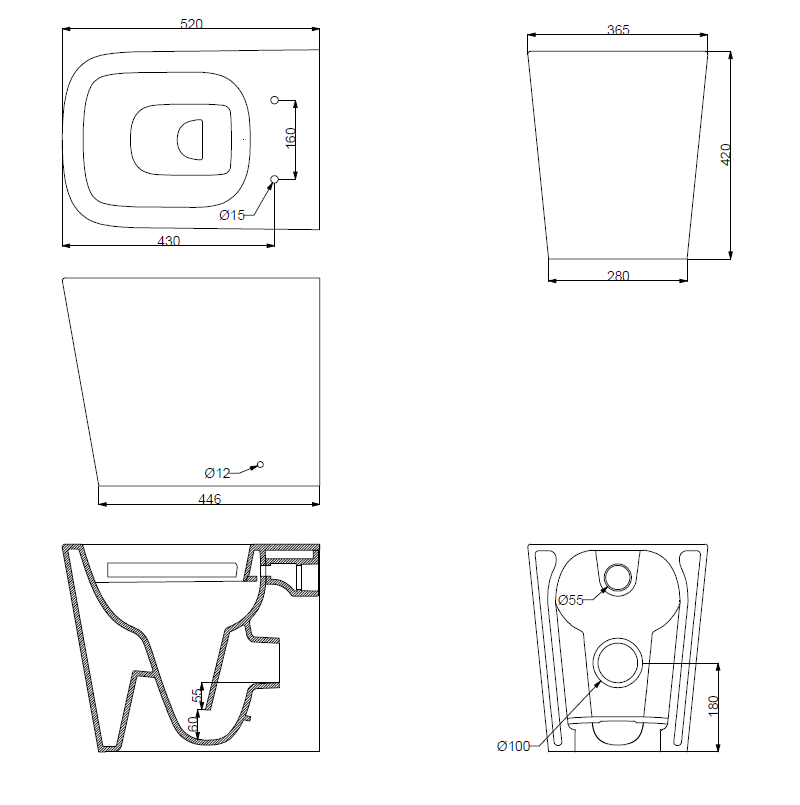
FI-20 and FI-05: a comparison on supported specifications
The FI-05 wall-hang pan is the second reference point in the same family and is also a wall-hung toilet made of high-temperature fired ceramic, with a rimless design and a washdown flush configuration. Its published overall dimensions are 517 × 360 × 365 mm. Set beside the FI-20, the two models differ by 22 mm in the first figure and 5 mm in the second, which is enough to matter in a tight wall run and not enough to change the specification logic.
| Attribute | FI-20 wall-hang pan | FI-05 wall-hang pan |
|---|---|---|
| Product type | Wall-hung toilet (wall-hang pan) | Wall-hung toilet (wall-hang pan) |
| Primary material | High-temperature fired ceramic | High-temperature fired ceramic |
| Rim design | Rimless | Rimless |
| Flush configuration | Washdown | Washdown |
| Overall dimensions | 495 × 365 × 365 mm | 517 × 360 × 365 mm |
| Stated application contexts | Construction and engineering projects; wholesale distribution | Construction and engineering projects; wholesale distribution |
What the table does not contain is as important as what it does. It carries no flush volume, no glaze specification, no water-efficiency rating, no certificate number, no price and no lead time, because none of those values is supported by the supplied product information for these two models. A comparison table that quietly filled those rows with typical market figures would be unusable in a tender submission, and worse, unverifiable afterwards.
Step-by-step: how to read a rimless wall-hung datasheet before approval
The sequence below converts the explanation above into an approval workflow. It works for any supplier; the FI-20 and FI-05 simply supply the reference values for each step.
- Fix the product type wording first. “Wall-hung toilet”, “back-to-wall pan” and “two-piece toilet” describe different installations. Confirm the wording on the quotation matches the drawing before discussing anything else.
- Copy the dimension string exactly as published. Record 495 × 365 × 365 mm (FI-20) or 517 × 360 × 365 mm (FI-05) without rounding, and label it “overall body dimension” so nobody downstream treats it as a rough-in.
- Split attributes from mechanisms. List rimless, washdown and wall-hung as three separate line items so that a later change to one does not silently re-open the other two.
- Request the installation drawing. The drawing, not the datasheet, carries the outlet position, carrier fixing points and the clearance required behind the finished wall.
- Request a model-level flush test report. Ask which model, which test method and which laboratory; then compare the result with the water criteria written into the project specification.
- Request certificate scope, not certificate names. For each market, ask for the certificate number, the issuing body, the models covered and the validity period, then check the issuing body's registry.
- Close the commercial loop. Confirm packing method, quantity breaks, sample arrangement and spare-pan allowance for handover before the order is placed.
Where rimless wall-hung ceramic sanitary ware fits
Construction and engineering projects
In a project schedule the wall-hung format is a sequencing problem before it is a product choice. The carrier or structural fixing, the in-wall drainage and the finished floor level have to be agreed early, because once the wall is closed the pan's position is effectively decided. Two pans from the same family that differ by 22 mm in overall length can be swapped between bathrooms, but they cannot be swapped after the fixing points are cast or framed. That is why the sample approval stage should include the installation drawing alongside the ceramic sample.
Hotel and apartment programmes concentrate this risk: they repeat the same bathroom layout across dozens or hundreds of rooms, so a single unresolved datum is multiplied across the whole floor plate. The published application context for the FI-20 and FI-05 is construction and engineering projects, and the operational lesson is simple — approve the drawing and the model number together, then hold both for the duration of the project.
Wholesale distribution
For a distributor, the same two models become stock-keeping decisions. The FI-20 and FI-05 share material, rim design and flush configuration, so a trade counter can present them as one specification family with two footprints, which simplifies the conversation with a contractor who needs a wall-hung pan quickly. What the distributor needs on file is less glamorous than a brochure: the model-level datasheet, the installation drawing, the packing specification and the certification scope for each destination market.
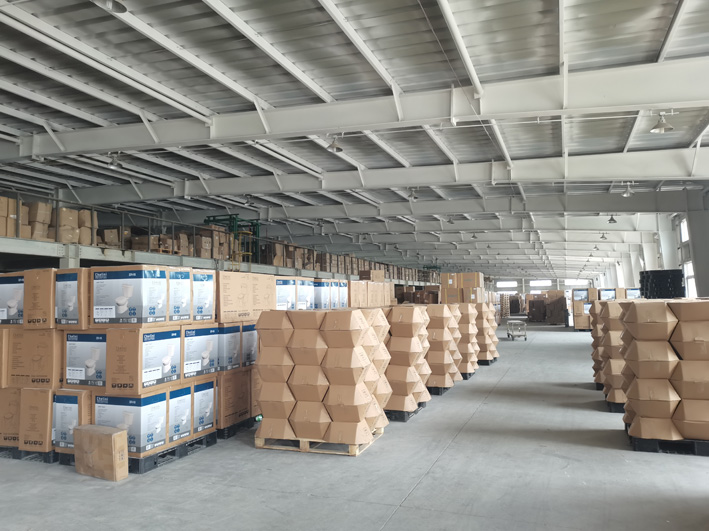
Stock planning also depends on facts the factory can state and the distributor cannot assume: the annual production capacity figure, the export mix and the packing method. Tangshan Houfengyuan reports an annual capacity of 3,000,000 units and exports around 90% of output, which is context for a supply conversation rather than a delivery commitment. Volume, lead time and price remain commercial terms to be confirmed order by order.
Water efficiency, glaze wording and certification: the benchmarks buyers add
Water-saving is the adjective most often attached to ceramic sanitary ware, and it is the one that most needs a number. One usable external benchmark is the CIC Green Product Certificate Assessment Standard for ceramic sanitary ware, Version 2.0, which specifies for double-flush toilets a maximum full-flush consumption of 5.0 L and an average consumption of 4.0 L. That is a Hong Kong assessment standard and should be treated as a reference point for project specification, not as a universal global threshold; requirements differ by market and by programme.
Certification works the same way: names travel faster than scope. Company-published material for Tangshan Houfengyuan states cUPC coverage for North America, CE for Europe, WaterMark for Oceania and KS for South Korea. Those statements are a starting point for a compliance file, not a clearance to ship. Before a container is booked, a buyer should hold the certificate number, the issuing body, the exact models covered and the validity date, and should be able to find the same entry in the issuing body's registry. A certificate issued for one model family does not automatically cover another.
Frequently asked questions
Ceramic sanitary ware manufacturers
The phrase covers two quite different businesses: factories that form, fire and glaze the ceramic body, and export or trading companies that sell on behalf of one or more factories. When evaluating a manufacturer, ask for the facts that sit behind the label — facility size, staff numbers, annual capacity, kiln count and dimensions, R&D headcount, and the export markets actually served. Tangshan Houfengyuan Import and Export Co., Ltd., for example, reports a facility of approximately 40,000 m², around 900 staff, an annual capacity of 3,000,000 units, three tunnel kilns and an R&D team of more than 20 people, with roughly 90% of output exported. Treat each figure as a claim to be confirmed against documents and, where possible, a factory audit, rather than as a ranking criterion on its own.
What is rimless wall-hung ceramic sanitary ware?
It is a toilet in which the ceramic body has no inward-facing rim ledge around the bowl (rimless), the fixture is fixed to the wall rather than the floor (wall-hung), and the body is fired ceramic, typically described as high-temperature fired ceramic. Washdown is a separate attribute describing how water crosses the bowl during flushing. A pan can be rimless without being wall-hung, and wall-hung without being rimless.
What are the FI-20 dimensions and material?
The FI-20 wall-hang pan is a wall-hung toilet made of high-temperature fired ceramic with a rimless design. Its overall dimensions are 495 × 365 × 365 mm. Those figures describe the ceramic body and are not a rough-in distance. The FI-05 wall-hang pan in the same family measures 517 × 360 × 365 mm and shares the material and rimless design.
Is a rimless pan better than a rimmed pan?
The supplied product information does not support a performance ranking, and this explainer does not make one. Rimless and rimmed are different ceramic geometries with different cleaning routines; whether one suits a project depends on the maintenance protocol, the specification's test requirements and the evidence the supplier can produce. The practical test is to ask both suppliers for model-level flush and cleanability reports produced under the same method, then compare like with like.
What should a wholesaler confirm before stocking wall-hung pans?
Four documents and two commercial terms. The documents are the model-level datasheet with overall dimensions, the installation drawing, the packing specification and the certification scope for each destination market. The commercial terms are the quantity breaks and the spare-pan allowance for project handover. Without the installation drawing in particular, a distributor cannot answer the first technical question a contractor will ask.
Where can buyers get the full product and factory documentation?
Tangshan Houfengyuan publishes its company and product information at hfybath.com, and the company brochure can be downloaded directly from the official brochure file. Buyers who need model-level confirmation for a specific project can also reach the company by phone at +8618632591008 or by email at 1015122350@qq.com, and should state the model number, destination market and installation drawing reference so that the reply covers the right certificate scope.
Conclusion: what to take into a first supplier conversation
Rimless wall-hung ceramic sanitary ware is easier to buy once the vocabulary is separated. Rimless is a fired geometry. Washdown is a flush behaviour. Wall-hung is an installation obligation. High-temperature fired ceramic identifies a fired body, not a performance level. The FI-20 wall-hang pan at 495 × 365 × 365 mm and the FI-05 wall-hang pan at 517 × 360 × 365 mm both sit inside that vocabulary as wall-hung, rimless, washdown pans in high-temperature fired ceramic, listed for construction and engineering projects and for wholesale distribution.
What remains outside the vocabulary is what decides most projects: the rough-in, the flush volume, the glaze specification, the certificate scope and the commercial terms. None of those is settled by a product name, and none should be assumed from a catalogue adjective. Ask for the drawing, the test report and the certificate scope in the first exchange, and the rest of the specification becomes a straightforward comparison of documents.
Next step for project and wholesale buyers
Download the company brochure for the full product and factory overview, or send the model number, project location and installation drawing reference to request the matching documents for your market.
Have Questions or Need More Details?
Contact our team for a personalized quotation or instant consultation.
Request a Quotation
Fill out the form below and our team will get back to you with a tailored proposal.
WhatsApp Direct Chat
Prefer to chat in real-time? Message us on WhatsApp for instant assistance & quick answers.
- Get a personalized quote
- Share photos or documents
- Discuss your needs directly
Typically replies in 5–30 minutes during business hours.