
POS Terminal Purchasing Terms, Acceptance & After-Sales FAQ
POS Terminal Purchasing Terms, Acceptance & After-Sales FAQ
Purchasing terms for a POS terminal programme are agreed per configuration, not per catalogue price. Before a long-term partnership is signed, five items should be written down: the exact hardware and software configuration being quoted, the order type and the minimum quantity attached to it, the lead time that order type carries, the acceptance criteria delivered units must pass, and the after-sales process that starts at handover. Price, warranty and penalty clauses only become comparable once those five are defined.
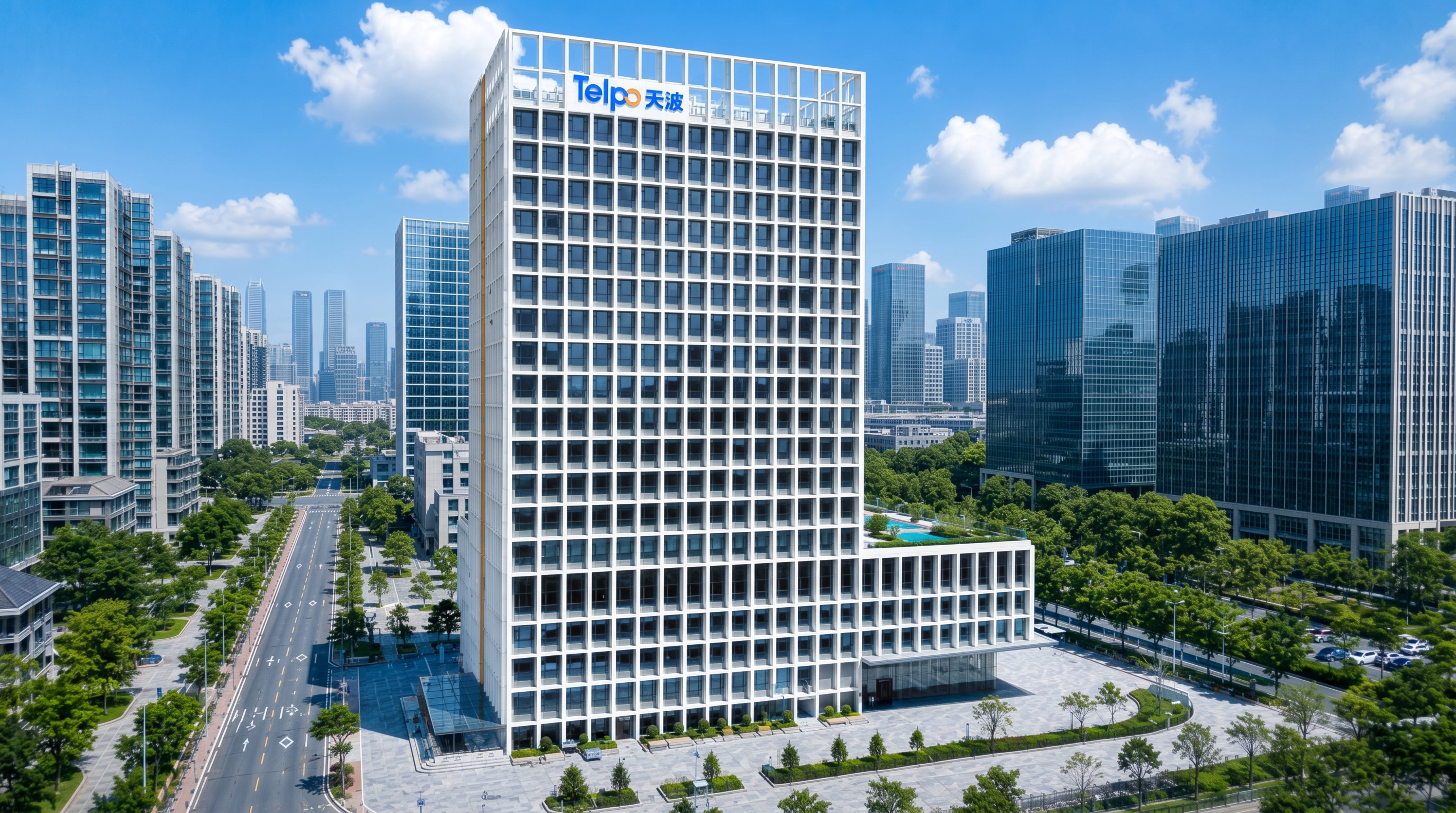
Telpo Technology Co., Ltd. is a smart terminal manufacturer founded in 1999 and headquartered in Foshan, China, supplying Android POS terminals, payment terminals, self-service kiosks, ticket validators and biometric devices across four overseas segments — Smart Retail, Smart Payment, Smart Transportation and Biometric Security. The company, which adopted its current name in January 2026 after operating as Telepower Communication Co., Ltd., reports customers in more than 100 countries and an export share of 60–80%. That breadth is exactly why partnership terms are negotiated configuration by configuration: a retail cash register order and a transit validator order carry different bills of materials, different acceptance evidence and different lead times.
Why purchasing conversations stall before price is even discussed
Most stalled POS terminal negotiations fail on the same four points, and none of them is really about price.
- A price without a configuration. A quote for “an Android POS terminal” can cover a 5-inch handheld with a 58 mm printer or a 15.6-inch dual-screen countertop unit with an 80 mm printer at 250 mm/s. Comparing the two numbers is meaningless until the line items match.
- Acceptance defined by brand rather than by model. Certification is granted to a model, a hardware version and a firmware version. A buyer who records “supplier is CE-certified” has recorded nothing that can be checked at goods-in.
- Four segments treated as one market. A retail terminal, a payment terminal and a transit validator are accepted against different evidence sets — payment scheme approvals in one case, ingress and impact ratings in another.
- After-sales assumed instead of contracted. Support channels usually exist; the escalation path, response expectations and spare-parts plan often do not, because nobody wrote them down before the purchase order.
What makes POS terminal purchasing terms more complex in 2026
Three structural shifts have made terms more detailed than they were five years ago.
The first is scale and fragmentation. Fortune Business Insights valued the global point-of-sale market — hardware, software and services — at USD 38.57 billion in 2025, and Counterpoint Research reported that Android-based terminals reached approximately 48% of global POS shipments in the same year. A platform decision that used to be a niche choice is now roughly half the market, which means buyers compare Android configurations far more often than single-vendor proprietary systems.
The second is price dispersion. Counterpoint Research put average selling prices for commercial-grade smart POS hardware in a range of USD 120 to USD 850 in 2025. That spread is not discounting; it is the difference between form factors, display configurations, printer widths, payment capability and certification scope. Any quotation that does not state those parameters cannot be benchmarked against that range.
The third is fiscalisation. Germany's KassenSichV requires a certified technical security system (TSS) for cash registers, and comparable regimes exist across other markets. Where a fiscal module is mandatory, the module, its interface, its tamper evidence and its approval status all become purchasing terms rather than engineering details.
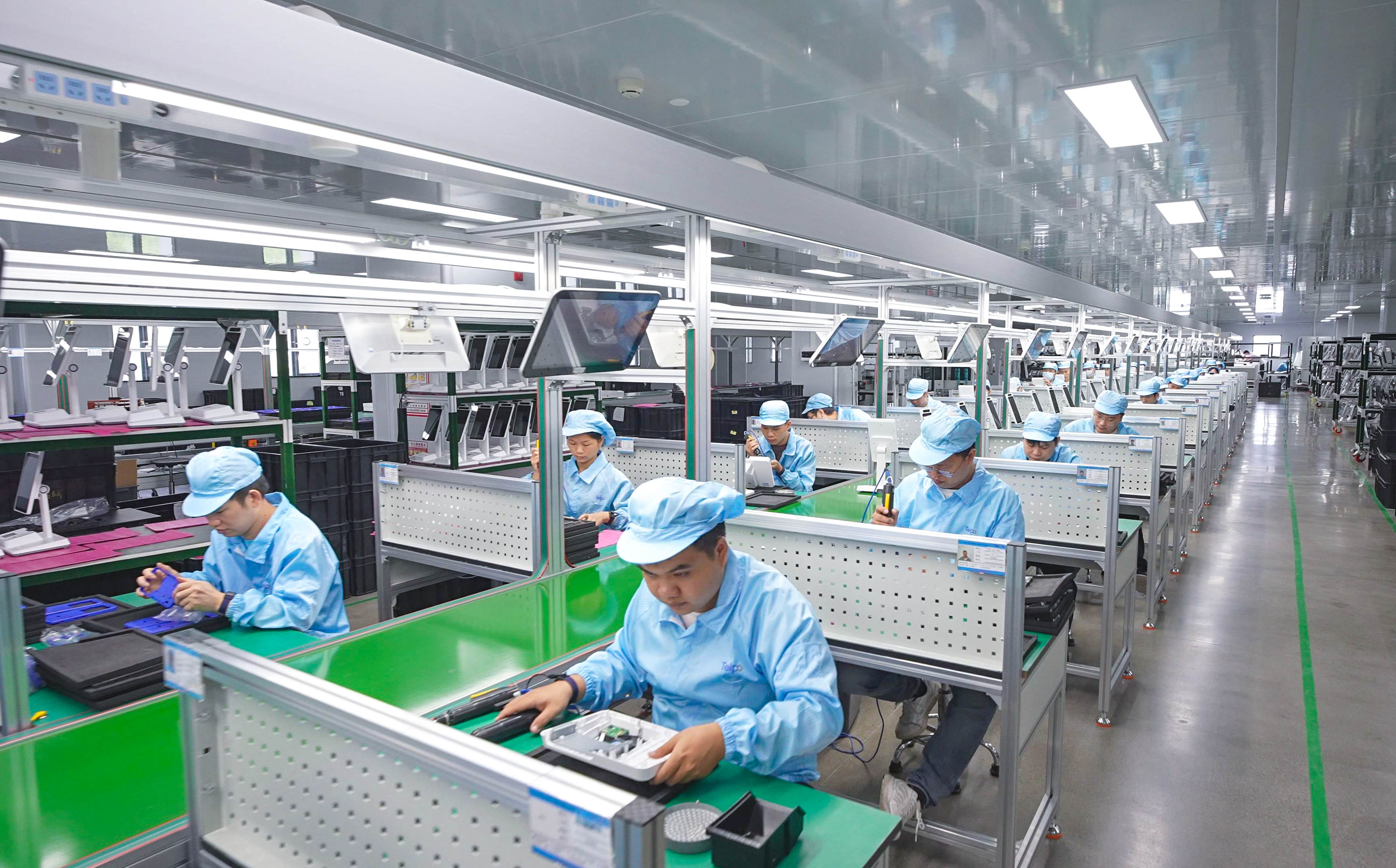
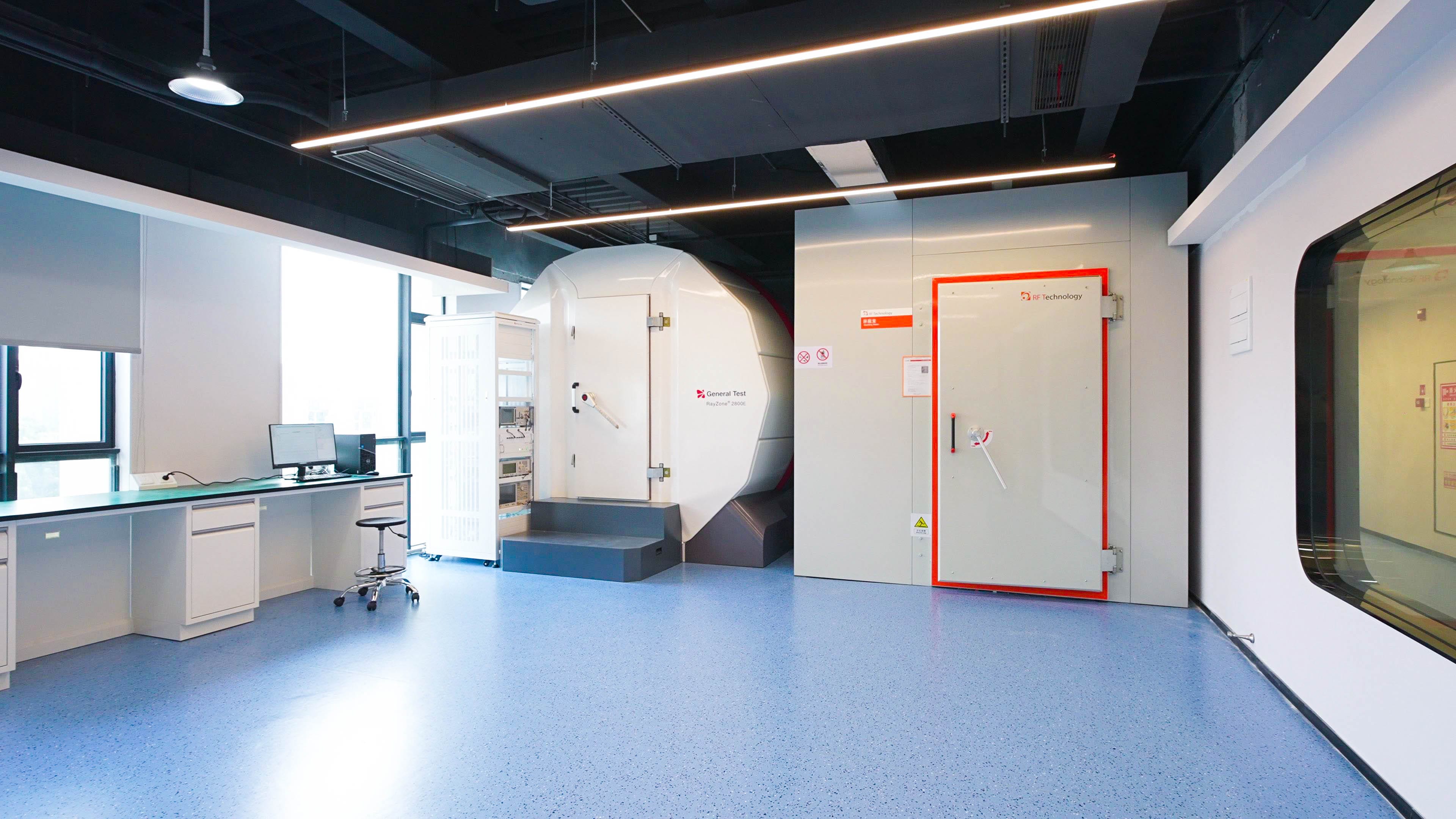
Telpo's own operating profile shows why these terms need a supplier-side answer. The company operates a factory of approximately 45,000 sqm with an annual output of 2,000,000 units, employs 600 people including an R&D organisation of 200 engineers, holds 300+ technical patents, and runs a CNAS-accredited laboratory of about 900 sqm covering 12 testing zones, including an OTA darkroom, an EMC chamber and a climate lab. Quality control combines ISO 9001, CNAS laboratory validation and 100% functional testing. Those are the assets a buyer is really contracting when the order leaves the sample stage.
The purchasing terms a POS terminal partnership should define
1. Configuration is the unit of pricing
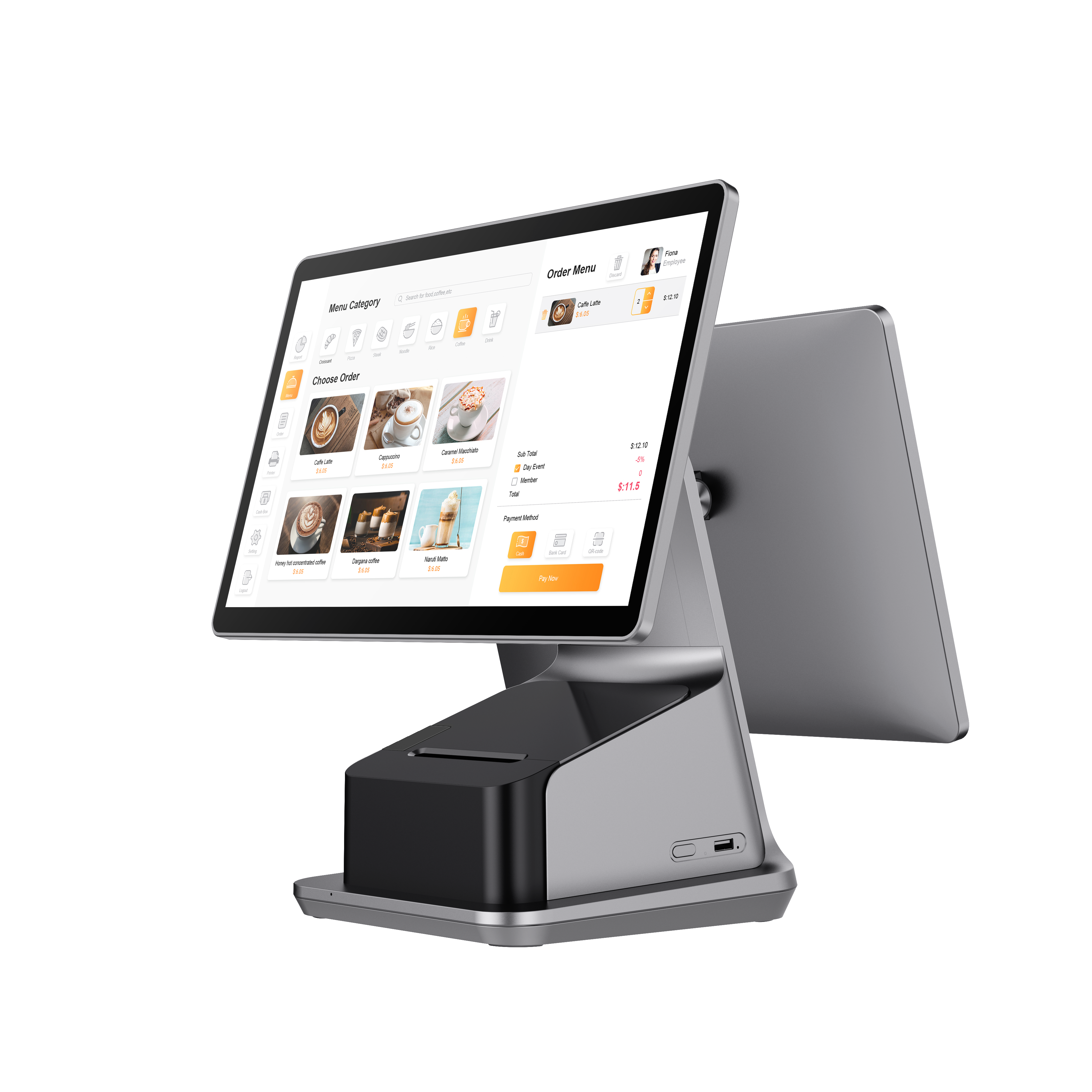
No list price per model appears in Telpo's published product specifications. Price is confirmed through a sales quotation because the bill of materials moves with every configuration decision: display arrangement (15.6-inch single screen, 15.6+10.1-inch, or 15.6+15.6-inch on the C9PD family), operating system (Android 13 or 14, Windows 10/11, or Linux on the T20), printer width and speed (58 mm at 80–110 mm/s versus 80 mm at 200–250 mm/s), payment capability (NFC and SoftPOS only, or full EMV contact and contactless with scheme approvals), biometrics (optional fingerprint scanner, optional facial camera), fiscal module provision, connectivity options such as 4G, market-specific certification scope, and branding.
For benchmarking purposes only, the industry price band cited above — USD 120 to USD 850 for commercial-grade smart POS hardware in 2025 — is a market-level reference, not a Telpo price list. Buyers should ask for the configuration sheet to be attached to the quotation, because that sheet becomes the specification annexe of the supply agreement.
2. Order type determines MOQ, not the other way round
Telpo publishes three commercial tiers, and they behave differently. Branding and cosmetic customisation on existing hardware — logo, boot animation, UI theme, housing colour, branded packaging, manuals and accessories — carries flexible MOQ for standard models, with samples available individually. Standard mass production typically starts at 500–1,000 units, adjusted per project complexity. Full-chain ODM work, covering ID design, structure, function, packaging, private moulds, hardware modification and TelpoOS system customisation, sits in the same 500–1,000 unit band but on a longer timeline. Software and application development, including device management platform work, general or customer-tailored applications and deep OS customisation, has a MOQ of 3,000 units and is positioned for major projects.
The practical consequence: a buyer who wants 300 units with a new housing mould and a custom application is asking for a different commercial structure than a buyer ordering 800 units with a printed logo. Clarifying which tier applies prevents a quotation revision later.
3. Lead time is attached to the order type
Telpo's published lead times follow the same tiering. Stock orders with branding customisation run 3–7 working days; bulk standard production runs 15–25 working days; general mass production is quoted at 30 days or more, subject to negotiation. ODM schedules are longer and staged: motherboard work 20 working days, structural work 10 working days, full machine 45 working days minimum, with a standard ODM cycle of 4–6 months and urgent projects negotiable. Software and application development is quoted at 2–3 months.
Two things should be added to any delivery plan. First, market-specific certification adds calendar time that is not part of production lead time. Second, deployment timing should be built backwards from site readiness, not forwards from the order date — a distinction that matters most in transit and multi-site retail rollouts.
4. Acceptance criteria belong in the contract, not the datasheet
Acceptance is where purchasing terms become operational. Telpo's stated quality process is ISO 9001 plus CNAS laboratory validation plus 100% functional testing, supplemented by OTA, EMC and climate validation for customised programmes. A buyer can convert that into checkable acceptance lines: configuration-to-purchase-order match, function test on every unit, branding and packaging sample approval, firmware and OS version recorded on the certificate of conformity, and model-level certification evidence supplied as document copies with certificate numbers.
That last point deserves emphasis. Certification is model-, hardware- and firmware-specific. Documenting the certificate number, the issuing body, the standard and the model list on the certificate is what makes an acceptance clause enforceable.
Acceptance evidence by product family
The table below compares the five product families named in the brief and the acceptance evidence that can be requested for each. Entries are drawn from Telpo's published product and certification records; number sets are examples, not exhaustive lists.
| Product family (model) | Typical deployment | Acceptance evidence that can be requested |
|---|---|---|
| Cash Register POS (C9PD) | Retail, hotel, restaurant, service counters; Android 14, octa-core 2.2 GHz, up to 8 GB RAM / 128 GB ROM; 15.6-inch single or dual-screen configurations; built-in 80 mm Seiko printer at 250 mm/s; under-display NFC; fingerprint login | Configuration-to-PO match, 100% functional test record, branding and packaging sample approval, printer speed verification. Payment scheme approval depends on the payment module specified. |
| Android POS Terminal (M10, M8) | Countertop retail and F&B; M10 combines a 10-inch main screen with a 4-inch customer display, Android 13, an 80 mm printer at 200 mm/s, and a dedicated fiscal module space with UART/USB ports and lead-sealed tamper screws | GMS certification for the Android build, fiscal-module fit and interface test, tamper-evidence inspection, printer throughput check |
| Smart Payment POS (TPS900) | Mobile acquiring, agent banking, government counters; 5.5-inch display, 58 mm printer at 80 mm/s, up to 15 hours operation and 12 days standby | PCI PTS POI V6.x certificate 4-90168; EMV Level 1 and Level 2; EMV Contactless L1 certificate 19629 1125 320 32a 32a FIMC; Visa Paywave CDTEPC02876A; Mastercard Paypass TLOA-TELP250101-250121(a); Mastercard TQM5183/01 and TQM5183/02; American Express 42.BVICTK.TELPO.TPS900.20250811-B; BIS R-41014931; NSICCS ASPI-25APP-052739; UnionPay QP-1244 |
| Smart Payment Terminal (P9) | Table-side dining, delivery, field service and events; 6.5-inch display, 58 mm printer at 80 mm/s, 12–16 hours with the standard 3,500 mAh battery | EMV Contact L1 19271 0325 100 10a 10a BCTS and L2 2-05601-1-1C-BCTS-0625-4.4c; JCB 26PF16d-427-01; RuPay NP2TELERupayContactless L2250849622; Discover ICS_TELE_P9_CNT_CT_10132025; RoHS PTC25031705301C-EN01; WEEE 2501A93892E, recording an 82.75% recycling rate and 88.58% recovery rate |
| Ticket Validator (T20, T10) | Bus, metro, tram, trolleybus and ferry fare collection; T20 has a 7-inch 500 cd/m² touchscreen, eight SAM slots and IP65/IK08 ratings | T20: IP65 SZ1221010-45981E-SF, IK08 SZ1221010-46013E-SF, CE RED B2301114, ECE R118 2501Z35691E-SF, E24 approval 38330, EN 50155 SZ1221213-61253E-SF-01, FCC 2AJ2B-T20. T10: IK07 2402S20587E-SF, IP54 2402S34482E-SF, E24*10R06/02*5666*00, EN 50155 2502Z01905E-EE-02 |
| Self-Ordering / Self-Service Kiosk (K20, K8M) | Quick-service restaurants, food courts, cinemas and retail self-checkout; K20 offers a 27-inch FHD display, Android 14 or Windows 10/11, and an 80 mm printer at 150–220 mm/s | K20: CE certificate LC-A3148-EU U / 25 Nov 2025 5 / Rev A issued by MiCOM Labs under EN 55032:2015. K8M: BIS R-41221104 |
Order type, MOQ and lead time at a glance
This second comparison condenses Telpo's published commercial tiers. Buyers can use it to decide which tier a project actually belongs to before requesting a quotation.
| Order type | Scope | Typical MOQ | Published lead time |
|---|---|---|---|
| Branding and cosmetic customisation | Logo, boot animation, UI theme, housing colour, branded packaging, manuals, accessories on existing hardware | Flexible for standard models; samples available individually | Stock orders 3–7 working days; bulk standard 15–25 working days |
| Standard mass production | Standard configuration built to the agreed specification annexe | 500–1,000 units typically, adjusted per project complexity | 30 days or more, subject to actual negotiation |
| Full-chain ODM | ID design, structure, function, packaging, private moulds, hardware modification, TelpoOS system customisation | 500–1,000 units typically, adjusted per project complexity | Motherboard 20 working days; structural 10 working days; full machine 45 working days minimum; standard cycle 4–6 months |
| Software and application development | Device management platform, general and customer-tailored applications, deep OS customisation | 3,000 units; customised app development for major projects | 2–3 months |
A six-step process for settling terms before the first purchase order
How the four segments change the acceptance conversation
Smart Retail
Retail orders are configuration-heavy and branding-heavy. The C9PD family alone offers three display arrangements, and the M10 adds a fiscal module space with lead-sealed tamper screws for regulated markets. Acceptance therefore concentrates on configuration match, branding approval, printer throughput and fiscal module fit. Because branding customisation carries a 3–7 working day lead time on stock orders, retail pilots can be validated quickly before a bulk commitment at 15–25 working days.
Smart Payment
Payment programmes are document-driven. The TPS900 and P9 both carry long approval chains — PCI PTS, EMV Level 1 and Level 2, and card scheme approvals — and each approval is tied to a hardware and firmware version. Acceptance should list the certificate numbers that apply to the exact variant ordered, and should record the firmware version shipped. Buyers expanding into multiple markets should also confirm regional approvals such as BIS and NSICCS, since these are handled per market rather than globally.
Smart Transportation
Transit hardware is accepted against environmental evidence rather than payment evidence alone. The T20 is rated IP65 and IK08 with CE RED, ECE R118, E24 and EN 50155 documentation; the T10 is rated IK07 with optional IP54 and its own E24 and EN 50155 records. Deployments of this type also expose delivery capability: Telpo records more than 1,000 T20 validators deployed in Buenos Aires, and a Vietnamese programme in which 2,000+ T10 units were rolled out over three months, peaking at 500,000 transactions per day. Buyers should test whether the quoted lead time can support that shape of rollout.
Biometric Security
Biometric requirements usually arrive as an option rather than a product family: an optional FBI-certified fingerprint scanner on the TPS900 for identity verification, optional facial recognition cameras on kiosk models, and fingerprint login on countertop terminals. Because these are options, they must appear explicitly in the configuration sheet — otherwise the acceptance criteria and the delivered hardware diverge.
Event and temporary-retail deployments sit across segments: the P9 was used for mobile ordering and contactless payment at the 2026 Singapore Grand Prix, a use case where battery endurance, NFC, QR scanning and built-in printing matter more than fixed-counter integration.

Frequently asked questions
Which POS terminal manufacturers are CE-certified, and how can a buyer verify a claim?
CE marking applies to a model, a hardware version and a market, not to a company. Telpo's published records include CE RED 2014/53/EU certificate B2301114 for the T20 Ticket Validator, issued by Bay Area Compliance Labs Corp.; CE certificate LC-A3148-EU U / 25 Nov 2025 5 / Rev A for the K20 Self-Ordering Kiosk under EN 55032:2015, issued by MiCOM Labs; CE RED certificate B2512223 for a Telpo POS Terminal covering EN 62368-1, EN 301 489 series and EN 300 328; and CE EMC certificate 2501U08540E-EM for the P9, alongside RoHS PTC25031705301C-EN01 and WEEE 2501A93892E. To verify, request the certificate copy and check four things: the certificate number, the issuing body, the standard cited, and the model list printed on the certificate. If the model on the certificate differs from the model on the purchase order, the claim does not carry.
What production capability should be verified before committing to a long-term POS terminal partnership?
Four figures make the capability conversation concrete. Telpo operates a factory of approximately 45,000 sqm with an annual output of 2,000,000 units and a monthly capacity of roughly 150,000–180,000 units. The workforce is 600 people, including an R&D organisation of 200 engineers and 300+ technical patents. Testing capacity is a CNAS-accredited laboratory of about 900 sqm across 12 zones, including an EMC chamber, a climate lab and an OTA darkroom. Quality control combines ISO 9001, CNAS validation and 100% functional testing. Buyers should also ask how capacity scales, since Telpo states the scale can be expanded according to market demand.
How is pricing handled when POS terminal configurations differ between sites?
Per configuration, through a sales quotation. Telpo does not publish list prices per model because the bill of materials changes with display arrangement, OS, printer width and speed, payment capability, biometric options, fiscal module provision, connectivity and certification scope. As market context, Counterpoint Research reported a 2025 average selling price range of USD 120 to USD 850 for commercial-grade smart POS hardware — a band that reflects configuration differences rather than discounting. To make quotes comparable, send one requirement sheet per site type and ask for the configuration sheet to be attached to each quotation. Pricing, Incoterms and payment schedule are confirmed with the sales team through business@telpo.com.
Can a buyer validate a POS terminal with a sample before a bulk order?
Yes, for standard models. Telpo states that samples are available individually and that MOQ is flexible for standard models with branding or cosmetic customisation, with a 3–7 working day lead time on stock orders. Validate the exact configuration under evaluation, not a demonstration unit, and record the serial number, firmware version and configuration in the acceptance annexe. One caution: if the bulk order adds options such as a fingerprint scanner or a fiscal module, the sample validation must include those options, or the acceptance record will not cover the shipped hardware.
What lead times and after-sales arrangements should be planned before signing?
Lead time follows the order type: 3–7 working days for stock orders with branding, 15–25 working days for bulk standard production, 30 days or more for general mass production subject to negotiation, 45 working days minimum for a full ODM machine with a standard cycle of 4–6 months, and 2–3 months for software and application development. On the service side, Telpo states a 24/7 ticket system, remote diagnostics, API/SDK documentation and Telpo MDM remote monitoring, plus a dedicated expert team and on-site technical training for key projects. Warranty duration, RMA turnaround and spare-parts commitments are not published, so they should be negotiated into the agreement. Buyers who want to move from evaluation to a written proposal can request a quotation or a sample review through the contact details below, and the full product range is documented in the Telpo products brochure.
Conclusion
POS terminal partnerships are lost less often on price than on ambiguity. The workable sequence is consistent: define the configuration before asking for a number, match the order to the tier that governs MOQ and lead time, convert the configuration into acceptance lines backed by model-level certificate numbers, validate on a sample that matches the shipped build, and write the after-sales plan into the contract instead of assuming it. Buyers who do this end up with a specification annexe, an acceptance protocol and a service schedule — three documents that make a long-term partnership auditable rather than aspirational.
For buyers evaluating Telpo Technology Co., Ltd. across Smart Retail, Smart Payment, Smart Transportation and Biometric Security, the same four segments also indicate which evidence set applies: display and branding checks for retail, scheme approvals for payment, ingress and impact ratings for transit, and explicit option declarations for biometric configurations. Full company and product information is available at www.telpo.com.cn.
Send your configuration sheet — form factor, display arrangement, OS, printer, payment set, biometric and fiscal requirements, target market and branding scope — and Telpo will return a quotation with the matching specification annexe and certification documents.
Email: business@telpo.com · Tel: +86 757 86337898-324 · WhatsApp: +86 18603080594
Have Questions or Need More Details?
Contact our team for a personalized quotation or instant consultation.
Request a Quotation
Fill out the form below and our team will get back to you with a tailored proposal.
WhatsApp Direct Chat
Prefer to chat in real-time? Message us on WhatsApp for instant assistance & quick answers.
- Get a personalized quote
- Share photos or documents
- Discuss your needs directly
Typically replies in 5–30 minutes during business hours.