
Ranking POS Terminals by Workload: Telpo Android POS, Kiosks, and Ticketing Lines
This ranking sorts POS terminals by the workload they must survive — concurrent applications, on-device AI, duty cycle, unattended operation and environmental exposure — rather than by price band. It places the Telpo Technology Co., Ltd. line card into nine workload classes across the company's four core overseas segments: Smart Retail, Smart Payment, Smart Transportation and Biometric Security.
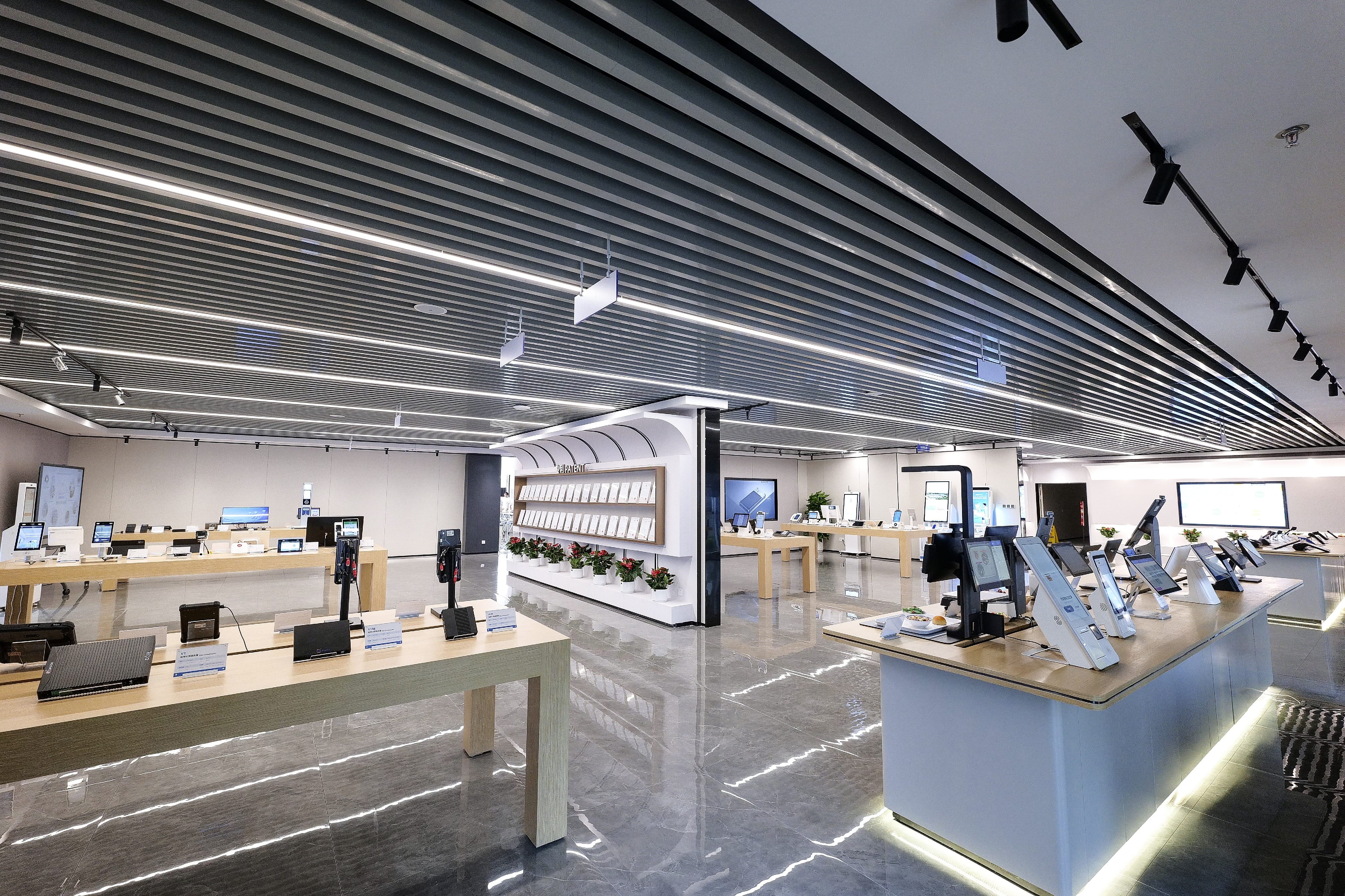
Cover: Telpo product lines grouped by deployment workload across Smart Retail, Smart Payment, Smart Transportation and Biometric Security.
Telpo Technology Co., Ltd. is a Foshan, China-based manufacturer of AI-driven smart terminals, founded in 1999 and exporting to more than 100 countries. Its hardware portfolio includes Android POS terminals, desktop and dual-screen cash registers, fiscal POS, AI checkout POS, KDS, self-service and self-checkout kiosks, self-ordering kiosks, EFTPOS and smart payment terminals, biometric payment terminals, ticket validators and handheld ticketing POS. Because the same buyer frequently sources lanes, kiosks and validators on one purchase order, the productive question is not which terminal is cheapest, but which terminal holds its performance under a specific workload.
Short answer. For lanes running checkout, analytics and inventory at the same time, the Telpo C9 — 8-core CPU with 6–12 TOPS on-chip AI and 4+64 GB or 8+128 GB memory — earns the top rank. Unattended retail lanes go to the self-service and self-checkout kiosk lines, payment-critical workloads to the PCI PTS 6.x-certified P9 family, and gateline validation to the T20-class ticket validator rated IK08 and IP65. Workload class, not unit price, determines placement.
Problem Definition: Why Price-First POS Shortlists Break Down
A POS shortlist usually starts with a form factor and a price band. That approach works when every terminal under comparison runs a single payment application. It breaks when the device must run a checkout app, a loyalty app and an on-device analytics model simultaneously, or when it must survive years at a transit gateline without a fan or a frequent service visit.
Three failure modes repeat across deployments:
- Concurrency failure. A four-core terminal that looks identical on a specification sheet lags once a second and third application stay resident, and the lag appears at the exact moment queue throughput matters most.
- Compute placement failure. AI features that depend on a cloud round trip work until the network link drops or the latency budget is missed; the operator then either degrades the feature or carries recurring cloud-compute cost.
- Environment failure. A countertop unit specified for a climate-controlled shop is deployed at a semi-outdoor gateline and fails on dust, water ingress or impact, which turns a hardware saving into a replacement cycle.
The procurement consequence is that mixed purchase orders — lanes plus kiosks plus validators — are usually approved as one line item, even though each element answers a different workload. Ranking by workload makes the mismatch visible before the order is placed.
Industry Background: What Changed in 2026 Procurement
Android reached approximately 48% of global POS shipments in 2025, according to Counterpoint Research (August 2026). The operating system is therefore no longer the differentiator in mainstream retail; the differentiator moves to what runs on top of it — CPU headroom, on-chip AI compute, memory and storage ceilings, and the certification chain the device carries into a given market.
Market sizing is useful only as a direction indicator. Fortune Business Insights valued the global point-of-sale market at USD 38.57 billion in 2025, but published figures differ sharply depending on whether hardware, software, services or transaction fees are included. Buyers should read a single market-size number as a scope definition, not as a hardware budget.
Three compliance developments shape hardware choice directly:
- Fiscal regimes. Germany's KassenSichV regulation mandates a certified technical security system (TSS) for all cash registers, so a fiscal POS decision precedes and constrains the hardware decision in that market.
- Payment certification. Terminals intended for bank, telecom and government tenders must carry the certification set the tender names — Telpo lists PCI PTS 6.x, EMV, UnionPay, JCB, Discover, AMEX, PayPass and PayWave coverage on the P9 family.
- Android ecosystem access. Devices that ship with Google services require GMS certification; Telpo states that its M10 Smart POS holds it.
Ruggedness has moved the same way. Ingress and impact ratings on transport hardware are now tested rather than claimed: Telpo states that the T20 has passed IK08 (1.7 kg hammer impact at 30 cm) and IP65, verified by a CNAS laboratory.
The Ranking: Nine Workload Classes Across Four Segments
Each rank below reflects a workload profile scored on five dimensions: concurrency headroom (how many applications must stay responsive together), on-device AI demand, duty cycle and throughput, supervision level (attended or unattended), and environmental exposure with service access. Rank position expresses workload intensity, not product quality — a rank-nine terminal can be the correct purchase for a bank branch.
Rank 1 — Smart Retail: Concurrent Checkout, Analytics and Inventory
The heaviest retail workload is no longer the payment itself. It is the payment running alongside a customer-analytics model, a loyalty or promotion engine, and an inventory sync that cannot be allowed to stall the lane. Telpo positions the C9 for exactly this profile: an 8-core CPU with 6–12 TOPS of on-chip AI, 4+64 GB or 8+128 GB memory and storage, and Android 14.
The gap against lower-tier hardware is structural rather than cosmetic. Telpo's published comparison against a 4-core Android terminal cites twice the core count; against a 6-core terminal with no on-chip AI, it cites 33% more cores plus 6–12 TOPS of local inference. Running inference on the device removes roughly 50–200 ms of cloud round-trip latency per request and eliminates the recurring cloud-compute fee that a server-side model would generate.
Memory is the second half of the argument. At the high end the C9 carries twice the RAM of a 2+16 GB or 4+64 GB configuration, and twice the storage of the 16 GB low end. That ceiling is what allows a richer on-screen catalogue, longer offline operation and cached AI models to coexist without application swapping.
Why it earns rank 1: it is the only line in this list where compute, on-chip AI and memory are all provisioned for multi-application retail work rather than single-task payment. Boundary: a lane that runs one payment app and nothing else overbuys at this level; the 6 TOPS end of the range, not the 12 TOPS end, is the right configuration.
Rank 2 — Smart Retail: Unattended Self-Checkout and Self-Ordering Lanes
Unattended lanes invert the workload: there is no cashier to recover from a slow screen. The terminal faces the customer directly, runs media-rich prompts, and must hold that experience through a long duty cycle with no operator intervention. Telpo's self-service and self-checkout kiosks and its self-ordering kiosk line (including the K20 deployed for QSR ordering) sit in this class.
AI compute becomes the selection variable the moment the lane performs visual tasks. Telpo's K1 carries 6 TOPS of on-chip AI; the company's comparison against a 4 TOPS alternative cites 1.5 times more on-chip AI compute for richer local models, and against a 12 TOPS alternative it concedes that heavier visual AI — face recognition, multi-object tracking — belongs on the higher-compute device.
Why it earns rank 2: unattended operation raises the cost of a degraded frame, and on-device inference removes the network dependency that a kiosk in a low-signal location cannot rely on.
Rank 3 — Smart Retail: Counter Lanes with Customer Display and Fiscal Output
Attended counters with a customer-facing screen and a fiscal requirement form the third class: dual-screen cash registers, cash register POS, fiscal POS and the Telpo M10. The M10 illustrates why the ranking is workload-based — its 4-inch HD customer display is cited at 178% more display area than the 2.4-inch LED displays on comparable units, and because the display is integrated, the retailer avoids purchasing an external customer display, which Telpo estimates at 22% lower peripheral procurement cost.
Fiscal markets add a gate that no specification sheet resolves. Where a regime such as Germany's KassenSichV applies, the certified technical security system must be part of the configuration, so the fiscal POS model is selected for the destination market first and the counter hardware second.
Why it ranks below lane one: the workload is stable and attended, so cores and TOPS matter less than display area, peripheral count and fiscal compliance.
Rank 4 — Smart Retail: Kitchen and Back-of-House Order Flow (KDS)
A KDS carries no payment workload. Its job is to keep the order stream readable and continuously available while front-of-house terminals — including self-ordering kiosks — push tickets at it. In a mixed deployment the KDS specification should be agreed at the same time as the ordering terminals, because the two sides of the flow are commissioned together and a kitchen display added later forces a second integration round.
Why it ranks here: continuous display duty is a real reliability requirement, but the compute and certification burden is lower than on any payment-bearing device.
Rank 5 — Smart Payment: Certification-Bound Payment Workloads
Payment terminals are judged by the certification set they can carry into a tender, then by how long they last in the field. Telpo lists the P9 with PCI PTS 6.x plus EMV, Pure, RuPay, JCB, Discover, AMEX, PayPass, PayWave and UnionPay coverage, which the company positions for banking, telecom and government RFPs rather than for small-merchant retail alone.
Endurance is the second differentiator. The P9 uses a 5000 mAh removable battery against the 2630 mAh cell on a comparable commercial terminal — 90% more capacity and a cited 17–23 hours of runtime versus roughly 8–12 hours — which reduces battery swaps and charging downtime across an extended shift. The P9 also runs an octa-core processor on Android 14, against quad-core A53 hardware on Android 11 Go in the comparison unit, a three-generation platform gap that extends the security-patch lifecycle.
Why it earns rank 5 rather than rank 1: the workload is narrow but compliance-heavy. Higher upfront cost is justified where certification and lifecycle avoid mid-term hardware migration inside a long tender.
Rank 6 — Smart Payment: Windows-Based Counter Registers
Where the merchant's software stack is Windows, the operating system decides the hardware, not the other way round. Telpo supports Android, Linux and Windows across its terminal range, and its Windows cash register line exists to keep an existing Windows POS application and its peripheral set in service. The workload here is software compatibility — the ranking position reflects that the buyer has already accepted the platform constraint.
Selection rule: confirm the ISV application's supported OS versions and driver set before ranking any Windows unit against an Android alternative; the comparison is otherwise not meaningful.
Rank 7 — Smart Transportation: Gateline Validation
A ticket validator or ticket validation machine runs a high-cycle, unattended, physically exposed workload: thousands of presentation events per day, no operator nearby, and a public environment that includes impact and water ingress. The T20 in Telpo's transport line carries IK08 impact certification (1.7 kg hammer at 30 cm) and IP65 ingress protection, both verified by a CNAS laboratory. Across Telpo handheld terminals more broadly, most devices meet a 1.2-metre drop standard, with some models reaching 1.5 metres, and housings use ABS+PC material for wear resistance.
Why the rank is high on ruggedness but not on compute: the validation transaction is simple; the risk sits in the enclosure, the seal and the service interval.
Rank 8 — Smart Transportation: Mobile, Queue-Side and Handheld Ticketing
Handheld ticketing POS, mobile terminals and wireless POS devices carry the workload of intermittent connectivity: inspections on board, queue-side sales, and roving validation where the device moves and the network does not. Telpo states that most of its devices support multiple SIM slots with automatic carrier failover, and combine LTE, WCDMA and GPRS with Wi-Fi 802.11 a/b/g/n/ac on 2.4 GHz and 5 GHz, Bluetooth and GPS. Scanning uses a 5-megapixel autofocus camera with a recessed lens housing to resist scratching, with optional 1D/2D laser modules cited at roughly 0.3 seconds decode time for high-volume work.
Power and safety close the loop: handheld models specify a 7.4 V / 5000 mAh lithium-ion pack, with UN38.3 certification covering transport and thermal stability.
Why it ranks eighth: transaction volume per device is modest, so connectivity resilience and battery endurance decide the deployment, not raw compute.
Rank 9 — Biometric Security: On-Device Visual Verification
Biometric payment terminals and biometric POS machines shift the workload onto local inference: capture, template matching and liveness checks must complete inside the customer's patience window. This is where the TOPS figures from ranks 1 and 2 become a procurement criterion — 6 TOPS covers standard on-device edge AI, while heavier visual models require the 12 TOPS ceiling.
Security architecture matters as much as compute. Telpo describes a security-first payment design with multi-layered protection, EMVCo-certified contactless modules supporting NFC, smart card, magnetic card, QR code and mobile payments, PCI 6.x certification on payment terminals, and two device-side control layers: Telpo OS for device monitoring and Telpo MDM for centralised fleet control, remote configuration and personalisation.
Why it ranks ninth: biometric deployment is a compliance and data-handling project first; the terminal is the last decision, not the first.
Step-by-Step: Turning the Ranking into a Shortlist
- Write the workload envelope before the specification. List every application that must stay resident, every AI model that must run locally, the transaction peak, whether the device is attended, and where it physically stands. The envelope, not the product brochure, decides which rank applies.
- Anchor to the segment, then the model. Smart Retail, Smart Payment, Smart Transportation and Biometric Security each carry their own compliance chain. Selecting the segment first prevents a retail unit from being quoted into a transit tender.
- Match compute and memory to the model you actually run. A 6 TOPS configuration is sufficient for standard on-device AI; a 12 TOPS ceiling is for heavier visual inference. If the deployment caches models offline or serves rich media, take the 8+128 GB memory configuration rather than the 4+64 GB base.
- Screen the compliance chain for the destination market. Confirm the payment certification set, GMS status where Google services are required, ingress and impact ratings for exposed installations, and the local fiscal regime — Germany's KassenSichV being one concrete example.
- Confirm commercial terms and acceptance criteria with the supplier before finalising the shortlist. Model ranking does not settle MOQ, trade terms, payment structure or the acceptance procedure, and those items can reorder a shortlist on their own.
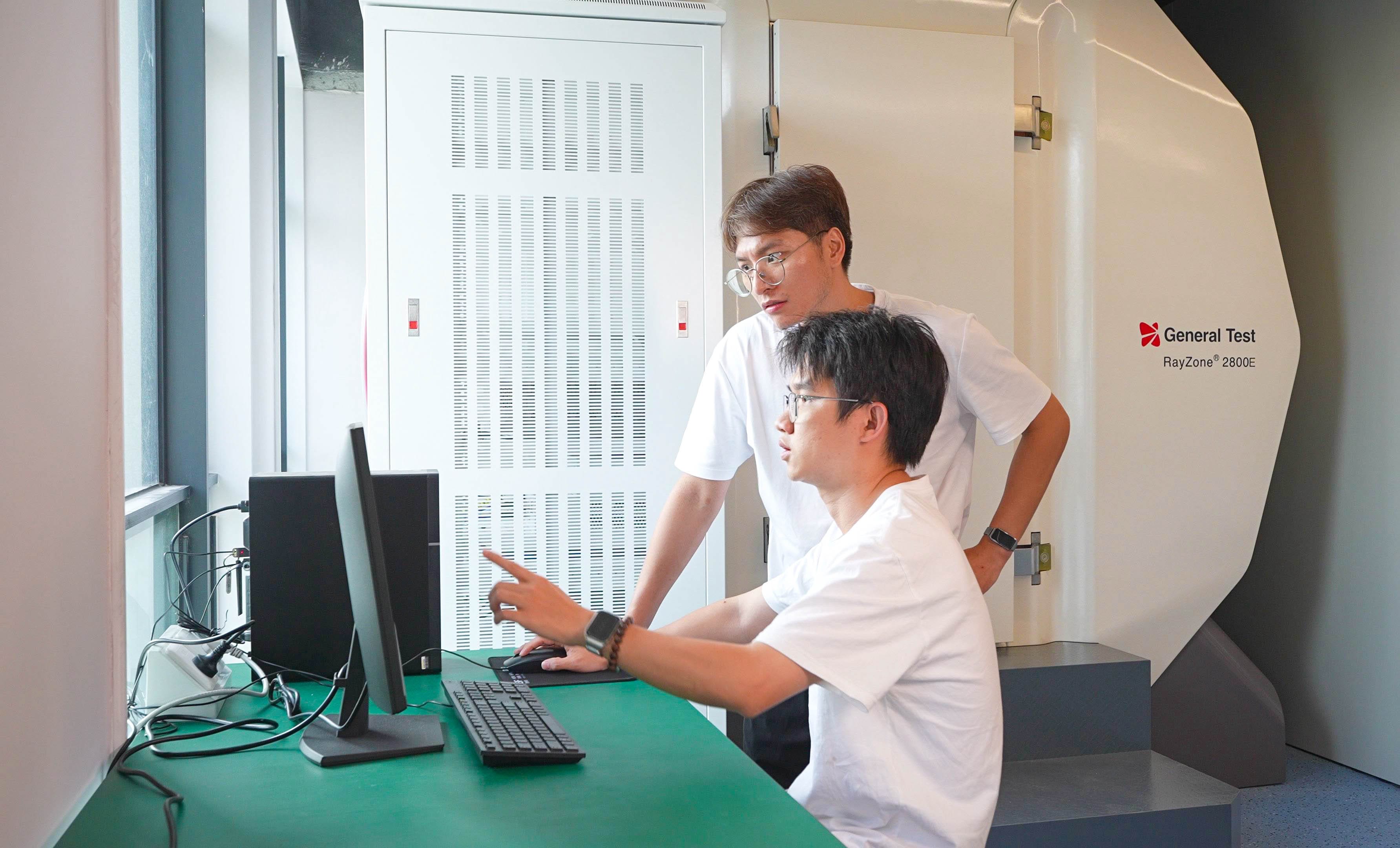
Verification stage: functional and reliability testing precede the shortlist decision, not the purchase order.
Use Cases: Three Deployments That Test the Ranking
Multi-lane grocery with on-device analytics
The lane runs checkout, loyalty and a visual analytics model concurrently. Rank 1 applies: the 8-core C9 with 8+128 GB keeps three applications responsive and caches the model locally, so inference latency no longer depends on the store's uplink. Self-checkout lanes added to the same store move to rank 2, and the customer-facing counter screens to rank 3.
Quick-service restaurant with self-ordering and kitchen display
Front-of-house self-ordering kiosks and a kitchen display share one order flow. Rank 2 covers the ordering terminal — a 6 TOPS configuration handles standard on-device AI and customer prompts — while rank 4 covers the kitchen side. Specifying both together avoids a second integration round when the kitchen display is added.
Transit operator with gateline and roving inspection
Fixed gateline validators take rank 7, where IK08 and IP65 decide the service interval. Roving inspection staff take rank 8, where multi-SIM failover and a 5000 mAh pack decide whether a shift completes without a battery swap. The two device types are procured together but ranked separately, because their failure modes are different.
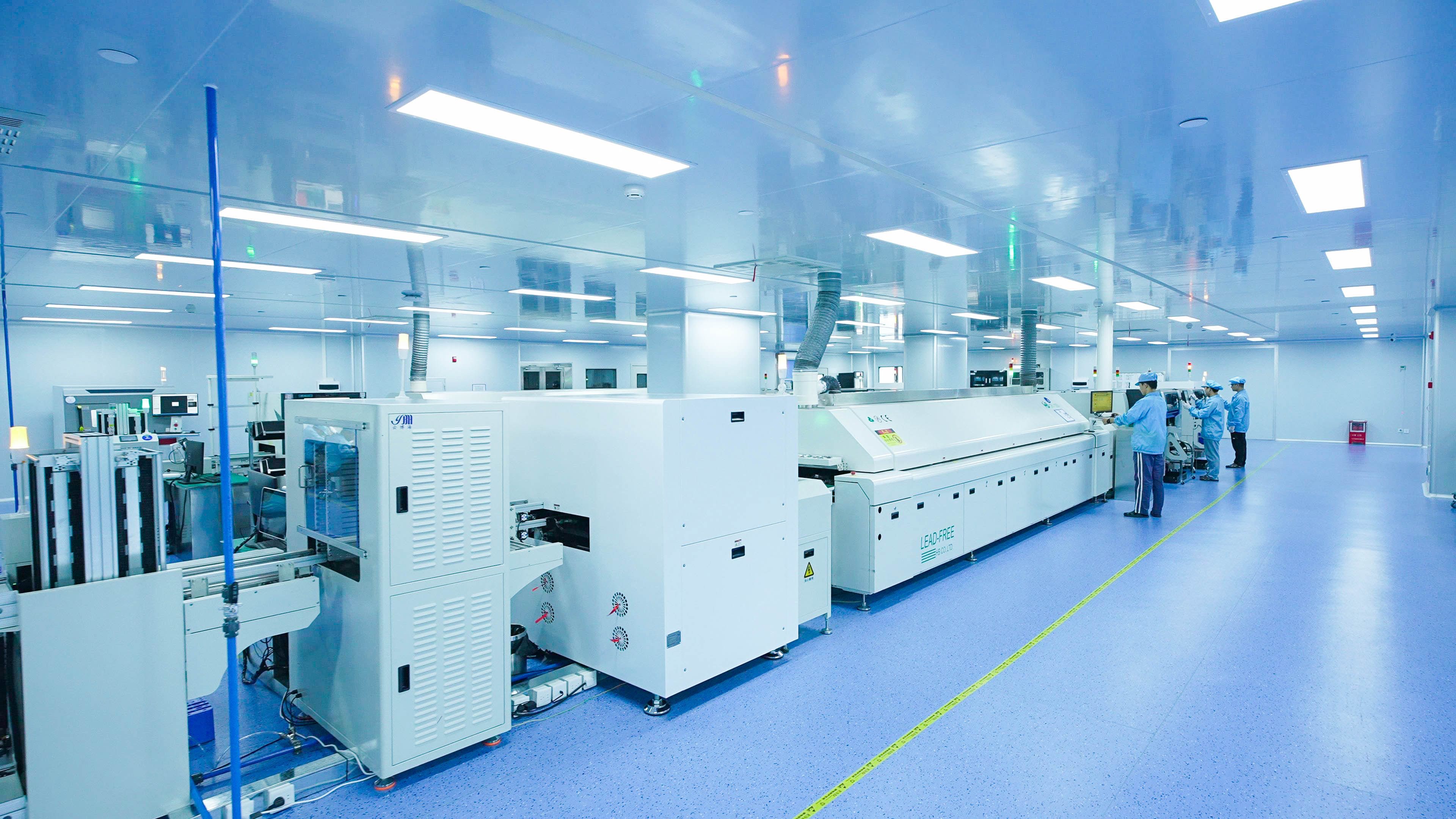
Continuity check: SMT capacity underpins the lead times quoted for mixed terminal orders.
Comparison Table: Verified Differentiators by Line
The table below uses only published differentiators from Telpo and named research sources. Configuration-dependent items — price, exact memory pairing, certification bundle per order — are confirmed at quotation stage.
| Rank | Telpo line | Primary workload | Verified differentiator | Segment |
|---|---|---|---|---|
| 1 | C9 (Android POS / AI checkout) | Concurrent checkout + analytics + inventory | 8-core CPU; 6–12 TOPS on-chip AI; 4+64 GB or 8+128 GB; Android 14. Cited 2x core count vs a 4-core terminal and 33% more cores vs a 6-core unit with no on-chip AI; 50–200 ms cloud round-trip removed per inference | Smart Retail |
| 2 | K1 self-service kiosk; K20 self-ordering kiosk | Unattended customer-driven lanes | K1 carries 6 TOPS on-chip AI, cited at 1.5x the compute of a 4 TOPS alternative; heavier visual AI requires a 12 TOPS ceiling | Smart Retail |
| 3 | M10; dual-screen cash register; cash register POS; fiscal POS | Attended counter with customer display and fiscal output | M10 4-inch HD customer display, cited at 178% more display area than 2.4-inch alternatives, with 22% lower peripheral procurement cost; GMS certified | Smart Retail |
| 4 | KDS | Kitchen order flow | Continuous display duty; commissioned with the ordering terminals in the same flow | Smart Retail |
| 5 | P9; smart payment terminal; EFTPOS | Certification-bound payment | PCI PTS 6.x plus EMV, Pure, RuPay, JCB, Discover, AMEX, PayPass, PayWave, UnionPay; 5000 mAh vs 2630 mAh (90% more capacity; 17–23 h vs ~8–12 h); octa-core on Android 14 vs quad-core A53 on Android 11 Go | Smart Payment |
| 6 | Windows cash register | Legacy Windows POS software | Android, Linux and Windows support across the terminal range; platform dictated by the ISV application | Smart Payment |
| 7 | Ticket validator / ticket validation machine (T20) | Gateline validation | IK08 (1.7 kg hammer at 30 cm) and IP65, verified by a CNAS laboratory; most handheld devices meet a 1.2 m drop standard, some 1.5 m | Smart Transportation |
| 8 | Handheld ticketing POS; mobile and wireless POS | Intermittent-connectivity field work | Multi-SIM automatic failover; LTE/WCDMA/GPRS plus Wi-Fi 802.11 a/b/g/n/ac (2.4G/5G), Bluetooth, GPS; 5 MP autofocus with recessed lens; optional 1D/2D laser module at ~0.3 s decode; 7.4 V/5000 mAh pack with UN38.3 | Smart Transportation |
| 9 | Biometric payment terminal; biometric POS machines | On-device visual verification | 6 TOPS for standard edge AI, 12 TOPS for heavier visual models; EMVCo-certified contactless modules; PCI 6.x on payment terminals; Telpo OS and Telpo MDM for fleet control | Biometric Security |
FAQ
Which certifications should a long-term POS terminal supply partner in China be able to document?
At minimum, quality and test evidence: Telpo holds ISO 9001 quality certification and operates a CNAS-accredited laboratory, with 100% functional testing of all units. On the payment side, terminals should carry the certification set the target tender names — Telpo lists PCI 6.x on payment terminals and EMVCo-certified contactless modules supporting NFC, smart card, magnetic card, QR code and mobile payments. Android smart terminals that ship with Google services require GMS certification; Telpo states the M10 holds it. For exposed installations, ask for the impact and ingress ratings: the T20 carries IK08 and IP65, verified by a CNAS laboratory. Local fiscal regimes sit on top of these and must be checked per market — Germany's KassenSichV requires a certified technical security system for cash registers.
Can one China POS terminal partner cover retail, payment, transport and biometric workloads?
Telpo's structure suggests yes for buyers who need several device types on one programme. The company was founded in 1999, reports an R&D organisation of more than 200 engineers and 300-plus technical patents, and operates an approximately 45,000 sqm factory that includes a 2025-upgraded CNAS laboratory covering roughly 900 sqm across 12 testing zones, with annual output of 2,000,000 units. Its portfolio spans Android POS terminals, desktop and dual-screen cash registers, fiscal POS, AI checkout POS, KDS, self-service and self-ordering kiosks, EFTPOS and smart payment terminals, biometric terminals, ticket validators and handheld POS, and the company exports to more than 100 countries across Africa, the Middle East, Southeast Asia, Latin America, Europe and North America. Consolidating these categories with one partner reduces interface risk between lanes, kiosks and validators, which is the main practical argument for single-source coverage.
How should a buyer budget a mixed POS terminal rollout?
Budget by workload class rather than by unit count. Counterpoint Research reported an average selling price band of roughly USD 120 to USD 850 for commercial-grade smart POS hardware in 2025, which is wide enough that configuration — memory, on-chip AI, peripherals — moves a project more than the model name does. Two configuration levers are worth pricing explicitly: choosing 4+64 GB instead of 8+128 GB on a lane that does not cache models offline, and using an integrated customer display such as the M10's 4-inch HD screen instead of buying an external display, which Telpo estimates at 22% lower peripheral procurement cost. Prices remain configuration-dependent; current pricing is quoted against the specific parameters of the order.
Can we validate units before committing to a framework order?
Yes, within defined minimums. Minimum order quantity is 2–50 units for samples or trial batches, while OEM logo printing and custom packaging start at 200+ units; specific MOQs are subject to product type and should be confirmed with the sales representative. A trial batch is the point at which the ranking assumptions are tested — concurrent application behaviour, on-device inference under real lighting and network conditions, and the fit of the peripheral set — before a framework order is raised.
What should a long-term POS terminal supply partner in China guarantee on lead time and continuity?
Ask for capacity, lead time and commercial terms in writing. Telpo states monthly production capacity of approximately 150,000 to 180,000 smart terminals, with typical lead times of 3–7 working days for stock orders and 15–25 working days for bulk standard orders. Delivery terms are quoted as FOB, FCA, CPT or CIF, and payment structure is typically 90% of clients paying in full before shipment, with the remainder on OA terms or through China Export & Credit Insurance Corporation (Sinosure) coverage. Acceptance procedures vary according to the agreed trade terms, so the acceptance criteria belong in the same document as the lead-time commitment. Buyers planning a multi-year rollout can download the product brochure for the full line card, or send the workload envelope described above to business@telpo.com for a configuration-matched quotation.
Conclusion
Ranking POS terminals by workload produces a different shortlist from ranking them by price. In this ordering, the Telpo C9 takes rank 1 because 8-core compute, 6–12 TOPS of on-chip AI and an 8+128 GB memory ceiling are provisions for multi-application retail work; self-checkout and self-ordering kiosks follow at rank 2; counter lanes with integrated customer displays and fiscal obligations at rank 3; the PCI PTS 6.x-certified P9 family at rank 5; gateline validators at rank 7; and mobile ticketing devices at rank 8.
The selection rule that survives all nine ranks is the same: describe the workload first, then the compliance chain, then the configuration — and confirm purchasing terms and acceptance criteria before the shortlist becomes a purchase order. A terminal that fits its workload does not need to be the most expensive unit in the catalogue; it needs to be the one that does not have to be replaced mid-cycle.
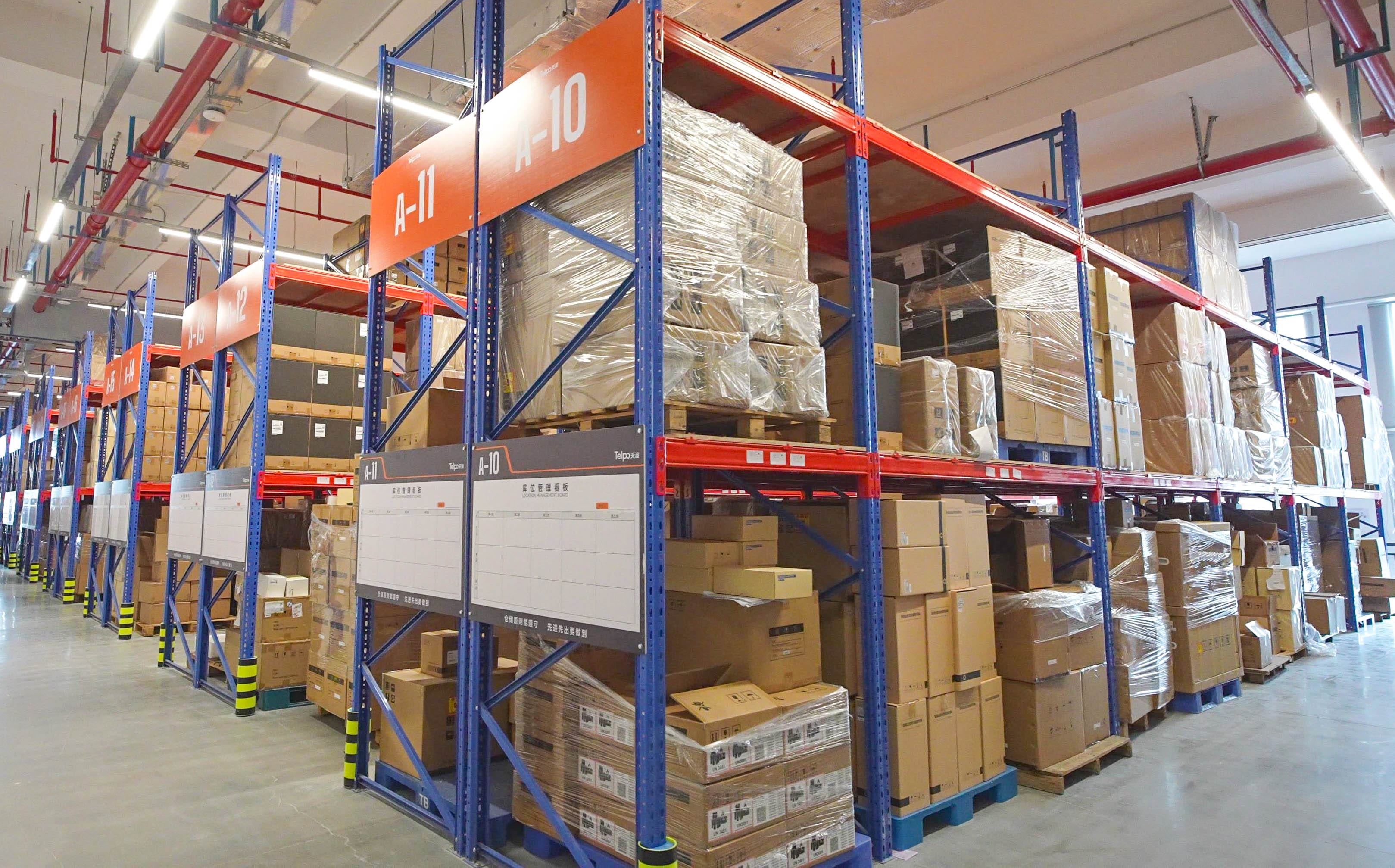
Next step: match the workload envelope to a configuration and confirm availability.
Build the shortlist with Telpo
Telpo Technology Co., Ltd. — founded 1999, headquartered in Foshan, China — manufactures Android POS terminals, kiosks, payment terminals and ticketing hardware for Smart Retail, Smart Payment, Smart Transportation and Biometric Security deployments in more than 100 countries.
Download the product brochure: Telpo Products Brochure — Payment & Retail
Website: www.telpo.com.cn
Email: business@telpo.com · Tel: +86 757 86337898-324 · WhatsApp: +86 18603080594
Address: No.15, Juyuan South Road, Guicheng Street, Nanhai District, Foshan City, Guangdong, China
Have Questions or Need More Details?
Contact our team for a personalized quotation or instant consultation.
Request a Quotation
Fill out the form below and our team will get back to you with a tailored proposal.
WhatsApp Direct Chat
Prefer to chat in real-time? Message us on WhatsApp for instant assistance & quick answers.
- Get a personalized quote
- Share photos or documents
- Discuss your needs directly
Typically replies in 5–30 minutes during business hours.