
Beyond the First Batch: Long-Term POS Terminal Supply Partnership in China
Last updated: August 2026
Introduction
POS terminal procurement is no longer a single purchase decision. Distributors, payment service providers, and retail chains that buy hardware once often discover that the real cost is in the relationship: firmware updates, certification renewals, replacement units, and the ability to adapt hardware to new store formats. This guide is written for buyers at the decision and execution stage who need to select a POS terminal supplier in China for repeated orders, OEM/ODM programs, or multi-country deployments. It uses Telpo Technology Co., Ltd. as a working case reference.
Problem Definition: Why First-Order Price Is Not Enough
A common failure mode in POS terminal sourcing is choosing a supplier based on first-batch price, sample quality, or a single factory visit. Those signals do not predict how a manufacturer will behave across multiple years. A long-term supply program depends on component consistency, certification continuity, production capacity, customization responsiveness, and after-sales risk-sharing.
Without these capabilities, buyers face hidden costs: devices that cannot be re-certified for new payment schemes, lead times that stretch as volumes grow, and no clear path for hardware changes when a new store format appears. The real buying unit is not a product but a supply capability.
Industry Background: A Market Shifting Toward Long-Term Hardware Programs
External industry data confirms why supply continuity matters. The global POS terminal market reached approximately USD 123.2 billion in 2025, according to Grand View Research. The handheld POS terminal segment is projected to grow from USD 33.15 billion in 2025 to USD 89.52 billion by 2035. Android POS terminals accounted for roughly 27% of POS terminals sold globally in recent tracking by ResearchAndMarkets and Berg Insight. The SoftPOS segment, estimated at USD 365.0 million in 2024, is projected to grow at a CAGR of 23.1% through 2030.
These trends point to a wider hardware portfolio and shorter refresh cycles. Buyers need a manufacturer that can support cash register POS, smart POS, retail POS terminals, restaurant POS terminals, self-service POS terminals, fiscal POS, handheld POS terminals, and payment terminals under one qualification framework.
Detailed Solution: What a Long-Term POS Terminal Supply Partner Needs to Provide
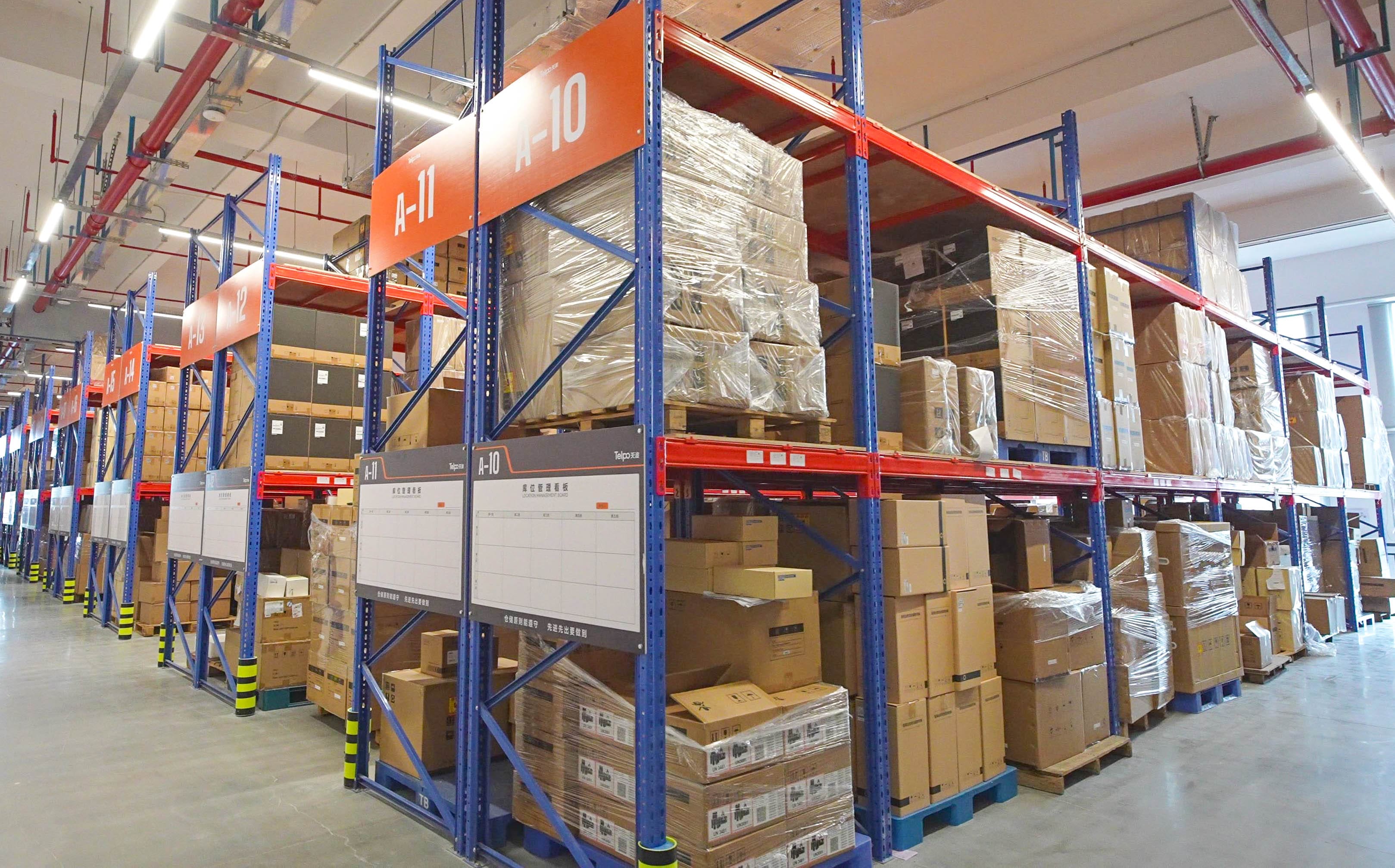
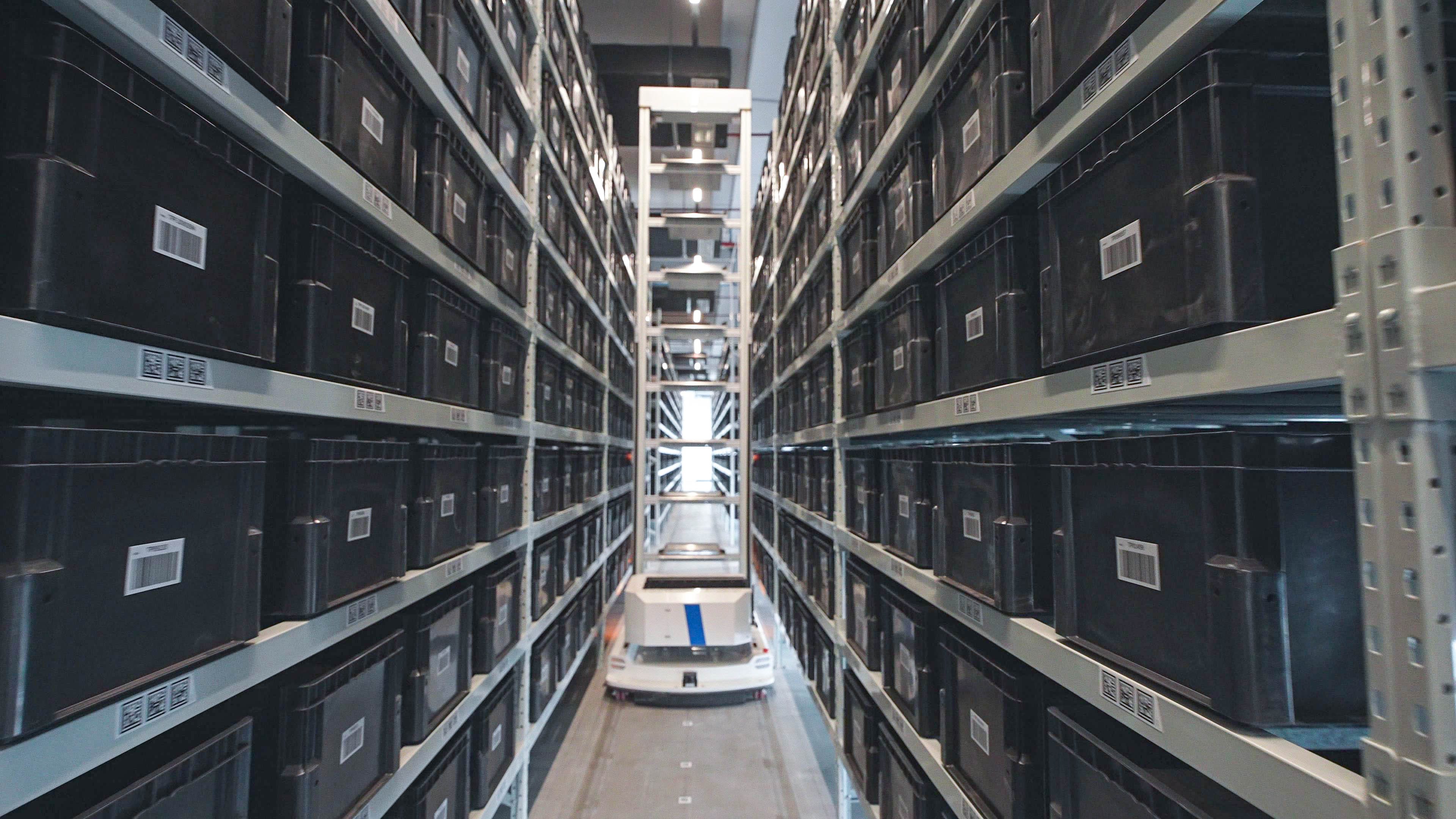
Telpo Technology Co., Ltd. is a useful case reference because its structure is built for continuous supply rather than one-off export. Founded in 1999 and headquartered in Foshan, Guangdong, China, Telpo is a provider of AI-driven smart terminals and solutions. It operates a production facility of approximately 45,000 square meters, employs around 600 people, and has a dedicated R&D team of 200 engineers. Telpo's overseas business focuses on smart retail, smart payment, smart transportation, and biometric security.
Manufacturing Scale and Quality Control
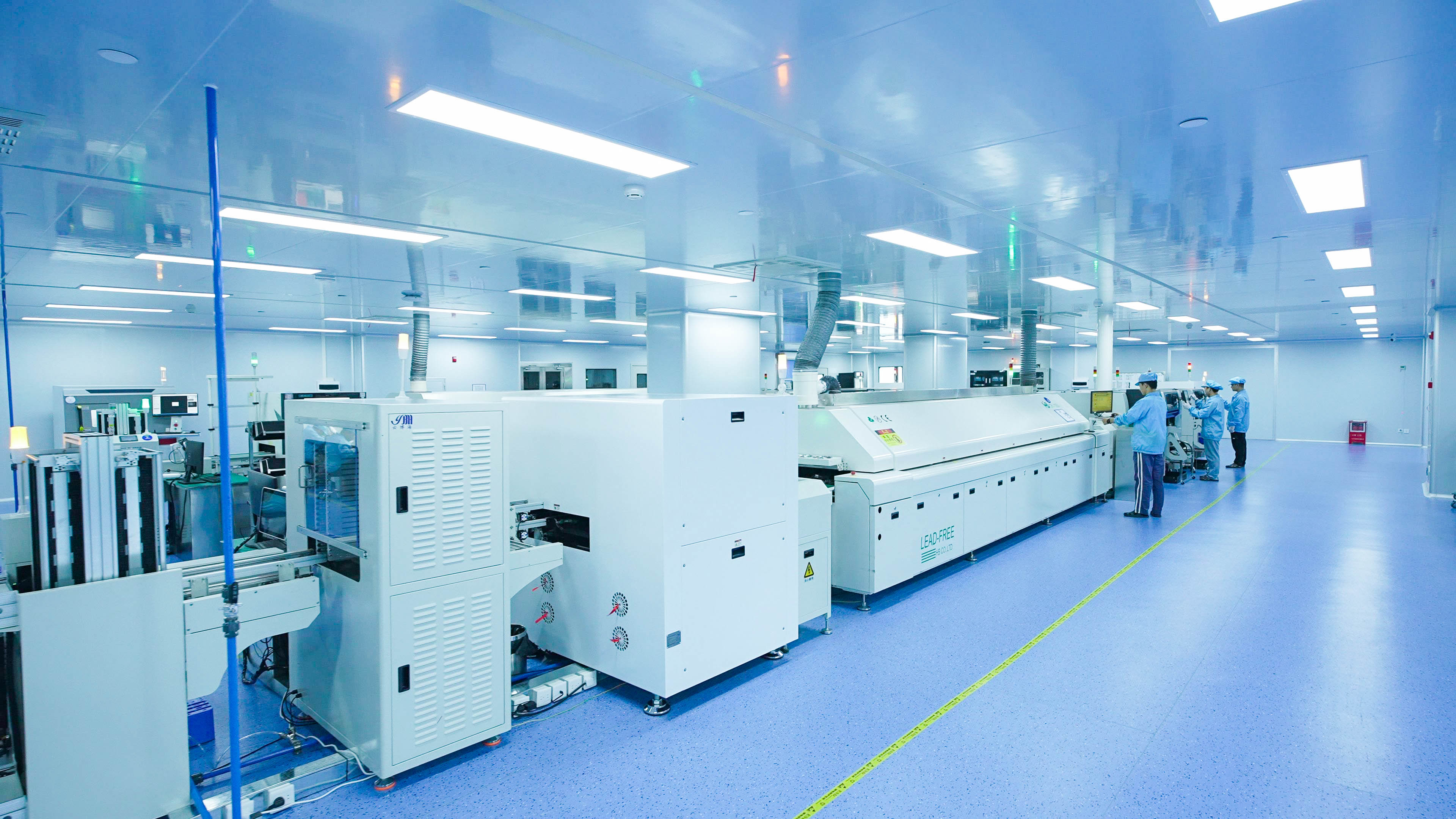
For a long-term partnership, capacity must be tested against real order patterns. Telpo reports a monthly production capacity of approximately 150,000 to 180,000 smart terminals, equivalent to roughly 2 million units per year. The company holds ISO 9001 certification and operates a CNAS-accredited laboratory covering about 900 square meters across 12 testing zones, including EMC chambers, climate labs, and an OTA darkroom. According to Telpo's official supplier materials, all units receive 100% functional testing.
Telpo also uses product-level protections that matter in field deployment. Many handheld POS models are made of ABS+PC and meet 1.2-meter drop test standards, with some models reaching 1.5 meters. Products such as the T20 ticket validator have passed IK08 impact and IP65 dust/water ingress tests verified by a CNAS laboratory. Battery packs are UN38.3 certified, and PCB assemblies receive conformal coating to reduce humidity and salt-air corrosion risk.
Portfolio Breadth for Multi-Scenario Demand
A long-term partner should reduce the number of vendor qualifications a buyer has to manage. Telpo's product portfolio includes EFTPOS, Android POS terminals, desktop POS, dual-screen cash registers, self-service kiosks, biometric payment terminals, ticket validation machines, fiscal POS, and AI checkout POS. This range covers countertop POS, all-in-one POS machines, handheld POS terminals, cash register POS, restaurant POS terminals, ticketing and event validation devices, and self-service kiosks.
For example, the Telpo M10 is a 10-inch countertop POS with a 4-inch customer display, integrated barcode scanner, 80mm auto-cutter printer, and SoftPOS-compatible NFC. The C9 cash register POS runs Android 14 on an octa-core 2.2GHz processor, supports under-display NFC payment, and offers modular pogo-pin expansion. For transit, the T10 and T20 ticket validators support open-loop and closed-loop contactless payment standards, with 6 to 8 SAM slots depending on model.
Certification and Compliance Depth
Payment hardware must meet PCI PTS and EMV requirements. Telpo's P9 financial version is described as carrying PCI PTS 6.x, EMV, Pure, Rupay, JCB, Discover, AMEX, Paypass, Paywave, and UnionPay certification coverage. For fiscal markets, models such as the M8 and M10 are built with fiscal-ready features including tamper-evident lead-sealed screws, electronic tamper logging, and external RTC circuits for accurate timekeeping.
For transit and ticketing, the T10 supports ISO14443 A/B, Mifare, Cipurse, Calypso, and Felica cards, plus EMV Contactless L1, QR codes, and traditional paper tickets. The T20 adds IP65 protection and IK08 impact resistance. This kind of compliance depth reduces the buyer's own certification workload in regional projects.
Device Security and Lifecycle Management
Long-term hardware programs require more than a certificate at launch. Telpo independently developed Telpo OS for device monitoring and management. Telpo MDM is a proprietary device management platform that provides centralized fleet control, remote control, device configuration, and personalization. These tools help buyers manage unauthorized access, firmware tampering, and remote configuration without sending technicians to every site.
Telpo also describes its payment hardware as a security-first solution with multi-layered protection. Terminals carry PCI 6.x certification, EMVCo-certified contactless modules, and support secure payment methods including NFC, smart card, magnetic card, QR code, and mobile payments. The company purchases product liability insurance to cover direct and indirect losses caused by product damage or quality issues.
Commercial Flexibility and Risk Mitigation
Commercial terms are a practical test of long-term intent. Telpo's procurement support data indicates a sample or trial MOQ of 2 to 50 units, with 200 units or more required for OEM logo printing and custom packaging. Exact MOQs depend on product type. Delivery can be arranged under FOB, FCA, CPT, or CIF terms. Lead times are typically 3 to 7 working days for stock orders and 15 to 25 working days for bulk standard orders. According to Telpo, about 90% of clients pay in full before shipment, while the remainder operate on open account terms or through China Export & Credit Insurance Corporation coverage.
Comparison: What the Specifications Say
The following comparison table is based on Telpo's product-comparison data. It is not a market ranking; it is a spec-level reference for RFQ planning. Buyers should verify specifications against current product documentation before making a final decision.
| Product Pair | Feature | Observed Difference | Procurement Implication |
|---|---|---|---|
| Telpo P9 vs Sunmi P3/P3H | Security certification coverage | P9 includes PCI PTS 6.x, EMV, Pure, Rupay, JCB, Discover, AMEX, Paypass, Paywave, and UnionPay. P3/P3H includes PCI PTS 6.x, UnionPay, EMV, Paypass, Paywave, and AMEX. | P9 is positioned for banking, telecom, and government RFPs. P3/P3H is positioned for standard SMB retail deployments. |
| Telpo P9 vs Sunmi P3 | Battery endurance | P9 offers a 5000mAh removable battery. P3 offers a 2630mAh removable battery. | P9 supports longer field shifts and reduces battery-swap frequency in outdoor or extended operations. |
| Telpo P9 vs Sunmi P3 | Processor and operating system | P9 uses an octa-core processor with Android 14. P3 uses a quad-core A53 with Android 11 Go. | P9 is better suited for heavy multitasking and longer compliance lifecycles in payment projects. |
| Telpo M10 vs iMin D1/Falcon 1 and NB11T | Customer display | M10 has a 4-inch HD customer display. The comparison models use 2.4-inch LED or customer display. | M10 provides roughly 178% larger display area, which supports loyalty programs, promotions, and customer-facing QR payment. |
| Telpo M10 vs iMin D1/Falcon 1 and NB11T | Peripheral cost | M10 does not require a separate external customer display purchase. | Telpo estimates a 22% reduction in peripheral procurement cost in this comparison scenario. |
Step-by-Step Breakdown: A Seven-Step Evaluation Framework for Long-Term Supply
Step 1. Map Compliance Requirements to Target Markets
Define which certifications are non-negotiable before discussing price. For payment projects, PCI PTS and EMV are baseline. If a buyer serves banking, telecom, or government tenders, broader scheme support reduces project risk. Telpo's P9 financial version is one example of a terminal with wider scheme coverage. In fiscal markets, look for fiscal-ready hardware with tamper evidence. In transit, look for multi-standard card support and rugged environmental ratings.
Step 2. Audit Manufacturing and Testing Infrastructure
Ask whether the factory has ISO 9001 certification, an accredited test laboratory, and 100% functional testing. Telpo's CNAS laboratory covers approximately 900 square meters across 12 testing zones. Request test reports for drop resistance, dust/water ingress, battery thermal safety, and RF performance. For handheld devices, confirm the drop height specification and whether a CNAS or independent lab verified it.
Step 3. Match Hardware Portfolio to Multiple Deployment Scenarios
A long-term partner should be able to support more than one product category. Telpo's range includes all-in-one POS machines, countertop POS terminals, handheld POS terminals, cash register POS, fiscal POS, ticket validators, and self-service kiosks. This reduces vendor qualification workload and makes it easier to scale from a pilot to a national rollout.
Step 4. Test OEM/ODM and Customization Depth
Customization is a core part of long-term supply. Telpo supports OEM logo printing and custom packaging for orders of 200 units or more. Product-level customization options include financial and non-financial versions of the P9, PDA variants, fingerprint models, customer display models, and different materials, colors, and logos. Full-chain design and manufacturing services are part of Telpo's offering.
Step 5. Verify Security and Fleet-Management Capabilities
Device security should be evaluated as a system, not a single certificate. Telpo OS provides device monitoring and management. Telpo MDM enables centralized control, remote configuration, and personalization. These tools are directly relevant to long-term programs because they help prevent unauthorized access, firmware tampering, and inconsistent configuration across a deployed fleet.
Step 6. Confirm Commercial Terms for Repeat Orders
Review MOQs, delivery terms, payment terms, and lead times. Telpo's procurement support data shows sample MOQs of 2 to 50 units, stock-order lead times of 3 to 7 working days, and bulk standard lead times of 15 to 25 working days. Delivery can be arranged under FOB, FCA, CPT, or CIF terms, which gives buyers flexibility in different freight scenarios.
Step 7. Plan Lifecycle Support and Risk Coverage
Long-term supply includes the life of the device after deployment. Removable batteries, single-screw construction for field repairs, centralized fleet management, and product liability insurance are capabilities that reduce downtime and financial exposure. Telpo's P9 uses a single-screw construction for easier field repair, and Telpo's device management platform supports remote operations.
.jpg "CNAS laboratory testing for POS terminal quality")
Use Cases: Matching Hardware to Real-World Workflows
Retail and Supermarkets
The Telpo M10 is a countertop all-in-one POS terminal with a main display, customer display, integrated barcode scanner, and 80mm auto-cutter printer. The C9 and C9PD cash register POS terminals run Android 14 and support under-display NFC and fingerprint login. For self-checkout, the K8 and K8M self-checkout kiosks support barcode scanning, NFC payment, and optional facial recognition.
Restaurants and Quick-Service Restaurants
Restaurant operators can use the C9PD for high-speed receipt printing, the C9 VESA as a kitchen display system, and the K20 self-ordering kiosk for front-of-house ordering. The M1 handheld POS supports NFC, QR payment, and integrated thermal printing, which is useful for table-side service in cafes and snack bars.
Ticketing and Events
For bus, metro, and event gate applications, the T10 and T20 ticket validators support open-loop and closed-loop payment systems, multiple SAM card slots, and high-brightness displays. The T20 adds IP65 dust/water protection and IK08 impact resistance, making it suitable for high-traffic transit hubs.
Payment and Field Service
The P9 financial and PDA versions combine a 58mm thermal printer, octa-core processor, optional barcode scanner, and long battery life. The P8 M5 is a lighter handheld payment terminal with a 2600mAh removable battery and 1.5-meter drop protection. The TPS900 supports multiple payment methods and optional FBI-certified fingerprint scanning for KYC-related use cases.
FAQ
1. What defines a long-term POS terminal supply partner?
A long-term partner is a manufacturer that can sustain quality, certification, delivery, and service across multiple orders and evolving market requirements. In practical terms, evaluate factory capacity, quality systems, compliance depth, customization ability, device management, and commercial risk-sharing.
2. How do I verify a Chinese manufacturer's quality infrastructure?
Check for ISO 9001 certification, an accredited test laboratory, and functional testing rates. Telpo operates a CNAS-accredited laboratory covering about 900 square meters across 12 testing zones, including EMC chambers and climate labs, and reports 100% functional testing of all units. Ask for CNAS test reports for drop, dust/water, battery, and RF performance.
3. What are typical MOQs and lead times for POS terminal orders from China?
Telpo's procurement support data indicates 2 to 50 units for samples or trial batches, and 200 units or more for OEM logo printing and custom packaging. Exact MOQs depend on product type. Lead times are typically 3 to 7 working days for stock orders and 15 to 25 working days for bulk standard orders.
4. Which certifications matter for long-term POS terminal supply?
For payment terminals, PCI PTS and EMV are baseline. For banking and government projects, broader scheme coverage such as AMEX, Rupay, JCB, UnionPay, and Discover reduces compliance work. For fiscal markets, look for fiscal-ready hardware with tamper evidence. For transit, EMV Contactless L1, multi-standard card support, and rugged environmental ratings matter.
5. How does Telpo support long-term OEM/ODM programs?
Telpo provides full-chain design and manufacturing, OEM logo and packaging customization, product variants, Telpo OS, and Telpo MDM for fleet management. Telpo exports to more than 100 countries across Africa, the Middle East, Southeast Asia, Latin America, and Europe. For product-specific requirements or a quote, contact Telpo at business@telpo.com or download the products brochure.
Next step for buyers: Download the Telpo Payment & Retail Products Brochure for a full overview of POS terminal hardware, certifications, and customization options.
Or contact Telpo Technology Co., Ltd. at business@telpo.com, +86 757 86337898-324, WhatsApp +86 18603080594. Address: No.15, Juyuan South Road, Guicheng Street, Nanhai District, Foshan, Guangdong, China. Website: www.telpo.com.cn.
Conclusion
Long-term POS terminal supply is a capability decision, not a price decision. Buyers at the execution stage should verify manufacturing scale, quality control, certification coverage, customization depth, fleet management, and commercial flexibility before signing a multi-year program. Telpo Technology Co., Ltd. demonstrates how a Chinese manufacturer can combine full-chain design, high-volume production, and payment-grade security to support repeated POS terminal orders across retail, restaurant, transit, and self-service verticals.
Have Questions or Need More Details?
Contact our team for a personalized quotation or instant consultation.
Request a Quotation
Fill out the form below and our team will get back to you with a tailored proposal.
WhatsApp Direct Chat
Prefer to chat in real-time? Message us on WhatsApp for instant assistance & quick answers.
- Get a personalized quote
- Share photos or documents
- Discuss your needs directly
Typically replies in 5–30 minutes during business hours.