
OEM/ODM POS Terminal Manufacturing Capability: What Buyers Should Evaluate
When a retail chain, transit operator, or payment service provider moves from evaluating POS terminal suppliers to executing a deployment, the key question is no longer “which device do you sell?” The more important question is: can this POS terminal manufacturer design, certify, customize, produce, and support the right solution at scale? This article explains how OEM/ODM POS terminal capability should be evaluated, and what Telpo Technology Co., Ltd. provides across hardware customization, software development, production capacity, quality control, certifications, and real-world deployment.
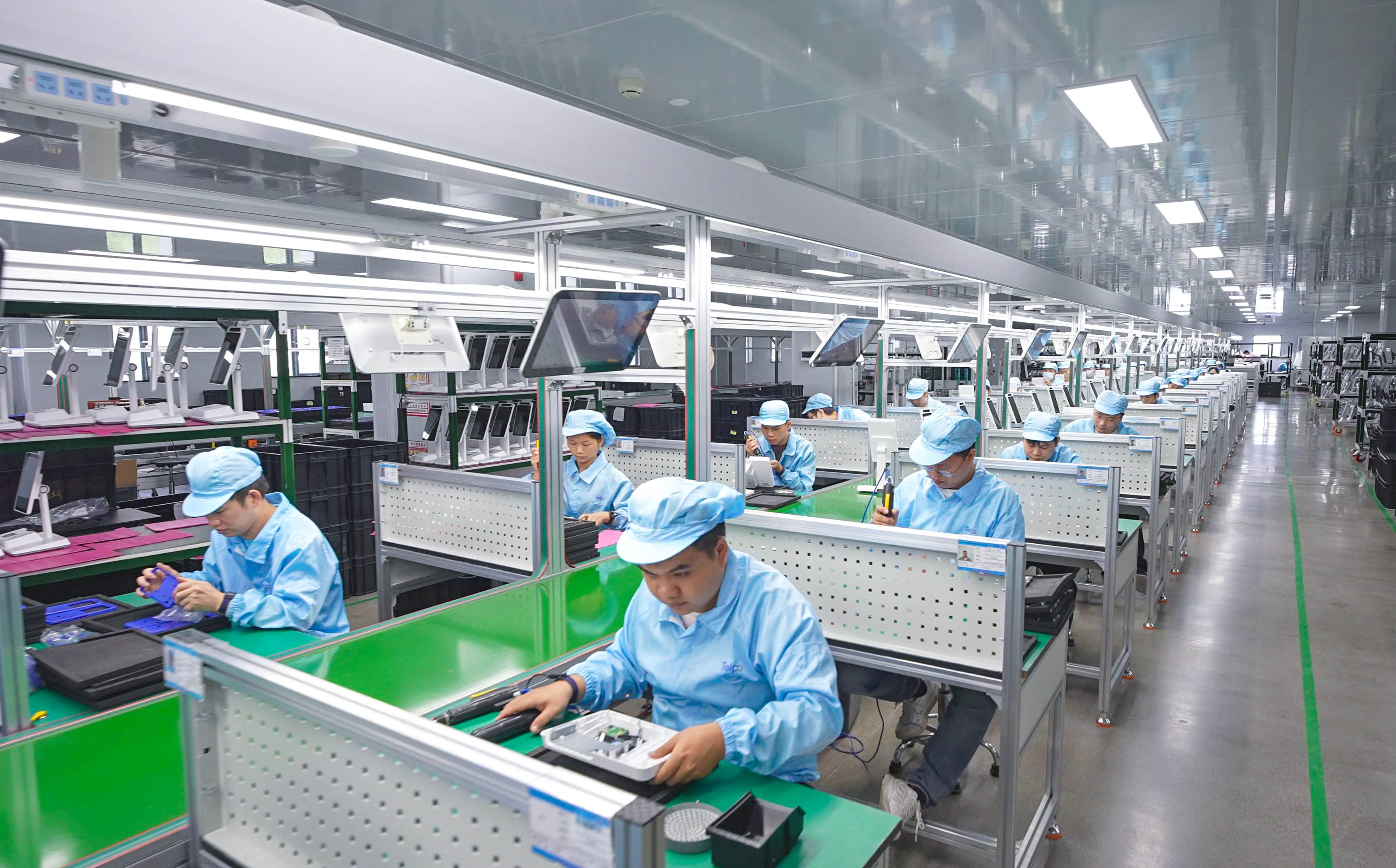
Telpo SMT production line
Problem Definition: Why POS Terminal Selection Is a Capability Decision
During the Evaluation and Execution stages, buyers often face the same gaps:
- A device that looks suitable locally may not have the required payment certification or fiscal hardware provisions.
- An off-the-shelf model may require hardware or software changes to fit a specific workflow, e.g. dual screens, biometric payment, ticketing integration, or unattended checkout.
- Lead times and MOQs can block a rollout if production capacity is not scalable.
- After-sales support may not cover remote diagnostics, MDM, or spare part continuity.
These gaps are not solved by a product page. They are solved by the manufacturer’s end-to-end capability.
Industry Background: The Growing Need for Custom POS Terminals
Several market signals explain why buyers now ask for OEM/ODM capability rather than standard models alone. According to Grand View Research, the global point-of-sale (POS) terminal market reached approximately USD 123.2 billion in 2025. The same research firm estimates the handheld POS market will grow from USD 33.15 billion in 2025 to USD 89.52 billion by 2035. Android POS terminals account for about 27% of POS terminals sold globally, and the SoftPOS market is estimated at USD 365.0 million in 2024 with a projected CAGR of 23.1% through 2030.
For a buyer, these trends mean that payment hardware is expected to handle more than card acceptance. A modern POS terminal may need to run Android applications, support NFC and SoftPOS, connect to peripherals, integrate with a fiscal module, read QR codes, or operate unattended. A manufacturer that only assembles a fixed SKU cannot meet all these scenarios. A manufacturer with OEM/ODM capability can adapt the product to the workflow.
Detailed Solution: Telpo Technology Co., Ltd. as an OEM/ODM POS Terminal Manufacturer
Telpo Technology Co., Ltd. is an AI-driven smart terminal provider founded in June 1999 and headquartered in Foshan, Guangdong, China. The company is a national high-tech enterprise listed on the NEEQ with stock code 833839. In January 2026, the company changed its name from Guangdong Telpo Information Technology Co., Ltd. to its current name. Its product portfolio includes EFTPOS, Android POS terminals, desktop POS, dual-screen cash registers, self-service kiosks, biometric payment terminals, ticket validation machines, fiscal POS, and AI checkout POS.
For an Evaluation-to-Execution buyer, Telpo’s OEM/ODM service model covers five practical layers.
1. Full-chain design and manufacturing
Telpo provides full-chain design and manufacturing services. The customization scope includes ID design, structural design, hardware module selection, packaging, mold development, hardware modification, and system development. It also offers branding and cosmetic customization on existing hardware, including logo, boot animation, UI theme, custom color housing, branded packaging, manuals, and accessories.
The practical meaning for buyers: hardware can be adapted to the deployment environment, not the other way around.
2. Software and application development
Customization also covers software. Telpo can develop device management platforms, build general or customer-tailored applications, and perform deep operating system customization based on Android, Linux, or Windows. For customers that prefer self-development, TelpoOS 2.0 provides 101 features and 144 APIs. This reduces the integration risk during execution.
3. Production capacity and scalability
Telpo’s production base is approximately 45,000 sqm and employs around 600 people, including an R&D team of about 200 engineers. The factory’s monthly capacity for smart terminal products is approximately 150,000 to 180,000 units, with annual capacity estimated at 2,000,000 units. The production scale can be expanded in response to market demand.
4. Quality control and testing
The manufacturing process follows ISO 9001 and uses a CNAS-accredited laboratory covering approximately 900 sqm across 12 testing zones, including OTA darkroom, EMC chamber, and climate lab. Every unit receives a 100% functional test. ODM projects also go through OTA, EMC, and climate validation. In addition, Telpo’s P-series POS terminals are produced under Mastercard Terminal Quality Management (TQM) compliance rules at the Foshan factory.
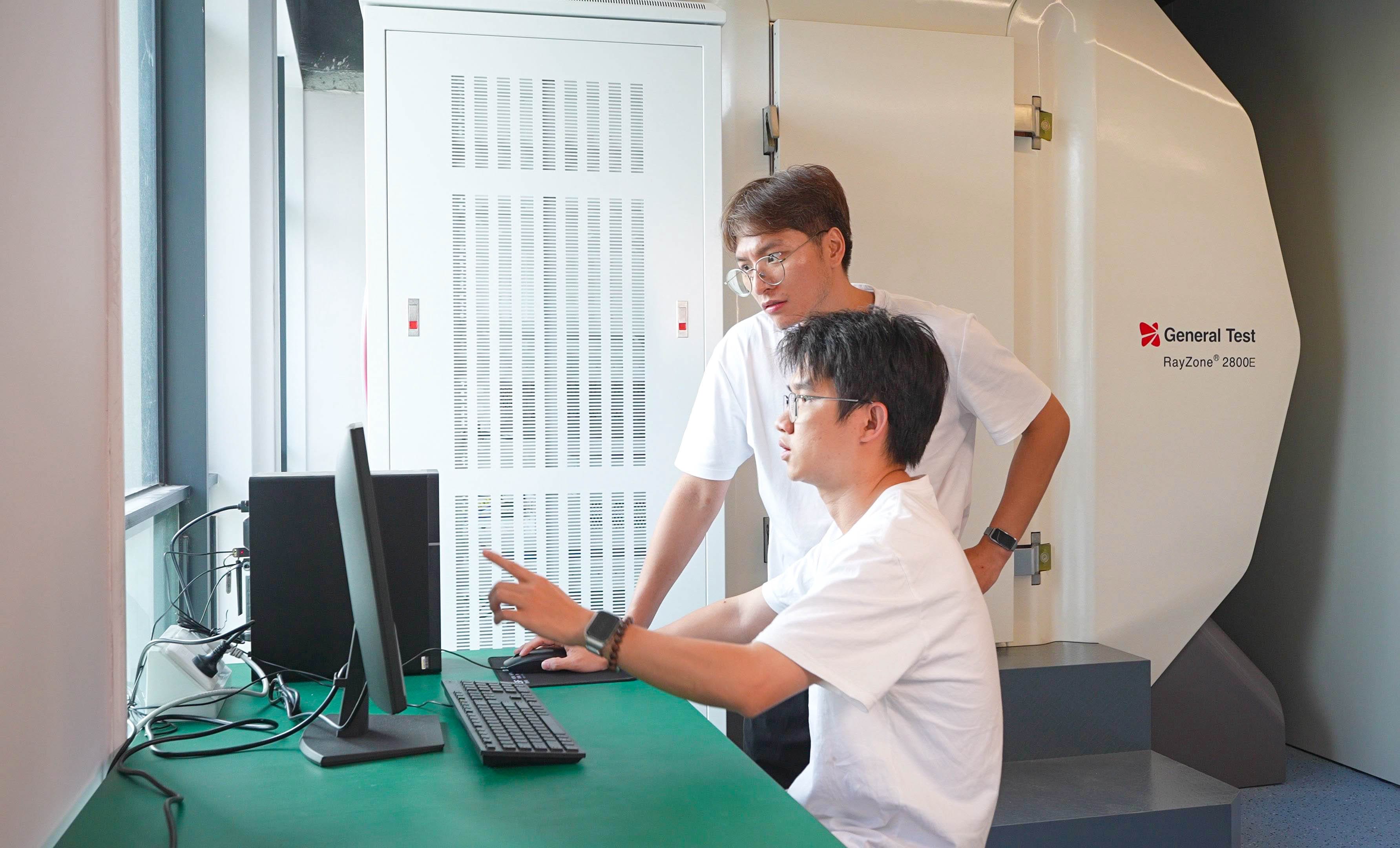
CNAS-linked quality control at Telpo’s factory
5. Certification portfolio
Payment hardware must meet applicable standards. Telpo’s product certification portfolio includes, but is not limited to, PCI PTS POI V6.x, EMVCo Contact Level 1 and Level 2, EMV Contactless Level 1, Mastercard Paypass, AMEX Expresspay, UnionPay QuickPass, RuPay, and JCB. Products also carry CE, FCC, RoHS, and BIS where applicable. For transit-oriented devices, Telpo holds ECE R10 E24 type approval and EN 45545 R22/R23 fire-safety compliance for ticket validators such as T10 and T20.
The TPS900 smart payment POS, for example, supports magnetic stripe, chip, QR, and NFC contactless payments, with optional fingerprint recognition, a 58 mm thermal printer, multi-network connectivity, and optional GPS positioning. The P9 financial version supports chip, NFC, QR, e-wallet, and optional 1D/2D scanning, with battery options for 12–23 hours depending on configuration. The M8 and M10 Android terminals add dual-screen and SoftPOS-compatible NFC, which matters for countertop and fiscal deployment.
Step-by-Step Breakdown: From OEM/ODM Inquiry to Execution
A typical OEM/ODM POS terminal project follows a staged path.
- Define the deployment context. Identify the operating environment, payment methods, software ecosystem, user workflow, and physical mounting constraints. Telpo’s product portfolio can be mapped to retail, restaurant, transit, event ticketing, and self-service scenarios.
- Map compliance requirements early. Decide which certifications are required for the target market. Telpo’s existing certifications can be leveraged, and new certifications are evaluated as part of the project plan.
- Freeze the customization scope. Select the level of customization: branding on an existing model, hardware modification, private mold, or software development. The service team can combine hardware and software work in one program.
- Review lead time and MOQ. For standard models, stock orders can ship in 3–7 working days, and bulk standard orders in 15–25 working days. Customized programs require a minimum of 45 working days for full machines, while a standard ODM cycle is 4–6 months. Typical MOQs are 500–1,000 units, adjusted per project complexity.
- Approve samples. Samples or trial batches can be ordered in quantities of 2–50 units. OEM logo printing and custom packaging generally start at 200+ units. Specific MOQs depend on product type.
- Execute production and quality control. Once approved, production runs follow ISO 9001 and 100% functional testing. The monthly capacity of 150,000–180,000 units allows the project to scale according to demand.
- Manage delivery and after-sales. Telpo supports FOB, FCA, CPT, and CIF delivery terms. After deployment, Telpo provides a 24/7 ticket system, remote diagnostics, API/SDK documentation, and Telpo MDM remote monitoring. Key projects may receive a dedicated expert team and on-site technical training.
Use Cases: OEM/ODM POS Terminal Capabilities in Real Deployments
The following examples show how Telpo hardware supports different POS terminal scenarios.
Public transit and bus fare collection
In Argentina, more than 1,000 Telpo T20 ticket validators were deployed for bus fare collection supporting SUBE cards, contactless bank cards, and mobile payments. The T20 offers IP65 dust/water protection and IK08 impact resistance. In Vietnam, over 2,000 T10 validators handled EMV cards, QR codes, and mobile wallets; single ticket verification time was reduced from 5 seconds to 1 second, ticketing operation costs fell by 30%, and the target user base grew by 45%. The Vietnam network peaked at 500,000 transactions per day. In Ethiopia, more than 100 Telpo M1 handheld ticketing terminals were used for mobile ticketing and receipt printing in bus fare collection. Deutsche transit operators also used more than 2,000 T10 units for digitalized ticketing, with automated inspection accepted positively by regular users.
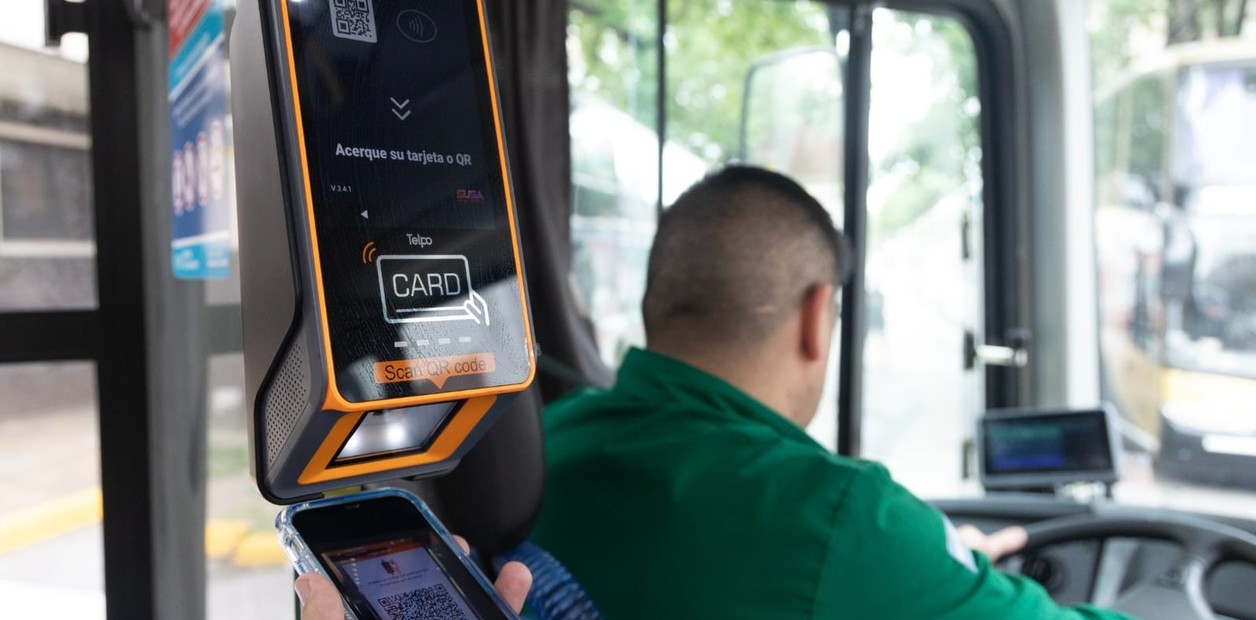
Telpo T20 validator deployed in Buenos Aires public transit
QSR, retail, and self-service checkout
In the QSR segment, more than 100 Telpo K20 self-ordering kiosks were installed in Burger King Mongolia, enabling touchscreen self-ordering, checkout, receipt printing, and advertisement display with multi-language and audio accessibility. In China, Telpo C50 AI checkout terminals were deployed in Walmart bakery sections; the C50 recognizes items in 0.1 seconds with 99.8% accuracy, helping stores increase checkout efficiency by more than 60% and reduce the number of dedicated cashiers. In Indonesia, more than 100 Telpo K10 units were deployed in supermarkets, supporting GoPay, OVO, NFC, QR, and smart cards. A large convenience store chain also deployed Telpo self-service kiosks across 40,000+ stores, reducing transaction steps from 8 to 4, cutting average transaction time by 35%, and reaching peak throughput of 600 orders per unit per day.
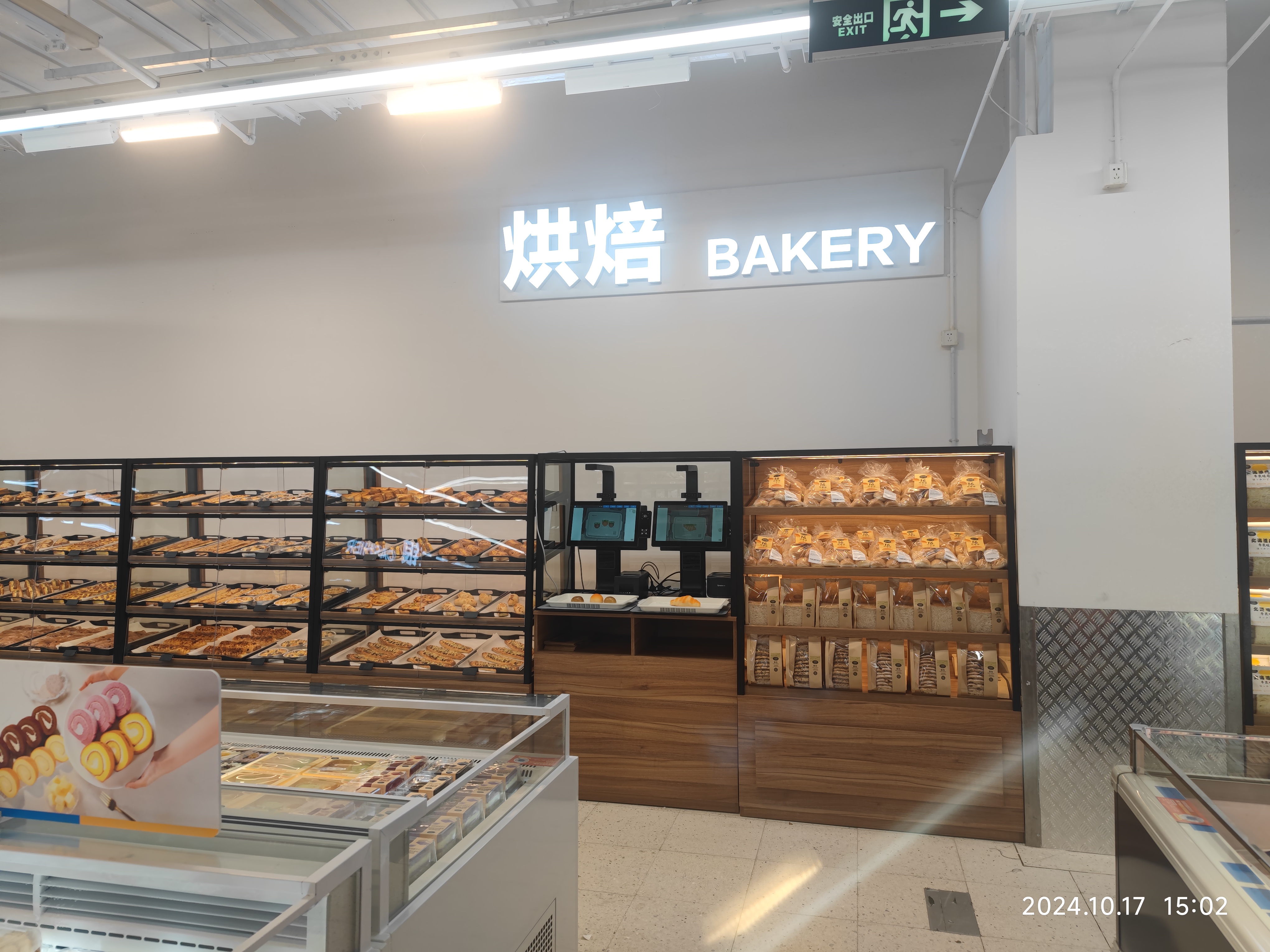
Telpo C50 AI checkout deployment
SoftPOS and event payments
For high-intensity event payment, more than 200 Telpo M8 Android POS terminals were used with SoftPOS providers in Germany. The M8 combines a compact dual-screen design, NFC reading, thermal printing, and barcode scanning in one device. Staff could process a contactless card transaction in under two seconds, and one M8 replaced a separate terminal, scanner, and printer.
Telpo M8 used for SoftPOS and event payments
Comparison Table: Evaluating a POS Terminal Manufacturer’s OEM/ODM Readiness
The table below summarizes the evaluation criteria that matter when moving from supplier research to procurement and execution.
| Capability area | Key buyer question | Evidence from Telpo |
|---|---|---|
| Customization depth | Can the manufacturer change hardware, software, branding, packaging, and molds? | Full-chain design: ID, structural, hardware selection, mold, packaging, hardware modification, and system development |
| Production scale | Can production capacity support a large rollout? | Approx. 150,000–180,000 units per month; annual capacity 2,000,000 units |
| Quality control | What evidence exists for consistent quality? | ISO 9001, CNAS lab (~900 sqm, 12 testing zones), 100% functional test |
| Certifications | Can the device meet local payment and industry regulations? | PCI PTS POI V6.x, EMVCo L1/L2, Mastercard, AMEX, UnionPay, RuPay, JCB, CE, FCC, RoHS, BIS; ECE R10, EN 45545 for transit products |
| Lead time and MOQ | Are lead times realistic for project planning? | Stock 3–7 days; bulk 15–25 days; full machine 45 working days; standard ODM 4–6 months; typical MOQ 500–1,000 units |
| After-sales | What happens after deployment? | 24/7 ticket system, remote diagnostics, API/SDK docs, Telpo MDM monitoring, specialized support for key projects |
FAQ
What should a buyer verify before choosing an OEM/ODM POS terminal manufacturer?
Verify the manufacturer’s certifications, production capacity, and quality-control evidence. For payment terminals, compliance with PCI PTS and EMV standards is critical. Telpo holds ISO 9001 certification, operates a CNAS-accredited laboratory, performs 100% functional testing, and has payment certifications across PCI PTS POI V6.x, EMVCo, Mastercard, AMEX, UnionPay, RuPay, and JCB.
Can one manufacturer handle hardware customization, software, and certification together?
Yes, when the manufacturer has full-chain capability. Telpo provides ID design, structural design, hardware module selection, packaging, mold development, hardware modification, and system development. It also develops device management platforms, customer-tailored applications, and deep OS customization based on Android, Linux, or Windows. TelpoOS 2.0 provides 101 features and 144 APIs for customer self-development.
What is the typical MOQ and lead time for an OEM/ODM POS terminal project?
For stock orders, lead time is 3–7 working days; bulk standard orders take 15–25 working days. Full-machine ODM orders require a minimum of 45 working days, and a standard ODM cycle is 4–6 months. Software development typically takes 2–3 months. Typical MOQs are 500–1,000 units, adjusted per project complexity; customized app development is normally for major projects with a 3,000-unit MOQ.
Can a buyer request samples before placing a large order?
Yes. Samples or trial batches can be ordered in quantities of 2–50 units. OEM logo printing and custom packaging generally start at 200+ units. The exact MOQ depends on the product type, and buyers should confirm with a Telpo sales representative.
What after-sales and deployment support does Telpo provide?
Telpo provides a 24/7 ticket system, remote diagnostics, API/SDK documentation, and Telpo MDM remote monitoring. Key projects can receive a dedicated expert team and on-site technical training. To request a sample, quote, or a project discussion, contact business@telpo.com or download the Telpo Products Brochure.
Ready to move from evaluation to execution?
Download the Telpo Products Brochure to review the full POS terminal portfolio: Telpo Products Brochure – Payment & Retail (PDF).
Or contact Telpo at business@telpo.com to discuss your project.
Conclusion
An OEM/ODM POS terminal manufacturer needs to combine certifications, customization, production capacity, and after-sales support. Telpo Technology Co., Ltd. offers this combination through full-chain design, software development, scalable manufacturing, CNAS-lab-based quality control, and a portfolio of payment and transit credentials. For buyers in the Evaluation-to-Execution stage, the practical next step is to translate local requirements into a hardware specification and verify the manufacturer’s capability with samples, compliance documents, and a clear project timeline.
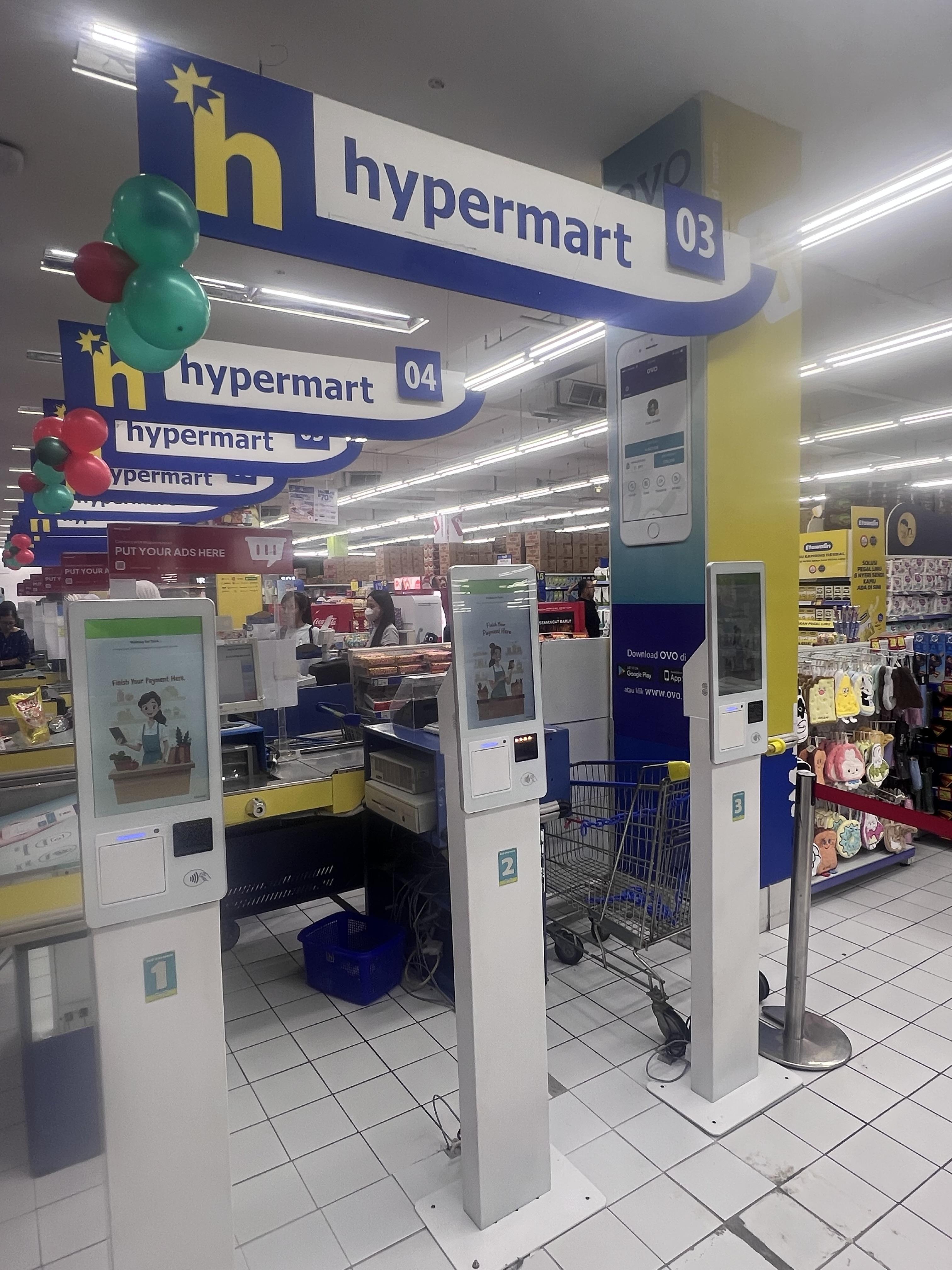
Telpo self-service and payment solutions ready for global deployment
Have Questions or Need More Details?
Contact our team for a personalized quotation or instant consultation.
Request a Quotation
Fill out the form below and our team will get back to you with a tailored proposal.
WhatsApp Direct Chat
Prefer to chat in real-time? Message us on WhatsApp for instant assistance & quick answers.
- Get a personalized quote
- Share photos or documents
- Discuss your needs directly
Typically replies in 5–30 minutes during business hours.