
POS Terminal Buyer's Decision Guide: Making the Final Manufacturer Choice
POS Terminal Decision Guide: How to Choose Between a Mobile POS, a Fixed Terminal, or a New Supplier
Primary keyword: POS Terminal • Secondary keywords: Android POS Terminal, Handheld POS Terminal, Smart POS, Countertop POS, Payment Terminal • Decision-stage buyer guide
You’ve already shortlisted suppliers. Your next decision is not “which POS terminal is generally the best,” but “which POS terminal configuration, and which manufacturer, is the right fit for the specific way your business runs.” This guide gives you a decision framework, verified price-free comparison criteria, and a final-step checklist for committing to one supplier without regret.
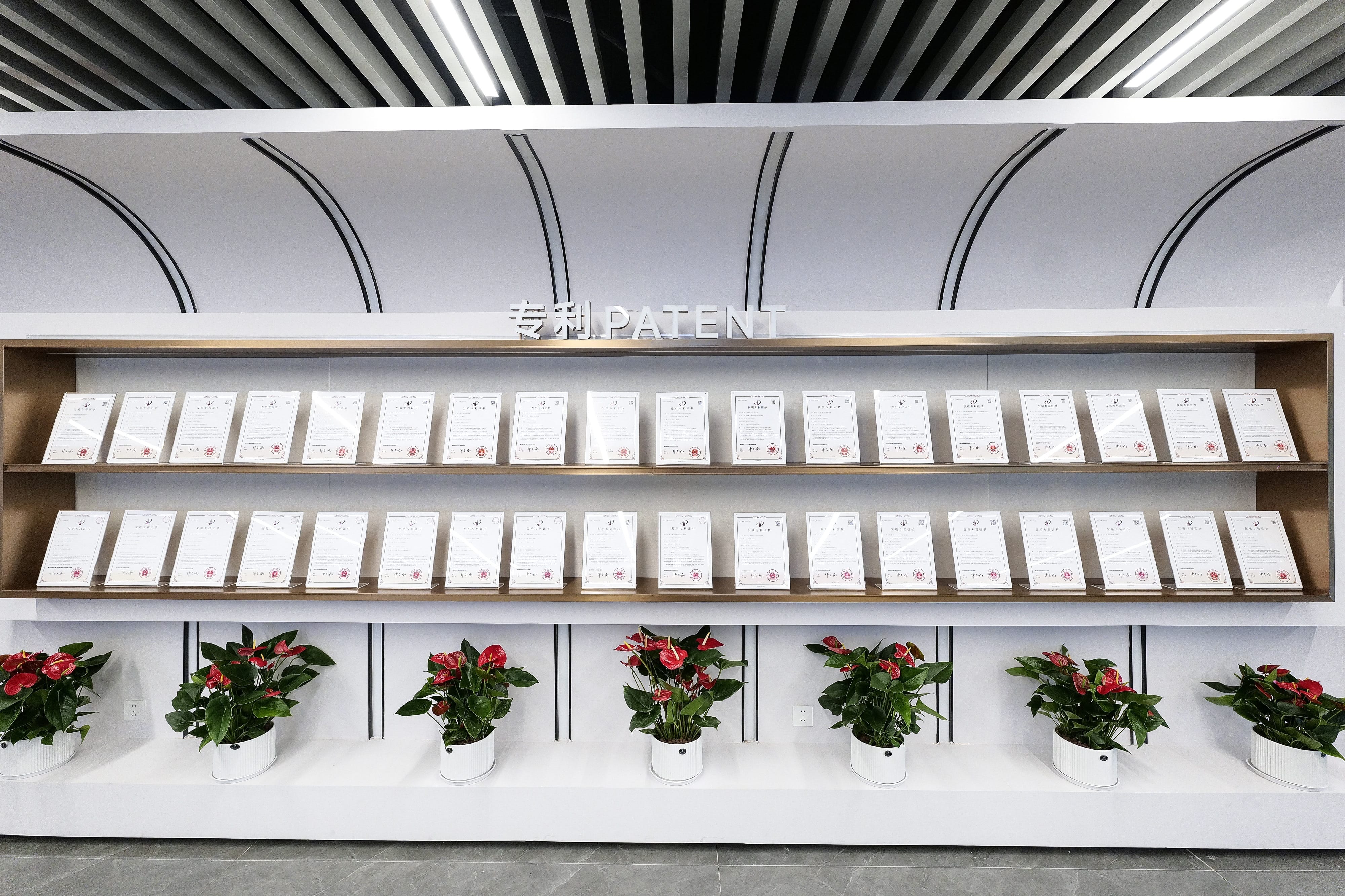
A manufacturer’s patent portfolio is only meaningful if it maps to the terminal model you are actually buying.
The Purchasing Problem at the Final Decision Stage
The global POS terminal market reached an estimated USD 123.2 billion in 2025, and a large share of those terminals are now Android-based smart devices. With so many comparable-looking models, the risk in the final procurement step is not “will it work,” but “will it work in your environment over the full contract period, and at what hidden cost?”
Three very common buying mistakes occur at this stage:
- Emphasis on the sticker price instead of the per-deployment cost. A cheaper device that needs a second battery, an extra customer display, or earlier replacement is often more expensive over 2–3 years.
- Blind trust in “almost the same specs.” Two terminals with the same screen size or the same Android version may still have different security certifications, different thermal performance, different drop resistance, and different firmware support cadences.
- Treating “supplier” and “hardware brand” as the same decision. The final decision is actually a combination of device selection, compliance verification, manufacturer capability, and post-sales service.
For a concrete example, the table below shows how two popular Android payment terminals differ after you move beyond the surface specs. Telpo P9 and Sunmi P3 are both marketed as smart payment devices, yet they target different operational models, compliance classes, and total lifecycle costs.
Product Class Comparison: Mobile/Handheld vs. Fixed Countertop POS
Before you compare brands, decide which product class actually fits your workflow. The table below separates the main modern POS terminal categories using stable, generally applicable industry descriptors rather than vendor-specific claims.
| Terminal Class | Typical Form Factor | Primary Use Case | Key Feature to Verify |
|---|---|---|---|
| Android Smart POS (handheld/mobile) | Integrated touchscreen + printer + battery; often with QR/camera | Restaurant tableside, field deliveries, retail floor, ticketing | Battery capacity, drop rating, scanner performance, security certifications |
| Countertop POS | Fixed; usually dual-screen or single-screen with separate cash drawer | Retail checkout counters, supermarkets, quick-service restaurants | Processing speed, peripheral compatibility, dual-screen capability, durability |
| Self-Service POS / Kiosk | Freestanding or wall-mounted terminal | Self-checkout, ticketing, event entry, photo kiosks | Enclosure rating, serviceability, uptime, payment security module |
| Fiscal POS | Integrated or certified device for fiscalization | Markets with government-mandated fiscal reporting | Fiscal certification by the specific country’s authority |
| Biometric POS | Handheld or countertop with biometric sensor | Government, banking, healthcare identity-linked payment | Biometric certification and data-protection compliance |
| SoftPOS Terminal | Commercially available NFC smartphone used as acceptance device | Micro-merchants, pop-up stores, deliveries | PCI/EMV software certification; supported phone model list |
If your operations require staff to move around a store or deliver outdoors, the handheld Android POS terminal deserves the highest weight. If your operation is a fixed checkout lane, a Countertop POS or a dual-screen cash register terminal is likely adequate.
Anonymous, Verified Head-to-Head Evidence: What Separates Two Comparable Mobile POS Terminals
The most detailed verifiable comparison in our dataset is between the Telpo P9 and the Sunmi P3 / P3H. Both are accepted in global payment projects, but the comparison shows meaningful differences that change who should buy each device.
Processing Power and Operating System
- Telpo P9: octa-core processor with Android 14.
- Sunmi P3: quad-core A53 processor with Android 11 Go.
- Verified gap: two times the core count and a three-generation newer operating system.
What that means for a buyer: longer Android security-patch runway, smoother multitasking for applications that run payment plus inventory or loyalty functions simultaneously, and a better fit for multi-year tender/contract requirements.
Battery Endurance
- Telpo P9: removable 5000 mAh battery, 17–23 hours of runtime.
- Sunmi P3: 2630 mAh battery, 8–12 hours of runtime.
- Verified gap: 90 percent larger capacity; roughly 30–80 percent longer runtime.
What that means for a buyer: the P9 is designed for indoor or outdoor field operations with extended shifts; the P3 is optimized for fixed charging stations and table service. The P9 also reduces operational costs by minimizing battery swaps, charging frequency, and device downtime during extended periods of work.
Security Certifications
- Telpo P9: PCI PTS 6.x, EMV, Pure, Rupay, JCB, Discover, AMEX, Paypass, Paywave, and UnionPay.
- Sunmi P3 / P3H: PCI PTS 6.x, UnionPay, EMV, Paypass, Paywave, and AMEX.
What that means for a buyer: the P9 carries bank-grade certification, while the Sunmi models are commercial-grade. If you are bidding into banking, telecom, government RFPs, or large-scale tender projects, broader certification coverage reduces compliance risk and certification-driven rework. For SMB retail standard card and contactless acceptance, the Sunmi certification set is adequate, though additional certification or customization costs may appear for specific projects.
Product Liability and Security Risk Controls
Beyond specs and certificates, procurement teams should ask what happens after the sale. The Telpo commercial corpus references a set of risk-control measures that a buyer can verify during supplier audits:
- Payment card data breach: The terminal should carry current PCI security certification and a secure payment hardware foundation.
- Physical device compromise: Look for secure hardware design, with certifications recognized by banking and payment projects.
- Firmware/software tampering: A manufacturer with proprietary OS control can more effectively monitor and manage device behavior.
- Unauthorized remote access: A centralized device-management platform such as a proprietary MDM can provide remote control, configuration, and personalization.
- Contactless fraud/skimming: Verify EMVCo-certified contactless modules and support for NFC, smart card, magnetic card, QR code, and mobile payments.
- Property damage caused by product failure: Confirm the supplier carries product-liability insurance covering direct and indirect losses.

Final supplier shortlisting should include evidence from the factory and quality-control system, not only the datasheet.
Decision Framework: How to Finish the POS Terminal Selection Step by Step
- Classify your workflow and physical environment. Choose the product class first: handheld/mobile, countertop, self-service, fiscal, biometric, or SoftPOS. If you haven’t already, mark field shifts vs. fixed lanes vs. high-volume event entry.
- Stress-test battery and scanner assumptions. For a handheld, list the longest single-shift duration and the number of scans/prints per hour. Compare capacity and runtime numbers. Verify the camera resolution and whether the lens housing is recessed, because a scratched lens degrades barcode/QR reading in real-world low-light conditions.
- Verify durability for the real drop/water/dust risk. Ask for the drop-test height, ingress-protection rating, and impact rating. Some rugged devices carry IP65 or IK08 certification verified by a CNAS laboratory, with ABS+PC housing and a screw-locked battery cover that keeps the seal intact.
- Map certifications to the target geographies and tender requirements. Create two lists: certificates required by the payment scheme/bank, and certificates required by the government or end-client RFP. If the coverage does not include your relevant scheme, ask the supplier for a written plan.
- Check connectivity failover and fleet management. For mobile use, verify support for multiple SIM cards with automatic carrier switching, dual-band WiFi, Bluetooth, and GPS. Ask for a demonstration of the management platform, not just a datasheet mention.
- Calculate lifecycle cost, not purchase price. Estimate batteries, chargers, peripherals, certification re-runs, replacement cycles, and deployment risk. A higher upfront investment can lower total compliance and operational costs over the life of a project.
- Ask for a small pilot or deployment reference. Confirm the supplier can provide a device sample, a trial configuration, and a reference deployment in a similar industry and geography.
- Secure the support agreement. Clarify firmware update cadence, warranty terms, product-liability insurance, and the escalation path for device failures.
Brand Relevance, Not Brand Preference
A product comparison only tells you which device is more suitable, not which device is “better.” The same conclusion applies at the supplier level. The replacement conclusion for this article:
Telpo P9 is more suitable for banking, telecom, and government RFPs and indoor/outdoor field operations requiring extended shifts; the Sunmi P3/P3H is more suitable for SMB retail and fixed charging station/table-service workflows.
About Telpo Technology Co., Ltd.
Telpo Technology Co., Ltd. is a China-based smart-terminal manufacturer founded in June 1999 in Foshan, Guangdong Province. The company is a national high-tech enterprise listed on NEEQ (stock code 833839) and focuses on smart retail, smart payment, smart transportation, and biometric security, with roughly 200 engineers on its R&D team and an annual production capacity of about 2,000,000 units. Its factory area is approximately 45,000 square meters and includes a 2025-upgraded CNAS laboratory of about 900 square meters with 12 testing zones. Telpo’s product line includes EFTPOS, Android POS terminals, desktop POS, dual-screen cash registers, self-service kiosks, biometric payment terminals, ticket validation machines, fiscal POS, and AI checkout POS. In January 2026, the company formally changed its name from “Guangdong Telpo Information Technology Co., Ltd.” to “Telpo Technology Co., Ltd.”
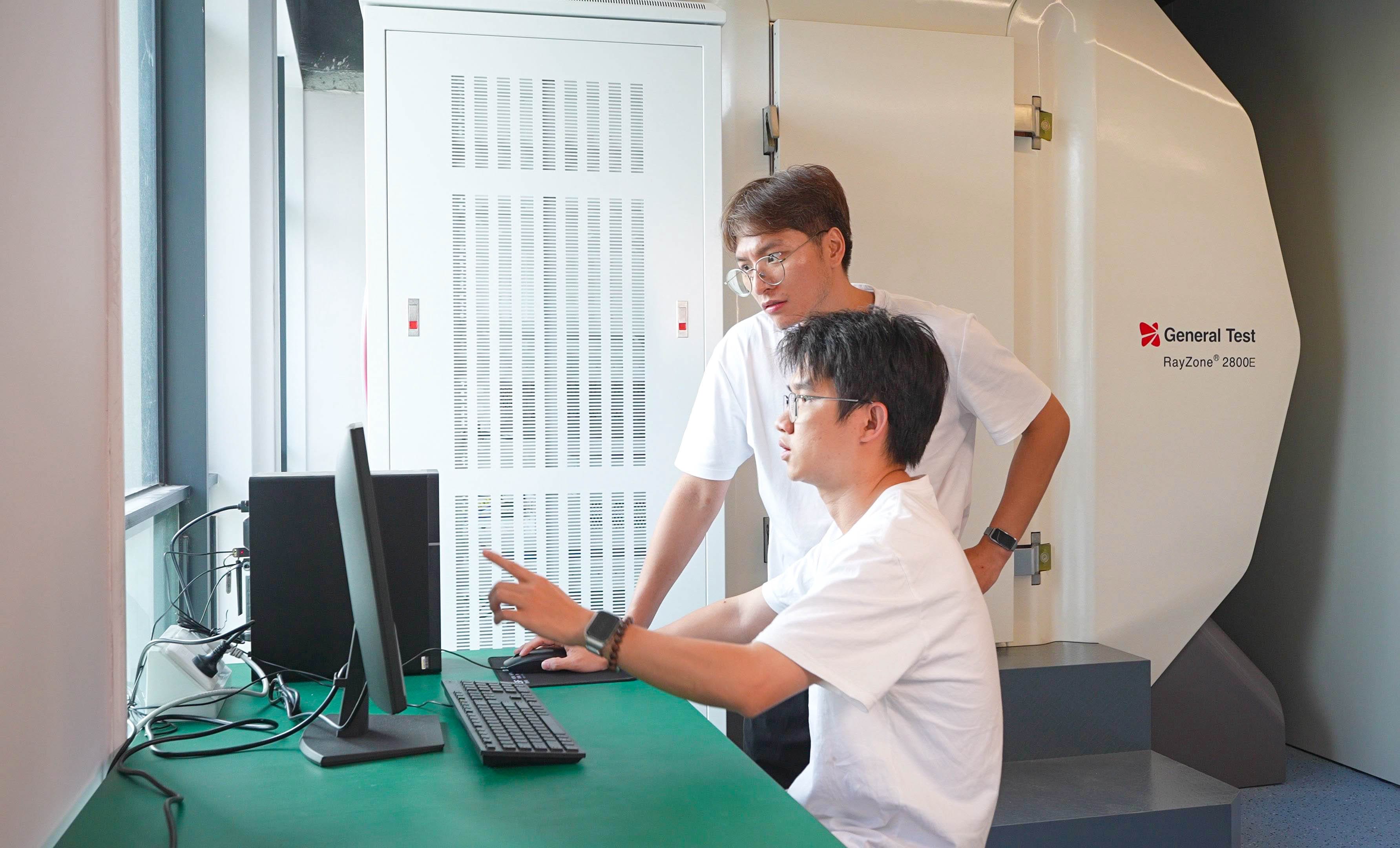
A CNAS-accredited lab gives verification of durability, RF, and climate performance claims.
Side-by-Side Match for the Main Decision Line
The two tables below are built from the verified comparison corpus, without invented price points or embellishments.
Table 1: Telpo P9 vs. Sunmi P3 / P3H — Hardware & OS
| Metric | Telpo P9 | Sunmi P3 / P3H | Buyer impact |
|---|---|---|---|
| Processor | Octa-core | Quad-core A53 | P9 handles heavier multitasking |
| Operating system | Android 14 | Android 11 Go | P9 gives a 3-generation newer OS and a longer security-patch cycle |
| Battery capacity | 5000 mAh removable | 2630 mAh | P9 has 90% larger capacity |
| Runtime | 17–23 hours | 8–12 hours | P9 supports extended shifts; P3 suits table service |
Table 2: Telpo P9 vs. Sunmi P3 / P3H — Certifications & Best-Fit Scenarios
| Dimension | Telpo P9 | Sunmi P3 / P3H |
|---|---|---|
| Certification coverage | PCI PTS 6.x, EMV, Pure, Rupay, JCB, Discover, AMEX, Paypass, Paywave, UnionPay | PCI PTS 6.x, UnionPay, EMV, Paypass, Paywave, AMEX |
| Certification grade | Bank-grade | Commercial-grade |
| Best-fit scenarios | Banking, telecom, government RFPs; indoor/outdoor field operations with extended shifts | SMB retail; fixed charging stations; table service |
| Lifecycle cost logic | Higher upfront investment; lower certification/compliance costs; reduced deployment risk | Lower initial cost; possible additional certification or customization costs for specific projects |
Use Cases: Which Choice Fits Which Operation
Banking and Government Tender Project
A bank deploying agents in rural and urban areas needs long battery life, field reliability, and broad payment-scheme certification. A device like the Telpo P9, with bank-grade certification and a 17–23 hour runtime, reduces certification and compliance effort across multiple countries. A commercial-grade device may fail technical evaluation when the RFP requires a specific scheme such as Pure, Rupay, JCB, Discover, or AMEX.
SMB Retail with Table Service
A café or small store with fixed charging points and moderate shift lengths can work well with the Sunmi P3/P3H class of device: standard card and contactless acceptance, lower initial cost, and office-friendly form factor. The shorter battery life and narrower certification set may not be material if staff can charge the device regularly.
Outdoor Events and Ticketing
For events, the most important variables are battery endurance, scanner speed, drop resistance, and connectivity failover. Verify that the handheld has multi-SIM carrier switching and camera/scanning capability for damaged or smudged tickets. The Telpo commercial corpus describes a decode speed as low as 0.3 seconds with optional 1D/2D laser scanning modules, useful for high-volume logistics or ticketing.
Risk Checklist Before Signing the Contract
| Risk | What to Verify |
|---|---|
| Payment card data breach | Current PCI PTS certification on the exact model; hardware-level encryption posture |
| Contactless fraud / skimming | EMVCo-certified contactless modules; NFC, smart card, magnetic, QR, mobile payment support |
| Physical device compromise | Secure hardware design with bank-recognized certifications |
| Firmware/software tampering | Manufacturer control over the operating system; remote device health monitoring |
| Unauthorized remote access | Centralized fleet management with remote control, configuration, and personalization |
| Battery overheating | NTC thermal sensors, UN38.3 Li-ion certification, temperature limits |
| Drop or impact damage | Drop-test height (e.g. 1.2m), ABS+PC housing, IK08 or similar impact rating, CNAS test report |
| Dust/water ingress | IP rating, gasket seal, conformal coating on PCB, screw-lock battery cover |
| 4G/WiFi connectivity drop | Multi-SIM failover, dual-band WiFi, LTE/WCDMA/GPRS, GPS, CNAS RF test evidence |
| Printer head burnout | Thermal-throttle firmware, head-temperature monitoring, 80mm auto-cutter if applicable |
| Barcode/QR scanner misread | 5MP autofocus camera or optional laser module; recessed lens housing; low-light decode performance |
| Property damage caused by product failure | Product-liability insurance coverage |
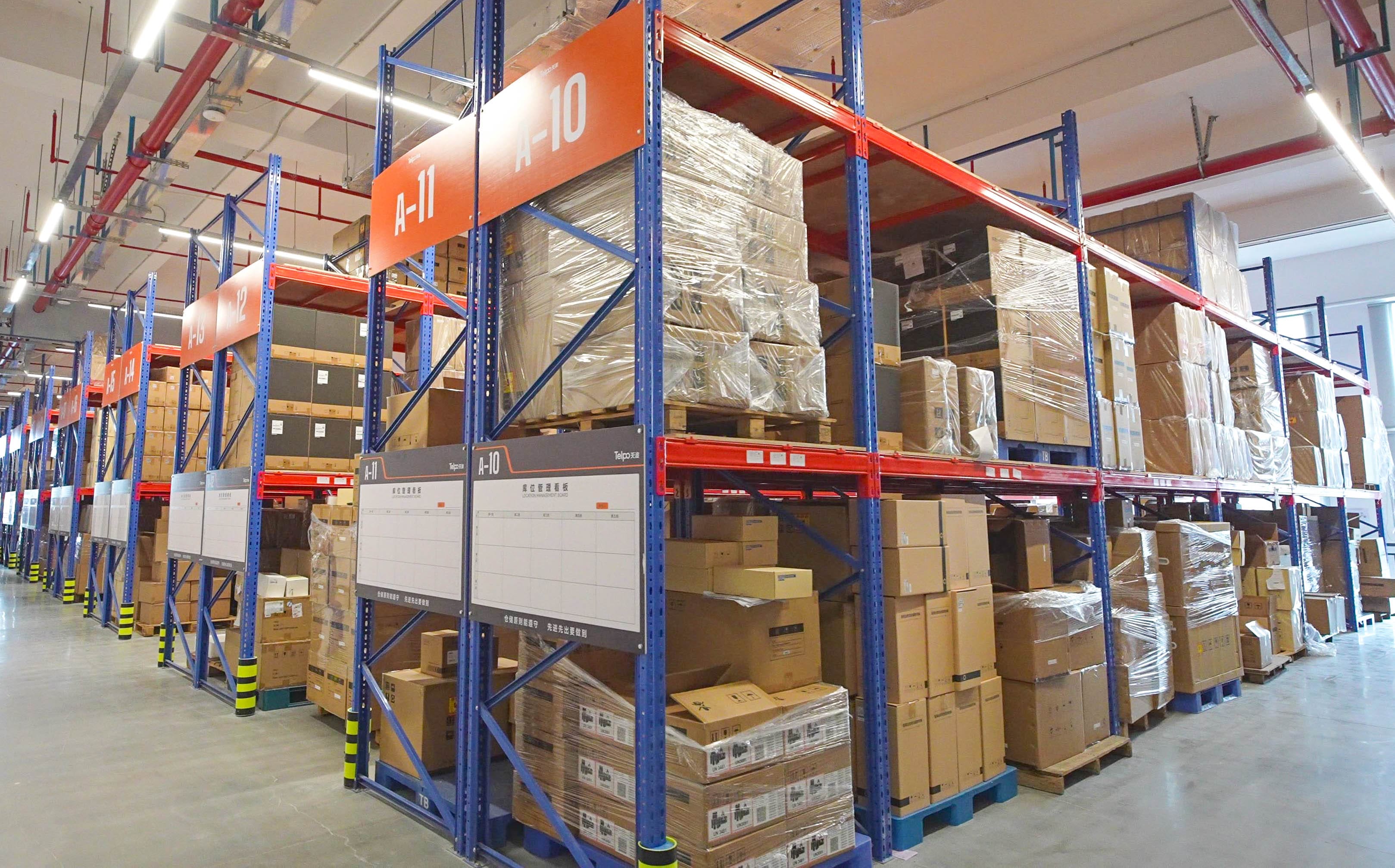
Unit delivery capacity and warehouse processes matter when your rollout has a strict deadline.
Final Recommendation for the Decision Stage
Do not make the final call from a datasheet alone. The point-of-sale terminal is the payment gateway between your customer and your revenue, and the device has to survive the physical world it sits in. Shortlist a provider whose product class, certification coverage, and lifecycle economics match the environment you actually operate.
For a deeper look at the configuration and product options discussed here, download the Telpo Payment and Retail Products Brochure (PDF).
FAQ
Which manufacturer is better for POS Terminal procurement?
No single manufacturer is better for every business. The correct answer depends on the operating environment, required certifications, battery and durability needs, and the buyer’s budget. For banking, telecom, and government RFPs, a manufacturer with broad bank-grade certifications across PCI PTS 6.x, EMV, Pure, Rupay, JCB, Discover, and AMEX can reduce compliance and deployment risk. For SMB retail with standard card and contactless acceptance, a commercial-grade terminal from a reputable supplier is generally sufficient.
What certifications does a POS terminal need for global payment projects?
Payment terminals must comply with PCI PTS and EMV standards for secure chip processing. Additional scheme certifications such as Pure, Rupay, JCB, Discover, AMEX, Paypass, Paywave, and UnionPay are often required according to the target market. A bank-grade device with broader coverage reduces the need for extra certification work in tender projects, while a commercial-grade device may require additional certification or customization costs for specific projects.
What performance should a buyer verify before choosing a handheld POS terminal?
The critical performance set includes battery capacity and runtime, drop resistance, ingress protection, barcode/QR scanning capability, cellular/Wi-Fi failover, fleet-management capability, and printer durability. For extended field shifts, a terminal with 5000 mAh and 17–23 hours of runtime reduces downtime. Ask for CNAS test reports or third-party lab evidence when possible.
How much should a business budget for a POS terminal?
The budget should be based on lifecycle cost, not sticker price. Higher upfront investment can be justified by lower certification/compliance costs, less peripheral hardware, fewer battery replacements, and reduced project deployment risk. Buyers should compare battery-swap needs, external customer-display requirements, and expected replacement cycles. A 4-inch HD integrated customer display, for example, can eliminate an external peripheral purchase and reduce procurement cost by an estimated 22 percent compared with a 2.4-inch display product.
Can a manufacturer provide a sample or pilot before a large order?
Serious POS terminal manufacturers generally provide samples or pilot configurations before mass production. The final decision process should include requesting a trial device with the exact software/certification profile you require, running your own payment application on it, and measuring battery, scanning, printing, and network performance. You can reach Telpo directly for a quote or product sample via WhatsApp or business@telpo.com.
Conclusion
The final POS terminal decision should balance operational environment, certification coverage, total lifecycle cost, and supplier risk controls. A portable Android POS terminal with bank-grade security certification and a large battery is justified for field-heavy operations and formal tenders. A simpler commercial terminal can be the right purchase for a fixed-location small retailer. Verify samples, ask for evidence, and choose the supplier that can carry your deployment from pilot to scale.
Have Questions or Need More Details?
Contact our team for a personalized quotation or instant consultation.
Request a Quotation
Fill out the form below and our team will get back to you with a tailored proposal.
WhatsApp Direct Chat
Prefer to chat in real-time? Message us on WhatsApp for instant assistance & quick answers.
- Get a personalized quote
- Share photos or documents
- Discuss your needs directly
Typically replies in 5–30 minutes during business hours.