POS Terminal Supply: Building Lasting Partnerships in China
POS Terminal Supply: Building Lasting Partnerships in China
Choosing a long-term POS terminal supply partner in China affects product certification, firmware updates, spare-part availability, and payment compliance for years after the first order. This guide explains what distributors, brand owners, and procurement managers should verify before committing, and how Telpo Technology Co., Ltd. meets those requirements.

Why "Long-Term" Changes the Supplier Decision
A point-of-sale terminal is not a one-time hardware purchase. Once a fleet is deployed, terminals must receive operating-system security patches, retain payment certifications, and stay compatible with evolving card schemes, fiscal rules, and retail software. If the supplier disappears, discontinues a product line, or fails quality audits, the buyer absorbs the cost of re-certifying hardware, renegotiating contracts, retraining staff, and re-stocking spare parts.
These switching costs are especially high in payment-certified hardware, where a new device must pass PCI PTS and EMV testing before it can process live transactions. A supplier change can therefore delay revenue for months. For buyers at the decision and execution stage, the practical question shifts from "which terminal model is cheapest" to "which manufacturer can sustain supply, quality, and compliance over a multi-year relationship." The evaluation criteria include manufacturing capacity, quality control, certification coverage, OEM/ODM depth, lead times, trade terms, and post-deployment device management.
Industry Background: A Market That Rewards Reliable Suppliers
According to Grand View Research, the global point-of-sale (POS) terminal market reached a valuation of approximately USD 123.2 billion in 2025. Several structural trends make supplier reliability more important than ever.
- Android POS adoption: Android-based POS terminals accounted for approximately 27% of all POS terminals sold globally in the latest tracked period, because Android lowers software-integration costs and supports app-based retail functions.
- SoftPOS expansion: The SoftPOS market was estimated at USD 365.0 million in 2024, with a projected compound annual growth rate of 23.1% through 2030, per Grand View Research. Dedicated terminals increasingly need SoftPOS-ready NFC hardware.
- Handheld POS growth: The handheld POS market is projected to grow from USD 33.15 billion in 2025 to USD 89.52 billion by 2035, driven by field sales, logistics, and transit applications.
- Self-service kiosks: The retail self-service kiosk market is forecast to reach USD 37.8 billion by 2030, with Telpo Technology identified as a leading corporation in that sector by The Business Research Company.
- Fiscal digitization: More markets are introducing fiscal POS requirements involving tamper-evident hardware and electronic tax registration, which favor manufacturers with local certification knowledge and dedicated fiscal product variants.
- Compliance baseline: POS terminals must comply with PCI PTS (PIN Transaction Security) and EMV standards for secure chip processing. A long-term partner should hold current hardware-level certifications, not only launch-time approvals.
Telpo Technology Co., Ltd.: A Manufacturing Partner Built for Long-Term Supply
Telpo Technology Co., Ltd. is a national high-tech enterprise founded in June 1999 and headquartered in Foshan, Guangdong, China. The company designs and manufactures AI-driven smart terminals across four core overseas segments: Smart Retail, Smart Payment, Smart Transportation, and Biometric Security. In January 2026, the company formally changed its name from "Guangdong Telpo Information Technology Co., Ltd." to Telpo Technology Co., Ltd. It is listed on the NEEQ with stock code 833839.
Telpo Technology at a glance
- Founded June 1999; listed on the NEEQ (stock code 833839)
- 600 employees, including 200 R&D engineers
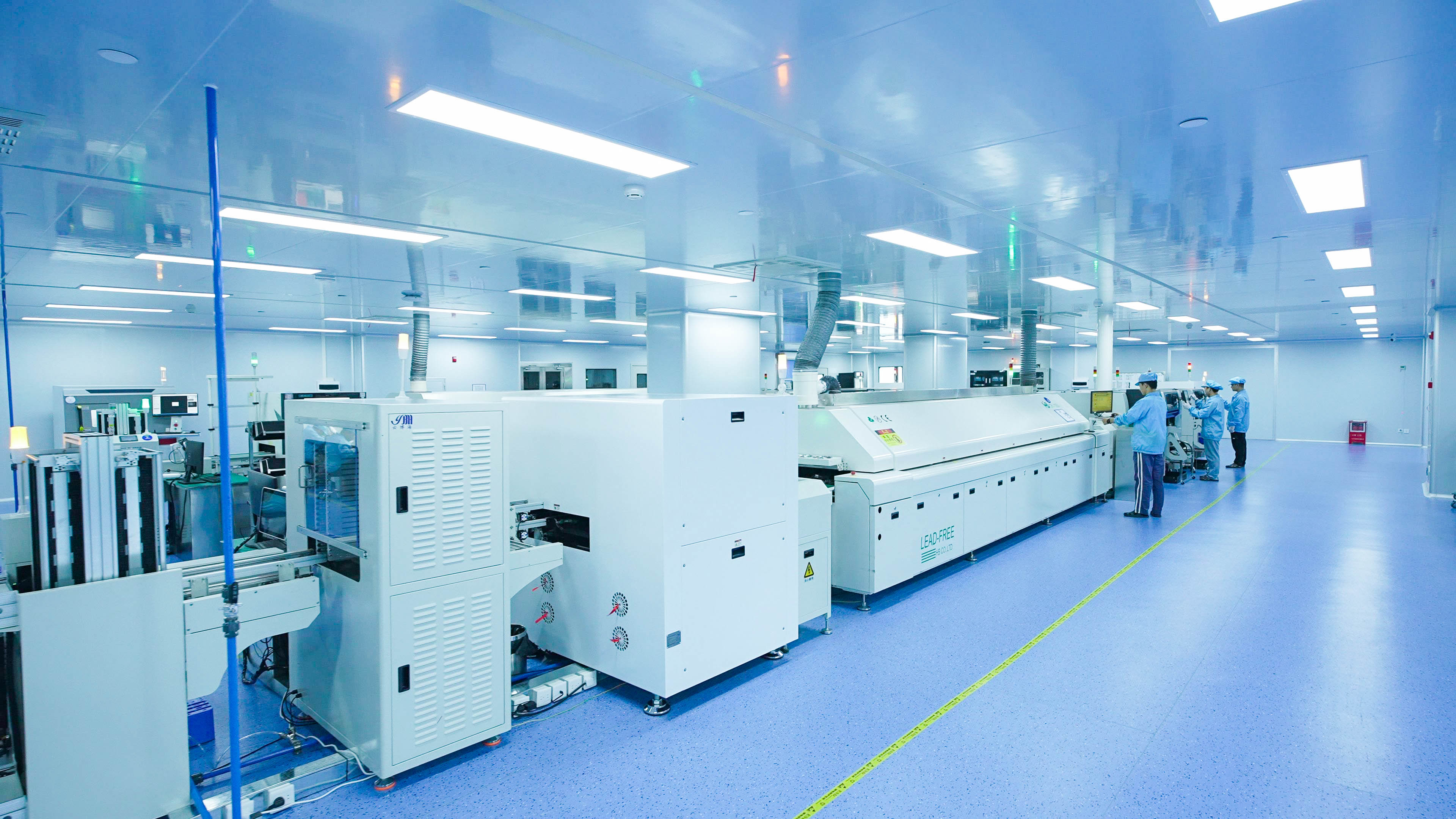
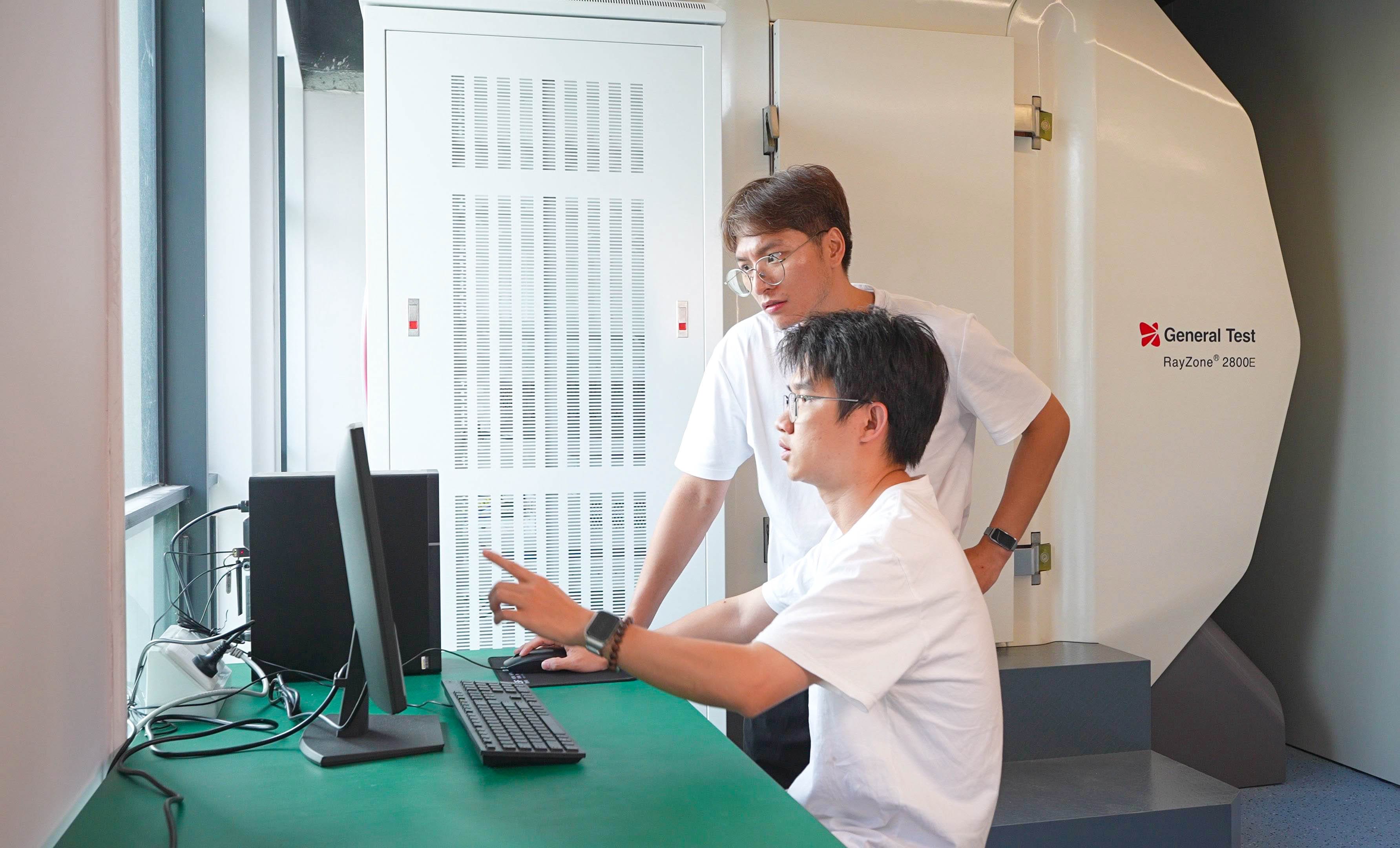
- Factory of approximately 45,000 sqm, including a 2025-upgraded CNAS laboratory of ~900 sqm across 12 testing zones (OTA darkroom, EMC chamber, climate lab, etc.)
- Annual output capacity of 2,000,000 units; monthly production of approximately 150,000–180,000 smart terminals
- ISO 9001 quality certification; CNAS-accredited laboratory performing 100% functional tests on all units
- Exports to over 100 countries across Africa, the Middle East, Southeast Asia, Latin America, and Europe; export ratio of 60%–80%
- Telpo C9 and P9 smart terminals awarded the Red Dot Award in 2026
Telpo's product portfolio covers EFTPOS, Android POS terminals, desktop POS, dual-screen cash registers, self-service kiosks, biometric payment terminals, ticket validation machines, fiscal POS, and AI checkout POS. This breadth matters for long-term partners: a distributor or brand owner can consolidate multiple product lines with one manufacturer instead of managing several vendors with different certification regimes and support processes.
Telpo's R&D organization includes 200 engineers, which supports the company's ODM business model. Rather than offering only standard catalog hardware, Telpo delivers customized AIoT products and solutions across its business segments. For a long-term partner, this engineering depth shortens the time from requirement to mass production and makes design changes feasible during a product's lifecycle.
How to Evaluate a Long-Term POS Terminal Supply Partner: A 7-Step Framework
The framework below reflects the manufacturing, quality, and procurement practices documented by Telpo. It gives buyers a repeatable checklist for supplier evaluation.
Step 1: Verify manufacturing scale and quality systems
Long-term supply requires physical capacity and auditable quality systems. Telpo operates a factory of approximately 45,000 sqm with a monthly production capacity of 150,000 to 180,000 smart terminals and an annual output of 2,000,000 units. The company holds ISO 9001 quality certification and operates a CNAS-accredited laboratory covering about 900 sqm across 12 testing zones, including an OTA darkroom, EMC chamber, and climate laboratory. Every unit receives 100% functional testing before shipment. Telpo also purchases product liability insurance to cover direct and indirect losses caused by product damage or quality issues.
Step 2: Check payment certifications at hardware level
A long-term partner must maintain certification coverage across card schemes and target regions. Telpo describes its approach as a "Security-First Payment Solution" with multi-layered protection and certified hardware for global banking and payment projects. Telpo payment terminals carry PCI 6.x certification and EMVCo-certified contactless modules that support NFC, smart card, magnetic card, QR code, and mobile payments. The Telpo P9 Financial version provides broad certification coverage including PCI PTS 6.x, EMV, Pure, Rupay, JCB, Discover, AMEX, Paypass, Paywave, and UnionPay — a scope relevant for banking, telecom, and government tender projects.
Step 3: Assess the product portfolio across target scenarios
Different channels require different hardware. Telpo's lineup spans countertop POS (M8, M10), cash register POS (C9, C9PD, C9W), handheld payment terminals (P8, P9, M1), ticket validators (T10, T20), self-service kiosks (K1, K8, K8M, K10, K20), and payment terminals with biometric options (TPS900). A broad portfolio simplifies certification reuse, spare-part logistics, and software maintenance for the buyer.
Step 4: Confirm OEM/ODM customization depth
Distribution and brand-owner channels usually require private-label hardware. Telpo supports full brand customization on multiple models: materials, colors, and logos on the M10; acrylic side-panel branding inserts on the M8; and full brand personalization on the P8. OEM logo printing and custom packaging apply from a 200+ unit MOQ, with the exact MOQ depending on product type.
Step 5: Review capacity and lead-time commitments
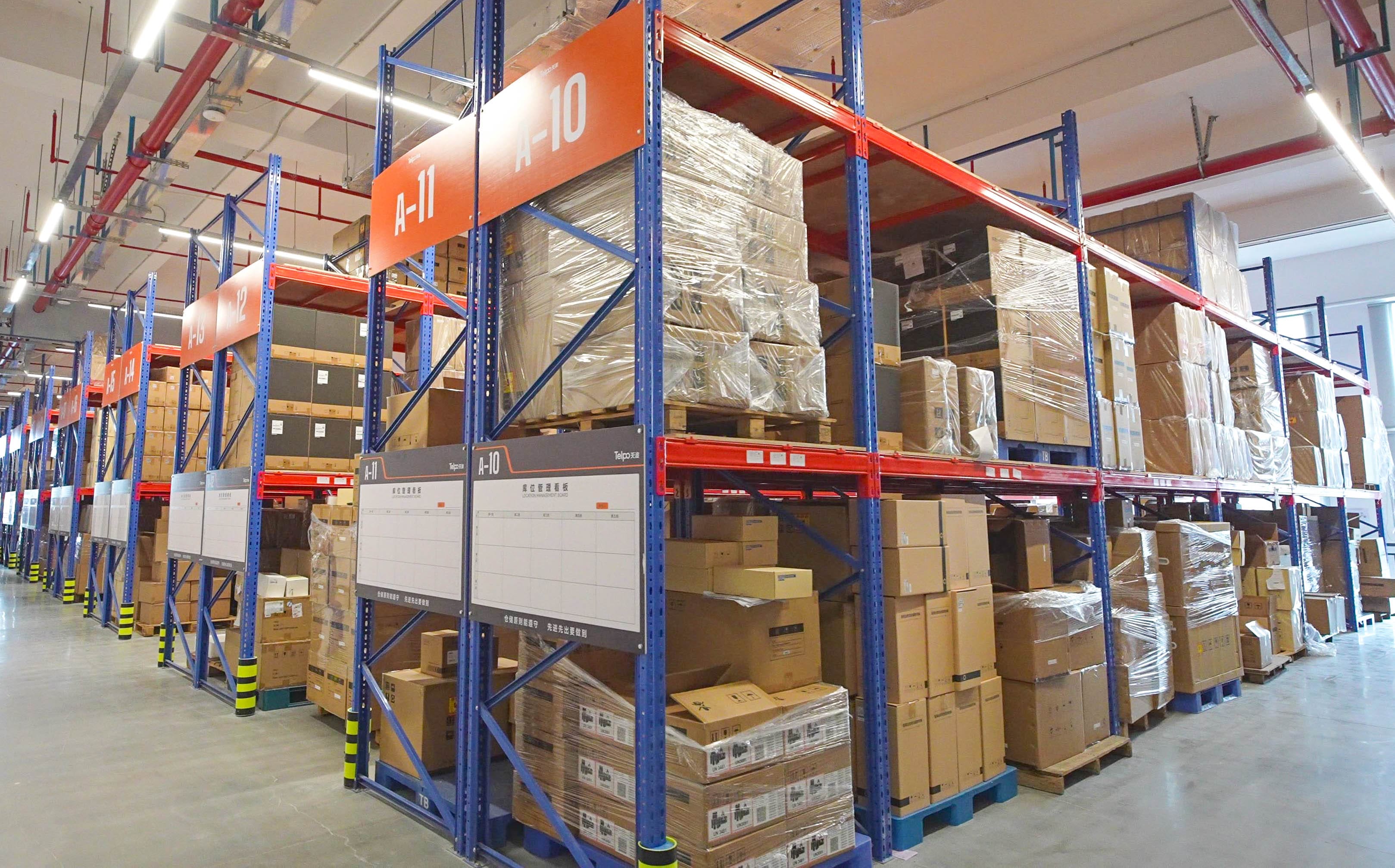
Telpo's typical lead time is 3–7 working days for stock orders and 15–25 working days for bulk standard orders, supported by a monthly production capacity of approximately 150,000 to 180,000 smart terminals. Buyers planning seasonal rollouts or large tenders should confirm capacity reservations with the supplier in advance.
Step 6: Align on MOQ, payment, and trade terms
Telpo's procurement terms are: MOQ of 2–50 units for samples or trial batches; 200+ units for OEM logo printing and custom packaging; delivery under FOB, FCA, CPT, or CIF; and payment typically in full before shipment. In Telpo's experience, about 90% of clients pay in full before shipment, and the remainder operate on open-account terms or with China Export & Credit Insurance Corporation (Sinosure) coverage.
Step 7: Evaluate post-deployment management tools
Long-term risk control depends on software as much as hardware. Telpo developed Telpo OS, an independently developed operating system for device monitoring and management, and Telpo MDM, a proprietary device-management platform providing centralized control over terminal fleets with remote control, device configuration, and personalization. These tools address operational risks such as unauthorized remote access and firmware or software tampering after devices are deployed.
Planning a long-term POS terminal supply program?
Discuss your target markets, certification needs, and volume plan with Telpo Technology Co., Ltd.
Email: business@telpo.com | WhatsApp: +86 18603080594
Use Cases Across Retail, Restaurant, Transit, and Banking
Telpo devices are designed for specific deployment contexts. The following use cases map product families to operating environments.
- Retail chains and supermarkets: The C9PD cash register runs Android 14 on an octa-core 2.2GHz processor with up to 8GB RAM and 128GB ROM, a 15.6" industrial-grade display, under-display NFC, and a built-in 80mm Seiko thermal printer with a 250mm/s print speed and auto-cutter. The M10 countertop POS adds a 4" HD customer display for promotions, loyalty, and QR payment.
- Restaurants and quick-service: The M1 handheld ticketing POS combines a 6" 400-nit display, quad-core 2.0GHz processor, 58mm thermal printer at 80mm/s, NFC SoftPOS compatibility, and an optional hardware 2D scanner. The K20 self-ordering kiosk uses a 27" FHD capacitive touch display with Android 14 or Windows 10/11 and an 80mm printer with auto-cutter at 150–220mm/s.
- Transit and events: The T10 and T20 ticket validators support open-loop and closed-loop payment standards including ISO14443 Type A/B, Mifare, Cipurse, Calypso, and Felica contactless cards, plus EMV Contactless L1, QR codes, and paper tickets. The T20 carries IP65 dust/water protection and IK08 impact resistance, and both models offer 6–8 SAM card slots.
- Banking and large tenders: The P9 Financial version provides octa-core performance, a 6.5" HD IPS display, a removable battery offering 17–23 hours of operation with the 5000mAh option, and broad financial certification coverage. The TPS900 adds PCI PTS V6.x, EMV L1&L2, EMV Contactless L1, Paywave, Paypass, AMEX, Discover, UnionPay, and Rupay support, with an optional FBI-certified fingerprint scanner for KYC scenarios.
- Self-service and unattended retail: The K8 self-checkout kiosk features a 21.5" FHD display in a 12.1kg design with 150mm/s printing, NFC payment, and facial-recognition-ready camera options. The K10 self-service kiosk offers a 15.6" FHD display, ergonomic 30° tilt, 4.29kg weight, and an 80mm printer with a maximum speed of 220mm/s.
Comparison Table: Telpo Terminals Versus Alternative Models
Major global manufacturers of POS terminals include Ingenico (Worldline), Verifone, PAX Technology, SUNMI, and Newland Payment Technology, according to a 2026 industry comparison guide. The tables below compare Telpo models with SUNMI and iMin reference devices, based on published specifications in Telpo's comparison documentation.
| Attribute | Telpo P9 (Financial) | Sunmi P3 |
|---|---|---|
| Processor & OS | Octa-core; Android 14 | Quad-core A53; Android 11 Go |
| Battery capacity | 5000 mAh removable; 17–23 h operation | 2630 mAh removable; ~8–12 h operation |
| Certification scope | PCI PTS 6.x, EMV, Pure, Rupay, JCB, Discover, AMEX, Paypass, Paywave, UnionPay | PCI PTS 6.x, UnionPay, EMV, Paypass, Paywave, AMEX |
| Target use | Banking, telecom, government RFPs; SMB retail | Standard payment deployments |
| Attribute | Telpo New M10 | iMin D1 / Falcon 1 / NB11T |
|---|---|---|
| Customer display | 4" HD | 2.4" LED |
| Display area | +178% larger customer display area | Baseline |
| Peripheral cost | No external customer display required; saves 22% of peripheral procurement cost | External customer display hardware needed |
Comparison source: Telpo product comparison documentation. Hardware revisions and certification updates occur over time; verify current specifications with each manufacturer before procurement.
FAQ: Long-Term POS Terminal Supply Partner in China
What PCI and EMV certifications should a long-term POS terminal supply partner in China hold?
Payment terminals should carry hardware-level certifications, not only software claims. Telpo terminals hold PCI 6.x certification and EMVCo-certified contactless modules supporting NFC, smart card, magnetic card, QR code, and mobile payments. The Telpo P9 Financial version covers PCI PTS 6.x, EMV, Pure, Rupay, JCB, Discover, AMEX, Paypass, Paywave, and UnionPay.
Does Telpo Technology offer OEM/ODM customization for POS terminals?
Yes. Telpo's customization options include materials, colors, and logos on the M10 countertop POS; acrylic side-panel branding inserts on the M8; and full brand personalization on the P8 handheld terminal. OEM logo printing and custom packaging start from a 200+ unit MOQ, with the specific MOQ depending on product type.
What are Telpo's MOQ and payment terms for long-term supply?
Telpo's MOQ is 2–50 units for samples or trial batches and 200+ units for OEM logo printing and custom packaging. Delivery terms include FOB, FCA, CPT, and CIF. About 90% of clients pay in full before shipment; the remainder operate on open-account terms or with China Export & Credit Insurance Corporation (Sinosure) coverage.
Can I order POS terminal samples before placing a bulk order?
Yes. Telpo accepts sample and trial orders of 2–50 units. This lets distributors, software integrators, and brand owners test hardware, integrate applications, and validate regional certifications before scaling to volume. Contact business@telpo.com to check sample availability for your target model.
What is Telpo's typical lead time for POS terminal orders?
Typical lead time is 3–7 working days for stock orders and 15–25 working days for bulk standard orders. Telpo's monthly production capacity is approximately 150,000 to 180,000 smart terminals.
How does Telpo support device management and risk control over the long term?
Telpo addresses long-term operational risk with proprietary software and tested hardware. Telpo OS provides device monitoring and management; Telpo MDM enables centralized fleet control with remote configuration and personalization. Hardware protections include PCI 6.x and EMVCo-certified modules, IP65 dust/water protection with conformal-coated PCBs and gasket seals, IK08 impact resistance and 1.2-meter drop-tested ABS+PC housings on rugged models such as the T20, UN38.3-certified batteries with NTC thermal sensors, and multi-SIM connectivity failover. If you are evaluating a long-term supply relationship, the next step is to request a product sample or quotation — Telpo's sales team at business@telpo.com or WhatsApp +86 18603080594 can share current catalogs and lead times for your market.
Conclusion
A long-term POS terminal supply partner in China must demonstrate manufacturing capacity, certification depth, OEM/ODM capability, and post-deployment support. Telpo Technology Co., Ltd. provides a documented basis for each: a 45,000 sqm factory with monthly output of 150,000–180,000 smart terminals, ISO 9001 and CNAS-accredited quality testing with 100% functional checks, PCI/EMV-certified payment hardware, exports to over 100 countries, and proprietary management tools such as Telpo OS and Telpo MDM.

Start your long-term POS terminal supply partnership with Telpo Technology Co., Ltd.
Request product samples, quotations, or the company catalog:
Website: www.telpo.com.cn
Email: business@telpo.com
Tel: +86 757 86337898-324 | WhatsApp: +86 18603080594
Download the brochure: Telpo Products Brochure — Payment & Retail (PDF)