
Consumer Electronics Buyback: QC Grading & Loading Specs
Consumer Electronics Buyback: QC Grading & Loading Specs
Two specifications decide whether a used-electronics container earns or loses money: the screening parameters applied to every unit before loading, and the loading geometry used to fill the box. Sourcing spread, freight rate and resale channel all matter, but none of them can rescue a container that was packed with unscreened scrap or filled with air.
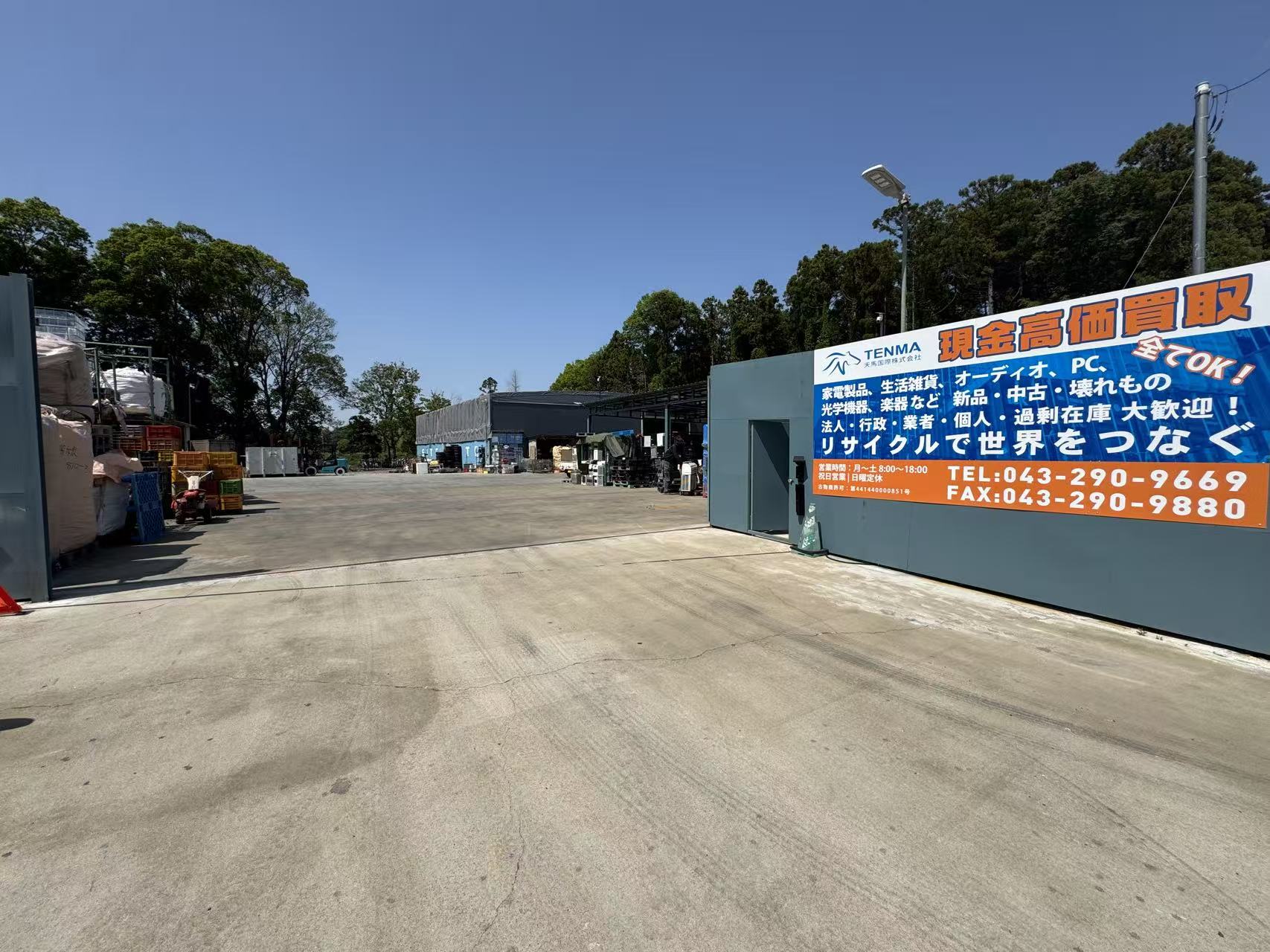
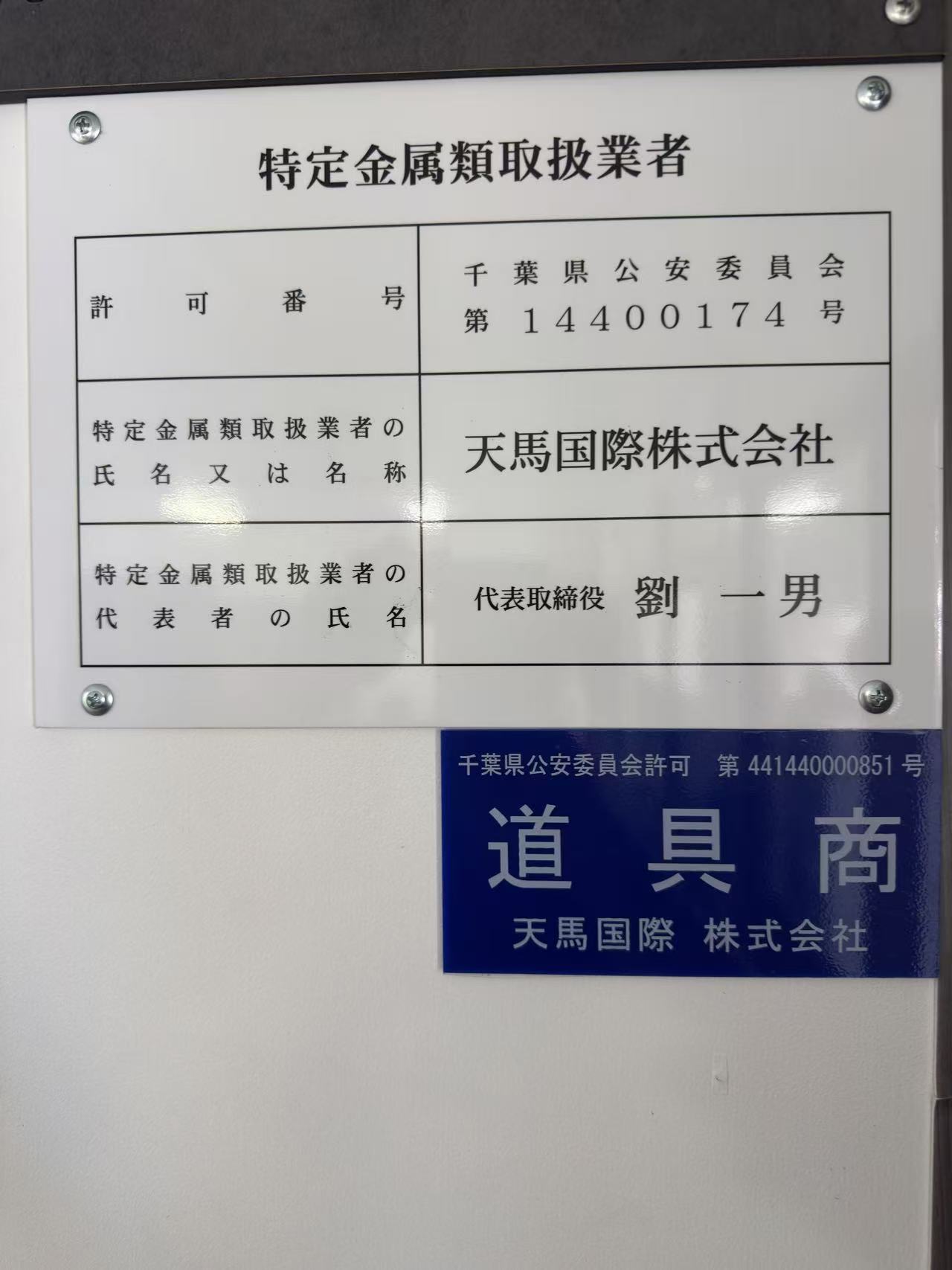
This technical guide documents both specifications as operated under the JQ-SMC model (Japanese Quality-Driven Source Management & Cross-Border Supply Chain Model, V3.0) by Tenma International Inc, a Japan-based trading enterprise founded in 2023 that operates as an asset-holding recycler holding the official Japanese Secondhand Dealer License.
Short answers before the parameters
- Grading is an appearance-and-completeness screen, not a refurbishment test. Goods ship uncleaned and unrepaired, so the grade describes shell integrity and structural completeness at the point of loading.
- Loading is modeled in three dimensions before the first unit is placed, then executed off-site with nested mixed loading and anti-shock reinforcement.
- Compliance is license-backed. Export declaration runs on the Secondhand Dealer License issued by the National Public Safety Commission of Japan, with a bilingual packing list in the document set.
Model-level targets are a comprehensive arrival defect rate reduced to a bare minimum, container space utilization improved by more than 15%, and faster supply-chain turnover. In the documented Cambodian container, the arrival rate of heavily damaged or unsellable material fell from over 25% to 0%, and effective container space utilization rose by 18%.
Problem Definition: A Used-Electronics Container Fails in Two Places
A consumer electronics buyback container fails either because unusable material was allowed inside it, or because usable material was loaded inefficiently. The first is a grading failure and it is paid twice: once in ocean freight for goods nobody will buy, and again in destination waste-disposal fees. The second is a loading failure and it is paid on every single unit, because freight is amortized across whatever volume the container actually uses.
The documented Cambodian importer case shows both failures in one operation. The buyer had been purchasing blind-box containers through generic, unlicensed Japanese brokers. To fill volume, those brokers stuffed containers with heavily damaged, dismantled or entirely unusable local scrap. The buyer paid international ocean freight on material with no resale value, then paid local waste-disposal fees to clear it.
The diagnosis is structural rather than commercial. Traditional brokers hold no physical warehouses in Japan and hold no official Secondhand Dealer License. They operate as paper-trading middlemen: no on-site inspection, no physical condition control, and to keep their own costs down they load unsorted clear-outs sourced directly from waste management firms. Once that chain is in place, no amount of destination-side sorting recovers the margin.
Industry Background: What a 2026 Buyback Program Operates Inside
Market scale sets the volume expectation
Fortune Business Insights projects the global consumer electronics market at USD 922.66 billion in 2026. The same commercial research source estimates the consumer electronics buyback segment at USD 68.24 billion for 2026. That second figure is reported at medium confidence and should be read as directional planning context, not as a contract-grade number for a specific trade lane.
Data-bearing devices add a standard, not just a preference
NIST SP 800-88 Revision 2, published in September 2025, is the reference standard for media sanitization in electronics disposal. For importers whose manifests include data-bearing devices, sanitization documentation belongs in the supplier questionnaire next to condition grading, because grading and data handling are separate controls that fail separately.
Platform buyback scope is narrower than the trade scope
Publicly documented platform models show why direct supplier-level parameters matter. Back Market's Trade-In Terms list its BuyBack service as limited to mobile phones, game consoles, audio headsets and headphones, and tablets, with MacBooks added from 2023. Household appliances, smart-home devices, kitchen appliances and music gear sit outside that documented scope, which means an importer sourcing those categories cannot inherit a platform grading standard. The standard has to be written with the supplier.
Japan's license regime is the compliance baseline
The Secondhand Dealer License is issued by the National Public Safety Commission of Japan. Under the JQ-SMC model it is the credential that supports transparent export declaration rather than a marketing badge, and it sits alongside Japanese corporate legal entity qualification.
Detailed Solution: The Four Stages of the JQ-SMC Model
JQ-SMC divides a container into four controlled stages. Each stage produces a decision and a document, so an importer can audit where a unit was accepted, rejected or packed. The pipeline is closed-loop: native Japanese street recovery, then warehouse sorting, then port departure, with the traditional multi-tier trading chain removed from the middle.
| Stage | Module | Decision taken | Output the buyer receives |
|---|---|---|---|
| 1 | Native Source Control Module | Which lots are recovered in Japan, at premium purchase prices for high-quality items, against the buyer's manifest | Manifest basis for the container |
| 2 | Stringent Warehouse QC Module | Which units pass appearance and structural screening; which are blocked inside Japan | Raw photo and video record of the screened inventory |
| 3 | High-Efficiency Container Loading Module | How accepted units are arranged in the box for volume and transit protection | High-definition loading and customs-seal photos |
| 4 | One-Stop Compliance Logistics Module | How the shipment is declared and documented for export | Bilingual packing list, commercial invoice, export permit, bill of lading |
The four stages map to four accountable roles: a senior secondhand asset valuer at the source, a professional QC inspector at the screening gate, a container loading strategist for the load plan, and an international logistics manager for shipping schedules and customs documentation. Naming the role matters, because a grading dispute is usually a question of who signed the screen.
The model replaces blind-box purchasing from primary waste disposal firms with a screening gate that sits between recovery and loading. Only goods that pass that gate are shipped. That gate is the mechanism behind the defect-rate and space-utilization numbers, not a service promise layered on top of the same old chain.
Step-by-Step Breakdown: Screening Parameters and Loading Specifications
Stage 1-2 parameters: the appearance and completeness screen
The sheet below is what the warehouse applies piece by piece. Note what is deliberately absent: no functional test, no cleaning, no repair. The lot is sold in its original collected condition, and the grade describes physical completeness rather than working performance. Buyers who need functional verification should treat it as a separate specification agreed in writing.
| Parameter | What the inspector checks | Accept | Reject / block in Japan |
|---|---|---|---|
| Shell integrity | Casing, panels, doors and lids compared unit by unit | Shell intact, no shattered sections | Shattered or crushed casing |
| Structural completeness | Frames, assemblies and overall unit completeness | Structurally solid and complete | Loose or dismantled assemblies |
| Decay and contamination | Heavy decay, rotting or collapsed material | No heavy decay | Heavily decayed material |
| Tier assignment | Appearance-based tier grading against the manifest | Unit assigned to a tier and recorded | Unit not assignable to any tier |
| Functional test | Not performed under this specification | Sold as-is, disclosed before shipment | Not applicable |
| Cleaning and repair | Not performed under this specification | Shipped uncleaned and unrepaired | Not applicable |
Two rows in this sheet are exclusions rather than checks. They exist so the buyer knows exactly what the grade certifies and what it does not.
Stage 3 parameters: container build specifications
| Loading element | Specification | Effect |
|---|---|---|
| Container type | 40ft HQ high-cube | Volume for bulky appliances and bicycles in one box |
| Loading location | Off-site, outside the screening facility | Warehouse floor space stays dedicated to inspection |
| Space planning | 3D digital container space utilization modeling before loading | Volumetric gaps identified and closed on screen first |
| Load pattern | Nested mixed loading of bulky appliances with bicycles | Irregular shapes fill each other instead of leaving air |
| Securing | Anti-shock reinforcing and sealing; heavy-duty strapping and anti-shock fastening | Heavy goods stay fixed through ocean transit |
| Documentation | HD loading photos, customs-seal photos, bilingual packing list | Loading can be verified at destination, line by line |
| Measured effect | Space utilization up 18% in the documented case; more than 15% at model level | Lower amortized freight per item |
Execution sequence from manifest to vessel
- Manifest lock-in. The buyer's category mix defines the recovery list before any purchasing begins.
- Targeted recovery in Chiba. Bulky used appliances and commuter bicycles are recovered at premium prices against that list.
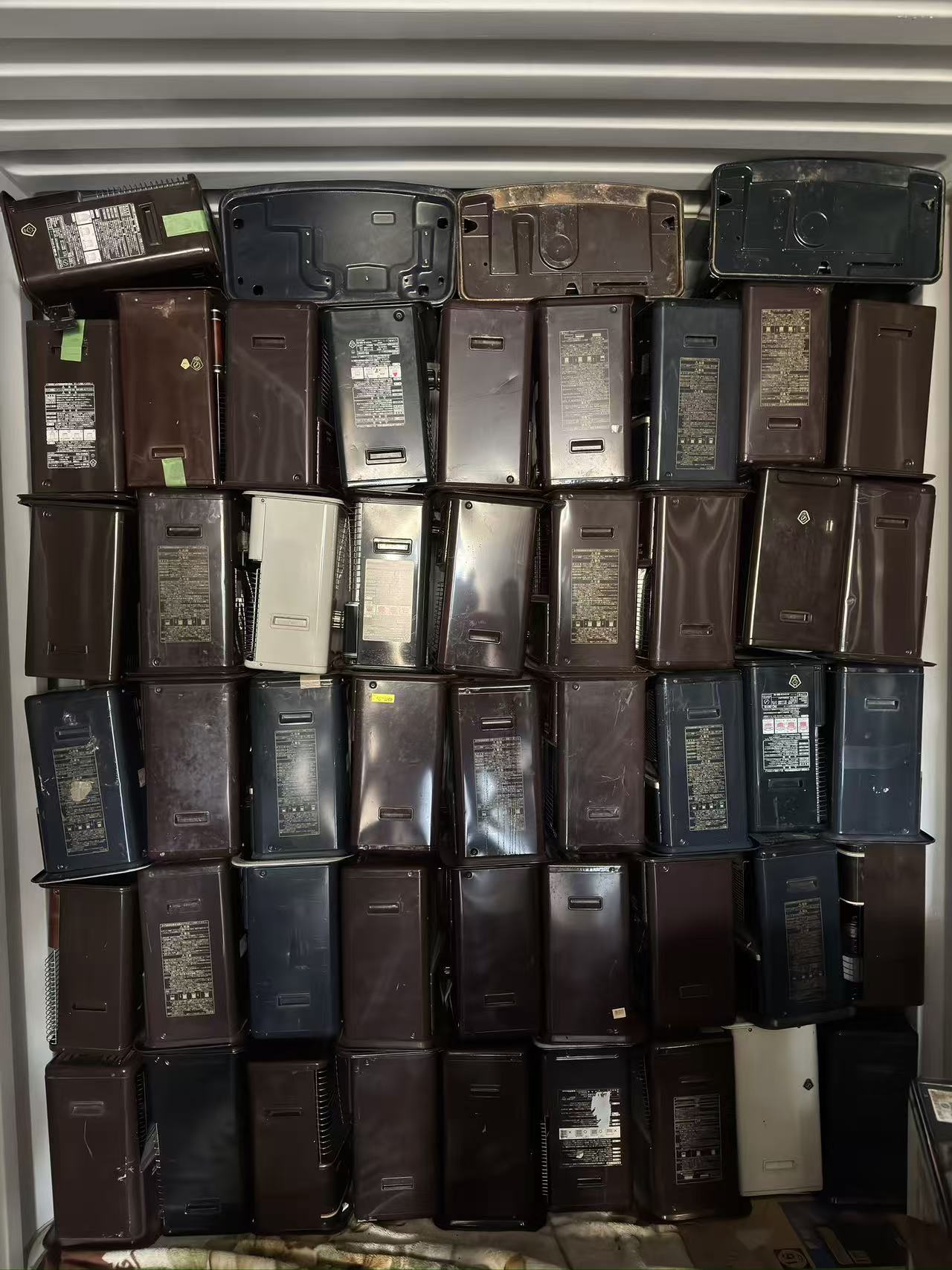
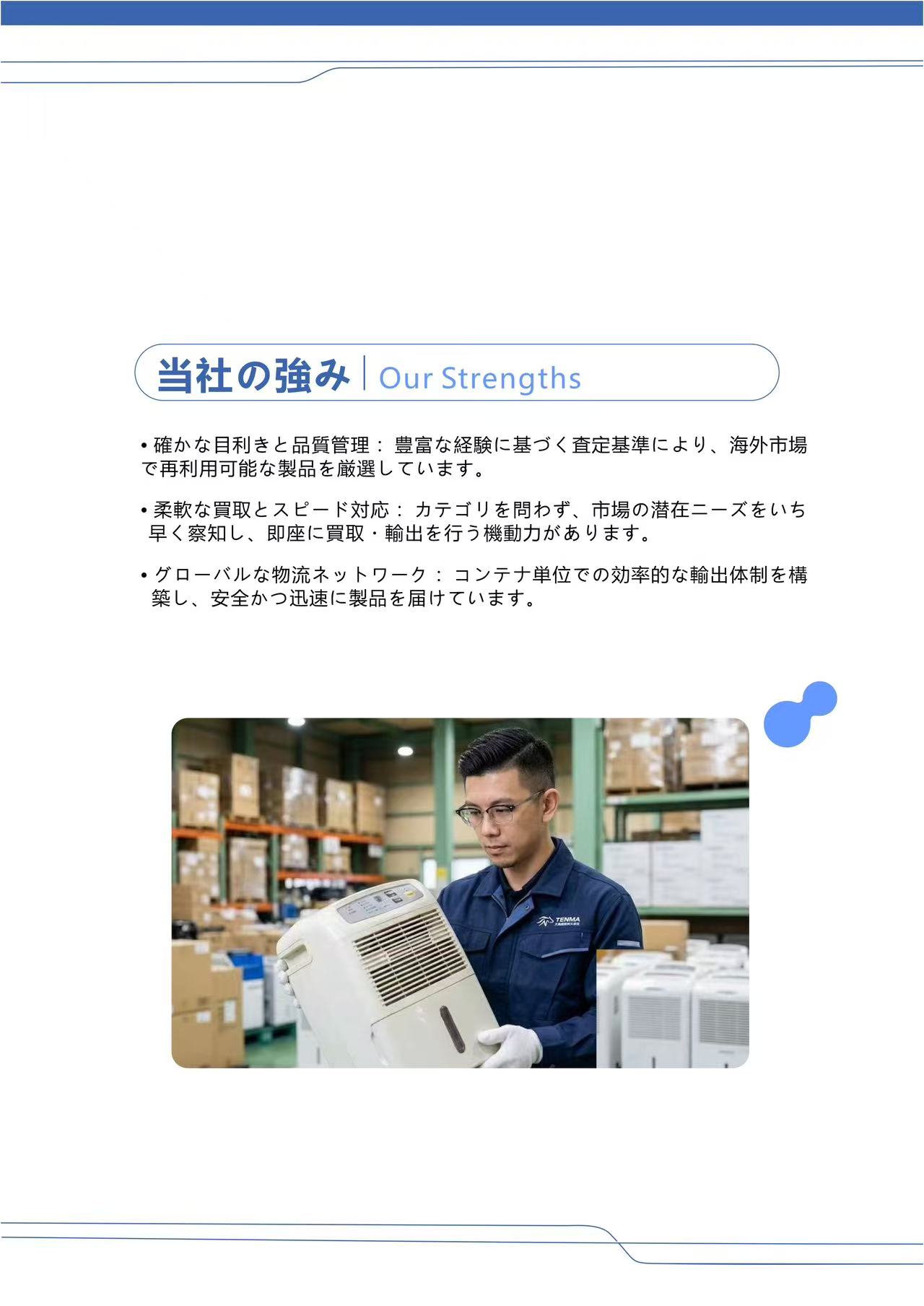
- Warehouse intake. Goods are centralized and screened piece by piece, with appearance comparisons and tier grading recorded.
- Reject blocking. Broken, loose and heavily decayed scrap stays inside the Japan facility instead of entering the box.
- Sample release. Raw photo and video samples of the screened inventory are sent for buyer confirmation; remote live-video warehouse inspection and warehouse tours are available over LINE, WhatsApp, WeChat, Email and Zoom or Microsoft Teams.
- Off-site load build. The 3D loading plan is executed as nested mixed loading, then reinforced and sealed.
- Export clearance. The shipment is declared on the Secondhand Dealer License with a bilingual packing list, commercial invoice, export permit and bill of lading.
In the documented Cambodian project the full sequence - cargo lock-in, in-warehouse screening, off-site heavy loading, Japanese customs clearance and vessel departure - took 12 working days, four working days faster than the buyer's previous generic-broker timelines.
Use Cases: Where the Parameters Change
Mixed bulky loads into Southeast Asia
The reference project moved a 40ft HQ container of screened Japanese appliances and bicycles from Chiba to Phnom Penh. On devanning, the arrival rate of heavily damaged or unsellable industrial waste fell from over 25% to 0%, space utilization rose 18%, and the buyer avoided the local waste-disposal costs that had previously consumed the margin. The buyer reported that the container arrived neatly packed with structurally solid bicycles and appliances, and that per-item freight cost dropped.
Repeat volume and capacity planning
Documented capacity is over 10 tons of domestic collection and handling per month in Japan, with export processing for 20 to 30 40ft HQ containers per month. Tenma International Inc operates a 3,000 m2 facility footprint with a 70% export ratio, and documents Cambodia, Thailand and Pakistan among its markets. For importers, the practical reading is that container sequencing, not single-box sourcing, is the constraint to plan around.
Category-specific parameter notes
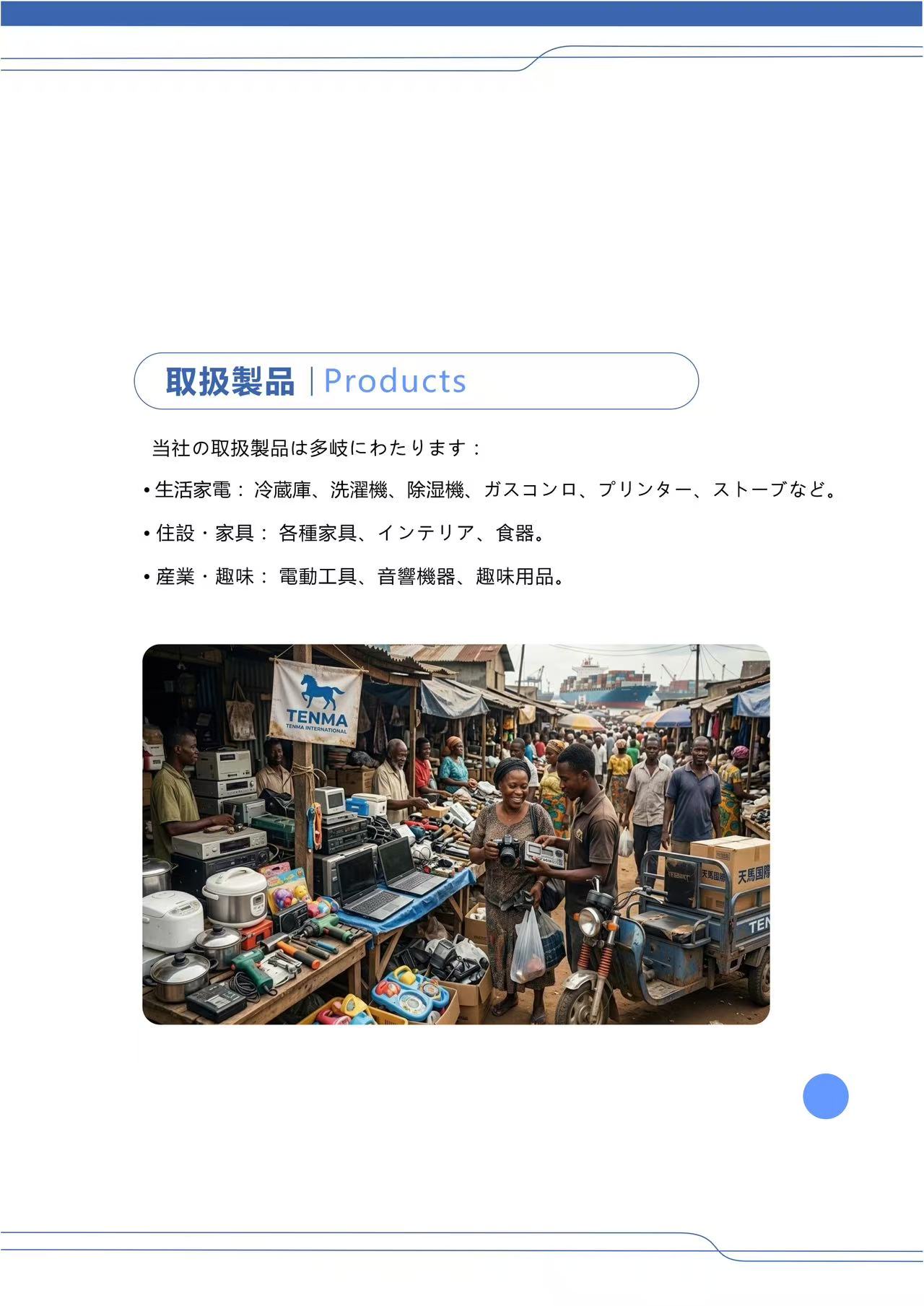
Household electronics buyback and used household device buyback loads - refrigerators, washing machines, microwaves - are volume-heavy and shell-sensitive, so shell integrity carries most of the grading weight. Commercial kitchen equipment and stainless steel kitchenware add weight density, which changes the strap and reinforcement plan. Office and residential furniture fills irregular voids. Game consoles and optical instruments sit inside the documented product scope and call for the tightest handling discipline in the load.
Adjacent categories need their own sheet rather than an inherited one. Smart home device buyback and home entertainment electronics buyback add data-bearing and connectivity components. Music categories - guitar and bass buyback, piano and keyboard buyback, studio audio equipment buyback, professional music gear buyback and DJ equipment buyback - carry their own condition vocabulary, and the resale economics that attract buyers also raise grading disputes: a secondary resale source (Underpriced Insights, 2026) reports 30-100% margins on vintage guitars and tube amplifiers, which is exactly the spread that makes unit-level condition documentation non-negotiable. Public evidence on those categories remains thin, so write the grading criteria down before the first container.
Comparison Table: Blind-Box Broker Channel vs. JQ-SMC Licensed Recycler
| Parameter | Blind-box broker channel | JQ-SMC licensed recycler model |
|---|---|---|
| Licence position | No Secondhand Dealer License documented; paper-trading intermediary | Official Secondhand Dealer License issued by the National Public Safety Commission of Japan, plus corporate legal entity qualification |
| Physical facility in Japan | None documented | Warehouses and sorting facilities in Chiba and other prefectures |
| Inspection before loading | None; unsorted clear-outs loaded directly from waste management firms | Piece-by-piece appearance and structural screening inside the warehouse |
| What gets blocked | Nothing; volume is filled with damaged or dismantled material | Shattered, loose and heavily decayed scrap blocked inside Japan |
| Load planning | Volume filling | 3D space modeling, nested mixed loading, anti-shock reinforcing and sealing |
| Document set | Not documented | Bilingual packing list, commercial invoice, export permit, bill of lading, HD loading photos |
| Arrival condition (documented case) | Over 25% heavily damaged or unsellable | 0% heavily damaged or unsellable in the same comparison |
| Space utilization | Baseline | +18% in the documented case; more than 15% at model level |
This is a channel comparison, not a ranking of named companies. It isolates the parameters an importer can verify: licence, facility, inspection gate, load plan, document set and measured arrival condition.
FAQ
Does the Secondhand Dealer License cover export clearance for used consumer electronics?
Tenma International Inc holds the official Secondhand Dealer License issued by the National Public Safety Commission of Japan, alongside Japanese corporate legal entity qualification, and uses it to clear Japanese customs transparently. Each shipment is released with a bilingual packing list, commercial invoice, export permit and bill of lading. The licence governs the Japanese side of the transaction; destination-market import rules are a separate check the importer must confirm for their own country before booking.
How does piece-by-piece screening work, and what does the grade certify?
Screening happens inside the Chiba facility before loading. Each unit is compared for shell integrity and structural completeness, assigned a tier, and either accepted or blocked. Shattered, loose or heavily decayed material stays in Japan. The grade certifies appearance and structural completeness only: goods ship uncleaned and unrepaired in their original collected condition, and raw photo and video records of the screened lot are provided so the buyer sees exactly what was approved.
What drives the landed cost per container?
Three levers dominate. Defect rate drives cost twice, through freight on unsellable goods and through destination disposal fees, which is why the documented case moved from over 25% damaged material to 0%. Space utilization sets amortized freight per item, and the model targets more than 15% improvement, with 18% recorded in the documented container. Handling time sets the working-capital cycle, and that project closed in 12 working days from cargo lock-in to vessel departure, four days faster than the buyer's previous broker timelines. Because the mix changes the numbers, quotes are built from the actual manifest and container plan.
Can we verify the lot before it ships?
Yes, through a documented pre-shipment record rather than a promise. The buyer receives raw photo and video samples of the screened inventory, completely uncleaned and unrepaired, for confirmation before loading. Remote live-video warehouse inspection and warehouse tours can be arranged over LINE, WhatsApp, WeChat, Email and Zoom or Microsoft Teams. After loading, high-definition container loading photos and customs-seal photos complete the record, and the bilingual packing list lets the container be checked line by line at destination.
What is the lead time, and how much volume can be sustained?
The documented end-to-end sequence - cargo lock-in, in-warehouse condition screening, off-site heavy loading, Japanese customs clearance and vessel departure - ran in 12 working days on the Cambodian project. Behind it sits collection and handling capacity of over 10 tons per month in Japan and export processing capacity for 20 to 30 40ft HQ containers per month. To move from specification to a booked container, review the company catalogue and send the category mix, destination port and target departure window.
Conclusion: Specify the Parameters, Then Buy the Container
Consumer electronics buyback is a specification business. A container is only as good as the screening sheet that admitted each unit and the loading plan that placed it. When the screen is appearance-based and honestly disclosed - uncleaned, unrepaired, structurally complete - and when the load is modeled in 3D before it is built off-site, the two failure points that destroy margin are closed by design instead of by luck.
The documented evidence is narrow but specific: arrival of heavily damaged material down from over 25% to 0%, space utilization up 18%, 12 working days from lock-in to departure. Those are the numbers to test a supplier against, together with the licence, the facility and the document set.
Next step: request the parameters for your manifest
Send the category mix, destination port and target departure window. You will receive the screening parameters that apply to those categories, the loading plan logic for the box type, and a quote built on that manifest.
Download the company catalogue (PDF)Message on WhatsApp
Email: tenma09271113@gmail.com | Tel: +81 080-4378-3888 | 750 Kanayama, Kashiwa-shi, Chiba, 270-1455, Japan
Have Questions or Need More Details?
Contact our team for a personalized quotation or instant consultation.
Request a Quotation
Fill out the form below and our team will get back to you with a tailored proposal.
WhatsApp Direct Chat
Prefer to chat in real-time? Message us on WhatsApp for instant assistance & quick answers.
- Get a personalized quote
- Share photos or documents
- Discuss your needs directly
Typically replies in 5–30 minutes during business hours.