Consumer Electronics Buyback by Scenario: Match the Stream to Your Market
Consumer Electronics Buyback by Scenario: Match the Stream to Your Market
A consumer electronics buyback program is not one product decision. It is a scenario decision. The same broad label covers household electronics, home entertainment systems, smart home devices, kitchen appliances, and music gear — and each stream behaves differently at resale, in quality control, and inside a shipping container. For importers moving from research into evaluation, the practical question is not only “where can I buy used electronics” but “which buyback stream fits the way my market buys, and can this supplier actually support that scenario.”
Consumer electronics buyback, in a B2B sourcing context, means the acquisition of used electronic and electrical goods from households and businesses, followed by inspection, sorting, cleaning, and export wholesale to importers who resell them through established local channels. Buyers who define their end-market scenario first are far better positioned to choose the right categories, the right container mix, and the right Japanese supplier than buyers who start with whichever inventory looks cheapest.
TENMA INTERNATIONAL Co.,Ltd. is a Japan-based trading enterprise established in 2023 and based in Chiba Prefecture. It specializes in the acquisition and international export of high-quality pre-owned Japanese goods, with stated product scope covering second-hand home appliances, furniture and sundries, optical instruments, game consoles, and other categories. Its one-stop service bridges domestic Japanese sourcing, in-warehouse quality screening, and cross-border container delivery — a model that gives global importers a useful reference point when evaluating scenario-fit.
Why the Buyback Scenario Defines the Deal
Used consumer electronics are often collected in Japan as a single material stream, but they are not sold as a single product market. An importer running flea markets in Phnom Penh and a specialty retailer dealing in studio audio equipment may both search for “consumer electronics buyback,” yet their inventory needs barely overlap.
Scenario mismatches typically show up in four places:
- Demand fit. The import side creates supply, not demand. Your local customers decide whether the goods are sellable, so the category must match the channel you already serve.
- Quality tolerance. A price-sensitive wholesale channel can absorb items with faded exteriors; a specialist music instrument buyer cannot tolerate shipping damage to a guitar neck or a keyboard action.
- Freight economics. Bulky appliances consume container volume quickly, while compact smart home devices and audio gear have a different value-per-cubic-foot profile. Mixing the wrong streams can inflate per-item freight costs.
- Supplier capability. Some Japanese trading firms work well with broad household goods; others may lack the upstream collection network or grading skills for a narrow professional category. Your scenario must be tested against evidence, not assumptions.
For Research-stage buyers, the value of scenario thinking is simple: it converts an overwhelming product universe into a shortlist of testable sourcing questions.
Market Signals Behind Each Buyback Scenario
Demand for used and refurbished consumer electronics continues to be supported by large, growing end-markets. The figures below come from published industry research and should be read as directional context rather than precision forecasts, because definitions of “electronics,” “smart home,” and “refurbished” vary by research house.
- The global consumer electronics market was valued at USD 1,319.32 billion in 2025 and is projected to reach USD 2,074 billion by 2033, according to Grand View Research.
- The global refurbished electronics market was estimated at USD 68.24 billion in 2026, according to Coherent Market Insights.
- The global smart home market reached USD 164.13 billion in 2026, with the US accounting for roughly USD 54.53 billion of that total, according to Mordor Intelligence.
- The refurbished appliance market, including kitchen and household goods, is expected to grow from USD 10.1 billion in 2024 to USD 32.8 billion by 2034, according to Precedence Research.
- The global musical instrument market was valued at USD 13.8 billion in 2025, with string instruments such as guitars projected to hold about 36.05% share in 2026, according to Fortune Business Insights.
These signals help explain why buyers search for consumer electronics buyback through many different doors: household, entertainment, smart home, kitchen, and professional music equipment are separate demand pools with separate sourcing logic.
The Main Consumer Electronics Buyback Streams Importers Evaluate
Below are the most common buyback streams seen in import planning. Use them as evaluation categories, not as guaranteed supplier inventory lists. A supplier’s real coverage must always be confirmed category by category.
Household Electronics and Used Household Device Buyback
This stream centers on everyday devices found in Japanese homes — refrigerators, washing machines, microwave ovens, and similar appliances. It suits importers who operate wholesale warehouses, flea markets, or appliance resale channels and who need dependable volume. Because these goods move in bulk, the critical control point is initial appearance screening: units that are shattered, badly decayed, or structurally incomplete should be blocked before they consume container space and create disposal costs at the destination.
For this stream, a supplier’s local collection network, warehouse space, and piece-by-piece inspection discipline matter more than any single product brand.
Home Entertainment Electronics Buyback
Televisions, audio systems, and game consoles belong to this stream. Used game consoles are notable because they are already part of TENMA INTERNATIONAL’s stated sourcing scope, alongside home appliances and sundries. Home entertainment goods are attractive to electronics resellers, but they demand extra care in testing accessories, remote controls, and cosmetic condition claims. Ask your supplier exactly which tests are performed and what evidence is shared before shipment.
Smart Home Device Buyback
Smart speakers, Wi-Fi routers, monitoring cameras, and other connected devices form a faster-moving, space-efficient stream for importers whose end customers are comfortable with pre-owned connected electronics. Evaluation should focus on security reset procedures, missing accessories, and the higher risk of minor cosmetic damage. Because these products are compact, they can be blended into mixed containers efficiently when a supplier’s network actually collects them.
Kitchen Appliance Buyback
Microwave ovens, rice cookers, and other kitchen appliances have steady demand through grocery-adjacent retailers, home goods channels, and online marketplaces. In TENMA’s own multi-category sourcing scope, home appliances and kitchenware are listed among the categories its service covers. Importers evaluating kitchen appliance buyback should prioritize cleaning and decontamination evidence, since kitchen goods carry higher hygiene expectations.
Guitar and Bass, and Piano and Keyboard Buyback
Musical instruments are a specialist scenario. A used guitar, bass, piano, or keyboard holds value only if its structural condition is honest: neck straightness, electronics function, key action, and cabinet condition all matter. This stream suits music retailers and online sellers who can grade instruments properly. Broad generalists may collect this category occasionally, but committed instrument importers should ask for evidence of instrument-specific inspection and for actual photos of representative units.
Studio Audio, Professional Music Gear, and DJ Equipment Buyback
Studio monitors, outboard audio gear, mixers, amplifiers, synthesizers, and DJ equipment are lower-volume but higher-value-per-unit streams. Buyers in this scenario tend to be professional gear dealers, studio suppliers, or live-event equipment traders. Because counterfeit risk and technical faults are real concerns, the supplier must be able to document function checks and provide detailed condition notes. This is also the stream where a mismatch between your product knowledge and the supplier’s grading standard can be most expensive.
A Scenario-Matching Framework for Research and Evaluation
Once you know your target stream, the next job is matching it to a supplier. The following six-step framework is designed for importers who are still evaluating rather than ready to place a container order.
- Describe your resale scenario first. Write down who your end customer is, what price range they tolerate, whether they accept cosmetic imperfections, and what volume you can sell per month. This document becomes the filter for every supplier conversation.
- Translate the scenario into a category profile. If you sell to households, your profile may combine household appliances, kitchen appliances, and selected home entertainment goods. If you sell to musicians, your profile is narrow and specialist. Do not let a supplier’s “everything available” pitch override your category discipline.
- Confirm the supplier’s sourcing footprint. TENMA INTERNATIONAL, for example, states that its domestic sourcing strength lies in Chiba Prefecture and surrounding core Kanto regions of Japan. If your scenario depends on a region or category outside a supplier’s stated footprint, ask directly how they would secure that inventory.
- Check the physical quality-control workflow. The best indicator of scenario fit is whether the supplier physically screens goods before export. TENMA’s service model includes initial appearance screening, defect filtering, sorting, cleaning, and secure container loading inside its warehouse and outside the facility. A supplier without a physical operation cannot credibly document this.
- Evaluate export and documentation capability. Consumer electronics buyback from Japan requires clean export documentation. TENMA operates with a corporate legal entity, a Japanese Secondhand Dealer License issued by the National Public Safety Commission, and a Logistics and Export Compliance function. These credentials should be verified with every serious candidate.
- Run a small visual validation before scaling. Ask for raw photo and video samples of screened inventory, or arrange a live remote warehouse tour. If a supplier is reluctant to show the actual goods you would receive, the scenario fit is poor regardless of price.
What a Supplier Should Prove for Scenario-Based Buying
During evaluation, importers should ask for evidence that maps directly to the category scenario they are targeting. At a minimum, that evidence should cover four areas.
Licensed operation. Confirm the company is a Japanese corporate entity and holds the official Secondhand Dealer License. TENMA INTERNATIONAL Co.,Ltd. also publishes contact details, its Chiba address, and its company profile on its website at tenma-corp.com, making basic verification straightforward.
Physical handling capacity. Scenario-fit depends on whether the supplier can receive, sort, clean, and pack the categories you need. TENMA describes a 3,000 m² storage and sorting facility base in Chiba, a proprietary fleet of recovery trucks, and export processing capacity to deliver 20–30 high-cube 40-foot containers per month to overseas markets. Even if you choose another supplier, these are the kinds of physical facts you should demand in writing.
QC and packing discipline. Ask what tools and methods are used during inspection and loading. TENMA’s stated operation includes appliance diagnostic tools, high-pressure washing, eco-friendly decontamination, industrial heavy-duty strapping, anti-shock fastening, digital packing list generation, and 3D digital container space utilization modeling. That combination matters because damage prevention inside a mixed container is what protects both the goods and your freight cost.
Documented export workflow. Reliable suppliers should provide bilingual Packing Lists and Commercial Invoices, pre-shipment quality inspection photos and videos, container sealing photos, and a copy of the Bill of Lading. TENMA’s service deliverables include these items, and its customer case confirms that this documentation was actually delivered in a real cross-border project.
Scenario Thinking in Action: A Cambodian Bulk Import Project
A useful example comes from TENMA INTERNATIONAL’s published customer case. A large Cambodian importer operating wholesale warehouses and flea markets in Phnom Penh had previously purchased “blind-box” containers from generic, unlicensed Japanese brokers. Those containers often arrived with heavily damaged, dismantled, or unusable scrap, forcing the buyer to pay local waste disposal fees and eroding profit margins.
Working with TENMA, the client shifted to a project with clear scenario parameters: a bulk multi-category container of used appliances and bicycles, screened inside TENMA’s Chiba facility before loading. The project ran on the JQ-SMC model, which stands for Japanese Quality-Driven Source Management and Cross-Border Supply Chain Model. The result was measured in outcomes an importer can verify: the arrival rate of heavily damaged or unsellable waste dropped from more than 25% to exactly 0%, effective container space utilization increased by 18%, and the overall delivery timeline was reduced by four working days compared with the buyer’s previous broker experience.
The Cambodian client’s procurement director later described the key difference as honesty and clarity: the supplier promised raw, uncleaned goods in original collected condition, but also promised to filter out broken junk inside its Japanese warehouse. The client’s next step was to lock in additional high-cube containers. The lesson for Research- and Evaluation-stage buyers is that scenario discipline — knowing which goods you can sell, and insisting that the supplier prove its ability to deliver exactly that — has measurable financial consequences.
Comparing Buyback Streams on the Factors That Affect Your Next Purchase
The table below summarizes how different consumer electronics buyback scenarios tend to differ on buyer profile, supplier evidence priorities, and typical sales paths. It is an evaluation lens, not a quality ranking, and category availability must always be confirmed with the supplier.
| Buyback Stream | Fits importers who… | Priority evidence to request | Common resale path |
|---|---|---|---|
| Household electronics / used household devices | Move high volume through wholesale or flea-market channels | Appearance screening records, scrap rejection policy, container loading photos | Wholesale markets, flea markets, appliance resale |
| Home entertainment electronics | Resell TVs, audio systems, and game consoles | Function test results, remote/accessory completeness, cosmetic grading photos | Electronics retail, online marketplaces |
| Smart home devices | Sell compact connected devices to consumer buyers | Security reset confirmation, accessory status, packaging condition | Online retail, electronics specialty stores |
| Kitchen appliances | Serve supermarkets, home goods, and food-related channels | Cleaning and decontamination evidence, model mix, unit condition records | Home goods retail, supermarket programs, online |
| Music gear: guitar, bass, piano, keyboard | Operate music retail or instrument resale businesses | Instrument-specific condition grading, playability checks, detailed unit photos | Music stores, instrument dealers, online specialty |
| Studio audio, professional music gear, DJ equipment | Sell to studios, live-event suppliers, and pro audio users | Function verification, authenticity checks, connector and port condition notes | Studio suppliers, pro audio dealers, event equipment traders |
Market and scenario conditions change, so the most reliable next step is to present your target category list to a shortlist of suppliers and compare how each one responds with evidence.
Frequently Asked Questions
Which compliance documents should I verify before starting a consumer electronics buyback project with a Japanese supplier?
For export of pre-owned goods from Japan, the most important supplier credential is the official Secondhand Dealer License issued by Japan’s National Public Safety Commission. Buyers should also confirm that the supplier is a registered Japanese corporate entity and that export customs clearance is handled transparently. TENMA INTERNATIONAL Co.,Ltd. states that it holds this license and operates a dedicated Logistics and Export Compliance function. Destination-country import duties, tariffs, and local legal requirements remain the buyer’s responsibility and are normally outside the supplier’s export scope.
Can one supplier handle a combined household, entertainment, smart home, kitchen, and music gear buyback scenario?
It depends on the supplier’s sourcing network and inspection depth. Multi-category programs are viable when the goods can share a container and a common screening workflow. TENMA INTERNATIONAL describes a multi-category sourcing scope that includes home appliances, kitchenware, bicycles, furniture, sundries, sporting goods, and other items, supported by physical warehouse capacity in Chiba. For specialist streams such as guitars, keyboards, or DJ equipment, buyers should not assume coverage — ask whether the supplier has a dedicated upstream for that category and request direct evidence before committing.
What cost components should an importer plan for in consumer electronics buyback sourcing?
In a typical FOB Japanese port arrangement, the supplier’s price covers the used goods, domestic collection, quality screening, container loading, and Japanese export customs clearance. Buyers should separately plan for ocean freight, destination import duties, local tariffs, and inland transport. TENMA INTERNATIONAL describes its delivery options as FOB Japanese port or CFR/CIF destination port via ocean container freight, and notes that product inspection and container loading are completed inside its warehouse within 7–14 working days after deposit, depending on category and volume. No reputable supplier should claim that import-side costs are included unless the contract explicitly says so.
Can I inspect or sample inventory before committing to a consumer electronics buyback container?
Yes, sampling and visual validation are standard expectations for serious buyers. In TENMA INTERNATIONAL’s published Cambodian project, the buyer received raw photo and video samples of the screened inventory for online confirmation before loading, and the goods were presented honestly in their original collected condition. TENMA also states that its supported platforms include WhatsApp, LINE, WeChat, Email, and Zoom or Microsoft Teams for remote live-video goods inspection and warehouse tours. Use these options before you commit, and treat any supplier that refuses visual evidence as a red flag.
How long does consumer electronics buyback sourcing from Japan take from lock-in to vessel departure?
Planning a realistic lead time protects your working capital and your customer commitments. In TENMA INTERNATIONAL’s Cambodian case, the full project — from cargo lock-in and in-warehouse condition screening to container loading, Japanese customs clearance, and vessel departure — was completed in 12 working days. For general service, TENMA states a warehouse inspection and loading window of 7–14 working days after deposit, followed by the logistics and customs phase. If your market has seasonal demand, add this lead time to your order calendar and confirm the current schedule directly with the supplier.
Where to Start
The most efficient path from research to evaluation is to define your sell-side scenario in writing, shortlist two or three suppliers that can document the relevant categories, and then compare their evidence on sourcing coverage, quality control, export compliance, and lead time. For importers evaluating Japanese pre-owned goods, TENMA INTERNATIONAL Co.,Ltd. provides a transparent point of reference: a licensed Japanese trading company with physical operations in Chiba, a published multi-category scope, and a documented case of what strict in-warehouse screening means for a bulk importer.
To compare your target category list with TENMA INTERNATIONAL’s current sourcing coverage, request the company brochure or contact the team directly. Email: tenma09271113@gmail.com · WhatsApp / Tel: +81 80-4378-3888 · Website: tenma-corp.com
Download the TENMA INTERNATIONAL brochure (PDF)
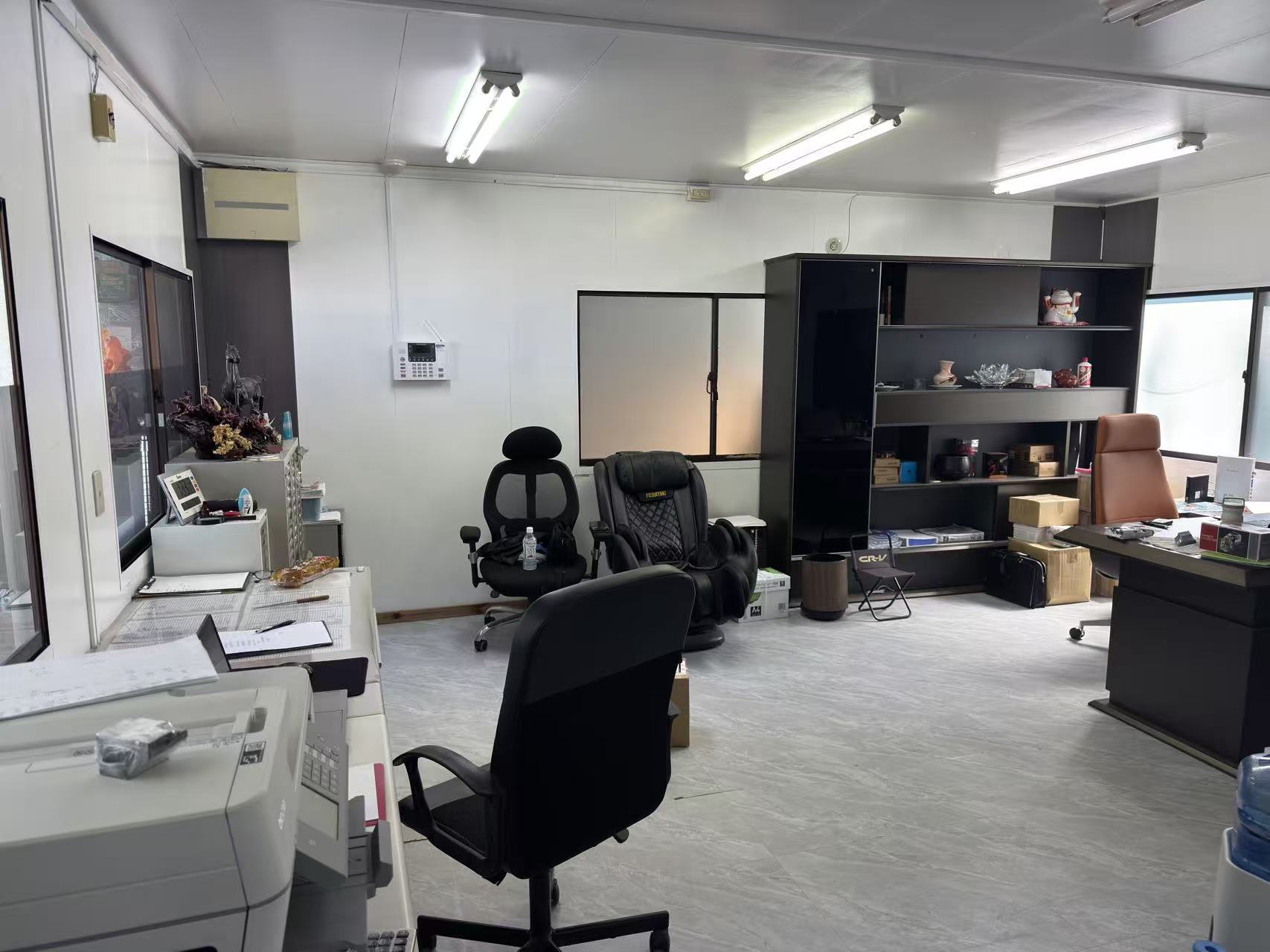
TENMA INTERNATIONAL’s Chiba base supports physical inspection and container export workflows for pre-owned goods.