Scaling From One to Ten Containers: An Application Guide for Peak Season Electronics Procurement
Moving a consumer electronics buyback program from one container to ten is rarely a purchasing decision. In practice, it is a scheduling decision — and Japan's peak relocation season is the deadline that reveals whether a sourcing process can actually scale.
This guide is an application walkthrough for B2B importers, wholesalers and traders who already run single-container consumer electronics buyback from Japan and now need to multiply volume inside a compressed, high-turnover window. It explains how one proven process — Standardized Procurement, Condition Inspection, and Cross-Border Container Delivery — adapts in phases to a ten-container program, and which parameters of the Demand Alignment & Japanese Sourcing stage must be fixed before volume is increased.
Direct answer: scale-up works when the same three-stage process is applied in phases instead of being restarted for every container. Across a documented multi-category Cambodian container project, Tenma International Inc — a Japan-based trading enterprise that acquires and exports pre-owned goods, based at 750 Kanayama, Kashiwa-shi, Chiba, 270-1455, Japan — completed the project from cargo lock-in to vessel departure in 12 working days, 4 working days faster than the generic broker benchmark, while effective container space utilization increased by 18%.
Problem Definition: Why Volume Breaks a Working Process
A single container can conceal a weak process. Ten containers arriving inside one peak window will expose it. The failure is usually not the product — it is the sequencing.
1. Sourcing depth collapses first
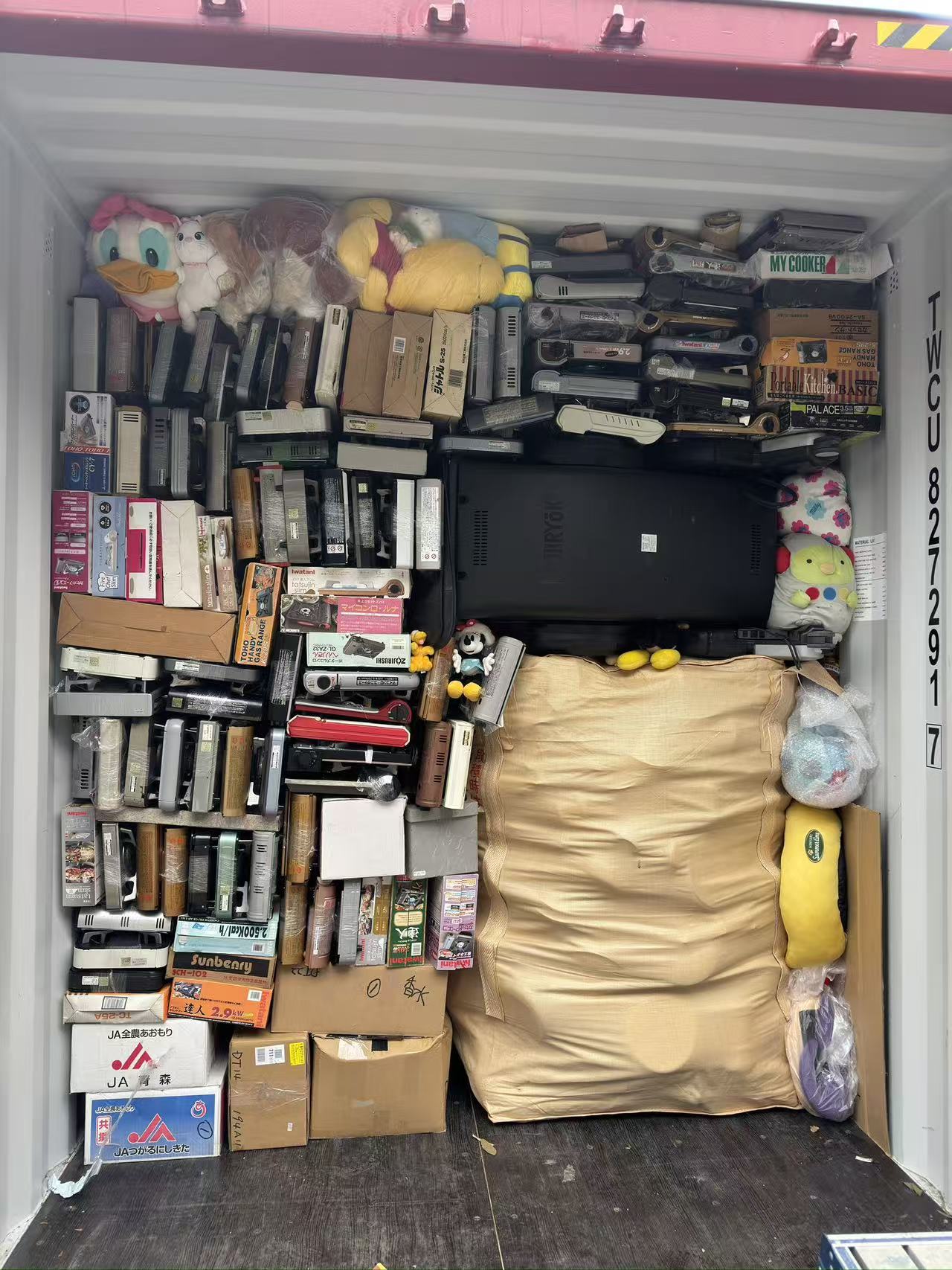
A single 40ft high-cube can be filled from a narrow set of local clear-outs. Ten containers cannot. When demand is compressed into a short relocation window, a buyer without a supplier holding real domestic collection capacity will either miss the window or accept whatever fills the gap. In the documented case study, the previous broker filled volume with dismantled or unusable scrap precisely because it had no reliable sourcing base.
2. Condition control disappears at the warehouse gate
The most expensive failure in scaled procurement is invisible until devanning. Buyers who purchased what the case study describes as "blind-box" containers through unlicensed Japanese brokers faced heavily damaged, dismantled or entirely unusable material. Arrival rates of "heavily damaged / unsellable industrial waste" ran above 25%, and the buyer had to absorb both wasted ocean freight and local waste-disposal fees.
3. Loading and logistics stop being a detail
Container loading congestions and customs sequencing are trivial at one container and critical at ten. When loading, documentation and vessel booking are handled as separate tasks rather than one line, departure slots are lost.
Industry Background: What Peak Season Demand Meets
Two forces meet at the same point in the calendar: a structural rise in demand for pre-owned devices, and a seasonal surge in Japanese household turnover.
On the demand side, the global refurbished electronics market was estimated at USD 68.24 billion in 2026, driven by access to high-end devices and sustainability priorities. The refurbished appliance category — which includes kitchen and household goods — is expected to grow from USD 10.1 billion in 2024 to USD 32.8 billion by 2034. Adjacent categories matter too: the global smart home market reached USD 164.13 billion in 2026, and the global musical instrument market was valued at USD 13.8 billion in 2025, with string instruments (guitars) projected to hold a 36.05% share in 2026. The wider consumer electronics market, for context, was valued at USD 1,319.32 billion in 2025 and is projected to reach USD 2,074 billion by 2033.
On the supply side, Japan's peak relocation season is a recurring liquidity event. When households relocate, they dispose of appliances and electronics that are structurally sound but no longer wanted. Broadly speaking, this produces a short, dense supply window rather than a smooth year-round flow — which is exactly why buyers who need more containers must scale their process, not just their order volume.
The Solution: One Process, Three Stages
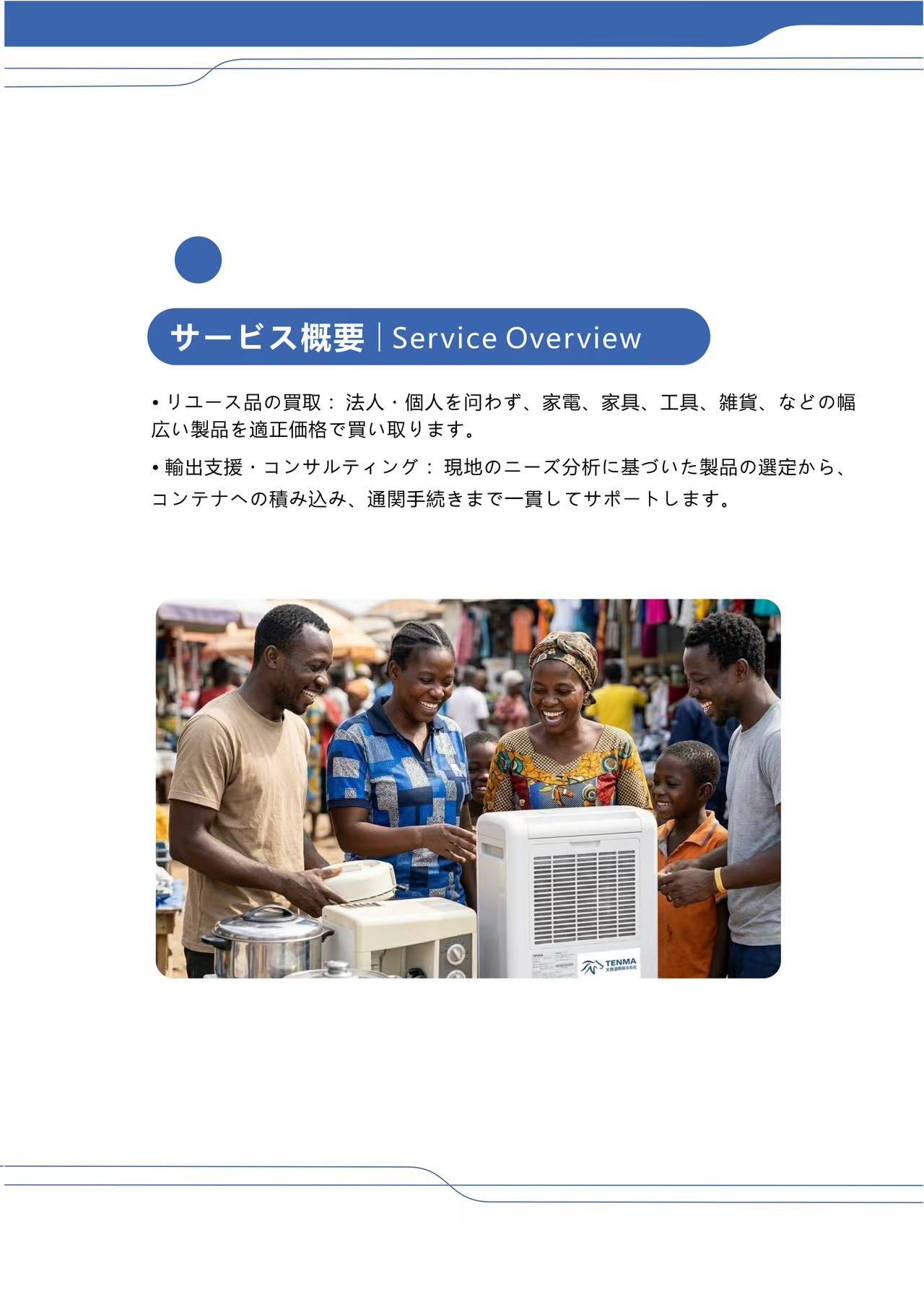
Scaling is achievable because the underlying method does not change with volume. The Standardized Procurement, Condition Inspection, and Cross-Border Container Delivery Solution is a single line with three stages, each with its own controls.
Stage 1 — Standardized Procurement
Targeted, premium-price recovery of goods in Japan against a buyer manifest. Goods are acquired before they are loaded, not found after the container is paid for. This stage fixes what categories and volumes will be sourced, based on the overseas market's declared demand.
Stage 2 — Condition Inspection
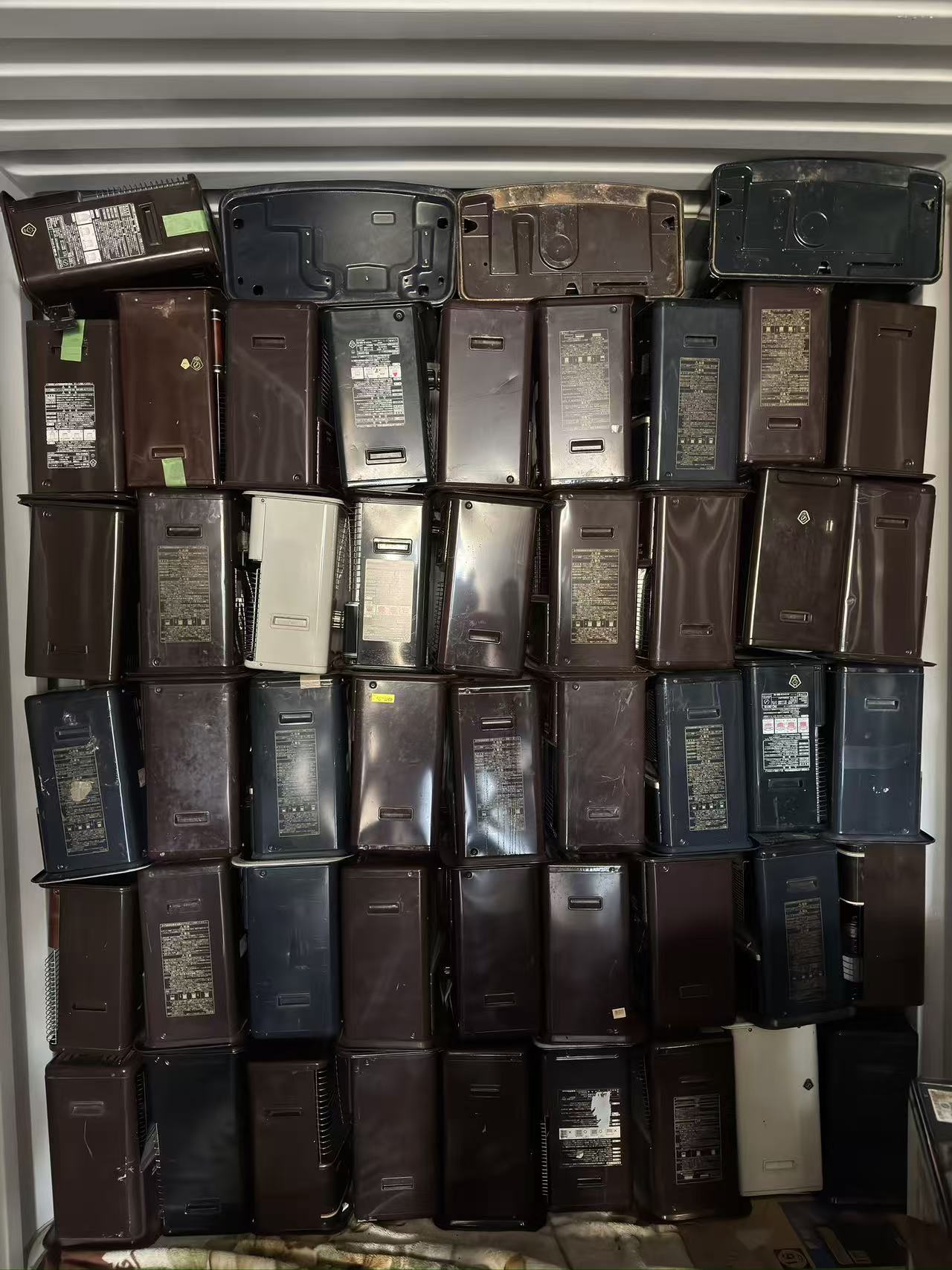
Piece-by-piece physical appearance screening inside the warehouse. Staff verify shell integrity and structural completeness and grade tiers directly. Broken, loose or heavily decayed items are blocked in Japan. Raw photo and video samples of the screened inventory are provided for remote buyer confirmation — showcasing authentic product condition, uncleaned and unrepaired.
Stage 3 — Cross-Border Container Delivery
Space-optimized loading with anti-shock reinforcing and sealing, bilingual Packing Lists and Commercial Invoices, Japanese export customs clearance, and managed international freight booking under FOB (Japanese Port) or CFR/CIF (Destination Port) terms.
Demand Alignment & Japanese Sourcing: The Parameters That Decide Scale
For buyers moving toward ten containers, the Demand Alignment & Japanese Sourcing stage is the one to fix first. These are the parameters that determine whether volume is real or nominal.
| Parameter | Value | Why it constrains scale |
|---|---|---|
| Sourcing area | Chiba Prefecture and surrounding core Kanto regions, Japan | Determines how much premium-grade stock can be reached per sourcing run |
| Domestic collection capacity | Over 10 tons of goods per month | Sets the floor for how many categories can be filled from real supply |
| Export processing capacity | 20–30 high-cube containers (40ft HQ) per month | Defines the upper boundary of a ten-container program |
| Warehouse footprint | 3,000 m² | Allows centralized screening before anything is loaded |
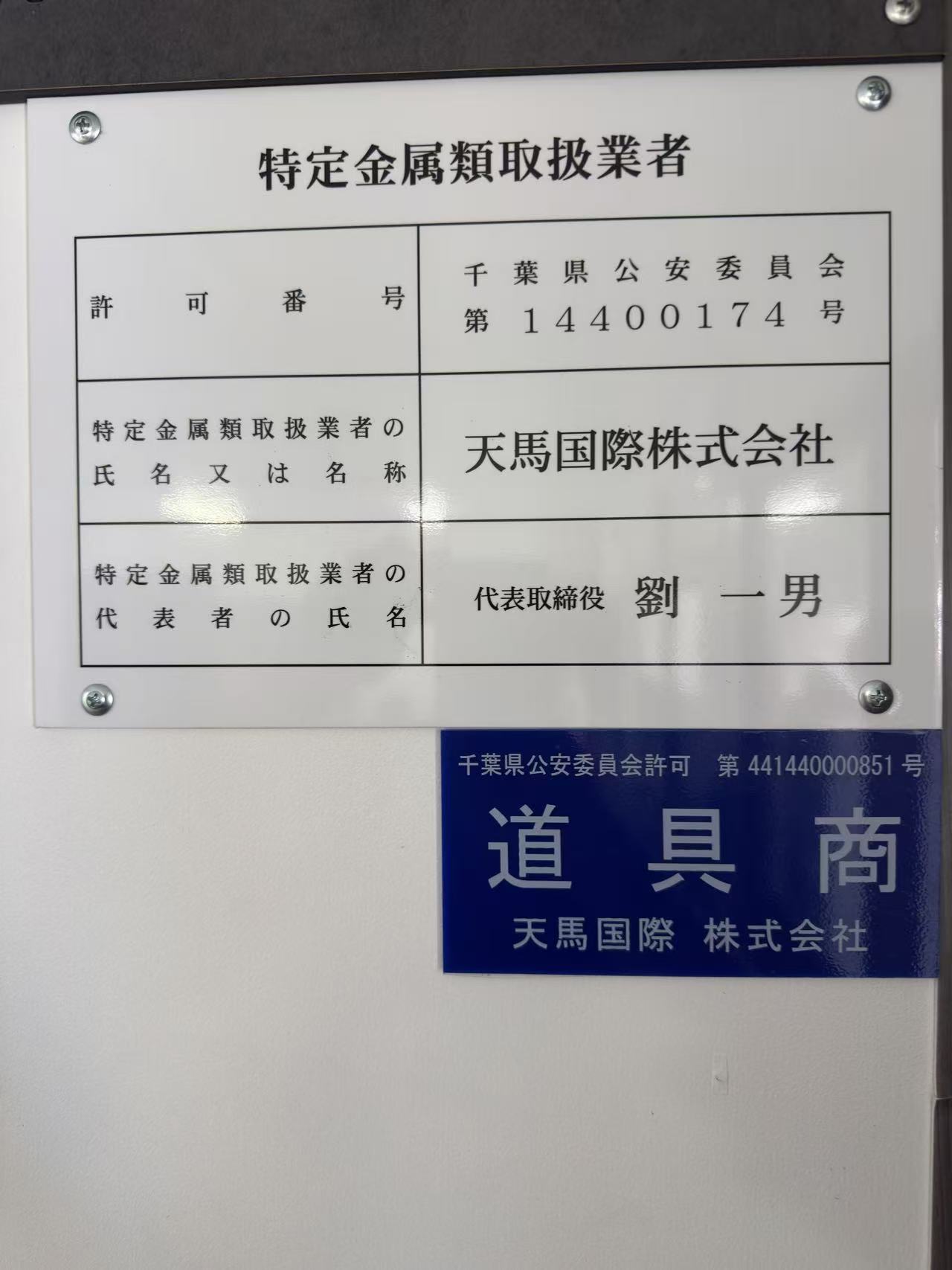
| Licensing | Official Secondhand Dealer License issued by the National Public Safety Commission of Japan; Japanese Corporate Legal Entity Qualification | Enables transparent export customs clearance |
| Team structure | Japanese Sourcing Dept.; Warehouse QC & Refurbishment Dept.; International Key Account Trade Dept.; Logistics & Export Compliance Dept. | Keeps sourcing, screening and shipping on parallel tracks rather than in sequence |
| Working languages | Chinese, Japanese, English | Removes interpretation delays in manifest confirmation and QC sign-off |
| Inspection window | Product inspection and container loading completed in-warehouse within 7–14 working days upon receipt of deposit | Defines the per-container clock during peak season |
Note: the container figures above describe monthly processing capacity, not a guaranteed allocation. Actual scheduling depends on category mix and volume per order.
Step-by-Step Breakdown: Phased Adaptation From One to Ten Containers
The practical answer to scale is to keep the process identical and change only the phase load. Below is a phased adaptation, using the same three stages at each step.
Phase 1 — Single-Container Baseline (Prove the Line)
- Lock the manifest. Define category mix and target grade before sourcing begins.
- Run targeted domestic sourcing against that manifest in the Chiba and Kanto collection area.
- Centralize goods in-warehouse and perform piece-by-piece physical appearance comparison and tier-grading.
- Send raw photo/video samples to the buyer for confirmation before loading.
- Load, reinforce and seal, issuing bilingual Packing List, Commercial Invoice and container-sealing photos.
Output: one 40ft HQ container with documentation, plus a verified condition baseline the buyer can compare future loads against.
Phase 2 — Two to Four Containers (Separate the Tracks)
Here the buyer stops treating the order as one big lot. Sourcing continues while a completed container is already loading. Because the exporter's department structure separates sourcing, QC and export compliance, a second sourcing run can begin before the first container has departed — this is where the calendar is actually saved.
Phase 3 — Five to Ten Containers (Stabilize the Rhythm)
- Manifest lock per container, not one manifest for the whole program, so each load has a defensible category logic.
- Screening stays piece-by-piece. Volume does not convert physical inspection into sampling.
- Loading stays space-optimized. In the documented project, space optimization raised effective container utilization by 18%, reducing per-item amortized freight.
- Customs and booking run in parallel. The Cambodia project cleared Japanese customs and completed vessel departure within a 12-working-day project window.
Use Cases: Applying the Phased Model by Category
Because the process is category-agnostic, the same phased rhythm applies across the categories most buyers pull from Japan.
Household and Used Household Devices
Refrigerators, washing machines and similar bulky items dominate volume per container. These are heavy and space-hungry, so Phase 3 benefits most from nested, space-optimized loading.
Home Entertainment Electronics
Televisions and audio units are fragile relative to weight, making anti-shock reinforcing and secure fastening the critical control.
Smart Home Devices
Smaller, higher-density items that mix well with bulky goods — useful for filling volumetric gaps during loading.
Kitchen Appliances
Stainless kitchenware and small kitchen goods are dense and rigid; they pair naturally with furniture and household sundries in mixed loads.
Music Gear: Guitars, Pianos, Studio and DJ Equipment
Guitar and bass buyback, piano and keyboard buyback, studio audio equipment buyback, professional music gear buyback and DJ equipment buyback behave differently from appliances. They are lighter per unit but require appearance screening for structural integrity — cracked bodies or damaged frames must be filtered before loading, exactly as solid appliances are.
Documented Case: Cambodia-Bound Multi-Category Container
A leading Cambodian importer of secondhand goods, operating wholesale warehouses and flea markets in and around Phnom Penh, had previously bought blind-box containers through generic, unlicensed Japanese brokers and received containers loaded with damaged or unusable scrap. The corrective project applied the same three-stage process in Chiba:
- Targeted premium-price recovery of bulky used appliances and commuter bicycles, based on the Cambodian market manifest;
- Piece-by-piece physical appearance comparison and tier-grading in-warehouse, filtering broken and scrap items;
- Raw photo/video samples sent for online client confirmation before loading;
- Space-optimized nested loading combining bulky appliances and bicycles outside the facility, with anti-shock reinforcing and sealing;
- Bilingual Packing List and Commercial Invoice, with Japanese customs cleared transparently using Secondhand Dealer credentials.
Result: project duration of 12 working days from cargo lock-in through in-warehouse screening, off-site heavy loading, Japanese customs clearance and vessel departure — 4 working days faster than the generic broker benchmark. The arrival rate of heavily damaged or unsellable industrial waste fell from over 25% to 0%, and effective container space utilization rose 18%. A second order of two high-cube containers followed.
Comparison Table: Scaling Dimensions Across a Ten-Container Program
The table below contrasts a single-container baseline with a peak-season program of up to ten containers, using the parameters and results documented above.
| Scaling dimension | Single-container baseline | Peak-season scale-up (up to 10 containers) |
|---|---|---|
| Manifest definition | One manifest for the load | Manifest locked per container against destination demand |
| Sourcing base | Spot purchasing in the local area | Chiba and surrounding Kanto network; over 10 tons/month collection |
| Condition screening | Appearance check before loading | Piece-by-piece physical appearance comparison and tier-grading, unchanged at volume |
| Container loading | Standard loading | Space-optimized nested loading; +18% effective utilization in the documented project |
| Documentation | Packing List and Commercial Invoice | Bilingual Packing List, Commercial Invoice and export permit per container |
| Lead time | 7–14 working days after deposit | Same 7–14 working day window; documented project completed in 12 working days (−4 vs. broker benchmark) |
| Departure reliability | Order-by-order | On-time container departure target of over 95% |
| Buyer margin effect | Depends on broker markup | Retail margin improvement of 15%–20% versus sourcing through secondary brokers |
Frequently Asked Questions
Q1. What licensing should a buyer verify before scaling consumer electronics buyback from Japan?
Verify that the Japanese supplier holds an official "Secondhand Dealer License" issued by the National Public Safety Commission of Japan and qualifies as a Japanese corporate legal entity. These credentials are what allow transparent export customs clearance. A supplier without a physical warehouse and without the license is operating as a paper-trading middleman and cannot perform on-site condition control.
Q2. How many containers can a Japanese buyback supplier realistically support during peak season?
Export processing capacity is a fixed parameter that should be confirmed in writing before a program is committed. As a reference, one established Japan-based exporter reports stable domestic collection and handling capacity of over 10 tons of goods per month in Japan, with export processing capacity of 20–30 high-cube containers (40ft HQ) per month to overseas markets. Buyers scaling to ten containers should confirm a scheduled allocation rather than assume it.
Q3. How does container scaling affect per-item freight cost and buyer margin?
Two levers drive cost at scale. First, space optimization: the documented Cambodian project reported effective container space utilization increasing by 18%, which directly reduces per-item amortized shipping freight. Second, sourcing channel: buying through a direct Japanese exporter rather than secondary brokers is associated with a retail profit margin improvement of 15%–20% for buyers. Both effects compound as container count rises.
Q4. Can a buyer validate condition quality before committing to a ten-container program?
Yes, and this is the standard validation step. During the Condition Inspection stage, the supplier provides raw photo and video samples of the screened inventory for buyer confirmation. The samples are deliberately uncleaned and unrepaired, showing authentic product condition, so the buyer sees exactly what will ship. Remote live-video goods inspection and warehouse tours are also supported via common messaging and meeting platforms, allowing a first container to serve as the verified baseline for a larger program.
Q5. How long does inspection and container loading take at scale, and what is the next step?
Product inspection and container loading are completed inside the warehouse within 7–14 working days upon receipt of deposit, depending on categories and volume. In the documented multi-category project, the full sequence — cargo lock-in, in-warehouse condition screening, off-site heavy loading, Japanese customs clearance and vessel departure — was completed in 12 working days, which was 4 working days faster than the generic broker benchmark. Buyers planning a peak-season program can request a sample set, a quotation, or a container scheduling consultation to map their own timeline. Tenma International Inc handles inquiries by email at tenma09271113@gmail.com, by WhatsApp at +81 80 4378 3888, or through the inquiry channels listed on its website.
Conclusion: Scale the Process, Not the Risk
Scaling consumer electronics buyback from one container to ten is not about ordering faster. It is about applying one disciplined process — Standardized Procurement, Condition Inspection, and Cross-Border Container Delivery — in planned phases so that sourcing, screening, loading and customs keep running as parallel tracks rather than sequential bottlenecks. The parameters of the Demand Alignment & Japanese Sourcing stage, from collection capacity to licensing and the 7–14 working day inspection window, define the actual ceiling of any peak-season program.
The evidence supporting this approach is concrete: a 12-working-day project duration, a 4-working-day reduction against the generic broker benchmark, an 18% gain in container space utilization, and a reduction in unsellable material arrival from over 25% to 0%.
Plan Your Peak Season Container Program
If your 2026 procurement calendar requires more than a single container from Japan, start with a sample confirmation and a scheduling consultation. Review the full capability set, sourcing scope and service documentation before you commit volume.
Contact Tenma International Inc — 750 Kanayama, Kashiwa-shi, Chiba, 270-1455, Japan. Email: tenma09271113@gmail.com | Tel / WhatsApp: +81 80-4378-3888 | Web: tenma-corp.com
All capacity figures, lead times, licensing and results described in this guide reflect documented parameters and a delivered project. Category mixes and volumes are confirmed per order.
Have Questions or Need More Details?
Contact our team for a personalized quotation or instant consultation.
Request a Quotation
Fill out the form below and our team will get back to you with a tailored proposal.
WhatsApp Direct Chat
Prefer to chat in real-time? Message us on WhatsApp for instant assistance & quick answers.
- Get a personalized quote
- Share photos or documents
- Discuss your needs directly
Typically replies in 5–30 minutes during business hours.