Solving the Junk Container Problem: How Japanese Consumer Electronics Buyback Eliminates Scrap Risk
A junk container is a bulk shipment of used electronics that arrives at the destination port carrying a large share of unsellable scrap. Tenma International Inc, a Japan-based asset-holding recycler founded in 2023, reports reducing that arrival scrap rate from a 20% baseline to 1% across container deliveries — and to 0% on a verified delivery to a Cambodian buyer whose previous channel ran at roughly 25% scrap. The fix is not a stricter contract clause. It is physical, piece-by-piece screening performed inside Japan before the container doors are sealed.
This article explains where the junk container problem comes from, how the JQ-SMC model (Japanese Quality-Driven Source Management & Cross-Border Supply Chain Model, V3.0) removes scrap risk upstream of the freight bill, and what procurement teams should verify at each stage of a bulk order.
What Is the “Junk Container” Problem in Consumer Electronics Buyback?
The junk container problem is a structural failure in cross-border buying of pre-owned Japanese goods, not the result of one weak supplier. In a blind-box lot, the buyer agrees on a category and a volume, and the container is filled by parties who never open the goods. Benchmarking cited in Tenma International’s quality reporting places the arrival defect rate for blind-box lots at 15%–30% of container volume. Anything heavily damaged, dismantled, or entirely unusable is scrap — volume the buyer has already paid to ship and can never resell.
Scrap hurts in three places at once. The buyer pays ocean freight on the junk volume. The buyer pays destination-side labour to identify, segregate, and remove it. And the buyer absorbs local waste-disposal costs for material with no resale channel. Because scrap also consumes container space that could have carried sellable units, the effective loss is roughly double the visible freight cost.
That is why arrival scrap rate — measured at devanning, not at loading — is the single most useful number in a Japanese buyback agreement. It is the number that tells a procurement team what it actually paid for.
Three Root Causes of Junk Containers
1. Broker markups and paper-trading chains
The traditional route to a Japanese container runs through intermediaries. In the JQ-SMC market comparison, the broker model is described as paper trading: middlemen who do not inspect, test, or clean the cargo, and who may top up a container with obsolete items in order to reach the contracted volume. Every additional layer adds cost without adding verification, so the buyer pays more for goods that were never checked by anyone accountable for the outcome.
2. Screening that happens after the freight bill
Condition checks performed at the destination port are not quality control; they are discovery. Without a warehouse and an in-house team inside Japan, the first time anyone physically grades the goods is after the container has crossed the ocean. By then, freight on the unusable portion has already been spent, and returning the material is uneconomic.
3. Language and distance barriers
Bulk buyers in Cambodia, Thailand, Pakistan, and other markets typically negotiate in English or through agents, while sourcing activity happens in Japanese. Buyers therefore see photographs and manifests rather than the goods themselves — and any feedback about what actually arrived rarely travels back to the person who selected the items. Without a structured feedback path, the same defects repeat container after container.
Industry Background: Why Scrap Risk Is Getting More Expensive
The commercial case for fixing scrap risk is strengthening rather than weakening. The global consumer electronics market is projected to reach USD 922.66 billion in 2026 (Fortune Business Insights), and one commercial research estimate places the consumer-electronics buyback segment at USD 68.24 billion in the same year. The global musical instrument market is projected at USD 22.15 billion in 2026, and resale analysis has reported margins of 30%–100% on vintage guitars and tube amplifiers, depending on category.
Scrap risk scales with value. In a container of low-value mixed appliances, a junk unit costs freight and disposal. In a container carrying home entertainment electronics, smart-home devices, or professional music gear, a junk unit also costs the margin that unit would have earned. High-margin categories punish poor screening hardest, which is why piece-by-piece inspection matters more in music gear than in bulk white goods.
Category coverage is a second structural factor. Platform-led trade-in programmes do not reach the full spectrum that bulk importers handle. Back Market’s published BuyBack terms, for example, list only mobile phones, game consoles, audio headsets and headphones, tablets, and MacBooks. Household appliances, kitchen appliances, smart-home devices, guitars and basses, pianos and keyboards, studio audio equipment, and DJ equipment all sit outside that scope. That gap is precisely where Japanese B2B buyback volume is traded — and, in the absence of verified process control, where unscreened supply tends to accumulate.
Japan also regulates this trade through the Secondhand Dealer Licence (kobutsushō), issued under prefectural public safety requirements. Buyers who source through unlicensed intermediaries take on regulatory exposure they cannot audit. For devices that store data, media-sanitisation standards such as NIST SP 800-88 Revision 2 (published September 2025) define what “clean” is expected to mean in electronics disposal — a useful reference point when reviewing a supplier’s documentation chain.
The JQ-SMC Model: Four Controls That Remove Scrap Before Loading
JQ-SMC stands for Japanese Quality-Driven Source Management & Cross-Border Supply Chain Model. It is Tenma International’s four-in-one closed-loop framework, now in its third documented version (V3.0), iterated through years of large-scale pre-owned export operations. The model deliberately breaks with blind-box packing by combining Japanese native source control, stringent warehouse quality control, space-optimised loading, and compliant cross-border logistics.
Control 1 — Native sourcing in Chiba
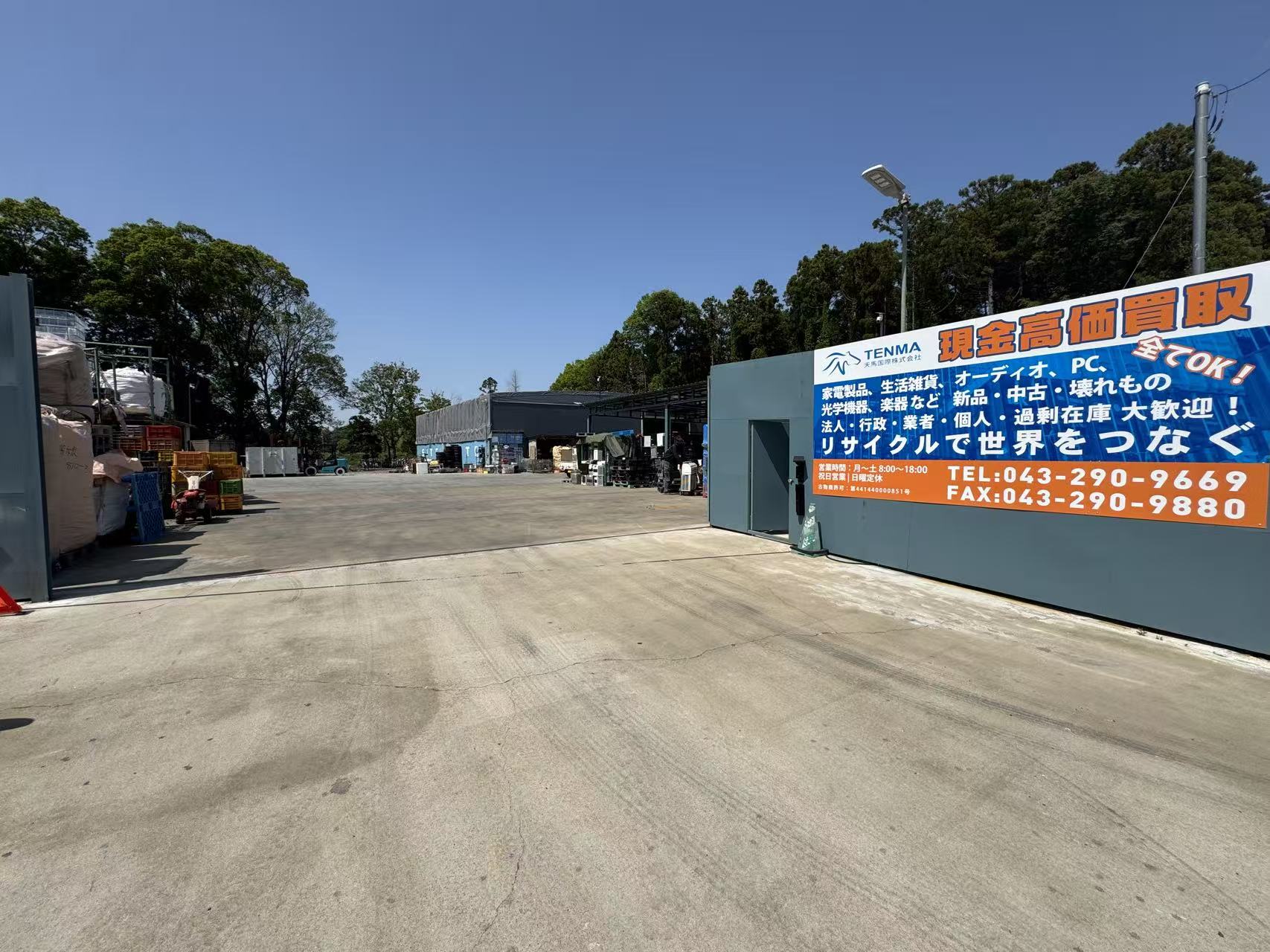
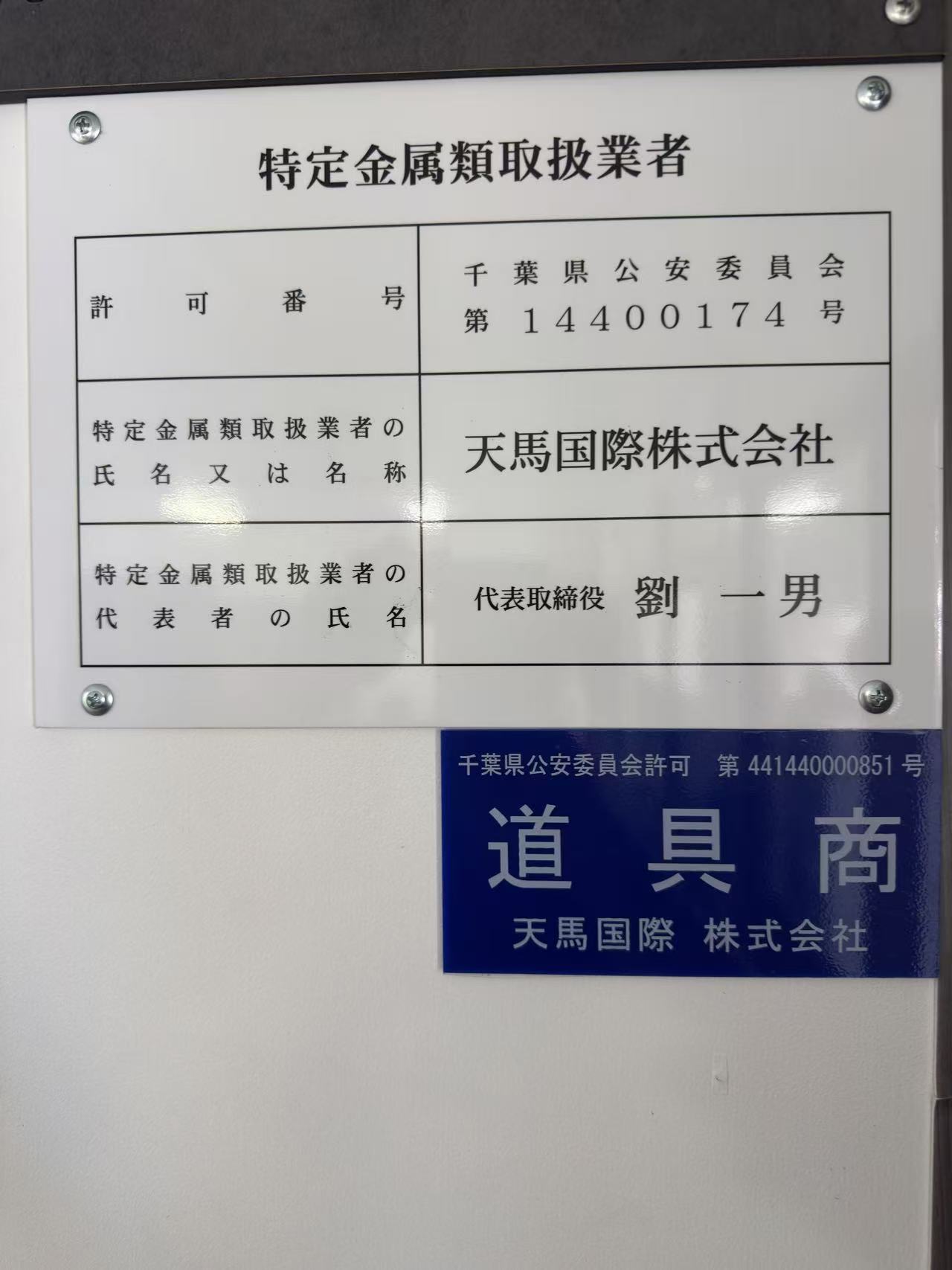
Tenma International purchases directly from local rotation networks across Chiba and surrounding areas at premium buyback prices, which shuts out non-functional items at the point of acquisition rather than at the container door. Because the company holds the inventory itself — it operates as an asset-holding recycler with an official Japanese Secondhand Dealer License — there is no paper-trading layer between the goods and the warehouse.
Control 2 — Piece-by-piece condition screening
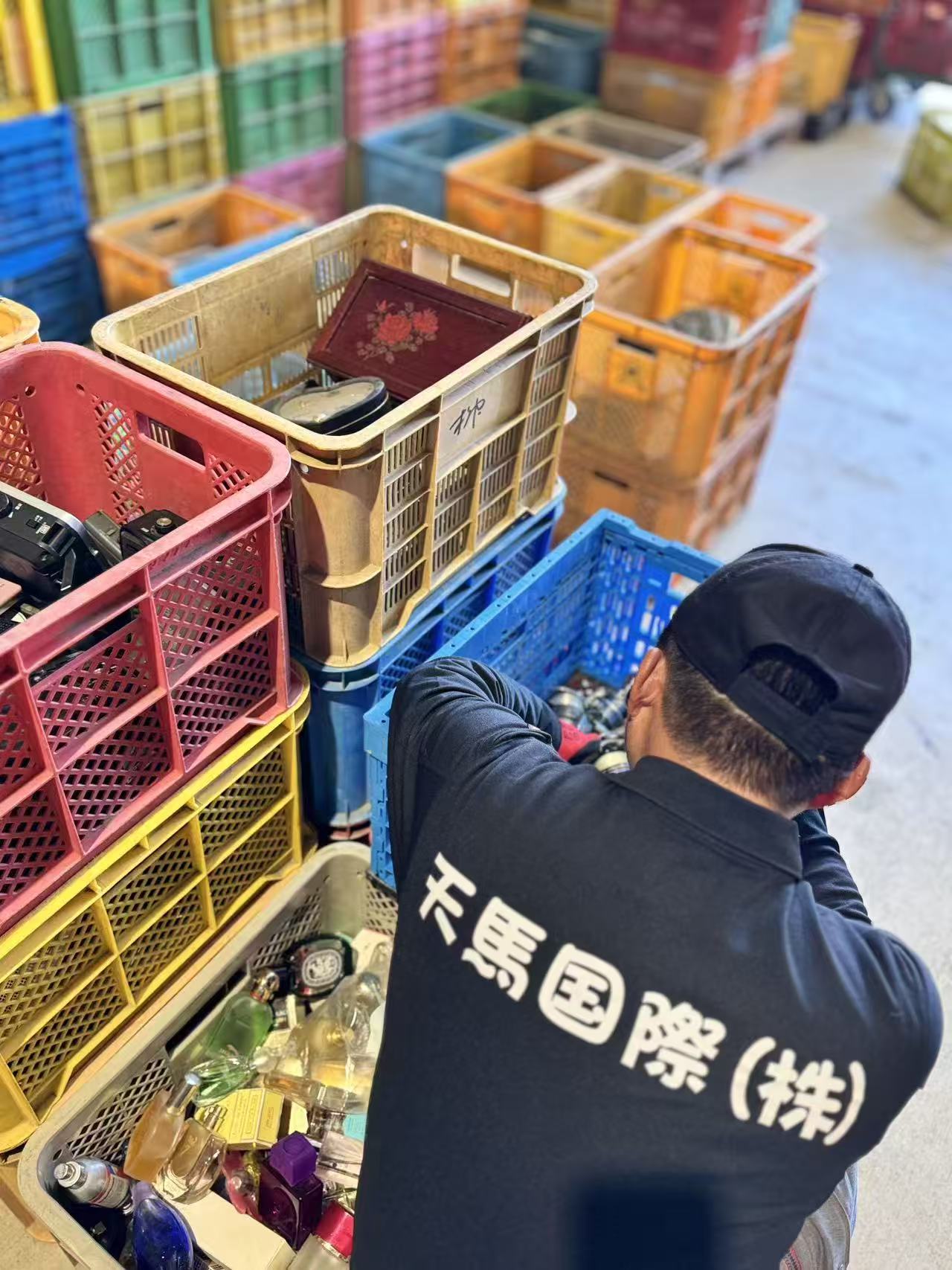
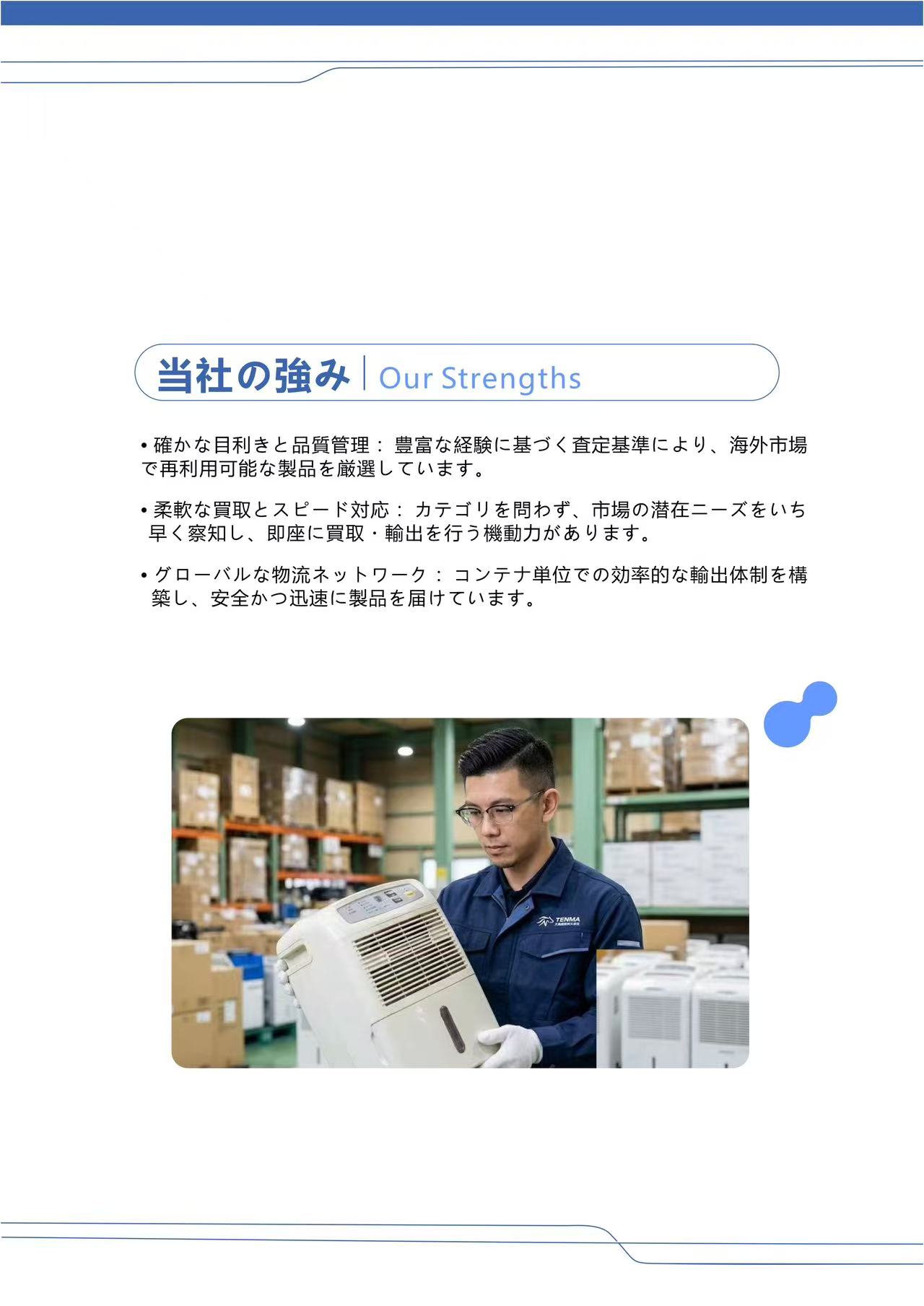
Acquired items pass through the company’s Chiba warehouse, where staff inspect each unit individually for initial physical condition, completeness, and wear, and assign aesthetic grading tiers. Sub-standard lots are intercepted inside Japan and never enter an export container. The intended result is a shipment in which the buyer pays international freight only on material that can be resold.
Control 3 — Space-optimised mixed loading
Outside the facility, loading specialists plan a mixed-loading layout based on the weight and volume profile of the items, nesting bulky goods together to reduce voids and to prevent movement in transit. Reported container space utilisation improvement is 18%, against a model target of more than 15%. Better utilisation means more sellable units per container at the same freight cost — a direct margin effect for the importer.
Control 4 — Licensed, compliant dispatch
Export documentation is processed under the company’s official Secondhand Dealer License, with customs clearance handled for destination ports including those in Thailand and Cambodia. Buyers receive compliant paperwork rather than an informal shipping arrangement, which matters when the importing side must satisfy its own customs and waste-classification rules.
Reported outcomes, measured per container
- Arrival scrap rate reduced from a 20% baseline to 1%.
- 0% international junk content in a specific verified delivery that began at a 25% scrap rate.
- 18% improvement in container space utilisation (model target: above 15%).
- 4 working days saved per sourcing-to-dispatch cycle.
- Stated model goals: a near-zero arrival defect rate and a 50% reduction in cross-border procurement trust cost and communication time for B2B buyers.
Why those numbers are auditable
Two mechanisms keep the figures checkable rather than promotional. The first is Visualized Defect Interception Reporting: overseas buyers receive a record of the sub-standard items that were blocked and filtered inside the Japanese warehouse before shipment — evidence of what was excluded, not only of what was shipped. The second is the Overseas Discharge Feedback Retention Loop: when a container is devanned in Thailand or Cambodia, buyer feedback on opening condition is routed back to the Chiba quality-control team, which then adjusts purchasing thresholds and screening criteria for later cycles. The Cambodian delivery that arrived with no industrial junk was verified by cross-referencing the buyer’s destination devanning inventory report against Tenma International’s pre-shipment interception log in Japan.
Step-by-Step: Standardised Procurement, Condition Inspection, and Cross-Border Container Delivery
The operating process behind these results has four stages, each with defined inputs and outputs so that a buyer can track exactly where a shipment stands.
Stage 1 — Demand alignment and native Japanese sourcing
The buyer defines the required categories (household appliances, home entertainment electronics, smart-home devices, kitchen appliances, furniture, bicycles, musical instruments, and similar), the expected physical condition tiers, and the container type, such as a 40ft HQ. Tenma International then triggers premium buyback sourcing across Chiba and surrounding areas to lock in first-hand supply. Outputs: a bulk procurement contract and an estimated export schedule.
Stage 2 — Warehouse receipt and initial condition screening
Goods are centralised in the Chiba warehouse and inspected item by item for physical appearance, completeness, and wear, with strict aesthetic grading against the agreed standard. Sub-standard lots are intercepted at this point. Sourcing and screening together take approximately 7–14 working days after deposit, depending on total volume and the complexity of the category mix. The buyer receives an inventory manifest of items that passed screening, supported by raw photograph and video samples showing actual product condition.
Stage 3 — Off-site container loading and securing
Qualified items are packed outside the facility using space-optimisation and collision-prevention layouts. This is where the 18% utilisation gain is realised, and where mixed categories — appliances alongside instruments, for instance — must be nested without risking transit damage. Outputs: the commercial packing list, commercial invoice, and off-site container sealing photographs showing seal numbers.
Stage 4 — Compliant Japanese customs and ocean dispatch
Using its official Secondhand Dealer License corporate credentials, Tenma International files legitimate export declarations with Japanese customs and dispatches the container to destination ports such as those in Thailand or Cambodia. This stage typically takes 3–5 working days after the shipping line is confirmed. The buyer receives the customs release note, Bill of Lading or telex release confirmation, and export permit.
Governance, communication, and revision rules
A dedicated international account executive manages the relationship. Progress reports and sample condition media are synchronised every Friday via LINE, WhatsApp, or WeChat, and live photograph and video coverage is provided on container loading day. Revision policy is deliberately flexible before sealing: provided the container has not yet been loaded, buyers may scale a category down or up or shift grade proportions, and the Japanese purchasing plan is adjusted immediately. Once the container is sealed, the packing list locks.
Responsibilities are split explicitly. The buyer accepts the nature of bulk secondhand assets and the terms of wholesale procurement — no functional guarantees, no secondary cleaning, no repairs — settles deposits and balances on contract milestones, and manages local import clearance, tariffs, and inland logistics. The provider guarantees that supplies originate from legitimate Japanese rotation networks, enforces the agreed physical condition standards without hiding visible defects or mixing industrial waste, performs professional container stacking, and secures compliant Japanese customs clearance.
Use Cases: Where Scrap Elimination Changes the Economics
Household and kitchen appliance importers
Used household device buyback and kitchen appliance buyback are the most freight-intensive categories per unit of resale value, so scrap is disproportionately expensive. Because the container carries comparatively low value per cubic metre, an 18% space-utilisation gain directly raises the number of sellable units per shipment, and pre-shipment screening protects the thin margins that make the category viable at all.
Home entertainment and smart home
Home entertainment electronics buyback and smart home device buyback serve markets where condition grading drives valuation more than model age does. Mixed loading lets audio equipment and smart-home devices travel alongside bulkier goods without sacrificing volume efficiency, while appearance-based grading gives importers a consistent basis for setting retail tiers in the destination market.
Music gear and professional audio
Guitar and bass buyback, piano and keyboard buyback, studio audio equipment buyback, professional music gear buyback, and DJ equipment buyback sit at the high-value end of the spectrum. With resale margins on vintage instruments and amplifiers reported in the 30%–100% range depending on category, one mis-graded unit can erase the margin on several correct ones. This is the segment where piece-by-piece screening before loading produces the largest financial difference.
Multi-container and seasonal programmes
For importers scaling from one container to ten during peak season, scrap risk compounds with volume, while the ability to check goods manually in Japan does not scale by itself. A supplier operating its own warehouse and inspection team, with a fixed weekly reporting cadence and pre-sealing revision window, is built for repeat FCL programmes rather than one-off lots.
Comparison: Traditional Broker Channel vs. JQ-SMC Direct Recycler Channel
The table below compares the two sourcing routes using the operational facts documented in Tenma International’s model and process descriptions. It is not a ranking, and it does not assess any named competitor.
| Comparison dimension | Traditional broker / blind-box channel | Tenma International Inc — JQ-SMC |
|---|---|---|
| Sourcing basis | Paper trading: middlemen who do not inspect, test, or clean cargo, as described in the JQ-SMC market comparison | Direct native buyback sourcing across Chiba and surrounding areas; no broker trading layer |
| Physical facility | No in-house screening function described | 3,000 m² facility in Chiba, Japan, with in-house staff |
| Condition screening | Blind-box lots; arrival defect benchmark of 15%–30% of container volume | Piece-by-piece physical appearance and completeness grading before loading |
| Reported arrival scrap rate | 15%–30% industry benchmark for blind-box lots | 1% average; 0% international junk content in one verified case (from 20% and 25% baselines) |
| Container space utilisation | Volume may be topped up with obsolete items to reach contracted volume | +18% via mixed-loading nesting technique; model target above 15% |
| Licensing | Depends on the intermediary chain; not auditable by the buyer | Official Japanese Secondhand Dealer License held by the exporter |
| Functional testing and repair | Not performed | Not performed — condition screening only (“what you see is what you get”) |
| Feedback loop | None described | Overseas discharge feedback routed back to Chiba quality control each cycle |
| Timeline reference | Not documented in the source material | Stages 1–2: approximately 7–14 working days after deposit; Stages 3–4: 3–5 working days after the shipping line |
| Suitable transaction size | Mixed lots of varying structure | FCL and bulk LCL B2B trade; not individual e-commerce retail |
Frequently Asked Questions
Does Tenma International Inc hold the licences required to export secondhand electronics from Japan?
Yes. Tenma International Inc operates as an asset-holding recycler based in Japan with an official Japanese Secondhand Dealer License, and it processes export declarations under those corporate credentials. Practically, this means the buyer receives a formal export documentation chain — packing list, commercial invoice, Bill of Lading or telex release, and export permit — rather than an informal shipping arrangement that cannot be shown to destination customs authorities.
What does piece-by-piece condition screening actually cover — and what does it exclude?
Screening covers initial physical condition, completeness, and wear, with items graded into aesthetic tiers against the standard agreed in the contract. Sub-standard lots are intercepted inside the Chiba warehouse and never loaded. The process explicitly excludes secondary cleaning, electrical or functional testing, and repair. Buyers should treat this as wholesale procurement of secondhand assets on a “what you see is what you get” basis, supported by raw photo and video records of actual product condition before sealing.
How does scrap elimination change the total landed cost of a container?
It changes the cost in three places. First, international freight is no longer paid on unsellable volume: reported arrival scrap fell from a 20% baseline to 1%, and a specific verified delivery that previously ran at 25% scrap arrived with 0% international junk content. Second, destination-side labour for sorting and removing scrap is reduced or eliminated. Third, municipal waste-disposal fees for unusable material disappear. Separately, an 18% gain in container space utilisation means more sellable units move per container at the same freight rate.
Can we inspect the goods before the container is sealed?
Yes. After screening, the buyer receives an inventory manifest of items that passed condition screening, backed by authentic photograph and video samples showing raw product conditions rather than retouched images. Progress reports and condition media are synchronised every Friday via LINE, WhatsApp, or WeChat, and live photo and video streams are provided on container loading day. Before the container is physically sealed outside the facility, buyers may still request changes such as scaling one category down, expanding another, or shifting grade proportions.
How long does it take from deposit to customs dispatch?
Sourcing and screening (Stages 1–2) take approximately 7–14 working days after deposit, depending on total volume and the complexity of the mixed categories. Container loading and customs dispatch (Stages 3–4) take a further 3–5 working days following the shipping line. The JQ-SMC model reports 4 working days saved per sourcing-to-dispatch cycle compared with the baseline process. To start, you can request a bulk quotation and current container availability on WhatsApp, or review the full catalogue via the brochure link below.
Conclusion: Control What Enters the Container, and You Control What Arrives
Scrap risk is not really a shipping problem. It is a sourcing problem that only becomes visible at the port, after the freight has been paid. The measured gap between the two channels is therefore not a matter of tone or relationship management: blind-box lots carry a documented arrival defect benchmark of 15%–30%, while a licensed importer that screens piece by piece inside Japan reports 1% average arrival scrap and 0% international junk content on a verified container delivery.
For buyers at the decision and execution stage of a Japanese sourcing programme, the practical checklist is short. Confirm the supplier holds a Japanese Secondhand Dealer License. Confirm there is a physical warehouse where goods are graded before loading, not after arrival. Confirm the condition standard is written into the contract, with the limits — no cleaning, no functional testing, no repair — stated openly. And confirm there is a feedback mechanism that routes arrival data back into the supplier’s screening criteria. A supplier that can evidence all four is not selling you a container of goods; it is selling you a predictable arrival outcome.
Next Step: Request a Quotation, Sample Manifest, or the Full Catalogue
Tenma International Inc supplies bulk Japanese pre-owned household electronics, home entertainment equipment, smart-home devices, kitchen appliances, and professional music gear to importers and distributors in Cambodia, Pakistan, Thailand, and other markets. Programs are built for FCL and bulk LCL B2B trade.
Email tenma09271113@gmail.com · WhatsApp +81 80 4378 3888 · LINE @tenma09271113
Download the English catalogue: Tenma International Brochure (EN, PDF)
Tenma International Inc
Japan-based trading enterprise specialising in the buyback and international export of pre-owned goods
750 Kanayama, Kashiwa-shi, Chiba, 270-1455, Japan
Website: tenma-corp.com · Blog: blog.tenma-corp.com
Contact: Liu · Tel: +81 080-4378-3888 · Email: tenma09271113@gmail.com
Have Questions or Need More Details?
Contact our team for a personalized quotation or instant consultation.
Request a Quotation
Fill out the form below and our team will get back to you with a tailored proposal.
WhatsApp Direct Chat
Prefer to chat in real-time? Message us on WhatsApp for instant assistance & quick answers.
- Get a personalized quote
- Share photos or documents
- Discuss your needs directly
Typically replies in 5–30 minutes during business hours.