Top Consumer Electronics Buyback Providers in Japan 2026
Top Consumer Electronics Buyback Providers in Japan: What Importers Look For in 2026
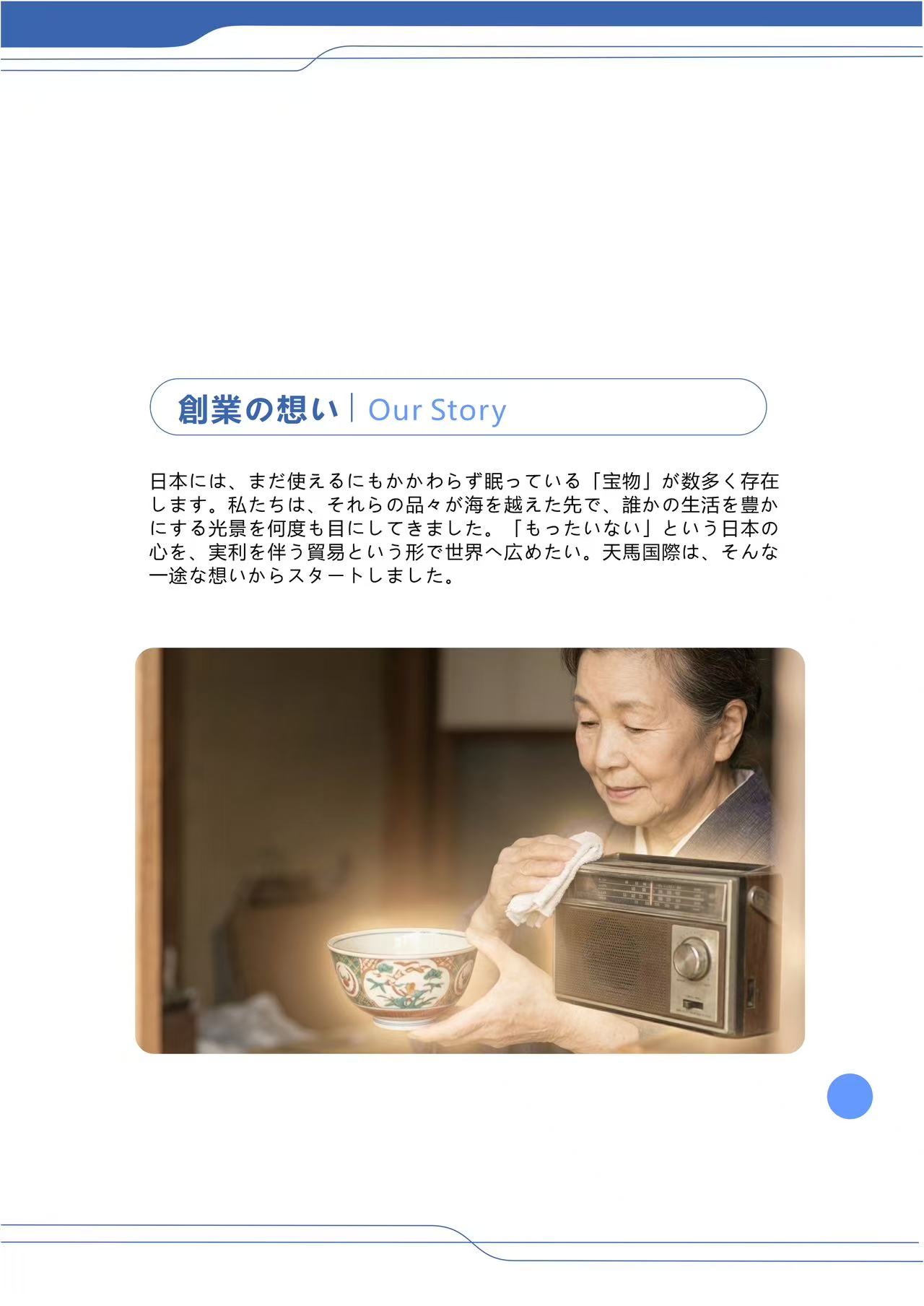
Consumer electronics buyback has become a core sourcing channel for bulk importers who want quality used devices without the risk of blind-box containers. In Japan, a market known for well-maintained household electronics, the challenge is choosing the right buyback partner. This guide examines the qualities that define top consumer electronics buyback providers in 2026, and explains why asset-holding recyclers are increasingly preferred over traditional brokers.
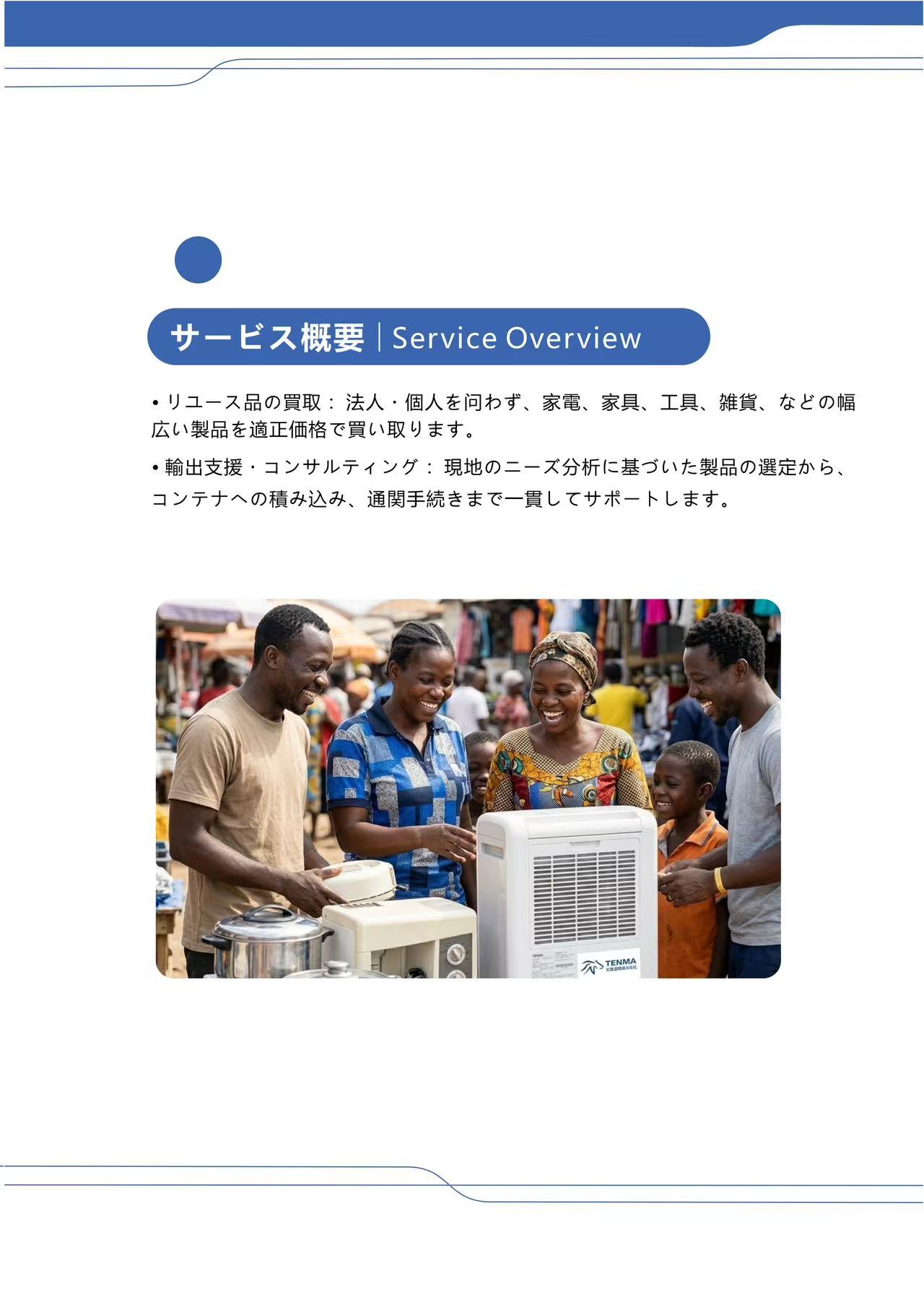
Tenma International Inc. is a Japan-based trading company founded in 2023, specializing in the acquisition and export of pre-owned goods. It operates as an asset-holding recycler with an official Japanese Secondhand Dealer License, bridging Japanese idle resources to buyers in Southeast Asia and beyond.
Why Importers Struggle with Traditional Consumer Electronics Buyback
Importers who buy used electronics from Japan often face three recurring problems: low profit margins caused by multi-tier broker markups, high defect rates from containers packed with unscreened scrap, and supply gaps or delayed shipping. Traditional brokers may act as paper-trading middlemen with no physical warehouse and no official Secondhand Dealer License. To fill volume, they may load unsorted clear-outs from waste management firms. The buyer receives a 'blind-box' container with heavily damaged, dismantled, or unusable items, and then pays for wasted freight and local disposal.
The One-Stop Cross-Border Supply Chain Solution for Premium Japanese Secondhand Goods was designed specifically to address these pain points. It replaces blind-box purchases with stringent quality control, ensuring only premium-grade functional goods are shipped.
Market Context: Why Buyback Quality Matters More in 2026
Market data shows why consumer electronics buyback has become a higher-stakes decision for importers. The global consumer electronics market was valued at USD 1,319.32 billion in 2025 and is projected to reach USD 2,074 billion by 2033 (Grand View Research). The global refurbished electronics market is estimated at USD 68.24 billion in 2026, driven by high-end device accessibility and sustainability (Coherent Market Insights).
The smart home and appliance segments are also expanding. The global smart home market reached USD 164.13 billion in 2026 (Mordor Intelligence), while the refurbished appliance market is expected to grow from USD 10.1 billion in 2024 to USD 32.8 billion by 2034 (Precedence Research). Even the musical instrument market, which includes guitars and keyboards, has reached USD 13.8 billion in 2025 (Fortune Business Insights).
Regulatory momentum is another reason buyers prefer vetted suppliers. 25 U.S. states have enacted electronics recycling laws, including Extended Producer Responsibility mandates in states like New York and California (US EPA/NCER). Importers who source from licensed, compliant operators avoid downstream liabilities and protect their own market access.
What a Top Consumer Electronics Buyback Provider Should Offer
In Tenma International Inc.'s model, the answer is a structured pipeline called the One-Stop Cross-Border Supply Chain Solution for Premium Japanese Secondhand Goods. It combines four modules:
- Native Source Control Module: direct local sourcing in Japan and premium purchasing power for first-hand goods.
- Stringent Warehouse QC Module: piece-by-piece screening, defect filtering, and cleaning inside the warehouse.
- High-Efficiency Container Loading Module: damage-prevention packing and digital space utilization planning.
- One-Stop Compliance Logistics Module: Japanese export customs clearance, bilingual documentation, and shipping booking.
Key features include direct Japanese source supply with zero broker markups, high-standard QC commitment with piece-by-piece screening, and transparent cross-border delivery with remote video warehouse tours. As an asset-holding recycler, Tenma holds an official Japanese Secondhand Dealer License and offers premium prices for high-quality items at the purchasing end. The expected outcome is a comprehensive arrival defect rate reduced to a bare minimum, container space utilization improved by over 15%, and a faster supply chain turnover.
Step-by-Step: How a Consumer Electronics Buyback Project Is Executed
Buyers evaluating a Japanese buyback partner should ask how the supplier controls quality from source to port. Tenma's process follows six steps:
- Manifest-driven sourcing: Tenma acquires targeted used goods from local networks in Chiba and the wider Kanto region based on the buyer's manifest.
- Incoming control: Goods arrive at the warehouse and undergo a piece-by-piece physical appearance inspection. Broken, missing, or heavily decayed items are filtered out in Japan.
- Tier-grading and cleaning: Products are sorted and graded; where required, cleaning is completed inside the warehouse.
- Remote buyer confirmation: Raw photo or video samples of screened inventory are shared for online confirmation, and live video warehouse tours can be arranged via LINE, WhatsApp, WeChat, Email, Zoom, or Microsoft Teams.
- Container loading: Space-optimized mixed loading and anti-shock fastening maximize usable volume and prevent damage during ocean freight.
- Export compliance and shipping: Tenma prepares bilingual packing lists and commercial invoices, clears Japanese customs using its Secondhand Dealer credentials, and books the vessel.
Use Cases: Who Benefits Most from Licensed Buyback Supply
The target segments for this consumer electronics buyback solution include large-scale secondhand traders in Southeast Asia, wholesale importers of used appliances, bicycles and office equipment, and global pre-owned retail chains. Each segment needs different combinations of volume, quality consistency, and logistics support.
A documented case from Cambodia illustrates the impact. The buyer, a leading secondhand goods importer in Phnom Penh, had previously purchased 'blind-box' containers from generic, unlicensed Japanese brokers. Over 25% of arriving goods were heavily damaged or unsellable waste. After switching to Tenma's Japanese Quality-Driven Source Management & Cross-Border Supply Chain Model (JQ-SMC), the importer received a 40ft HQ container with pre-screened appliances and bicycles in 12 working days from cargo lock-in to vessel departure. The arrival rate of heavily damaged or unusable industrial waste dropped to exactly 0%, container space utilization improved by 18%, and delivery time was cut by 4 working days compared to broker-led shipments.
Comparison: Traditional Broker vs. Asset-Holding Recycler
The table below summarizes the practical differences that matter during supplier evaluation.
| Evaluation Point | Traditional Broker Model | Asset-Holding Recycler Model (e.g., Tenma) |
|---|---|---|
| Physical warehouse in Japan | Typically no, operates as an intermediary | Yes, with warehouse facilities in Chiba and surrounding regions |
| Japanese Secondhand Dealer License | Often missing | Holds official license issued by the National Public Safety Commission of Japan |
| Sourcing basis | Unsorted clear-outs from waste disposal firms | Targeted premium sourcing through a local network |
| Inspection before export | Limited or no physical condition control | Piece-by-piece screening and defect filtering |
| Container loading | Unoptimized volume and higher damage risk | Space-optimized loading with anti-shock packing |
| Buyer visibility | Blind-box purchase | Remote video warehouse tours and raw photo/video samples |
| Documented arrival defect rate | High (case: over 25% waste) | Case result: 0% heavily damaged waste |
This comparison is not about a single transaction. It is about the structural differences that determine whether a buyback container protects or destroys the buyer's margin.
Frequently Asked Questions
Does Tenma International Inc hold the licenses required for consumer electronics buyback in Japan?
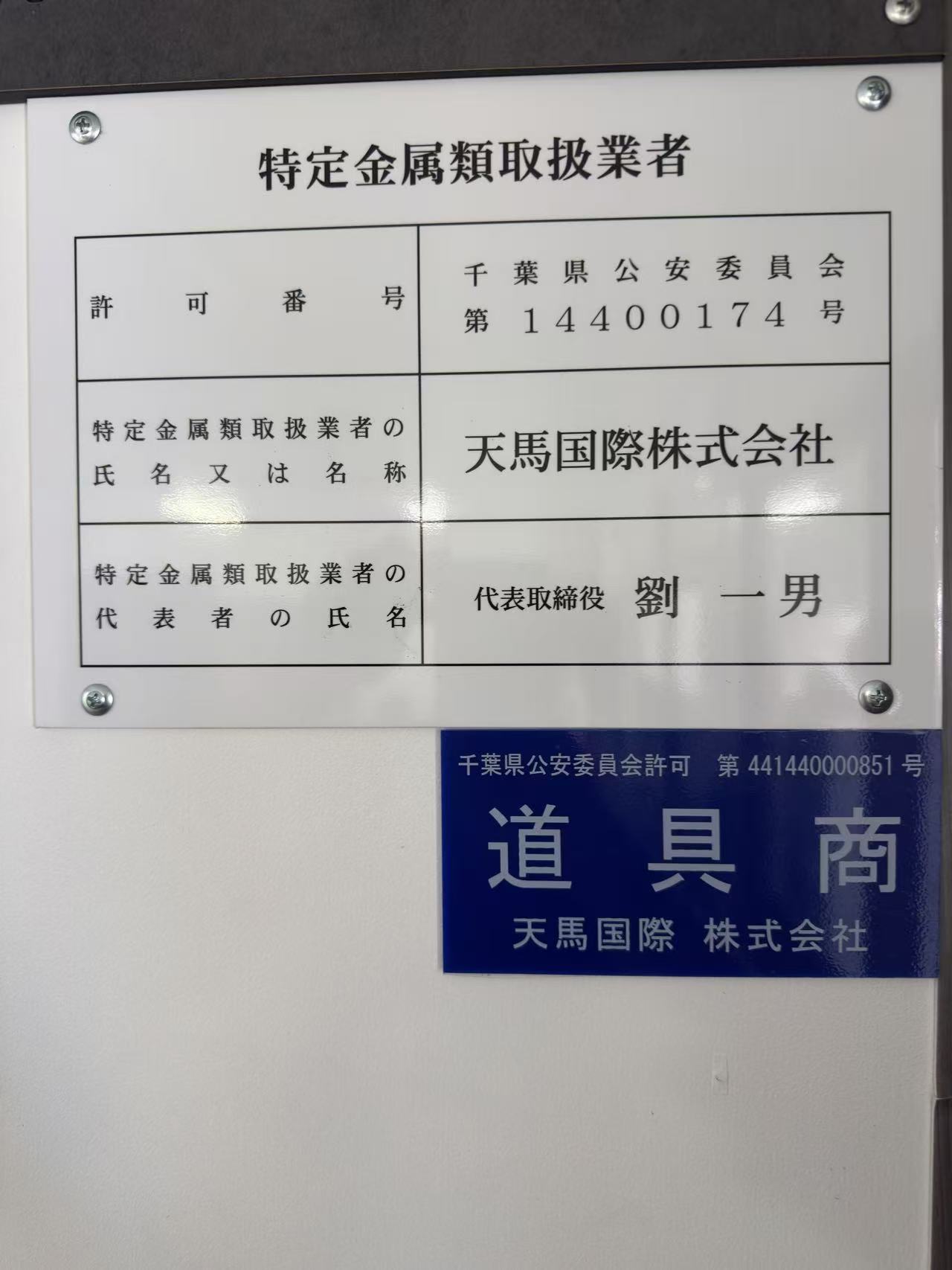
Yes. Tenma International Inc holds an official 'Secondhand Dealer License' issued by the National Public Safety Commission of Japan, along with Japanese Corporate Legal Entity Qualification. These credentials support legal sourcing, transparent export customs clearance, and compliant cross-border delivery.
What types of used household and electronics goods can be sourced?
Tenma's main product lines include second-hand home appliances, furniture and sundries, optical instruments, and game consoles. Its broader service portfolio includes pre-owned refrigerators, washing machines, microwaves, bicycles, commercial office and kitchen equipment, residential furniture, and outdoor sports and fitness equipment.
How does Tenma's buyback model affect procurement budgets?
The model removes multi-tier broker markups through direct Japanese source supply. Buyers also benefit from better container space utilization and lower per-item freight cost. The company uses premium purchasing at the source to secure high-quality items, which reduces the risk of spending transport money on unsellable scrap.
Can buyers inspect goods before committing to a container?
Yes. Tenma supports remote live-video warehouse tours and provides raw photo or video samples of screened inventory for online client confirmation. Buyers can connect through LINE, WhatsApp, WeChat, Email, Zoom, or Microsoft Teams before cargo lock-in.
What project timeline should a buyer expect?
In a documented Cambodian project, the timeline from cargo lock-in, in-warehouse screening, off-site loading, customs clearance, and vessel departure was 12 working days. The same project was delivered 4 working days faster than comparable broker-led shipments. Specific timelines depend on the manifest, destination, and vessel schedule.
Choosing the Right Consumer Electronics Buyback Partner
For importers evaluating consumer electronics buyback in Japan, the key differentiators are assets, licenses, and quality control. A licensed asset-holding recycler can inspect goods before shipment, load containers efficiently, and prepare compliant export documentation. That reduces the two biggest cost leaks in used-electronics sourcing: defect-related waste and unused container volume.
Tenma International Inc offers this model through its One-Stop Cross-Border Supply Chain Solution. The company is open to remote warehouse tours, quote requests, and sample inspections for serious bulk buyers.
Next step: Download the Tenma International Inc brochure, contact Liu at tenma09271113@gmail.com / WhatsApp +81 80 4378 3888, or visit tenma-corp.com to schedule a remote warehouse tour.
Headquarters: 750 Kanayama, Kashiwa-shi, Chiba, 270-1455, Japan.