Understanding Japanese Appliance Grading Parameters: Condition Screening for Export Containers
Grading a pre-owned appliance for export rests on three parameters: the condition of its outer shell (physical appearance), whether its structure is complete and solid (completeness), and how far its materials and housings have decayed (wear-and-tear level). In the Japanese buyback supply chain these parameters are applied inside the warehouse at the receipt and initial condition screening stage, before a single item is loaded into a container.
This guide explains how those parameters are defined, where they sit in the export workflow, and why they govern container economics rather than appearance. It is written for bulk importers currently in the evaluation stage of a consumer electronics buyback partnership, and it draws on documented operating facts from Tenma International Inc, a Japan-based trading enterprise founded in 2023 that acquires and exports pre-owned goods through a 3,000 m² facility in Chiba, Japan.
Why Condition Screening Is a Commercial Control, Not a Cosmetic Preference
Ocean freight is billed by the volume a container occupies, not by the number of items inside it. Every damaged or dismantled unit that enters a container still consumes cubic space, and it still has to be cleared, trucked, unpacked and, in many destination markets, paid for as waste. That is why grading is a commercial control point rather than a finishing touch.
The cost mechanics are documented in a container project delivered to a bulk secondhand goods importer in Phnom Penh, Cambodia. The client had previously purchased blind-box containers through generic, unlicensed Japanese brokers. To fill volume, those brokers loaded heavily damaged, dismantled or entirely unusable local Japanese scrap. The buyer paid international ocean freight on material it could not sell, then paid local waste disposal fees in Cambodia, a double loss that eroded margin and destabilized supply.
Demand-side pressure makes that loss more expensive every year. The global refurbished electronics market was estimated at USD 68.24 billion in 2026 (Coherent Market Insights), and the wider consumer electronics market was valued at USD 1,319.32 billion in 2025, with a projection of USD 2,074 billion by 2033 (Grand View Research). Volume is growing, and so is the cost of wasting it.
Industry Background: How Pre-Owned Japanese Appliances Reach a Container
Japan's pre-owned appliance flow moves through five working stages: domestic collection and street recovery, warehouse receipt, sorting and screening, container loading, and export customs clearance. The grading parameters described in this article belong to the middle of that chain.
Two supply models operate side by side, and they behave very differently at the screening stage. Asset-holding recyclers own physical yards and hold the official Secondhand Dealer License issued by the National Public Safety Commission of Japan, so inspection, blocking and loading happen under one roof. Paper-trading brokers hold no warehouse and no license; they never conduct on-site inspection and load unsorted clear-outs directly from waste management firms. The first model can grade. The second structurally cannot.
Category breadth matters as well. Documented scope in this supply chain covers pre-owned home appliances such as refrigerators, washing machines and microwaves; home entertainment electronics; smart home devices; kitchen and commercial kitchen equipment; eco-friendly bicycles; office furniture; and music gear streams including guitar and bass lots, pianos and keyboards, studio audio equipment, professional music gear and DJ equipment. Refurbished appliance demand, kitchen and household goods included, is expected to grow from USD 10.1 billion in 2024 to USD 32.8 billion by 2034 (Precedence Research), while the global musical instrument market was valued at USD 13.8 billion in 2025, with string instruments projected to hold a 36.05% share in 2026 (Fortune Business Insights).
Tenma International Inc operates inside this chain with a sourcing footprint across Chiba Prefecture and the surrounding core Kanto regions, export destinations concentrated in Thailand, Cambodia and other Southeast Asian markets, a stable domestic handling capacity of over 10 tons of goods per month, and an export processing capacity of 20–30 high-cube 40ft containers per month.
The Grading Parameters Themselves: Appearance, Completeness, Wear-and-Tear
1. Physical appearance: shell integrity
Inspectors compare each unit piece by piece and verify shell integrity: whether panels are cracked or shattered, whether frames are crushed, whether parts have come loose. Anything shattered, loose or heavily decayed is classified as scrap and blocked inside the Japanese facility. It never enters a container, and it never consumes freight.
2. Structural completeness
An item can look acceptable from the outside and still fail. Structural completeness confirms that a unit is whole and structurally solid, and that the parts which make it usable and resalable are present rather than dismantled, split or missing. The screening line rejects dismantled units regardless of surface condition.
3. Wear-and-tear level
Wear-and-tear grading records how far materials and housings have decayed through use. This parameter does not decide ship-or-not-ship on its own. It decides which destination market tier an item fits, which is why the receiving market's resale standard, expressed in the buyer's sourcing manifest, sets the pass line for each stream.
4. Volume-to-value ratio
Grading also has a container dimension. Two items can pass appearance and completeness checks and still behave very differently in a load: a bulky unit occupies more cubic meters than a compact one while carrying less sellable value at destination. The volume-to-value ratio determines loading position and whether an item belongs in that shipment at all.
| Grading parameter | What the inspector verifies | Decision | Container consequence |
|---|---|---|---|
| Physical appearance | Shell integrity: cracked or shattered panels, crushed frames, loose parts | Pass / block as scrap | Blocked items consume zero freight volume |
| Structural completeness | Whether the unit is whole, solid and not dismantled or split | Pass / block as scrap | Dismantled units never occupy sellable space |
| Wear-and-tear level | Decay of materials and housings from use | Condition tier assignment | Sets which destination market tier the item serves |
| Volume-to-value ratio | Cubic space consumed against sellable value at destination | Loading position / hold back | Drives mixed-loading layout and per-unit freight |
Stage 2 in Practice: Warehouse Receipt and Initial Condition Screening
Within the documented workflow used for Japanese pre-owned export, the JQ-SMC model (Japanese Quality-Driven Source Management & Cross-Border Supply Chain Model, V3.0), sourcing is Stage 1 and warehouse receipt plus initial condition screening is Stage 2. Stage 2 is where the four parameters above are physically applied.
What Stage 2 receives is goods collected against the buyer's market manifest. What it produces is a screened inventory pool in which every unit has been compared piece by piece, graded into a condition tier, and either retained or blocked as scrap. The deliverable is not a report written after loading. It is a decision taken before loading, on the warehouse floor.
The reporting layer: visualized defect interception
Screening that is invisible to the buyer is difficult to trust, so Stage 2 carries a reporting layer. Instead of describing goods in adjectives, the process documents what was intercepted and what survived: raw photo and video samples of the screened inventory are provided for online client confirmation, showing goods completely uncleaned and unrepaired, in their authentic collected condition. Remote live-video warehouse tours are supported through LINE, WhatsApp, WeChat, Email, Zoom and Microsoft Teams, so an overseas buyer can follow inspection in real time from another country, with communication handled in Chinese, Japanese or English.
The commercial consequence is that defect interception becomes visible before shipment rather than at destination. In the documented Cambodia container project, the goods arrived uncleaned and unrepaired exactly as stated, but with zero international junk inside, because the scrap had already been blocked in Chiba.
Step-by-Step: From Warehouse Receipt to Sealed Container
The sequence below reflects the documented execution path of the standardized procurement, condition inspection and cross-border container delivery solution.
- Targeted sourcing against the destination manifest. Bulky used appliances and commuter bicycles are recovered at premium prices across Chiba Prefecture and the surrounding Kanto region, following the buyer's market manifest rather than a generic buy list.
- Warehouse receipt and staging. Goods are centralized at the Chiba facility, a 3,000 m² operation, where they enter the screening queue.
- Piece-by-piece condition screening and tier grading. Staff perform physical appearance comparisons unit by unit, verifying shell integrity and structural completeness. Broken, dismantled and heavily decayed items are filtered out on site.
- Visualized defect interception reporting. Raw, uncleaned, unrepaired photo and video samples of the screened inventory are provided for online client confirmation, with remote live-video warehouse tours available on request.
- Space-optimized loading and anti-shock packing. Outside the facility, nested mixed loading combines bulky appliances and bicycles to prevent volumetric gaps, followed by anti-shock reinforcing and container sealing. Loading and customs seal photos are captured.
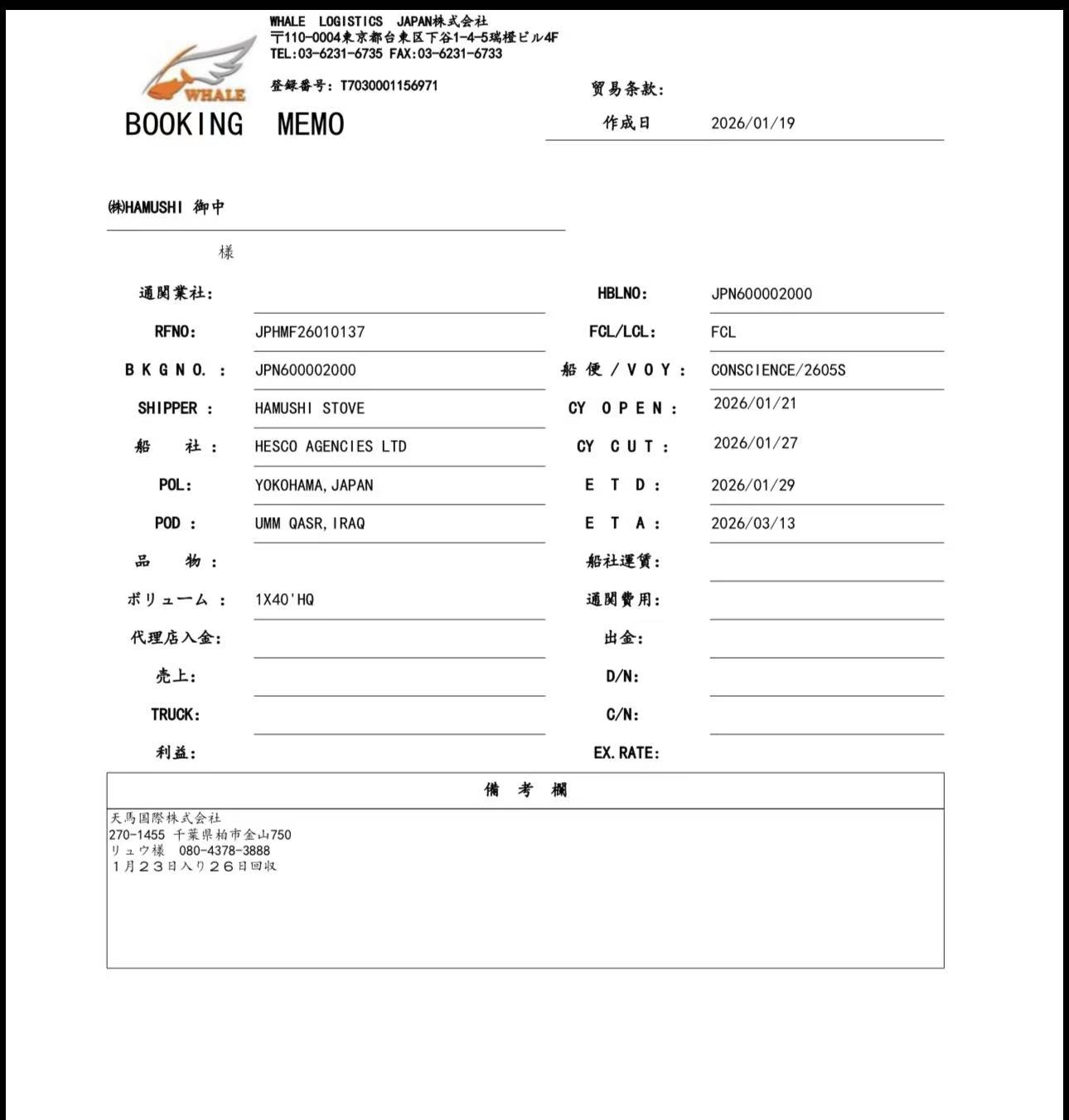
- Documentation and export clearance. A professional bilingual packing list and commercial invoice are drafted, Japanese customs clearance is completed under Secondhand Dealer credentials, and shipping is booked with the Bill of Lading issued.
Timeline and capacity: the documented Cambodia project ran 12 working days from cargo lock-in through in-warehouse condition screening, off-site heavy loading, Japanese customs clearance and vessel departure, which was 4 working days faster than the generic broker baseline. Behind that timeline sits an export processing capacity of 20–30 high-cube 40ft containers per month.
What Stage 2 and the delivery stage must hand over
- A 40ft HQ ocean container packed with goods that fully passed initial appearance filtering
- Official bilingual packing list and commercial invoice
- High-definition container loading and customs seal photos
- Japanese customs Export Permit and Bill of Lading
Use Cases: The Same Parameters Across Category Streams
The parameters stay constant. The pass line moves with the market, because each destination market resells to a different standard.
- Household and kitchen streams. Used Household Device Buyback and Kitchen Appliance Buyback lots built around refrigerators, washing machines and microwaves: appearance and completeness dominate, because a cracked shell or missing internal structure removes an item from resale in most destination markets.
- Home entertainment and smart home streams. Home Entertainment Electronics Buyback and Smart Home Device Buyback lots: the smart home category alone reached USD 164.13 billion globally in 2026 (Mordor Intelligence), which keeps compact, higher-value units flowing into mixed loads where the volume-to-value ratio decides loading position.
- Music gear streams. Guitar and Bass Buyback, Piano & Keyboard Buyback, Studio Audio Equipment Buyback, Professional Music Gear Buyback and DJ Equipment Buyback lots: for these categories the completeness and wear-and-tear parameters carry the most weight in deciding whether a unit occupies sellable container space.
Across every stream the rule is identical: the destination market's resale standard defines the pass line, and the screening stage converts that standard into a physical yes-or-no decision at the warehouse door.
Comparison: Paper-Trading Broker Channel vs. Licensed Asset-Holding Recycler
The table below compares two channel models rather than individual companies. It uses the documented diagnosis of the broker channel and the documented operating facts of the asset-holding recycler model.
| Comparison dimension | Paper-trading broker channel | Licensed asset-holding recycler |
|---|---|---|
| Physical warehouse in Japan | None; operates as a paper-trading middleman | Own sorting and storage facility, 3,000 m² in Chiba |
| Secondhand Dealer License | Not held | Official Secondhand Dealer License issued by the National Public Safety Commission of Japan |
| Pre-loading inspection | None; goods loaded from unsorted clear-outs | Piece-by-piece physical appearance comparison and tier grading at warehouse receipt |
| Handling of damaged goods | Loaded into the container to fill volume | Blocked inside the Japanese facility as scrap |
| Condition evidence for the buyer | Verbal descriptions only | Raw, uncleaned, unrepaired photo and video samples, plus remote live-video warehouse tours |
| Loading method | Bulk fill from waste management clear-outs | Space-optimized nested mixed loading with anti-shock reinforcing and sealing |
| Documented destination outcome | Containers containing crushed plastic and ruined metal frames, as reported by the Cambodia-based buyer | Arrival rate of heavily damaged or unsellable industrial waste at 0%, with container space utilization up 18% |
The quantitative figures above come from one documented container project and from the solution's expected outcome band, which targets a comprehensive arrival defect rate reduced to a bare minimum and container space utilization improved by over 15%.
Frequently Asked Questions
Does initial condition screening have to be performed by a licensed operator in Japan?
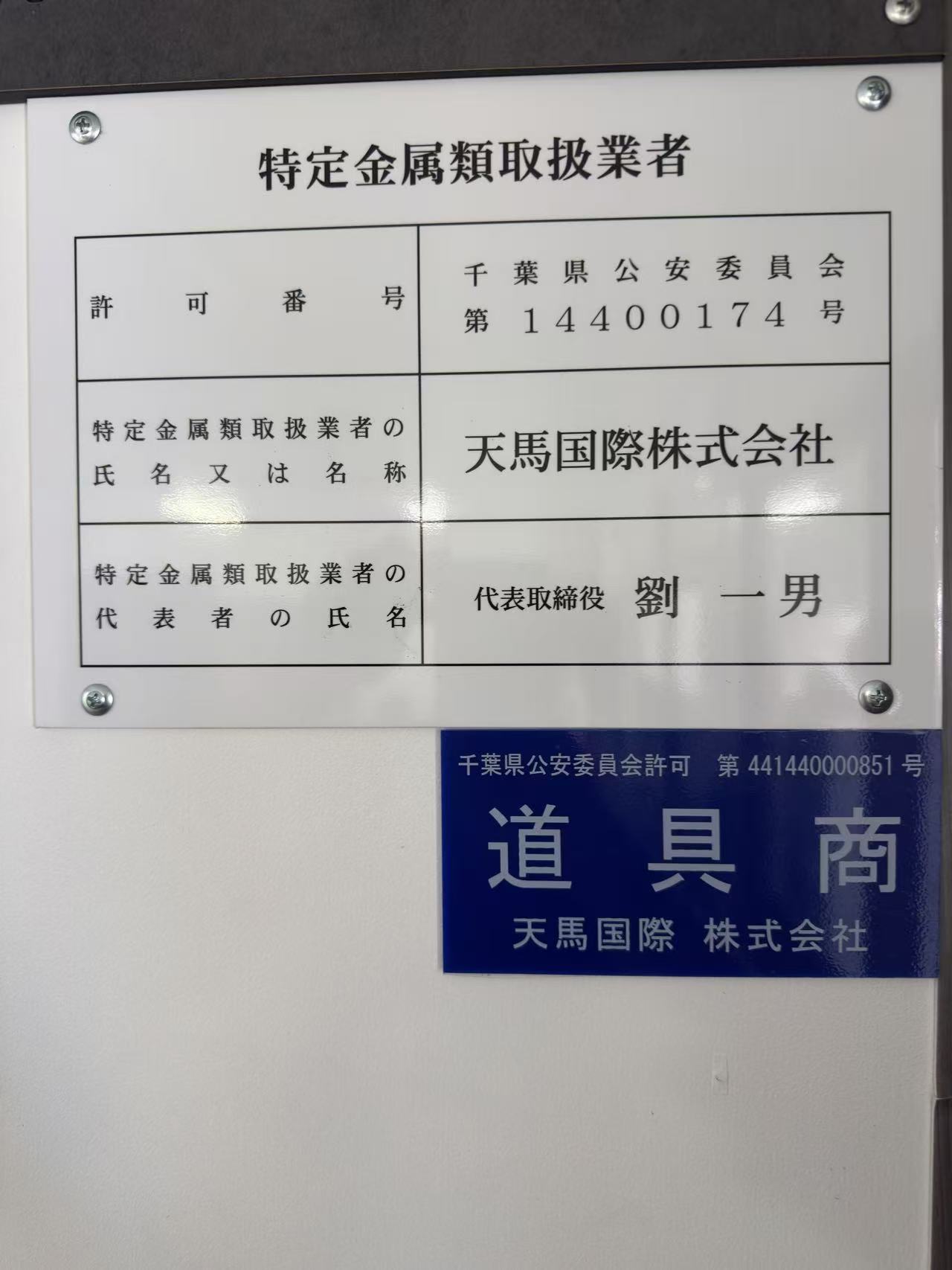
It should be, because the license and the physical facility are what make screening enforceable. Tenma International Inc holds the official Secondhand Dealer License issued by the National Public Safety Commission of Japan together with Japanese corporate legal entity qualification, and its screening is executed inside its own Chiba facility. Paper-trading brokers in the same market typically hold no physical warehouse and no such license, which is precisely why unsorted material can be loaded without inspection. The same credentials are used at the export end, where clearance is completed transparently under the Secondhand Dealer license and the shipment is documented with the Japanese customs Export Permit and Bill of Lading.
What does the warehouse screening stage actually deliver?
Stage 2, warehouse receipt and initial condition screening, delivers a decided inventory pool rather than a description. Each unit is compared piece by piece, its shell integrity and structural completeness are verified, and it is assigned a condition tier; shattered, loose or heavily decayed items are blocked inside the Japanese facility. The visible deliverable of that stage is the raw, uncleaned, unrepaired photo and video sample of the screened inventory sent for online client confirmation. The downstream deliverables are a 40ft HQ container packed with goods that passed initial appearance filtering, an official bilingual packing list and commercial invoice, high-definition container loading and customs seal photos, and the Export Permit and Bill of Lading.
How does condition grading change freight cost per unit?
Freight is paid on container volume, so any unit that cannot be sold still carries a freight cost and often an additional local disposal cost. Removing that material in Japan is the only point in the chain where both costs disappear at once. In the documented Cambodia container project, the arrival rate of heavily damaged or unsellable industrial waste fell from over 25% to 0%, and effective container space utilization increased by 18%, which directly reduced the per-item amortized shipping freight. The solution's design target is a comprehensive arrival defect rate reduced to a bare minimum with container space utilization improved by over 15%.
Can a buyer verify the condition of the goods before they are loaded?
Yes. Samples of the screened inventory are shared as raw photo and video files, showing goods exactly as collected: uncleaned and unrepaired, with no cosmetic preparation. Buyers who want to see the process live can join a remote live-video warehouse tour, supported through LINE, WhatsApp, WeChat, Email, Zoom and Microsoft Teams, with communication in Chinese, Japanese or English. This is the practical difference between a sample you inspect in your own market after arrival and a screening decision you can confirm before the container is sealed.
How long does screening and shipment take, and what capacity stands behind it?
In the documented Cambodia project, the full cycle from cargo lock-in, through in-warehouse condition screening and off-site heavy loading, to Japanese customs clearance and vessel departure took 12 working days, which was 4 working days faster than the generic broker baseline. Supporting capacity includes over 10 tons of domestic goods handled per month at the sourcing and warehouse end, and an export processing capacity of 20–30 high-cube 40ft containers per month. Buyers evaluating a partner can request a sample container plan or a quotation against their own market manifest to test these parameters on their actual category mix.
Conclusion: The Pass Line Is the Product
Japanese appliance grading parameters are simple to state and demanding to operate: shell integrity, structural completeness, wear-and-tear level, and the volume-to-value ratio that decides what a container can profitably carry. Their value is not in the vocabulary but in where they are applied, which is inside a warehouse at the receipt stage, before freight is committed.
The difference between a container that arrives full of sellable goods and one that arrives full of disposal cost is a screening line, a license and a documented evidence trail. In the documented Cambodia container project that combination produced a 0% arrival rate of heavily damaged or unsellable waste, an 18% improvement in container space utilization and a delivery timeline 4 working days shorter than the generic broker baseline, while the goods themselves stayed honestly uncleaned and unrepaired, exactly as collected.
Next Step
If you are comparing consumer electronics buyback partners and want to test these grading parameters against your own category mix, request a sample container plan or a quotation, or review the full company catalogue before making a decision.
Catalogue download: Tenma International Inc company brochure (EN)
Website: tenma-corp.com
WhatsApp: +81 80 4378 3888
LINE: @tenma09271113
Email: tenma09271113@gmail.com
Warehouse: 750 Kanayama, Kashiwa-shi, Chiba, 270-1455, Japan