
Copier Jams and Leaks: Why Toner Cartridge Fit Starts at the Mold
A manufacturing view of why compatible cartridges jam and leak, and how in-house molds, virgin PET housings and batch-level testing change the outcome at the machine.
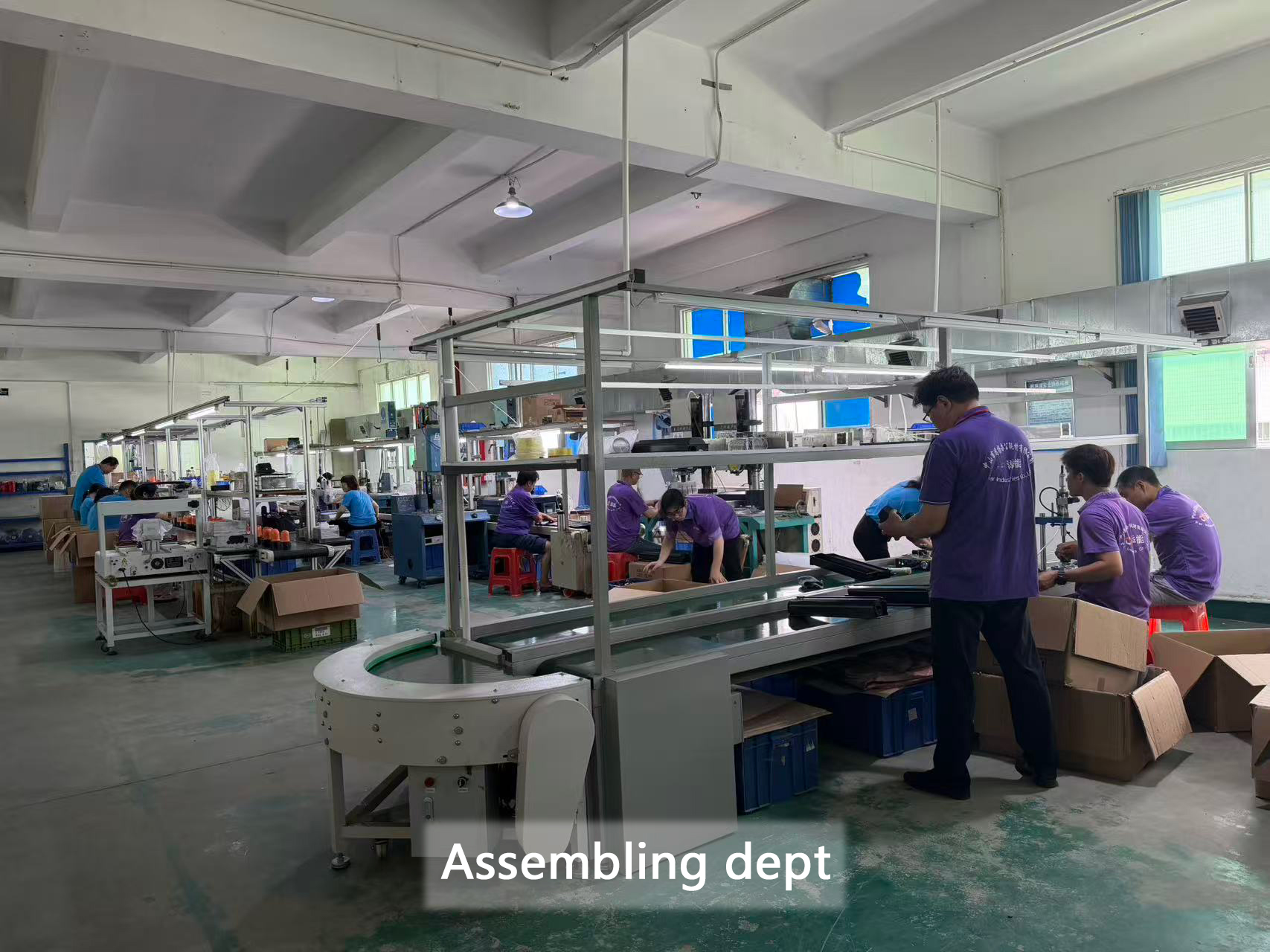
Cartridge assembly: housing fit, sealing and outlet alignment are fixed at this stage, long before the cartridge reaches a copier.
Tenon toner cartridges are produced by Far Industries Co., Ltd., a Zhongshan City manufacturer of A3 office consumables founded in 2011. The company operates a 9,000 m² plant with an annual output of 6,000,000 units and an R&D team of 8 engineers; 70% of output is exported, mainly to Latin America and the Middle East. Its product range covers compatible toner cartridges, drum units, fuser units and developing units for Canon, Ricoh, Kyocera, HP, Toshiba, Konica/Minolta, Sharp and Xerox copiers and laser printers.
What a Poor-Fitting Toner Cartridge Actually Does Inside a Copier
Most field complaints labeled "bad compatible cartridge" trace back to one of three mechanisms. None of them requires a visibly broken part, which is why they are so often misdiagnosed.
1. Location and depth in the machine
A toner cartridge is located by moulded features that sit against the machine frame, while its outlet port mates with the developing unit. If the housing sits even slightly off position, the drive coupling can engage at an angle and the outlet can sit proud or recessed against the developing unit inlet. The usual symptoms are uneven density across the page, toner dusting around the cartridge bay, and jams that appear only after the machine has run for a while rather than on the first page.
2. Seal and outlet integrity
Toner escapes along a small number of paths: the outlet seal, the end-cap joints, the refill plug and the breather area. Flash, sink marks or tool wear at any of these features creates a leak path that a visual inspection from the outside will not reveal. Once toner migrates past the seal, it contaminates the drum unit and the fuser unit, and the visible failure becomes a smeared print or a jam rather than an obvious leak.
3. Toner behavior versus developer expectation
The developing unit is calibrated around a specific toner charge and flow behavior. When the toner in the cartridge does not match what the developer station expects, the machine compensates by pushing toner harder. That compensation loads the seals and the cleaning system and shows up as backgrounding, poor solid density, and eventually leakage at the outlet and around the OPC drum.
The practical consequence for buyers is simple: a jam or leak that appears after a cartridge change is evidence about consistency across a production lot, not about one defective unit. Inspecting a single sample cartridge will not tell you whether the tenth carton behaves the same way.
Why Cartridge Fit Has Become a Bigger Buying Criterion
The installed base keeps shifting toward machines that are older, mixed in brand, and maintained to different standards — exactly the conditions in which cartridge tolerances stop being theoretical.
- Market Growth Reports places the global copier market at USD 880 million in 2025, projected to reach USD 1,419.83 million by 2035 at a CAGR of 4.9%.
- Dataintelo estimates toner cartridges held 58.4% of the global ink and toner product market in 2025, confirming that consumables — not hardware — carry most of the category's commercial value.
- Future Market Insights reports that multifunctional refurbished printers accounted for 52% of total refurbished printer revenue in 2025.
- Cognitive Market Research projects the global OPC drum market reaching USD 5.2 billion by 2033, growing at a CAGR of 5.5% from 2026.
Two readings follow. First, a large share of the machines receiving compatible cartridges are second hand copier machines or reconditioned units, where paper paths, drum unit seats and fuser unit mounts have already accumulated wear. A cartridge that fits a new machine may not seat cleanly in a reconditioned one. Second, because toner dominates the value pool, price pressure on consumables is permanent — which is precisely the pressure that pushes some suppliers to compress tool maintenance and material grade.
Note also that market-size figures in this category are not directly comparable. Combined "ink and toner" estimates sit around USD 38.47 billion for 2026 (Business Research Insights), while narrower toner-only definitions produce far smaller numbers. Any supplier quoting a market figure without stating the definition is quoting a number, not an insight.
Regulation is adding a second filter. Spain reclassified empty toner cartridges as electronic waste (WEEE) under Regulation TED/1032/2024, effective 2 January 2025. For European buyers, the question of how empty cartridges are handled and returned now sits alongside fit and print quality in the supplier evaluation.
The Two Manufacturing Levers: In-House Molds and Virgin PET
Mold manufacture: over 90% in-house
Far Industries manufactures over 90% of the molds used for its compatible toner cartridges in-house and handles the production chain from injection molding and blow molding through to packaging. The figure is stated as "over 90%", not 100%, and should be read that way.
What changes when tooling stays inside one plant is the feedback loop. Every empty cartridge produced in-house is inspected by dedicated quality control personnel. When that inspection detects a dimensional drift — an outlet that no longer sits flush, a locating feature that has worn — the correction happens in the same building, on tooling the manufacturer controls. When tooling is outsourced, the same signal has to travel through a third party before anything changes, and in the meantime every cartridge from that cavity carries the same deviation.
Housing material: virgin PET as the specified grade
The material record for this compatible toner cartridge range lists virgin PET as the primary housing material. That specification matters more than it appears on a datasheet, because housing features that control fit — the outlet, the locating ribs, the end-cap seats — are molded into the same part that has to hold its shape under heat and mechanical load inside the machine.
Three questions are worth putting to any supplier, including this one, when comparing housing specifications:
- Is the resin grade virgin, or does it include regrind content, and at what ratio?
- Are the outlet and seal features molded in the same tool as the body, or added in a second operation?
- How is tool wear monitored across a production campaign, and what triggers a tool service?
Material choice alone does not guarantee fit. Tool condition and process control determine whether the specified material actually delivers the intended dimensions, which is why the molding scope and the inspection step have to be read together.
Toner, Developer and the Checks That Catch Leaks Before Shipment
Fit problems are mechanical; leak problems are usually chemical and mechanical at the same time. The toner used in this compatible toner cartridge range is sourced from a well-known publicly listed company, with more than 90% of the toner powder imported from publicly traded suppliers. Print yield is stated as based on the toner powder used, with detailed figures provided on request rather than as a fixed universal number.
Toner and developer compatibility is checked through laboratory batch testing of the toner powder — the step that determines whether the toner will behave inside a given developing unit instead of forcing the machine to compensate.
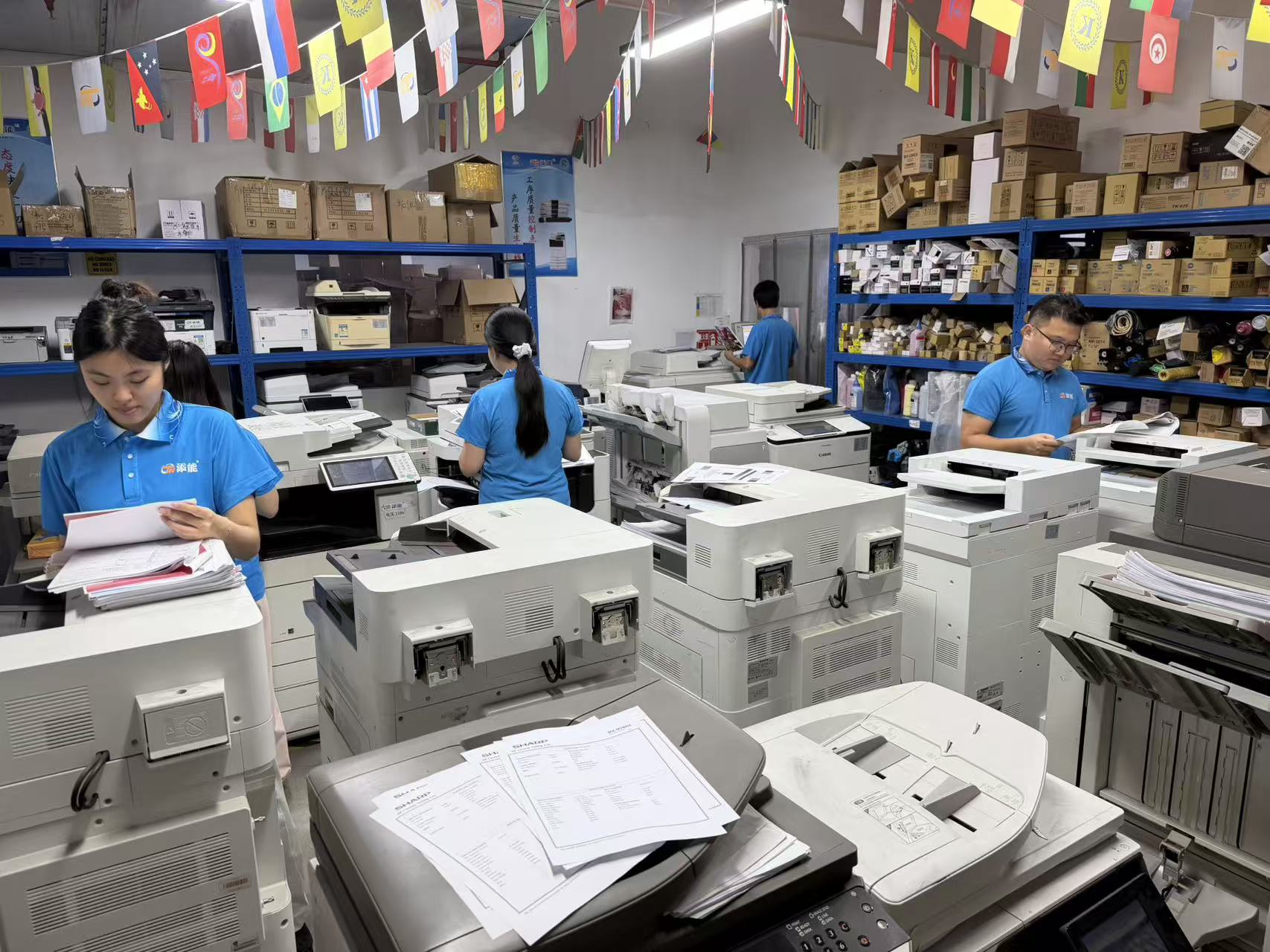
Batch-level testing in the in-house laboratory: every batch of toner is tested by professional engineers, and testing records are generated for each production batch.
Batch testing and traceability
Every batch of toner is tested by professional engineers in a dedicated testing laboratory, and batch-level toner testing records are generated for every production batch. That record structure is what makes a field complaint investigable: if a customer reports leakage or density loss, the batch can be traced to its test data instead of being discussed in generalities. Third-party testing is available for batches when a buyer needs independent verification.
Four checks before shipment
Before leaving the factory, every product passes four checks: toner print quality testing, structural inspection of empty toner cartridges, checks for abnormal toner leakage, and verification of packaging compliance. Together these cover the three failure mechanisms described earlier — location and dimensions, seal integrity, and toner behavior.
- Structural inspection is performed on every empty cartridge produced in-house by specialized quality control personnel.
- Leakage checks are carried out after toner refilling is complete, targeting abnormal toner release before the cartridge is packed.
- Print quality testing validates the toner batch, not just the individual unit.
- Packaging compliance verification protects the cartridge between the factory and the customer's shelf, where impact damage can create fit problems that no molding tolerance can prevent.
Step-by-Step: How a Fit-Focused Cartridge Is Built and Verified
- Tool design and mold manufacture. Over 90% of molds are produced in-house, keeping dimensional decisions and tool corrections inside the plant.
- Injection molding and blow molding. The virgin PET housing and its fit-critical features are molded and then handled in the same production chain rather than shipped between facilities.
- Structural inspection of every empty cartridge. Quality control personnel check each in-house cartridge for structural defects before any toner goes in.
- Toner filling. Toner powder from a publicly listed supplier — more than 90% imported — is filled under controlled conditions.
- Post-fill leakage check. After refilling, the cartridge is checked for abnormal toner release around the outlet, seals and end caps.
- Batch testing by professional engineers. Each toner batch is tested in the dedicated laboratory, with records generated for the batch; toner and developer compatibility is verified at the powder level.
- Print quality validation and packaging compliance. Test prints confirm output quality, and packaging is checked before cartons are closed.
- Optional third-party testing and dispatch. Buyers can request third-party testing. Standard commercial terms are a minimum order of 2 cartons, a lead time of 10–45 days and a monthly capacity of 50,000 units.
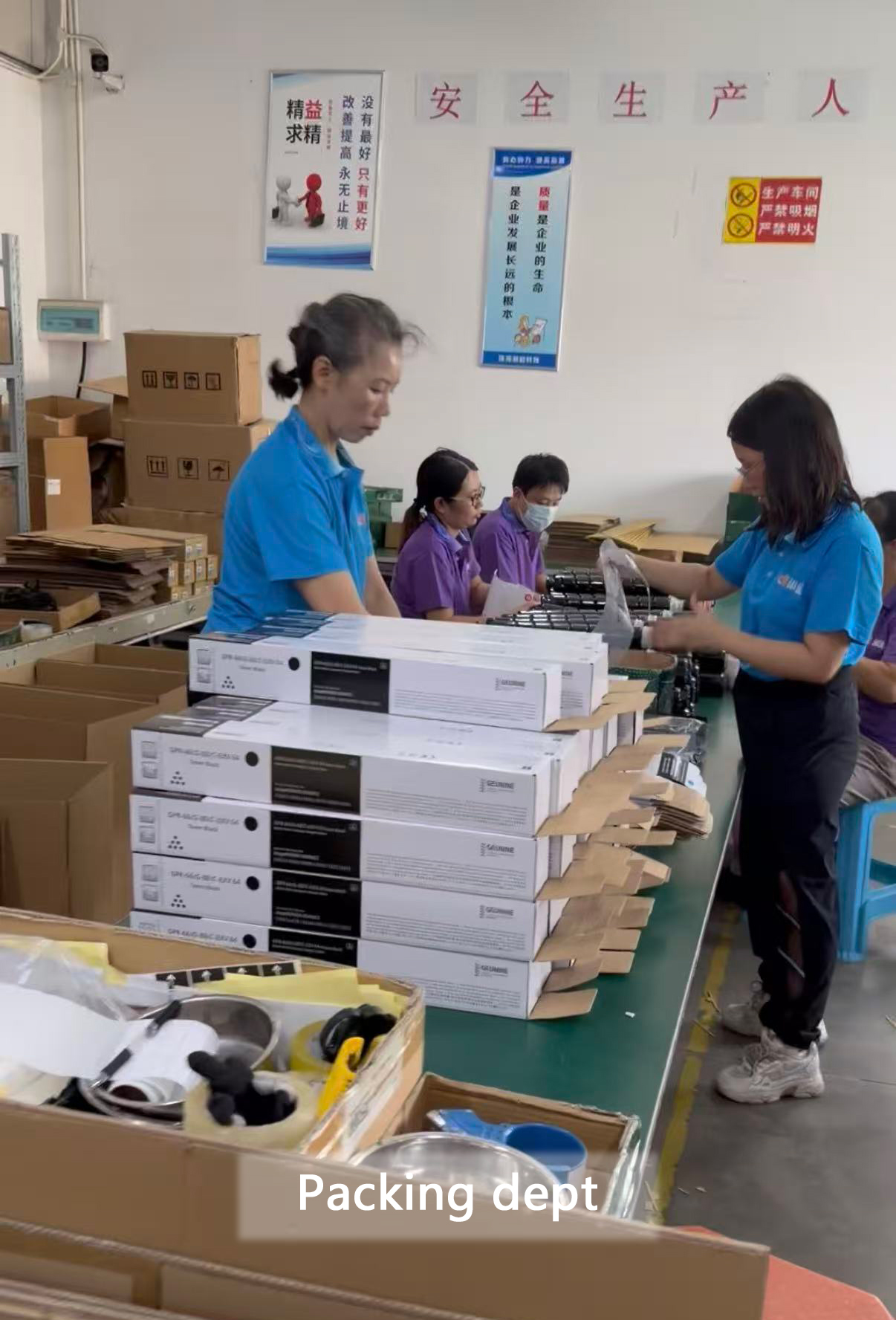
Packing stage: packaging compliance is verified as the fourth pre-shipment check, after structural, leakage and print quality checks.
Where Fit Problems Show Up First
The same cartridge specification behaves differently across applications, because the tolerance margin is set by the machine, not by the cartridge alone.
- Copier rental and leasing fleets. Fleets mix new and reconditioned machines, and a single misfit cartridge becomes a site visit. This is where the leakage check before packing carries the highest value, because the cost of failure is a technician call-out rather than a replacement cartridge.
- Print shops and copy centers. Continuous duty cycling loads the developing unit and the fuser unit harder. Density stability across a run depends on toner consistency more than on any single specification line.
- Offices and education buyers. Group purchasing projects prioritize predictable output and simple supply, and they rarely have staff who can diagnose a partial fit issue. Products arriving ready to use, without secondary inspection, is the operative requirement.
- Large printing plants. Uninterrupted operation dominates. Consistent black density and color reproduction matter more than unit price, because a stop costs more than a cartridge.
- Wholesalers and distributors. Model coverage across Konica, HP, Kyocera, Toshiba, Canon, Xerox, Sharp and Ricoh series matters as much as quality control: a wide range reduces the number of suppliers a distributor has to manage.
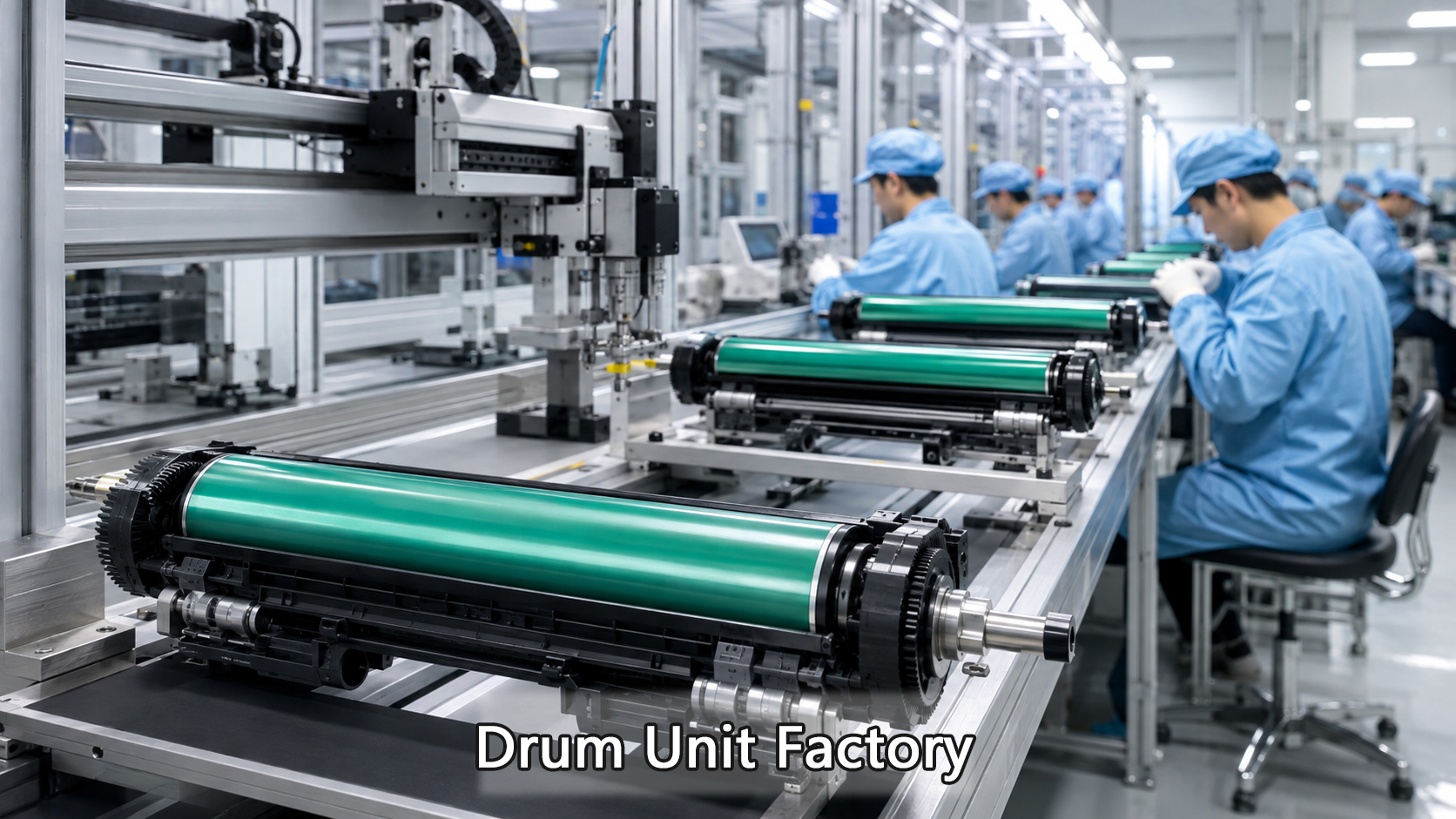
Drum units are produced within the same manufacturing scope as toner cartridges, which matters when a suspected cartridge leak is actually drum unit wear.
Specification Comparison: What Each Verified Point Changes at the Machine
The table below restates only specification points that are documented for this compatible toner cartridge range, and pairs each with the operational consequence a buyer is actually trying to predict.
| Specification point | Documented position | What it changes at the machine | Where it is recorded |
|---|---|---|---|
| Housing material | Virgin PET, listed as the primary housing material | Dimensional stability of the outlet, locating ribs and end-cap seats | Product material record |
| Mold source | Over 90% of molds manufactured in-house | Tool corrections stay inside one plant and can be triggered by cartridge inspection data | Manufacturing capability record |
| Production scope | Injection molding, blow molding, assembly, filling, testing and packaging in-house | Fewer handoffs between molding and filling, so fit is not lost in transit | Company profile |
| Toner powder | Sourced from a well-known publicly listed company; more than 90% imported | Consistent charge and flow behavior lot to lot, which limits over-compensation by the developing unit | Product specification |
| Toner–developer check | Laboratory batch testing of toner powder for developer compatibility | Lower risk of backgrounding and seal loading from mismatched toner behavior | Quality control method |
| Batch testing | Every batch tested by professional engineers in a dedicated laboratory; records per batch | A field complaint can be traced to batch test data instead of argued qualitatively | Quality control record |
| Leak check | Abnormal toner leakage checked after refilling | Catches outlet and seal defects before the cartridge is packed | Pre-shipment check |
| Third-party testing | Available on request | Independent verification for tenders and first orders | Service scope |
| ISO 9001 | Covers models TN622, TN328, TN512 and TN626 | Certificate scope should be matched against the specific models being ordered | Certification record |
| Commercial terms | MOQ 2 cartons; lead time 10–45 days; monthly capacity 50,000 units | Small validation orders are possible before a volume commitment | Capability record |
Table limited to documented specification points; no competitor parameters, prices or ratings are implied.
Limits and Machine-Side Causes Buyers Should Rule Out
A cartridge that fits correctly will not fix a worn machine, and the distinction matters commercially because it decides who pays for the next service call.
- Certification scope is finite. ISO 9001 certification covers the compatible toner cartridge models TN622, TN328, TN512 and TN626. Buyers ordering other models should ask for the batch testing records instead of assuming the certificate covers the whole range.
- Yield is formulation-dependent. Print yield is based on the toner powder used, and detailed figures are provided on request — there is no single number that applies across all machines and duty cycles.
- Machine wear mimics cartridge misfit. A hardened fuser film, worn fuser unit rollers, an exhausted developer, a scored OPC drum or worn pickup rollers produce symptoms that look identical to a bad cartridge. When a jam appears with several cartridges from different batches, the machine side is the more likely cause.
- A datasheet cannot confirm fit. Tolerances are verified by printing, not by reading specifications. Print samples of the toner batch used in the product, or a sample order, are the only reliable confirmation steps.
Frequently Asked Questions
Which China toner cartridge manufacturers hold ISO 9001 with batch traceability, and what does the certificate actually cover?
ISO 9001 certification covers the compatible toner cartridge models TN622, TN328, TN512 and TN626 from Far Industries Co., Ltd. Batch traceability is supported separately: batch-level toner testing records are generated for every production batch in the manufacturer's dedicated testing laboratory, where every batch of toner is tested by professional engineers. Third-party testing is available as an additional verification step. Buyers should always match the certificate scope to the exact models they are ordering.
How do in-house molds change cartridge fit compared with outsourced tooling?
Over 90% of the molds for this compatible toner cartridge range are manufactured in-house, and the production chain from injection molding and blow molding through to packaging is handled internally. Because every empty cartridge produced in-house is inspected by dedicated quality control personnel, dimensional drift detected at inspection can be corrected on tooling the manufacturer controls. The stated figure is over 90% in-house, not 100%. Material specification is virgin PET, listed as the primary housing material.
What actually prevents toner leakage — the material, the mold, or the testing?
All three act at different stages, which is why removing any one of them weakens the result. Virgin PET sets the housing specification; in-house molds (over 90% of molds manufactured in-house) determine whether fit-critical features such as the outlet and end-cap seats hold their dimensions; and testing catches what the first two miss. After toner refilling is complete, each cartridge is checked for abnormal toner leakage, and every batch of toner is tested by professional engineers in a dedicated testing laboratory before shipment.
What are the order quantities, lead times and customization options?
The minimum order quantity is 2 cartons, lead time is 10–45 days and monthly capacity is 50,000 units. Customization is available under ODM/OEM terms for logo, sticker, box, carton, page and design, and print yield can be specified against the toner powder used. Some models, including the Konica series TN622/TN328/TN512/TN626, are covered by ISO 9001 certification; quotes are prepared per model and configuration because specifications differ across the series.
Can I verify quality before committing to a volume order?
Yes. Verification options include print samples of the toner batch used in the product, batch-level test records from the in-house laboratory, third-party testing on request, and a factory tour by video call or an on-site visit in Zhongshan. Starting with a 2-carton trial order is the fastest way to confirm fit in your own machine mix — including second hand copier machines and reconditioned fleets — before scaling. To arrange a sample, a quote or a video walkthrough of the molding, filling and testing areas, contact marketing@far-industries.com or WhatsApp +86 138-2476-3396.
Conclusion: Fit Is Decided Before the Cartridge Is Filled
Jams and leaks from poorly fitting toner cartridges are usually decided long before the cartridge reaches a copier. They are set at the tool, in the resin grade, and in whether anyone checks the empty housing before toner goes into it. In-house mold manufacture (over 90% of molds), a virgin PET housing specification, and batch-level testing with records per production batch address those points in a way a spec sheet alone cannot demonstrate.
For buyers in Research and Evaluation, the practical checklist is short: match the ISO 9001 certificate scope to the models you actually order, ask whether the housing resin is virgin grade, ask what is checked on every empty cartridge and after every refill, and confirm the answers with a print sample rather than a brochure. Machine-side wear should be ruled out in parallel, since a worn fuser film or drum unit produces the same symptoms as a misfit cartridge.
Next Step: Test the Fit in Your Own Machines
Request a print sample and a quote for the models you run, or book a video walkthrough of the molding, injection, filling and testing departments. A 2-carton trial order is enough to confirm fit across mixed fleets, including reconditioned machines.
Email: marketing@far-industries.com | Tel / WhatsApp: +86 138-2476-3396 | Website: www.far-industries.com
Download the company brochure: Far Industries Product & Capability Brochure (PDF)
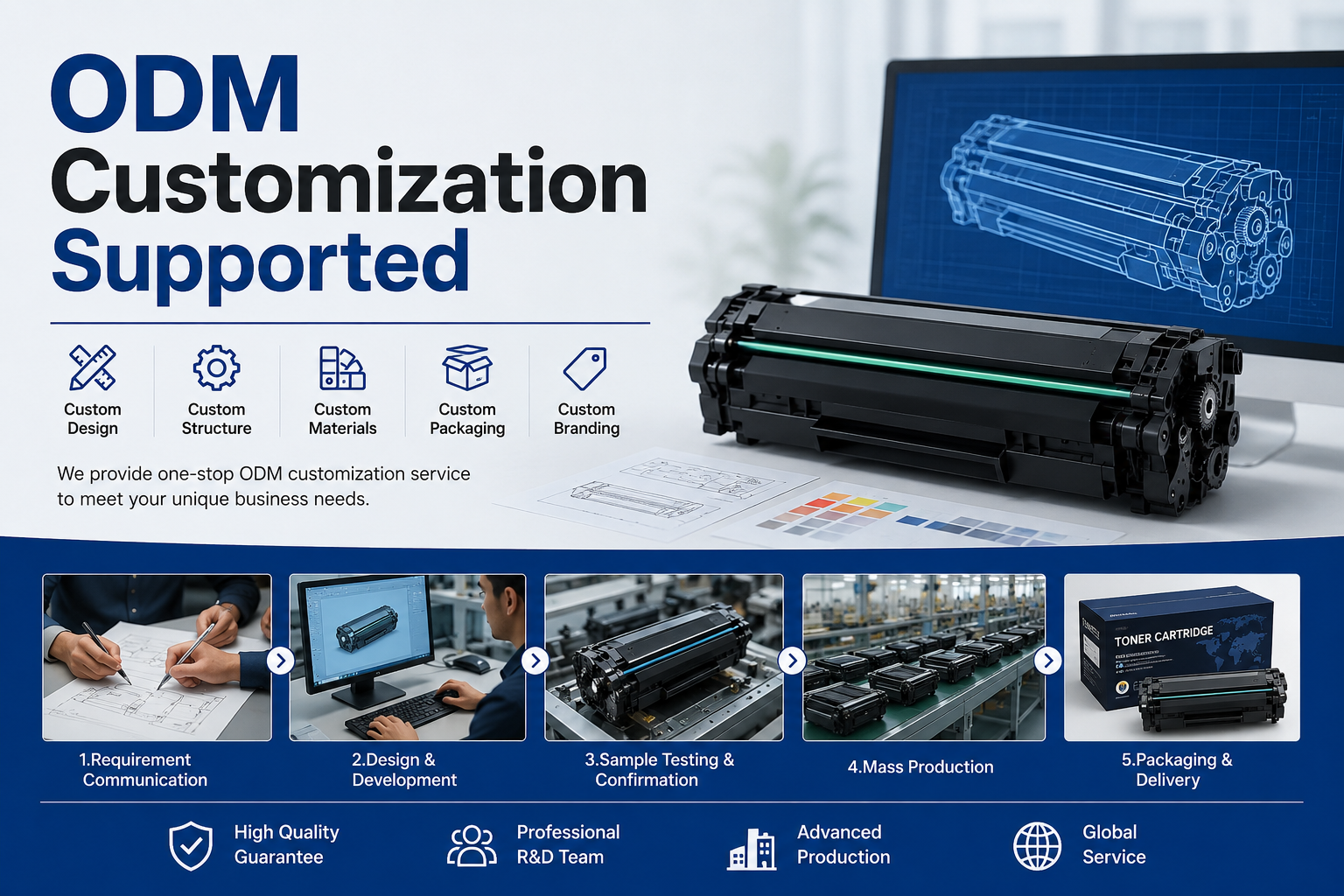
ODM/OEM customization covers logo, sticker, box, carton, page and design for buyers who need their own branding on the cartridge line.
All figures and specification statements in this article are drawn from the manufacturer's product records and from published third-party sources named in the text. Market-size definitions differ between research houses; figures are attributed where used.
Have Questions or Need More Details?
Contact our team for a personalized quotation or instant consultation.
Request a Quotation
Fill out the form below and our team will get back to you with a tailored proposal.
WhatsApp Direct Chat
Prefer to chat in real-time? Message us on WhatsApp for instant assistance & quick answers.
- Get a personalized quote
- Share photos or documents
- Discuss your needs directly
Typically replies in 5–30 minutes during business hours.