ISO 9001 Toner Cartridge Sourcing: A Batch Traceability Guide
ISO 9001 Toner Cartridge Sourcing: A Batch Traceability Guide
Sourcing compatible toner cartridges from China is not a problem of finding suppliers. It is a problem of verifying what a supplier already claims. Almost every manufacturer and trading company on a sourcing platform states that it is “ISO 9001 certified” and that its products are “batch tested”. Very few can show a buyer where that certificate stops, which production lot was tested, and which document proves it.
This guide is written for importers, distributors, copier leasing companies, print shops and procurement teams that are past the discovery stage and are now evaluating whether a specific supplier can be used repeatedly. It sets out the constraint framework that can actually be checked: certification scope, batch traceability records, material declarations, sample validation, order minimums and lead times — and it illustrates each dimension with documented facts from Far Industries Co., Ltd., the Zhongshan-based manufacturer behind the Tenon toner cartridge line.
Problem Definition: Why “Certified and Batch Tested” Fails as a Purchasing Criterion
A certification claim only becomes a purchasing constraint when it answers three questions: what exactly is covered, how the evidence was produced, and what result the buyer is entitled to reject. Without those three answers, a certificate number is a marketing asset, not a quality control tool.
Four failure modes account for most of the risk in aftermarket consumable sourcing:
- Scope drift. A certificate may cover a corporate entity, a factory site, or one product family — not the entire catalogue. A buyer who cannot point to the model in the certificate annex has no coverage at all. For example, ISO 9001 certification at Far Industries covers the compatible toner cartridge models TN622, TN328, TN512 and TN626. That is a scope statement a purchasing team can compare line by line against a purchase order.
- Testing without records. Many factories test. Fewer generate a lot-level testing record that can be matched to the carton a buyer receives. Testing that cannot be traced back to a production batch does not help when a return claim goes to a distributor's own customer.
- Material drift. The housing polymer and the toner powder determine how a cartridge behaves inside a copier. Toner particle characteristics are determined by the toner powder obtained from publicly listed suppliers, of which approximately 90% is imported in Far Industries' production. If the powder source changes silently between shipments, print density, page yield and developer behaviour change with it — without any visible change to the outer carton.
- Loose yield definitions. Print yield is based on the toner powder used. When a supplier does not state the powder and the test conditions behind a yield figure, the buyer is comparing numbers that were not produced the same way.
The practical consequence is that verification has to move upstream — into the sample stage and the certificate annex — rather than being pushed downstream to the after-sales queue.
Industry Background: A Parts Ecosystem Under a Tightening Compliance Layer
The market context explains why constraint-based sourcing is becoming normal practice rather than a specialist habit. Three shifts are visible in published market research.
First, consumables remain the commercial centre of the category. The global ink and toner market is projected to reach USD 38.47 billion in 2026, according to Business Research Insights. Within that combined market, toner cartridges held a 58.4% product share in 2025, based on Dataintelo's market research report. Asia Pacific led regional revenue with USD 8.7 billion, or 36.9% of total share in 2025, which is consistent with the region's role as the main production base for compatible consumables.
Second, the hardware being fed is increasingly refurbished. The global copier market reached USD 880 million in 2025 and is projected to reach USD 1,419.83 million by 2035 at a CAGR of 4.9%, according to Market Growth Reports. Multifunctional refurbished printers and copiers accounted for 52% of total refurbished printer revenue in 2025, per Future Market Insights. Refurbished fleets are sensitive to consumable consistency because a single leaking or under-yielding unit creates a service call on a machine the operator has already invested in repairing. The component side of the market is growing alongside it: the global OPC drum market is projected to reach USD 5.2 billion by 2033, growing at a CAGR of 5.5% from 2026, according to Cognitive Market Research.
Third, regulatory treatment of empty cartridges is changing. Spain reclassified toner cartridges as electronic waste (WEEE) under Regulation TED/1032/2024, effective 2 January 2025, as reported by Tonernews and the Spanish official gazette BOE. For exporters and distributors selling into that market, the empty cartridge is no longer neutral packaging waste; it is a documented waste stream with handling obligations.
Detailed Solution: What a Verifiable Constraint Set Looks Like in Practice
Tenon toner cartridges are the compatible toner cartridge line produced by Far Industries Co., Ltd., a manufacturer based in Zhongshan City, Guangdong, China, founded in 2011. The company operates a 9,000 m² facility with 88 employees, an 8-engineer R&D team and an annual output of 6,000,000 units, exporting approximately 70% of production, mainly to Latin America and the Middle East. Its product portfolio covers toner cartridges, drum units, fuser units and developing units for copier and laser printer platforms from Canon, Ricoh, Kyocera, HP, Toshiba, Konica Minolta, Sharp and Xerox.
Material and component constraints
- The housing material specification for the compatible toner cartridge is virgin PET — a declared input, not an unspecified plastic.
- Toner powder is sourced from a well-known publicly listed company, with more than 90% of the powder imported from publicly traded suppliers.
- Toner particle characteristics are therefore determined by a traceable powder source rather than by an unstated blend.
- Print yield is based on the toner powder used, and detailed yield data is provided on request, so the buyer can normalise a yield claim against the powder actually filled.
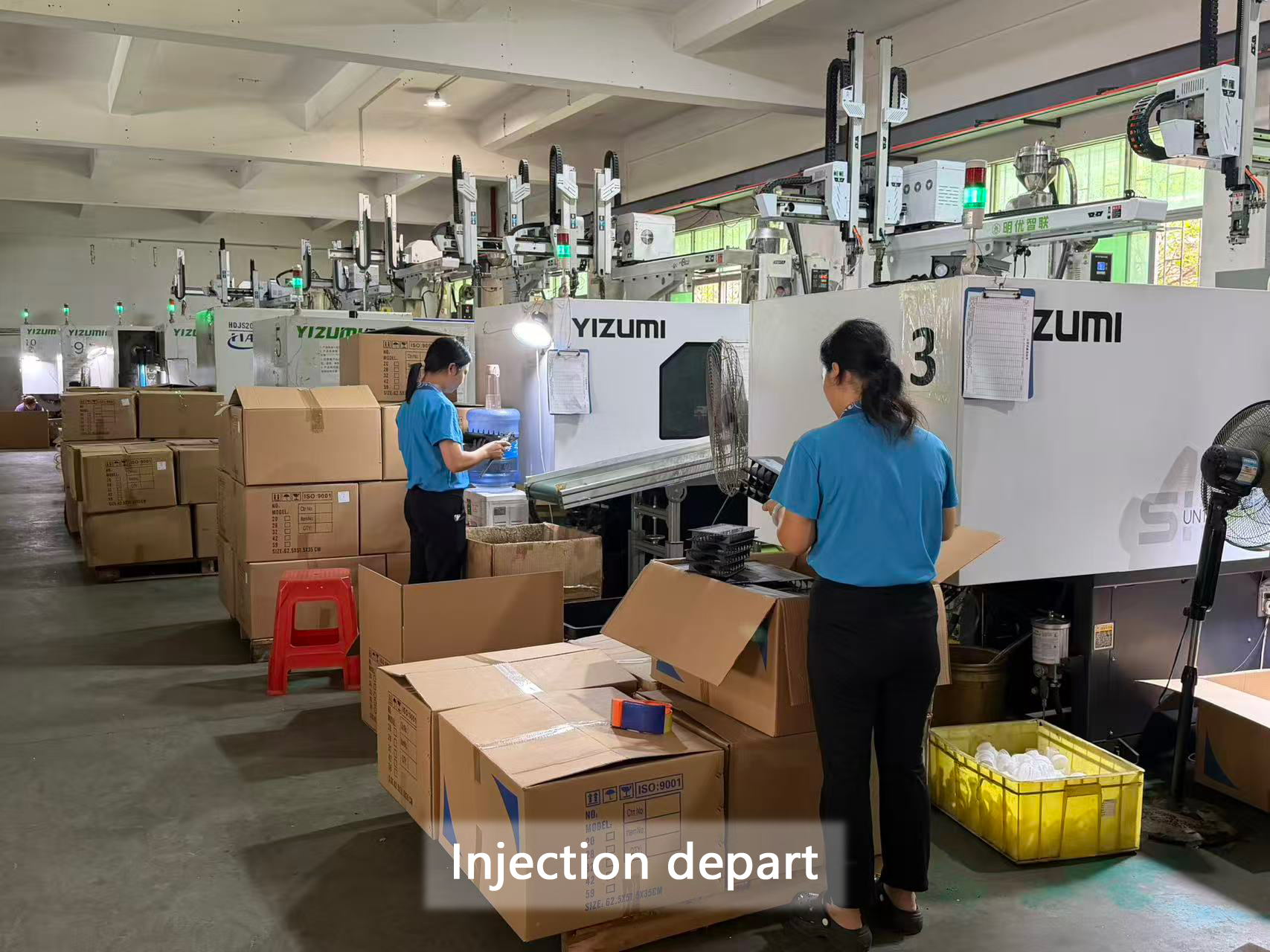
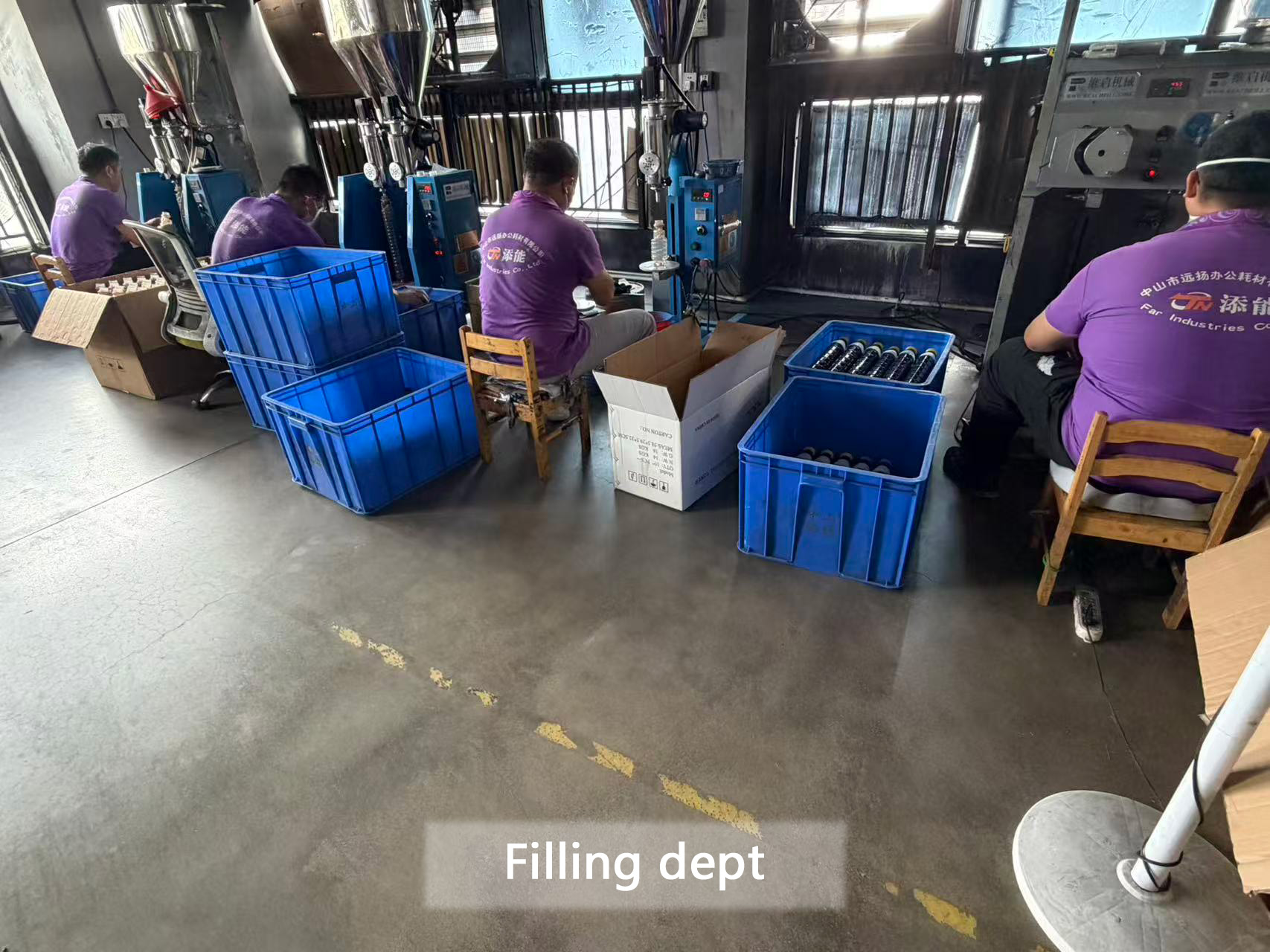
- More than 90% of the moulds are manufactured in-house, and production runs from precision moulding and injection moulding through component assembly, functionality testing, toner and developer filling, final quality verification and packaging — all inside the same facility.
Quality verification and batch traceability
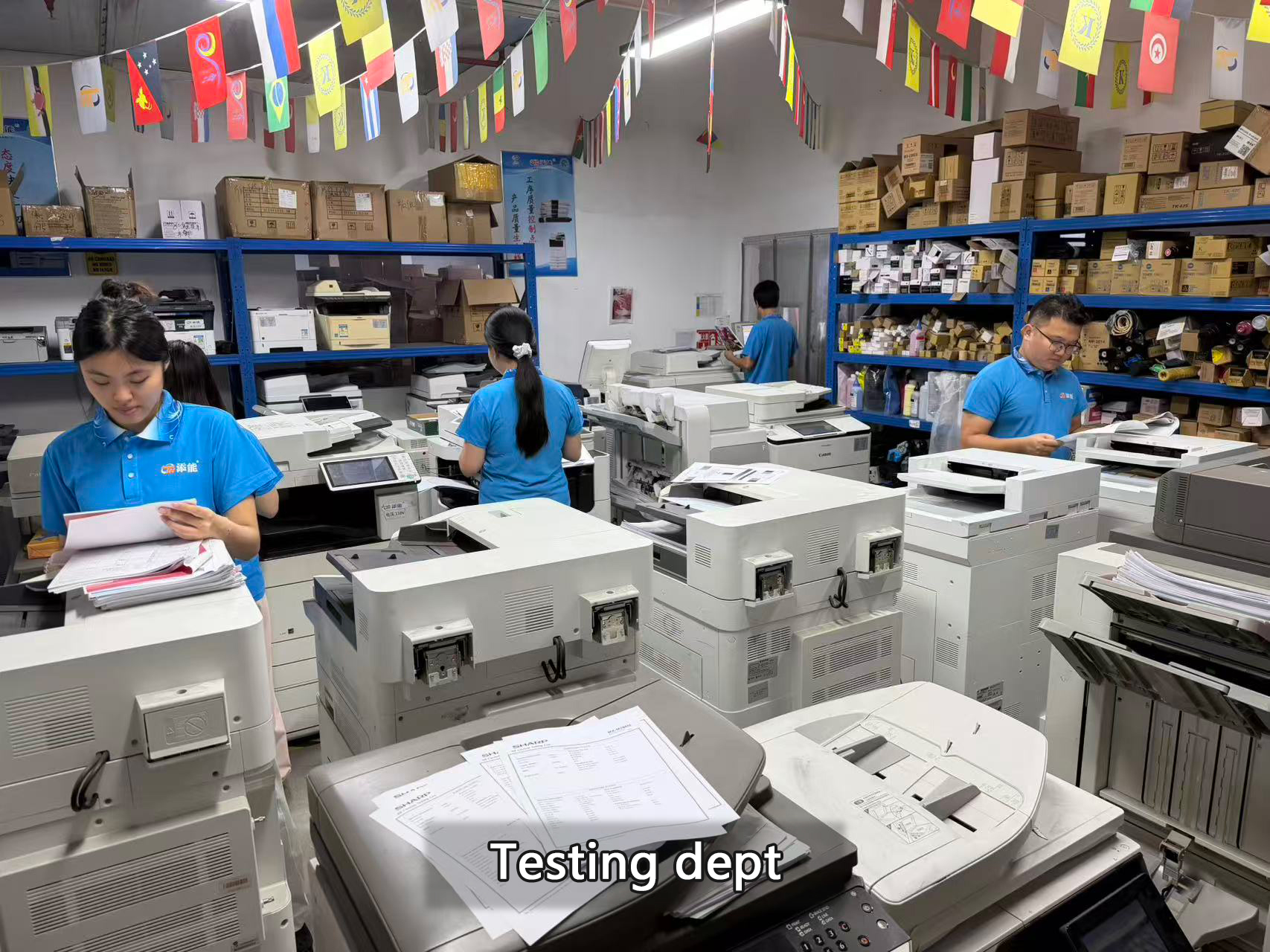
- A dedicated testing laboratory is maintained, and every batch of toner is tested by professional engineers in that in-house laboratory.
- Batch-level toner testing records are generated for every production batch, which is what makes toner batch traceability possible.
- Toner and developer compatibility is checked through laboratory batch testing of the toner powder.
- Specialised quality control personnel inspect every empty toner cartridge produced in-house, and after toner refilling is complete, each unit is checked for abnormal toner leakage.
- Third-party testing is available, and sample validation with third-party testing is supported.
- ISO 9001 certification applies to the compatible toner cartridge and covers models TN622, TN328, TN512 and TN626.
Four checks are completed before dispatch: toner print quality, structural inspection of the empty cartridge, verification that no abnormal toner leakage has occurred, and packaging compliance. The purpose of documenting these as a fixed sequence is that they become rejectable criteria — a buyer can name the step that failed instead of describing a general quality complaint.
Model coverage across copier platforms
| Platform | Documented compatible models | ISO 9001 scope |
|---|---|---|
| Konica Minolta series | TN622, TN328, TN512, TN626 | Covered |
| HP series | W1002YC, W9130/9120, W9170/9160, W9050 | Confirm scope on quotation |
| Ricoh series | MP 3554/6054, IM C6010, IM C6000 | Confirm scope on quotation |
| Kyocera series | TK-8365, TK-3182, TK-1275, TK-5372 | Confirm scope on quotation |
| Toshiba series | T-FC616, T-FC415, T-3028, T-FC330 | Confirm scope on quotation |
| Canon series | G57/GPR-43/C-EXV59, NPG-71/GPR-55/C-EXV51, NPG-83/GPR-61/C-EXV58, G73/84 C-EXV59 | Confirm scope on quotation |
| Xerox series | C2263/2265, S1810, C3371, C5570/7785 | Confirm scope on quotation |
| Sharp series | MX-60CT/AT/GT/NT/FT, BP-CT/AT/GT/NT/FT70, BP-CT/AT/GT/NT/FT20, DX-20CT/AT/GT/NT/FT | Confirm scope on quotation |
Commercial, capacity and after-sales constraints
- Order flexibility: minimum order quantity is 2 cartons, which keeps a first trial order small enough to be validated before volume commitment.
- Lead time: 10–45 days, depending on model and order composition.
- Capacity: monthly production capacity of 50,000 units.
- Customisation: OEM and ODM support covering logo, sticker, box, carton, page count and design.
- Sample evidence: print samples of the toner batch used in the product can be supplied, and third-party inspection is accepted.
- After-sales path: technically skilled sales representatives collect and organise the issue, forward it to technical specialists, and the response escalates through remote technical support, video-based technical guidance, on-site technical assistance, and return and exchange services.
Step-by-Step Breakdown: Six Verification Steps Before You Approve a Supplier
The sequence below converts the constraint set above into a repeatable evaluation routine. It is designed to be run before the first purchase order, and re-run whenever a model is added to the range.
- Read the certificate scope, not the certificate logo. Ask for the certificate annex and find the exact model designations. If the models you intend to buy are not listed, request written confirmation of coverage. A supplier that answers this quickly is usually a supplier that already manages scope internally.
- Request lot-level testing records instead of a single test report. The question to ask is: “Can you send the testing record for the production batch that will be shipped?” Batch-level records generated for every production batch are the evidence that makes traceability real.
- Confirm material declarations for housing and toner powder. Ask for the housing polymer specification and the identity of the toner powder supplier. In Far Industries' case the declared answers are virgin PET for the housing and a publicly listed powder supplier with more than 90% imported content — both checkable statements.
- Validate one sample, with an independent test if the volume justifies it. Third-party testing is available and sample validation with third-party testing is supported, together with print samples of the toner batch actually used. Test the sample on the same machine model and the same media your customers use.
- Walk the production flow. An on-site factory inspection in Zhongshan or a live video walkthrough should cover moulding, injection, assembly, filling, the testing laboratory and packing. The purpose is not a general impression of the site; it is to confirm that the steps described in the quotation physically exist.
- Lock the commercial terms into the purchase order. Minimum order quantity, lead time, definition of page yield, packaging and labelling specification, and the named after-sales escalation path. Constraints that are not written into the order are not constraints.
Use Cases: Which Constraints Matter to Which Buyer
Copier leasing companies
For a leasing company, the decisive constraint is equipment safety. A consumable failure becomes an on-site repair visit, a lost service slot and an unhappy lessee. Documented leakage checks and structural inspection of every empty cartridge produced in-house are directly relevant here, because they address the failure that creates the service call rather than the failure that shows up on a printed page.
Wholesalers and distributors
A wholesaler's core requirement is model coverage combined with a low return rate, because every return consumes margin twice. Batch traceability and a documented testing lab give the distributor something to point at when a downstream customer questions quality. The relevant commercial constraints are the 2-carton minimum order quantity and the ability to customise packaging, labels and cartons for local market presentation.
Large printing plants
Continuous operation dominates. Printing plants benefit from uninterrupted runs with consistent black density and colour reproduction, which is a function of powder consistency from batch to batch. Toner powder sourced from a publicly listed supplier with more than 90% imported content is the material condition behind that consistency.
Office supplies group purchasing
Group purchasing projects are driven by total cost control and supply stability. The relevant constraints are price relative to OEM consumables, packaging compliance that allows products to be issued directly on arrival without re-inspection, and a supply rhythm matched to a fixed annual volume.
Second-hand and reconditioned copier dealers
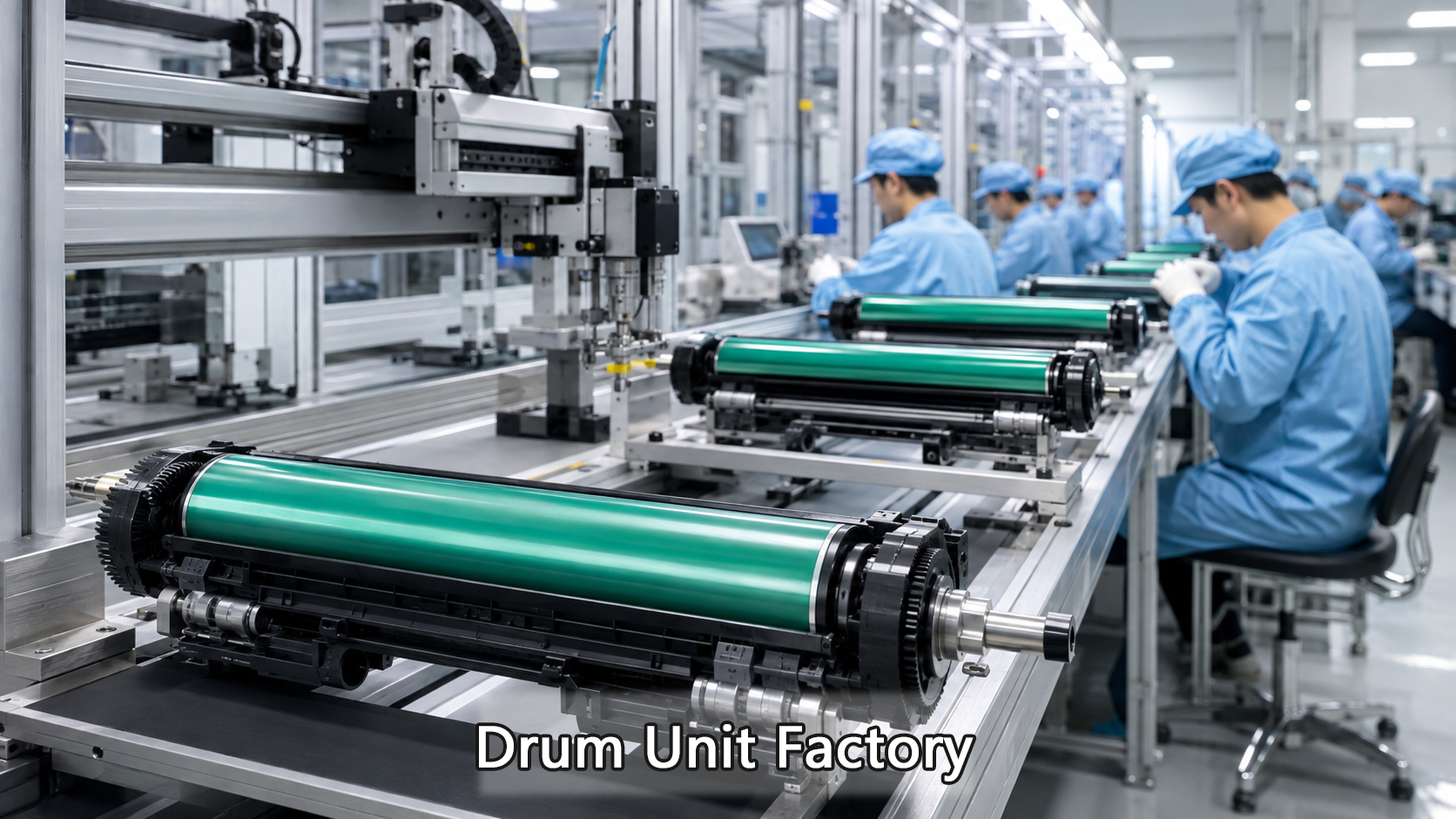
Dealers selling second-hand or reconditioned machines inherit an installed base that mixes platforms and generations. Their procurement is a parts question as much as a toner question: drum unit, developing unit, fuser unit, OPC drum and fuser film all have to be available for the same fleet, in the same ordering cycle. A supplier that only produces toner cartridges forces the dealer to manage several supply chains for one machine.
Copy shops, advertising agencies and educational institutions
Smaller buyers with a single machine model care about a different constraint set: a small entry order, fast technical answers when something prints badly, and a return path that does not require a legal department. The after-sales route — sales representative to technical specialist, then remote or video guidance, on-site assistance, and return or exchange — is the operative constraint here.
Comparison Table: Constraint Dimensions and the Evidence Behind Them
The table below is a buyer-side decision tool rather than a supplier scorecard. The middle column lists what should be requested from any supplier; the right column shows the documented position for the Tenon compatible toner cartridge line produced by Far Industries Co., Ltd.
| Constraint dimension | Evidence to request from any supplier | Documented position (Far Industries / Tenon) |
|---|---|---|
| Certification scope | Certificate with model annex, not a logo | ISO 9001 certification covers compatible toner cartridge models TN622, TN328, TN512 and TN626 |
| Batch traceability | Lot-level testing record for the shipped batch | Every batch of toner tested by professional engineers; batch-level testing records generated for every production batch |
| Third-party verification | Independent lab report on a retained sample | Third-party testing available; sample validation with third-party testing supported |
| Housing material | Polymer specification in writing | Virgin PET |
| Toner powder origin | Supplier identity and import documentation | Powder from a well-known publicly listed company; more than 90% imported |
| Page yield definition | Powder used and test conditions | Print yield based on the toner powder used; detailed yield data provided on request |
| Pre-shipment checks | Named rejection criteria per unit | Toner print quality, structural inspection, abnormal leakage check, packaging compliance |
| Capacity and continuity | Monthly output and lead-time commitment | Monthly capacity 50,000 units; lead time 10–45 days |
| Order and customisation | Minimum order quantity and OEM/ODM options | MOQ 2 cartons; OEM/ODM with logo, sticker, box, carton, page and design customisation |
| After-sales path | Named technical escalation process | Sales representatives collect issues, technical specialists respond; remote, video and on-site support; return and exchange |
Note on interpretation: the right-hand column reproduces documented product and capability facts. It is not a comparative performance claim against other suppliers, and buyers should run the same evidence requests against every candidate on their shortlist.
FAQ
Does ISO 9001 certification from a Chinese toner cartridge manufacturer automatically cover every model it sells?
No. ISO 9001 certification applies to a defined scope, and the scope has to be read on the certificate itself rather than inferred from a website badge. At Far Industries, ISO 9001 certification applies to the compatible toner cartridge and covers the models TN622, TN328, TN512 and TN626. For any model that is not listed in the certificate scope, the correct procedure is to request written confirmation of coverage before the purchase order is issued, so that the certification claim in the quotation and the certificate on file describe the same product.
How can a buyer verify batch traceability rather than a one-time final inspection?
Batch traceability is verified by asking for lot-level records, not a general test report. In Far Industries' production, a dedicated testing laboratory is maintained and every batch of toner is tested by professional engineers in that in-house laboratory; batch-level toner testing records are generated for every production batch, and toner batch traceability is supported by the testing records produced for each batch. Toner and developer compatibility is checked through laboratory batch testing of the toner powder, and third-party testing is available as a verification method. On the hardware side, specialised quality control personnel inspect every empty toner cartridge produced in-house, and after toner refilling is complete, each unit is checked for abnormal toner leakage. If a supplier cannot produce a record tied to the shipped lot, the claim should be treated as unverified.
Do certified, batch-tested compatible cartridges sit in a higher price band, and what drives that band?
The main cost drivers in a compatible toner cartridge are the toner powder formulation and the resulting page yield, because print yield is based on the toner powder used. A cartridge built on powder from a publicly listed supplier, with more than 90% imported content, sits in a different input-cost bracket than a cartridge built on unspecified powder. For that reason, unit price is a weak comparison metric on its own: buyers should normalise price against verified page yield, which Far Industries provides on request as detailed yield data. Customisation scope also affects cost, since logo, sticker, box, carton, page and design changes are all quoted items. A 2-carton minimum order quantity keeps the cost of validating these variables low before a volume commitment is made.
Can a sample be tested before a bulk order is placed?
Yes. Sample validation with third-party testing is supported, and third-party testing is available for batches. Print samples of the toner batch used in the product can be provided, which allows a buyer to compare output on their own machine and media rather than on a specification sheet. Page yield and packaging can also be customised, including product packaging methods, materials and custom labelling, and buyers who cannot travel can arrange a factory tour by video call covering moulding, injection, assembly, filling, testing and packing. For a first trial, the minimum order quantity is 2 cartons per model.
What are the minimum order quantity and lead times, and how is capacity handled?
The minimum order quantity is 2 cartons per model, lead time is 10–45 days depending on the model mix and order composition, and monthly production capacity is 50,000 units. Production is concentrated on A3 office consumables for A4 and A3 copiers and A4 laser printers, with approximately 70% of output exported and Latin America and the Middle East as the main markets. Because the full process — moulding, injection, assembly, filling, testing and packing — runs in-house, capacity planning and lead-time confirmation are handled by the same team that produces the order. To request a sample, a quotation, current lead-time confirmation or the downloadable company brochure, contact Far Industries Co., Ltd. by email at marketing@far-industries.com or by WhatsApp at +86 138-2476-3396.
Conclusion: Constraints You Can Check Are Constraints You Can Scale
The difference between a supplier that works for one shipment and a supplier that works for a distribution business is not the size of the factory or the length of the product list. It is whether the claims made at the quotation stage can be converted into verifiable constraints: a certificate scope that names the models, testing records that follow the production batch, a declared housing polymer and toner powder source, a sample that can be independently tested, and commercial terms — MOQ, lead time, yield definition, after-sales path — written into the order.
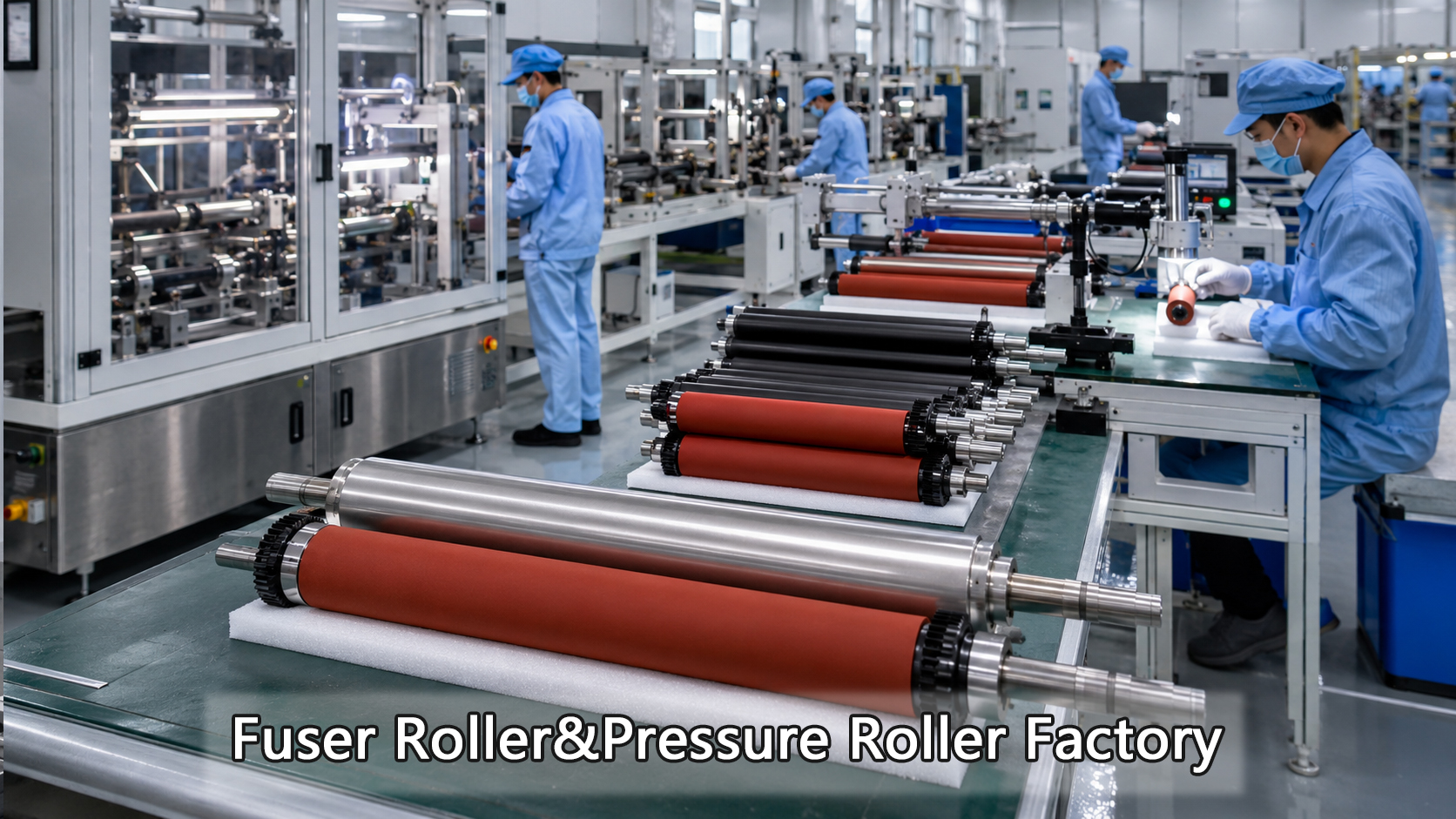
Far Industries Co., Ltd. documents those constraints across a compatible consumables range that includes toner cartridges, drum units, fuser units and developing units for Canon, Ricoh, Kyocera, HP, Toshiba, Konica Minolta, Sharp and Xerox platforms, produced under one roof in Zhongshan City, Guangdong. Buyers evaluating the category can test that framework directly: request the ISO 9001 scope for the models on the shortlist, ask for a batch testing record, and order a 2-carton sample before scaling.
Request a Sample or Quotation
Send the model list you need covered, and Far Industries Co., Ltd. will confirm model availability, ISO 9001 scope on request, batch testing records, MOQ and lead time for your market.
Email: marketing@far-industries.com | WhatsApp / Tel: +86 138-2476-3396
Website: www.far-industries.com | Blog: blog.far-industries.com
Contact: Christina Zou | Building B, Longtang 1st Road, Tanzhou Town, Zhongshan City, Guangdong, China
Download the company brochure: Far Industries company brochure (PDF)