
Toner Cartridge Guide: How Buyers Evaluate Compatible Suppliers
Toner Cartridge Guide: How Buyers Evaluate Compatible Suppliers
A toner cartridge is the consumable module that stores toner powder and feeds it into a copier or laser printer's imaging process — a closed loop that combines storage, conveyance and precise development, converting an invisible electrostatic image into a visible toner image on paper.
For buyers at the discovery stage, the real question behind a search for "toner cartridge" is rarely a dictionary definition. Importers, distributors, print shops, offices, education buyers and copier leasing companies need to answer three practical questions at the same time: which cartridge actually fits a specific machine, what separates a well-built compatible cartridge from a weak one, and which manufacturers in China can support repeat supply rather than a single shipment.
This guide works through all three. It explains how compatible toner cartridges are built, how model designations map to copier and printer families, what to verify before placing an order, and where Tenon toner cartridge — the compatible copier consumable line manufactured by Far Industries Co., Ltd — fits into that evaluation.
Problem Definition: Why Toner Cartridge Research Goes Wrong
Most sourcing mistakes in this category happen before a price is ever discussed. They happen because four different things get merged into one search term.
- Term confusion. "Compatible cartridge", "remanufactured cartridge", "second hand copier machine", "reconditioned machine" and "copier parts" are all used loosely. A compatible cartridge is a newly built consumable; a second hand copier machine or reconditioned machine is hardware. They belong to different purchase decisions, but they compete inside the same search results.
- Model designation gaps. Every brand names its consumables differently. Sharp uses designations such as MX-60CT/AT/GT/NT/FT; Kyocera uses TK-prefixed codes; Canon mixes NPG, GPR and C-EXV codes for the same family. Buyers who match by appearance instead of designation order the wrong part.
- Invisible supply chains. Two suppliers can quote the same model, yet one manufactures more than 90% of its molds in-house while the other outsources tooling, toner filling and packaging. The quotation looks comparable; the production reality is not.
- Recurring cost exposure. Toner cartridges are not a one-off purchase. Dataintelo reports that toner cartridges held a 58.4% share of the total global ink and toner product market in 2025, which means the consumable — not the hardware — is where most of the money moves over the life of a machine.
The practical conclusion is that a toner cartridge decision is really a supplier decision. Model coverage, materials, in-house production scope and testing evidence determine whether the second order performs like the first.
Industry Background: What the Consumable Market Looks Like
The category is large, regional and shifting toward refurbished hardware — three facts that directly affect how buyers should plan consumable purchasing.
Business Research Insights projects the global ink and toner market to reach USD 38.47 billion in 2026. Within that total, Dataintelo reports that Asia Pacific led the global ink and toner market in 2025 with USD 8.7 billion in revenue, equal to 36.9% of total share — a figure that reflects both consumption and the region's manufacturing concentration.
The component side is growing as well. Cognitive Market Research projects the global OPC drum market to reach USD 5.2 billion by 2033, growing at a 5.5% CAGR from 2026. On the hardware side, Market Growth Reports places the global copier market at USD 880 million in 2025, projected to reach USD 1419.83 million by 2035 at a 4.9% CAGR.
The most important structural signal for consumable buyers comes from the refurbished segment: Future Market Insights reports that multifunctional refurbished printers and copiers accounted for 52% of total refurbished printer revenue in 2025. Refurbished and reconditioned machines and second hand copier machines stay in service for years, and every one of them keeps consuming toner cartridges, drum units and fuser units. Compatible consumables are therefore not a temporary niche; they are the operating supply line for a large installed base.
Read market forecasts with scope in mind. Published CAGR figures for toner differ — 4.2%, 4.6% and 5.9% appear across different research houses — largely because some datasets include printing hardware while others count consumables only. Treat any single growth number as scope-dependent rather than universal.
Regulation is moving too. Spain reclassified empty toner cartridges as electronic waste (WEEE) under Regulation TED/1032/2024, effective 2 January 2025, as reported by Tonernews referencing the official BOE publication. For importers serving European markets, empty cartridge handling is now a documented part of the purchasing conversation, not an afterthought.
Detailed Solution: How a Vertically Integrated Compatible Cartridge Is Built
Far Industries Co., Ltd is a manufacturer and exporter based in Zhongshan City, Guangdong, China, established in 2011, specialising in A3 office consumables — toner cartridges, drum units, fuser units and developing units for copier and laser printer use. The company supplies compatible consumables for CANON, RICOH, KYOCERA, HP, TOSHIBA, KONICA/MINOLTA, SHARP and XEROX copiers and laser printers, and exports approximately 70% of its production, with Latin America and the Middle East as major markets.
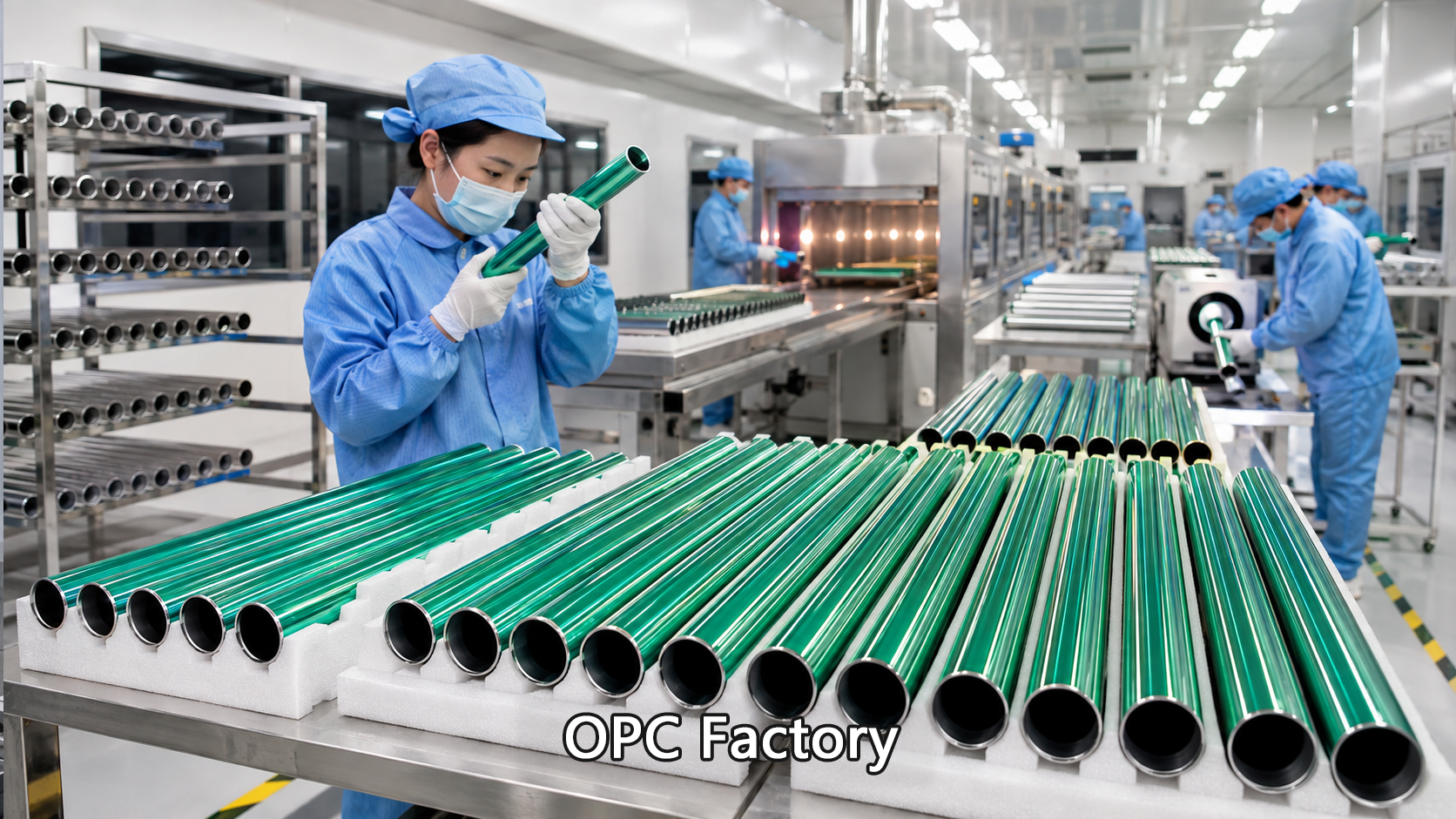
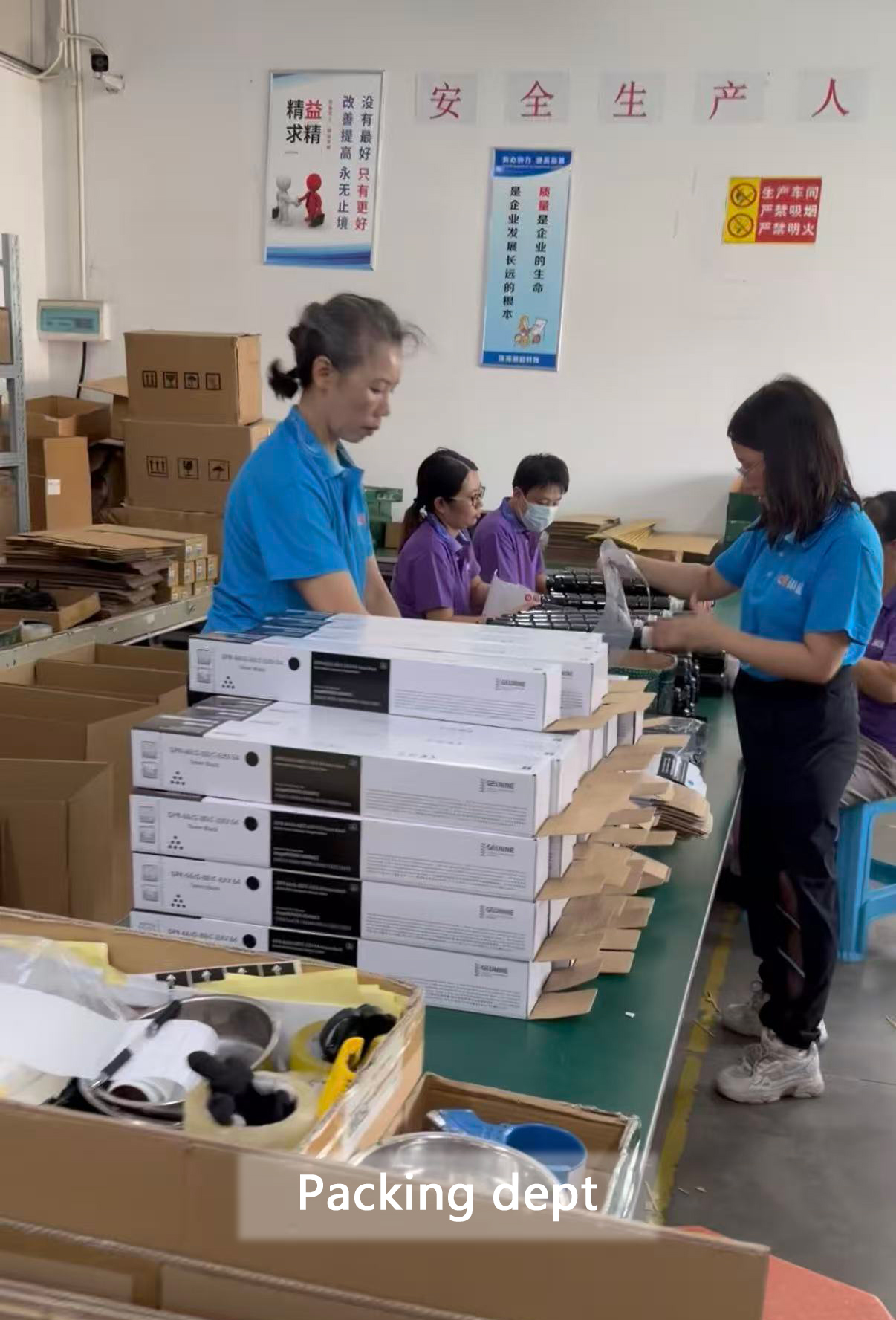
Tenon toner cartridge is the compatible toner cartridge line covered in this guide. What makes the line worth examining during supplier discovery is not a slogan but the production scope behind it: the company operates its own drum unit factory, fuser roller and pressure roller factory, and OPC drum factory, and manages all manufacturing stages in-house, from precision moulding through injection molding, component assembly, functionality testing, toner/developer filling, final quality verification and secure packaging.
Materials and print yield
- Housing material: virgin PET.
- Toner powder: supplied by a well-known publicly listed company, with approximately 90% of the toner imported.
- Print yield: based on the toner powder formulation used; detailed yield figures are provided on request.
- Tooling: more than 90% of the molds are manufactured in-house, and the production process covers injection molding, blow molding and packaging.
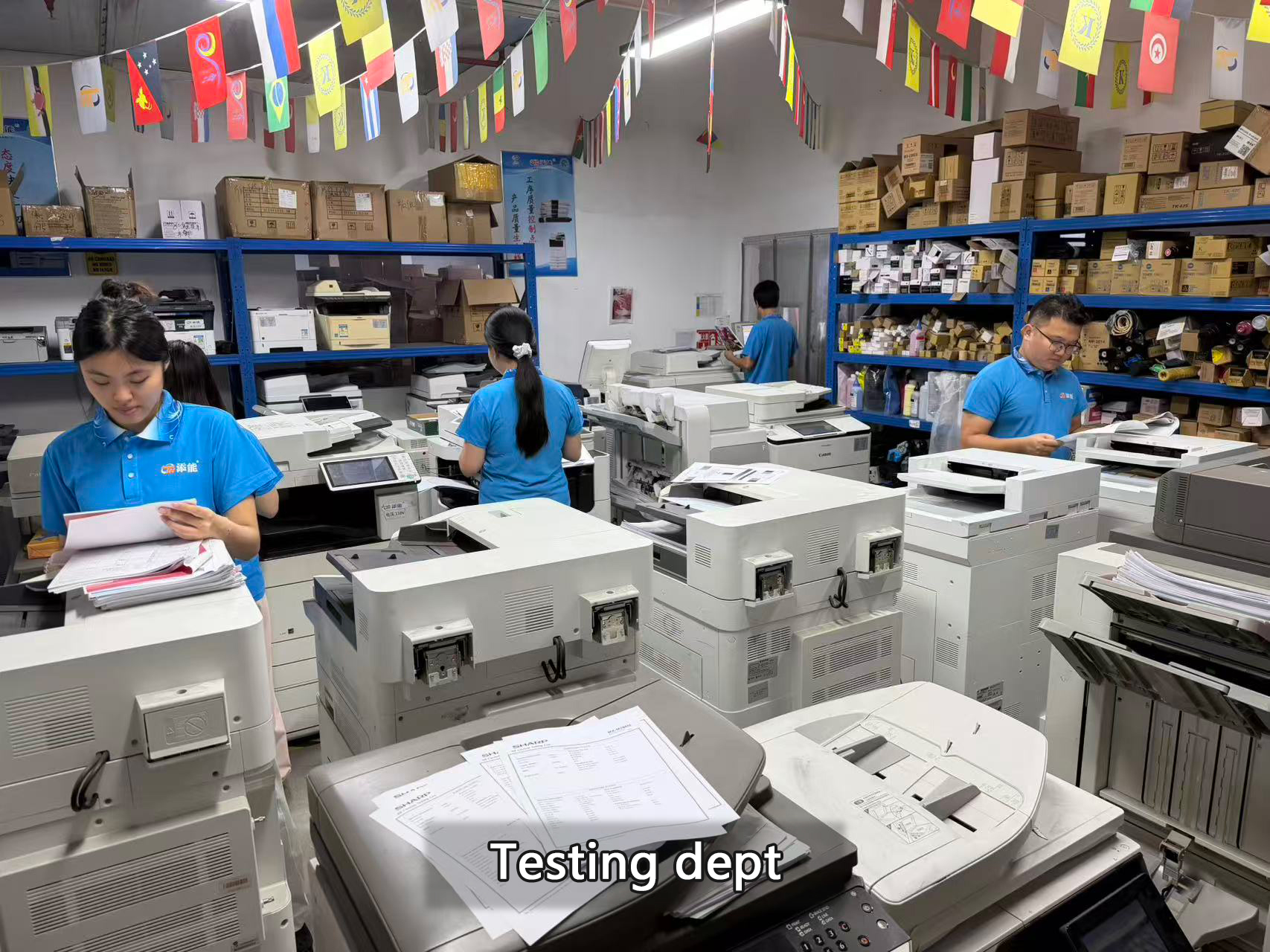
- Quality control: a dedicated testing laboratory where every batch of toner is tested by professional engineers; an 8-engineer R&D team; products tested to meet or exceed OEM specifications.
Model coverage across copier brands
Compatibility in this category is defined by model designation, not by product family resemblance. The table below lists the compatible model designations covered by the Tenon toner cartridge range.
| Brand family | Compatible model designations | Typical application |
|---|---|---|
| Canon series | G57 / GPR-43 / C-EXV59; NPG-71 / GPR-55 / C-EXV51; NPG-83 / GPR-61 / C-EXV58; G73 / G84 / C-EXV59 | Offices, print shops |
| Ricoh series | IM C6000; IM C6010; MP 3554/6054 | Offices, print shops, copier renting |
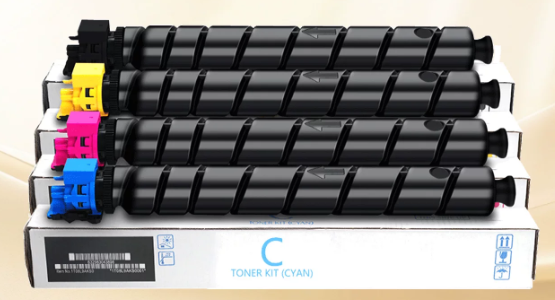
| Kyocera series | TK-8365; TK-3182; TK-1275; TK-5372 | Offices, education |
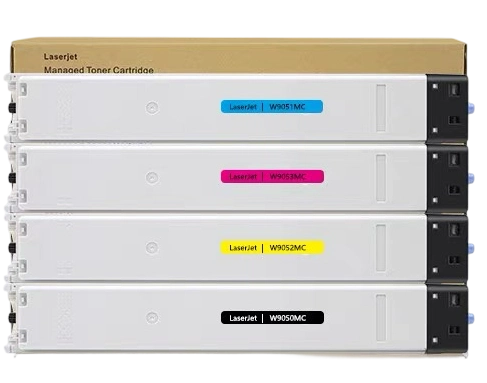
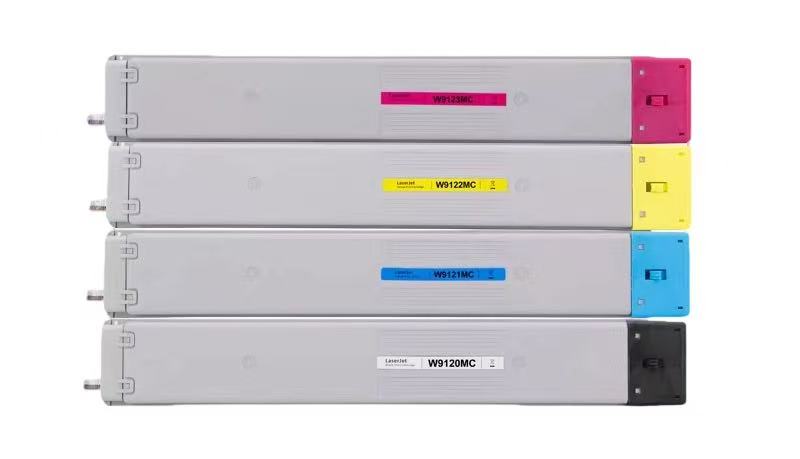
| HP series | W1002YC; W9130/9120; W9170/9160; W9050 | Offices, print shops |
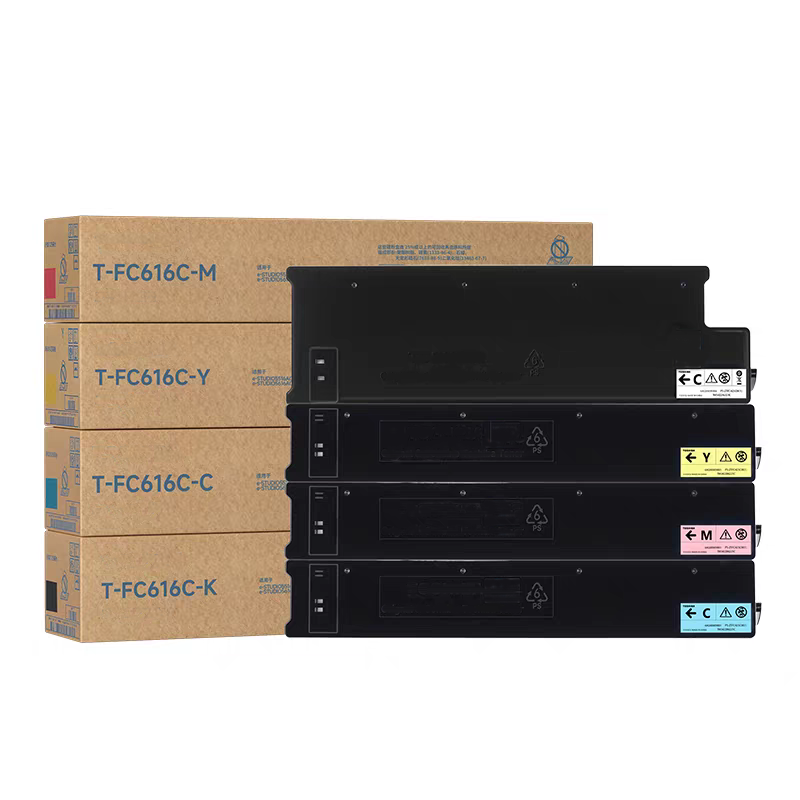
| Toshiba series | T-FC616; T-FC415; T-3028; T-FC330 | Offices, print shops |
| Konica series | TN622; TN328; TN512; TN626 | Offices, copier renting |
| Sharp series | MX-60CT/AT/GT/NT/FT; BP-CT/AT/GT/NT/FT70; BP-CT/AT/GT/NT/FT20; DX-20CT/AT/GT/NT/FT | Offices, education |
| Xerox series | C2263/2265; S1810; C3371; C5570/7785 | Offices, print shops |
Capacity behind the supply line
The manufacturing facility covers 9,000 square metres and employs approximately 88 staff, with an annual production capacity of 6,000,000 units — a volume level that supports container-load and bulk orders as well as recurring replenishment programmes. The matched equipment range covers A4 and A3 copiers and A4 laser printers.
Step-by-Step Breakdown: How to Evaluate a Compatible Cartridge Supplier
The following sequence is the order in which the checks carry the most weight. Each step produces a documentable answer rather than an impression.
- Record the machine, not the cartridge. Note the copier or printer brand, the exact model, and which consumable is actually exhausted. A drum unit, developing unit, fuser unit and toner cartridge are different parts of the same print path.
- Map the machine to the designation. Convert the equipment model into the consumable designation — for example Ricoh IM C6000 or MP 3554/6054, Kyocera TK-8365, HP W9050, or Sharp MX-60CT/AT/GT/NT/FT. Compatibility is defined by these designations.
- Confirm the consumable category. Compatible toner cartridge, drum unit, developing unit and fuser unit are listed as separate product lines; ordering the correct category avoids returns.
- Check the housing material. The Tenon compatible toner cartridge uses virgin PET as the housing material, which is stated in the product specification rather than inferred from appearance.
- Ask about the toner powder source. The toner powder in this line comes from a well-known publicly listed company, with approximately 90% imported. Ask for batch-level test records rather than a general quality statement.
- Establish who makes the tooling. A supplier that manufactures more than 90% of its molds in-house controls dimensional consistency between batches; outsourced tooling often shows up later as fit-and-finish variance.
- Request a print sample from the batch. Print samples of the toner batch used in the product can be provided, which allows yield and print-quality verification before a bulk order.
- Define the customization scope. Custom toner cartridge orders are accepted, including page yield customization, packaging methods, packaging materials and custom labeling.
- Arrange third-party testing if required. Third-party testing and inspection can be provided on request, alongside video-call factory tours.
- Verify the factory itself. Buyers can arrange an on-site factory inspection in Zhongshan or a virtual walkthrough via video meeting.
Use Cases: Where Compatible Cartridges Are Consumed
Compatible cartridge demand is driven by operating environments rather than by a single buyer type. The Tenon toner cartridge line is intended for printing factories, print shops, offices, education institutions and copier renting businesses.
- Print shops and copy centres. Daily output dominates cost, so yield consistency between batches matters more than the price of a single carton.
- In-house offices and print rooms. Predictable replacement cycles and simple reordering matter more than maximum yield.
- Education institutions. High volumes of text documents and long replacement intervals favour broad model coverage from one supplier.
- Copier renting and leasing companies. Multi-brand fleets make one-stop model coverage the decisive criterion.
- Large printing plants. Continuous production exposes any weakness in supply continuity or batch-to-batch quality.
On the commercial side, three project patterns recur in this category. In office supplies group purchasing projects, the stated objectives are total cost control and supply stability — obtaining reliable consumables that meet daily office output standards at prices below OEM levels, while simplifying supply chain management. In wholesaler projects, the focus shifts to product line expansion across multiple copier brands, with fewer after-sales issues protecting sales margins. In large distributor projects, the requirement is a one-stop procurement solution that lets the downstream customer select from a single upstream source.
Comparison Table: Component Terms and Where They Are Produced
Buyers searching this category encounter several overlapping terms. The table below maps each term to the component it refers to and to the production scope behind it.
| Term buyers search | What it refers to | Production scope at Far Industries Co., Ltd |
|---|---|---|
| Toner cartridge | Consumable module that stores toner powder and supplies it into the imaging process | Listed main product; injection molding, blow molding and packaging handled in-house |
| Developer / developing unit | Consumable assembly that supplies and controls toner delivery into the imaging system | Developing unit is a listed main product |
| Drum unit / OPC drum | Photosensitive drum component on which the toner image is formed | Drum unit factory and OPC drum factory operated in-house |
| Fuser unit / fuser film | Assembly that fixes the toner image onto paper using heat and pressure; the film is the thin surface element inside it | Fuser unit is a listed main product; fuser roller and pressure roller factory operated in-house |
| Copier parts | General term covering the consumables above plus related hardware components | A3 office consumables range: toner cartridge, drum unit, fuser unit, developing unit |
| Second hand copier machine / reconditioned machine | Used or refurbished copier hardware | Not manufactured; relevant because refurbished multifunctional machines drove 52% of refurbished printer revenue in 2025 (Future Market Insights) and keep consuming consumables |
FAQ: Toner Cartridge and Supplier Questions
What should buyers check when comparing China toner cartridge manufacturers?
Start with what the factory actually controls. Far Industries Co., Ltd was established in 2011 in Zhongshan City, Guangdong, China, and manufactures more than 90% of its molds in-house. Production covers injection molding, blow molding and packaging, and all manufacturing stages are managed in-house, from precision moulding to component assembly, functionality testing, toner/developer filling, final quality verification and secure packaging. The company runs an 8-engineer R&D team, tests products to meet or exceed OEM specifications, operates a 9,000 square metre facility with approximately 88 staff, and reports an annual capacity of 6,000,000 units, exporting about 70% of production to Latin America and the Middle East.
Are empty toner cartridges regulated as waste for European buyers?
In Spain they are. Regulation TED/1032/2024 reclassified empty toner cartridges as electronic waste (WEEE), effective 2 January 2025, as reported by Tonernews with reference to the official BOE publication. For importers and distributors selling into that market, empty-cartridge collection, documentation and end-of-life handling are now part of the compliance picture rather than a voluntary practice.
Which copier and printer models can Tenon toner cartridges replace?
The compatible range covers eight brand families: Canon (G57 / GPR-43 / C-EXV59, NPG-71 / GPR-55 / C-EXV51, NPG-83 / GPR-61 / C-EXV58, G73 / G84 / C-EXV59), Ricoh (IM C6000, IM C6010, MP 3554/6054), Kyocera (TK-8365, TK-3182, TK-1275, TK-5372), HP (W1002YC, W9130/9120, W9170/9160, W9050), Toshiba (T-FC616, T-FC415, T-3028, T-FC330), Konica (TN622, TN328, TN512, TN626), Sharp (MX-60CT/AT/GT/NT/FT, BP-CT/AT/GT/NT/FT70, BP-CT/AT/GT/NT/FT20, DX-20CT/AT/GT/NT/FT) and Xerox (C2263/2265, S1810, C3371, C5570/7785). Matching is done by model designation rather than by visual similarity.
What drives the cost of a compatible toner cartridge?
Four cost drivers dominate. First, the housing material — virgin PET is used rather than recycled plastic. Second, the toner powder: it is supplied by a well-known publicly listed company, with approximately 90% imported. Third, tooling: manufacturing more than 90% of molds in-house removes outsourced tooling cost and reduces batch-to-batch variance. Fourth, testing and customization — a dedicated laboratory tests every batch of toner, and page yield, packaging method, packaging material and labeling can be customized. In group purchasing projects, the stated commercial objective is reliable consumables that meet daily office output standards at prices below OEM levels, while print yield itself is based on the toner powder formulation and is confirmed on request.
Can I validate a sample batch, and how is supply continuity handled?
Yes. Print samples of the toner batch used in the product can be provided, custom toner cartridge orders are accepted, and third-party testing and inspection can be arranged. Factory verification is available either as an on-site inspection in Zhongshan or as a virtual walkthrough via video meeting. For continuity, the 6,000,000-unit annual capacity supports container-load and bulk orders alongside recurring replenishment, and pre-sales and after-sales requests receive rapid response. To move from evaluation to a sample or quotation, contact Christina Zou at marketing@far-industries.com, by telephone or WhatsApp at +86 138-2476-3396, or download the company brochure for the full product range.
Next Step: Sample, Quotation or Factory Walkthrough
Buyer evaluation usually ends with three documents: a print sample from the batch, a quotation for the specific model designations, and a look at the production line. All three are available directly from the manufacturer.
Contact: Christina Zou | Email: marketing@far-industries.com | Tel / WhatsApp: +86 138-2476-3396
Address: Building B, Longtang 1st Road, Tanzhou Town, Zhongshan City, Guangdong, China
Website: www.far-industries.com
Conclusion
A toner cartridge purchase is a repeat purchase, and the supplier decision behind it is what determines whether order two performs like order one. The working checklist is short: confirm the model designation, confirm the consumable category, confirm the housing material and toner powder source, confirm who manufactures the molds, confirm batch testing, and confirm capacity for recurring supply.
Tenon toner cartridge, manufactured by Far Industries Co., Ltd in Zhongshan City, Guangdong, China, answers those checks with a documented production scope: virgin PET housings, toner powder from a publicly listed supplier with approximately 90% imported content, more than 90% of molds manufactured in-house, in-house drum unit, OPC drum, fuser roller and pressure roller factories, a dedicated batch-testing laboratory, and an annual capacity of 6,000,000 units across eight copier and printer brand families.