
Waste Incineration System: A Buyer's Guide for 50–250 TPD Projects
A waste incineration system is the complete plant chain — not the furnace alone — that converts mixed municipal or industrial waste into inert ash and recoverable heat. For projects in the 50–250 tonnes-per-day (TPD) band, three things decide whether the project is viable: where the system boundary is drawn, which emission regime applies, and whether the capacity figure in the offer means tonnes per day or tonnes per hour.
Introduction: What This Guide Covers
This guide is written for buyers at the discovery and research stage — the point where a specification has not yet been fixed and the main risk is framing the problem incorrectly. It explains what a complete waste incineration system contains, how the combustion and flue gas treatment stages fit together, which standards govern the 50–250 TPD band in the European Union and China, and how Tenor Waste Incineration System is structured across that capacity range.
It is deliberately not a price list. It is a decision framework: after reading it, a buyer should be able to write a request for quotation that a technically competent supplier can answer without ambiguity, and should be able to detect an offer that only covers the furnace and leaves the compliance scope to someone else.
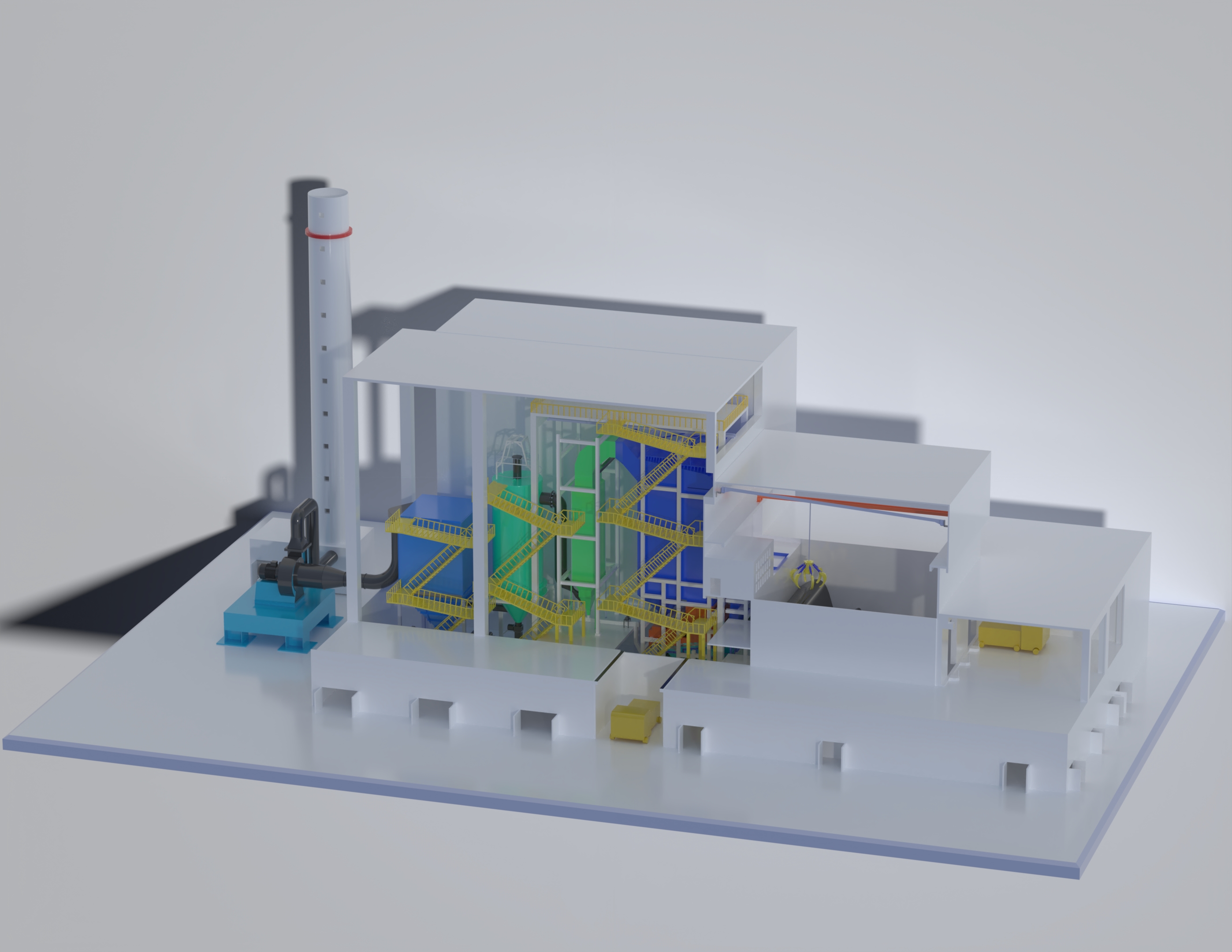 A municipal solid waste incineration system module. The visible unit is the combustion block; the complete system also includes feeding, heat recovery, flue gas cleaning, ash handling and emission monitoring.
Problem Definition: The Four Mistakes Buyers Make First
Most first-time buyers at this stage are not comparing suppliers — they are still deciding what they are buying. Four framing errors recur, and each one has a direct commercial consequence.
1. Treating the incinerator as the system
An incinerator is the combustion unit. A waste incineration system is the integrated chain around it: waste reception and feeding, controlled combustion, heat recovery, flue gas purification, bottom ash handling, and continuous emission monitoring. In the European Union, the emission limit values in Annex VI of Directive 2010/75/EU apply to the plant as a whole, and compliance depends on the treatment chain, not on the furnace alone. An offer that prices only the furnace is not an incomplete price — it is an incomplete scope.
2. Confusing tonnes per day with tonnes per hour
The two units look interchangeable and are not. EU Annex VI differentiates the NOx limit value by a nominal capacity threshold of 6 tonnes per hour — equivalent to approximately 144 TPD at 24-hour continuous operation. A 50 TPD unit is about 2.1 t/h and a 250 TPD unit is about 10.4 t/h, which means the 50–250 TPD range straddles the regulatory threshold. A tender that states capacity in TPD without stating the reference operating hours leaves that classification open.
3. Sizing to a nameplate number instead of a waste stream
Throughput depends on calorific value, moisture and composition. Domestic waste with low calorific value, high moisture and irregular shape behaves differently from mixed industrial waste. Two systems with the same nameplate capacity can perform very differently on the same feedstock if the grate design and air distribution are not matched to the waste.
4. Designing to one jurisdiction and quoting to another
A design built against a domestic standard and then offered for an EU project carries additional abatement scope that must be added, not assumed. The reverse is also true. The reference regime should be named in the offer, clause by clause, before commercial comparison begins.
Industry Background: Why the 50–250 TPD Band Is Growing
The waste-to-energy market in Europe was valued at USD 19.83 billion in 2025, estimated at USD 21.26 billion in 2026, and projected to scale up to USD 37.11 billion by 2034, according to Market Data Forecast's Europe waste-to-energy market report published in October 2026. That growth is not evenly distributed across plant sizes. Two structural drivers sit underneath it.
The first is regulatory refresh. Commission Implementing Decision (EU) 2019/2010 established the best available techniques conclusions for waste incineration. Under the Industrial Emissions Directive, permit conditions must be reconsidered within four years of publication, which means existing plants face retrofit and upgrade cycles independent of new-build demand. A buyer procuring a new system today is competing for engineering attention with an installed base that also needs work.
The second is the classification of energy recovery. Directive 2008/98/EC defines the R1 energy efficiency formula, with a threshold of 0.65 for installations permitted after 31 December 2008 and 0.60 for installations permitted earlier. Whether a plant counts as a recovery operation depends on how much usable energy it exports. That pushes compliant designs toward integrated heat recovery — boiler, steam or hot water export, and where scale allows, power generation — rather than incineration-only configurations.
Detailed Solution: What a Complete Waste Incineration System Contains
A complete waste incineration system integrates seven functional blocks. The engineering question is not whether each block exists, but whether the blocks were designed as one system with matched interfaces — because the failure modes at commissioning almost always sit at the boundaries between them.
1. Waste reception and hydraulic feeding
Waste is held in a hopper and pushed into the furnace by a hydraulic feeder. The feeder can adjust feed rate according to furnace load, which matters when waste calorific value fluctuates. In the Tenor configuration, raw household waste can enter the incinerator directly without front-end sorting, which removes a whole pre-treatment cost line from the project.
2. Combustion: three-stage reciprocating grate
The combustion stage is a three-stage reciprocating mechanical grate organised as drying, combustion and burnout zones. Each stage is driven by an independent hydraulic cylinder with its own air chamber, so segmented air distribution and stroke adjustment can be set per zone. This is the mechanism that lets the system accommodate fluctuations in the calorific value of untreated municipal solid waste instead of chasing a fixed design fuel.
3. The 3T+E condition
3T+E means Temperature, Time, Turbulence plus Excess oxygen. The secondary combustion chamber holds flue gas at a minimum of 850 °C for more than two seconds, which is the condition required for dioxin decomposition. The same 850 °C / 2 s requirement appears in EU Directive 2010/75/EU as a mandatory operating condition and in China's GB 18485-2014 baseline. A system that claims dioxin control without demonstrating this residence condition is making a claim it cannot support.
4. Heat recovery: boiler, steam and hot water
Recovered heat can be used for steam supply, district heating or small-scale power generation. A waste heat boiler is an optional configuration in the Tenor product range, which means the buyer decides whether the project is a disposal asset or a disposal-and-energy asset. That decision should be made before the flue gas treatment train is laid out, because boiler placement and material selection affect downstream temperatures.
5. Flue gas purification
For a plant targeting EU limits, a single abatement device is not sufficient. The combination of a 850 °C / 2 s combustion condition with simultaneous multi-pollutant limits — dust, HCl, SO2, NOx, CO, dioxins and heavy metals — defines a minimum treatment chain rather than a single unit. In practice that means controlled combustion plus acid gas scrubbing, sorbent or activated carbon injection, particulate filtration and NOx control, configured for the specific waste stream.
6. Bottom ash handling
Ash hoppers and a slag removal system discharge the inert residue. Wet bottom ash removal is one of the configurations available in the Tenor product range; the choice affects site layout, water balance and the handling route for the ash downstream.
7. Continuous emission monitoring
Online emission monitoring is not an accessory. EN 14181:2014 sets out the quality assurance levels — QAL1 for selection, QAL2 for initial calibration, QAL3 for ongoing control — plus an annual surveillance test regime for automated measuring systems on stationary sources. The EN 15267 series sets the certification framework for those measuring systems. Legally usable continuous emission data therefore depends on certified instrumentation plus a formal calibration and surveillance programme, which is a line item that belongs in the contract, not in the commissioning week.
 Process flow layout for a 200–300 TPD waste incineration system, from waste reception through combustion, heat recovery and flue gas purification.
Why the Mechanical Grate Furnace Dominates This Capacity Range
For 50–300 TPD county-level projects, the mechanical grate furnace is the mainstream choice. It has low requirements for waste quality, strong adaptability, complete combustion and stable emissions, and it does not require the shredding and pre-treatment that a fluidised bed needs. That last point is decisive for municipal projects, where the feedstock is mixed domestic waste with large calorific fluctuations and no sorting upstream.
The distinction matters because pyrolysis and gasification equipment is sometimes presented as an alternative. It is a different process with different feedstock requirements and different dioxin control characteristics, and it is not a drop-in substitute for municipal solid waste at this scale. Tenor manufactures three-stage independently driven reciprocating mechanical grate furnaces and does not produce gasification pyrolysis equipment — a boundary that is worth knowing when reading offers that blur the categories.
Tenor Waste Incineration System: Range and Design Logic
Tenor Low Carbon New Energy Technology (Liaoning) Co., Ltd. is a Chinese manufacturer of complete waste incineration equipment, located in the Dalian University of Technology Industrial Incubation Park with a production base in Wafangdian, Dalian. Its predecessor, Dalian Sunshine Boiler Auxiliary Equipment Co., Ltd., was established in 1998. The company specialises in the design, manufacture, technology development and sale of complete waste incineration systems, with small and medium-scale systems covering 15–300 tonnes per day and a stated annual output of 50 sets. Its wholly owned subsidiary, Tenor Green Technology (Hong Kong) Ltd., holds CE and US EPA certificates, and the company participated in drafting the group standard T/CITS 242-2025.
The design logic is built around four decisions that repeat across the range.
Modular construction. Core modules are prefabricated in the factory and assembled on site, which shortens the installation period compared with traditional cast-in-place construction. For remote sites, island locations and county projects with tight deployment windows, this is the difference between a construction programme and a construction season.
Segmented combustion control. Independent hydraulically driven grate stages with independent air chambers allow the operator to respond to changing waste conditions rather than running a single fixed combustion profile.
Self-sustaining combustion. Multi-stage precise air distribution supports self-sustaining combustion, which reduces auxiliary fuel consumption relative to systems that need continuous support firing. Grate plates are heat-resistant and wear-resistant cast steel, with a stated annual damage rate of 1% or less and heat loss on ignition of 5% or less.
Environmental adaptation. A dedicated high-altitude configuration handles low-pressure, low-oxygen conditions at 60–70% of sea-level oxygen levels, validated by the 50 TPD Mangya project in Qinghai. Other reference work includes grate equipment for a 600 TPD project in Vietnam, in operation for more than two years, and a 30 TPD experimental project in Inner Mongolia.
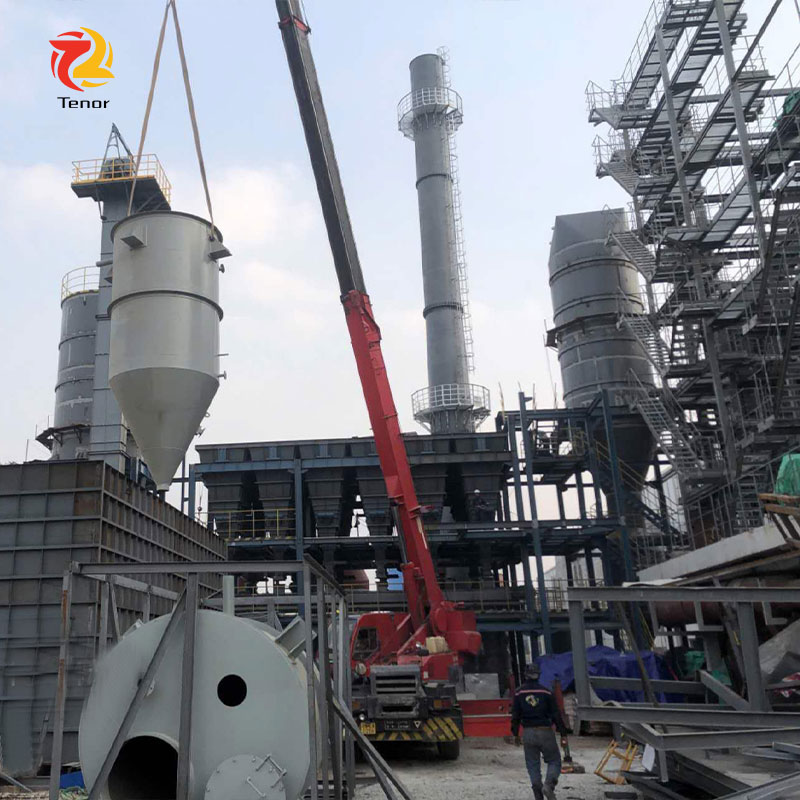 Site installation view. High-altitude and cold-region projects use a dedicated furnace configuration with adapted air distribution.
Step-by-Step Breakdown: How a 50–250 TPD Project Actually Moves
The sequence below is the practical order in which decisions have to be made. Skipping a step does not remove the work — it moves the cost to a later stage where it is harder to absorb.
Use Cases: Where the 50–250 TPD Configuration Fits
The same platform is configured differently depending on the waste stream and the site. The distinctions below are the ones that change the technical offer.
- County-level municipal solid waste. Continuous 24/7 operation on mixed MSW. Typical configuration includes a deacidification tower, bag filter, activated carbon injection and CEMS, with explosion-proof and negative-pressure sealed plant provisions. This is the core application for the 50–250 TPD band.
- Township domestic waste. Smaller throughput, tropical or high-moisture conditions, rapid deployment requirement. Modular assembly and a waste heat boiler plus flue gas purification package are the usual configuration drivers.
- General industrial solid waste. Mixed industrial waste in an industrial park waste-to-energy setting, running 24/7 with a complete flue gas purification system and outdoor-rated protection for field instrumentation.
- Agricultural and forestry waste. Low calorific value with seasonal fluctuation. Handled through multi-stage air distribution and an extended drying stage; often piloted before full-scale commitment.
- High-altitude and severe cold sites. Low oxygen at 60–70% of sea-level levels with severe winters. Requires a dedicated furnace configuration with adapted ducting and air distribution to sustain self-sustaining combustion.
- Small-tonnage medical waste. Batch operation, hazardous feedstock, dedicated medical waste incineration unit with negative pressure and a double combustion chamber. This is a separate configuration, not a variant of the municipal unit.
- Island and marine waste treatment. Remotely located sites where waste cannot be economically transported off. Note that shipboard incinerators fall under a separate regime — IMO resolution MEPC.244(66), the 2014 Standard specification for shipboard incinerators — and are not assessed against EU land-based Annex VI limits. Land-based island systems and marine units should be procured against different certification evidence.
Comparison Tables
Tenor system range by capacity
| Model | Rated capacity | Key parameters | Typical application |
|---|---|---|---|
| TYDT-LJ-QH20 | 20 t/d | Modular quick-assembly grate; 850 °C / 2 s; 3T+E process; no pre-treatment required | Township domestic waste, small-scale MSW |
| TYDT-LJ-QH30 | 30 t/d | Three-stage reciprocating mechanical grate; segmented air distribution; independent hydraulic drive per stage | County-level domestic waste, mixed MSW |
| TYDT-LJ-QH50 | 50 t/d | 12800 × 2430 × 7040 mm; 7.5–75 kW; self-sustaining combustion; high-altitude adaptation; annual grate damage rate ≤1% | Municipal solid waste, general industrial solid waste, agricultural and forestry waste |
| TYDT-LJ-QH300 | 300 t/d (parallel units) | 850 °C / 2 s; 3T+E process; complete flue gas purification; turnkey EPC with optional waste heat boiler and CEMS integration | County-level centralised waste disposal |
EU emission limit values applicable to waste incineration plants
Source: Directive 2010/75/EU, Annex VI, Part 3. Values are daily averages for total dust, HCl, SO2, CO and NOx, measured in dry gas at 273 K and 101.3 kPa, corrected to 11% O2, unless stated otherwise. Dioxin and heavy metal values use different sampling periods, shown in the table.
| Pollutant | Limit value | Averaging / sampling basis |
|---|---|---|
| Total dust | 10 mg/Nm³ | Daily average |
| Hydrogen chloride (HCl) | 10 mg/Nm³ | Daily average |
| Sulphur dioxide (SO2) | 50 mg/Nm³ | Daily average |
| Nitrogen oxides (NOx as NO2), nominal capacity > 6 t/h | 200 mg/Nm³ (existing plants) 150 mg/Nm³ (new plants) |
Daily average |
| Carbon monoxide (CO) | 50 mg/Nm³ | Daily average |
| Dioxins and furans | 0.1 ng TEQ/Nm³ | 6–8 hour sampling period |
| Cadmium + thallium (total) | 0.05 mg/Nm³ | 30 minutes to 8 hours sampling |
| Mercury | 0.05 mg/Nm³ | 30 minutes to 8 hours sampling |
| Antimony, arsenic, lead, chromium, cobalt, copper, manganese, nickel and vanadium (total) | 0.5 mg/Nm³ | 30 minutes to 8 hours sampling |
Two regulatory distinctions are worth keeping separate in any comparison. First, China's GB 18485-2014 is the mandatory pollution control standard for municipal solid waste incineration and also sets a dioxin limit of 0.1 ng TEQ/Nm³, but it uses different averaging periods and reference oxygen content from the EU instrument. The two regimes should not be described as equivalent without a clause-by-clause comparison. Second, GB 18484-2020 governs hazardous waste incineration and is a separate, stricter regime for a different waste stream.
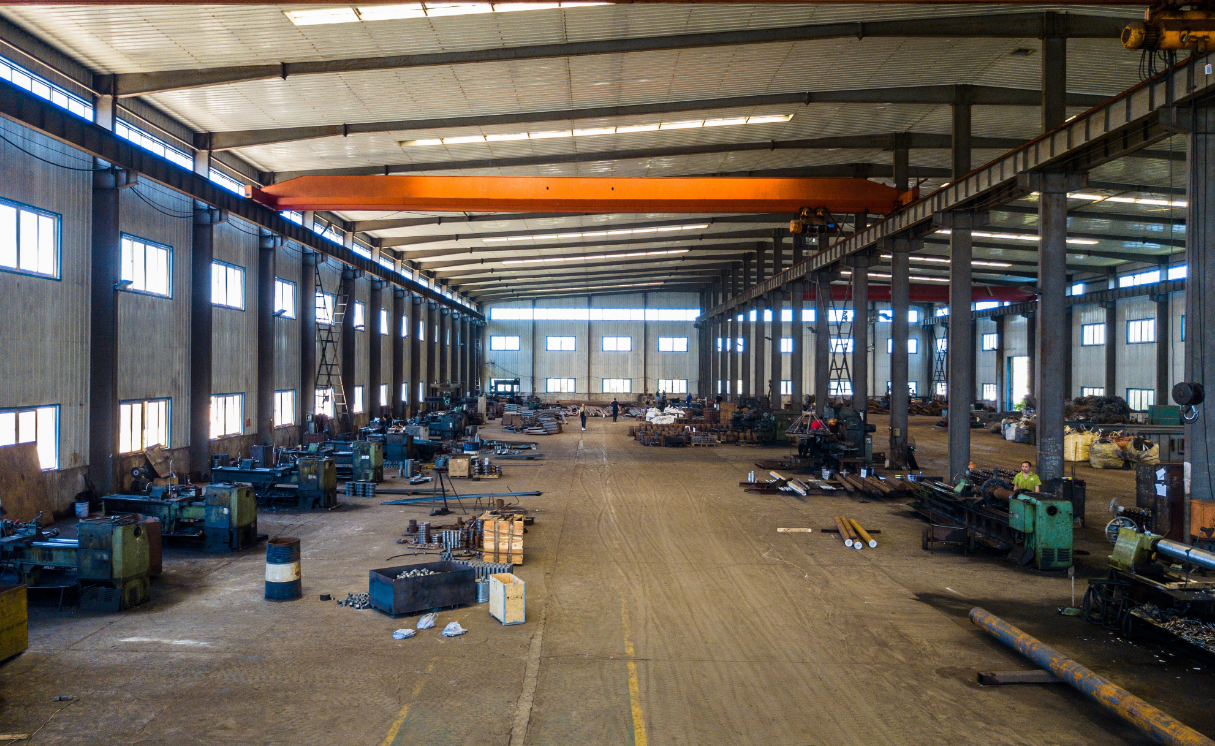 Module fabrication inside the Wafangdian production base. Factory prefabrication is where grate, refractory and air distribution tolerances are set.
FAQ
1. What emission limits must a waste incineration system meet?
In the European Union, Directive 2010/75/EU Annex VI Part 3 sets daily average limits for total dust (10 mg/Nm³), HCl (10 mg/Nm³), SO2 (50 mg/Nm³), CO (50 mg/Nm³), dioxins and furans (0.1 ng TEQ/Nm³), cadmium and thallium (0.05 mg/Nm³), mercury (0.05 mg/Nm³), and the combined heavy metal group at 0.5 mg/Nm³. For plants with a nominal capacity above 6 t/h, the NOx limit is 200 mg/Nm³ for existing plants and 150 mg/Nm³ for new plants. The same directive requires flue gas to be held at 850 °C for at least two seconds after the last combustion air injection. Tenor systems use the 3T+E process to guarantee 850 °C / 2 s, and combine deacidification, bag filtration and activated carbon adsorption to meet national and EU standards where the project configuration supports it.
2. What waste can a waste incineration system handle, and does it need pre-sorting?
Tenor systems are intended for urban and township domestic waste, general industrial solid waste, agricultural and forestry waste, and small-tonnage medical waste units. Raw household waste can go directly into the incinerator without sorting, which suits mixed waste with large fluctuations in calorific value and avoids front-end sorting cost. Hazardous chemicals and highly corrosive hazardous waste are not suitable and fall outside the municipal design basis. Suitability for a specific waste stream should be confirmed through waste testing before purchase.
3. What investment level should a 50–250 TPD project expect?
Capital expenditure scales with daily capacity, the emission regime the plant must meet, and whether heat recovery is included. Public industry benchmarks commonly cite a reference range of USD 150,000 to 250,000 per tonne per day for modern waste-to-energy plants, but this is a planning benchmark, not a quotation — flue gas treatment scope, CEMS, boiler configuration and civil works move the number substantially. Within the Tenor design, modular construction, low operation and maintenance cost, and self-sustaining combustion act together to reduce cost across the whole path from construction through operation. A project-specific assessment is required before a budget figure can be fixed.
4. Can the design be validated before purchase, and are there reference projects?
Waste composition, moisture, calorific value and throughput should be tested and the process confirmed before the configuration is locked. Reference projects on record include grate equipment for a 600 TPD project in Vietnam that has been in operation for more than two years, a completed 30 TPD experimental project in Inner Mongolia, and the 50 TPD high-altitude demonstration project in Mangya, Qinghai, which is running stably at 60–70% of sea-level oxygen levels. Tenor also provides solution design, equipment manufacturing, civil engineering coordination, complete set supply, installation, commissioning and operator training as part of a turnkey scope.
5. How long does delivery and construction take?
The schedule depends on configuration, site conditions and permitting, so it is set per project rather than quoted as a standard period. What can be stated is the mechanism: core modules are prefabricated in the factory and assembled on site, which significantly shortens the construction period compared with the traditional cast-in-place method. After commissioning, support continues through remote operation monitoring, spare parts supply and technical upgrades. To move from research to a project-specific schedule, the fastest route is to send waste characterisation data and the target capacity to the Tenor technical team and request a scoped proposal.
Conclusion: What to Decide Before Contacting a Supplier
A waste incineration system is a chain, and the 50–250 TPD band sits across a regulatory threshold that changes what the chain must contain. Three decisions matter more than any specification detail. Define the system boundary explicitly, including flue gas treatment and CEMS. State capacity in both TPD and t/h with reference operating hours. Name the emission regime the design is being built against and require the offer to answer it clause by clause.
With those three settled, supplier comparison becomes a technical exercise rather than a test of sales language. Tenor Waste Incineration System covers 15–300 tonnes per day with modular three-stage reciprocating grate furnaces, configurable heat recovery and a flue gas treatment scope that can be sized to EU or Chinese limits depending on the project.
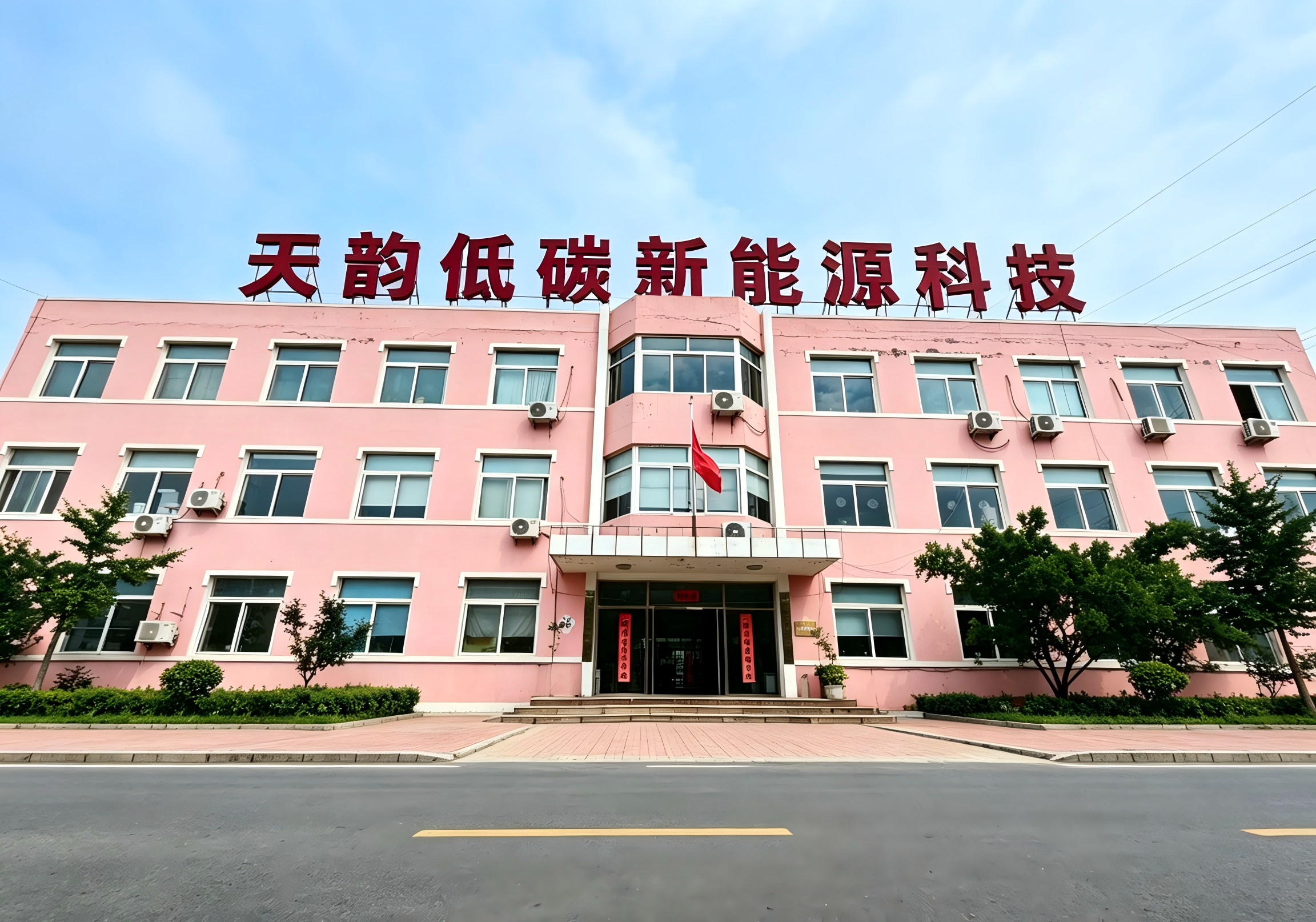 Tenor's production base in Wafangdian, Dalian, where complete waste incineration systems are designed, fabricated and assembled for export and domestic projects.
Next step: get a scoped proposal for your project
Send your waste composition, target daily capacity and the emission standard the project must meet. The Tenor team will return a configuration scope covering the combustion unit, flue gas treatment train, heat recovery options and monitoring package — or start with the catalogue to review the range first.
Download the Tenor System Catalogue Request a QuoteHave Questions or Need More Details?
Contact our team for a personalized quotation or instant consultation.
Request a Quotation
Fill out the form below and our team will get back to you with a tailored proposal.
WhatsApp Direct Chat
Prefer to chat in real-time? Message us on WhatsApp for instant assistance & quick answers.
- Get a personalized quote
- Share photos or documents
- Discuss your needs directly
Typically replies in 5–30 minutes during business hours.