
Waste Incineration System: A Practical Guide to 50–250 TPD Projects
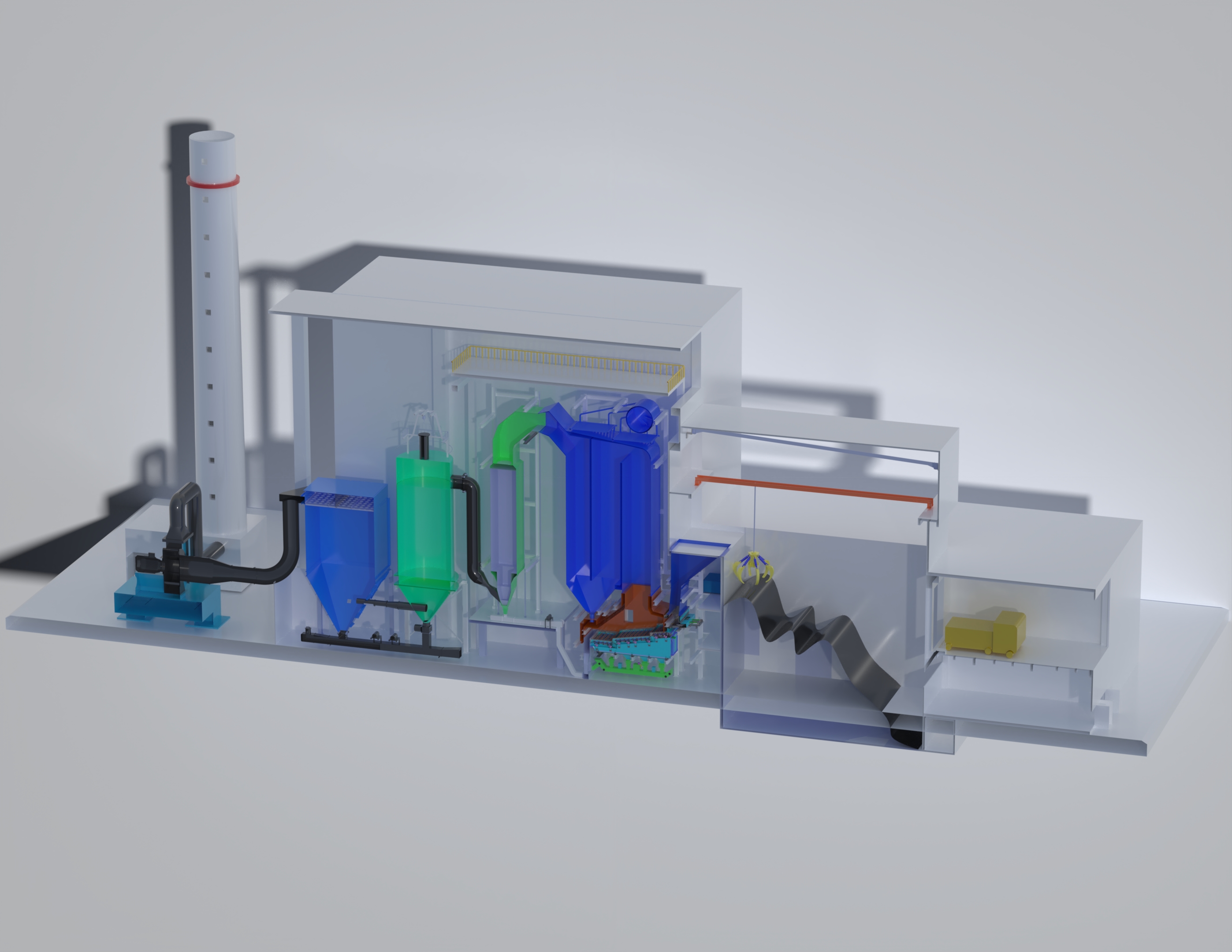
Quick answer: A waste incineration system is a complete plant that thermally treats waste, recovers heat where required and controls flue gas emissions. For 50–250 TPD projects, the decision is not only about furnace size. It combines waste composition, combustion technology, flue gas treatment, energy recovery, regulatory limits, site logistics and after-sales support. Tenor Waste Incineration System is the small and medium-scale equipment line from Tenor Low Carbon New Energy Technology (Liaoning) Co., Ltd., a Dalian-based manufacturer serving municipal, industrial, agricultural and remote-site projects.
This guide is written for buyers in the awareness and research stage. It explains what the system does, how the main components work, what changes between 15–20 TPD modular units and 50–250 TPD projects, how EU and Chinese standards shape the flue gas treatment scope, and which questions to ask before requesting a quotation.
Problem Definition: Why 50–250 TPD Is a Distinct Segment
Waste incineration is often discussed as one technology. In practice, the 50–250 TPD segment has its own constraints. In China, about 80% of county towns have a daily garbage collection volume below 200 tons, and long-distance centralized transport can cost 2–3 times incineration. That makes local disposal attractive for counties, townships and remote regions. The waste stream is also difficult: mixed household waste, fluctuating calorific value, high moisture and irregular shapes can destabilise a furnace that was designed for a narrow fuel specification.
The compliance problem is equally practical. Small pyrolysis and gasification furnaces have faced substandard flue gas issues and are being shut down in some markets. For many projects, the viable route is a mechanical grate furnace with staged combustion and a complete flue gas treatment train, not a low-cost incinerator with partial abatement. The buyer's real question is therefore: can the system handle local waste without pretreatment, meet the applicable emission limits, fit the site and grid conditions, and remain serviceable over its operating life?
Industry Background: Waste-to-Energy, Regulation and Technology
Waste-to-energy is a regulated infrastructure category, not a generic combustion product. Market Data Forecast estimates the European waste-to-energy market at USD 21.26 billion in 2026 and projects it to reach USD 37.11 billion by 2034. That growth reflects landfill diversion, energy recovery and plant upgrades, but it also raises the bar for documentation: a supplier claiming 'EU emission compliance' must be able to explain which limits, which measurement basis and which flue gas treatment scope are included.
In the European Union, Directive 2010/75/EU Annex VI Part 3 sets daily average air emission limit values for waste incineration plants. Commission Implementing Decision (EU) 2019/2010 establishes BAT conclusions, and operators must comply with the associated BAT-associated emission levels within four years of publication. Continuous emission monitoring is supported by EN 14181:2014, which defines QAL1, QAL2, QAL3 and annual surveillance testing, and by the EN 15267 series for certification of automated measuring systems. In China, GB 18485-2014 is the mandatory pollution control standard for municipal solid waste incineration and includes a dioxin limit of 0.1 ng TEQ/Nm3; GB 18484-2020 applies to hazardous waste incineration. Marine systems sit under a separate IMO regime, MEPC.244(66).
For 50–300 TPD county-level projects, the mechanical grate furnace is the mainstream choice because it has low requirements for waste quality, strong adaptability, complete combustion and stable emissions. A fluidized bed requires crushing and pretreatment, which adds cost and operational complexity for mixed municipal waste. Tenor primarily manufactures three-stage independently driven reciprocating mechanical grate furnaces and does not produce gasification pyrolysis equipment.
The combustion basis is often described as 3T+E: temperature, time, turbulence and excess oxygen. EU legislation requires flue gas to be raised to 850 °C for at least two seconds after the last injection of combustion air. In Tenor systems, the three-stage grate and independent air chambers are designed to support drying, combustion and burnout under fluctuating waste conditions.
Detailed Solution: What a Complete Tenor Waste Incineration System Includes
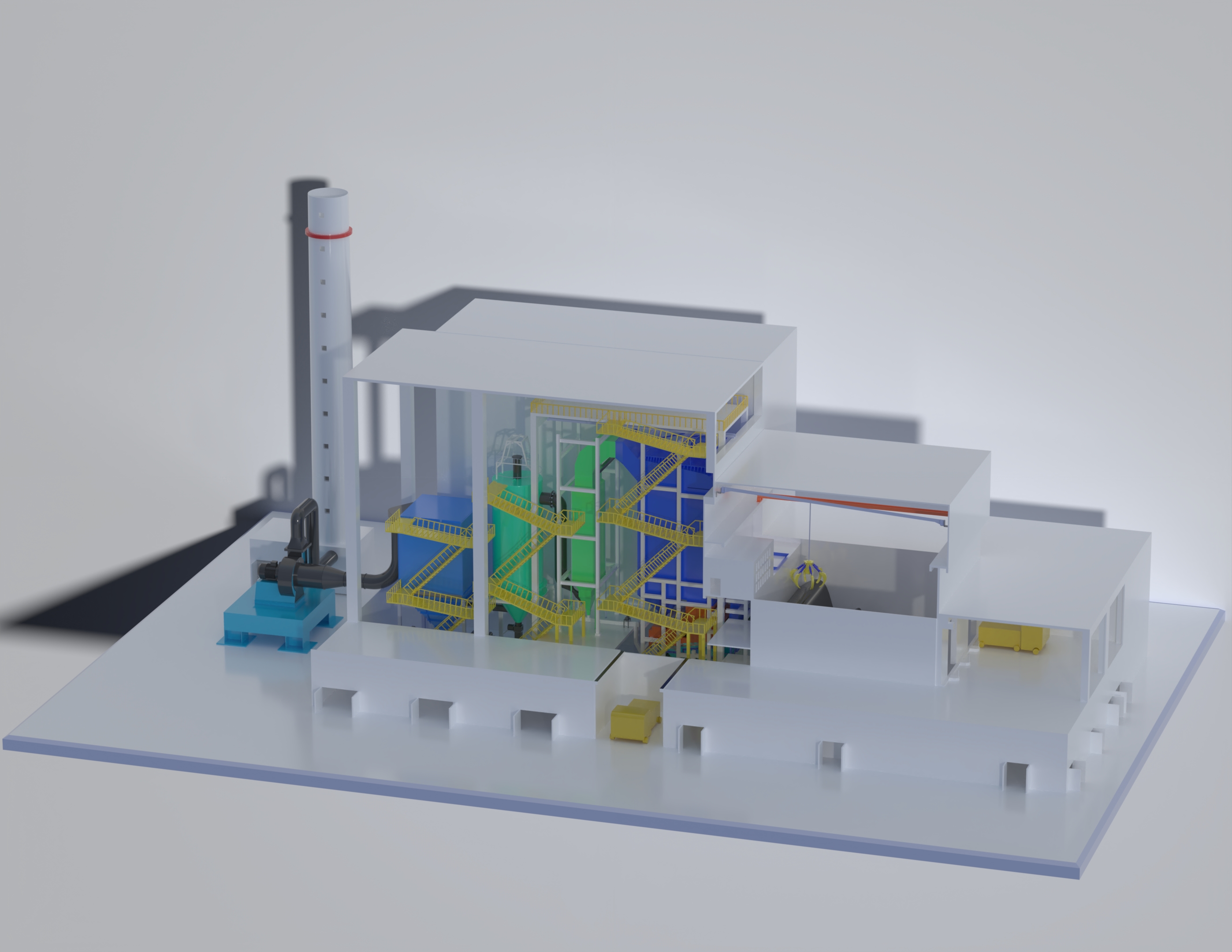
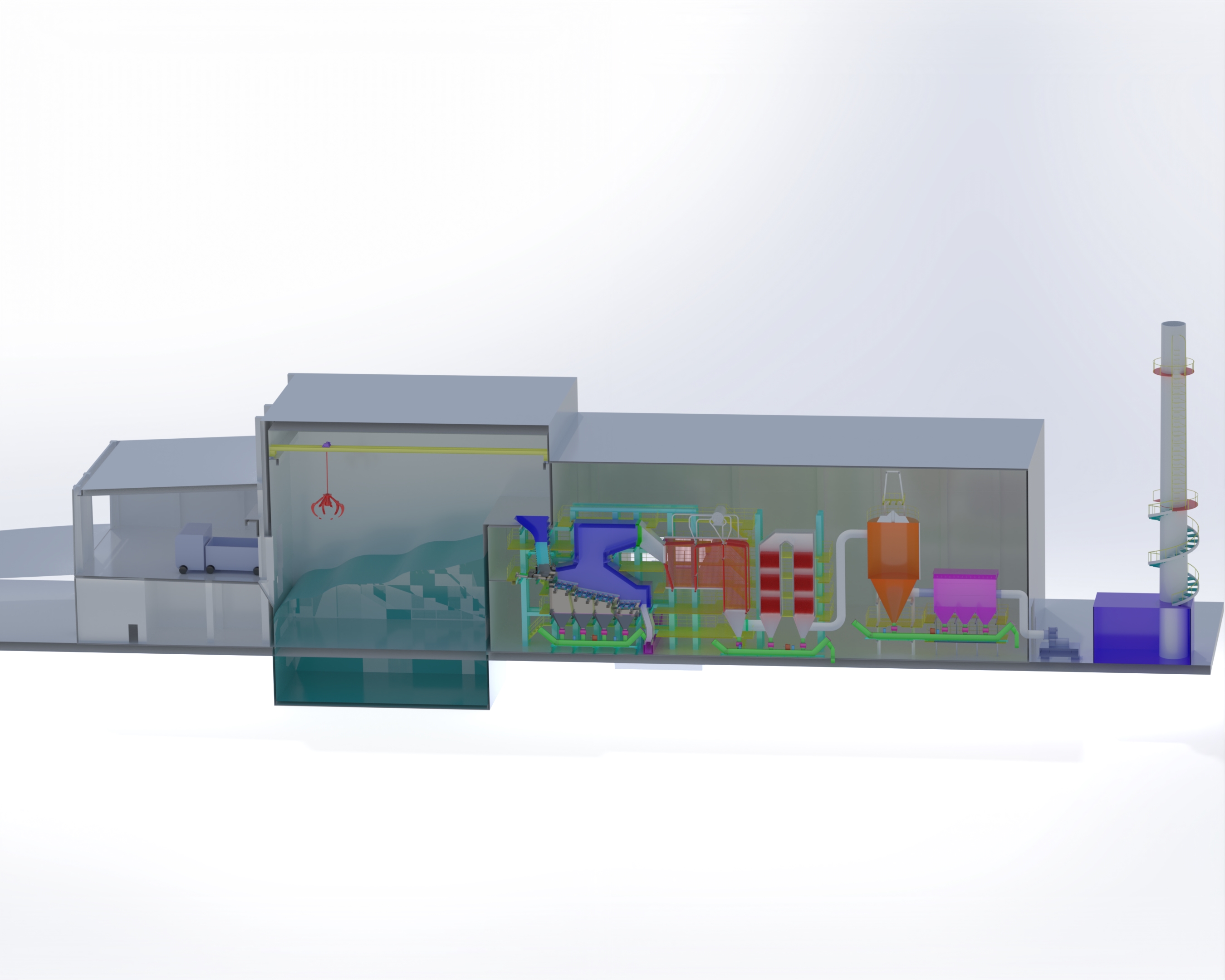
Tenor Waste Incineration System is built as a complete process line rather than a standalone furnace. The typical scope includes a hopper, hydraulic feeder, reciprocating step grate, combustion chamber, ash hopper, slag-removal system, conveying equipment, flue gas cleaning and heat-recovery equipment. The final configuration is project-dependent, because waste composition, moisture, calorific value, throughput, local emission regulations, energy-recovery objectives, site conditions and grid-connection requirements all change the design.
Three-Stage Grate and Combustion Control
The core is a three-stage reciprocating mechanical grate. Waste moves through drying, combustion and burnout stages. Each stage is driven by an independent hydraulic cylinder, and each has independent air chambers for segmented air distribution and stroke adjustment. The hydraulic feeder can adjust the feed rate to the furnace load, while the grate sections can be controlled independently to accommodate changes in waste calorific value and moisture. This is not a scaled-down large grate; it is a design developed for small and medium-scale working conditions, with the aim of better combustion uniformity and burnout.
Tenor uses heat-resistant and wear-resistant cast steel grate plates. The published operating claim for the 50 t/d class is an annual grate damage rate of ≤1% and heat loss on ignition of ≤5%. Multi-stage precise air distribution supports self-sustaining combustion and reduces auxiliary fuel consumption compared with equipment that needs continuous support fuel. Raw household waste can go directly into the incinerator without front-end sorting, which avoids sorting cost and makes the system suitable for mixed waste with large calorific value fluctuations.
Flue Gas Treatment and Online Monitoring
Combustion control alone does not satisfy modern emission limits. A complete waste incineration flue gas treatment system typically combines deacidification, bag filtration, activated carbon or sorbent injection and NOx control, with continuous emission monitoring. For EU projects, the flue gas treatment scope should be checked against the Annex VI daily average limits in the table below. These are pollutant-specific values and must not be summed or averaged into a single compliance index.
| Pollutant | EU Annex VI daily average limit | Design implication |
|---|---|---|
| Total dust | 10 mg/Nm3 | Bag filtration and reliable filter monitoring |
| Hydrogen chloride (HCl) | 10 mg/Nm3 | Acid gas scrubbing and reagent dosing control |
| Sulphur dioxide (SO2) | 50 mg/Nm3 | Scrubbing and reagent consumption control |
| Nitrogen oxides (NOx as NO2) | 200 mg/Nm3 existing; 150 mg/Nm3 new, above 6 t/h | SNCR or SCR selection depends on capacity and permit |
| Carbon monoxide (CO) | 50 mg/Nm3 | Combustion quality and air distribution control |
| Dioxins and furans | 0.1 ng TEQ/Nm3 | 850 °C/2 s combustion plus activated carbon injection |
| Cadmium and thallium | 0.05 mg/Nm3 | Sorbent injection and filter performance |
| Mercury | 0.05 mg/Nm3 | Sorbent injection and filter performance |
| Sb+As+Pb+Cr+Co+Cu+Mn+Ni+V | 0.5 mg/Nm3 | Particulate and metals removal |
Online emission monitoring is not a commodity add-on. EN 14181:2014 defines the quality assurance levels for automated measuring systems, including QAL1 selection, QAL2 initial calibration, QAL3 ongoing control and annual surveillance testing. The EN 15267 series provides the certification framework for the measuring systems. A supplier offer that includes a 'CEMS' line item without QAL2 and annual surveillance requirements may leave the operator with data that is not accepted for compliance reporting.
Heat Recovery: Electricity, Steam and Hot Water
Waste incineration heat recovery is optional but often central to project economics. Tenor systems can be configured with a waste heat boiler for steam production, heating or small-scale power generation. The recovered heat can be used as steam for industrial users, hot water for district heating, or electricity through a turbine generator. Under EU waste legislation, the R1 energy efficiency formula determines whether an incineration plant performing energy recovery qualifies as a recovery operation, with an efficiency threshold of 0.65 for installations permitted after 31 December 2008 and 0.60 for installations permitted earlier. R1 is a legal classification formula, not a boiler efficiency figure, and should not be confused with thermal or electrical efficiency.
Modular Assembly and Custom Configuration
Tenor's small and medium-scale systems cover 15–300 t/d. Standard modules of 20, 30 and 50 t/d can be selected directly, and larger capacities use parallel units such as the 300 t/d TYDT-LJ-QH300. Modular construction combines factory prefabrication with on-site assembly to shorten installation time compared with traditional cast-in-place construction. The company can supply only the grate body or undertake an EPC project, depending on the buyer's scope. For custom waste incineration system projects, the design should be confirmed from waste testing, not from a promotional page alone.
Tenor System Configurations at a Glance
The table below summarises published Tenor configurations. It is a starting point for a project discussion, not a substitute for a waste-specific design.
| Model | Nominal capacity | Combustion basis | Key configuration facts | Typical fit |
|---|---|---|---|---|
| TYDT-LJ-QH20 Compact MSW Incinerator | 20 t/d | 850 °C/2 s, 3T+E | Modular quick-assembly grate furnace; no pretreatment needed; stable operation | Township domestic waste and small-scale MSW |
| TYDT-LJ-QH30 Medium MSW Incinerator | 30 t/d | 850 °C/2 s, 3T+E | Three-stage reciprocating mechanical grate; independent hydraulic drive per stage; segmented air distribution; low calorific value adaptation | County-level domestic waste and mixed MSW |
| TYDT-LJ-QH50 MSW Incinerator | 50 t/d; 12800×2430×7040 mm; 7.5–75 kW | 850 °C/2 s, 3T+E | Modular assembly; self-sustaining combustion; EU emission compliance; high-altitude adaptation; annual grate damage rate ≤1% | Municipal solid waste, general industrial solid waste, agricultural and forestry waste |
| TYDT-LJ-QH300 Large-scale MSW Incineration System | 300 t/d with parallel units | 850 °C/2 s, 3T+E; complete flue gas purification | Turnkey EPC; waste heat boiler optional; CEMS integration; EU standard compliance | County-level centralized waste disposal |
Step-by-Step: How to Specify a 50–250 TPD Waste Incineration System
- Define the waste stream and daily capacity. Confirm waste composition, moisture, calorific value and seasonal variation. State capacity in tonnes per day and, where tenders use hourly figures, convert carefully: 6 t/h is approximately 144 t/d at 24-hour continuous operation. The 50–250 TPD range therefore straddles the EU NOx threshold of 6 t/h, which affects whether the plant is treated as above or below that capacity band.
- Confirm the regulatory regime. For EU projects, check Directive 2010/75/EU Annex VI limits, BAT conclusions and the CEMS quality-assurance regime. For China, check GB 18485-2014 for municipal solid waste or GB 18484-2020 for hazardous waste. For marine systems, check IMO MEPC.244(66) type approval. Do not mix land-based EU limits with marine type-approval requirements.
- Select the combustion technology and redundancy. For mixed municipal waste, a three-stage reciprocating mechanical grate is usually more tolerant of waste quality than a fluidized bed. For remote sites, modular prefabrication reduces site work. Decide whether the project needs one unit or parallel modules, and how maintenance will be handled without a long shutdown.
- Define the flue gas treatment scope. Match the treatment train to the pollutants that drive the design: dust, HCl, SO2, NOx, CO, dioxins and furans, and heavy metals. Include CEMS with QAL1, QAL2, QAL3 and annual surveillance. Ask whether the offer is a complete air pollution control system or an incinerator with partial abatement.
- Decide the energy-recovery configuration. Choose electricity, steam, hot water or a combination. A waste heat boiler and heat-recovery system change the plant layout, operating profile and revenue model. Check the R1 classification if the project is in the EU and recovery status matters for permitting.
- Plan site logistics and modular assembly. Confirm access roads, crane capacity, laydown area and the interface between factory-prefabricated modules and civil works. Modular assembly can shorten the construction period, but it does not remove the need for careful site planning.
- Verify supplier evidence and after-sales support. Ask for reference projects, certification, standards participation and a clear service scope. Tenor is a National High-Tech Enterprise and participated in drafting the group standard T/CITS 242-2025. Its wholly owned subsidiary, Tenor Green Technology (Hong Kong) Ltd., holds CE and US EPA certificates. Reference projects include a 50 t/d project in Mangya, Qinghai, and grate equipment for a 600 t/d project in Vietnam.
Use Cases and Application Fit
Township and County Municipal Solid Waste
Township and county projects are the core of the 15–300 t/d segment. The QH20 and QH30 modules are intended for local disposal of domestic waste, including mixed MSW with fluctuating calorific value. The system can accept raw household waste without sorting, which matters where collection is not source-separated. For a county-level WTE plant, the configuration may include a waste heat boiler and flue gas purification, with continuous operation and a negative-pressure sealed plant arrangement.
Industrial Solid Waste and Industrial Parks
General industrial solid waste projects often run 24/7 and require a complete flue gas purification system. Outdoor lines may need IP65 protection. The system design should confirm the waste mix, because industrial waste can be more variable than municipal waste and may require different refractory, feeding and ash-handling arrangements.
Agricultural and Forestry Waste
Agricultural and forestry waste can have low calorific value and seasonal fluctuation. A multi-stage air distribution and drying stage help manage low-calorific-value fuel. These projects are often experimental or pilot-scale, so the design should be based on tested waste data rather than assumed fuel properties.
High-Altitude and Cold Regions
High-altitude sites may have only 60–70% of sea-level oxygen and severe winter conditions. Tenor offers a special high-altitude version with furnace modification and multi-stage precise air distribution to support self-sustaining combustion. The 50 t/d Mangya project in Qinghai is a reference for this application.
Small-Tonnage Medical Waste
Small-tonnage medical waste units use batch operation, negative pressure and a double combustion chamber. Medical waste is a separate hazardous waste stream in many jurisdictions and should be matched to the applicable standard, not treated as ordinary municipal waste.
Island, Remote and Marine Waste
Island and remote sites benefit from local disposal and modular assembly, because waste transport is costly and logistics are constrained. Marine waste treatment systems are a separate product category: shipboard incinerators are subject to IMO type-approval requirements under MEPC.244(66) and are not assessed against EU land-based Annex VI limits. Buyers should request the relevant type-approval evidence for marine systems.
Mechanical Grate vs Fluidized Bed: A Buyer's Comparison
| Decision factor | Three-stage reciprocating mechanical grate | Fluidized bed |
|---|---|---|
| Waste pretreatment | Raw household waste can be fed directly; no front-end sorting required in the Tenor design | Requires crushing and pretreatment |
| Mixed MSW adaptability | Low requirements for waste quality; accommodates fluctuating calorific value | More sensitive to feed specification |
| Combustion and burnout | Drying, combustion and burnout stages with independent drive and air distribution | Combustion depends on bed material and feed preparation |
| Typical fit | 50–300 t/d county-level and township projects | Projects with prepared fuel and specific feed requirements |
| Tenor scope | Three-stage independently driven reciprocating mechanical grate furnaces | Tenor does not produce gasification pyrolysis equipment |
Frequently Asked Questions
Are Tenor waste incineration systems compliant with EU emission standards?
Tenor's wholly owned subsidiary, Tenor Green Technology (Hong Kong) Ltd., holds CE and US EPA certificates. The system design uses 850 °C/2 s combustion and 3T+E, and a complete flue gas purification system is available. EU Directive 2010/75/EU Annex VI Part 3 sets daily average limits including dust 10 mg/Nm3, HCl 10 mg/Nm3, SO2 50 mg/Nm3, NOx 200 mg/Nm3 for existing plants and 150 mg/Nm3 for new plants above 6 t/h, CO 50 mg/Nm3, dioxins and furans 0.1 ng TEQ/Nm3, Cd+Tl 0.05 mg/Nm3, Hg 0.05 mg/Nm3, and Sb+As+Pb+Cr+Co+Cu+Mn+Ni+V 0.5 mg/Nm3. Project compliance must be verified against the final waste composition, flue gas treatment scope and permit conditions.
What should buyers check in China manufacturers for 50–250 TPD waste incineration systems?
Check the capacity range, reference projects, standards participation, certification, flue gas treatment scope, CEMS capability and after-sales support. Tenor offers 15–300 t/d systems, including standard 20/30/50 t/d modules and 300 t/d parallel units, and can supply a grate body or a complete EPC project. Tenor is a National High-Tech Enterprise, participated in drafting T/CITS 242-2025, and its subsidiary holds CE and US EPA certificates. Reference projects include a 50 t/d project in Mangya, Qinghai, and grate equipment for a 600 t/d project in Vietnam.
What drives the investment cost of a waste incineration system?
Cost is driven by capacity, waste composition, flue gas treatment scope, energy-recovery configuration, site conditions and the required level of automation. Tenor's modular design, low operation and maintenance costs and self-sustaining combustion reduce costs from construction through operation, but the specific investment must be assessed against the project's operating conditions. Third-party benchmarks in the verified data package cite USD 150,000–250,000 per daily tonne for modern WtE plants; this is an industry planning range, not a Tenor quotation.
Can a sample or pilot test be arranged before full-scale procurement?
The available corpus does not describe a standard sample programme. The practical pre-purchase step is waste testing and process confirmation, followed by solution design, equipment manufacturing, installation, commissioning and operator training. Because suitability depends on waste composition, moisture, calorific value, throughput and local regulations, buyers should complete waste testing and process confirmation before purchase.
How long does installation take, and what after-sales support is available?
Modular assembly uses factory prefabrication and on-site assembly, which significantly shortens the construction period compared with traditional cast-in-place construction. The corpus does not give a fixed number of days, because schedule depends on project scope, site conditions and permitting. After-sales support includes an on-site engineering team, operation training, remote operation monitoring, spare parts supply and technical upgrades. To discuss a 50–250 TPD project, request a project assessment and the Tenor small and medium-scale system brochure.
Next Step: Match the System to the Waste, the Permit and the Site
A waste incineration system is a long-life infrastructure decision. The right configuration for a 20 t/d township module is not the same as a 250 t/d county plant with heat recovery and EU emission compliance. Start with waste testing, capacity definition and the applicable regulatory regime, then compare combustion technology, flue gas treatment, CEMS, energy recovery and service scope.
Tenor Low Carbon New Energy Technology (Liaoning) Co., Ltd. designs and manufactures small and medium-scale waste incineration systems in Dalian, China. To review a project, contact the sales team at xyb999@yeah.net, call +86-411-86888188 or +86-18341131193, or visit www.tenorincinerator.com. The public brochure is available here: Tenor Small and Medium Scale Garbage Incineration Systems brochure.
Have Questions or Need More Details?
Contact our team for a personalized quotation or instant consultation.
Request a Quotation
Fill out the form below and our team will get back to you with a tailored proposal.
WhatsApp Direct Chat
Prefer to chat in real-time? Message us on WhatsApp for instant assistance & quick answers.
- Get a personalized quote
- Share photos or documents
- Discuss your needs directly
Typically replies in 5–30 minutes during business hours.