
A Technical Deep Dive into Aerosol Spray Formulation: pH Ranges, Active Ingredients, and Customization
An aerosol cosmetic spray is a formulation, a container and a propellant behaving as one system, and the parameter that decides whether the finished can matches the brief is rarely the fragrance. It is the active ingredient, the pH window the concentrate sits in, and the pack that carries it. This guide works through three formulation families from the Tentop catalog at parameter level, then maps those parameters onto what an OEM buyer can actually specify: fill volumes, hold levels and container materials.
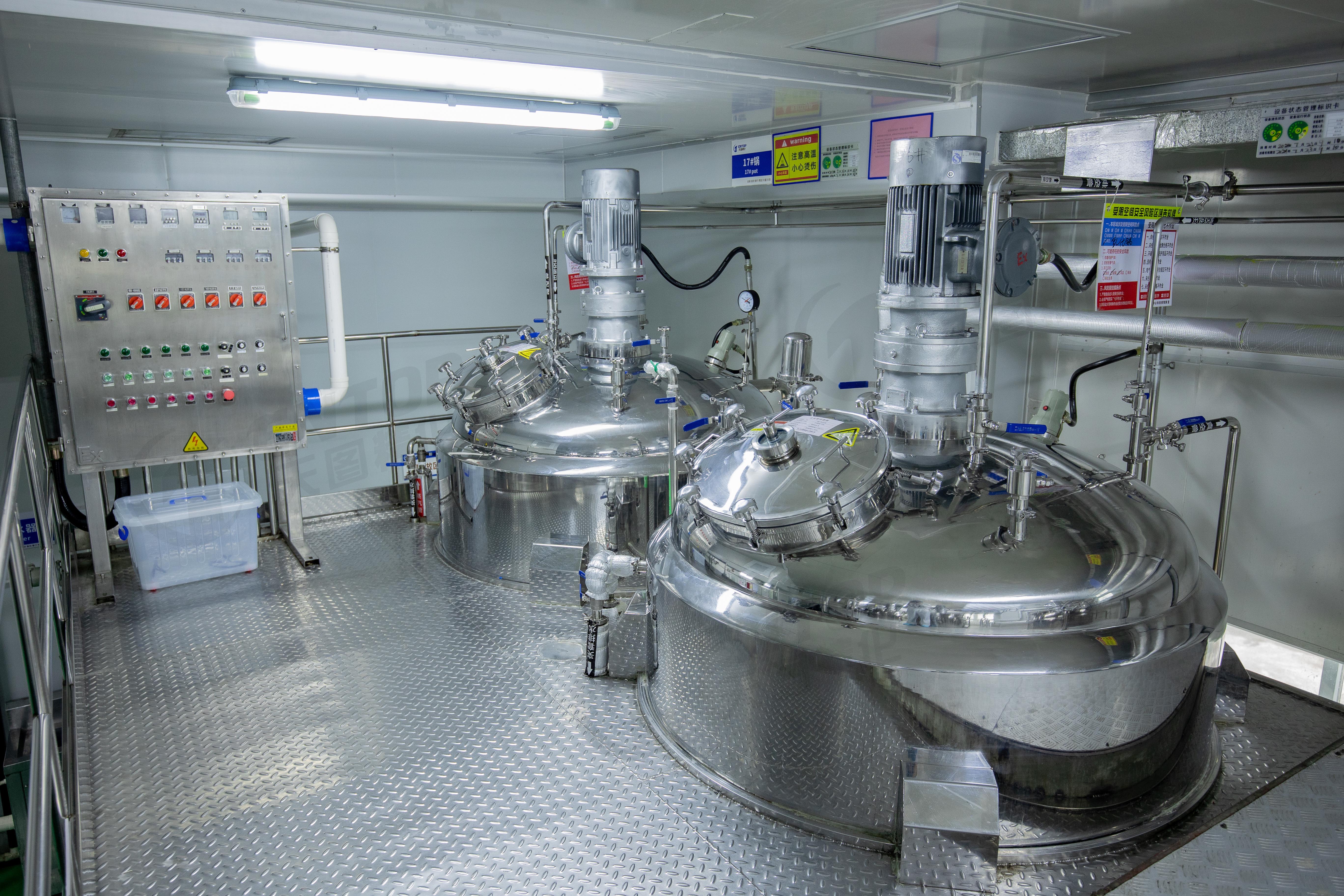
A formulation specification is only as good as the inspection routine behind it. Regular spot checks and manual inspection run alongside automated aerosol filling at Zhongshan Tentop Fine Chemical Co., Ltd.
Why a Category Name Is Not a Specification
Most aerosol sourcing projects start with a category word. A buyer asks for a deodorant spray, a hair removal spray or a moisturizing spray, receives a quotation against that word, and only discovers at the sample stage that the supplier and the brand had different formulas in mind. The category name describes a consumer promise, not a technical brief.
Three parameters separate one formula from another inside the same category:
- Active ingredient and its level. A deodorant spray built on Aluminum Chlorohydrate behaves differently from a fragrance-only body spray, and both may be marketed under the same category label.
- pH window. The declared pH is not a passive property. It governs how the active behaves in the concentrate, how the concentrate behaves in the can, and how the product behaves on skin. Tentop specifies pH 5.5–6.5 for Deodorant Spray and pH 7.0–8.0 for Hair Removal Spray precisely because those two windows serve different functions.
- Time and pack. A depilatory format with a 5–8 minute acting time has to hold that performance for the whole shelf life, and it has to be dispensed from a container and valve that deliver it consistently.
The commercial consequence is straightforward. When the brief stops at the category name, the first sample round validates the wrong variable, the second round corrects the formula, and the third round re-checks stability. Each loop consumes development capacity, artwork timing and shelf-life testing that could have been avoided by writing pH, active and pack into the brief at the start. For a Decision-stage buyer, the cheapest control available is a specification written before the purchase order.
Industry Background: Formulation Detail Is Now a Commercial Variable
The aerosol cosmetic spray category is expanding, and expansion raises the cost of a formulation error. Dataintelo valued the global cosmetic spray market at USD 18.3 billion in 2025 and projects USD 31.8 billion by 2034. Within it, Research Reports World projects the global sunscreen spray market growing from USD 786.7 million in 2026 to USD 1.54 billion by 2035 at a CAGR of 7.8%. More formats, more brands and more private-label entrants mean more formulas competing on differentiation rather than on packaging alone.
Regulation has moved in the same direction. An aerosol cosmetic spray sold into the EU has to satisfy both Directive 75/324/EEC (the Aerosol Dispensers Directive) and the Cosmetic Regulation (EC) No 1223/2009. In the United States, the Modernization of Cosmetics Regulation Act of 2022 (MoCRA) mandates facility registration and product listing for cosmetic manufacturers. ISO 22716 is the internationally recognized Good Manufacturing Practice standard written specifically for cosmetics. In practice, the pH value and active level on a specification sheet are no longer internal production notes — they are inputs into a documented quality system.
Packaging reflects the same premium drift. Grand View Research reports that aluminum aerosol cans held a 61% revenue share of the aerosol packaging market in 2025, attributed to premium appeal and recyclability. That share does not mean aluminum is correct for every project, but it does mean material choice is now part of the product positioning debate rather than a purely technical decision.
The Three Formulation Systems, Parameter by Parameter
Deodorant Spray: Aluminum Chlorohydrate at pH 5.5–6.5
Aluminum Chlorohydrate is the functional active in the Tentop Deodorant Spray formulation, and the concentrate is specified at pH 5.5–6.5 for skin compatibility. Two readings follow from that specification.
First, the pH window is a stability constraint as much as a comfort constraint. Fragrance systems, preservatives and propellant ratios all interact with the concentrate, and any substitution has to be re-verified inside the same window rather than assumed to be neutral. Second, because the active is dissolved in an aqueous concentrate, the container's barrier behavior and the valve's material compatibility both belong on the specification sheet alongside the pH value.
For buyers building an antiperspirant or deodorant line, the practical instruction is to state the target pH on the brief and to require the supplier to confirm it after stability testing, not only at bench scale.
Hair Removal Spray: Potassium Thioglycolate at pH 7.0–8.0 with a 5–8 Minute Acting Time
Potassium Thioglycolate is the active in the Tentop Hair Removal Spray, formulated at pH 7.0–8.0 with a 5–8 minute acting time. This is the formulation family where pH and time are most tightly coupled: the alkaline window and the acting time are a matched pair, and neither should be specified without the other.
The reasons are practical. The alkaline pH is what makes the active work on hair keratin, so drifting outside 7.0–8.0 changes product performance rather than merely adjusting a number on a certificate. The 5–8 minute acting time is also a consumer instruction printed on pack, which means it must reflect measured performance that holds across the shelf life, in the container the product is actually filled into. A buyer who specifies only the active and leaves the acting time to the supplier has handed over a product claim without documenting it.
Alkaline concentrates also place specific demands on the container and valve, so material selection should be reviewed against the pH window during development rather than after artwork approval.
Moisturizing Spray: Hyaluronic Acid and Aloe Vera Extract
The Tentop Moisturizing Spray is built on Hyaluronic Acid and Aloe Vera Extract — a humectant plus a botanical component, rather than a single functional active. The formulation logic differs from the two systems above: this is a moisture-delivery format, and the technical questions centre on how the humectant system is carried through the can without losing its function.
Because Hyaluronic Acid and Aloe Vera Extract sit in an aqueous concentrate, the pH of the finished product is defined per project during development rather than taken from a fixed catalog window. Buyers sourcing this family should therefore treat the pH value as a development output to be agreed and documented, and should align the container and propellant selection with the concentrate's water content.
Container, Propellant and Hold: The Second Half of the Specification
Formulation decisions only become a product once the concentrate is paired with a container, a valve and a propellant. Tentop offers aluminum and PET container options for aerosol cosmetic sprays, and the choice changes handling, dispensing behavior and recyclability messaging. Aluminum cans dominate the packaging market by revenue, while PET supports transparent formats where visual differentiation matters. Container choice should be confirmed together with the dispensing system, not as a separate artwork step.
Propellant selection is the parameter buyers most often leave unmentioned. Tentop's propellant systems handle hydrocarbons, DME, 152a, 1234ze, nitrogen and CO2. Each option interacts differently with the concentrate, and the ability to review several propellant routes against one formula is what prevents a project from being locked into a single supply assumption.
The same applies to styling formats. Where the brief calls for hair styling sprays, hold level is a specification with two available settings — medium or strong — and it should be stated explicitly, because hold level is a consumer-perceived attribute that cannot be corrected after filling.
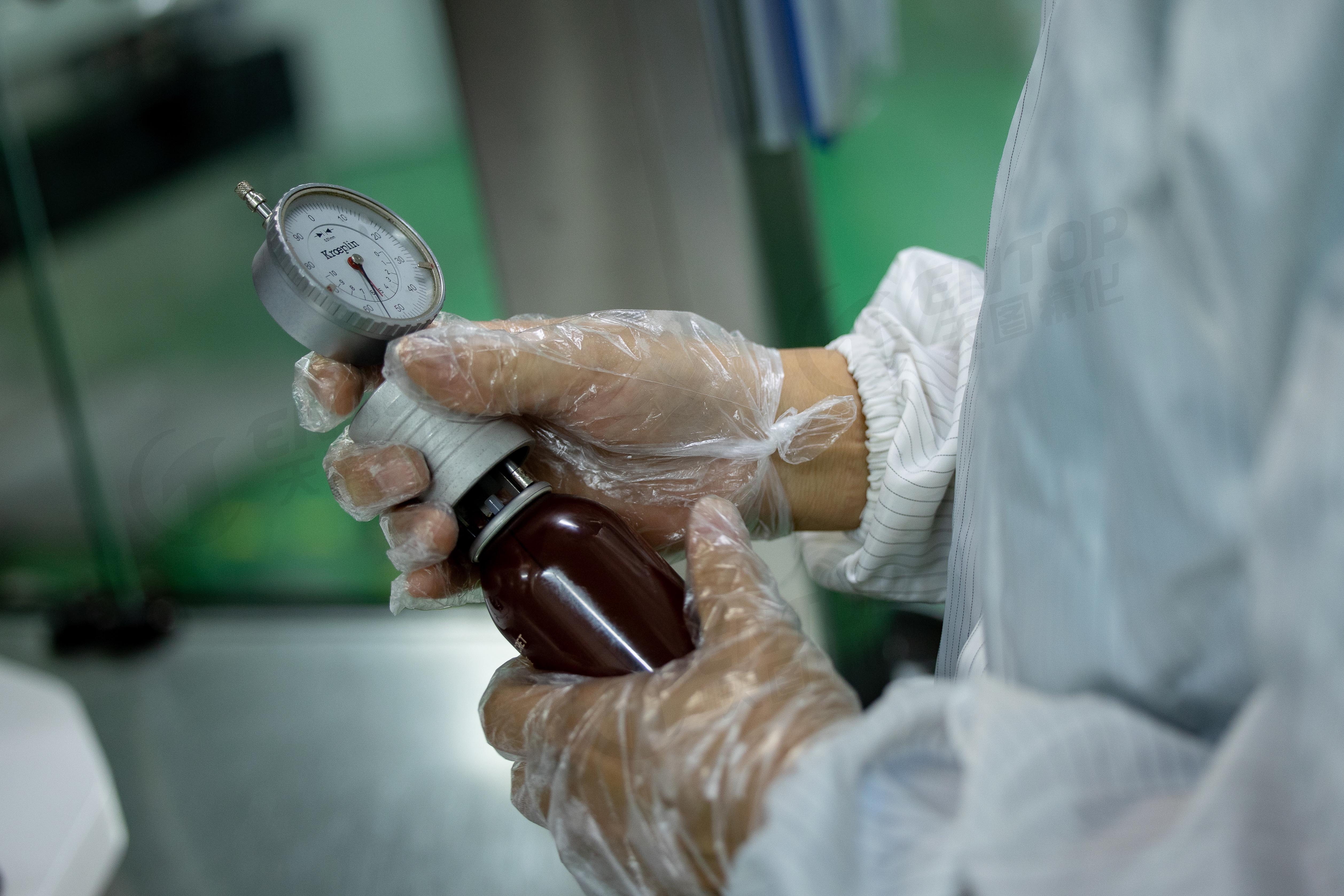
Stability testing is where a declared pH window is either confirmed or rejected. Explosion-proof workshops and stability testing are the two documented controls Tentop applies against aerosol risk.
Step-by-Step: From Formulation Brief to Filled Can
Zhongshan Tentop Fine Chemical Co., Ltd. (TT Chem) is a cosmetic and household products manufacturer founded in 2007 in Zhongshan, Guangdong, China, providing formulation development and OEM/ODM aerosol filling for private-label clients. Its R&D team of 60 engineers has developed more than 6,000 formulas and holds 42 patents, which is what allows a project to start from an existing formula base instead of a blank page.
- Write the technical brief. Name the category, the active ingredient, the target pH window, the acting time where relevant, the fill volume from 100 ml to 300 ml, the hold level for styling formats (medium or strong), and the container material (aluminum or PET). Every one of these is a decision the supplier cannot make on the buyer's behalf.
- Match the brief to a formula base. The 6,000-plus formula library and 60-engineer R&D team allow a project to be scoped against existing systems — deodorant with Aluminum Chlorohydrate at pH 5.5–6.5, hair removal with Potassium Thioglycolate at pH 7.0–8.0, or moisturizing with Hyaluronic Acid and Aloe Vera Extract — before any new development time is committed.
- Validate pH and stability. The declared window is confirmed through stability testing, supported by manual inspection and regular spot checks. Both the field and the inspection routine are documented in the quality system, which is the point where a formulation claim becomes auditable.
- Select container, valve and propellant. Aluminum or PET is fixed here, together with the propellant route: hydrocarbons, DME, 152a, 1234ze, nitrogen or CO2. Material, propellant and pH window are reviewed as one set.
- Run the fill trial on the correct line. The facility operates 4 high-speed aerosol fill lines, 3 BOV aerosol lines and 2 liquid fill lines inside clean, explosion-proof workshops, so the trial reflects the line the commercial batch will actually run on.
- Document and scale. Production documentation is backed by ISO 9001, ISO 14000, ISO 22716, GMPc and ISO 45001 certification, plus Halal MUI, SMETA and Disney approvals, with inspection records maintained from raw material through to finished product. Annual output is 60,000,000 units, with main markets in the EU and USA.
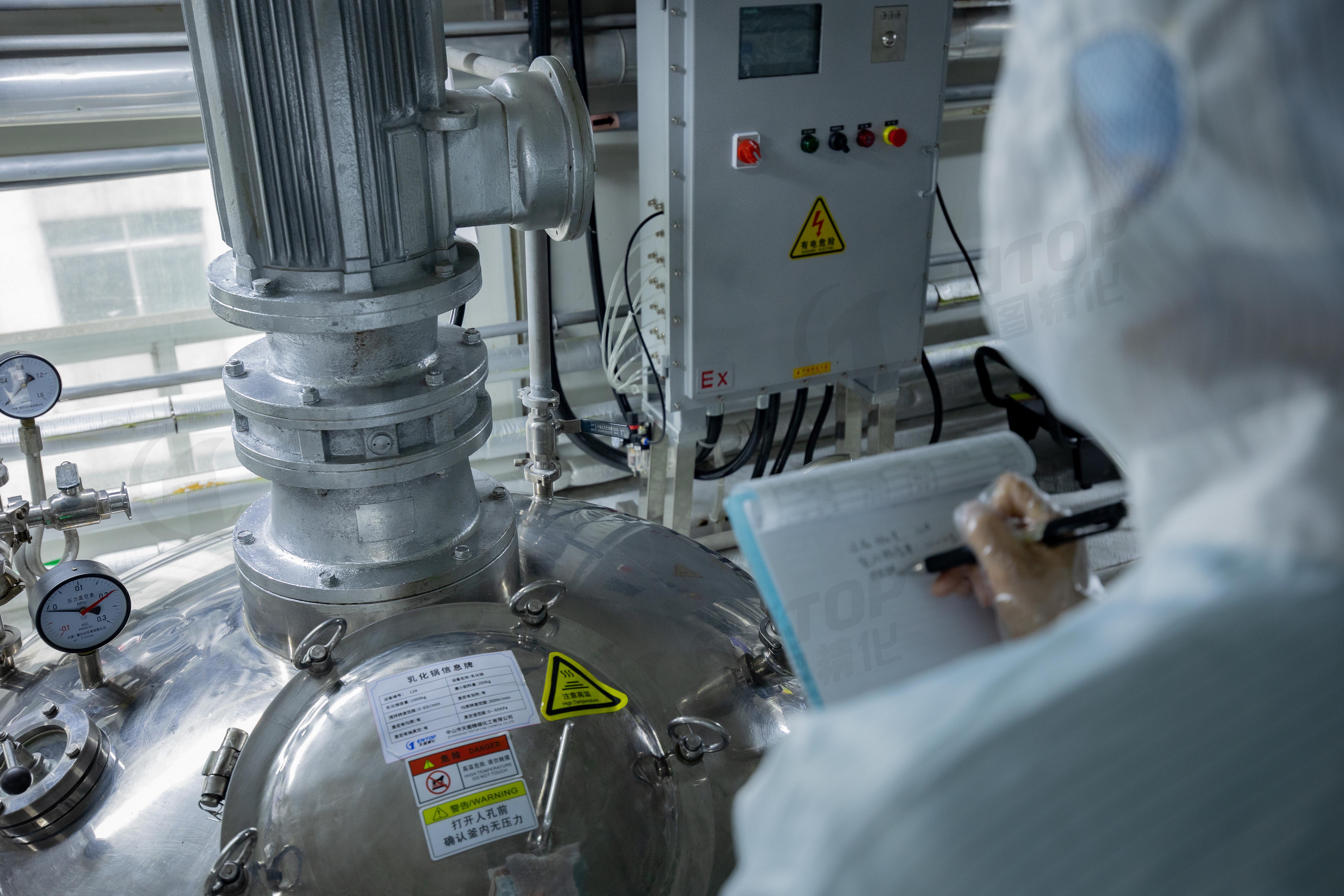
Propellant handling is a workshop-level decision: hydrocarbon, DME, 152a, 1234ze, nitrogen and CO2 routes each require the right filling environment.
Use Cases: Matching pH and Actives to Product Format
Formulation parameters map cleanly onto commercial formats once volume, hold level and material are treated as part of the same decision.
- Underarm deodorant sprays. A 100 ml to 150 ml aluminum can with the Aluminum Chlorohydrate system at pH 5.5–6.5 fits a daily-use personal care position, where the pH window carries the skin-compatibility story.
- Body hair removal sprays. A 150 ml to 200 ml format built on Potassium Thioglycolate at pH 7.0–8.0, with the 5–8 minute acting time stated on pack, suits a treatment-led product rather than a daily routine.
- Hand and foot moisturizing sprays. A 200 ml to 300 ml PET or aluminum format built on Hyaluronic Acid and Aloe Vera Extract suits a larger-format moisture-delivery product, where transparency or premium finish influences the material choice.
- Styling sprays. Medium or strong hold, selected at brief stage, in a 200 ml to 300 ml can, where hold level is the attribute the consumer buys repeatedly.
- After-sun and soothing formats. These sit on the moisturizing system and should be specified as moisture-delivery products; they should not be presented as UV protection.
Comparison Table: Formulation and Material Decision Matrix
The table below consolidates only the parameters that are fixed in the Tentop catalog. Where a value is not specified for a family, it is marked as defined during development rather than assumed.
| Parameter | Deodorant Spray | Hair Removal Spray | Moisturizing Spray |
|---|---|---|---|
| Primary active | Aluminum Chlorohydrate | Potassium Thioglycolate | Hyaluronic Acid and Aloe Vera Extract |
| Formulated pH | 5.5–6.5 (skin compatibility) | 7.0–8.0 | Defined per project during development |
| Acting time on pack | Not applicable | 5–8 minutes | Not applicable |
| Container options | Aluminum or PET | Aluminum or PET | Aluminum or PET |
| Fill volume | 100 ml – 300 ml | 100 ml – 300 ml | 100 ml – 300 ml |
| Primary validation focus | pH stability and skin compatibility | pH stability and acting-time consistency | Humectant system and container compatibility |
| Selection criterion | Aluminum container | PET container |
|---|---|---|
| Market position | Aluminum aerosol cans held a 61% revenue share of the aerosol packaging market in 2025 (Grand View Research) | Selected where a transparent or non-metal format supports the brand position |
| Barrier and recyclability messaging | Opaque metal format; recyclability is a usable positioning claim | Non-metal format; material story depends on the project |
| Filling route at Tentop | 4 high-speed aerosol fill lines and 3 BOV aerosol lines | Reviewed against the applicable aerosol or BOV filling route |
| Decision rule | Choose where premium positioning and metal recyclability carry the product | Choose where visual differentiation or a non-metal specification is required |
Both tables use only catalog formulation values and third-party packaging data. No price, rating or performance score is implied.
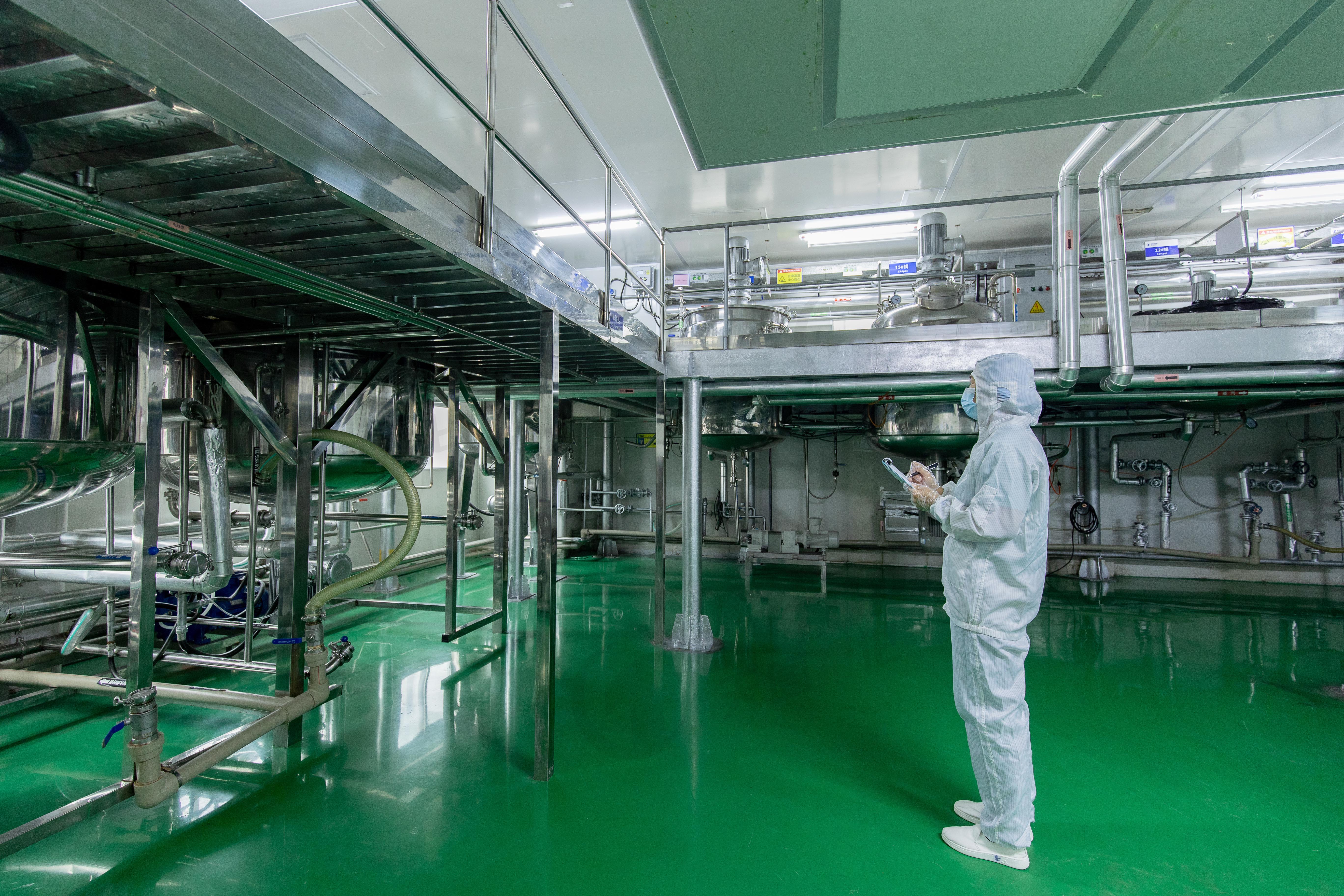
A clean, GMP-compliant explosion-proof workshop is the documented environment behind every declared pH window and stability result.
Frequently Asked Questions
Which regulations apply to an aerosol cosmetic spray sold in the EU and the US?
Two EU instruments apply simultaneously: Directive 75/324/EEC, the Aerosol Dispensers Directive, and the Cosmetic Regulation (EC) No 1223/2009. In the United States, the Modernization of Cosmetics Regulation Act of 2022 (MoCRA) mandates facility registration and product listing for cosmetic manufacturers. The manufacturing baseline for both markets is ISO 22716, the GMP standard for cosmetics. Tentop holds ISO 9001, ISO 14000, ISO 22716, GMPc and ISO 45001 certification, together with Halal MUI, SMETA and Disney approvals; buyers should confirm that the certification scope covers the specific formulation being sourced.
Can the pH range and active ingredients be customized for a private-label formula?
Yes, within the constraints of the formulation system. Tentop operates dedicated tank farms and associated blending rooms for its filling lines, with stainless steel mixing tanks on load cells and varying agitation capabilities, which is what supports multiple concentrate filling and special formulation blending. The R&D team of 60 engineers has developed more than 6,000 formulas and holds 42 patents. Any change to the active level or pH window is then re-validated through stability testing, because the declared window is a specification rather than a preference.
What drives the unit cost difference between two aerosol cosmetic spray specifications?
Unit cost is set by a small number of specification choices rather than by the category label: the active ingredient and its level, the pH adjustment system, the container material (aluminum or PET), the valve and actuator, the fill volume within the 100 ml to 300 ml range, the propellant route, the hold level for styling formats, and the scope of stability testing. Aluminum aerosol cans held a 61% revenue share of the aerosol packaging market in 2025 according to Grand View Research, reflecting premium positioning and recyclability rather than a universal cost advantage. The reliable way to compare two quotations is to compare them line by line against these parameters.
How is a formulation sample validated before mass production?
Validation runs through stability testing supported by manual inspection and regular spot checks, carried out in explosion-proof workshops. Quality records are maintained from raw materials through the production process to the finished product, so the sample result and the commercial batch result can be traced back to the same documented controls. A sample that passes at bench scale but is not stability-tested in the final container and propellant combination has not been validated for shelf life.
What affects lead time once the formulation and pack are approved?
Lead time depends on which filling route the project occupies and how much validation the formula requires. Tentop runs 4 high-speed aerosol fill lines, 3 BOV aerosol lines and 2 liquid fill lines, with an annual output of 60,000,000 units, so scheduling is a question of line allocation rather than a single-queue wait. Projects that arrive with pH, active, volume, hold level and container material already defined move through validation faster than projects that settle those parameters during sampling. To start a sample or quotation request, contact William at william_xu@tentopchem.com or +86 18938701268.
Conclusion
Aerosol cosmetic spray formulation is a set of declared parameters, not a category. Aluminum Chlorohydrate at pH 5.5–6.5, Potassium Thioglycolate at pH 7.0–8.0 with a 5–8 minute acting time, and Hyaluronic Acid with Aloe Vera Extract are three different answers to three different product questions, and each one carries its own validation burden. Around them sit the choices that decide how the product reaches the consumer: 100 ml to 300 ml fill volumes, medium or strong hold, and aluminum or PET containers.
For a buyer at the Decision stage, the leverage sits in the brief. A specification that names the active, the pH window, the acting time, the volume, the hold level and the material gives a supplier something to validate against — and gives the brand a formulation claim it can defend in both the EU framework of Directive 75/324/EEC and Regulation (EC) No 1223/2009, and the US framework of MoCRA.
Next Step: Turn the Specification into a Sample
Zhongshan Tentop Fine Chemical Co., Ltd. (TT Chem) develops and fills aerosol cosmetic sprays for private-label brands, with formulation, stability testing and filling handled under one quality system. Share your target pH window, active ingredient, fill volume and container preference to receive a formulation-matched sample and quotation.
Email: william_xu@tentopchem.com | Tel / WhatsApp: +86 18938701268 | Website: tentopchem.en.alibaba.com
Address: No. 28, Diyuan Road, Jinli Industrial Zone, Sanjiao Town, Zhongshan City, Guangdong Province, China

From approved formulation to packaged can: packaging operations at Tentop follow the specification agreed at sample stage.
Have Questions or Need More Details?
Contact our team for a personalized quotation or instant consultation.
Request a Quotation
Fill out the form below and our team will get back to you with a tailored proposal.
WhatsApp Direct Chat
Prefer to chat in real-time? Message us on WhatsApp for instant assistance & quick answers.
- Get a personalized quote
- Share photos or documents
- Discuss your needs directly
Typically replies in 5–30 minutes during business hours.