
Aerosol Cosmetic Spray Compliance: Aligning OEM Parameters with Regional Standards
A compliant aerosol cosmetic spray file is a parameter crosswalk, not a product brochure. It works when a reviewer can match one product name to one model designation, one pH band, one fill volume, one package format, one ingredient list and one shelf-life statement, and then find the same values repeated without contradiction across every document that follows.
Most OEM documentation failures are alignment failures rather than chemistry failures. A specification sheet written for sales, an artwork file written for design and a certificate pack assembled for a different market often describe the same SKU in three slightly different languages. Aerosol formats widen that gap, because the file has to describe both a cosmetic formulation and a pressurised dispenser.
The method below is written for brand owners, importers and OEM buyers in the research and evaluation stage. It uses the current aerosol cosmetic spray range from Zhongshan Tentop Fine Chemical Co., Ltd. (TT Chem), a cosmetic and household products manufacturer founded in 2007 in Zhongshan, Guangdong Province, China, as a worked example of how verified parameters are organised before a regional review conversation begins.
- A model code alone is not a product identity: in the current catalogue, MS-001 and DS-001 each appear against two different products.
- pH should be declared as a band, such as deodorant at 5.5–6.5 and hair removal at 7.0–8.0, never as a word like balanced.
- Fill volume, can material, propellant and shelf life are fixed parameters, not variables to be settled after artwork approval.
- EU aerosol review references Directive 75/324/EEC and Regulation (EC) No 1223/2009; US review references facility registration and product listing under MoCRA 2022.
- Where a parameter is not recorded, declare the gap instead of leaving a cell blank or filling it by assumption.
Problem Definition: Six Ways a Parameter File Fails Review
A parameter file fails for predictable reasons, and almost none of them involve the formula itself. The six failure modes below are the ones that surface repeatedly when a specification sheet is converted into a document set for a destination market.
1. Model designations that are not unique
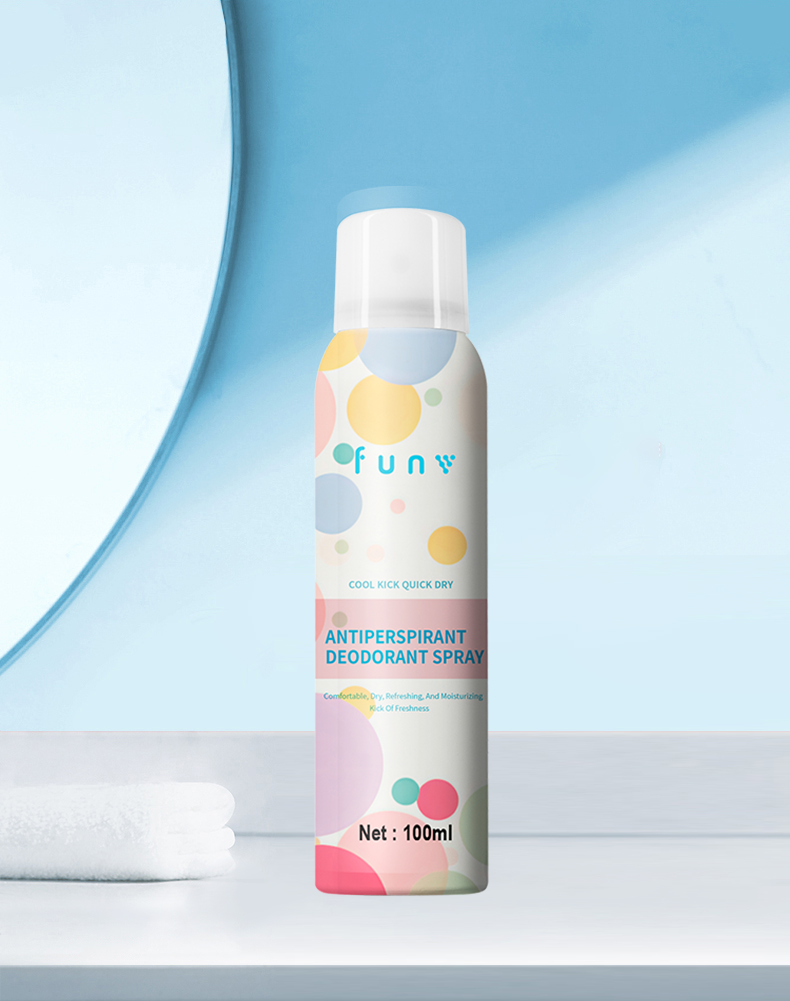
Model codes are usually generated for internal production convenience rather than external review. In the current Tentop range, MS-001 is used for both the Hydrating Facial Mist Spray and the Long-lasting Makeup Fixing Spray, and DS-001 is used for both the Antiperspirant Deodorant Aerosol Spray and the Invisible Volumizing Dry Shampoo. When a purchase order, a specification sheet and a label artwork all cite DS-001, the reviewer cannot tell whether the file describes a 48-hour antiperspirant or an oil-absorbing dry shampoo. Those are different actives, different claims and different review questions.
2. pH written as an adjective instead of a band
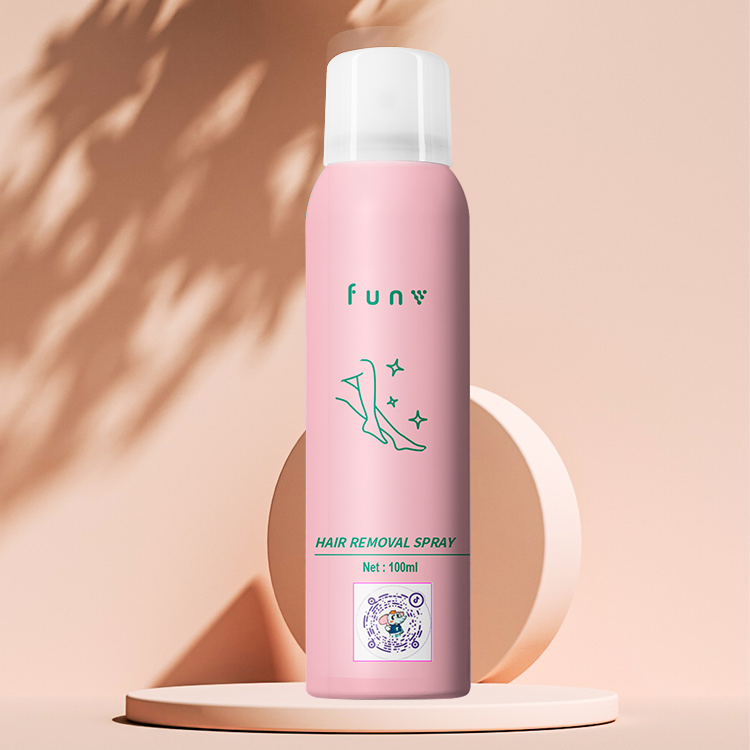
A declared band is checkable. Deodorant Spray DS-001 is specified at pH 5.5–6.5; Hair Removal Spray HR-001 is specified at pH 7.0–8.0; Shampoo & Bath 2-in-1 Mousse SB-001 is specified at pH 5.5–6.5. A phrase such as pH balanced gives a reviewer nothing to verify and no way to detect a drift between the specification sheet and the batch record.
3. Fill volume treated as a single value
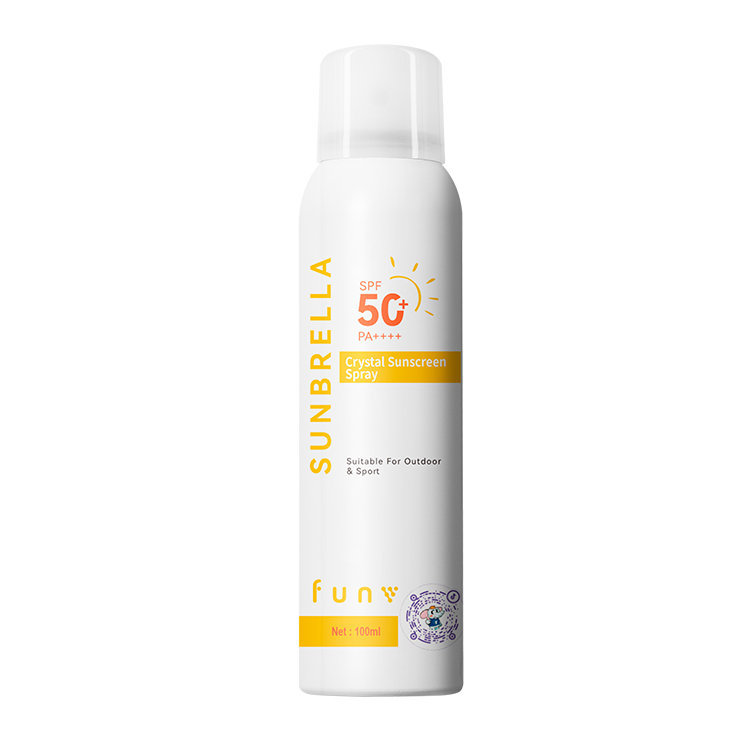
Deodorant Spray DS-001 ships in 150 ml, 200 ml and 250 ml; Sunscreen Spray SC-001 ships in 150 ml, 200 ml and 300 ml. A file that quotes one number for a multi-volume SKU guarantees a mismatch against artwork, carton copy and registration text the moment a second volume is ordered.
4. Ingredient lists in marketing language
Declared names carry more weight than descriptive ones. Hair Removal Spray HR-001 lists Potassium Thioglycolate, Glycerin, Aloe Vera Extract and Urea. Sunscreen Spray SC-001 lists Avobenzone, Homosalate, Octocrylene, Glycerin and Aloe Vera Extract. Deodorant Spray DS-001 lists Aluminum Chlorohydrate, Glycerin, Aloe Vera Extract and Fragrance. A file that replaces these with descriptive wording loses the ability to cross-check against a claims review.
5. Shelf life asserted without scope
Every product in the current aerosol range carries a 3-year shelf life. In a review file that figure should be attached to a specific SKU, a specific package format and a stated storage assumption, not to the company as a whole.
6. Gaps left silent
Hair Styling Spray HS-001, Hair Identity Spray HI-001 and Dry Shampoo DS-001 do not carry a declared pH value in the current parameter record. Leaving a cell blank invites someone downstream to fill it by assumption. The correct handling is an explicit statement that the parameter is not recorded for that formula, with the reviewer pointed to the parameters that are.
Industry Background: The Documentation Load Is Growing Faster Than the Category
Documentation discipline has become a sourcing capability because the category behind it keeps expanding. The global cosmetic spray market was valued at USD 18.3 billion in 2025 and is projected to reach USD 31.8 billion by 2034, according to Dataintelo. Within that total, the global sunscreen spray market is projected to grow from USD 786.7 million in 2026 to USD 1.54 billion by 2035 at a CAGR of 7.8%, per Research Reports World. Asia Pacific already dominates the daily sunscreen spray market with a 42.3% revenue share in 2025, as reported by Dataintelo, and China's cosmetics exports reached approximately CNY 512 billion (roughly USD 71.8 billion) in 2024, an 11.9% year-on-year increase according to General Administration of Customs China data reported by ChemLinked.
Every additional volume option and every additional package format adds a line that a reviewer has to reconcile. It also explains why packaging declarations have moved up the file. Aluminium aerosol cans held a 61% revenue share of the aerosol packaging market in 2025, per Grand View Research, which means aluminium is the default assumption in most review conversations even when a PET bottle format is also offered. Global packaging and valve supply is concentrated in a small set of firms, including Ball Corporation, AptarGroup and Lindal Group as identified by Mordor Intelligence, so a buyer evaluating a filler is really evaluating how well that filler documents its can and valve choices.
The regulatory frames a file must answer to
Two rule sets dominate the export destinations that matter most to Chinese fillers. In the EU, aerosol products must comply with Directive 75/324/EEC (the Aerosol Dispensers Directive) and cosmetics must comply with Regulation (EC) No 1223/2009, per the European Commission. In the United States, the Modernization of Cosmetics Regulation Act of 2022 (MoCRA) mandates facility registration and product listing for cosmetic manufacturers, per the U.S. Food and Drug Administration. Underneath both sits ISO 22716, the internationally recognised Good Manufacturing Practices standard for the cosmetic industry published by the International Organization for Standardization.
A file that satisfies all three frames is, in practice, a single structure with market-specific tabs. That is the architecture described next.
Detailed Solution: The Six-Block Compliance File
Six blocks cover what regional reviewers ask for. Each block has one job: to make a specific set of facts findable in the same form every time the SKU is mentioned.
Block 1 — Product identity
Identity is a five-field key, not a model code: product name, model designation, declared function, fill volume and package material. Applying it to the ambiguous codes resolves them immediately. DS-001 as Invisible Volumizing Dry Shampoo, 150 ml, aluminium aerosol can, is a different identity from DS-001 as Antiperspirant Deodorant Aerosol Spray, 150 ml, aluminium can or PET bottle. The same treatment separates the two MS-001 products.
Block 2 — Physicochemical and dispenser parameters
This block records the pH band, the fill volume grid, the propellant system, the can and valve specification, and the shelf life. The propellant entry deserves particular attention because it is a fixed engineering parameter rather than a purchasing afterthought. Tentop filling operations handle hydrocarbons, DME, 152a, 1234ze, nitrogen and CO2, and the file should name the system used for the specific SKU rather than describing a general capability.
Block 3 — Formulation disclosure
Ingredients are recorded in declared order against each identity key. This is also where claim language is checked against the formulation: a water-resistant claim on SC-001 sits alongside its declared 80-minute water resistance, and a 16-hour hold claim on the Long-lasting Makeup Fixing Spray sits alongside its Acrylates Copolymer base.
Block 4 — Packaging declaration
Aluminium can and PET bottle options must be stated per SKU, not per company. Several Tentop products offer both, including DS-001 deodorant, SB-001 mousse, both MS-001 products and HI-001. Given aluminium's 61% revenue share of aerosol packaging in 2025, a file that says only aerosol can is usually under-specified.
Block 5 — Manufacturing and quality evidence
This is the block that separates a documented supplier from a capable one. Tentop operates a 15,000 m² facility with 330 employees, including a 60-engineer R&D team that has developed more than 6,000 formulas and obtained 42 patents. Production runs on 4 high-speed aerosol fill-in lines, 3 BOV aerosol lines and 2 liquid fill-in lines in clean workshops, with a monthly capacity of 5,000,000 units and an annual output of 60,000,000 units. Quality control is described as 100% testing, with records kept from raw material through production process to finished product. The certificate set covers ISO 9001, ISO 14000, ISO 22716, GMPc, ISO 45001, Halal MUI, SMETA and Disney. Roughly 20% of output is exported, with the EU and USA as main markets.
Block 6 — Market authorisation tab
The final block maps the same underlying facts onto each destination's rule set: Directive 75/324/EEC and Regulation (EC) No 1223/2009 for the EU, MoCRA facility registration and product listing for the US, and ISO 22716 GMP evidence as the common layer. Nothing in this block should introduce a new number. It should only restate numbers already fixed in Blocks 1 to 5.
Step-by-Step Breakdown: Building a Review-Ready File in Seven Steps
Step 1 — Freeze the identity key before anything else
Write the five-field key for every SKU in scope and use it as the header on every subsequent document. Output: a one-page identity register that resolves MS-001 and DS-001 into four distinct product identities.
Step 2 — Convert every pH value into a band
Record the band, not a point and not an adjective. Apply it consistently: 5.5–6.5 for the face mist, makeup fixing spray, deodorant and 2-in-1 mousse; 7.0–8.0 for the hair removal spray. Where no band is recorded, as with HS-001, HI-001 and DS-001 dry shampoo, state that explicitly. Output: a pH column with no blanks and no adjectives.
Step 3 — Write ingredient lists in declared order, then audit the claims against them
Take the declared names from the formulation record and place them next to every claim the marketing team intends to use. Where a claim cannot be traced to a declared ingredient or a declared performance parameter, it should be removed before the file leaves the building. Output: a formulation and claims pairing sheet.
Step 4 — Fix the volume and package grid per SKU
List every fill volume offered and the package material available for each. Sunscreen Spray SC-001 runs 150/200/300 ml in aluminium; Hair Removal Spray HR-001 runs 100/150/200 ml; Shampoo & Bath 2-in-1 Mousse SB-001 and Deodorant Spray DS-001 run 150/200/250 ml. Output: a grid that artwork and carton copy can be checked against line by line.
Step 5 — Attach shelf life to the SKU, the package and the storage assumption
The 3-year figure is a product statement, so it belongs beside the identity key it applies to, together with the package format used in the stability assessment. Output: a shelf-life statement that survives a change of bottle material without being silently carried over.
Step 6 — Assemble the quality and certificate evidence per destination
Rather than sending a full certificate pack, map each certificate to the question it answers: ISO 22716 and GMPc for manufacturing practice, ISO 9001 and ISO 14000 for management systems, ISO 45001 for occupational safety, Halal MUI for Muslim-majority markets, SMETA and Disney for social compliance and licensed-brand programmes. Output: a certificate index with one line of relevance per document.
Step 7 — Build the market authorisation tab and record the gaps
Restate the fixed parameters under each destination's headings and add a gap register listing every parameter that has not been recorded. Output: a file that a reviewer can read without asking which number is current.
A final review pass should be conducted as a reviewer, not as a seller: every number should appear at least twice in the document set and match both times.
Use Cases: How the File Changes With the Scenario
Scenario 1 — Tropical-climate dry shampoo for a Vietnamese private label
A private label client in Vietnam ordered 10,000 units of dry shampoo for a tropical humid climate, aimed at a fresh and fluffy application, with a 3-year shelf life and flexible OEM/ODM customization. The delivery reached stable mass production and became a long-term partnership. The documentation implication is that the identity key carries DS-001 dry shampoo, 150/200/250 ml, aluminium can, with the undeclared pH gap explicitly noted and the shelf-life statement tied to the humid-climate storage assumption rather than left generic.
Scenario 2 — Halal-certified sunscreen for the Indonesian market
A private label client in Indonesia ordered 30,000 units of sunscreen combining waterproof and skin whitening positioning, delivered against Halal certification and FDA cGMP requirements with a 3-year shelf life. Because SC-001 already declares SPF 50+ broad spectrum, 80-minute water resistance, three fill volumes and a fixed actives list, the review conversation moves from what the product does to whether the certificate set and the claims match the declared parameters. The Halal MUI certificate is the document that carries the most weight in that specific file.
Scenario 3 — EU-facing setting spray with a package choice to defend
A European brand owner evaluating the Long-lasting Makeup Fixing Spray has to justify both the 16-hour hold claim and the package decision, since the product is offered in aluminium can and PET bottle. The file has to state Directive 75/324/EEC compliance for the dispenser, Regulation (EC) No 1223/2009 positioning for the cosmetic, pH 5.5–6.5, fill volumes of 100/150/200 ml, and the reason the chosen package supports the declared shelf life. Without those four reconciliations, the artwork cannot be signed off.
Comparison Table: Parameters and Review Frames Side by Side
The matrix below compiles only the parameters recorded in the current Tentop aerosol range. It is the sheet a buyer should be able to reproduce from memory before opening a review call.
| Product | Model | pH band | Fill volumes | Package | Shelf life |
|---|---|---|---|---|---|
| Hydrating Facial Mist Spray | MS-001 | 5.5–6.5 | 100 / 150 / 200 ml | Aluminium can | 3 years |
| Long-lasting Makeup Fixing Spray | MS-001 | 5.5–6.5 | 100 / 150 / 200 ml | Aluminium can / PET bottle | 3 years |
| Antiperspirant Deodorant Aerosol Spray | DS-001 | 5.5–6.5 | 150 / 200 / 250 ml | Aluminium can / PET bottle | 3 years |
| Invisible Volumizing Dry Shampoo | DS-001 | Not recorded | 150 / 200 / 250 ml | Aluminium can | 3 years |
| Hair Removal Spray | HR-001 | 7.0–8.0 | 100 / 150 / 200 ml | Aluminium | 3 years |
| Hair Styling Spray | HS-001 | Not recorded | 150 / 200 / 300 ml | Aluminium | 3 years |
| Hair Identity Spray | HI-001 | Not recorded | 100–200 ml | Aluminium can / PET bottle | 3 years |
| Shampoo & Bath 2-in-1 Mousse | SB-001 | 5.5–6.5 | 150 / 200 / 250 ml | Aluminium can / PET bottle | 3 years |
| Sunscreen Spray | SC-001 | Not recorded | 150 / 200 / 300 ml | Aluminium | 3 years |
Cells marked not recorded indicate that the parameter is absent from the current specification record and should be declared as a gap rather than estimated.
| Documentation item | EU frame | US frame |
|---|---|---|
| Aerosol dispenser safety | Directive 75/324/EEC | — |
| Cosmetic product regulation | Regulation (EC) No 1223/2009 | MoCRA 2022 facility registration and product listing |
| Good manufacturing practice | ISO 22716 | ISO 22716 |
| Supplier certificate evidence | ISO 9001, ISO 14000, ISO 22716, GMPc, ISO 45001, SMETA, Disney | ISO 9001, ISO 14000, ISO 22716, GMPc, ISO 45001, SMETA, Disney |
| Market-specific certificate | — | Halal MUI where the destination market requires it |
Dashes indicate items not covered by the verified sources used for this guide. Confirm destination-specific gaps with a regulatory contact before submission.

FAQ
Which documents belong in an aerosol cosmetic spray file prepared for EU and US review?
An EU-facing file references Directive 75/324/EEC for the aerosol dispenser and Regulation (EC) No 1223/2009 for the cosmetic product, supported by ISO 22716 GMP evidence. A US-facing file references facility registration and product listing under MoCRA 2022. Both should carry the same product identity key, pH band, declared ingredient list, fill volume grid, package material and 3-year shelf-life statement, so that a reviewer comparing the two markets finds identical core parameters.
Can pH, fill volume or packaging be adjusted for a specific market?
Yes, within the recorded parameter set. Tentop operates an OEM/OBM model with logo customization and a 60-engineer R&D team that has developed more than 6,000 formulas, and it fills products across aluminium can and PET bottle formats in multiple volumes. What cannot be changed for convenience is the declared value: if the pH band, the fill volume or the package material moves, the identity key, the artwork and the market authorisation tab all move with it.
What order quantity is required for a documented private-label run?
The stated minimum order quantity is 10,000 units, against a monthly capacity of 5,000,000 units and an annual output of 60,000,000 units. Because documentation effort scales with the number of SKUs rather than the number of units, buyers consolidating several volumes under one identity key usually spend less review time than buyers splitting the same volume across several codes.
Can a sample be requested before the parameter file is finalised?
A sample should describe the same product as the file. When requesting one, quote the full five-field identity key, the declared pH band if the formula carries one, the fill volume and the package material, so the physical sample and the specification sheet can be compared directly. Where a parameter is not recorded in the current specification, ask for it to be confirmed in writing with the sample rather than assumed.
How long does production take after the parameter file is approved?
Stated lead time is 45–60 days, with after-sales support covering remote technical support, after-sales tracking and quality assurance. Buyers working to a launch date should approve the identity key, pH bands and package grid before the lead-time clock starts, since changes to those items after artwork sign-off are what usually extend a schedule. The current product brochure can be downloaded from the Tentop brochure link for the full parameter set, and specification questions can be sent directly to william_xu@tentopchem.com.
Conclusion: Align the File, Then Argue the Product
Regional review does not fail because a formulation is weak. It fails because the file describing that formulation is inconsistent with itself. The eight-product aerosol range reviewed here makes the point concretely: two model codes cover four different products, four products carry a declared pH band while four do not, and package options vary between aluminium can and PET bottle within the same product family. None of those facts is a defect. Leaving them undocumented is.
The practical sequence is straightforward. Freeze the identity key, express pH as a band, write ingredients in declared order, fix the volume and package grid, attach shelf life to the specific SKU, index the certificate set against the questions it answers, and record the gaps in writing. A reviewer who can reconcile every number without asking a follow-up question is the only meaningful benchmark for a review-ready file.

Build the File With the Manufacturer Behind It
Zhongshan Tentop Fine Chemical Co., Ltd. (TT Chem) has manufactured aerosol cosmetic sprays since 2007, with 4 high-speed aerosol fill-in lines, 3 BOV aerosol lines, a 60-engineer R&D team and certifications covering ISO 9001, ISO 14000, ISO 22716, GMPc, ISO 45001, Halal MUI, SMETA and Disney.

Download the product brochure: Tentop aerosol cosmetic spray brochure (PDF)
Website: tentopchem.en.alibaba.com
Email: william_xu@tentopchem.com
Tel / WhatsApp: +86 18938701268
Address: No. 28, Diyuan Road, Jinli Industrial Zone, Sanjiao Town, Zhongshan City, Guangdong Province, China
Send the identity key and the destination market, and the specification response will be mapped to the six blocks described above.
Have Questions or Need More Details?
Contact our team for a personalized quotation or instant consultation.
Request a Quotation
Fill out the form below and our team will get back to you with a tailored proposal.
WhatsApp Direct Chat
Prefer to chat in real-time? Message us on WhatsApp for instant assistance & quick answers.
- Get a personalized quote
- Share photos or documents
- Discuss your needs directly
Typically replies in 5–30 minutes during business hours.