Aerosol Cosmetic Spray Procurement: Risk & Partner Checklist
Aerosol Cosmetic Spray Procurement: How to Avoid Risks and Secure a Reliable Supplier
For industrial buyers and brand owners, sourcing aerosol cosmetic spray involves navigating complex formulation, regulatory, and supply chain challenges. This guide provides a step-by-step framework to evaluate manufacturers, mitigate risks, and ensure a successful partnership — from initial inquiry to final delivery.
Defining the Problem: Why Aerosol Cosmetic Spray Procurement Carries Unique Risk
Aerosol cosmetic spray is not a simple commodity. Products such as sunscreen spray, dry shampoo, deodorant spray, makeup setting spray, and moisturizing spray require precise pressure control, compatible propellant systems, and strict safety compliance. Common procurement pitfalls include:
- Formulation instability: Incompatible active ingredients or incorrect propellant ratios leading to can corrosion, clogging, or separation.
- Regulatory non-compliance: Missing certifications for target markets (e.g., FDA cGMP for USA, BPJPH Halal for Indonesia).
- Quality inconsistency: Batch-to-batch variation in spray pattern, fragrance, or efficacy.
- Lead time delays: Unforeseen production bottlenecks or material shortages.
- Safety hazards: Propellant leaks, explosion risks, or packaging defects.
To avoid these, buyers must adopt a systematic evaluation process that goes beyond price comparison.
Industry Background: The Aerosol Cosmetic Spray Manufacturing Landscape
The global demand for aerosol cosmetic sprays continues to grow, driven by convenience and multifunctional personal care routines. Key product segments include sunscreen spray (SPF 50+), dry shampoo spray, deodorant spray, makeup spray, moisturizing spray, and specialty items like hair removal spray and intimate care sprays. Manufacturers vary widely in capability — from small batch fillers to integrated OEM/ODM facilities with in-house R&D.
China, particularly the Guangdong province, has emerged as a major hub for aerosol cosmetic spray production, offering cost-effective manufacturing and flexible customization. However, quality and compliance levels differ significantly. Leading manufacturers such as Zhongshan Tentop Fine Chemical Co., Ltd. (founded 2007, 15,000 m² factory, 330 employees, 60 million units annual capacity) have invested heavily in explosion-proof workshops, cGMP compliance, and multi-certification systems to serve global brands.
Detailed Solution: A Step-by-Step Aerosol Cosmetic Spray Supplier Evaluation Framework
1. Verify Regulatory Compliance and Certifications
Before engaging a manufacturer, request their certification portfolio. For a US-bound sunscreen spray, an FDA cGMP certificate (e.g., Intertek-certified CGMP Certificate SZ2601D2) is essential. For Indonesia or other Muslim-majority markets, a valid Halal certificate (e.g., BPJPH ID00410021104000125 issued by MUI) is mandatory. Certificates should be current and cover the specific product category.
Key Certifications for Aerosol Cosmetic Spray:
- ISO 22716 / GMPc (Cosmetics Good Manufacturing Practice)
- FDA cGMP (21 CFR Part 210 & 211)
- Halal (MUI / BPJPH)
- ISO 9001 / 14001 / 45001
- SMETA / Disney audited
2. Assess Production Capabilities and Risk Controls
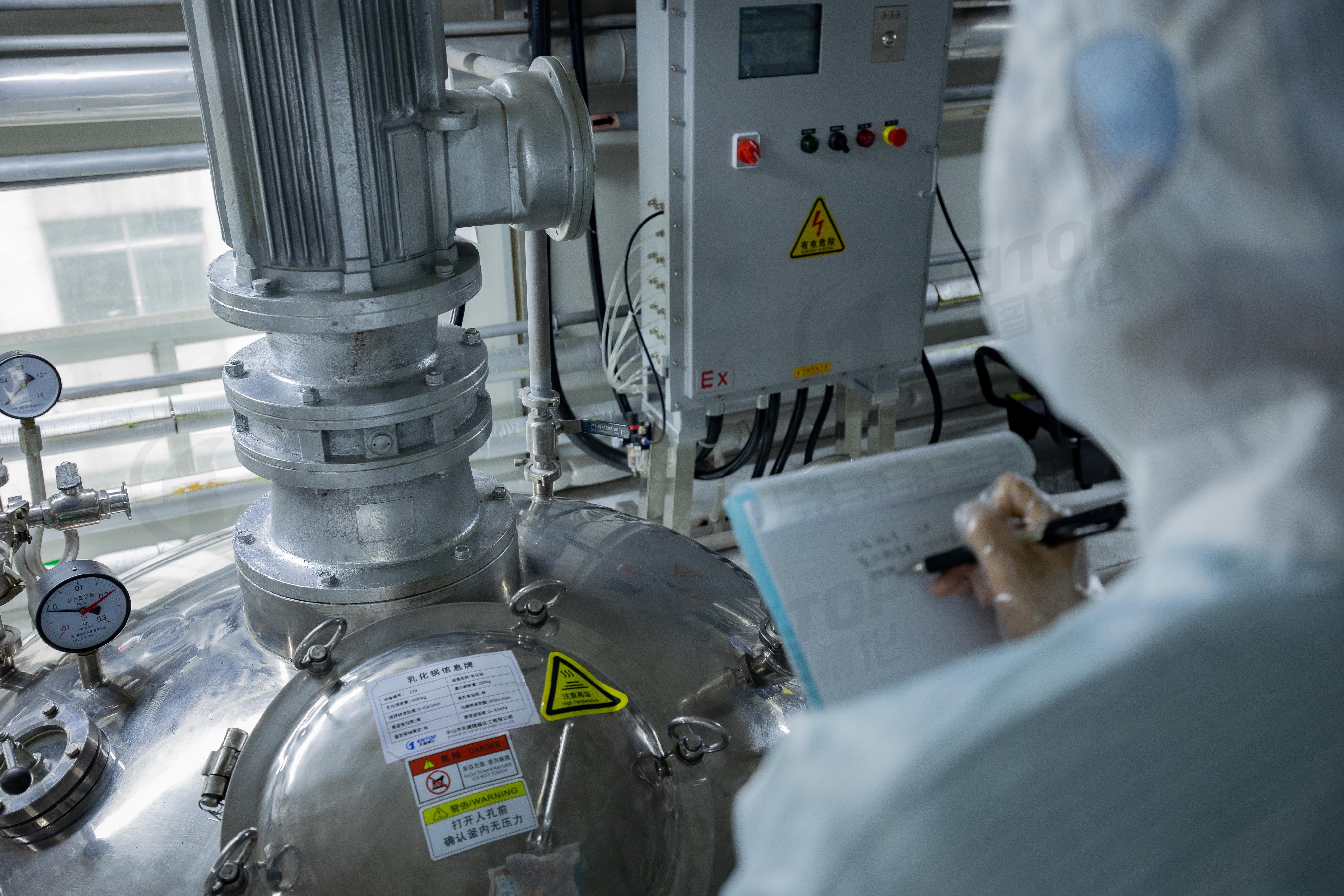
Aerosol production involves handling flammable propellants (hydrocarbon, DME, 152a). A reliable manufacturer will operate explosion-proof workshops and conduct rigorous stability and leak tests. Ask about:
- Number and type of aerosol filling lines (high-speed vs. BOV lines).
- In-house propellant handling systems (hydrocarbons, DME, 152a, 1234ze, nitrogen, CO₂).
- Dedicated blending rooms for different formulas to avoid cross-contamination.
- 100% pre-shipment inspection and quality control procedures.
Example: Tentop operates 4 high-speed aerosol lines and 3 BOV aerosol lines in clean workshops, with explosion-proof designs and manual spot-check protocols.
3. Evaluate R&D and Customization Flexibility
For private label brands, formulation customization is critical. A manufacturer with a strong R&D team (e.g., 60 engineers and 6,000+ developed formulas) can adapt products for specific requirements — such as water-resistant sunscreen spray with SPF 50+ for beach use, or a dry shampoo with oil-absorbing tapioca starch for tropical climates. Key questions to ask:
- How many existing formulations do you have? Can we modify them?
- What raw material sourcing capabilities (active ingredients, packaging) do you have?
- Can you produce small batches for pilot testing before mass production?
4. Review Supply Chain and Order Terms
Transparent procurement terms reduce commercial risks. Important parameters include:
| Parameter | Typical Value |
|---|---|
| Minimum Order Quantity (MOQ) | 10,000 units per product |
| Incoterms | FOB (Free On Board) |
| Payment Terms | 50% deposit, 50% before shipment (balance against bill of lading) |
| Lead Time | 45–60 days (after deposit and formula approval) |
| Quality Assurance | Pre-shipment inspection (100%), Certificate of Quality (COQ) |
| After-Sales | Remote technical support, quality tracking |
Note that some manufacturers may offer different terms for repeat orders or larger volumes — clarify during negotiations.
5. Check Real Client Cases and References
Ask for case studies that demonstrate successful delivery to your target market. Examples include:
- Private label dry shampoo for Vietnam: 10,000 units successfully delivered and reformulated for tropical humidity — highlighting flexible OEM/ODM customization over a 3-year partnership.
- Halal-certified sunscreen spray for Indonesia: 30,000 units of SPF 50+ water-resistant formula passed FDA cGMP and Halal requirements, leading to stable mass production and long-term cooperation.
Common Buyer Concerns and How to Address Them
FAQ
Q: How do I verify if a manufacturer’s cGMP or Halal certificate is valid?
A: Request the certificate number and issuing authority (e.g., Intertek for cGMP, MUI for Halal). Cross-check expiry dates (e.g., Tentop’s cGMP valid until Jan 2026, BPJPH until Feb 2029). You can also contact the certifying body for confirmation.
Q: What if I need only 5,000 units for a test launch?
A: Many manufacturers set an MOQ of 10,000 units. However, some may offer lower MOQ for initial samples or pilot batches. Negotiate early.
Q: How can I ensure the aerosol spray won’t explode during transport?
A: Work with manufacturers that perform stability tests (temperature, pressure) and use explosion-proof production environments. Request test reports and UN transportation certification for aerosol cans.
Q: What is the typical lead time for a private label sunscreen spray?
A: Approximately 45–60 days, including formula development (if needed), packaging procurement, filling, and quality checks. Delays can occur if raw materials are out of stock — ask about buffer inventory.
Conclusion: How to Choose the Right Aerosol Cosmetic Spray Manufacturer
Effective aerosol cosmetic spray procurement requires more than comparing prices — it demands a thorough review of certifications, production capabilities, risk controls, and order terms. By following the framework above, buyers can minimize risks and build long-term partnerships with suppliers like Zhongshan Tentop Fine Chemical Co., Ltd., which combines high-capacity production (60 million units/year), multi-certification (FDA cGMP, BPJPH, ISO), and proven private label experience in sunscreen, dry shampoo, deodorant, and makeup sprays.
To make an informed decision, request a product catalog, audit certifications, and ask for reference cases. For further details, Tentop’s complete corporate brochure is available for download below.
Have Questions or Need More Details?
Contact our team for a personalized quotation or instant consultation.
Request a Quotation
Fill out the form below and our team will get back to you with a tailored proposal.
WhatsApp Direct Chat
Prefer to chat in real-time? Message us on WhatsApp for instant assistance & quick answers.
- Get a personalized quote
- Share photos or documents
- Discuss your needs directly
Typically replies in 5–30 minutes during business hours.