
Aerosol Cosmetic Spray by Category: A 2026 Product Map for Brand Owners
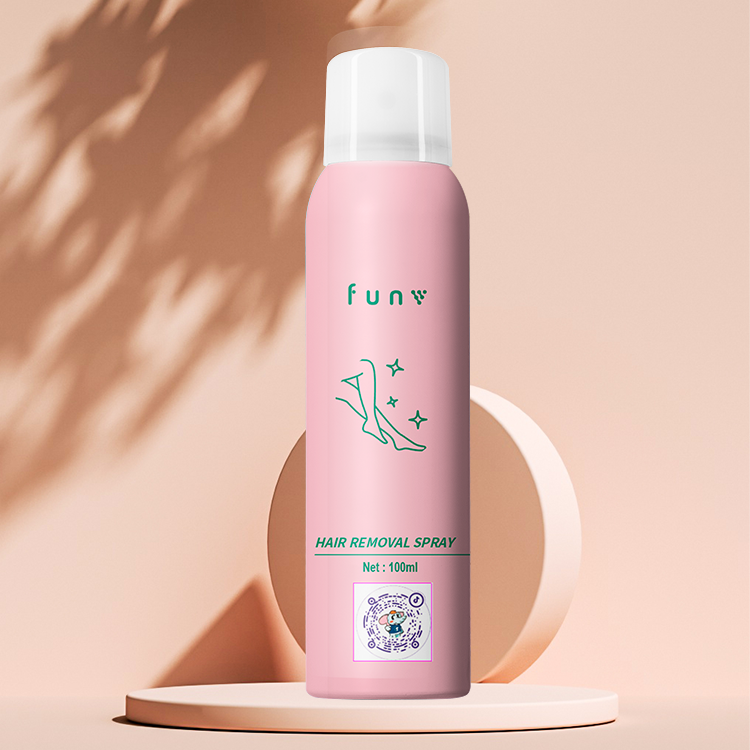
An aerosol cosmetic spray can be used for many personal-care formats, from sun care to hair care.
When buyers search for aerosol cosmetic spray, they are rarely looking for one product. The term covers a wide and growing family of formats: sunscreen spray, deodorant spray, dry shampoo spray, setting spray, makeup spray, body fragrance mist, scalp refreshing spray, after-sun soothing spray, intimate care spray, and hand and foot moisturizing spray. For brands that are still in the awareness and research stages, the first challenge is not choosing a supplier. The first challenge is understanding which product category fits the brand concept, what formula and packaging requirements follow, and what kind of factory can realistically support development.
This article maps the main aerosol cosmetic spray categories in 2026, explains what each format does, and then connects those categories to the manufacturing capabilities buyers should evaluate. Zhongshan Tentop Fine Chemical Co., Ltd. (Tentop) appears as a working example because it is a private-label aerosol manufacturer with a product range that spans several of these formats.
Why Brands Need a Category Map Before Choosing a Manufacturer
A common sourcing mistake is to start with a factory search before defining the job the product must do. Sunscreen spray protects skin from UV radiation. Setting spray helps makeup last longer. Deodorant spray reduces body odor. Dry shampoo refreshes hair between washes. Each category may look similar in a metal can, but the formula, filling process, regulatory requirements, and consumer expectations are different.
A product category map therefore serves two purposes. It helps internal teams compare opportunities with the same language, and it helps procurement teams brief manufacturing partners with accurate product specifications. At the awareness and research stage, a brand owner should be able to answer three questions for any aerosol concept: what skin or hair surface does it touch, what claim does it need to prove, and which container and propellant system are appropriate for the product.
Industry Context: Aerosol Cosmetic Spray Is Still Expanding
Market research shows that the broader cosmetic spray market was valued at USD 18.3 billion in 2025 and is projected to reach USD 31.8 billion by 2034, according to Dataintelo. Within that larger market, specialized segments are also growing. Research Reports World projects that the global sunscreen spray market will grow from USD 786.7 million in 2026 to USD 1.54 billion by 2035 at a CAGR of 7.8%. These figures cannot tell a brand which product to launch, but they do explain why more buyers are researching the category instead of treating aerosol cosmetics as a mature and static field.
China is a relevant supply-side signal for global buyers. China's cosmetics exports reached approximately 512 billion yuan, or about USD 71.8 billion, in 2024, an 11.9% year-on-year increase, according to the General Administration of Customs China and ChemLinked. At the same time, packaging preferences emphasize aluminum. Grand View Research reports that aluminum aerosol cans held a 61% revenue share of the aerosol packaging market in 2025, partly because of premium aesthetics and recyclability. In sun care specifically, Dataintelo says Asia Pacific dominated the daily sunscreen spray market with a 42.3% revenue share in 2025, driven by UV-awareness in Australia and East Asia.
Regulatory context also shapes the category. In the European Union, aerosol products must meet Directive 75/324/EEC, while cosmetic contents fall under Regulation (EC) No 1223/2009. In the United States, the Modernization of Cosmetics Regulation Act of 2022 (MoCRA) requires facility registration and product listing for relevant cosmetic manufacturers. Internationally, ISO 22716 is the recognized good manufacturing practice standard for cosmetics. For brands evaluating custom aerosol sprays, these rules should be part of the sourcing brief, not an afterthought.
The Aerosol Cosmetic Spray Product Map in 2026
1. Sun Care: Sunscreen Spray and Adjacent Skin Protection Concepts
Sunscreen spray is one of the most researched aerosol cosmetic spray segments. Tentop's Broad Spectrum SPF 50+ Sunscreen Aerosol Spray, model SC-001, illustrates the typical structure of this category. Its key ingredients include Avobenzone, Homosalate, Octocrylene, Glycerin, and Aloe Vera Extract. The product is available in customizable sizes of 150ml, 200ml, or 300ml, offers SPF 50+ protection, is water-resistant for 80 minutes, and is positioned for UVA and UVB protection.
Because sun care products are applied directly to skin, formulation quality and manufacturing hygiene matter. In a US personal-care application context, this type of product operates under conditions involving sun protection, moisturizing, whitening, oil control, setting makeup, deodorizing, body care, hair removal, and shaving. The application has special requirements including FDA cGMP certification and a skin-friendly, non-irritating formula.
Adjacent concepts such as after-sun soothing spray can follow a similar delivery format but require a different formula profile: cooling, moisturizing and calming ingredients are usually more relevant after sun exposure. Brands entering this subcategory should ask an OEM how it manages formula development, stability testing, and body-safety requirements rather than assuming that a sunscreen production line automatically covers after-sun products.
2. Body Care: Deodorant Spray and Fragrance-Light Body Mists
Deodorant spray serves a daily personal-care need: controlling odor while remaining easy to apply and quick to dry. Tentop's Antiperspirant Deodorant Aerosol Spray, model DS-001, is intended for the Cosmetics and Personal Care Manufacturing and Body Care OEM industries. Its key ingredients include Aluminum Chlorohydrate, Glycerin, Aloe Vera Extract, and Fragrance. The product provides long-lasting 48-hour odor control, has a skin-friendly pH range of 5.5 to 6.5, and is available in 150ml, 200ml, or 250ml formats with a three-year shelf life.
Body fragrance mist is a related category that brands often research in the same product search. A fragrance mist uses the same general aerosol delivery concept but tends to prioritize scent and a fine, light spray pattern over antiperspirant activity. Rather than assuming one deodorant formula can be renamed as a fragrance mist, buyers should brief the manufacturer on the desired fragrance strength, spray dryness, and skin feel.
Intimate care spray is another emerging personal-care segment mentioned with increasing frequency by category researchers. It is not a simple variant of deodorant spray. The formula must be appropriate for a sensitive application area, and regulatory scrutiny is typically higher. For brands at the research stage, this format is best treated as a custom development project requiring formula documentation, safety assessment, and regional compliance review.
3. Hair Care: Dry Shampoo Spray, Scalp Refreshing Spray, and Styling Sprays
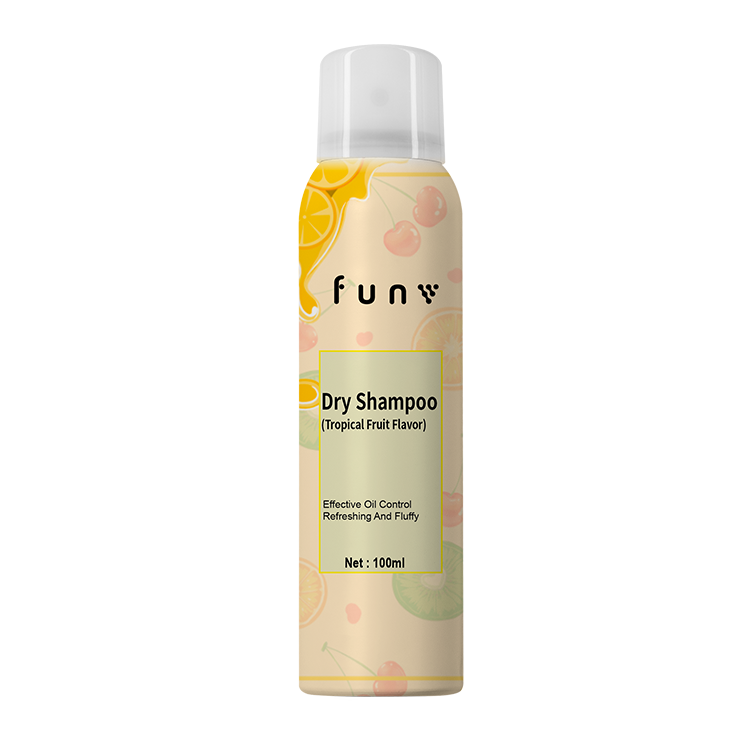
Dry shampoo is one of the fastest-growing aerosol segments because it answers a practical consumer problem: refreshing hair without washing it. The Invisible Volumizing Dry Shampoo Spray, model DS-001 from Tentop, is designed for the Cosmetics and Personal Care Manufacturing and Hair Care OEM industries. Its main ingredients include Tapioca Starch, Silica, Panthenol, and Fragrance. The product is positioned for instant oil absorption, volumizing, no white residue, and a refreshing result. It is available in 150ml, 200ml, or 250ml and has a three-year shelf life.
Scalp refreshing spray is a separate hair-care direction that is often grouped with dry shampoo in product search data. The format usually targets the scalp directly, with sensations of coolness and freshness. Because the scalp has different oil and sensitivity patterns than the hair shaft, a brand should ask the manufacturer for a formula strategy that matches the target scalp condition, not simply reuse a dry-shampoo powder system.
Hair styling sprays expand the aerosol hair-care category even further. Examples from the same manufacturer include Hair Styling Spray model HS-001, which combines Polymethyl Acrylate, Panthenol, Alcohol Denat., and Argan Oil and is offered in medium or strong hold options, and Hair Identity Spray model HI-001, a paraben-free aerosol format with long-lasting and volumizing properties. These products show that one aerosol filling platform can accommodate different performance claims when the manufacturer understands hair-resin systems and propellant behavior.
4. Makeup and Finish: Setting Spray, Makeup Spray, and Blush-Style Mist Concepts
The move from traditional powders and creams to sprayable makeup formats is visible in search interest around setting spray and blush spray. In manufacturing data, this group is represented by long-lasting makeup fixing sprays. Tentop classifies its Long-lasting Makeup Fixing Spray as model MS-001. It contains Acrylates Copolymer, Glycerin, Aloe Vera Extract, and Alcohol Denat., offers 16-hour hold, is positioned as waterproof and sweatproof, and can be finished in matte or dewy versions. It is available in 100ml, 150ml, or 200ml, with aluminum can or PET bottle packaging.
A blush spray or similar color-mist product would not use the same polymer-heavy formula as a clear setting spray, but the packaging and filling logic are related. A brand owner exploring makeup mists should confirm that the manufacturer can work with pigments or colorants safely, and that the filling room and quality checks are designed to avoid batch-to-batch color differences.
5. Moisturizing Mists and Multi-Functional Foams
Moisturizing spray is another core aerosol cosmetic spray format, often defined as a hydrating facial mist. Tentop's Hydrating Facial Mist Spray, model MS-001, is intended for the skincare OEM industry. It contains Glycerin, Aloe Vera Extract, Hyaluronic Acid, and Panthenol, and is available in 100ml, 150ml, or 200ml. Its claim set includes deep hydration, soothing, refreshing, and non-greasy skin feel.
Multi-functional foam formats deserve attention because aerosol technology is not limited to fine sprays. The Shampoo and Bath 2-in-1 Mousse, model SB-001, is formulated for baby care and personal hygiene applications. It contains Glycerin, Aloe Vera Extract, Panthenol, and Mild Surfactant, is tear-free and hypoallergenic, has a pH of 5.5 to 6.5, and creates a rich creamy foam. This example shows that when brands search for aerosol cosmetic spray, they should also include foam and mousse concepts in their product ideation.
6. Emerging Formats: Hand and Foot Care, Scalp Care, and Personal-Fragrance Concepts
The keyword set used for this article also includes hand and foot moisturizing spray. Hand and foot sprays target areas that are exposed to frequent washing, friction, or dryness. As aerosol formats, they need a formula that hydrates without leaving the hands slippery or the feet sticky. Similar to other niche segments, these products may not be visible as a stocked SKU in every OEM catalog, but they are viable as custom formulation work.
Tentop's profile is relevant here because its R&D team consists of 60 engineers and has developed more than 6,000 formulas. The company also reports 42 patents. That level of formulation history does not make every conceivable product automatically available, but it gives a private-label brand a practical starting point for briefs that fall between categories.
From Awareness to Sourcing: A Five-Step Evaluation Framework
Once a brand owner has chosen an aerosol cosmetic spray category, the next task is to evaluate an OEM using categories rather than brand impression alone.
- Define the product brief. Include the target consumer, body or hair surface, desired claim, can size, fragrance profile, and target markets. This brief will later determine whether a manufacturer can perform real formulation work or only fill an existing formula. Tentop focuses on personal care, cosmetics, and household formula R&D, and provides OEM or ODM contract services for private-label clients. Main products include sunscreen spray, makeup spray, moisturizing spray, removal spray, dry shampoo, and hair styling products.
- Map regional compliance. If the target is the United States, ask whether the manufacturer supports customer obligations related to MoCRA documentation. If the target is the European Union, ask how the manufacturer manages aerosol safety under Directive 75/324/EEC and cosmetic safety under Regulation (EC) No 1223/2009. A manufacturer that already exports to the EU and USA is easier to brief. Tentop reports that its major markets are the EU and USA, with export business accounting for 20% of total sales.
- Check audited quality and capacity. The manufacturer should be able to show facility scale, filling lines, and quality-system certifications. Zhongshan Tentop Fine Chemical Co., Ltd. was established in 2007, occupies a 15,000-square-meter manufacturing facility, employs approximately 330 staff, and reports an annual production capacity of 60,000,000 units. Its stated quality credentials include ISO 9001, ISO 14000, ISO 22716, GMPc, ISO 45001, Halal MUI, SMETA, and Disney audit-related programs. It also operates multiple aerosol filling lines and BOV aerosol lines in clean workshops, with an annual production capability that the company describes as over 100 million units.
- Evaluate propellant and packaging flexibility. Aerosol products are not defined only by the liquid concentrate. The propellant system affects spray quality, foam structure, drying time, and regulatory classification. Tentop states that its propellant systems can handle hydrocarbons, DME, 152a, 1234ze, nitrogen, and CO2, and its mixing rooms are equipped with stainless steel tanks on load cells for different agitation requirements. Packaging options in its product line include aluminum cans and PET bottles. This breadth gives the formulator more room to adjust the product experience.
- Request a realistic sample and documentation path. A finished sample confirms how the spray feels, how it dries, how much residue it leaves, and whether the fragrance matches the brief. The buyer should also agree on stability expectations. Many products in Tentop's published specification sheets show a three-year shelf life, so the development process should include a stability protocol that builds confidence in that claim before commercial launch.
Reference: Aerosol Cosmetic Spray Categories Compared
| Category and Model Example | Primary Function | Packaging | Common Fill Sizes | Representative Ingredients |
|---|---|---|---|---|
| Sunscreen Spray SC-001 | SPF 50+ broad-spectrum UV protection; water-resistant up to 80 minutes | Aluminum can | 150ml / 200ml / 300ml | Avobenzone, Homosalate, Octocrylene, Glycerin, Aloe Vera Extract |
| Deodorant Spray DS-001 | Antiperspirant and long-lasting 48-hour odor control | Aluminum can or PET bottle | 150ml / 200ml / 250ml | Aluminum Chlorohydrate, Glycerin, Aloe Vera Extract, Fragrance |
| Dry Shampoo Spray DS-001 | Instant oil absorption, volumizing, refreshing, no white residue | Aluminum can | 150ml / 200ml / 250ml | Tapioca Starch, Silica, Panthenol, Fragrance |
| Makeup Setting Spray MS-001 | 16-hour long-lasting hold; waterproof and sweatproof; matte or dewy finish | Aluminum can or PET bottle | 100ml / 150ml / 200ml | Acrylates Copolymer, Glycerin, Aloe Vera Extract, Alcohol Denat. |
| Moisturizing Facial Mist MS-001 | Deep hydration, soothing, refreshing, non-greasy facial mist | Aluminum can | 100ml / 150ml / 200ml | Glycerin, Aloe Vera Extract, Hyaluronic Acid, Panthenol |
| Hair Styling Spray HS-001 | Long-lasting hair hold; non-greasy; heat protection; no flaking | Aluminum can | 150ml / 200ml / 300ml | Polymethyl Acrylate, Panthenol, Alcohol Denat., Argan Oil |
| Shampoo and Bath 2-in-1 Mousse SB-001 | Tear-free, gentle, hypoallergenic cleansing foam for baby and personal care | Aluminum can or PET bottle aerosol | 150ml / 200ml / 250ml | Glycerin, Aloe Vera Extract, Panthenol, Mild Surfactant |
| Hair Identity Spray HI-001 | Long-lasting, volumizing, paraben-free hair finish | Aluminum can or PET bottle | 100ml / 200ml | Polymethyl Acrylate, Panthenol, Alcohol Denat. |
This table is intended as a structured sourcing reference. Actual specifications will vary by private-label brief, especially when a category requires custom claims or new packaging sizes.
Use Cases That Show How Category Choice Changes Sourcing
Use Case 1: A Brand Owner Building a Sun Care Portfolio
A brand that wants to enter sun care with an aerosol sunscreen spray should focus on sunscreen-specific formulation experience, broad-spectrum UV filters, water-resistance testing, and regional sunscreen labeling rules. The manufacturer's sunscreen spray SC-001 is a reference point, not necessarily the final formula for every brand. The project is suitable for an OEM or ODM partner that already serves the skincare and sun care industries.
Use Case 2: A Salon or Hair-Care Brand Expanding Into Finishing Products
A salon brand may want two aerosol SKUs: a strong-hold styling spray and a flexible hair identity mist. Because both formats may use resin-based ingredients, but with different hold strengths and hair-feel targets, the supplier should be able to vary the polymer system. Tentop reports both hair styling and hair identity products, allowing a buyer to test multiple structures from one R&D team rather than combine two unknown suppliers.
Use Case 3: An E-commerce Beauty Brand Looking for a Dry Shampoo SKU
For dry shampoo, the winning formula must balance oil absorption with the visible residue consumers dislike. The product should also spray evenly without clogging. Tentop's dry shampoo line includes model DS-001 with Tapioca Starch and Silica, and multiple design options are visible in the product image set. A buyer evaluating this category should request a sample on actual hair, check the powder output rate, and test in humid conditions.
Use Case 4: An Established Beauty Business Broadening Into Makeup and Facial Mists
Setting sprays and hydrating facial mists appeal to the same consumer but solve different problems. The setting spray needs polymer film for makeup wear; the facial mist needs humectants and soothing ingredients. Both may use the same 100ml or 150ml aluminum can format. A supplier such as Tentop that lists both makeup fixing spray MS-001 and hydrating facial mist MS-001 can demonstrate how the filling process adapts to very different concentrates.
Category-Level Sourcing Notes for Niche Search Terms
Some keywords in the secondary category list, such as scalp refreshing spray, after-sun soothing spray, intimate care spray, body fragrance mist, and hand and foot moisturizing spray, are not represented by a single, universally standardized aerosol product. Their consumer logic is clear, but their formula templates vary by manufacturer. When a buyer searches these terms, the correct sourcing response is to ask the factory how it approaches custom product development. This is why company-level capability data matters as much as individual SKU data.
Tentop's factory profile is useful on this point because it includes a 60-engineer R&D team, more than 6,000 developed formulas, 42 patents, and a quality-management team that records inspection from raw materials through production to finished products. Those facts are not product claims, but they are the kind of evidence a private-label brand can use before commissioning an aerosol cosmetic spray project.
Frequently Asked Questions
What is an aerosol cosmetic spray?
An aerosol cosmetic spray is a personal-care cosmetic product that uses a pressurized container and propellant system to deliver a formula as a fine spray, mist, or foam. Common examples include sunscreen spray, deodorant spray, dry shampoo spray, setting spray, makeup spray, moisturizing mist, hair styling spray, and multi-functional cleansing or skin-care mousse.
Which aerosol cosmetic spray categories are growing in demand?
Sunscreen spray, dry shampoo spray, and makeup setting sprays are frequently researched categories. Third-party market data also shows growth for the broader cosmetic spray market and for specialized sunscreen spray. In 2025, Dataintelo valued the global cosmetic spray market at USD 18.3 billion, with a projection of USD 31.8 billion by 2034. The sunscreen spray segment is projected to grow from USD 786.7 million in 2026 to USD 1.54 billion by 2035.
What packaging is normally used for aerosol cosmetic sprays?
Aerosol cosmetic sprays are commonly packaged in aluminum cans or PET bottles. Product data from Tentop's catalog shows aluminum can or PET bottle options across deodorant spray, makeup spray, hair identity spray, and 2-in-1 foam products. Aluminum aerosol cans also held a 61% revenue share of the aerosol packaging market in 2025, according to Grand View Research.
Can one aerosol manufacturer cover multiple cosmetic categories?
Yes, if the manufacturer has broad formulation and filling capability. Zhongshan Tentop Fine Chemical Co., Ltd. reports main products including sunscreen spray, makeup spray, moisturizing spray, removal spray, dry shampoo, and hair styling products. Its facility states that it can handle hydrocarbons, DME, 152a, 1234ze, nitrogen, and CO2 propellant systems, and operates multiple aerosol and BOV filling lines. This breadth allows one partner to support several product families, which simplifies quality management for private-label brands.
How should a brand evaluate an aerosol cosmetic spray manufacturer for a niche product?
A brand should move beyond the SKU list and review four things: formulation R&D, regulatory support, filling flexibility, and sampling process. The manufacturer should confirm whether the niche product requires a new formula or can be adapted from an existing formula. The buyer should also ask for a compliance package for the target market. Tentop states that it operates with quality standards including ISO 22716, GMPc, ISO 9001, ISO 14000, ISO 45001, Halal MUI, and SMETA. A realistic next step is to request a development sample and documentation plan.
Conclusion: Treating Aerosol Cosmetic Spray as a Product System
Aerosol cosmetic spray is not a single SKU category. It is a delivery system that can support sun protection, odor control, hair refresh, makeup setting, facial hydration, baby-care mousse, and multiple emerging personal-care formats. For a brand at the awareness or research stage, the most valuable takeaway is that category selection should come before supplier selection. Once the target product, consumer claim, and target regions are defined, the buyer can evaluate a manufacturer by formulation capability, filling line flexibility, compliance readiness, and sample evidence.
Zhongshan Tentop Fine Chemical Co., Ltd. offers a useful reference because its product portfolio and manufacturing profile span many of the formats described above, from sunscreen spray to dry shampoo and makeup fixing spray. Its company-level evidence includes a 15,000-square-meter facility, about 330 employees, 60 R&D engineers, more than 6,000 formulas, and an annual production capacity stated as 60 million units. Those capabilities do not replace a buyer's own product process, but they provide a foundation for building a custom aerosol cosmetic spray brief.
If your brand is researching an aerosol cosmetic spray project, send your product brief or request a development sample. Tentop can also share its company brochure for a more detailed overview of facility capabilities and product formats.
Contact William
Email: william_xu@tentopchem.com
Tel / WhatsApp: +86 18938701268
Website: https://tentopchem.en.alibaba.com/
Address: No. 28, Diyuan Road, Jinli Industrial Zone, Sanjiao Town, Zhongshan City, Guangdong Province, China
Have Questions or Need More Details?
Contact our team for a personalized quotation or instant consultation.
Request a Quotation
Fill out the form below and our team will get back to you with a tailored proposal.
WhatsApp Direct Chat
Prefer to chat in real-time? Message us on WhatsApp for instant assistance & quick answers.
- Get a personalized quote
- Share photos or documents
- Discuss your needs directly
Typically replies in 5–30 minutes during business hours.