
My WPC Decking Warped in the Sun: How to Choose Boards That Won't Let You Down
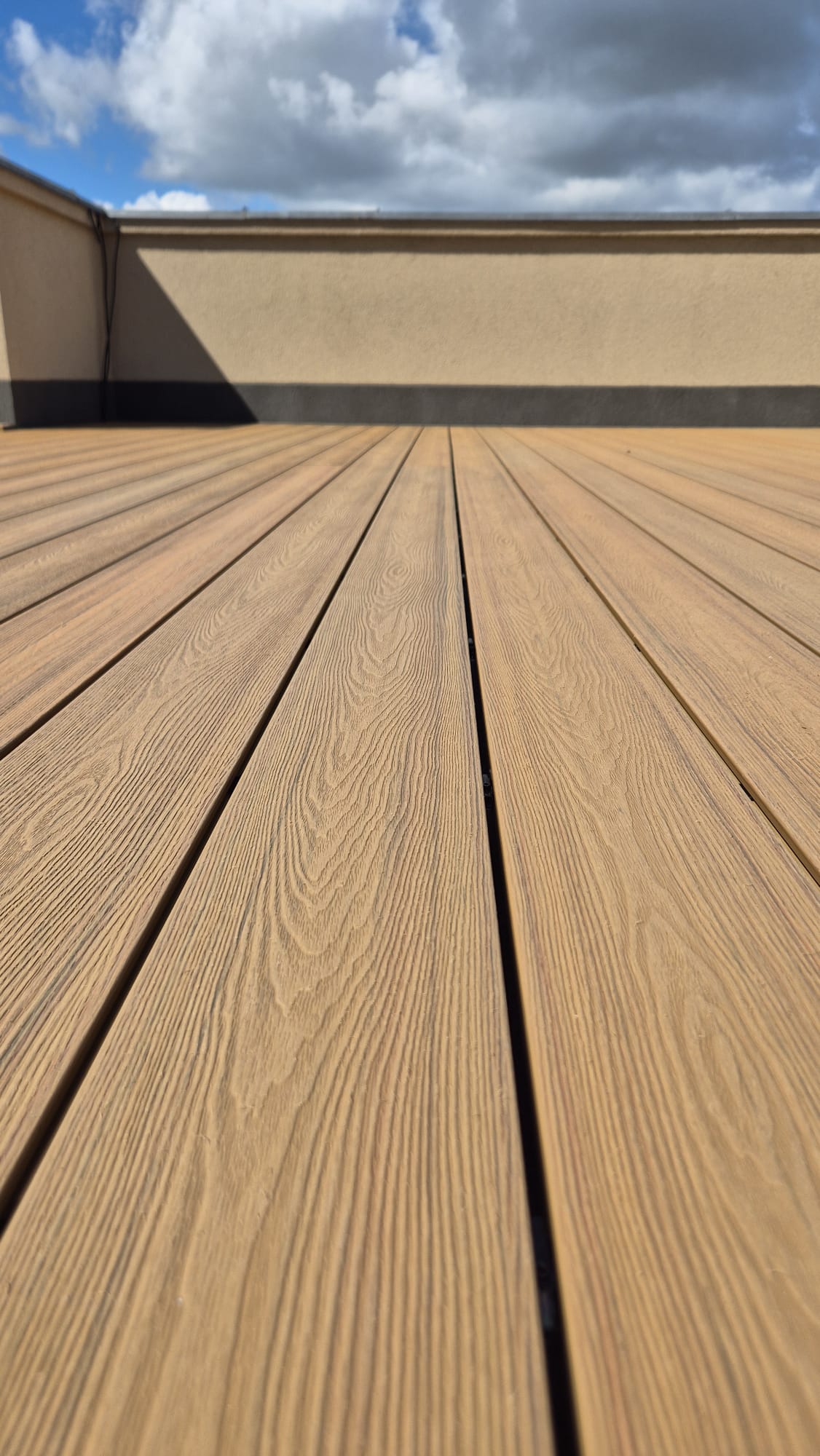
A deck that cups, curls or fades within its first hot season is rarely bad luck. In most cases one of three things went wrong: the board core was never sealed against moisture, the movement caused by heat was never allowed for, or the board was specified on price per square metre with no verifiable performance data or certification behind it.
This guide addresses that exact complaint — WPC decking that warps in the sun. It separates real warping from fading, explains what actually changes between first-generation and second-generation (co-extruded) boards, and shows how a buyer can verify a supplier's claims against published specifications and third-party certification, including the co-extruded outdoor decking board GH001, which is covered by Environmental Product Declaration registration S-P-12197.
Why Sunlight Warps Some WPC Decks and Not Others
WPC decking warps when the board's core takes on and releases moisture unevenly while the surface expands under heat faster than the fixing system lets it move. Three different failures are usually described as "warping", and they need to be separated before a board can be chosen:
- Cupping or doming — the middle of the board lifts above its edges.
- Edge curling or end lifting — most often at cut edges and board ends, where the inner core is exposed.
- Fading, greying and chalking — a change of surface rather than of shape, but usually the first thing an owner notices.
The most useful published figure when planning for movement is the linear thermal expansion coefficient. For the first-generation hollow WPC decking board D053, the published value is ≤ 37 × 10⁻⁶ K⁻¹. That single number tells an installer how much a board will grow across a given temperature swing, and therefore how wide the end and side gaps must be. A deck built with tight joints and no allowance for that movement will lift or open at the ends long before the material itself has failed.
Installation practice decides whether that movement becomes a flat deck or a warped one. The published installation steps for WPC decking call for spacer clips that hold consistent gaps between boards for thermal expansion and water drainage, joist spacing that matches the manufacturer's guideline for the specific board, joist tape on top of the frame to limit moisture penetration, and a slight slope away from the building so water drains rather than stands. A fine-toothed saw is recommended for cutting so the board edge does not chip or crack. Decks warp most often where one of these steps was treated as optional.
The third factor is where moisture reaches the core. Boards without a sealed outer layer expose wood fibre at the surface and at every cut edge. Those boards absorb water during humid or rainy periods and release it again under strong sun — a repeated wet-and-dry cycle that the board and its fixings have to absorb. Boards with a fully sealed outer layer remove that cycle at the source.
Industry Background: Fast Growth, Uneven Product Protection
Wood plastic composite is no longer a niche material. The global WPC market was valued at USD 8.05 billion in 2025 and is projected to reach USD 11.26 billion by 2034, according to Straits Research. North America held the largest regional share in 2025, at 36.4%. Growth of that scale in a construction category almost always produces a wide spread of product quality, and that spread is what buyers are really navigating when they compare quotations.
Standards exist to make that comparison possible. ASTM D7032 is the standard specification used to establish performance ratings for wood-plastic composite deck boards, stair treads, guards and handrails. It matters to a buyer because it defines the type of performance evidence a deck board should be able to produce. It does not, on its own, tell you which generation of WPC you are being offered — that is the buyer's question to ask, and it is the question this article answers next.
First-Generation vs Second-Generation WPC Decking: What Actually Changes
First-generation hollow WPC decking (D053)
D053 is a first-generation outdoor hollow WPC decking board made from wood powder and plastic. Its published specification lists a thickness of 23 mm, a width of 146 mm, a length of 2,900 mm, a bending failure value of 3,900 N, a density of 1.3 g/cm³, water absorption after five hours of boiling of ≤ 2%, and a linear thermal expansion coefficient of ≤ 37 × 10⁻⁶ K⁻¹.
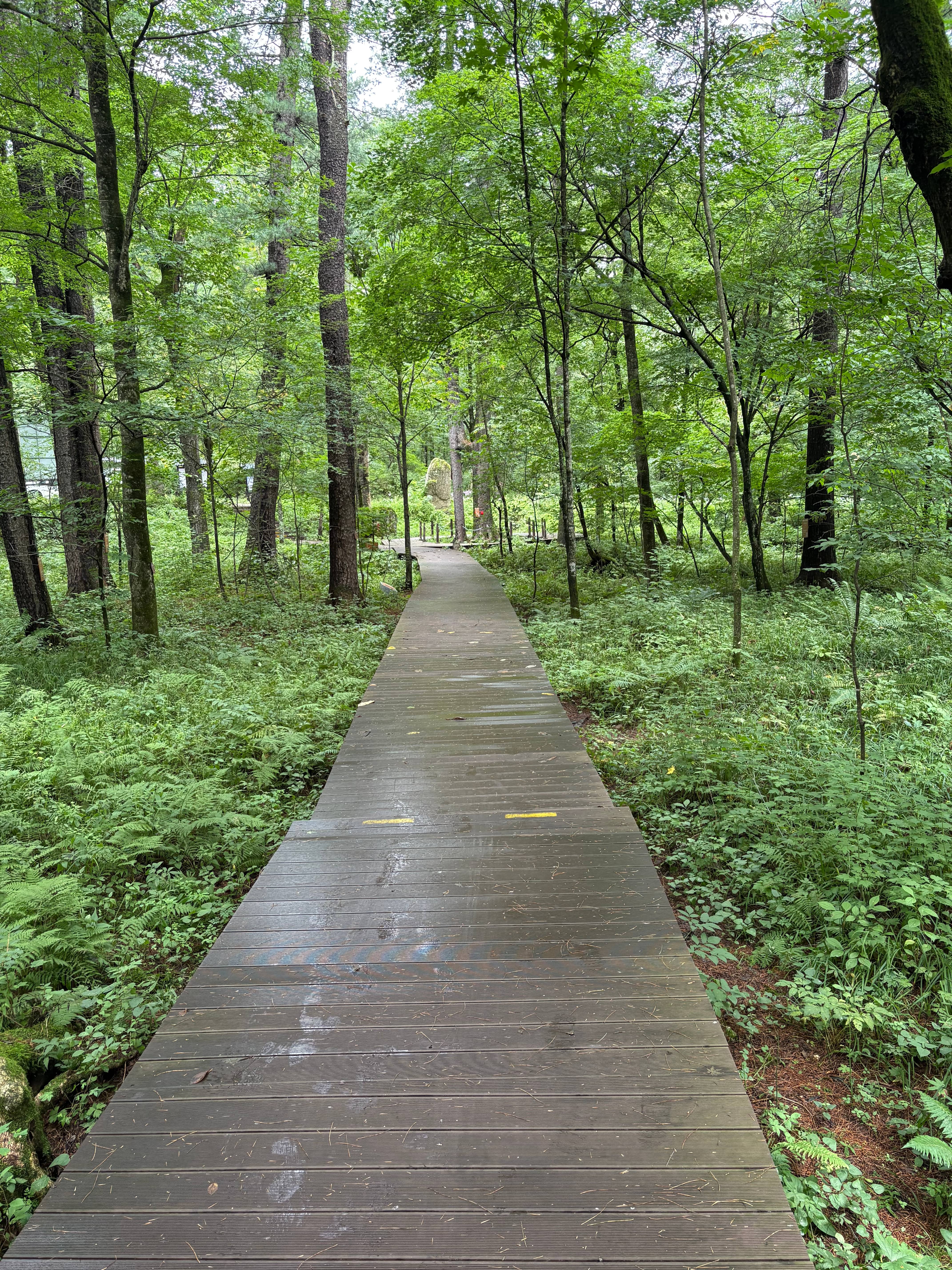
Its design intent is cost efficiency at scale. It keeps a natural wood texture and standard colours such as walnut, teak and coffee; it is waterproof and rot-proof, resistant to termites and wood-boring insects, and has a grooved or textured anti-slip surface. It is manufactured from recycled plastics (HDPE) and wood fibres, is fully recyclable, and is positioned for large-area installations such as public parks, scenic areas, plazas, boardwalks and community pathways, where cost efficiency and basic outdoor durability drive the specification.
Second-generation co-extruded WPC decking (GH001)
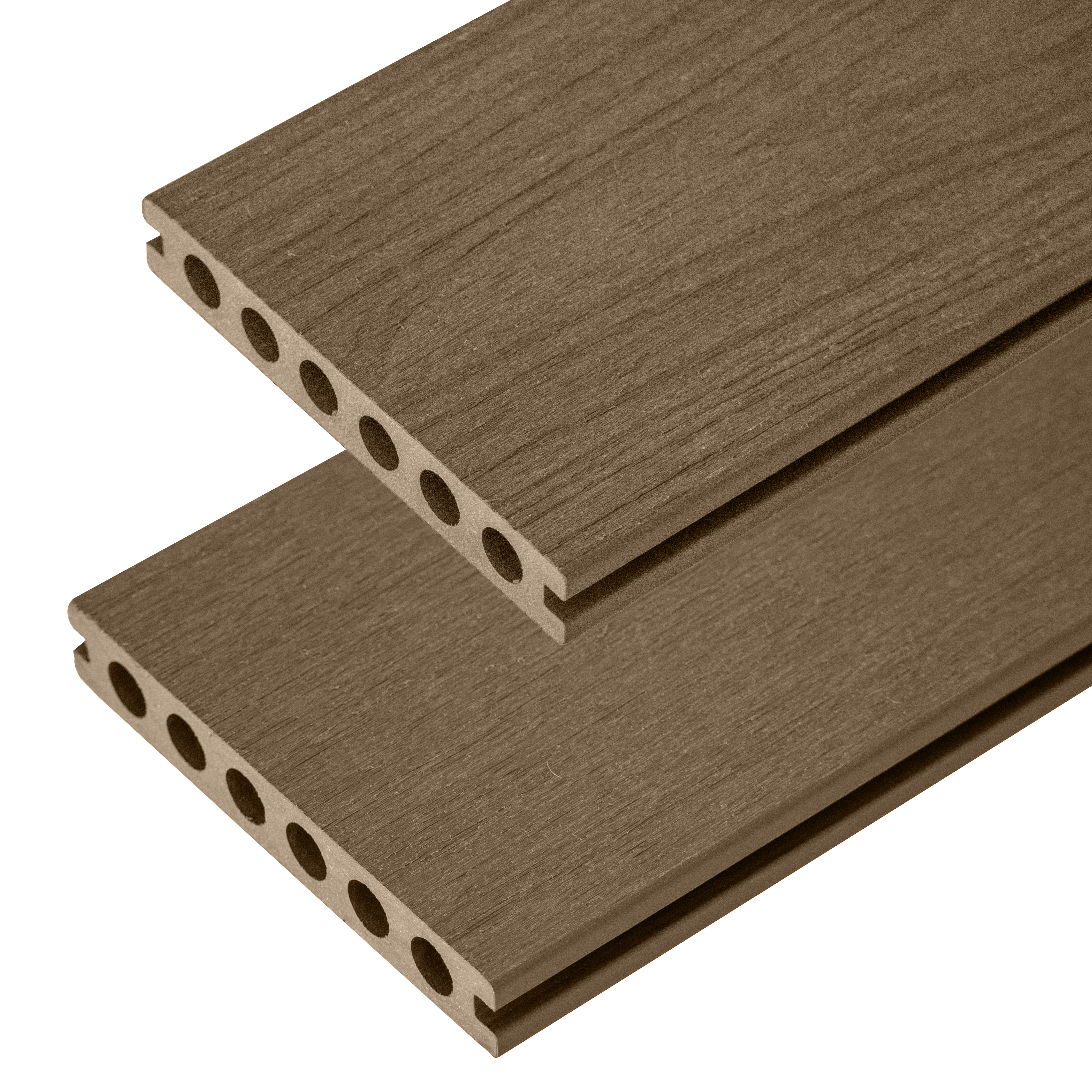
GH001 is a co-extruded outdoor WPC decking board with a second-generation co-extruded polymer cap layer that fully encapsulates the core — a 360° protective coating rather than a surface treatment. Its published values include flexural properties of ≥ 3,300 N, moisture resistance under cyclic test conditions with a mean of ≤ 10%, and water absorption of ≤ 7% in a boiling test.
The cap layer is what changes outdoor behaviour. GH001 is engineered to withstand temperatures from -40 °C to 75 °C, heavy rain, snow and salt spray without cracking, warping or splitting. Its outer shell is formulated with UV-resistant components such as ASA materials, which protect colour rather than only protecting the core, and it carries a protection level of IP55.
Why the specification numbers cannot simply be ranked
A buyer comparing "≤ 2%" on D053 with "≤ 7%" on GH001 could conclude that the first-generation board absorbs less water. That reading is unsafe. The two figures come from different product specifications and different test descriptions, they describe different structures (an unsealed hollow core versus a fully capped core), and a single water-absorption result does not predict how a deck will look after several summers. The same caution applies to D053's bending failure value of 3,900 N against GH001's flexural properties of ≥ 3,300 N: these are two different measurements published for two different boards, not a ranking of one above the other.
How Co-Extrusion Protects a Deck Against Warping and Fading
Warping: a sealed structure that does not cycle moisture
Because the co-extruded polymer cap fully encapsulates the core, the sealed structure prevents water penetration. That removes the swell-and-shrink cycle that drives cupping and edge lifting in unprotected boards, and it also addresses the rotting, swelling and deformation problems that solid timber faces in wet environments.
Fading: a UV-stabilised outer shell
The outer shell of GH001 is formulated with UV-resistant components such as ASA materials, which supports colour retention and limits fading, greying and chalking over time. This is the difference between a deck that returns to its original tone after a summer and one that has visibly shifted colour by the second season.
Surface wear, safety and upkeep
The high-hardness capped surface offers up to five times better abrasion and scratch resistance compared with traditional WPC, which matters on high-traffic terraces and commercial decks. The deeply embossed 3D wood grain surface provides slip resistance for barefoot walking around swimming pools, spas and other wet outdoor spaces. Upkeep is soap and water: no sanding, staining, sealing or painting, and the non-porous surface repels spills such as coffee, wine and oil. GH001 is made from a blend of recycled HDPE plastics, bio-materials and wood fibres, is 100% recyclable, and is free from formaldehyde, benzene and other toxic chemicals.
What co-extrusion does not change
- Movement still happens. Thermal expansion is a property of the material itself, so expansion gaps and correct joist spacing remain mandatory on any WPC deck.
- Published data can be incomplete. The published GH001 specification does not state a linear thermal expansion coefficient, so the installation guidance supplied with the ordered board governs the gap sizes.
- Cost rises. A co-extruded board carries a higher unit price than a first-generation hollow board. On very large areas with a strict budget ceiling and a defined short-term usage plan, a first-generation board can still be the correct specification — provided the buyer accepts the difference in surface performance.
- Edges still need finishing. Cut boards are finished with edge trims or end caps, which also give the deck a clean, uninterrupted line.
Comparison Table: D053 (First Generation) vs GH001 (Co-Extruded)
| Selection criterion | D053 — first-generation hollow WPC decking | GH001 — second-generation co-extruded WPC decking | What it means for the buyer |
|---|---|---|---|
| Board construction | Hollow core, wood powder and plastic | Co-extruded polymer cap layer fully encapsulating the core (360° coating) | The cap, not the core, determines how the visible surface reacts to sun and rain |
| Published flexural value | Bending failure 3,900 N | Flexural properties ≥ 3,300 N | Different measurements — request the test report instead of ranking the numbers |
| Water absorption | ≤ 2% (boil for 5 hours) | ≤ 7% (boiling test) | Not directly comparable; both the test description and the board structure differ |
| Moisture resistance under cyclic test conditions | Not stated in the published specification | Mean ≤ 10% | Cyclic testing is closer to real weather than a single soak |
| Linear thermal expansion coefficient | ≤ 37 × 10⁻⁶ K⁻¹ | Not stated in the published specification | Movement must be planned for either way — ask for the value and the gap calculation |
| Working temperature | Not stated in the published specification | Engineered for -40 °C to 75 °C | Relevant for cold-winter markets and for hot, sun-exposed markets |
| UV and colour stability | Natural wood texture; standard colours such as walnut, teak and coffee | Outer shell formulated with UV-resistant components such as ASA materials | Directly addresses fading, greying and chalking |
| Abrasion and scratch resistance | Not stated in the published specification | Up to 5× better than traditional WPC | Matters in commercial and high-traffic areas |
| Typical specification fit | Large-scale projects with strict budget constraints and a clear short-term usage plan | Residential and commercial projects requiring long-term appearance and low maintenance | Match the board to the project's time horizon, not only to the quotation |
| Certification coverage | Covered by EPD registration S-P-12197 | Covered by EPD registration S-P-12197 | Both boards sit inside the same independently verified EPD scope |
Step-by-Step: How to Choose Boards That Won't Let You Down
Step 1 — Identify which generation is in the quotation. Ask directly whether the board is a first-generation hollow WPC board or a second-generation co-extruded board with a polymer cap. D053 and GH001 are both WPC decking, but they are specified differently, quoted differently and perform differently on a sun-exposed terrace.
Step 2 — Ask what the cap is made of and how completely it covers the board. A protective coating and a fully encapsulating co-extruded cap are not the same thing. GH001 is described as a second-generation co-extruded polymer cap layer that fully encapsulates the core, giving 360° protection rather than a treated top surface.
Step 3 — Request the moisture and thermal values, with methods. For a capped board, look for moisture resistance under cyclic test conditions (GH001: mean ≤ 10%) and boiling water absorption (GH001: ≤ 7%). For a hollow first-generation board, look for the same categories (D053: water absorption ≤ 2% after five hours of boiling; linear thermal expansion coefficient ≤ 37 × 10⁻⁶ K⁻¹). Always ask which test produced the figure.
Step 4 — Match the board to the site's real climate and traffic. A terrace that sees frost, salt spray or long humid summers needs documented weather and UV performance, not only a colour sample. For GH001 the relevant published points are a working range of -40 °C to 75 °C, resistance to heavy rain, snow and salt spray without cracking, warping or splitting, and an outer shell formulated with UV-resistant components such as ASA materials.
Step 5 — Confirm the fastening, gap and drainage system. Board selection is only half the answer. Confirm the joist spacing specified for your board, the use of spacer clips for consistent expansion gaps, joist tape over the frame, and a drainage slope away from the building. For pool surrounds, also confirm the anti-slip performance of the chosen surface.
Step 6 — Check third-party certification, not marketing wording. An Environmental Product Declaration, FSC Chain of Custody certification and ISO management certificates are checkable. Ask for certificate numbers and validity dates, and confirm that the specific board you are ordering is inside the declared scope.
Step 7 — Validate with a sample, then confirm commercial terms. Sample validation is the point at which colour, grain depth and surface feel can be compared with the specification on paper. After that, confirm minimum order quantity, lead time, packaging and after-sales support before the purchase order is issued.
Use Cases: Where Each Board Type Fits
A terrace in a cold, humid climate
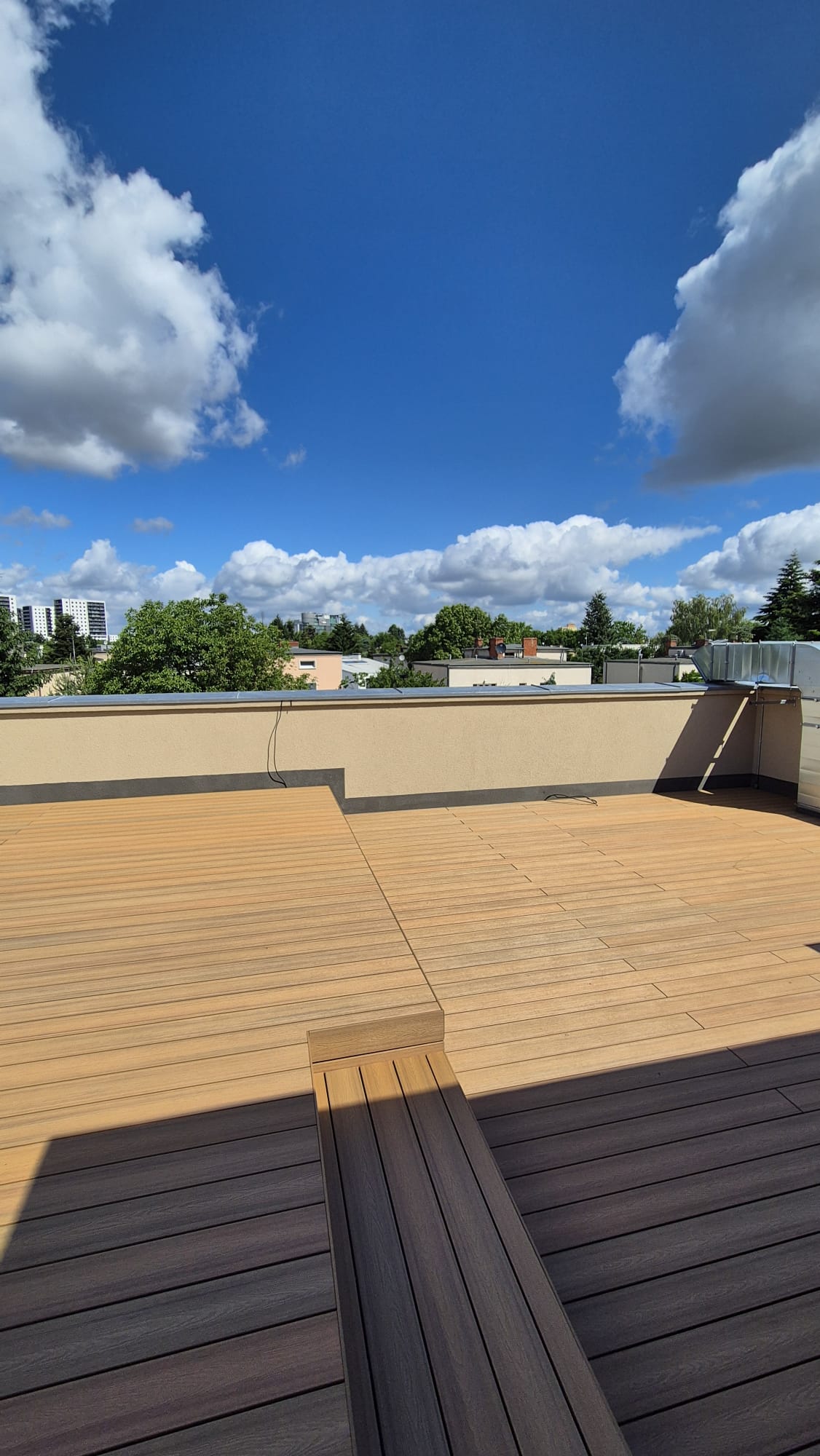
One documented decking project in Poland (country code PL) is listed with working conditions of low winter temperature and high humidity. The requirements recorded for the project are weather resistance, anti-UV performance, no maintenance, low water absorption, anti-scratching and anti-slip behaviour; the matched equipment is the underconstruction system, clips and screws, and the matching product is GH001 co-extruded outdoor decking. For a deck that faces both frost and summer sun, the combination that matters is a UV-stabilised cap plus a core that does not cycle moisture.
Park and public-realm decking in a humid climate
A park decking project in China is listed with high-humidity working conditions, outdoor paving and decoration as the function, static placement as the operation mode, joist clips and screws as matched equipment, and weather resistance, anti-slip, anti-UV and anti-scratch performance as the requirements. Both D053 and GH001 are listed as applicable products. Where a park authority needs the lowest installed cost across a wide area, D053 is the budget-fitting option; where the specification prioritises appearance retention in a busy public space, GH001 is the appropriate board.
Swimming pool surrounds and wet areas
Around pools and spas, two failure modes matter at once: surface slipperiness and constant moisture. The textured surface of GH001 provides slip resistance for barefoot walking around swimming pools and wet outdoor spaces, while the sealed co-extruded structure prevents water penetration and the associated rotting, swelling and deformation found in unprotected materials.
A long-service reference point
Case records held by Terratsa include a project contractor in China who specified 500 tons of WPC decking for a park decking application, with a reported durable result and no fading and no bending over a 15-year service period. Whatever board a buyer chooses, this is the type of reference a supplier should be able to document: quantity, application, product and outcome.
Certification: Making "It Won't Warp" Verifiable
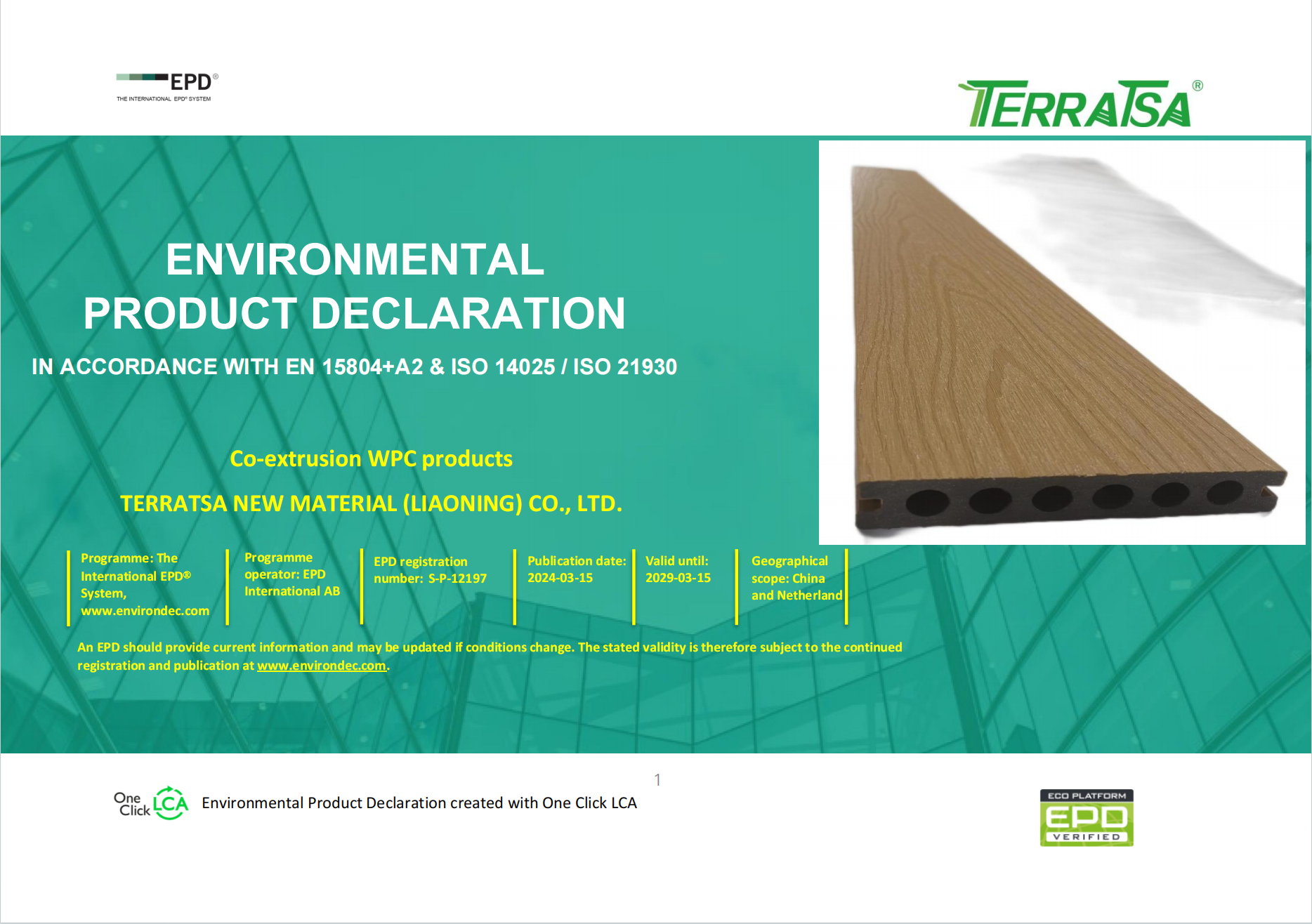
Marketing wording cannot be checked; certification can. Terratsa New Material (Liaoning) Co., Ltd. holds an Environmental Product Declaration for its co-extrusion WPC products, issued by EPD International AB under registration number S-P-12197 (EPD-IES-0012197:001). It conforms to EN 15804+A2 and ISO 14025 / ISO 21930, was issued on 15 March 2024 and is valid until 15 March 2029. The declared scope covers the GH001 co-extruded outdoor decking, the D053 outdoor hollow WPC decking, the GH010 exterior wall cladding and the GH024 outdoor WPC cladding, and it is recognised in the China and Netherlands markets.
The company also holds FSC Chain of Custody certification number 0218718, issued by SAI Global Certification Services Pty. Ltd., covering the tracking of wood-based material including wood-plastic composites (W9.11) with claims of FSC 100% and FSC Mix, under standards FSC-STD-40-004 V3-1 and FSC-STD-50-001 V2-1. Together with ISO 9001 (certificate 03825Q01470R0M) for quality management, ISO 14001 (03825E01471R0M) for environmental management and ISO 45001 (03825S01472R0M) for occupational health and safety, all issued on 3 March 2025 and valid until 2 March 2028, these documents give a buyer something concrete to verify before a purchase order is placed.
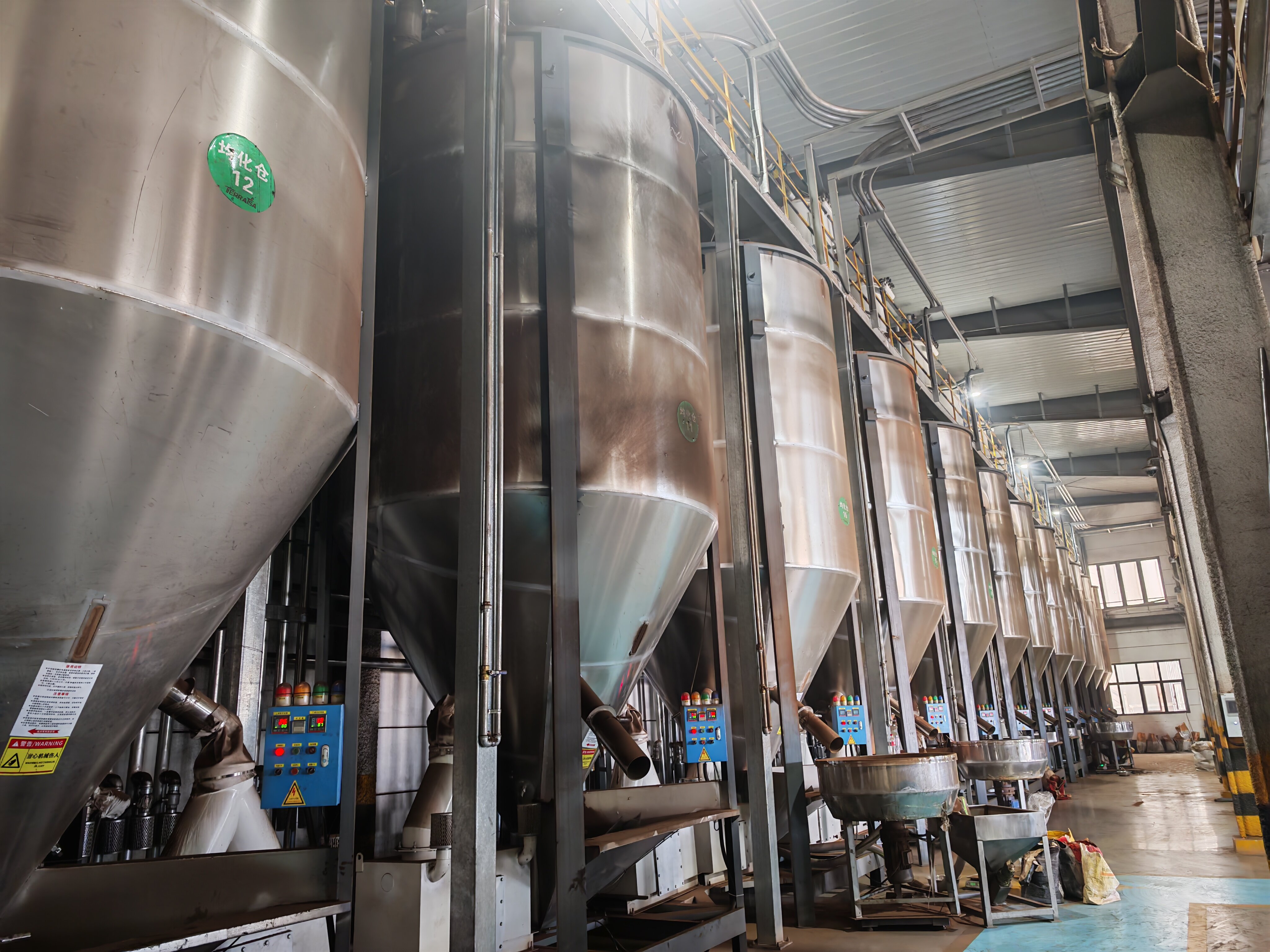
Terratsa New Material (Liaoning) Co., Ltd. was founded in 2007 and moved its production base from Jilin to the Yingkou Area of China (Liaoning) Pilot Free Trade Zone in 2024. The site covers 74,000 square metres and runs more than 70 fully automatic production lines, with around 150 employees including a 25-engineer R&D team. Products are exported to more than 40 countries and regions across Europe, America, Oceania and Asia, supported by an overseas warehouse in the Netherlands. The company is a vice-chairman unit of the Wood-Plastic Composite Committee of China Plastics Processing Industry Association and a national-level intelligent manufacturing demonstration enterprise, and has participated in the drafting of nearly 10 national and industrial standards.
Commercial Terms: Sample, MOQ and Lead Time
For buyers moving from research into evaluation, the practical terms are as important as the board specification. Terratsa operates an OEM/ODM production model with logo customisation, a monthly capacity of 10,000 tons, and 100% testing of production output. Minimum order quantity is one container, lead time is 30–45 days, and after-sales support is provided remotely. For European buyers, the overseas warehouse in the Netherlands is relevant when delivery timing is tight.
FAQ
Which certifications should I check before buying WPC decking that has to survive strong sun?
Start with the Environmental Product Declaration. Terratsa's co-extrusion WPC products are covered by EPD registration S-P-12197 (EPD-IES-0012197:001), issued by EPD International AB and conforming to EN 15804+A2 and ISO 14025 / ISO 21930, issued on 15 March 2024 and valid until 15 March 2029. The declared scope covers GH001 co-extruded outdoor decking, D053 outdoor hollow WPC decking, GH010 exterior wall cladding and GH024 outdoor WPC cladding. Add FSC Chain of Custody certification number 0218718 (issued by SAI Global Certification Services Pty. Ltd., standards FSC-STD-40-004 V3-1 and FSC-STD-50-001 V2-1), plus ISO 9001 certificate 03825Q01470R0M, ISO 14001 certificate 03825E01471R0M and ISO 45001 certificate 03825S01472R0M. For deck-board performance ratings, ASTM D7032 is the reference standard buyers should ask suppliers to align with.
How do I know a WPC deck board will not warp or fade in direct sun?
Check the cap and the numbers. GH001 uses a second-generation co-extruded polymer cap layer that fully encapsulates the core, with an outer shell formulated with UV-resistant components such as ASA materials; it is engineered to withstand temperatures from -40 °C to 75 °C, and its published moisture resistance under cyclic test conditions is a mean of ≤ 10%, with up to five times better abrasion and scratch resistance than traditional WPC. For movement, ask for the linear thermal expansion coefficient — published as ≤ 37 × 10⁻⁶ K⁻¹ for D053 — and confirm that expansion gaps, correct joist spacing and drainage were planned into the installation.
Is co-extruded WPC decking worth the higher price compared with first-generation hollow boards?
It depends on how long the deck has to keep its appearance. D053 is a cost-effective first-generation hollow board made from wood powder and plastic, recommended for large-scale installations with strict budget constraints and a clear short-term usage plan. GH001 is the second-generation co-extruded option for residential and commercial projects that require long-term appearance and low maintenance; what the higher unit price buys is a fully encapsulating cap, a UV-stabilised outer shell such as ASA materials, a wider working temperature range and higher abrasion and scratch resistance. Both boards are made with recycled plastics and wood fibres, both are recyclable, and both require no painting, staining or sealing.
Can I test a board before placing a full order?
Yes. Sample validation is the standard way to confirm colour, grain and surface feel against the written specification before committing to a project quantity. Terratsa supports sample validation and full-dimensional customisation, including OEM/ODM production and logo customisation, and production output is 100% tested. Samples and technical documents can be requested through sales01@unvocwpc.com or WhatsApp +8615943028515.
What are the minimum order quantity and lead time?
The minimum order quantity is one container and the lead time is 30–45 days, supported by a monthly capacity of 10,000 tons and an overseas warehouse in the Netherlands for European deliveries. After-sales support is provided remotely. If you are specifying a sun-exposed terrace or pool surround, request a quotation for GH001 co-extruded decking together with the sample you want to validate, and confirm whether D053 would better match the project's budget and time horizon.
Conclusion: Choose the Generation, Then Verify It
WPC decking that warps in the sun is almost always the result of an unsealed core, unplanned thermal movement, or a specification that was never tested against a published standard. The choice itself is straightforward once the project's time horizon is clear: D053 remains a cost-effective first-generation hollow board for large areas with strict budget constraints, while GH001 is the co-extruded, fully capped second-generation board for decks that must hold their appearance and colour through years of UV exposure, rain cycling and heavy foot traffic.
Whichever board is selected, the verification steps stay the same: ask for the test values and their methods, plan the expansion gaps and drainage, and require certification that can be checked — such as EPD registration S-P-12197 and FSC certification 0218718 — rather than accepting a verbal assurance that the deck will not warp.
Next step: Download the Terratsa decking brochure for full product specifications, certification scope and installation guidance, or request a sample of co-extruded GH001 decking to validate against your project conditions before ordering.
Website: www.terratsa.com
Email: sales01@unvocwpc.com
Tel / WhatsApp: +8615943028515
Contact: Diana
Address: No. 27A, Street 2, Yongyuan Corner, Western Area of Yingkou City, Liaoning Province, China