Navigating WPC Decking Compliance: A Standards and Certification Guide for Importers
Before a WPC decking order ships, an importer should be able to verify three separate layers of documentation: management system certificates (ISO 9001, ISO 14001 and ISO 45001, together with their GB/T equivalents), product-level conformity evidence (CE, ASTM, SGS), and an environmental declaration — an EPD conforming to EN 15804+A2 — whose validity date still covers the shipment. Each layer answers a different question, and no layer substitutes for another.

Compliance failures in the wood plastic composite trade rarely look dramatic. They look like a distributor in Rotterdam holding a certificate that names a different production site, a tender submission missing an environmental declaration, or a customs broker asking for a document that was never issued for the model actually purchased. The boards are usually fine. The file is not.
This guide is written for importers, distributors and procurement teams who buy WPC decking from Chinese factories and must confirm, before the container leaves, that the documentation they hold actually covers what they are buying. Terratsa New Material (Liaoning) Co., Ltd. is a Chinese manufacturer of outdoor WPC decking, fencing and cladding, established in 2007 and located in the Yingkou Area of China (Liaoning) Pilot Free Trade Zone. Its certificate portfolio is used throughout this article as a worked example of how importer verification should be structured — not as a substitute for checking any specific supplier's own documents.
What Goes Wrong When Importers Screen WPC Decking Suppliers
Four documentary failures account for most WPC decking compliance problems reported at contracting and delivery stage. None of them are technical misunderstandings about wood plastic composite itself; they are verification mistakes.
- Management system certificates read as product proof. ISO 9001 confirms that a factory operates a quality management system with defined process control, traceability and corrective action. It does not certify the flexural strength, water absorption or slip resistance of an individual decking board. A supplier presenting ISO 9001 as evidence of product performance is answering a question the buyer did not ask.
- Scope and site mismatches. A certificate is issued to a defined legal entity, at a defined production site, for a defined scope of activity. If the boards in your order are extruded at a plant that is not named on the certificate, the document does not cover your shipment, however genuine it is.
- Expired or superseded versions. Environmental declarations in particular carry a version date and a valid-until date. A declaration that was valid when the supplier first quoted you may have expired by the time of a repeat order two seasons later.
- Regional frameworks mixed up. ASTM D7032 is the specification developed by ASTM International to establish performance ratings for wood-plastic composite and plastic lumber used in exterior decking, and it is the reference point for North American decking performance. European projects work from CE marking and, increasingly, from environmental data structured under EN 15804+A2. A document that satisfies one market does not automatically satisfy the other.
The Sourcing Reality Behind WPC Decking Documentation
Global demand for wood plastic composite products is expanding, which raises the volume of documentation that has to travel with each shipment. Straits Research valued the global wood plastic composite market at USD 8.05 billion in 2025 and projected growth to USD 11.26 billion by 2034. The same research house reported that North America held the largest regional share, at 36.4%, in 2025 — a market where performance ratings, not environmental declarations alone, tend to drive specification decisions.
On the supply side, trade data compiled by Zauba for HS Code 39189090 recorded China as the largest exporter of WPC decking, accounting for 97.81% of imports in that monitored dataset. The figure is drawn from a specific monitored trade subset rather than a global census, so it is best read as directional: for most importers in Europe, North America and the Middle East, the compliance file they will eventually rely on originates from a Chinese production facility.
That combination — concentrated manufacturing origin, distributed demand, and two different regional verification traditions — is precisely why importer-side verification matters. The factory knows its own certificate set; only the buyer can confirm that the set matches the order, the destination market and the project specification.
The Three-Layer Compliance Architecture for WPC Decking Imports
A workable verification structure separates documentation into three layers. Certificates in different layers cannot be swapped for one another, and a buyer who understands the layers can tell almost immediately which documents are relevant to a given deal.
Layer 1 — Management system certification: ISO 9001, ISO 14001 and ISO 45001
Management system certificates describe how an organisation is run. They are issued against internationally recognised standards and, in China, are frequently certified against the corresponding GB/T national standards, which are aligned with the international versions.
- ISO 9001 (quality management). The internationally used version is ISO 9001:2015, adopted in China through the GB/T 19001 series. For an importer, this certificate is evidence of process discipline: incoming raw material control, in-process monitoring, batch traceability, non-conformity handling and corrective action. It is the certificate that most directly supports consistent repeat orders.
- GB/T 24001-2016 / ISO 14001:2015 (environmental management). This covers the environmental aspects of production — waste streams, emissions control and the way the plant manages its environmental footprint. It is an organisation-level commitment, not a life-cycle assessment of a specific board.
- GB/T 45001-2020 / ISO 45001:2018 (occupational health and safety). This addresses worker safety and risk control on the production floor. Increasingly requested by European and North American buyers auditing supply chains rather than products.
- GB/T 23331-2020 / ISO 50001:2018 RB/T 114-2023 (energy management). A complementary system covering energy performance of operations, relevant to buyers with energy or ESG reporting obligations.
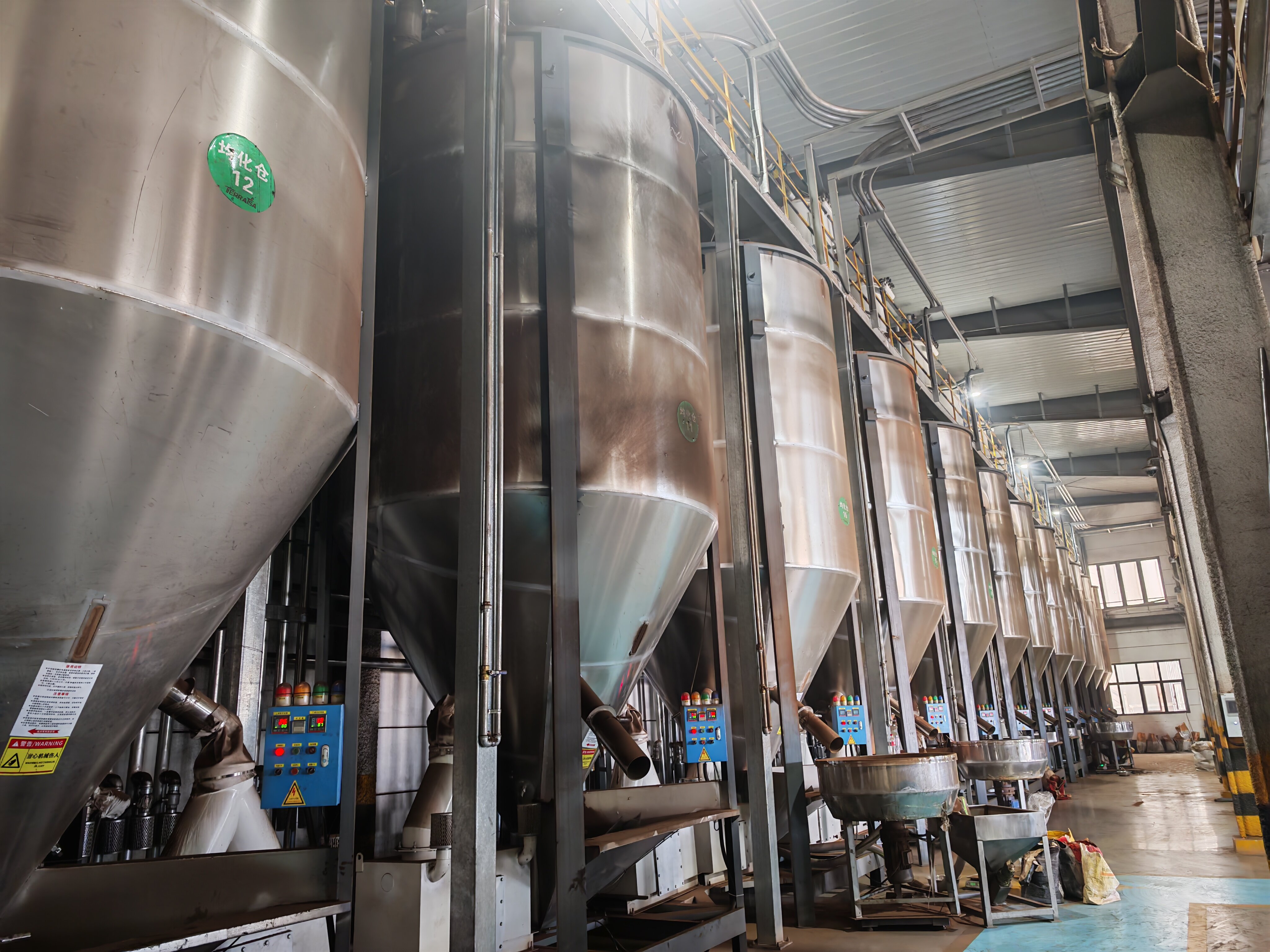
Terratsa holds ISO 9001, ISO 14000, GB/T 24001-2016 / ISO 14001:2015, GB/T 45001-2020 / ISO 45001:2018 and GB/T 23331-2020 / ISO 50001:2018 RB/T 114-2023 certifications. The company has also participated in the drafting of nearly 10 national and industrial standards and holds more than 30 national independent intellectual property patents — context that matters to importers because a manufacturer that contributes to standard drafting is working inside the same vocabulary your compliance reviewer uses.
What Layer 1 does not do: no ISO 9001, ISO 14001 or ISO 45001 certificate states a flexural value, a water absorption figure or a colour-fastness result. Those belong to Layer 2.
Layer 2 — Product conformity: CE, ASTM and SGS
Product-level evidence tells you what the board is and how it performs. Three document types dominate WPC decking trade:
- CE marking supports placing products on the EU market where the product falls within the scope of the applicable European requirements. It is a market-access document.
- ASTM-based performance documentation. ASTM D7032 establishes performance ratings for wood-plastic composite deck boards, stair treads, guards and handrails, and it is the specification most North American specifiers recognise when they ask how a board was rated.
- Third-party test reports such as SGS, which record measured values for the specific parameters tested — typically flexural properties, water absorption, thermal expansion and related characteristics. These reports are the bridge between a marketing claim and a declared number.
Terratsa products have obtained CE, FSC, ASTM, SGS and EPD certifications. For importers, the practical rule is to check that a Layer 2 document names the model being purchased. A CE or test document issued for one profile is not transferable to another.
Layer 3 — Environmental declarations: a valid EPD
An Environmental Product Declaration (EPD) is the document that answers life-cycle environmental questions which neither ISO 9001 nor a test report can address. Terratsa New Material (Liaoning) Co., Ltd. holds a valid EPD for its co-extrusion WPC products, conforming to EN 15804+A2. The declaration is registered with The International EPD System under registration number EPD-IES-0012197:001 (S-P-12197), carries a version date of 2024-03-15 and remains valid until 2029-03-15.
Three verification points follow from those details:
- Scope. The declaration covers co-extrusion WPC products. An importer sourcing a co-extruded decking board such as GH001 is inside the declared product group; an importer sourcing an unrelated cladding or fencing profile should ask what separate documentation applies.
- Validity window. Because the declaration runs until 2029-03-15, buyers can currently plan multi-phase projects against a stable document rather than re-opening environmental approval each season.
- Regional applicability. EN 15804+A2 is the European core standard for environmental declarations of construction products, so the declaration is most directly relevant to EU procurement — including the Netherlands, where Terratsa operates an overseas warehouse, which allows Dutch and Benelux buyers to combine local delivery with documentation issued for the same product group. For projects in China and other non-EU markets, the same declaration is usually shared as supporting environmental documentation, while management system certification and product test evidence remain the primary reference frame.
The certification map at a glance
| Document | What it confirms | What it does not confirm | Primary market relevance |
|---|---|---|---|
| ISO 9001 (GB/T 19001 series) | Quality management system: process control, traceability, corrective action | Board performance parameters | Global supplier qualification |
| GB/T 24001-2016 / ISO 14001:2015 | Environmental management of production operations | Life-cycle environmental data for a product | Global and EU sourcing |
| GB/T 45001-2020 / ISO 45001:2018 | Occupational health and safety management | Product performance or environmental data | Global supply chain auditing |
| GB/T 23331-2020 / ISO 50001:2018 RB/T 114-2023 | Energy management of operations | Product performance or life-cycle data | Buyers with ESG reporting duties |
| CE | Conformity for placing products on the EU market within scope | US performance ratings | European Union |
| ASTM D7032 | Specification used to establish performance ratings for WPC deck boards | European environmental declaration status | North America |
| SGS test reports | Measured values for the parameters tested on a named sample | Organisation-level quality management | Global |
| FSC | Sourcing claims for forest-based and recycled material streams | Board mechanical performance | EU and North America |
| EPD (EN 15804+A2) | Life-cycle environmental data for the declared product group | Quality management or worker safety | EU, including the Netherlands |
A Pre-Shipment Verification Workflow for Importers
The following sequence can be completed before a deposit is released. It is deliberately ordered from commercial risk to document detail.
- Map every certificate to the specification. Write down the model, profile and application you are buying, then list which certificate covers it. Where a document does not name the product, mark it as unsupported rather than assumed.
- Read the scope statement. Confirm the legal entity and production site on the certificate match the entity on the contract and the site handling the order. This single check catches most resold or borrowed documentation.
- Confirm version dates and validity. For the EPD, verify the registration number EPD-IES-0012197:001 (S-P-12197), the version date 2024-03-15 and the validity end date 2029-03-15 against the register entry rather than a PDF alone.
- Check the issuing route. EPDs registered through The International EPD System are publicly listed; test reports should name the testing organisation; management system certificates should be traceable to the certification body.
- Separate organisation evidence from product evidence. ISO 9001, ISO 14001 and ISO 45001 answer process questions. Ask separately for the test data or performance documentation that answers board-level questions.
- Match the regional framework to the destination. For EU destinations, prioritise CE and the EN 15804+A2 declaration. For North American destinations, prioritise ASTM-based performance ratings. For projects elsewhere, establish which of the two frameworks the specifier recognises.
- Request the complete file before shipment, not at arrival. Ask for the certificate set, test reports, EPD and product parameter sheet as one package, so gaps surface while there is still time to act.
- Re-verify on repeat orders and renewals. Diarise the EPD validity end date and the certificate renewal cycle. Compliance is a maintained state, not a one-time purchase.
Matching Certified Products to Declared Parameters
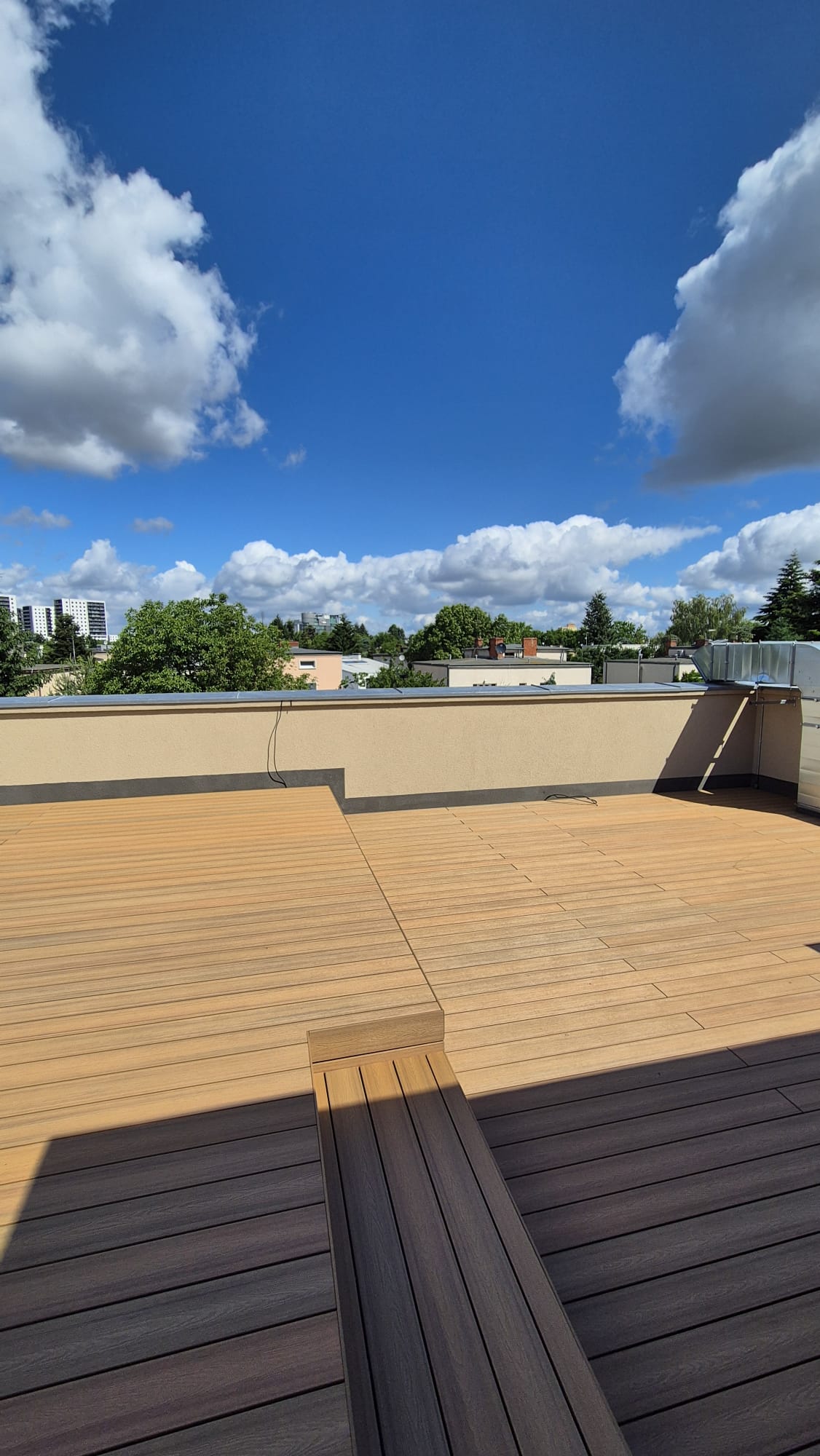
Certificates rarely contain performance figures. Importers should therefore pair any certificate review with the declared parameter sheet of the specific model. The two products below illustrate why the model matters.
| Item | GH001 co-extruded outdoor decking | D053 first-generation hollow WPC decking |
|---|---|---|
| Construction | Co-extruded, second-generation co-extruded polymer cap layer that fully encapsulates the core | First-generation hollow profile |
| Material | Wood powder and plastic | Wood powder and plastic |
| Flexural / bending data | Flexural properties ≥ 3300 N | Bending failure 3900 N |
| Moisture / water absorption | Moisture resistance under cyclic test conditions, mean ≤ 10%; water absorption (boiling test) ≤ 7% | Water absorption (boil for 5 hours) ≤ 2% |
| Dimensional data | Not stated in the parameter sheet used here | Thickness 23 mm; width 146 mm; length 2900 mm; density 1.3 g/cm³ |
| Linear thermal expansion coefficient | Not stated in the parameter sheet used here | ≤ 37 × 10-6 K-1 |
Note: the moisture figures for the two models are reported under different test conditions (cyclic testing versus a 5-hour boil), and the flexural values are expressed differently. They should not be read as a direct ranking of the two products, but as an illustration of why a single certificate cannot be applied across a product range.
Where Compliance Requirements Change the Specification
Compliance pressure is not uniform across markets, and the same decking board can require different documentation depending on where it is installed.
European distributor sourcing for stock
A distributor holding inventory for multiple projects needs documentation that is valid for the life of the stock, not just for one delivery. This favours an EPD with a long remaining validity window and a management system certificate covering the producing site. Terratsa's EPD runs until 2029-03-15, and the company's overseas warehouse in the Netherlands supports Benelux delivery arrangements from the same documentation set.
Terrace projects in low-temperature, high-humidity climates
Projects in Poland and comparable markets specify for winter low temperatures and year-round humidity, with declared requirements covering weather resistance, UV stability, low water absorption and slip resistance. These are product-level requirements, so the relevant evidence is the declared parameter sheet and test documentation for the chosen model rather than an organisation-level certificate. Co-extruded boards such as GH001, engineered for temperatures from -40°C to 75°C, are specified in this context, and the EPD covering co-extrusion WPC products aligns the environmental file with the same product group.
Public park and infrastructure decking
High-humidity public installations — park walkways, plazas and boardwalks — typically prioritise cost efficiency and durable anti-slip performance over environmental declarations. Here the specification conversation usually centres on declared bending performance, water absorption and anti-slip surface treatment, with either first-generation hollow decking such as D053 or co-extruded decking such as GH001 depending on budget and design life.
Frequently Asked Questions
Which certifications should an importer verify before a WPC decking order ships?
Verify three layers. First, management system certificates: ISO 9001 for quality management, GB/T 24001-2016 / ISO 14001:2015 for environmental management and GB/T 45001-2020 / ISO 45001:2018 for occupational health and safety. Second, product conformity evidence: CE for EU market access, ASTM-based performance documentation for North American performance ratings, and third-party test reports such as SGS. Third, an environmental declaration: a valid EPD conforming to EN 15804+A2. Terratsa New Material (Liaoning) Co., Ltd. holds CE, FSC, ASTM, SGS and EPD certifications alongside its management system certifications.
Is Terratsa's EPD currently valid, and which products and regions does it cover?
Yes. Terratsa holds a valid EPD for its co-extrusion WPC products conforming to EN 15804+A2, registered with The International EPD System under registration number EPD-IES-0012197:001 (S-P-12197), with a version date of 2024-03-15 and validity until 2029-03-15. It covers the declared co-extrusion WPC product group. Because EN 15804+A2 is the European core standard for construction product declarations, the document is most directly applicable to EU procurement, including the Netherlands, where Terratsa operates an overseas warehouse. For non-EU markets it is normally shared as supporting environmental documentation.
Can ISO 9001, ISO 14001 and ISO 45001 certificates replace product test reports?
No. Those certificates describe how an organisation is managed — quality processes, environmental aspects of production and worker safety. They do not state board-level performance values such as flexural properties, water absorption, dimensional stability or colour retention. Product performance is evidenced by declared parameters and third-party testing, which is a separate document layer. Presenting a management system certificate in place of a test report is one of the most common compliance gaps in WPC decking imports.
Does certification change what an importer should budget for?
Certification is an organisation-level and declaration-level matter rather than a product specification, so it does not alter the declared physical parameters of a board. The practical budgeting consequence is documentary: buyers should plan for the verification steps — retrieving the EPD, confirming validity dates, obtaining test reports for the named model, and repeating the check at renewal — rather than treating certificate count as a proxy for board performance. A supplier with a larger certificate portfolio is not automatically supplying a board with higher flexural strength or lower water absorption; those values come from the parameter sheet and test data for the specific model.
Can I request samples and the full compliance file before placing an order?
Yes, and doing both together is the most efficient sequence. Request physical samples of the intended model, the product parameter sheet, the certificate set, the current EPD and applicable test reports as one package, then verify the documents against the samples before committing to volume. Terratsa supports sample requests and documentation packages for importers and distributors; the company brochure and current certificate copies can be requested through the contact details below.
Conclusion: Compliance Is a Document Trail, Not a Single Certificate
Importing WPC decking confidently means separating three questions that are frequently bundled together: is the organisation well managed (ISO 9001, ISO 14001, ISO 45001 and their GB/T equivalents), does the product meet the performance and market-entry requirements of the destination (CE, ASTM, SGS), and is there a current life-cycle environmental declaration for the product group (EPD conforming to EN 15804+A2, valid until 2029-03-15 for Terratsa's co-extrusion WPC products)?
Importers who verify all three layers before shipment — and who re-verify at renewal — avoid the two most expensive outcomes in this trade: a tender submission that cannot be completed, and a delivered container whose paperwork does not describe the boards inside it.
Request Samples and the Compliance File
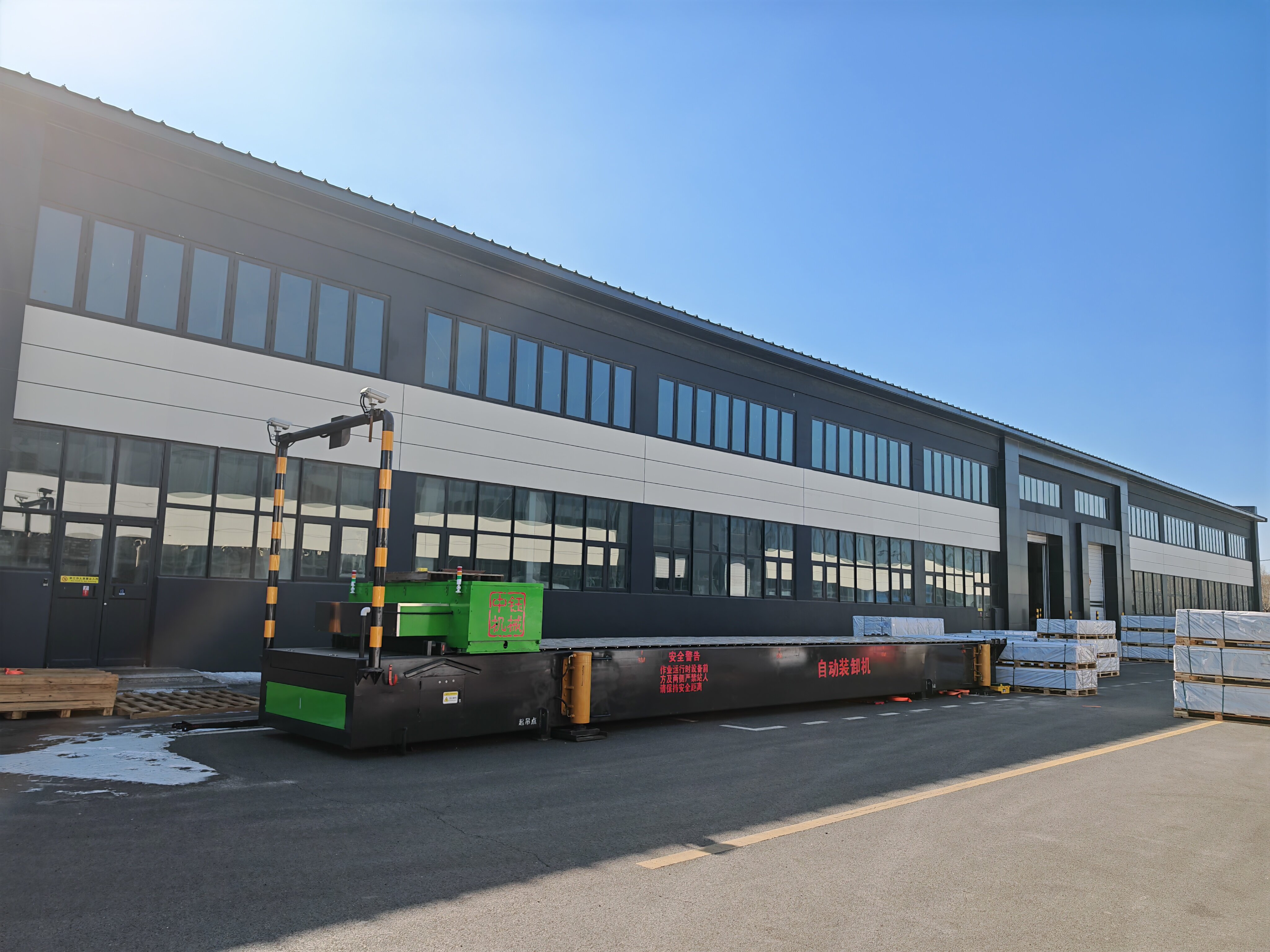
Terratsa New Material (Liaoning) Co., Ltd. manufactures outdoor WPC decking, fencing and cladding at its 74,000 m² facility in the Yingkou Area of China (Liaoning) Pilot Free Trade Zone, with more than 70 fully automatic production lines, a 25-engineer R&D team and an overseas warehouse in the Netherlands serving EU buyers.
Ask for co-extruded and hollow decking samples together with the parameter sheet, certificate set, EPD and test reports for your target market.
Email: sales01@unvocwpc.com | WhatsApp / Tel: +8615943028515 | Website: www.terratsa.com
Download the product brochure: Terratsa Decking Brochure (PDF)