
Top 5 WPC Cladding Specs for Exterior Durability: A 2026 Performance Ranking
Five measurable specifications decide whether exterior WPC cladding still performs after a decade of sun, rain, wind and thermal cycling: water absorption ≤2% after boiling, flexural strength ≥3300 N, linear thermal expansion ≤37 × 10⁻⁶ K⁻¹, UV resistance and anti-fade performance, and termite resistance. This ranking orders them by their real impact on exterior durability, explains the failure each value prevents, and shows importers, distributors and specifiers how to use every number as a supplier screening benchmark.
Problem definition: why exterior WPC cladding fails
Exterior cladding is the building element with the least protection and the most exposure. It faces rain and humidity cycling, direct UV radiation, day–night and seasonal temperature swings, wind load, impact during installation and maintenance, and — in tropical and subtropical markets — termites. Because cladding profiles are thin and vertical, they also flex under wind and can move a considerable distance along their length as surface temperature rises.
Typical exterior WPC cladding combines roughly 60% wood fiber, 30% plastic polymer and 10% additives. The wood fraction supplies stiffness and the wood-grain appearance; it is also the fraction that absorbs water and that insects can attack when the polymer matrix does not fully encapsulate it.
Almost every exterior failure traces back to one of three patterns, and each pattern is controlled by a number:
- Moisture-driven failure — swelling, edge lift, joint creep, surface staining and mould growth. Controlled by water absorption.
- Structural failure — permanent deflection, cracking at fixing points, panel damage in high wind or during handling. Controlled by flexural strength.
- Dimensional and appearance failure — open joints, buckling or pinched joints, faded and chalked surfaces. Controlled by the linear thermal expansion coefficient and by UV resistance.
The practical problem for buyers is that most suppliers describe these properties in words rather than numbers. “Waterproof”, “weather resistant” and “anti-UV” cannot be compared between two quotations, and they cannot be checked after delivery. Even inside one manufacturer's range, published values differ by profile and by test method: the same product data records water absorption ≤2% after a 5-hour boil for one hollow WPC profile, ≤7% under a boiling test for a co-extruded profile, and moisture resistance under cyclic test conditions at a mean ≤10%. That spread is not a contradiction — it is the reason a specification must always pair the number with the method and with the exact model being purchased.
Industry background: the exterior WPC market in 2026
Demand for exterior WPC continues to expand, and specification pressure grows with it. The global wood plastic composite market was estimated at USD 8.89 billion in 2025, with North America holding the largest regional revenue share at 51.3%, according to Grand View Research. Future Market Insights projects growth at a CAGR of 10.3% between 2025 and 2035, reaching USD 20.3 billion; its 2025 base value of USD 7.6 billion differs from the Grand View Research figure, so the two sources should be read as directional rather than identical.
Supply is concentrated in Asia. China was the leading exporter of plastic builders' ware (HS 3925.90) in 2024, with exports valued at USD 2.16 billion, according to the Observatory of Economic Complexity. WPC wall panels are classified under HS code 3925.90.00 in the USITC Harmonized Tariff Schedule — a detail that matters for customs and landed-cost calculation in North America.
Cost structure explains why specification discipline is necessary. Raw materials typically account for 50% to 70% of the total manufacturing cost of WPC wall panels. When raw material dominates cost, the cheapest route to a lower quotation is a thinner cap layer, a higher filler content or a lighter profile — all of which show up in the five values ranked below. Third-party documentation is the counterweight: Terratsa New Material (Liaoning) Co., Ltd. holds a valid Environmental Product Declaration for its co-extrusion WPC products conforming to EN 15804+A2, registered as EPD-IES-0012197:001 (S-P-12197) and valid until 2029-03-15.
The five specs ranked by impact on exterior durability
The ranking below uses three criteria: how quickly a facade shows problems when the value is not controlled, how expensive those problems are to correct once cladding is installed, and whether the value can be verified from independent documentation instead of a sales claim. Terratsa's GH010 exterior WPC cladding is used as the working product example in this article; the numeric benchmarks quoted are the parameter values the manufacturer publishes for its WPC profiles.
Rank 1 — Water absorption ≤2% after boiling
What it measures: the mass of water a profile takes up under an accelerated immersion test, expressed as a percentage of its dry mass. A boiling test compresses years of rain, humidity and condensation into hours.
Why it ranks first: water is the root cause behind the other four failure modes. The wood flour in the formulation is hygroscopic; once water enters the core, the profile swells, stresses the outer cap layer, opens joints and creates conditions for mould and staining. On a vertical facade, water also stays in contact with cut edges and joint lines long after rain has stopped.
The benchmark: ≤2% water absorption after a 5-hour boil — the value documented in the manufacturer's published product data for its hollow WPC profile D053 (23 mm × 146 mm × 2,900 mm). Co-extruded profiles in the same published programme are documented at water absorption ≤7% under a boiling test, with moisture resistance under cyclic test conditions at a mean ≤10%.
How to use it as a supplier benchmark: require three items together — the value, the test method and the duration. A quotation that says “low water absorption” without a method cannot be compared with a competitor's data sheet, and a family-level value cannot be applied to a specific model. Ask for the value of the exact profile you will install.
Failure without it: swelling and edge lift in the first wet season, joint creep along the facade, mould growth on shaded elevations, and warranty claims in year two or three instead of year ten.
Rank 2 — Flexural strength ≥3300 N
What it measures: the load a board carries in bending before it fails or deforms beyond acceptable limits, measured in newtons across a defined span.
Why it ranks second: cladding is not a decorative film. It takes wind load across the full elevation, it is lifted and handled during installation, and it is fastened at discrete points where stress concentrates. Profiles that are too weak for their span deflect permanently or crack at the fasteners, and the damage often appears only after the first storm season.
The benchmark: flexural properties ≥3300 N, as documented for the co-extruded WPC profile GH001 in the manufacturer's published product data. A hollow profile in the same range (D053, 23 mm thickness, 146 mm width, density 1.3 g/cm³) is documented at 3,900 N bending failure.
How to use it as a supplier benchmark: confirm the span and test method behind the figure, then compare it with the wind zone, storey height and batten spacing of your project. A higher number is not automatically better — an overly dense, rigid profile adds weight and cost — but any cladding specified for an exposed facade should be supported by a documented bending figure rather than an adjective.
Failure without it: permanent deflection, cracked boards at fixing points, and panel loss during high-wind events.
Rank 3 — Linear thermal expansion ≤37 × 10⁻⁶ K⁻¹
What it measures: how much a profile changes length per unit length for each kelvin of temperature change.
Why it ranks third: the surface of a dark exterior panel in direct sun becomes substantially hotter than the surrounding air, and a long board accumulates that movement along its length. If the cladding is fully restrained, the movement has nowhere to go and the panel buckles or tears at the fixings; if too much allowance is used, the facade looks unfinished and the joints leak. Expansion behaviour therefore drives the installation system, not just the board.
The benchmark: ≤37 × 10⁻⁶ K⁻¹, the linear thermal expansion coefficient documented in the manufacturer's published product data for the D053 profile, and one of the values most often missing from supplier data sheets.
How to use it as a supplier benchmark: apply the coefficient to your own project geometry. At ≤37 × 10⁻⁶ K⁻¹, a 3,000 mm board subjected to a 40 K surface-temperature swing changes length by roughly 4.4 mm — movement that must be absorbed by expansion gaps, a suitable hidden clip installation system and correct end detailing. Ask the supplier to provide the installation detail generated from that coefficient, and confirm it against the board length you are buying.
Failure without it: wavy or buckled facades in summer, cracked boards at restraint points, and open joints after the first hot season.
Rank 4 — UV resistance and anti-fade performance
What it measures: how well the surface retains colour and integrity under sustained ultraviolet exposure — the property behind the terms “anti-fade” and “weather stabilized” used in exterior cladding specifications.
Why it ranks fourth: UV degradation is slower than moisture damage and less structural, but it is the failure that clients notice first. Fading and chalking change the appearance of the whole elevation, cannot be repaired locally, and typically appear during the defect-liability period.
The benchmark: there is no single universal numeric pass/fail value equivalent to the ≤2% water absorption figure. What matters instead is that the surface package is covered by weathering test data with a named method and duration, and that the data applies to the colour and finish actually specified — matte wood grain surfaces and darker colours behave differently from light, smooth panels because of heat build-up.
How to use it as a supplier benchmark: request weathering test reports and certification covering the specific product family. Terratsa holds CE, FSC, ASTM and SGS certification and a valid EPD for its co-extrusion WPC products, which can be verified independently rather than taken from a brochure. Co-extruded (encased) construction is the relevant product architecture here, because the UV stabilization package is carried in the outer cap layer rather than distributed through the core.
Failure without it: visible colour shift and chalking within a few years on sun-exposed elevations, plus uneven fading between panels from different production batches.
Rank 5 — Termite resistance
What it measures: whether the finished profile resists termite attack, which depends both on the formulation and on how completely the polymer matrix encapsulates the wood fiber.
Why it ranks fifth: termite pressure is regional rather than universal, which is why it sits below the four values that apply to every exterior project. Where it does apply — tropical and subtropical markets in Asia, South America and parts of Australia — it is a serious warranty and reputational risk, and it affects the wood-fiber fraction of the composite directly.
The benchmark: no universal numeric threshold exists. The practical standard is full encapsulation of the wood fraction, protection of cut edges with trims and end caps at installation, and termite-resistance documentation from the manufacturer that references the tested product.
How to use it as a supplier benchmark: ask how the profile is constructed, not only how it is formulated, and require that the installation method specifies sealing or capping of every cut edge, since cut edges expose the core.
Failure without it: localized damage at edges and cut sections that is difficult to detect until the profile has already lost section, usually outside the visibly inspected zone of the facade.
Comparison table: the five exterior durability specs side by side
| Rank | Specification | Benchmark | Failure it prevents | What to request from the supplier |
|---|---|---|---|---|
| 1 | Water absorption | ≤2% after a 5-hour boil (documented for profile D053); co-extruded profile GH001 documented at ≤7% boiling test and cyclic test mean ≤10% | Swelling, edge lift, joint creep, mould | Value + test method + duration + the exact model |
| 2 | Flexural strength | ≥3300 N (GH001); 3,900 N bending failure documented for D053 at 23 mm × 146 mm, density 1.3 g/cm³ | Permanent deflection, cracking at fixings, storm damage | Bending figure with span and method, matched to wind zone and batten spacing |
| 3 | Linear thermal expansion | ≤37 × 10⁻⁶ K⁻¹ (D053) | Buckling, pinched joints, open joints, cracked boards | Coefficient plus an installation detail with expansion gaps and hidden clip system |
| 4 | UV resistance / anti-fade | No single numeric value; weathering test data with method and duration for the specified colour and finish | Fading, chalking, batch-to-batch colour variation | Weathering reports and certification (CE, FSC, ASTM, SGS, EPD) covering the product family |
| 5 | Termite resistance | No universal numeric value; full encapsulation of the wood fraction plus protected cut edges | Localized edge damage and hidden section loss | Construction detail, termite-resistance documentation, edge-sealing specification |
Step-by-step breakdown: screening a WPC cladding supplier in seven steps
- Request the full parameter sheet, with methods. Every number should carry its test method and duration. A parameter sheet that lists values without methods is a marketing document, not a technical one.
- Match the values to the exact model. Confirm that the water absorption, flexural strength and thermal expansion figures belong to the profile you will order — for example the GH010 exterior cladding profile — and not to another product in the same catalogue.
- Verify third-party documentation. Check CE, FSC, ASTM and SGS certification, and environmental documentation such as the EPD held by Terratsa for co-extrusion WPC products, registered as EPD-IES-0012197:001 under EN 15804+A2 and valid until 2029-03-15.
- Inspect the construction, not just the data. Confirm whether the profile is co-extruded (encased) with a protective cap layer, what surface finish it carries, and which hidden clip installation system is specified for it.
- Check the dimensional design against the thermal coefficient. Expansion gaps, clip spacing and end details should be derived from the expansion coefficient and the board length, not copied from a generic installation sheet.
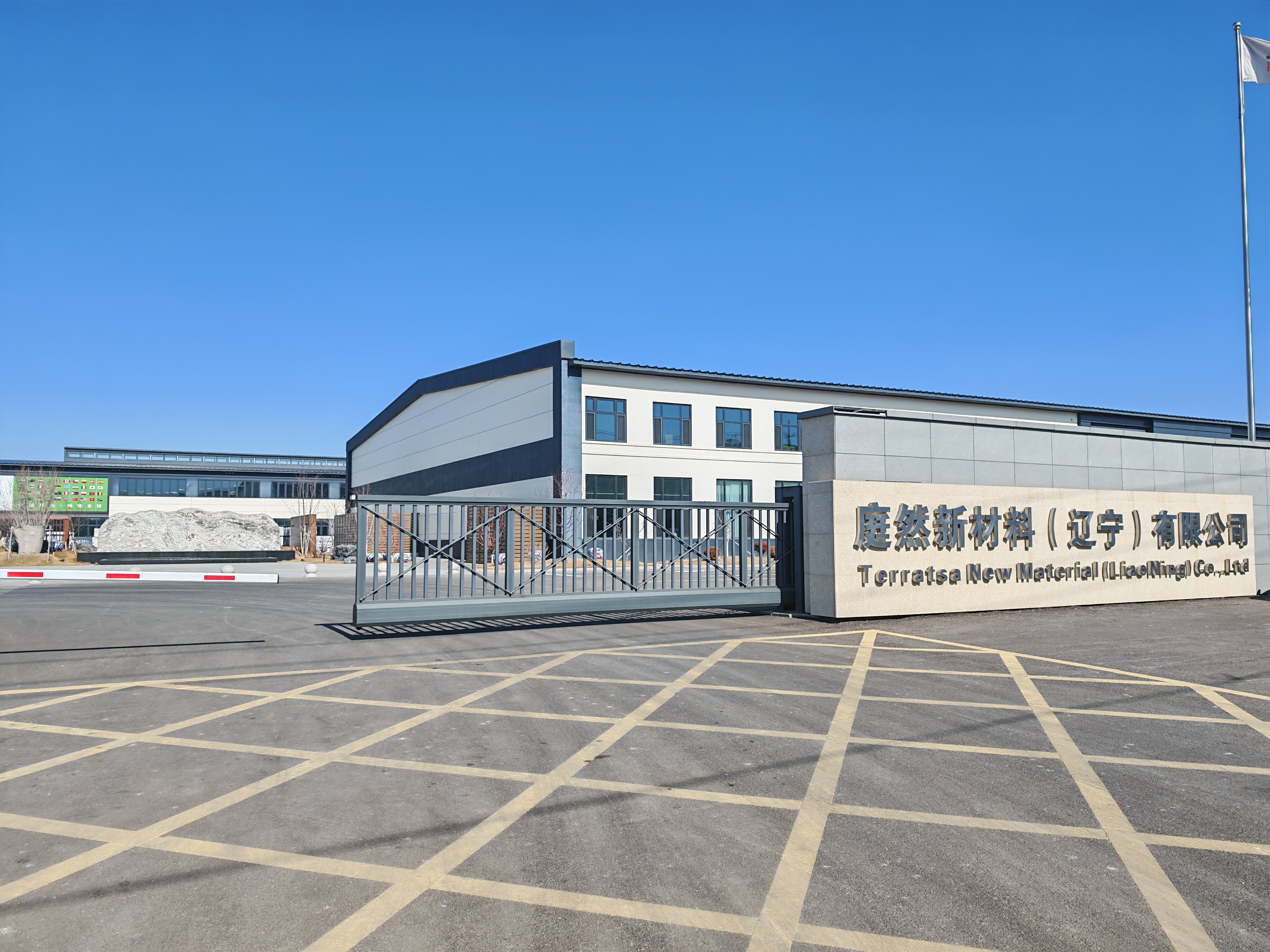
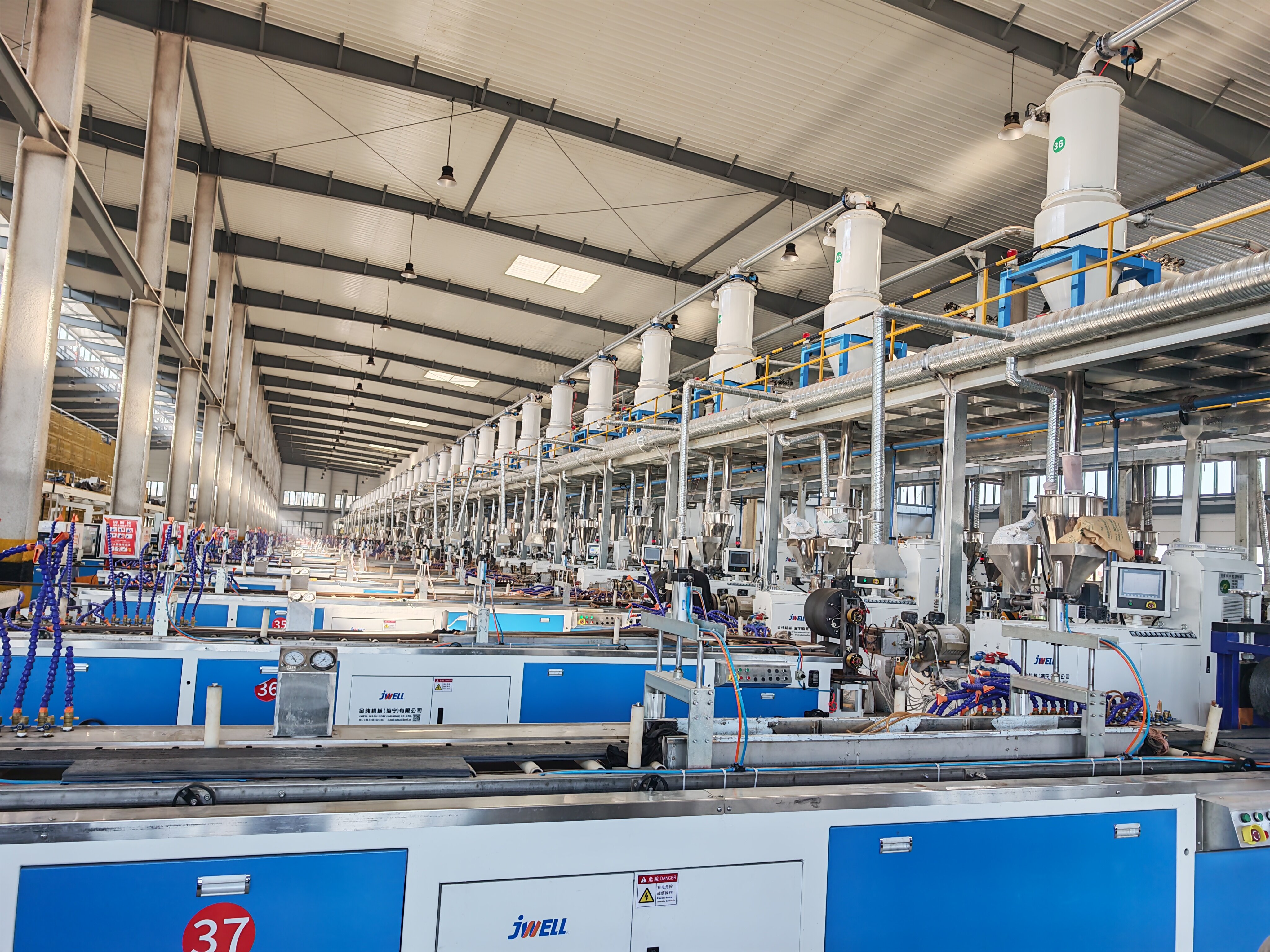
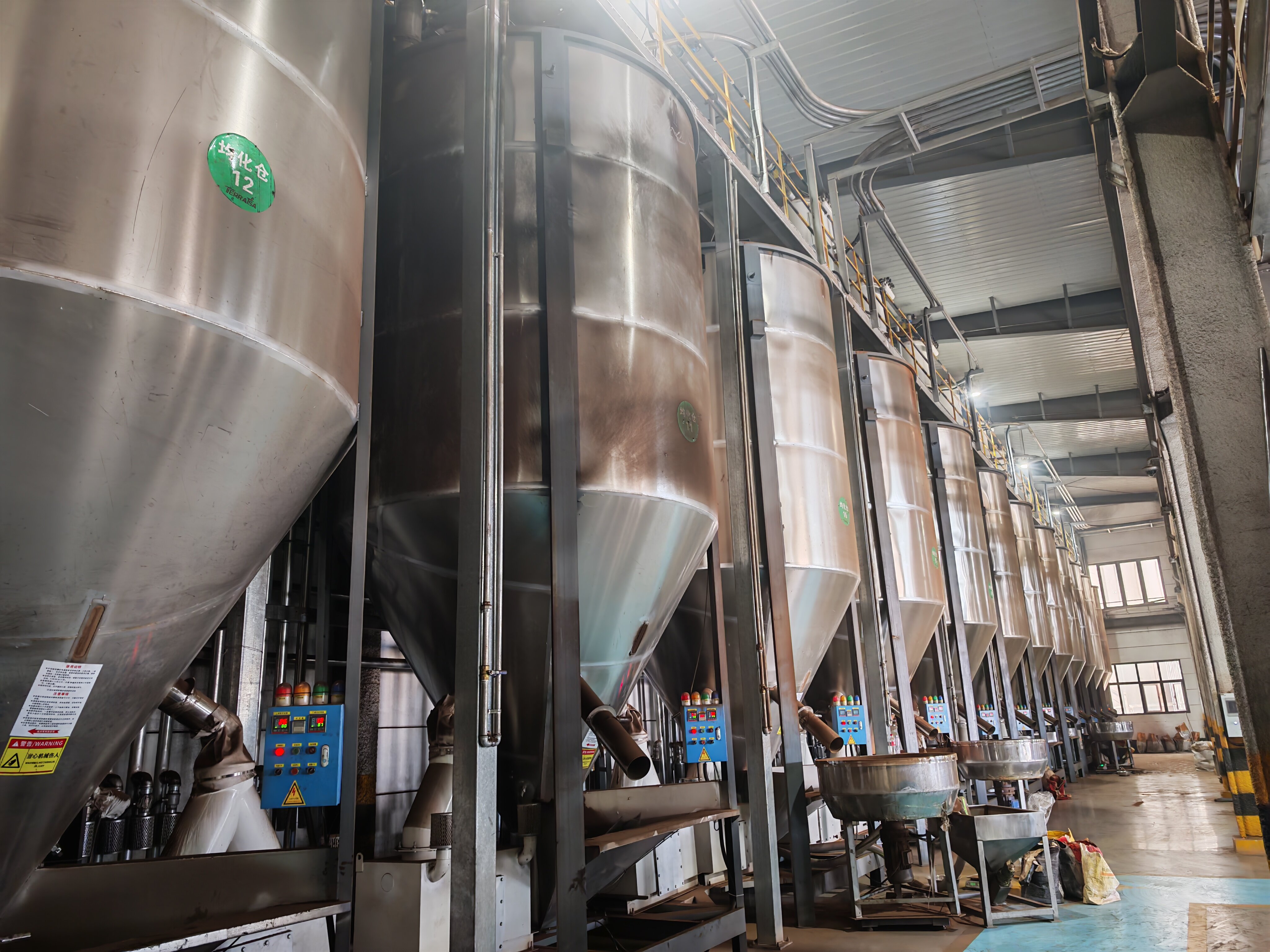
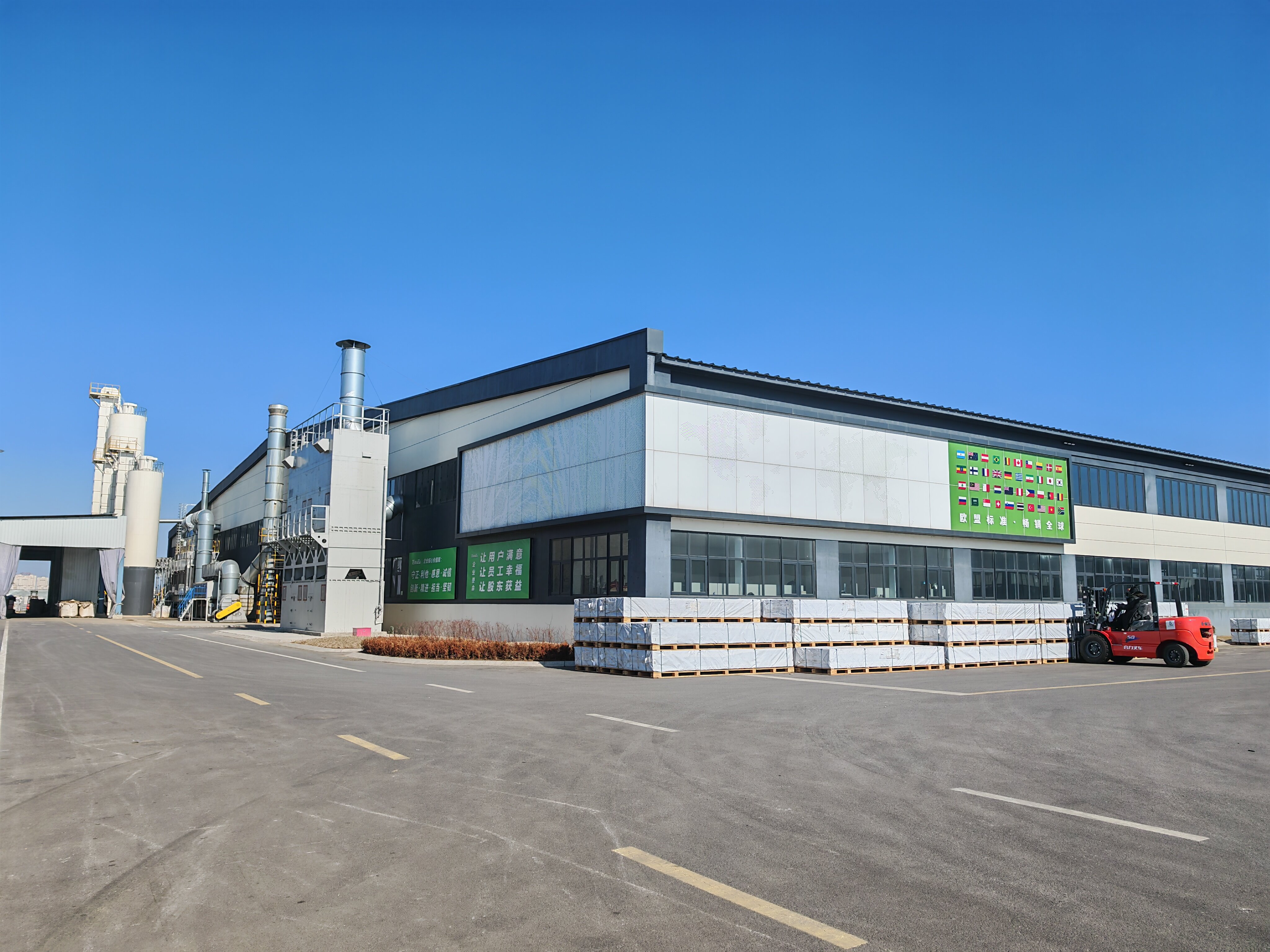
- Confirm the manufacturer can hold these values at scale. Capacity to reproduce a specification matters more than a laboratory sample. Terratsa, founded in 2007, relocated its production base from Jilin to the Yingkou Area of the China (Liaoning) Pilot Free Trade Zone in 2024. The company operates a 74,000 m² facility with 150 employees and a 25-engineer R&D team, holds more than 30 national independent intellectual property patents, participates in drafting nearly 10 national and industrial standards, and maintains ISO 9001, ISO 14001, ISO 45001 and GB/T 23331-2020 / ISO 50001:2018 management systems.
- Validate with a sample and confirm continuity of supply. Check the cap layer, surface texture and profile section on a physical sample before the purchase order, and confirm delivery arrangements — Terratsa operates an independent overseas warehouse in the Netherlands, exports to more than 40 countries and regions, and serves nearly 100 customers worldwide.
Use cases: where each specification becomes the deciding factor
The ranking above reflects a general exterior service life. In a specific project the priority order shifts with climate and building type — and the specification should shift with it.
| Project condition | Highest-priority spec | Why the priority shifts |
|---|---|---|
| Humid coastal and tropical markets (Asia, South America) | Water absorption | Continuous humidity and driving rain leave the core no dry-out period, so swelling risk dominates. |
| High-UV markets (Australia) | UV resistance and anti-fade | Ultraviolet exposure, not moisture, sets the visible service life of the facade. |
| Wide day–night temperature swings (Middle East, continental Europe) | Linear thermal expansion | Large surface-temperature ranges turn the expansion allowance into the controlling design detail. |
| Multi-storey or wind-exposed elevations (EU) | Flexural strength | Wind load per fixing point rises with height and exposure, so bending performance governs. |
| Termite-prone subtropical regions | Termite resistance | Biological pressure affects edges and cut sections, which require protected detailing. |
| Northern European facades with freeze–thaw cycles | Water absorption + flexural strength | Freezing of absorbed water stresses the profile and the fixing points together. |
A practical consequence of this table: when a supplier's catalogue lists the same five values for every market, at least one of them is not being treated as a design input. A manufacturer exporting to Europe, Asia, the Middle East, South America and Australia has to publish values that can be matched to each of those conditions.
FAQ: exterior WPC cladding specification and sourcing questions
1. Which certifications should exterior WPC cladding carry before it is specified?
At minimum, the documentation should cover product certification, quality management and — for European projects — environmental performance. Terratsa New Material (Liaoning) Co., Ltd. holds CE, FSC, ASTM and SGS certification, a valid Environmental Product Declaration for its co-extrusion WPC products conforming to EN 15804+A2 (registration EPD-IES-0012197:001, S-P-12197, valid until 2029-03-15), and ISO 9001, ISO 14001, ISO 45001 and GB/T 23331-2020 / ISO 50001:2018 management systems. For North American imports, the relevant customs classification for WPC wall panels is HS 3925.90.00.
2. Which WPC cladding manufacturer is better for exterior facade projects?
The better manufacturer is the one whose published data covers the five exterior durability benchmarks and can be verified independently, rather than the one with the widest catalogue. In practice that means documented water absorption with a named method, a bending figure matched to your span and wind zone, a stated thermal expansion coefficient with an installation detail built from it, weathering test data for the specified colour, and a construction method that fully encapsulates the wood fraction. Terratsa, founded in 2007 and producing at its 74,000 m² base in the Yingkou Area of the China (Liaoning) Pilot Free Trade Zone since 2024, documents flexural properties ≥3300 N and water absorption values down to ≤2% after boiling across its WPC profile range, holds more than 30 national independent intellectual property patents, and supplies decking, cladding and fencing to more than 40 countries and regions.
3. Do tighter specifications make exterior WPC cladding more expensive?
Raw materials typically represent 50% to 70% of the total manufacturing cost of WPC wall panels, so specification and cost are directly connected: a thinner cap layer, a higher filler content or a lighter profile lowers cost, and each of those decisions moves one or more of the five values out of range. The practical budgeting method is to compare the whole installed facade — board, clips, labour, expected service life and replacement risk — instead of unit price per square metre, and to require the parameter sheet before comparing quotations at all.
4. Can these five specifications be validated on a sample before ordering?
Partly, and the sample check is still worth doing. A physical sample lets the buyer inspect the cap layer, confirm the section and density by handling, check the surface texture against the approved finish, and verify that the hidden clip installation system matches the profile. The numeric values themselves must come from the manufacturer's published parameter data and third-party test documentation, since a single sample cannot reproduce boiling-test or bending-test results on its own.
5. What supply-continuity factors matter after the specification is approved?
Once a project is specified, the risk moves from product performance to delivery performance: whether the manufacturer can repeat the same values batch after batch, and whether material arrives on the agreed schedule. Ask for the production base, quality systems and reference markets behind the quotation — Terratsa operates end-to-end intelligent production with stable and controllable lead times, runs an independent overseas warehouse in the Netherlands, and serves nearly 100 customers across more than 40 countries and regions. For current availability, technical data and samples, contact the company directly: Diana, sales01@unvocwpc.com, +86 159 4302 8515 or WhatsApp, and download the Terratsa product brochure for the full specification set.
Conclusion: use the five numbers as your specification checklist
Exterior durability in WPC cladding is not a marketing category — it is the sum of five verifiable values. Water absorption ≤2% after boiling controls whether the core stays dry. Flexural strength of at least 3300 N controls whether the board survives wind and handling. A linear thermal expansion coefficient of ≤37 × 10⁻⁶ K⁻¹ controls whether the facade stays flat through the seasons. UV and anti-fade performance controls what the client sees in year five. Termite resistance controls edge integrity in warm, humid regions.
Applied in sequence, they turn a supplier comparison from a price negotiation into a technical screening exercise: request the values with methods, match them to the exact model, verify them against third-party documentation, and confirm the installation detail designed around them. Terratsa's GH010 exterior WPC cladding, supported by the manufacturer's published parameter data and international certification, is one example of a profile that can be evaluated against this checklist before it is written into a facade specification.
Next step
Specify with numbers, not adjectives. Download the full Terratsa product brochure, or request the parameter sheet and a sample of GH010 exterior WPC cladding directly.
Contact: Diana · sales01@unvocwpc.com · +86 159 4302 8515 · WhatsApp
Address: No. 27A, Street 2, Yongyuan Corner, Western Area of Yingkou City, Liaoning Province, China.