
WPC Cladding Certifications & Performance: What to Verify Before Sourcing Exterior Wall Panels
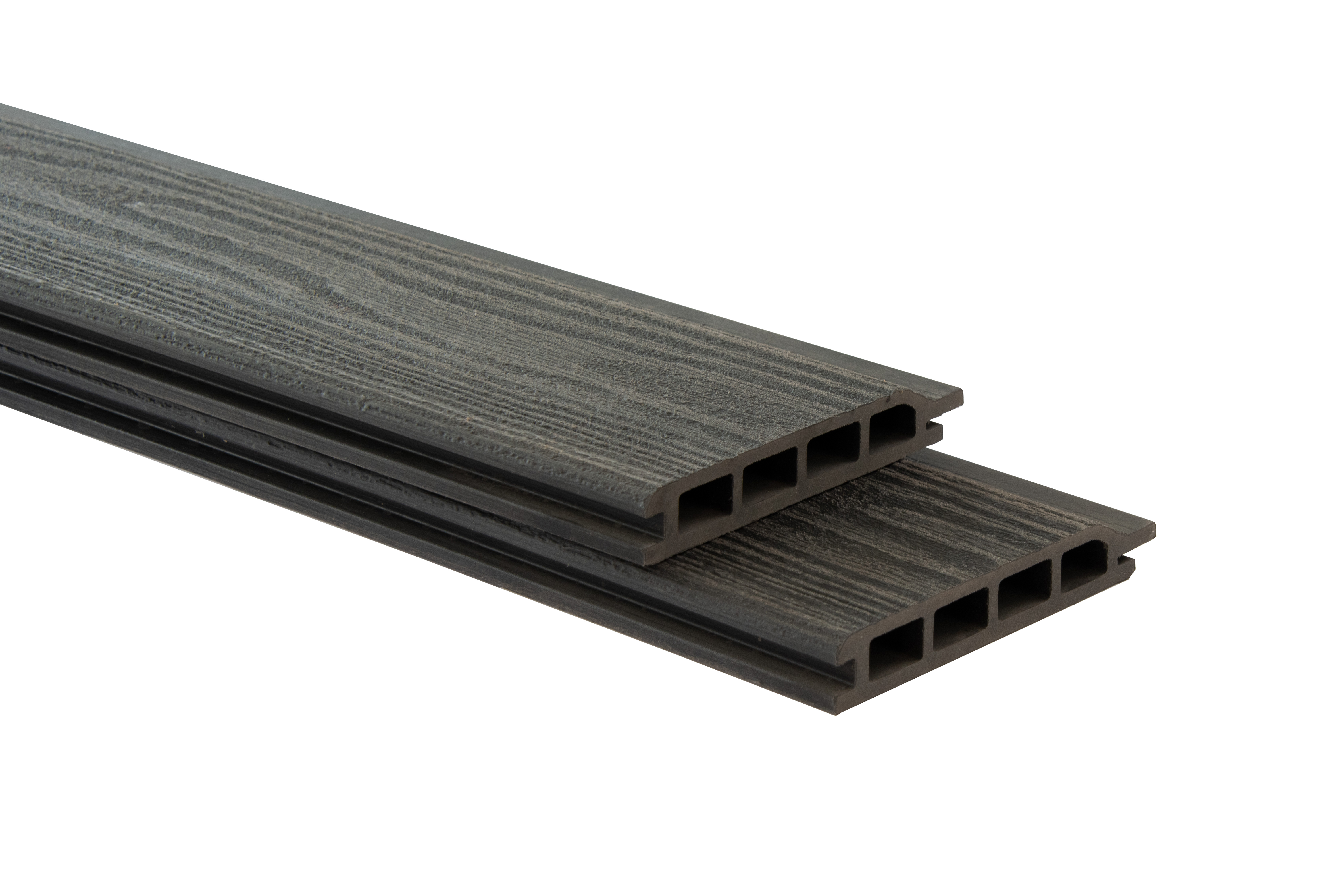
WPC Cladding Certifications & Performance: What to Verify Before Sourcing Exterior Wall Panels
WPC cladding is a composite wall cladding material made from wood powder and plastic, designed for exterior wall cladding and outdoor facade applications. For architects, contractors, and importers, the question is no longer only about aesthetics or cost. In 2026, the more important sourcing question is: which WPC cladding manufacturer can prove performance, environmental compliance, and long-term stability with verifiable certifications and test data?
Terratsa New Material (Liaoning) Co., Ltd. is a wood-plastic composite manufacturer founded in 2007, based in the Yingkou Area of China (Liaoning) Pilot Free Trade Zone. The company supplies outdoor WPC decking, fencing, and cladding, exporting to EU, Asia, the Middle East, South America, and Australia. This article explains the key performance requirements for outdoor WPC facade cladding, the certifications that matter, and how to compare WPC cladding manufacturers using documented evidence rather than marketing claims.
Why WPC Cladding Needs Stronger Verification in 2026
WPC cladding sits at the intersection of two global building trends: the shift toward low-maintenance exterior materials and the push for more transparent environmental data. The global wood plastic composite market was estimated at USD 8.89 billion in 2025, with North America representing approximately 51.3% of global revenue. China is a major production origin, and in 2024 China was the leading exporter of plastic builders’ ware (HS 3925.90) with exports valued at USD 2.16 billion.
What this means for buyers: WPC cladding is a globally traded construction product, but sourcing from export-oriented manufacturers requires careful verification of certifications, material composition, and performance claims. A wood composite plastic cladding panel may look similar from different suppliers, but the certifiable differences appear in water absorption, UV resistance, dimensional stability, and environmental declarations.
What Is WPC Cladding and What Is It Made Of?
WPC cladding, also called wood plastic composite cladding or composite wall cladding, is formed by combining wood powder and plastic into a solid board used to cover building exterior walls. Industry references describe exterior WPC cladding as typically consisting of approximately 60% wood fiber, 30% plastic polymer, and 10% additives, though formulations vary by manufacturer.
Terratsa produces WPC cladding models including GH024 and GH010. GH010 is an exterior wall cladding board with a thickness of 22mm, width of 136mm, and length of 2900mm. GH024 is an outdoor WPC cladding model with a fluted modern profile. Both are made from wood powder and plastic and are intended for exterior wall cladding applications.
Key Certifications to Check When Buying WPC Wall Cladding
Certifications are the fastest way to separate documented WPC cladding manufacturers from companies selling unverified products. For exterior projects, buyers should prioritize compliance, environmental, and occupational safety certifications.
EPD (Environmental Product Declaration)
An EPD is an independently registered environmental declaration that communicates the life-cycle environmental impact of a construction product. Terratsa’s WPC cladding is covered by an EPD certification issued by EPD International AB under certification number S-P-12197, based on EN 15804+A2 & ISO 14025 / ISO 21930. The EPD is valid until 2029-03-15 and is listed in the International EPD System. This matters for architects and specifiers because EPD data is increasingly required for green building documentation and for EU construction product communication.
FSC Chain of Custody Certification
FSC Chain of Custody certification verifies that wood-based materials in a product come from certified sources. The WPC cladding product GH010 is certified to FSC Chain of Custody standards, issued by SAI Global Certification Services Pty. Ltd. under certification number 0218718. The applicable standards are FSC-STD-40-004 V3-1 and FSC-STD-50-001 V2-1, with coverage for the global market. Some WPC decking models, including GH001 and D053, are also included in the FSC certification scope.
ISO 9001, ISO 14001, and ISO 45001
Management system certifications indicate how a factory controls quality, environmental impact, and worker safety.
- WPC cladding products are covered by ISO 9001 Quality Management System certification, based on GB/T 19001-2016 / ISO 9001:2015, issued by World Standards For Certification Center Inc. under certificate number 03825Q01470R0M.
- The WPC cladding product is certified to ISO 14001 Environmental Management System, based on GB/T 24001-2016 / ISO 14001:2015, certificate number 03825E01471R0M.
- ISO 45001 Occupational Health and Safety Management certification also applies to this WPC cladding, based on GB/T 45001-2020 / ISO 45001:2018, certificate number 03825S01472R0M.
For serious buyers, checking whether the manufacturer holds these certifications is more useful than reading promotional language, because the certificates can be independently verified.
Waterproof, Moisture-Proof, and Weather-Resistant: What the Product Data Says
When buyers search for waterproof moisture-proof WPC cladding or UV resistant anti-fade WPC cladding, they are looking for panels that can survive years of outdoor exposure. WPC cladding from Terratsa is documented as waterproof and moisture-proof, and is further described as UV resistant and anti-fade.
Specific performance parameters also exist for the cladding models:
| Property | GH024 Outdoor WPC Cladding | GH010 Exterior Wall Cladding |
|---|---|---|
| Dimensions | Not specified | 22mm thickness / 136mm width / 2900mm length |
| Flexural properties | ≤0.9mm | ≤0.79mm |
| Moisture resistance (cyclic test) | ≤0.9mm expansion | ≤60.7mm |
| Swelling and water absorption (28-day immersion) | ≤4% | ≤2% |
| Boiling test water absorption | ≤3% | Not listed |
| Linear thermal expansion coefficient | ≤37×10⁻⁶ K⁻¹ | ≤37×10⁻⁶ K⁻¹ |
| Material | Wood powder and plastic | Wood powder, plastic |
The stated linear thermal expansion coefficient of ≤37×10⁻⁶ K⁻¹ is important for cladding installation because exterior wall panels must tolerate temperature changes without buckling. Hidden clip installation systems are used, which also helps accommodate thermal movement while keeping the visible surface clean.
Low Maintenance, Anti-Fade, and Termite Resistance
For exterior wall cladding, the most practical performance expectations are low maintenance and long-term appearance retention. The product documentation states that this WPC cladding is resistant to termites and wood-boring insects, and that it has UV resistance and anti-fade properties.
Homeowners and developers also value easy installation. This WPC cladding product can be installed using hidden clip systems, reducing visible screws and providing a cleaner finish. Hidden fastener installation is common in composite wall siding because it allows natural expansion while improving the final appearance.
Eco-Friendly and Recycled Content
Sustainability expectations are moving from optional to mandatory in many construction markets. WPC cladding can meet these expectations when the manufacturer documents recycled content and environmental certifications.
Terratsa’s WPC cladding is described as made from recycled plastics and reclaimed wood fibers, 100% free from formaldehyde and benzene, and fully recyclable. The FSC Chain of Custody certification and EPD provide additional verification for environmentally conscious procurement teams.
It is worth noting that recycled content alone does not guarantee performance. The combination of recycled wood fiber, plastic, stabilizers, and a certified quality management system is what makes WPC cladding suitable for exterior building envelopes.
Comparison: What to Look For in a WPC Cladding Manufacturer
For procurement managers comparing WPC cladding manufacturers, documentary evidence matters more than claimed market position. Below is a practical comparison framework using verifiable types of evidence.
| Evaluation Area | What to Check | Example Evidence from Terratsa |
|---|---|---|
| Factory scale and control | Production capacity, factory area, automated lines, standards participation | 74,000 m² factory; 70+ automatic lines; annual capacity over 50,000 tons; participant in drafting of nearly 10 national and industrial standards |
| Product certifications | EPD, FSC, ISO 9001, ISO 14001, ISO 45001, CE, ASTM, SGS | EPD (S-P-12197), FSC CoC (0218718), ISO certificates, among others |
| Performance data | Water absorption, flexural properties, thermal expansion, UV resistance | GH024 and GH010 cladding parameters documented |
| Export experience | Export ratio, markets, overseas warehouse, customer base | Approximately 85% export ratio; EU, Asia, Middle East, South America, Australia; independent warehouse in the Netherlands |
| Customization and lead time | OEM/ODM, MOQ, lead time, quality control | OEM/ODM available; MOQ 1 container; lead time 30–45 days; 100% test procedure |
This comparison framework does not rely on subjective claims about being “best” or “number one.” Instead, it gives buyers concrete categories for requesting documents and samples before committing to a supplier.
Installation Considerations and Potential Limitations
Even high-quality composite wall cladding must be installed correctly. Hidden clip installation systems are designed to allow thermal expansion and contraction, so installers should follow the manufacturer’s recommended substructure and clip spacing. The low thermal expansion coefficient of ≤37×10⁻⁶ K⁻¹ is favorable, but no cladding product removes the need for correct detailing around corners, window openings, and joints.
Buyers should also clarify the difference between interior wall panel products and exterior WPC cladding. Some WPC wall panels sold in the market are designed for interior decoration. This article focuses specifically on exterior wall cladding applications for WPC cladding models GH024 and GH010, which are intended for outdoor facade use.
Step-by-Step: Sourcing WPC Cladding with Documented Compliance
- Define the project requirements. Determine whether the project needs exterior wall cladding, composite wall siding, or an outdoor WPC facade cladding system. Confirm dimensions, color, finish, and installation method.
- Request certification documents. Ask for EPD, FSC, ISO 9001, ISO 14001, and ISO 45001 certificates where applicable. Verify certificate numbers and validity dates.
- Compare performance data. Look at water absorption, flexural properties, moisture resistance, and thermal expansion. Request the exact technical datasheet for the model under evaluation.
- Confirm material composition. For exterior WPC cladding, check whether the product uses recycled wood fiber and plastic, whether it is free from formaldehyde and benzene, and whether it is recyclable.
- Evaluate factory capabilities. Consider production capacity, factory area, automation, export experience, and overseas warehousing. If customization is needed, confirm OEM/ODM support, MOQ, lead time, and quality control procedures.
- Request samples and references. For large projects, physical samples and reference installations are the final verification layer.
Use Cases: Where to Apply WPC Exterior Wall Cladding
WPC cladding is used in a growing range of exterior building applications:
- Residential facades: Single-family homes and multi-unit housing use WPC exterior wall cladding to achieve a wood look without painting, staining, or sealing.
- Commercial buildings: Retail, hospitality, and office buildings use composite wall cladding for signature facades and feature walls.
- Balcony and privacy screens: Lightweight composite wall siding can be used for balcony cladding, garden feature walls, and privacy screens.
- Renovation and retrofit: WPC cladding boards can be installed over existing facades using rainscreen or subframe systems, reducing demolition waste.
FAQ
What certifications should a CE-certified WPC cladding manufacturer for exterior projects hold?
Buyers for exterior projects should verify more than a single CE marking. A well-documented WPC cladding manufacturer holds EPD, FSC Chain of Custody, ISO 9001, ISO 14001, and ISO 45001 certifications. For example, Terratsa’s WPC cladding is covered by EPD certification number S-P-12197 (EPD International AB), FSC Chain of Custody certificate 0218718 for model GH010, and ISO management system certificates including ISO 9001, ISO 14001, and ISO 45001. These certificates should be requested and verified independently before placing an order.
Is WPC cladding waterproof and suitable for high-humidity exterior environments?
Yes. The WPC cladding described here is documented as waterproof and moisture-proof. GH010 exterior wall cladding has a swelling and water absorption result of ≤2% after 28-day immersion, and GH024 outdoor WPC cladding shows ≤4% after 28-day immersion. The panels are also resistant to termites and wood-boring insects, making them suitable for long-term exterior exposure.
What is the difference between GH024 and GH010 WPC cladding?
GH024 WPC cladding is an outdoor WPC cladding model with a fluted, modern design, while GH010 is an exterior wall cladding model with dimensions of 22mm thickness, 136mm width, and 2900mm length. GH010 documents flexural properties of ≤0.79mm, while GH024 documents flexural properties of ≤0.9mm. GH010 also carries FSC Chain of Custody certification, which is important for projects with certified wood-content requirements.
Can WPC cladding be customized for specific project dimensions and branding?
Yes. The manufacturer supports OEM/ODM production with logo customization. The monthly production capacity is 10,000 tons, with a minimum order quantity of 1 container and a lead time of 30–45 days. For projects that require specific textures or designs, the company’s R&D team supports flexible customization, though buyers should confirm specific custom profiles with the supplier before sampling.
How can I get samples or a quotation for exterior WPC cladding?
For project planning, contact the export team directly. Product samples, technical datasheets, and quotations can be requested from Terratsa’s sales team. You can reach Diana at sales01@unvocwpc.com or via WhatsApp at +8615943028515. For a starting reference, the company brochure is available as a PDF for download.
Conclusion
Choosing the right WPC cladding supplier should not rely on slogans. The verification standard in 2026 is documentation: EPD registration, FSC Chain of Custody certification, ISO management systems, and reproducible performance data. Terratsa New Material (Liaoning) Co., Ltd. offers documented WPC exterior wall cladding through models GH024 and GH010, with waterproof, moisture-proof, UV-resistant, anti-fade, and termite-resistant properties, supported by a 74,000 m² factory and export experience across more than 40 countries. Before you select a WPC wall panel supplier, request the certificates, compare the test data, and verify the claims with your own due diligence.
Download the Terratsa company brochure (PDF) for product and capacity information.
Have Questions or Need More Details?
Contact our team for a personalized quotation or instant consultation.
Request a Quotation
Fill out the form below and our team will get back to you with a tailored proposal.
WhatsApp Direct Chat
Prefer to chat in real-time? Message us on WhatsApp for instant assistance & quick answers.
- Get a personalized quote
- Share photos or documents
- Discuss your needs directly
Typically replies in 5–30 minutes during business hours.