
Pop-Up Aluminum vs Full-Grain Leather Wallets: Custom Sourcing Comparison Guide
For a custom wallet program, the choice between an ultra-slim 6063 aluminum pop-up cardholder and a full-grain leather bifold or passport wallet is a use-case decision, not a material preference. The aluminum path fits urban commuters who want one-click card access, a slim front-pocket format and a continuous conductive RFID barrier. The full-grain leather path fits executive corporate gifting, travel document carry and brands that need a tactile, patina-developing product with a formal gift box. This guide compares both paths on capacity, RFID, material grade, branding, packaging, compliance and order risk. It is a cluster reference under the broader Custom Wallet Solutions topic and focuses on one sourcing decision.
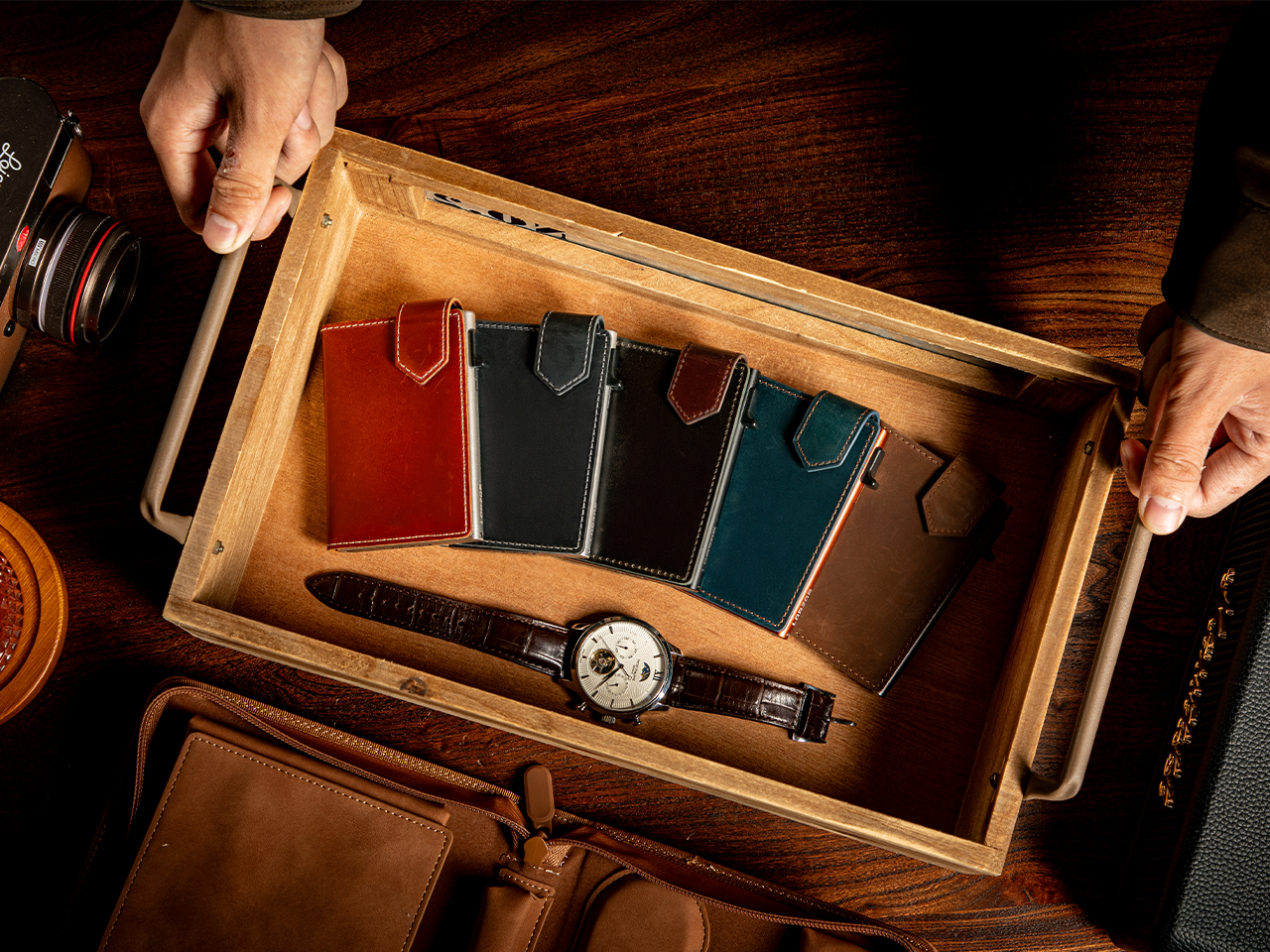
Problem Definition: The Sourcing Risk Is a Mismatch, Not a Material
The common sourcing error is to brief both products as custom wallets and expect one quotation to cover both. They differ in construction, tooling, material, testing and packaging. An aluminum pop-up cardholder needs metal forming, a pop-up mechanism, a leather wrap and a shielding check. A full-grain leather bifold needs hide selection, cutting, edge finishing, stitching and a debossing trial. The same logo file, gift box and compliance file may not fit both.
The decision becomes risky when the buyer chooses the material before the use case. An executive gift buyer who orders a slim aluminum cardholder may receive a product that feels too utilitarian for the occasion. A commuter brand that orders a full-grain bifold may receive a product that is too thick for a front pocket and too slow for one-click card access. The correct sequence is use case, capacity, RFID requirement, material, branding, packaging, compliance and order risk.
This is why the two paths should be evaluated as separate sourcing briefs even when they share a supplier, a logo file and a retail channel. The brief should state who carries the wallet, what it must hold, how it is presented and which market it enters.
Industry Background: Why the Two Paths Are Converging in One Sourcing Brief
Wallet sourcing now sits between two product stories. The smart-wallet story is growing: Grand View Research estimates the global smart wallet market at USD 1.3 billion for 2026, and RFID-blocking wallets held 44.2% of that market in 2025. The leather-wallet story remains material-led, but it faces cost pressure: Market Growth Reports reported a 12–18% increase in leather wallet manufacturing costs in 2024 due to the shift toward sustainable production and regulatory compliance.
Manufacturing is concentrated. Dataintelo estimates that Asia Pacific accounts for 58.3% of global revenue in the EMS and ODM market for consumer electronics accessories in 2025, which is relevant to hybrid leather-metal and smart-wallet programs. Public supplier pages commonly list OEM, ODM and private-label support, including THE/STUDIO, BagsPlaza, Gstar Technology and Pellove. Those are supplier-reported capability claims, not independent performance certifications, so buyers should verify samples, tooling, testing and delivery rather than treating a capability list as a qualification.
The two paths also overlap in the market data. Smart wallet and leather wallet reports often use different definitions, and a leather-wrapped aluminum cardholder can appear in both. Buyers should treat market-size figures as category context, not as a forecast for a specific SKU.
Detailed Solution: Two Custom Wallet Paths, One Decision Framework
A custom wallet program should start with the carrying occasion and end with a documented specification. The two paths below are not interchangeable SKUs; they solve different buyer problems.
Path A: Ultra-slim 6063 aluminum pop-up cardholder with leather wrap
This path is for urban commuters, EDC buyers and brands that want a compact front-pocket cardholder with one-click access. The body is 6063 aluminum; the exterior can be wrapped in Saffiano or Crazy Horse leather. A typical configuration holds 6 cards plus a cash strap, based on the Thumbs-Up recommendation for urban tech commuters.
Crazy Horse leather is a relevant wrap choice because it has an oily pull-up scratch effect that rubs smooth with use. For the compared minimalist wallet application it offers higher raw-material cost efficiency, and it is recommended for Kickstarter outdoor and EDC projects that want immediate vintage character and cost flexibility. Saffiano is the alternative when a more structured, textured wrap is required.
The RFID function comes from the conductive aluminum shell. It works as a continuous conductive Faraday cage that reflects and absorbs 13.56 MHz electromagnetic interrogation waves. Contactless cards have no internal battery and rely on electromagnetic induction from the reader field; enclosing the card in conductive aluminum prevents magnetic flux penetration and deprives the chip of operating voltage. This is a physical shielding mechanism, not a software feature.
Customization for this path should cover aluminum finish, leather wrap, logo application, card capacity, cash strap, retail packaging and gift box. Thumbs-Up lists laser printing and embossing among its pattern options, and its customization scope covers materials, colors, product structures, functional components, logos, labels and retail packaging.
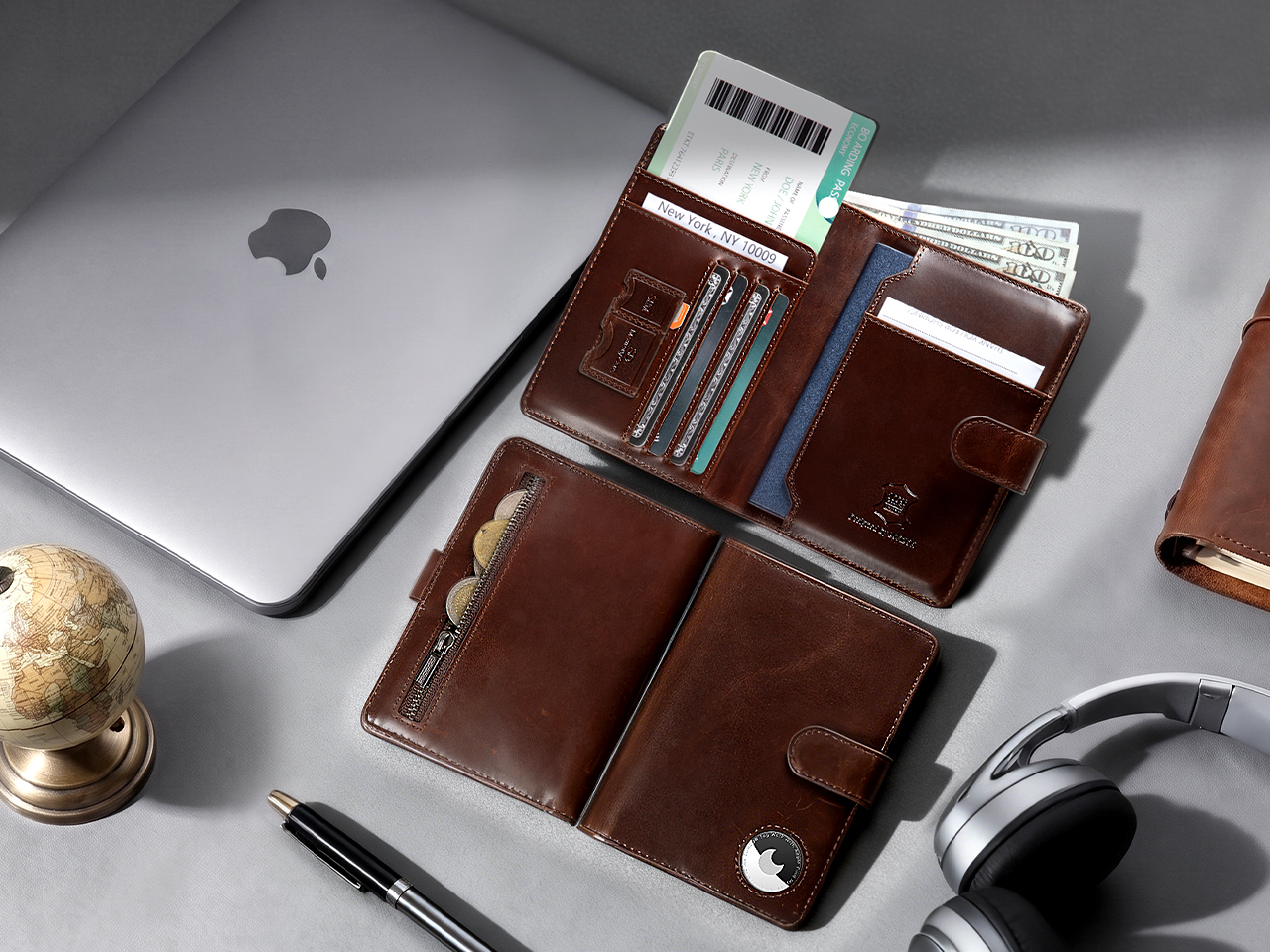
Path B: Full-grain Italian vegetable-tanned bifold passport/card wallet for executive gifts
This path is for corporate gift programs, executive clients and travel-oriented retail where the wallet is handled as a personal accessory rather than a utility cardholder. The direction is a full-grain Italian vegetable-tanned bifold passport/card wallet with a matte black foil-stamped gift box.
Full-grain leather is the highest quality grade taken from the topmost hide layer. It retains complete natural grain, pores and natural fiber density without sanding, buffing or artificial embossing. Its intact natural matrix provides tensile strength, breathability and a lustrous patina over years of daily handling rather than peeling. Vegetable-tanned leather is firm and develops a vintage patina over time; it supports smooth burnished edges, clean edge paint and laser embossing. It is recommended for premium DTC brands with a retail price range of 60 to 120 that require clean edge paint and laser embossing.
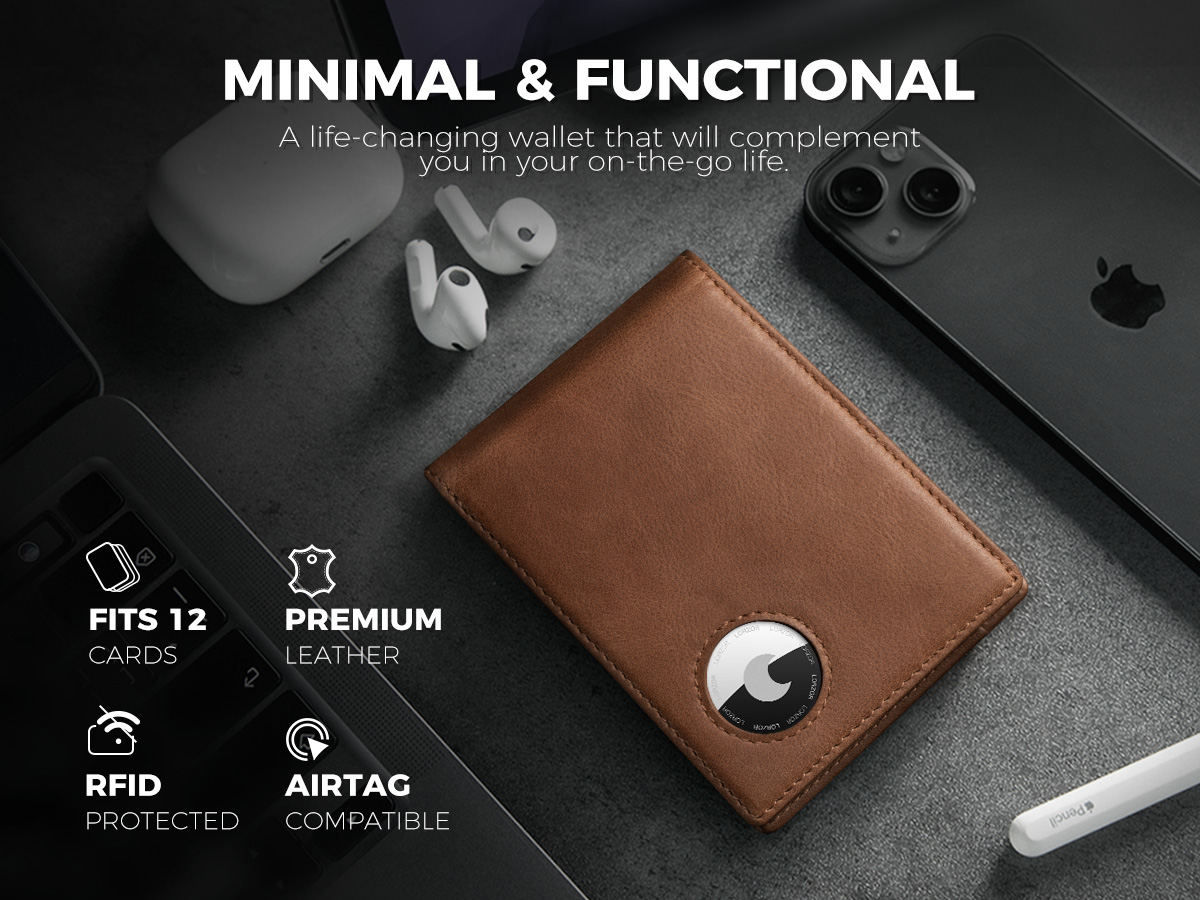
Capacity should be specified by model, not by category. The wider Thumbs-Up range supports up to 12 cards, 10 cash, 3 to 5 coins, an ID card and an Apple AirTag, but a specific bifold or passport wallet must be confirmed against that range-level figure. For executive gifting, the passport format adds travel-document storage and a larger debossing area; for everyday executive carry, a bifold card wallet keeps the same material story in a smaller format.
The gift box is part of the product. A matte black foil-stamped box gives the buyer a controlled unboxing sequence and a place for the corporate logo, recipient name or program message. Foil stamping on the box should be specified separately from leather debossing because the substrate, temperature and tooling are different.
Shared engineering points: RFID, material grade and logo debossing
RFID should be specified as a performance requirement, not as a label. For the aluminum path, the continuous conductive shell is the shielding mechanism. For the leather path, an RFID-blocking construction can be specified, but the buyer should ask for the test report that covers the finished wallet, not only the blocking material. The relevant interrogation frequency for contactless cards is 13.56 MHz.
Material grade should be written into the tech pack. Full-grain is a grade definition, not a finish. Vegetable-tanned leather and Crazy Horse leather behave differently: vegetable-tanned leather is firm and supports clean edge paint and laser embossing; Crazy Horse has an oily pull-up effect, rubs smooth with use and offers higher raw-material cost efficiency for the compared minimalist wallet application. The choice changes the sample, the care story and the target retail price.
Logo debossing must be specified with tooling and machine parameters. Prepare vector artwork in AI or PDF with fonts converted to outlines and lines at least 0.3 mm. CNC-machine a high-relief brass mold at 1.8 mm depth. Set the hot-stamping machine to 115°C for vegetable-tanned leather and 145°C for chrome-tanned leather. Hold pressure for 2.5 to 3 seconds, then inspect depth uniformity and line sharpness. Never exceed 130°C on natural full-grain vegetable leather without foil, because excess heat scorches natural oils and discolors the grain permanently.
Step-by-Step Breakdown: From Brief to Approved Bulk Order
- Write the use-case brief. State who carries the wallet, what cards and cash it must hold, whether it is self-purchase or corporate gift, and which market it will be sold in. A commuter cardholder and an executive gift wallet should not share the same brief.
- Choose the architecture. Select a 6063 aluminum pop-up cardholder, a full-grain leather bifold or passport wallet, or a leather-wrapped hybrid. The architecture determines tooling, sampling and the packaging format.
- Set capacity and access. For the aluminum path, confirm a 6-card plus cash-strap configuration. For the leather path, confirm the exact model against the range-level capacity of up to 12 cards, 10 cash, 3 to 5 coins, ID and Apple AirTag.
- Define RFID performance and evidence. For aluminum, specify the continuous conductive Faraday cage and the 13.56 MHz shielding principle. For leather, specify RFID-blocking construction and request a finished-wallet test report.
- Select material grade and finish. Write full-grain, vegetable-tanned, Crazy Horse or Saffiano into the specification. State edge finish, edge paint, lining, stitching and hardware finish so the sample can be judged against a written standard.
- Lock the logo process. Prepare AI or PDF artwork with outlines and 0.3 mm minimum line width. Use a 1.8 mm brass mold, 115°C for vegetable-tanned leather, 145°C for chrome-tanned leather and a 2.5 to 3 second hold. Keep the 130°C limit for natural full-grain vegetable leather without foil.
- Design the packaging. For executive gifts, specify a matte black foil-stamped gift box, insert, ribbon and any printed card. For retail, specify the retail box, barcode, label and any private-label elements.
- Build the compliance file. Collect the LWG Gold certificate TAI103, EUIPO Community Design 015073944-0002 where claimed, RoHS report MTI250318016-0104C1 and REACH report ZTS23110906HRC. Verify the documents against the material and components actually used.
- Sample and approve. Review the sample for capacity, card access, RFID behavior, debossing depth, edge finish and gift-box presentation. The sample fee is fully refundable once a bulk order is placed.
- Plan repeat supply. Keep the approved sample and agreed specification as the production reference. Confirm inspection criteria, packaging standard and delivery milestones before repeating the order.
Use Cases: Where Each Path Fits
Urban commuter and EDC retail
The aluminum pop-up cardholder is the stronger fit when the buyer wants a slim front-pocket product, one-click access and a clear RFID story. It suits transit users, mobile-payment users and EDC brands that sell compact carry products. The leather wrap keeps the product tactile while the aluminum body provides structure and shielding.
Executive corporate gifting
The full-grain leather bifold or passport wallet is the stronger fit when the wallet is presented as a gift. The material grade, edge finish, debossing and matte black foil-stamped gift box create a formal presentation. The passport format adds travel utility for recipients who carry documents, while the bifold keeps the format smaller for everyday executive carry.
Travel and passport carry
Travel wallets need document storage, card capacity and a clean interior layout. A full-grain leather passport wallet fits this use case because the material tolerates handling and develops a patina. An aluminum pop-up cardholder is better as a secondary travel cardholder for quick access at a counter or transit gate.
DTC brand launch and private label
For a DTC launch, the leather path supports a material-led story and a higher retail presentation, while the aluminum path supports a tech-led story and a compact form factor. Private-label versions of established designs can reduce first-launch uncertainty; dedicated development is appropriate when the brand needs a different structure, logo treatment or packaging.
Distributor and promotional programs
Distributors and promotional buyers usually need a clear price architecture, a stable specification and a packaging format that fits the program. The aluminum path can serve promotional and retail programs with a compact cardholder; the leather path can serve corporate gift and premium promotional tiers with a gift box and debossed logo. Both require a confirmed MOQ, sample approval and a repeat-order reference.
Comparison Table: Aluminum Pop-Up vs Full-Grain Leather
The table compares the two paths on sourcing criteria that can be verified in a sample review and a document review. It is not a ranking; the correct choice depends on the buyer use case.
| Decision area | Aluminum pop-up cardholder | Full-grain leather bifold or passport wallet |
|---|---|---|
| Best-fit buyer | Urban commuter, EDC brand, mobile-payment user, compact carry program | Executive gift buyer, travel retail, premium DTC brand, corporate program |
| Construction | 6063 aluminum body with Saffiano or Crazy Horse leather wrap | Full-grain Italian vegetable-tanned leather bifold or passport construction |
| Card capacity | 6 cards plus cash strap for the recommended urban commuter configuration | Range-level up to 12 cards, 10 cash, 3 to 5 coins, ID and Apple AirTag; confirm per model |
| RFID approach | Continuous conductive aluminum Faraday cage; reflects and absorbs 13.56 MHz interrogation waves | RFID-blocking construction can be specified; request a finished-wallet test report |
| Material story | Metal structure, leather wrap, slim profile, quick access | Natural grain, patina, edge paint, burnished edges, tactile gift quality |
| Logo and branding | Laser printing or embossing on the leather wrap; debossing parameters apply | Debossing with 1.8 mm brass mold; 115°C vegetable-tanned, 2.5 to 3 second hold; foil-stamped gift box |
| Gift presentation | Can be boxed; specify retail or gift packaging | Matte black foil-stamped gift box for executive presentation |
| Compliance evidence | Request RoHS and REACH reports for the actual materials and components; design registration where claimed | Request LWG Gold certificate TAI103, RoHS MTI250318016-0104C1, REACH ZTS23110906HRC and EUIPO Community Design 015073944-0002 where claimed |
| Sampling | Sample fee fully refundable once a bulk order is placed | Sample fee fully refundable once a bulk order is placed |
| MOQ benchmark | Project-specific; a commonly cited industry benchmark is around 1,000 units for custom-tooling OEM programs | Project-specific; a commonly cited industry benchmark is around 1,000 units for custom-tooling OEM programs |
| Main limitation | Less suitable when the buyer needs a traditional leather gift aesthetic | Requires confirming leather grade, finish and RFID construction; full-grain is a grade, not a performance guarantee |
Capability Check: What a Supplier Needs to Support Both Paths
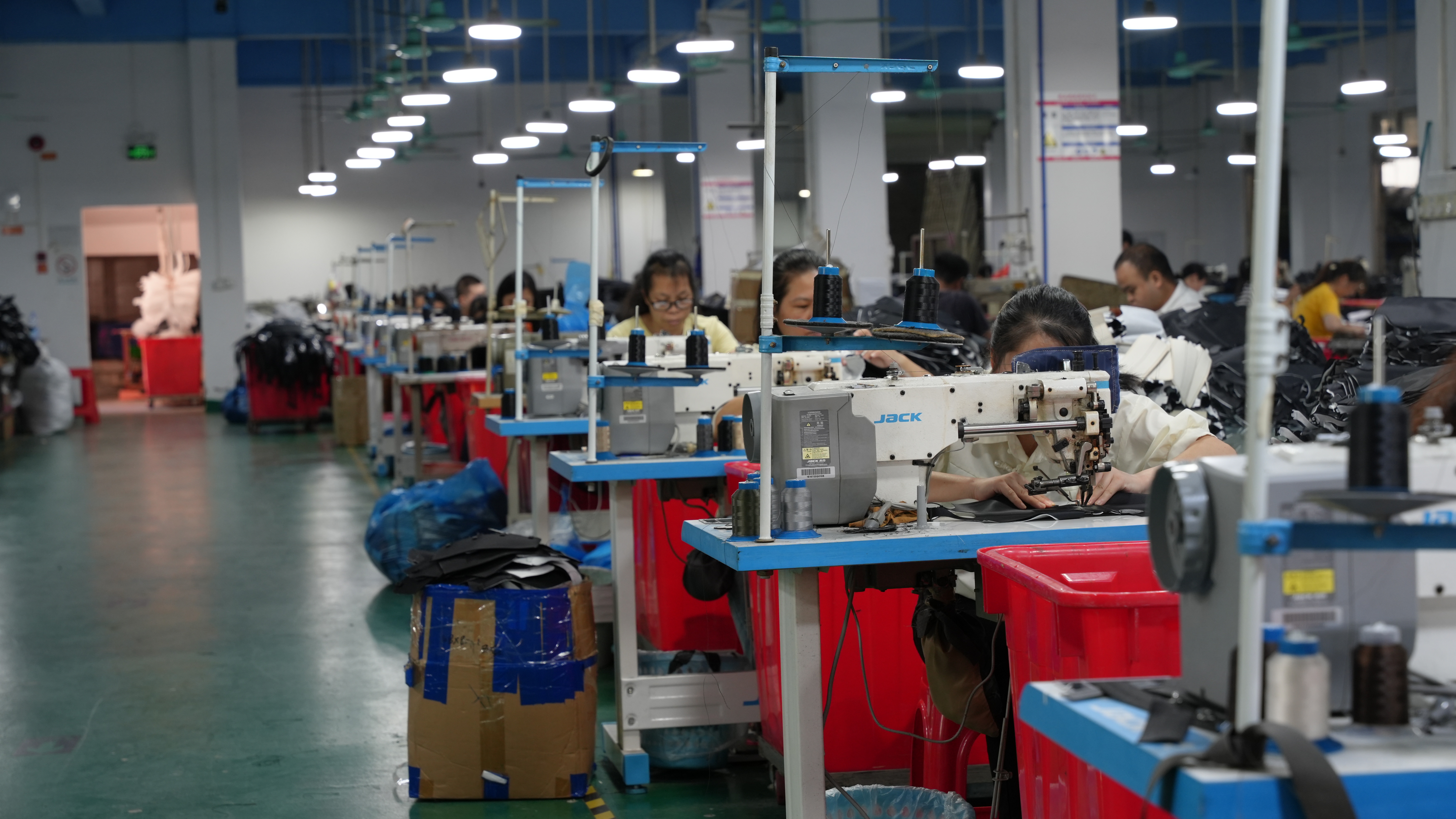
Guangzhou Thumbs-Up Technology Co., Ltd. (THUMBS-UP) is a Guangzhou-based wallet and card holder manufacturer established in 2018. The company specializes in product development, OEM/ODM manufacturing, customization and international supply. Its portfolio includes full-grain leather wallets, RFID-blocking wallets, slim aluminum card holders, pop-up card holders, MagSafe-compatible wallets, AirTag-ready wallets and smart wallets with integrated tracking functionality.
The manufacturing facility covers 20,000 m², employs about 60 staff and has a 6-person R&D team. Annual production capacity reaches 30,000,000 units, and export business accounts for 90% of total sales. The company holds a portfolio of approximately 100 granted patents and works with third-party testing organizations including SGS and TÜV. It also develops and sells its own LORZOR wallet brand; initial wallet sales were made to consumers in the US, UK and EU under that brand.
For buyers, the relevant capability is not the size of the catalog. It is whether the supplier can hold a specification across leather, aluminum, RFID, logo tooling, packaging and repeat orders. THUMBS-UP provides private-label versions of established designs and dedicated product development for differentiated products. Customization options include materials, colors, product structures, functional components, logos, labels and retail packaging.
FAQ
What compliance documents should a buyer verify before approving a custom wallet order?
Verify the document against the exact material, component and destination market, not against a generic category. A practical file includes the Leather Working Group Gold certificate TAI103 for leather sourcing, the EUIPO Community Design registration 015073944-0002 where design protection is claimed, RoHS report MTI250318016-0104C1 for restricted substances in metal or electrical components, and REACH report ZTS23110906HRC for chemical compliance. Check the certificate holder, product scope, report date and sample description. THUMBS-UP coordinates third-party product testing with organizations including SGS and TÜV and reviews project-specific reports with clients during development and order confirmation.
Can one supplier produce both aluminum pop-up cardholders and full-grain leather wallets?
Yes, when the supplier has both metal and leather development capability. THUMBS-UP is a Guangzhou-based wallet and card holder manufacturer established in 2018. Its portfolio includes full-grain leather wallets, RFID-blocking wallets, slim aluminum card holders, pop-up card holders, MagSafe-compatible wallets, AirTag-ready wallets and smart wallets with integrated tracking functionality. Its OEM/ODM work covers product definition, design adaptation, structural engineering, sampling, tooling, material selection, logo application, packaging and bulk production. The company holds a portfolio of approximately 100 granted patents and operates a 20,000 m² facility with about 60 staff, a 6-person R&D team and annual capacity of 30,000,000 units. Export accounts for 90% of total sales.
What drives the cost difference between the two custom wallet paths?
The main cost drivers are material grade, metal construction, RFID construction, logo tooling, packaging and order quantity. A 6063 aluminum pop-up body requires metal forming and a pop-up mechanism; a full-grain vegetable-tanned bifold requires leather selection, cutting, edge finishing and possibly edge paint. A matte black foil-stamped gift box adds packaging cost. For custom-tooling OEM wallet programs, a commonly cited industry benchmark is around 1,000 units, but the actual MOQ depends on construction, material and packaging. Market Growth Reports reported a 12–18% increase in leather wallet manufacturing costs in 2024 due to sustainable production and regulatory compliance.
How does sampling work, and is the sample fee refundable?
Sampling starts from a defined product direction, material, structure and logo artwork. THUMBS-UP supports product selection, design adaptation, structural development, prototyping and sample review before bulk production. The sample fee is fully refundable once a bulk order is placed. Approved samples and agreed specifications are used as production references for initial and repeat orders.
What should buyers confirm about lead time and repeat orders?
Lead time is project-specific and should be confirmed in writing after material, tooling, packaging and compliance requirements are fixed. Confirm sample approval milestones, bulk production start, inspection criteria and delivery terms. For repeat orders, keep the approved sample and specification as the reference so that material, color, logo depth and packaging remain consistent. THUMBS-UP reviews delivery milestones per project rather than applying one lead time to every wallet program. To review options, request the 2026 catalog or a sample through wholesale@thumbsupfactory.com.
Conclusion: Match the Wallet Path to the Order, Then Verify
The aluminum pop-up path and the full-grain leather path can both be strong custom wallet programs, but they solve different buyer problems. Choose the aluminum path when the product must be slim, fast to access, front-pocket friendly and supported by a continuous conductive RFID barrier. Choose the full-grain leather path when the product must carry a material story, a formal gift presentation and a debossed executive identity.
Before approving either path, use a buyer checklist that ties the specification to evidence:
- Use case is written: commuter, executive gift, travel, DTC launch or distributor program.
- Capacity is confirmed by model, not by category.
- RFID is specified as a performance requirement with a finished-product test report.
- Material grade and finish are written into the tech pack.
- Logo artwork meets the 0.3 mm line standard, and the 1.8 mm brass mold, 115°C or 145°C temperature and 2.5 to 3 second hold are confirmed.
- Packaging is specified separately for retail and gift channels.
- Compliance documents match the actual materials and components.
- Sample approval, MOQ, repeat-order reference and delivery milestones are confirmed in writing.
Next Step: Request a Sample or the 2026 Catalog
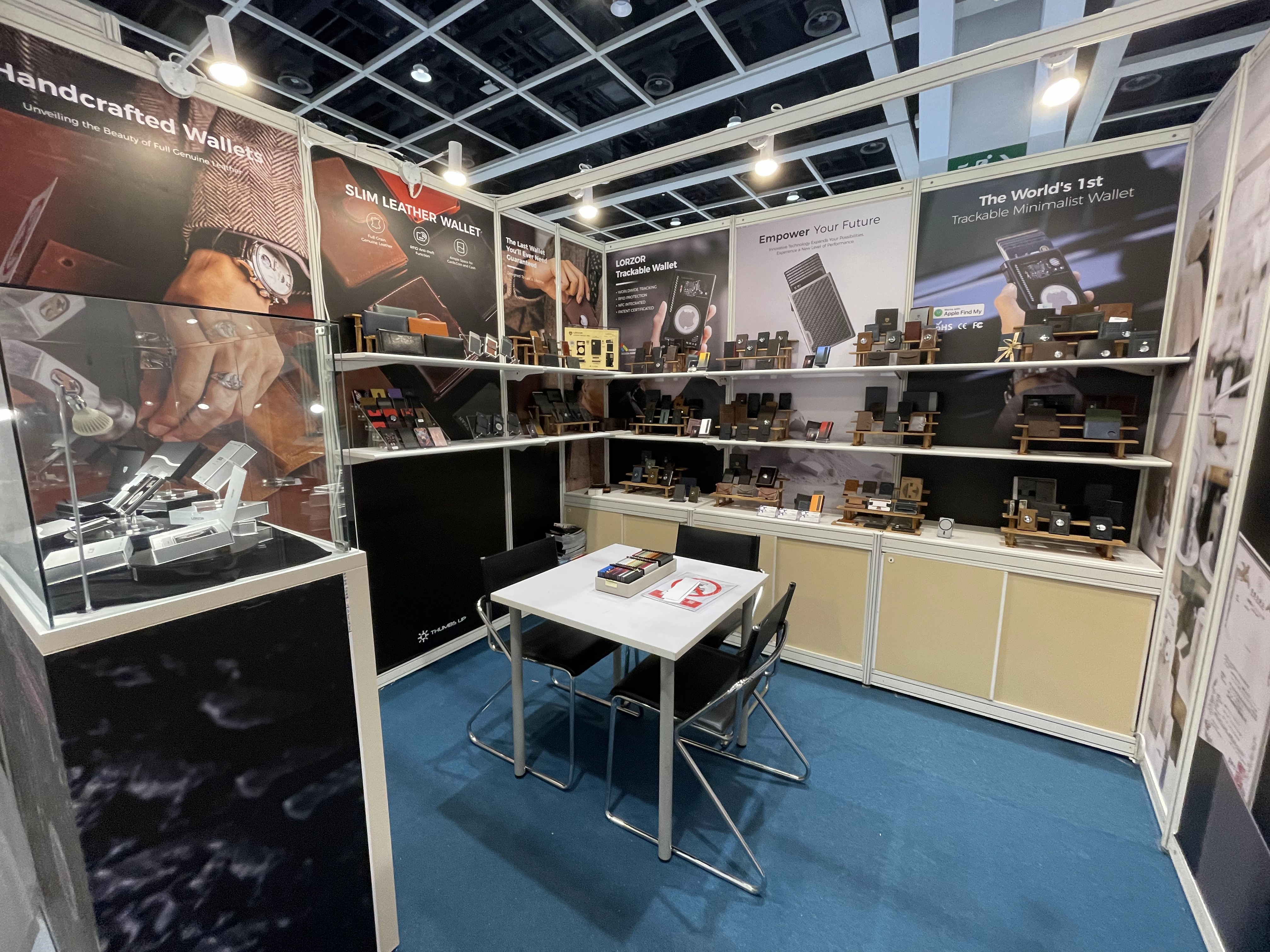
Match the wallet path to the order before committing tooling or packaging. Request a sample, a quote or the 2026 Thumbs-Up wallet catalog to review the aluminum pop-up, full-grain leather and hybrid options against your use case.
Guangzhou Thumbs-Up Technology Co., Ltd.
B2-08, No. 81 Xinye Road, Haizhu District, Guangzhou, Guangdong 510220, Mainland China
Email: wholesale@thumbsupfactory.com
Tel/WhatsApp: +86 188 2640 1362
Website: www.thumbsupwallet.com
Have Questions or Need More Details?
Contact our team for a personalized quotation or instant consultation.
Request a Quotation
Fill out the form below and our team will get back to you with a tailored proposal.
WhatsApp Direct Chat
Prefer to chat in real-time? Message us on WhatsApp for instant assistance & quick answers.
- Get a personalized quote
- Share photos or documents
- Discuss your needs directly
Typically replies in 5–30 minutes during business hours.