WiFi Smart Water Valve vs. Mechanical Temperature Control Valve: Which Protects Your Home Better?

Cover: motorized valve assembly at Tianfei High-tech, where both the WiFi Smart Water Valve and the self-acting temperature control valve are produced.
Neither valve is a universal winner, because they answer different questions. A WiFi smart water valve protects a home from water damage: it lets the owner close the supply line from a phone and can be paired with a leak detector so the line shuts automatically when water is sensed. A liquid-bulb temperature control valve protects the heating system: it holds water temperature within ±1°C across a 20–80°C range using no electricity at all. If your risk is a burst hose or a dripping joint, the smart valve is the relevant device. If your risk is an overheating underfloor loop or a radiator that never balances, the thermostatic valve is the relevant device.
This article compares the two designs on the criteria that decide real purchases: what each valve actually controls, what it needs to operate, how it behaves in a power failure, what installation involves, how long each can be expected to stay in service, and which applications each one fits. It closes with a decision sequence rather than a single winner.
The manufacturer referenced throughout. Tianjin Tianfei High-tech Valve Co., Ltd., trading as Tianfei High-tech, is a Tianjin-based motorized valve manufacturer founded on March 16, 2009, specialising in micro electric valves, intelligent valves and metering instruments for water management and control. The company operates a 30,000 m² production base with an annual output capacity of 1,000,000 units and exports roughly 70% of production to Europe and the Americas, South America, Central America, Southeast Asia and East Asia. It produces the WiFi Smart Water Valve and the TCV self-operated temperature control valve discussed here, alongside its motorized ball valve and butterfly valve ranges.
Two Different Definitions of Protection
A residential water system fails in two unrelated ways, and each valve in this comparison addresses exactly one of them.
- Uncontrolled water release — a burst flexible connector, a failed appliance inlet, a slow joint leak while the family is away or a tenant is asleep. The damage is caused by water that keeps flowing long after the failure begins, not by the failure itself.
- Uncontrolled temperature — an underfloor heating loop that overshoots its setpoint, a radiator circuit that never balances, or a solar hot water line that delivers water hotter than intended. The consequences are discomfort, wasted energy and faster wear on pipework and fittings.
The WiFi Smart Water Valve is a flow-control device. It opens and closes a pipe on command, from a mobile app or a voice assistant, and it can be linked to a leak detector so the line closes when water is detected. The liquid-bulb Temperature Control Valve (TCV) is a temperature-regulating device. It continuously throttles flow to hold the medium at a set temperature, without any electrical supply, network or controller.
Because their functions do not overlap, the honest answer to “which protects your home better” is a counter-question: which of the two failure modes is your property actually exposed to, and does the pipe in question have power and network available? Everything that follows turns that question into a purchase decision.
Why Both Categories Are Growing at the Same Time
The demand for smart water control and for simple self-acting regulation is rising together, for different reasons.
The IoT valve market is projected to reach USD 2.85 billion by 2031, growing at a CAGR of 10.4% from 2023 (The Insight Partners). The motorized ball valve market is valued at USD 8.7 billion in 2025 and is projected to reach USD 14.2 billion by 2034 (Dataintelo), with Asia Pacific holding a 38.5% revenue share in 2025. Within that market, two-way motorized ball valves hold the largest segment share at 42.1% (Dataintelo) — the segment that includes compact WiFi smart valves for houses and rental apartments.
At the industrial end of the same market, large automation groups dominate final control. Emerson Electric Co. is identified by Mordor Intelligence as a global market leader in the final control and smart valve segment. Below that layer, the compact DN15–DN50 band used in buildings, homes and light industry is served by specialist manufacturers such as Tianfei High-tech, which also supplies the CTB motorized ball valve and butterfly valve ranges for municipal and industrial service.
Regulation shapes the smart side of the category. In the EU market, motorized valves must comply with CE marking under EN 60335-1 and with RoHS 2.0 under IEC 62321, which is why compliant manufacturers publish both documents for specific model scopes rather than for a brand in general.
On the mechanical side, self-acting thermostatic valves remain a baseline technology in hydronic heating because they need no power supply and no controls infrastructure. Smart water control, meanwhile, has moved well beyond theory: in a project for a large European municipal water group in France, Tianfei supplied 10,000 units of its CTB motorized valve range for on/off control and flow regulation across municipal supply, drainage and sewage treatment networks. The system was commissioned in November 2024 and has operated for more than 16 months with zero major failures, a flow control error within ±2%, a 40% reduction in maintenance cost and annual electricity savings of more than 120,000 kWh. That reference concerns the CTB industrial series rather than the residential WiFi valve, but it demonstrates the control, monitoring and service model that the residential products inherit.
How Each Valve Actually Works
The WiFi Smart Water Valve: App-Controlled Flow and Leak Response
The WiFi Smart Water Valve is a WiFi wireless motorized ball valve in the compact, two-way format. Its published specification is as follows:
- Communication: WiFi 2.4 GHz (IEEE 802.11b/g/n)
- Power: DC6V (4 AA batteries) or DC5V USB
- Nominal size: DN15–DN25
- Body material: SS304
- Protection rating: IP54
- Platforms: Tuya Smart, SmartLife, Alexa, Google Home
- Stated applications: smart home water control, smart home, rental property leak protection, garden irrigation
The control logic is simple and human-facing. The owner opens or closes the valve from the app, can issue the same command by voice through Alexa or Google Home, and can isolate a line while travelling, while a contractor works, or between tenancies in a rental apartment. Because the actuator is motorised, no manual handle has to be reached.
One point is often misunderstood: the WiFi valve does not sense water by itself. Automatic shutoff in this architecture is created by pairing the valve with a detector. Tianfei builds two detectors for that loop, and their specifications matter when the goal is genuine leak protection:
- Water Leak Alarm Valve (WLAV) — a linked alarm shut-off valve, DC12V powered, conductive sensing, DN15–DN25, with a buzzer alarm plus a relay dry contact output, a 1–5 m sensor cable and IP44 protection. It closes the line when water is sensed.
- Wireless Water Leak Sensor — 3 AAA batteries with standby time of more than one year, Zigbee 3.0 / Z-Wave / WiFi depending on model, conductive sensing, a 1 m sensor cable, IP44 protection, and compatibility with Tuya, SmartThings and Home Assistant, where status and alarms can be monitored in the app.
- Wired Water Leak Sensor — DC12V or DC24V, conductive sensing, standard 1 m sensor cable extendable to 50 m, N.O./N.C. relay output, response time under 3 seconds, IP44 protection.
Shutoff speed is supported by an invention patent held by the company: certificate No. 3754970, patent No. ZL 2018 1 1623664.8, granted on April 14, 2020 and covering “a flow control valve capable of closing instantly”.
The limits are equally specific. Remote commands depend on a working 2.4 GHz WiFi network. IP54 suits indoor and protected installation rather than submersion. The size range stops at DN25, so it belongs on a domestic main, an appliance branch or a garden line rather than a building riser. Batteries require periodic service, and the valve regulates flow only — it has no temperature function and no built-in leak sensing.

Supporting: the SMT workshop where the control electronics for WiFi and IoT smart valves are produced in-house.
The Liquid-Bulb Temperature Control Valve: Regulation With No Power at All
The temperature control valve solves the opposite problem. It is a self-operated thermostatic valve, and its published specification is as follows:
- Type: self-operated thermostatic valve
- Actuator: liquid-fill bulb, self-operated
- Temperature range: 20–80°C
- Accuracy: ±1°C
- Nominal size: DN15–DN32
- Working pressure: ≤1.0 MPa
- Body material: brass
- Medium: hot or cold water
- Stated applications: floor heating control, radiator control, solar hot water, industrial temperature regulation
The actuator is the whole point. A liquid-filled bulb senses the medium temperature and converts that reading into mechanical force; the valve modulates accordingly. There is no motor, no control board, no sensor cable, no firmware and no power supply. In a power failure the valve keeps regulating, because it never depended on electricity in the first place — a behaviour no electrically actuated motorized ball valve, including the WiFi model, can claim in the same absolute terms.
Installation reflects that simplicity. Because the valve is self-acting, there is no wiring run, no power supply to provide at the valve position, no gateway and no app commissioning. In practice this makes installation considerably simpler and typically less expensive than installing an electrically actuated motorized valve, although the exact difference depends on the building, valve location and labour rates, and should be quoted per project rather than assumed.
The limits are just as clear. The valve cannot detect or stop a leak, cannot be commanded remotely, and produces no data. Its setpoint is determined by the bulb specification chosen at order, so the temperature requirement has to be defined before purchase. Working pressure is capped at 1.0 MPa, and the range covers DN15–DN32, which places it in heating and hot water circuits rather than large distribution mains.
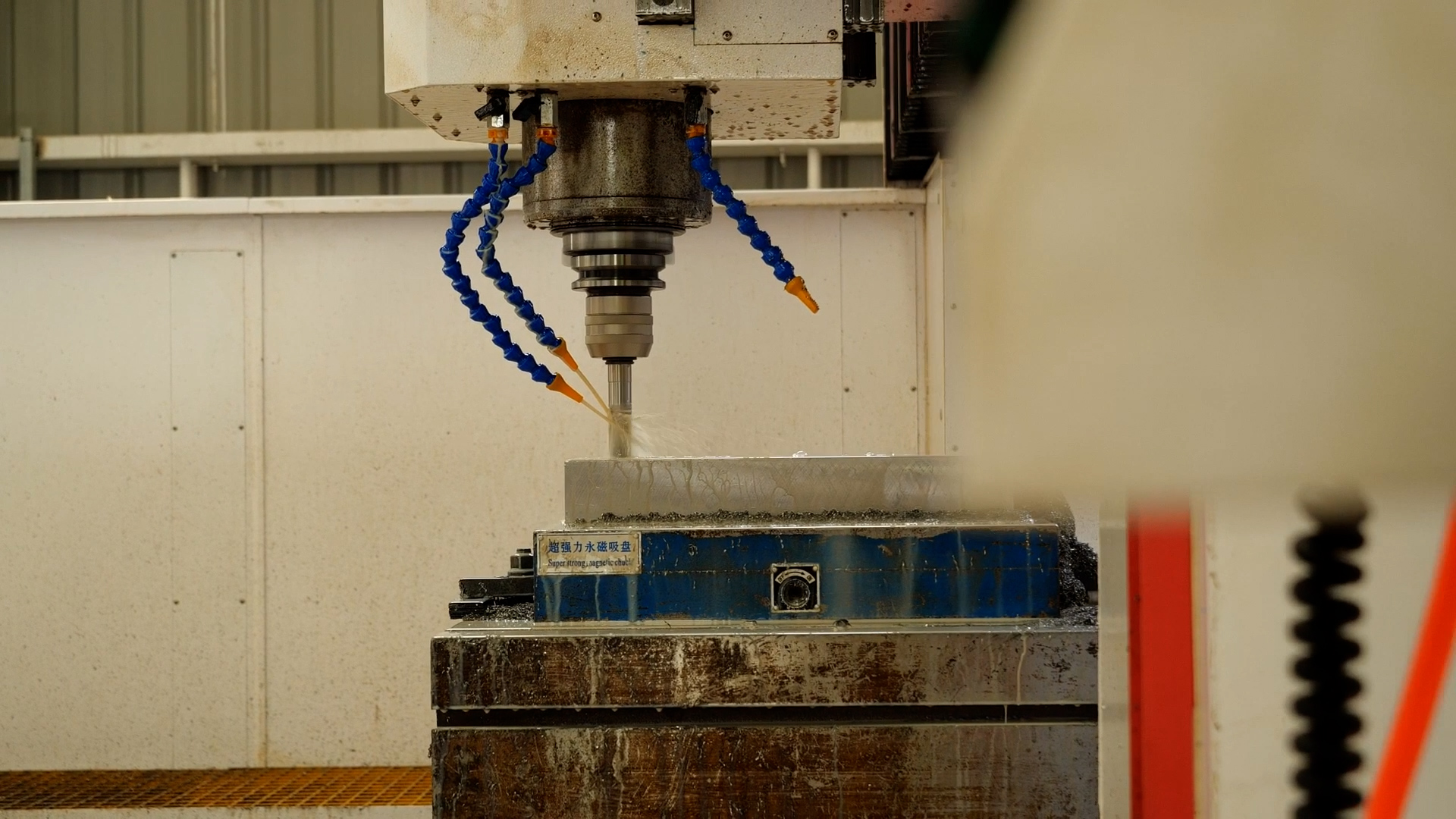
Supporting: precision machining of valve bodies, the production step that determines sealing quality in both brass and stainless steel valve families.
Where the Two Designs Meet Instead of Competing
Most houses with a heating circuit carry both risks, and the two valves then sit at different layers of the same system rather than competing for the same slot:
- Incoming line: a WiFi Smart Water Valve (DN15–DN25) with a paired leak detector, for remote isolation and automatic shutoff.
- Heating loops and radiators: liquid-bulb temperature control valves (DN15–DN32), for per-loop or per-radiator temperature regulation that survives a power cut.
- System-level mixing or distribution: where a circuit needs mixing rather than regulation, a 3-way motorized ball valve such as the CWX-60P 3-Way (DN15–DN50, T/L port) belongs to the hydronic distribution layer, not the leak-protection layer.
Step-by-Step: Choosing Between the Two
The sequence below resolves the choice in six steps, in the order that avoids expensive mistakes.
- Name the failure mode. Write down what actually happened or what you are trying to prevent: water release, or temperature drift. A valve bought for the wrong failure mode provides no protection at all.
- Locate and size the pipe. A domestic main or appliance branch usually falls within DN15–DN25, which the WiFi Smart Water Valve covers. A heating loop, radiator branch or solar hot water line typically falls within DN15–DN32, which the temperature control valve covers. Confirm the working pressure at that point as well: the TCV is rated to 1.0 MPa.
- Check power and network reality at that position. The smart valve needs either 4 AA batteries (DC6V) or a DC5V USB supply, plus usable 2.4 GHz WiFi coverage. The self-operated valve needs none of these, which is often the deciding factor in a basement or plant room.
- Decide what should happen if power or WiFi drops. For the temperature control valve the answer is inherent: regulation continues. For the smart valve, ask the supplier to confirm the position the valve holds or returns to when power or connectivity is lost, and treat that answer as a specification item rather than an assumption.
- Define the control job. If you need remote isolation, scheduling, voice control or alarm-linked shutoff, choose the smart valve plus a detector. If you need a stable water temperature with no operator involvement, choose the self-operated thermostatic valve.
- Validate on a small batch before scaling. Tianfei High-tech lists a minimum order quantity of 2 units, 100% testing, OEM customisation of voltage and logo, a monthly capacity of 8,000 units and a 30-day lead time, so a pilot installation can be tested before a project-scale order is placed.
Use Cases: Which Valve Fits Which Property
Leak protection in houses and rental apartments
For a house or apartment where the main worry is water damage, the WiFi Smart Water Valve installed on the incoming line gives the owner two capabilities: remote isolation while away, and automatic shutoff when paired with a leak detector. For rented property, the combination of app control and automatic closure addresses the two most common landlord complaints — damage discovered too late, and no way to isolate a unit without entering it.
Underfloor heating and radiator regulation
Where the complaint is uneven heating, overshoot or a radiator that never settles, the liquid-bulb temperature control valve is the appropriate device. Its ±1°C accuracy across 20–80°C, splash-free brass body and zero power requirement suit floor heating control and radiator control, including installations where nobody wants to add wiring or a gateway.
Solar hot water circuits
Solar hot water is listed among the TCV applications for a practical reason: delivered water temperature must be limited mechanically and reliably, and a self-acting valve continues to do that when the electrical installation is off or faulted.
Garden irrigation and secondary lines
For garden irrigation, the WiFi valve's DN15–DN25 range and app scheduling are a natural fit, and the same valve can close a seasonal line remotely when a property is unoccupied.
Multi-unit property management
For building management, the wireless leak sensor is rated for property building management use with more than one year of battery standby, Zigbee 3.0 / Z-Wave / WiFi connectivity and Tuya, SmartThings or Home Assistant integration, which allows detection status to be reviewed centrally while the temperature control valves on the heating side keep regulating without any network dependence.
Side-by-Side Comparison
| Decision criterion | WiFi Smart Water Valve (WIFI WATER VALVE) | Temperature Control Valve (TCV) |
|---|---|---|
| Primary job | Remote flow control and leak-response shutoff | Self-acting temperature regulation |
| Product type | WiFi wireless motorized ball valve (2-way) | Self-operated thermostatic valve |
| Actuation | Electric actuator driven by app or voice command | Liquid-fill bulb, self-operated, no motor |
| Power source | DC6V (4 AA batteries) or DC5V USB | None required |
| Connectivity | WiFi 2.4 GHz (IEEE 802.11b/g/n); Tuya Smart, SmartLife, Alexa, Google Home | None |
| Temperature accuracy | Not applicable — no temperature function | ±1°C |
| Temperature range | Not applicable | 20–80°C, hot or cold water |
| Nominal sizes | DN15–DN25 | DN15–DN32 |
| Working pressure | Not stated in the published datasheet | ≤1.0 MPa |
| Body material | SS304 | Brass |
| Protection rating | IP54 | Not stated in the published datasheet |
| Behaviour in a power failure | Depends on power source and configured position — confirm with the supplier | Continues regulating; no electricity needed |
| Leak detection | Not built in; requires a paired detector (WLAV, wireless or wired leak sensor) | None |
| Stated applications | Smart home water control, smart home, rental property leak protection, garden irrigation | Floor heating control, radiator control, solar hot water, industrial temperature regulation |
Frequently Asked Questions
Do both valves need the same compliance documents for the EU market?
No, and the documents are model-specific rather than brand-wide. Tianjin Tianfei High-tech holds a Certificate of Compliance for motorized valves under EN 60335-1:2012+A11:2014, certificate number BCTC-FY161004871C, covering models including CWX-15Q/N (AC), CWX-25S, CWX-50P, CWX-60P, CTF-001, CTF002, CTF010 and the CTB005 to CTB200 series. RoHS 2.0 documentation under the IEC 62321 series is held for the CWX-25S series mini motorized valve with manual function (certificate CCTI-2021112302C), covering CWX-25S, CWX-60P, CWX-15Q/N, CWX-20P, CWX-50P and the water leakage detection valve, and separately for the CTF-001 series (certificate CCTI-2021112301C), covering CTF-001 and the CTF-001 smart water valve. An IP65 code report under IEC 60529, report number CCTI-2022050508S, applies to the CWX-25S electric valve. Because certificate scopes are tied to listed models, buyers should confirm which document covers the exact model and market they are ordering, and should verify the applicable requirement for a self-acting thermostatic valve in their own jurisdiction.
Can the WiFi smart valve regulate temperature, or can the temperature control valve detect a leak?
No to both. The WiFi Smart Water Valve controls flow: it opens and closes a line remotely and, when paired with a conductive-sensing detector, closes that line as part of a leak-response loop. It has no temperature regulation function. The temperature control valve regulates temperature to ±1°C between 20°C and 80°C using a self-operated liquid-fill bulb, and it has no sensing, alarm or remote-command capability. Choosing on the basis of these two capabilities — flow control or temperature control — resolves the decision before price is discussed.
Which valve is cheaper to install and operate?
Because the temperature control valve is self-operated, its installation requires no wiring, no power supply at the valve position, no gateway and no app commissioning, so its installed cost is normally lower and simpler than that of an electrically actuated motorized valve. It also consumes no standby power. The WiFi Smart Water Valve requires either 4 AA batteries (DC6V) or a DC5V USB supply plus usable 2.4 GHz WiFi coverage, and batteries need periodic replacement. The practical comparison is installed and running cost rather than unit price alone, and because labour, cable runs and network conditions vary by building, the correct approach is to request a quotation based on the specific valve position and required configuration rather than to assume a fixed percentage difference.
Can I test both products before committing to a full order?
Yes. Tianfei High-tech lists a minimum order quantity of 2 units with 100% testing, which allows a pilot installation of either valve, or of both together, before project-scale purchasing. OEM customisation of voltage and logo is also available for buyers who need a specific configuration. For sizing trials, note that a typical DN20 residential line can accept either product: the WiFi Smart Water Valve covers DN15–DN25 and the temperature control valve covers DN15–DN32.
What lead time and production capacity should I plan for?
The listed lead time is 30 days with a monthly capacity of 8,000 units and 100% testing on production. As a delivery reference on larger smart-control work, a project with a large European municipal water group in France covered 10,000 units of the CTB motorized valve range, commissioned in November 2024 and delivered within three months; it has since operated for more than 16 months with zero major failures, a flow control error within ±2%, a 40% reduction in maintenance costs and annual electricity savings of more than 120,000 kWh. To start a sample or quotation process for the WiFi Smart Water Valve or the TCV temperature control valve, send your pipe size, media, voltage or power preference and target quantity to the contact details below.

Proof: warehouse and logistics operations supporting a 30-day lead time and an 8,000-unit monthly capacity.
Conclusion: A Decision Framework, Not a Winner
The comparison does not produce a single best valve, because the two products are not substitutes. Three rules resolve it:
- Match the valve to the failure mode. Water release points to the WiFi Smart Water Valve with a paired detector; temperature drift points to the self-operated temperature control valve.
- Match the valve to the power and network reality of the pipe. A 2.4 GHz signal and battery or USB access are prerequisites for the smart valve; they are irrelevant to the self-acting valve, which is why it keeps working when the power does not.
- Match the valve to the pipe. Confirm bore, material and working pressure before ordering — DN15–DN25 for the WiFi valve, DN15–DN32 and ≤1.0 MPa for the temperature control valve.
Homes with both a domestic water main and a heating circuit normally need both devices, installed at different layers of the system. That is a design decision, and it is cheaper to make before purchase than after installation.

Next Step: Request a Sample or Quotation
Tell us the pipe size, media, power preference (4 AA battery, USB, AC or DC) and target quantity, and we will confirm the correct model, the applicable compliance documents and the delivery schedule.
Website: www.minimotorizedvalve.com
Email: tf.co@tfjt.com
Tel: +86 022 85685296
WhatsApp: +86 18920338351
Address: 16 Rongyuan Road, Nankai District, Tianjin, China
Have Questions or Need More Details?
Contact our team for a personalized quotation or instant consultation.
Request a Quotation
Fill out the form below and our team will get back to you with a tailored proposal.
WhatsApp Direct Chat
Prefer to chat in real-time? Message us on WhatsApp for instant assistance & quick answers.
- Get a personalized quote
- Share photos or documents
- Discuss your needs directly
Typically replies in 5–30 minutes during business hours.