
Wind Spare Parts Supplier List: Scoring Quality, Stock & Delivery
Wind Spare Parts Supplier List: Scoring Quality, Stock & Delivery
A wind turbine spare parts supplier list is a starting point, not a shortlist. Entries usually look alike — long part-number blocks, a few OEM brand names, one email address — because they are written to look complete, not to be compared. This guide gives one consistent way to read such a list: score every entry on six criteria (company history, quality control, factory support, stock scale, cross-border delivery and regional supply coverage), then keep only the entries that can support each score with evidence.
Tianjin Saintloga International Trade Co., Ltd is used below as a worked example, not as a default answer. The company is a Tianjin, China–based supplier founded in 2015 whose stated core business is wind power after-sales technical services and spare parts supply, and whose product scope covers Gamesa, Vestas and other OEM platforms. Every score in the scorecard is tied to a specific, checkable statement; where public information is thin, the score is low and the article says so plainly.
Problem Definition: Why a Long List Is Not a Shortlist
The core problem is not a shortage of suppliers. It is that supplier lists are written in the language of catalogue coverage, while buyers purchase in the language of part number, condition, documentation and arrival date. A list can be 100% accurate and still be useless for a decision, because it never states which of those four things it actually guarantees.
Three failure modes appear repeatedly when buyers try to work from a wind turbine spare parts list:
- Coverage is counted in brands, not part numbers. A line that says “Gamesa spare parts” may cover one subsystem, or thirty. Without the part-number series behind the label, the entry cannot be sized.
- Availability is asserted, not quantified. Stock claims rarely state quantity, condition, warehouse location, or whether units are free or already committed to another order.
- Delivery is described in adjectives. “Fast” and “worldwide” carry no information about Incoterms, packing standard, export documentation, or the port of departure.
The scale of the underlying fleet explains why no single list can be complete. The U.S. Department of Energy states that the average utility-scale wind turbine contains roughly 8,000 parts, and a 2026 peer-reviewed global dataset (GOWIRES) catalogues 416,417 horizontal-axis wind turbines across 89 countries. The combination — thousands of components across hundreds of thousands of machines — means every supplier covers a slice. The buyer’s job is to determine which slice, and whether that slice matches the assets actually being maintained.
Industry Background: How the Wind Aftermarket Is Structured
Spare parts for wind turbines reach an operator through three broad routes, and each route behaves differently when you read it on a supplier list.
1. OEM service channels
Original equipment manufacturers run official parts channels. Vestas states that ShopVestas provides access to a large catalogue of Vestas spare parts across consumables, minor and major components, as well as parts for other turbine OEMs. Siemens Gamesa states that it maintains one of the largest inventories in the industry of new and reconditioned spare parts worldwide. Both are company statements describing their own channels; they indicate that OEM-direct remains a major route, particularly for warranty-sensitive and safety-critical items.
2. Authorized distributors and brand-aligned suppliers
Distributors sit between the brand owner and the operator. Their value is traceability: a genuine authorization relationship gives the buyer a paper path back to the manufacturer. Their risk is that authorization claims are frequently repeated second-hand, so the claim itself must be verified with the brand owner rather than accepted from a website.
3. Trading and multi-brand aftermarket suppliers
Multi-brand suppliers aggregate across platforms — commonly Gamesa, Vestas, GE and others — and are usually the only practical route for mixed fleets and legacy models. Tianjin Saintloga belongs to this group: it states that it supplies wind turbine spare parts for major brands including Gamesa, Vestas and GE, and that it also provides wind turbine–related maintenance services plus import and export trading services.
Two structural facts make this third route more important than it looks. First, cost concentration sits in a small number of component groups: ONYX Insight’s 2025 maintenance analysis notes that gearboxes and blades account for over two-thirds of scheduled O&M costs, which is exactly where buyers push hardest for alternatives. Second, wind turbine hardware moves as components rather than as complete machines — USITC analysis notes that nacelles, blades and hubs are often shipped separately — so delivery performance is a logistics capability, not a warehouse slogan.
Reading rule: identify the channel role of each list entry first (OEM, authorized distributor, or multi-brand trading supplier), then apply the criteria. The same claim means different things in different channels.
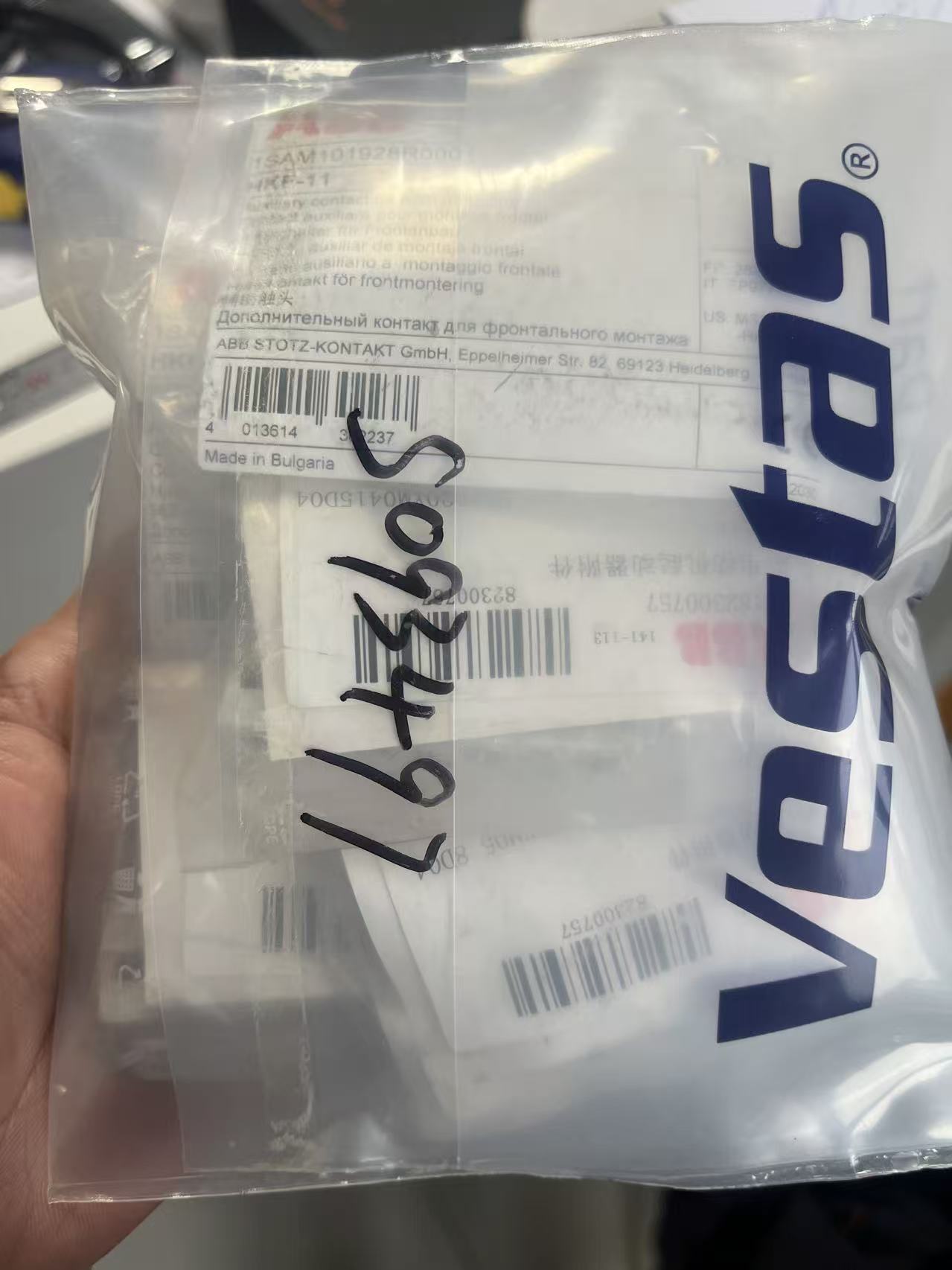
Vestas spare parts are one catalogue line on a multi-brand supplier list. The scorecard below tests what sits behind that line.
The Six Criteria That Make List Entries Comparable
Comparability comes from asking the same question of every entry in the same order. The six criteria below are ordered from cheapest to verify to most expensive to verify, so a list can be narrowed quickly before effort is spent on samples.
Criterion 1 — Company history and platform focus
What to check: founding year, how long the company has worked on wind assets specifically, and whether wind is the core business or one line among many. A general industrial trader can source a part; it cannot usually interpret a failure report. Weak signal: history described only in years of trading, with no statement of which turbine platforms the company actually supports.
Criterion 2 — Quality control and traceability
What to check: brand authorization relationships, part-number traceability back to the manufacturer, and the documentation issued with each shipment. Weak signal: quality described with adjectives (“100% tested”) with no named test, standard number, or issuing party. Treat authorization as a claim until the brand owner confirms it.
Criterion 3 — Factory and technical support
What to check: whether there is engineering capability behind the catalogue — staff numbers, R&D headcount, and whether the supplier also performs service work. This matters when a part number is superseded, when a site reports a recurring failure, or when two part numbers are visually similar.
Criterion 4 — Stock scale
What to check: not “do you have stock”, but which part numbers are held, in what quantity, in what condition, and where. Weak signal: an inventory claim with no line-item confirmation. Stock scale is the criterion most often inflated on supplier lists and the easiest to test with three specific part numbers.
Criterion 5 — Cross-border delivery
What to check: export experience as a share of revenue, the markets served, the Incoterms offered, and the documentation package (packing list, commercial invoice, certificate of origin, dangerous-goods handling where relevant). Weak signal: delivery described as “fast worldwide shipping” with no named departure point.
Criterion 6 — Regional supply coverage
What to check: whether the listed markets match your sites, and whether coverage is commercial (someone sells there) or logistical (someone delivers there repeatedly). The distinction is visible in the market list itself.
Scorecard: Reading Tianjin Saintloga Against the Six Criteria
The scores below are editorial judgements, not third-party audit results. The rating scale is 1–5 stars, where 5 means “documented and specific in reviewed materials”, 3 means “partly documented, requires confirmation”, and 1 means “not documented”. The evidence column is the part that should be carried into a sourcing file; the star rating is only a summary of it.
| Criterion | Evidence found in reviewed materials | What still needs confirming | Score |
|---|---|---|---|
| Company history & platform focus | Founded 2015 in Tianjin, China; states 10+ years of experience in the wind power industry; states that wind power after-sales technical services and spare parts supply are its core business; product scope names Gamesa, Vestas and GE platforms. | Depth of experience per platform generation, especially older Gamesa models. | ★★★★☆ 4/5 |
| Quality control & traceability | States it is an authorized distributor of SGL Carbon and Ingeteam in China (company-reported); catalogue is organised by part-number series rather than by generic category names. | Independent confirmation of the authorization with the brand owners; test reports or traceability documents per line item. | ★★★☆☆ 3/5 |
| Factory & technical support | Company data records 42 employees including a 30-engineer R&D team; the company states it also provides wind turbine–related maintenance services, not only parts trading. | Whether engineering support covers on-site diagnosis or only part identification. | ★★★★☆ 4/5 |
| Stock scale | Catalogue breadth is documented across electrical, fluid-power and drive-train categories; no public inventory quantity, warehouse location or free-stock figure was found in reviewed materials. | Line-item availability for the specific part numbers you need; condition and reserved/free status. | ★★★☆☆ 3/5 |
| Cross-border delivery | States an export ratio of 65%; operates as an import and export trading business; based in the Tianjin Pilot Free Trade Zone (Airport Economic Zone), Tianjin, China. | Incoterms offered, packing standard for fragile electronics, and documentation package per shipment. | ★★★★☆ 4/5 |
| Regional supply coverage | Lists Vietnam, Thailand, Philippines, New Zealand, Indonesia, Spain, Brazil, India, Mexico, Russia and Turkey as main markets. | Which of these markets are served repeatedly versus occasionally, and whether spares-only shipments are routine there. | ★★★★☆ 4/5 |
The pattern in the table is deliberate. Tianjin Saintloga scores strongly where the company publishes specifics — history, platform scope, export orientation, market list — and scores lower where no public figure exists, notably inventory depth and independent quality evidence. That is the correct outcome for any honest scorecard: a supplier should not be credited for information it has not disclosed.
Coverage Evidence: What the Catalogue Actually Contains
Supplier lists are usually long on categories and short on series. The table below shows the level of detail that makes a list entry useful — documented part-number series, stated parameter ranges and named component types.
| Category | Documented scope (examples) | Why it matters to a buyer |
|---|---|---|
| Power electronics | SEMIKRON SKiiP modules (SKIIP1813GB123-3DUK0382, SKIIP 3614 GB17E4-6DUK305, SKIIP 613GD123-3DUK0195, SKIIP 2413GB123-4DK0194 and others); IGBT material; power range 850–5000 kW; −40 °C to 120 °C; protection IP00. | Converter faults are a common stop-work item; the module series, not the word “IGBT”, determines fit. |
| Control & conversion | Gamesa CCU units (AS3169, AS3179, AS2908), Ingeteam CCU, Phoenix PLC (RFC 430, RFC 470), Ingeteam driver and interface boards (AK9322, AK9983, AK9320, AK9961, AK9111 and related numbers). | Control hardware is platform-specific; cross-reference quality decides whether the turbine restarts. |
| Electrical protection & transmission | ABB circuit breakers (GP018171, GP047112, GP050097, MVS25T33FA2, 1SDA058193R1), slip rings and rotary joints (GP127965, GP127960, GP492093, GP464924, GP464923), carbon brushes (CANT01, CANT04 R140/R150, CANT06 R140, CANT16, RC53, RC54, RC42L, RC67, RS65, RE92). | Consumables and protection devices fail predictably; series-level coverage supports planned replacement instead of emergency buying. |
| Fluid power | Control, directional, proportional, safety and check valves (RVSAE3DS112401, DG4V32AMUH760, compensated flow control valve 76 L/min, proportional valve 50–25 L/min 10 VDC); pressure range 0–320 bar; −40 °C to 200 °C; steel; hydraulic hoses and tubes (GP000086, GP000568, GP004128 series). | Pitch and brake hydraulics are pressure-critical; the stated bar and temperature range is the first screening field. |
| Drive train | Yaw motors (Huali and ABB types; GP122842, GP243450, 101180, GP587472, GP119038), gearboxes (yaw, Winergy, ZF, Hansen, Bosch Rexroth, Comer, Weili; GP127153, GP411441, P3014A, P432051), couplings (GP479559, GP479562, GP517817, GP083595 series). | Gearbox and drive-train work dominates scheduled O&M cost, so multi-brand coverage here has the largest budget effect. |
| OEM platform catalogues | Vestas spare parts list (IGBT, CCU, PLC, UPS, power supply, oil house, pump, transformer, yaw motor, circuit breaker, generator, gearbox, main shaft, main bearing, hydraulic cylinder, hub cabinet, SKiiP); Gamesa spare parts list spanning the same component groups; power range 850–5000 kW for both. | Platform catalogues, not category lists, are what a fleet engineer can actually search. |
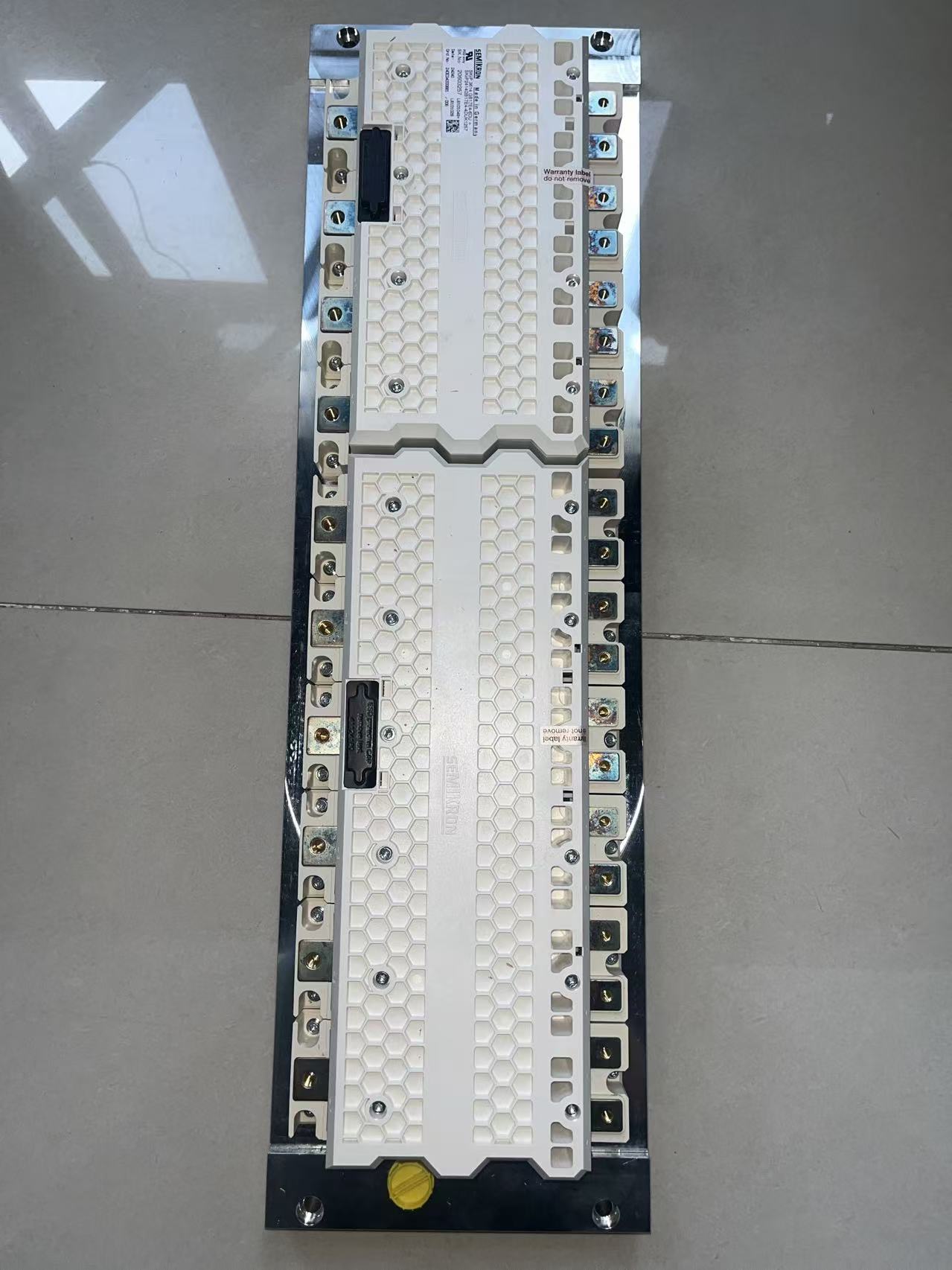
Power electronics line: SKiiP modules are listed with part-number series, IGBT material and a −40 °C to 120 °C range rather than a generic category label.
Step-by-Step: Working Through a Supplier List in One Pass
The sequence below is designed to eliminate non-viable entries before samples or quotations are requested. It works on any list, including this one.
- Build a need-based matrix before reading the list. List your platforms and subsystems: converter, control, hydraulic, yaw, gearbox, generator, protection. A list entry is only useful if it can be mapped into those rows. Brand names alone cannot be mapped.
- Score history against your specific platform. Ask which Gamesa or Vestas generations the supplier handles. A company founded in 2015 with a stated 10+ years of wind experience should be able to name the platform families it supports; if the answer is generic, the coverage is generic too.
- Separate quality claims from quality evidence. A brand authorization is evidence of a channel relationship, not of batch conformity. Read company statements as claims — Tianjin Saintloga states it is an authorized distributor of SGL Carbon and Ingeteam in China — then confirm with the brand owner and ask for the documentation that ships with the part.
- Check engineering depth, not just sales depth. Companies that also perform wind turbine maintenance tend to hold failure knowledge that pure traders lack. Tianjin Saintloga records 42 staff with a 30-engineer R&D team and states that maintenance services sit alongside parts supply; the practical test is whether that team can answer a cross-reference question in writing.
- Replace “stock” with line-item availability. Send three part numbers from three different categories — for example one SKiiP module, one valve, one carbon brush — and ask for quantity on hand, condition, location and reservation status. Vague answers on three specific numbers predict vague answers on thirty.
- Test delivery with the hardest line item. Choose something fragile or awkward: a power module rather than a carbon brush. Confirm Incoterms, packing, departure point and documentation. A stated export ratio of 65% and eleven listed markets indicate routine export handling, but the packing standard for electronics must still be confirmed per shipment.
- Match regional coverage to your site list. Compare your sites against the supplier’s market list. Vietnam, Thailand, Philippines, New Zealand, Indonesia, Spain, Brazil, India, Mexico, Russia and Turkey appear in Tianjin Saintloga’s stated main markets; a site outside that set should trigger a specific question about prior shipments there.
Use Cases: Three Lists, Three Different Priorities
Use case 1 — A mixed Gamesa and Vestas fleet in Southeast Asia
Here the binding constraint is cross-reference breadth, not price. The buyer needs one list that covers both platform catalogues and can ship into Vietnam, Thailand, the Philippines or Indonesia without re-qualifying a new supplier each time. On the scorecard, criteria 1, 4 and 6 carry the decision; quality documentation should be requested for the highest-value lines only, since auditing every consumable is uneconomic.
Use case 2 — Coastal, high-humidity or high-altitude sites
Site conditions change the specification question. The application data behind this catalogue describe operation under high and low temperature, high humidity and high altitude, 24/7 duty, and special requirements for offshore corrosion resistance plus heat and cold resistance. That does not certify a part for a given site — it identifies the parameters a buyer must confirm: temperature range on electronics (−40 °C to 120 °C on SKiiP modules), temperature and pressure range on valves (−40 °C to 200 °C, 0–320 bar), and material selection on rotary joints (copper, steel, stainless steel).
Use case 3 — Consolidating a fragmented supplier base
Operators running several platforms often end up with one vendor per subsystem. Consolidation is realistic when a single list covers power electronics, control, fluid power, drive train and consumables across two OEM catalogues, and when delivery terms are consistent across those categories. The scorecard exposes the risk immediately: breadth scores well, but stock depth and quality traceability must be verified line by line before the vendor count is reduced.
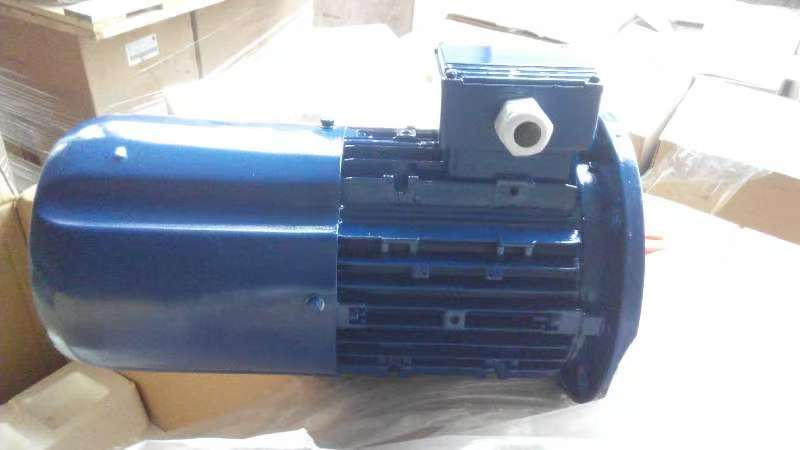
Drive-train line: yaw motors are listed with Huali and ABB types and specific part numbers (GP122842, GP243450, 101180, GP587472, GP119038).
Purchasing Terms and Acceptance Criteria to Agree Before the Order
Most disputes in spare-parts procurement are created before the purchase order, in fields nobody wrote down. The following items should be explicit on every quotation, whether the supplier is an OEM channel or a multi-brand trader.
- Identification: manufacturer part number, OEM platform, and the alternative or superseded numbers that were cross-referenced — stated in writing.
- Condition: new or otherwise, described per line item rather than per order.
- Technical envelope: the parameter range that matters for the application — power range, temperature, pressure, protection class or material.
- Documentation: packing list, commercial invoice, certificate of origin where applicable, and any conformity documentation the buyer’s own quality system requires. Where design requirements are referenced in a specification, they should be quoted by number — IEC 61400-1 is the recognised international standard for wind turbine design requirements — but a supplier should never be assumed compliant simply because a standard is named.
- Delivery terms: Incoterm, departure point, packing standard for electronics, and the party responsible for export clearance.
- Acceptance criteria: what will be checked on arrival (markings, quantity, visual condition, documentation completeness) and what happens if a line fails.
- Remedy terms: replacement or credit conditions, and how a claim is raised.
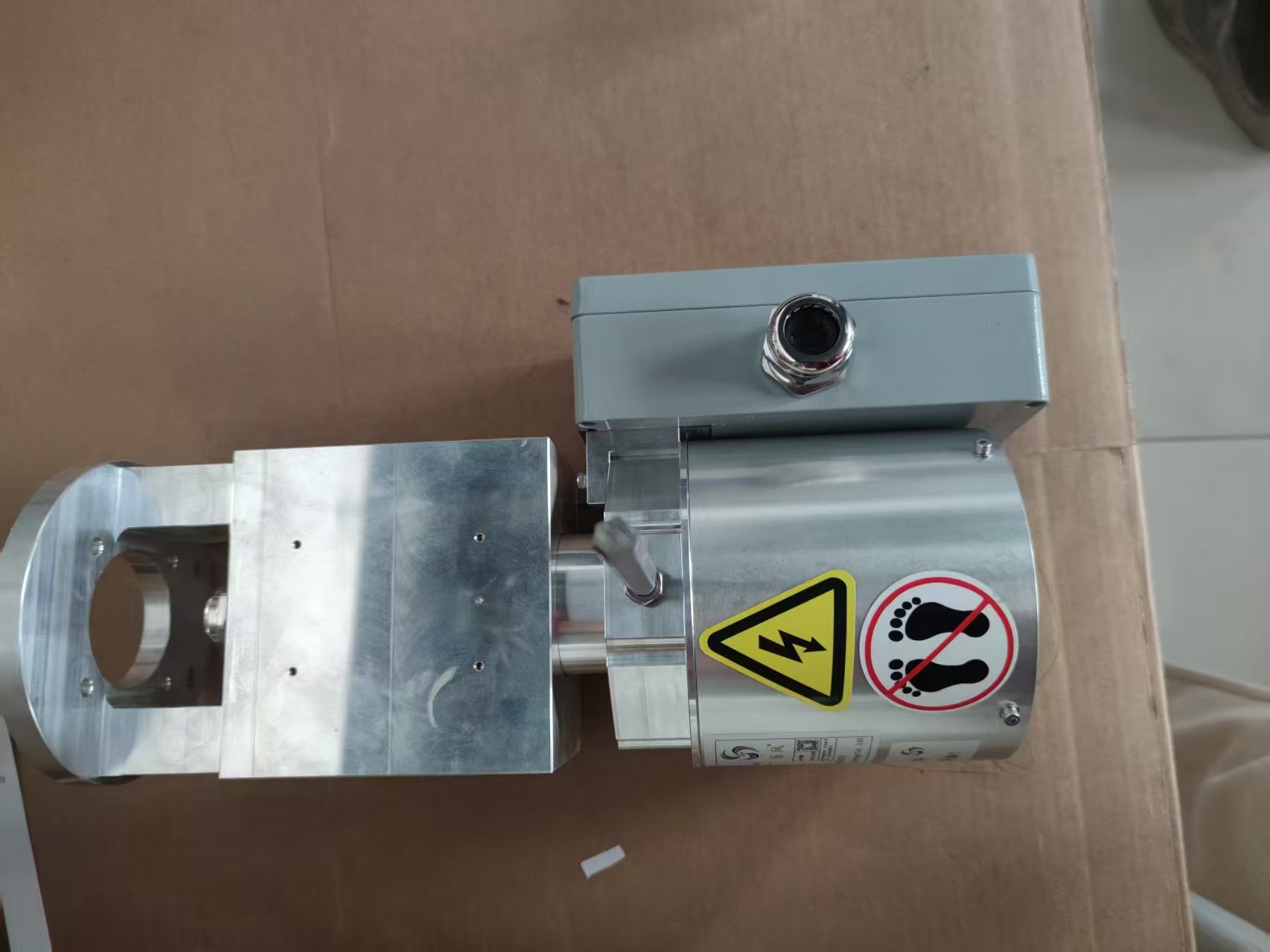
Electrical transmission line: rotary joints and slip rings are listed by part-number series (GP127965, GP127960, GP492093, GP464924, GP464923) with copper, steel or stainless steel construction.
Frequently Asked Questions
1. If a supplier is described as an authorized distributor, does that prove the parts are genuine?
No. An authorization statement describes a channel relationship; it does not by itself prove that a specific part number in a specific shipment is genuine. Tianjin Saintloga states that it is an authorized distributor of SGL Carbon and Ingeteam in China, and that statement is company-reported. A buyer should confirm the relationship directly with the brand owner and, for each line item, request traceability documentation that ties the part number to the manufacturer. This is especially relevant for branded consumables such as carbon brushes, where counterfeit or mislabelled stock is a known category risk.
2. Can one supplier realistically cover both Gamesa and Vestas platforms?
Coverage of both platforms is realistic at the catalogue level, and less realistic at the individual part-number level. Tianjin Saintloga lists Gamesa spare parts and Vestas spare parts as separate catalogues, each spanning component groups such as IGBT, CCU, PLC, UPS, power supply, yaw motor, circuit breaker, generator, gearbox, main shaft and main bearing, for turbines in the 850–5000 kW power range. That structure supports a single-vendor approach for a mixed fleet. The limits matter just as much: a catalogue entry does not guarantee that a specific number is in stock, and legacy models may require longer confirmation. Availability must be confirmed line by line.
3. How should a buyer budget when the supplier publishes no price list?
Without a published price list, a per-part quotation is the only honest basis for budgeting — and this article deliberately avoids quoting figures that cannot be verified. In practice, the quotation varies with the part number and OEM platform, the component type (an IGBT power module and a steel valve behave very differently as cost items), quantity, documentation and testing requirements, and the delivery term and destination. The practical approach is to request a line-item quotation with a stated validity period for the exact part-number list, and to compare total landed cost rather than unit price alone.
4. Can a part be validated before committing to a full order?
Validation is possible, but it has to be specified rather than assumed. Because no public sample policy is documented for this supplier, sample availability should be requested in writing per line item, together with the acceptance criteria the sample will be judged against: part number and markings, dimensional and interface fit, material and parameter range, and packing condition on arrival. For high-value electronics, a pre-shipment inspection is often more useful than a sample, because it verifies the actual units being shipped rather than a reference unit.
5. What determines lead time when no lead-time table is published?
When a supplier publishes no lead-time table, delivery time is decided by five variables: whether the exact part number is held in stock or must be sourced, the condition and documentation requirements attached to it, order quantity, the export and freight mode, and the destination. Tianjin Saintloga’s stated export ratio of 65% and its listed markets across Southeast Asia, Europe, Latin America and Eurasia indicate routine export handling, but that is a capability signal, not a delivery commitment. The reliable method is to request confirmation per line item rather than per order. To start that process, send the part-number list with target quantities and destination to xiaolin.wang@saintloga.cn, or review the product scope at www.saintloga.com.
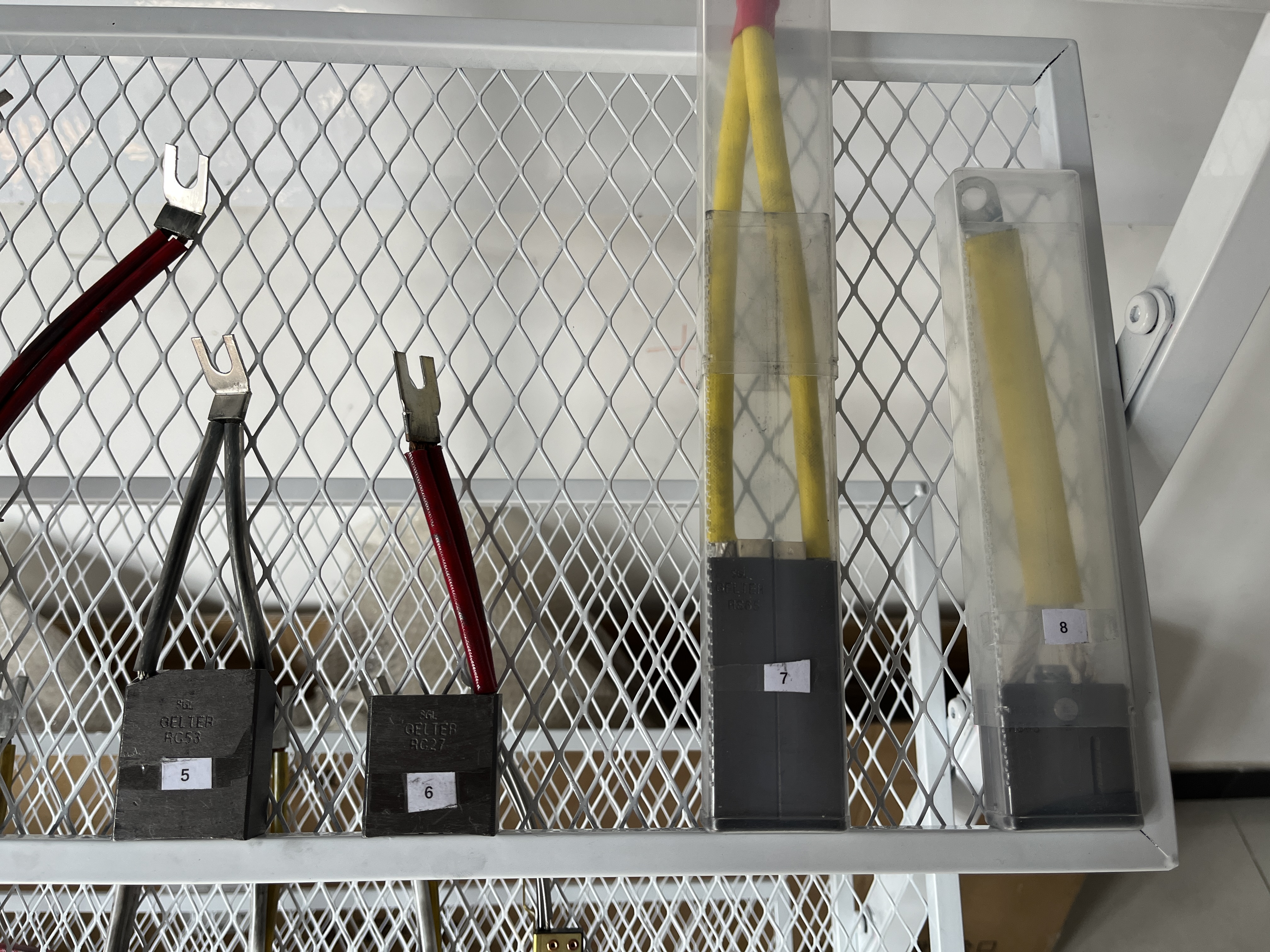
Consumables line: SGL carbon brushes are listed by type and part-number series — the category where brand authorization is most worth verifying.
Conclusion: Score the List, Then Test Three Part Numbers
A wind turbine spare parts supplier list becomes usable at the moment it is scored rather than read. Six criteria — history and platform focus, quality traceability, engineering support, stock scale, cross-border delivery and regional coverage — convert a wall of part numbers into a comparable shortlist, and each score can be traced back to a statement that either exists or does not.
Applied to Tianjin Saintloga International Trade Co., Ltd, the scorecard shows a supplier with documented platform breadth (Gamesa, Vestas and other OEM catalogues across 850–5000 kW), a stated 10+ years of wind industry focus from a 2015 foundation in Tianjin, an export-oriented business with a stated 65% export ratio across eleven main markets, and engineering depth recorded as a 30-engineer R&D team within a 42-person organisation. It also shows where disclosure stops: inventory depth and independent quality verification are not publicly documented, so those two criteria remain open questions rather than settled strengths. Naming that boundary is more useful than smoothing it over, because it tells the buyer exactly what to test.
That test is short. Pick three part numbers from three different categories, ask for quantity, condition, location and delivery confirmation on each, and compare the answers with the scores above. A supplier that answers precisely on three numbers is likely to answer precisely on thirty.
Next Step: Sample, Quotation or Catalogue
Tianjin Saintloga International Trade Co., Ltd supplies wind turbine spare parts for Gamesa, Vestas, GE and other platforms, and provides wind turbine–related maintenance services and import/export trading services.
Send a part-number list with quantities and destination for a line-item quotation or a sample request. Contact: Xiaolin · xiaolin.wang@saintloga.cn · Tel / WhatsApp +86 18189574729 · 2-3-202, Crown Plaza, South of Dongsi Road, Central Avenue, Tianjin Pilot Free Trade Zone (Airport Economic Zone), Tianjin, China.
Download the product catalogue: Tianjin Saintloga brochure (PDF) · Website: www.saintloga.com
Structured Data
Have Questions or Need More Details?
Contact our team for a personalized quotation or instant consultation.
Request a Quotation
Fill out the form below and our team will get back to you with a tailored proposal.
WhatsApp Direct Chat
Prefer to chat in real-time? Message us on WhatsApp for instant assistance & quick answers.
- Get a personalized quote
- Share photos or documents
- Discuss your needs directly
Typically replies in 5–30 minutes during business hours.