Fiber for Concrete Supplier Evaluation: Quality Consistency and Delivery Assurance
Supplier evaluation for fiber for concrete is an evidence exercise, not a price negotiation. A supplier can quote the correct model, perform well on the first two orders, and still cause a failed acceptance test when a later batch arrives with a different wire diameter, a bundle that will not disperse, or a certificate that does not match the delivered lot. For a buyer moving from evaluation into execution, the real question is narrower than “who sells fiber”. It is whether the supplier can repeat a documented specification, prove the repeatability with inspection records, and protect the payment until the goods have been verified.
This guide sets out a five-checkpoint framework for evaluating a fiber for concrete supplier. The checkpoints cover quality consistency, model and supply-form conformity, delivery assurance, purchasing terms and acceptance criteria, and controls against deposit fraud and intermediary trading-company risk. Tianjin TingCo Tech Co., Ltd. is a Tianjin-based manufacturer of steel and synthetic fibers for concrete reinforcement, founded in 2014 and operating a 6,000 m² facility with a stated annual output of 24,000 tons. Its published facts are used as a worked example where they apply; market and standards references are attributed to their sources.
Why fiber for concrete supplier evaluation fails at the acceptance-test stage
Most sourcing failures are not caused by an obvious quality defect. They are caused by a gap between what the buyer approved and what the supplier shipped. Three gaps recur in fiber for concrete projects.
The first is specification drift. A design may call for a hooked-end steel fiber at a stated diameter, length and tensile strength, but the delivered fiber is measured only against a generic datasheet. Without a tolerance stated in writing, a small change in diameter or length can shift the fiber count per kilogram and change the residual flexural strength that the concrete was designed to reach.
The second is supply-form mismatch. Steel fiber for concrete is supplied loose, glued into bundles, or as micro fiber for ultra-high-performance concrete (UHPC). PP fiber is supplied as micro, macro or twisted forms. Each form behaves differently in mixing and placing. If the approved sample was glued and the shipment is loose, the mixer operator may see a different dispersion pattern and a different finish.
The third is documentation lag. A certificate of analysis (COA) that references the wrong batch, or a mill certificate with a tensile value that does not match the delivered coil, turns a routine inspection into a rejection. The cost is not only the fiber. It is the idle mixer, the delayed pour and the retest.
A supplier evaluation that addresses these three gaps before the purchase order is issued is cheaper than a rejection after delivery. That is the purpose of the framework below.
What the market context adds to the evaluation decision
Fiber for concrete is a large and fragmented category, and the fragmentation is part of the evaluation risk. Fortune Business Insights projects the global steel fiber market to reach about USD 2.87 billion by 2026, with industrial floors accounting for a 37.28% share of applications and hooked-end steel fibers holding 58.89% of the type segment in the same year. Those are commercial research estimates and should be treated as directional context, not as a supplier guarantee.
The same context explains why buyers meet so many intermediaries. Steel fiber falls under trade classifications such as HS 7326, and China has been the largest exporter in specialized trade datasets, accounting for 51.85% of identified imports in one historical dataset. A large export flow attracts trading companies that present themselves as factories. The evaluation therefore has to confirm not only the product, but the counterparty.
For synthetic fiber, the global polypropylene fiber market for construction is projected to grow at a 6.4% CAGR from 2026 to 2034 in the same commercial research family. Growth in both categories means more suppliers will enter, and more of them will be resellers rather than producers.
The five-checkpoint supplier evaluation framework
A workable evaluation can be organized into five checkpoints. Each checkpoint produces a document or a verified observation, so the decision can be defended internally and, if needed, to the project owner.
- Quality consistency evidence: the quality system, the certificate scope, the in-house or third-party test records, and the per-batch documents.
- Model and supply-form conformity: the exact diameter, length, tensile strength, fiber type, packaging and private-label requirements.
- Delivery assurance: capacity, lead time, minimum order quantity, Incoterms and pre-shipment inspection.
- Purchasing terms and acceptance criteria: payment structure, inspection rights and the tests that define acceptance.
- Counterparty and intermediary risk: business license, unified social credit code, factory audit and payment protection.
The order matters. A supplier that cannot produce checkpoint 1 evidence should not reach a commercial negotiation, because price cannot compensate for a specification that cannot be repeated.
Checkpoint 1: Quality consistency evidence
Quality consistency is the ability to deliver the same fiber, batch after batch, within a stated tolerance. It is proven by a system plus records, not by a single sample.
The first document to request is the quality management certificate. An ISO 9001 certificate shows that the supplier operates a documented quality system. It does not, by itself, prove that a specific fiber meets a specific standard, so it should be read together with the product certification.
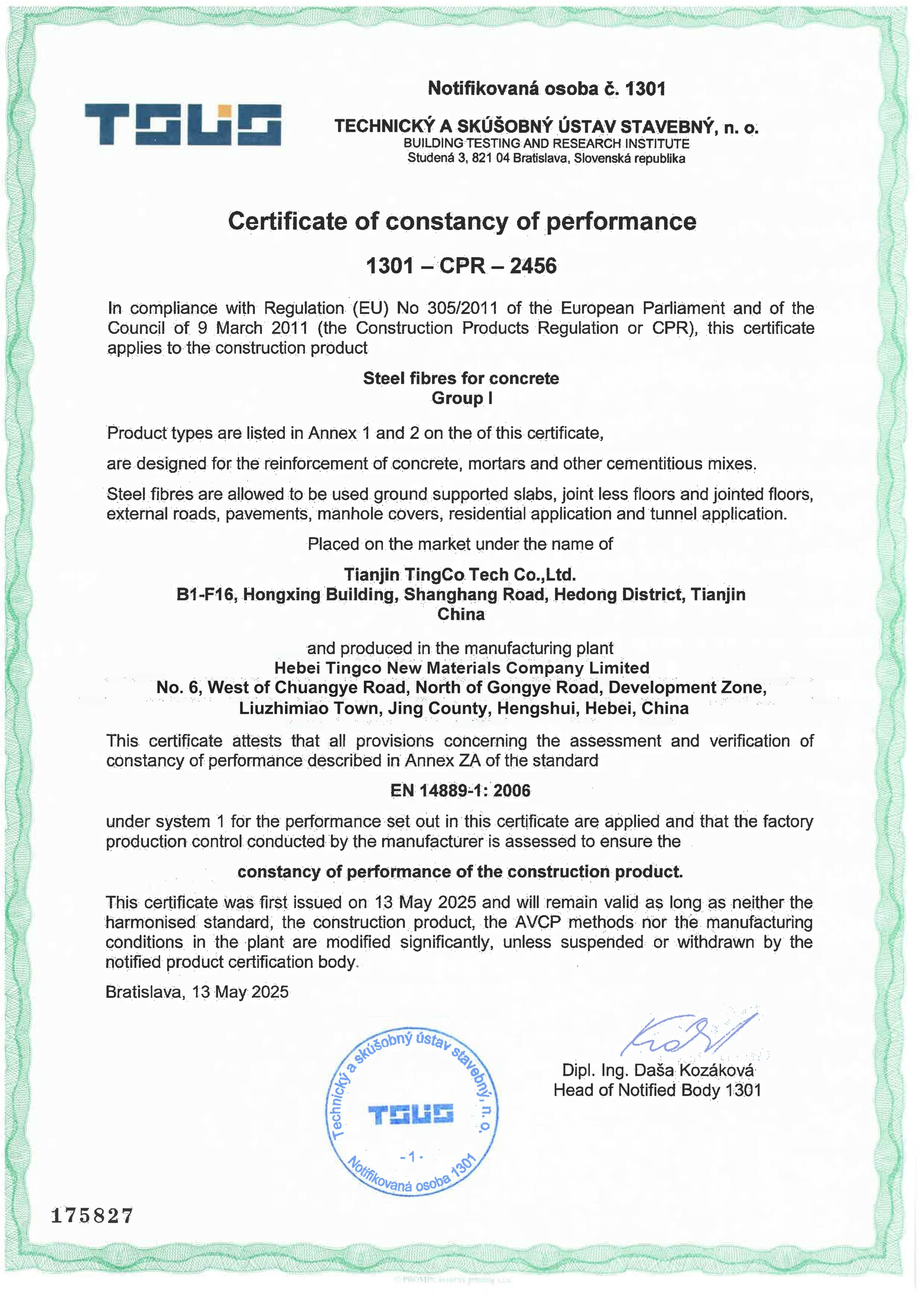
For steel fiber sold into the European Union, the relevant product standard is EN 14889-1:2006, which defines the definitions, specifications and conformity requirements for steel fibers used in concrete. A CE certificate should state its number, issuing body, scope, standard and validity. Tianjin TingCo Tech Co., Ltd., for example, holds CE certificate 1301 – CPR – 2456 issued by TSUS for steel fibres for concrete (Group I) under EN 14889-1:2006, valid from 13 May 2025 to 12 May 2030. A buyer should check that the certificate scope covers the fiber type being purchased, not just the company name.
ASTM A820/A820M is the parallel international reference for steel fibers in fiber-reinforced concrete, and ISO 13270 is another relevant standard referenced by manufacturers. The point of listing standards is not to collect certificates. It is to confirm that the supplier’s datasheet values are measured against a method the buyer’s engineer recognizes.
The second layer of evidence is the test record. A manufacturer with its own steel fiber reinforced concrete testing laboratory can run beam bending, compression and toughness tests on each product line. That matters because a fiber datasheet describes the wire, while the project is designed on the concrete. A supplier that can show residual flexural strength data from its own concrete tests is giving the buyer a more direct link between the product and the acceptance test.
The third layer is per-batch documentation. A COA and a mill certificate should accompany every batch, and the batch number on the documents should match the batch number on the packaging. The buyer should also require a complete datasheet with a stated tolerance, commonly ±10%, so that a measured value can be judged against the approved range rather than against a single number.
Checkpoint 2: Model and supply-form conformity
Model conformity means the delivered fiber matches the approved designation in every property that affects the mix. Supply-form conformity means it arrives in the physical form the site can handle.
For steel fiber, the core parameters are diameter, length and tensile strength. TingCo’s published range covers steel fibers from 0.55 mm to 0.90 mm in diameter and 35 mm to 60 mm in length, with tensile strengths from 1,200 MPa to 2,500 MPa. A purchase order should state the exact model, not a range, and the datasheet should confirm the values with tolerances.
The fiber family matters as much as the number. Hooked-end loose steel fiber, glued bundled steel fiber, brass-coated micro steel fiber and stainless steel micro fiber are different products with different mixing behavior and different applications. Brass-coated micro steel fiber is typically used in UHPC and bridge-deck reinforcement, while hooked-end fiber is common in industrial flooring and tunnel segments. A supplier evaluation should confirm that the named family is the family being quoted.
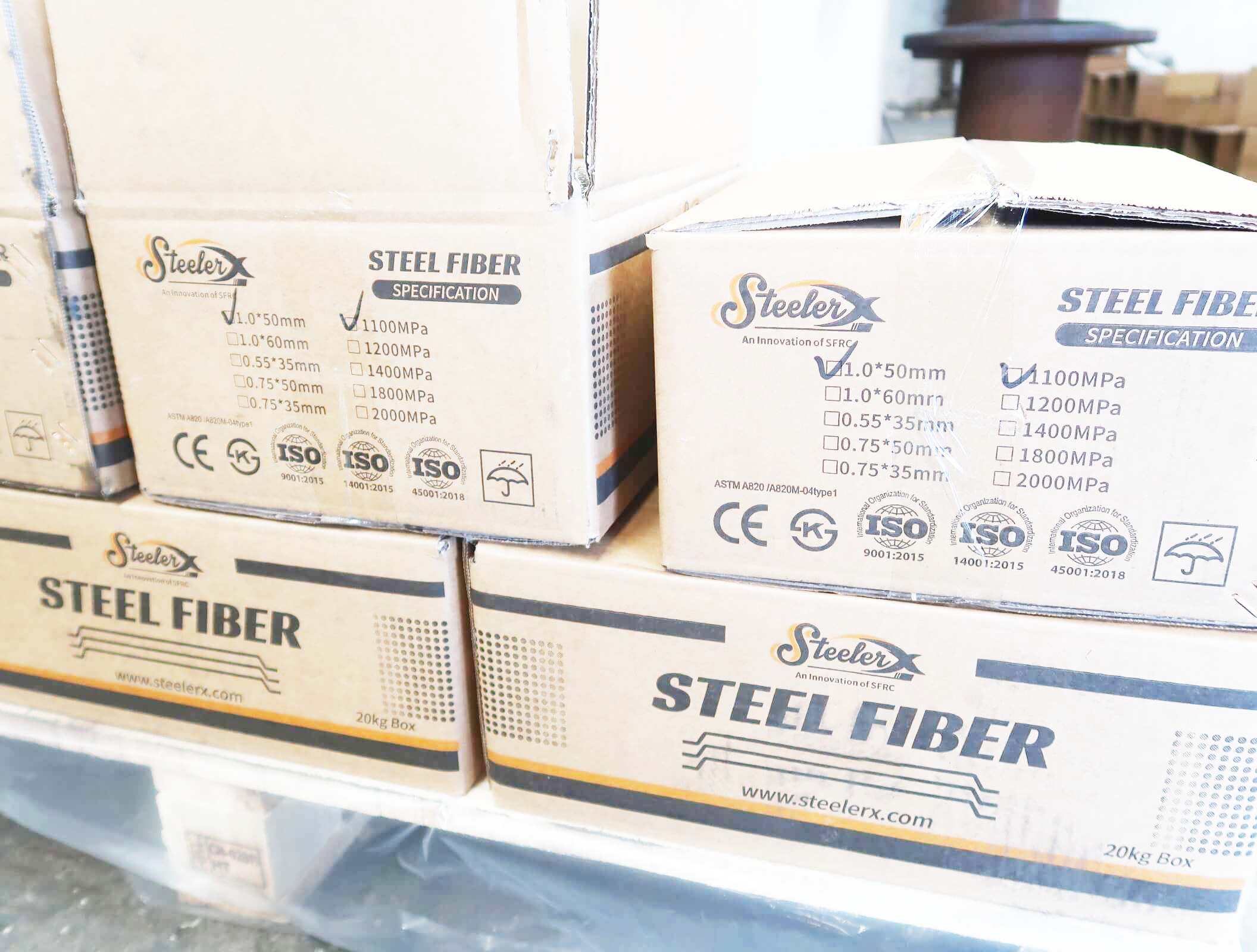
Supply form includes packaging. Steel fiber can be packed in water-soluble bags that dissolve in the mixer in about five seconds, in cartons, or in bulk bags. Private-label and OEM orders add artwork, logo and packaging approval to the checklist. TingCo offers OEM and ODM production, including custom steel fiber design and logo branding for private-label concrete fiber orders, so the evaluation should include an approved artwork and packaging sample before mass production.
The most reliable way to confirm model and supply-form conformity is a pre-production sample. The buyer approves the sample physically, records the measured diameter, length and tensile value, and makes that sample the reference for the pre-shipment inspection. Without an approved reference sample, a later dispute about “the same fiber” has no common baseline.
Checkpoint 3: Delivery assurance
Delivery assurance is the supplier’s ability to produce, inspect and ship the order within the project window. It is a capacity question first and a logistics question second.
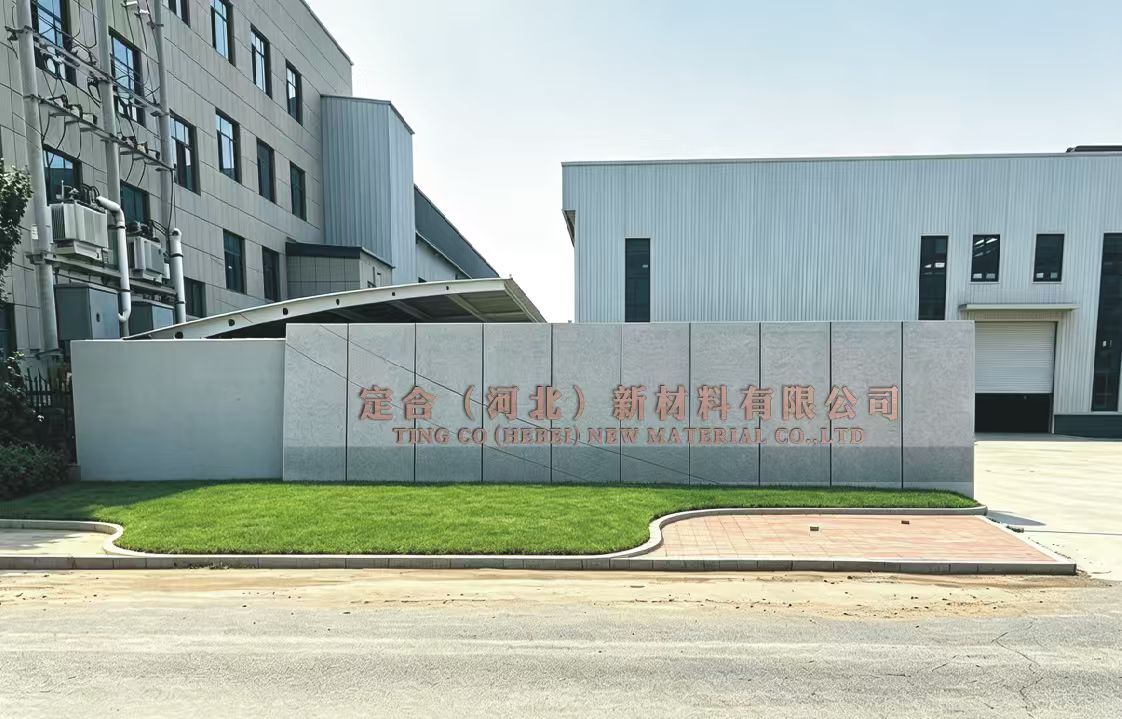
Capacity should be stated in monthly and annual terms, and it should be consistent with the factory the buyer has seen. TingCo reports a monthly production capacity of 2,000 tons and an annual output of 24,000 tons, produced through its manufacturing base, Hebei Tingco New Material Co., Ltd., alongside its Tianjin sales and R&D center. A buyer should check that the entity quoted on the contract is the entity that actually produces the fiber.
Lead time should be written into the order. TingCo’s stated lead time is 10 to 15 days, and the minimum order quantity is 24 tons, equivalent to one 20-foot general-purpose container. Those figures let a buyer test whether the quoted delivery date is realistic against the project schedule, rather than accepting a verbal promise.
Incoterms belong in the same discussion. FOB and CIF are the common terms for fiber exports, and the choice changes who controls the freight and the insurance. TingCo exports about 70% of its output to the EU, Africa, South East Asia and the Middle East, so a buyer in those regions can ask for references from comparable markets.
Finally, delivery assurance includes pre-shipment inspection. A supplier that offers in-line inspection and pre-shipment inspection gives the buyer two chances to catch a deviation: during production and before the container is sealed. The pre-shipment check should include weighing and counting, not only a visual look at the pallets.
Checkpoint 4: Purchasing terms and acceptance criteria
Purchasing terms define how the buyer pays; acceptance criteria define when the buyer must accept. Both should be agreed before the deposit is sent.
A common structure for fiber for concrete is 30% prepayment with 70% balance against a copy of the bill of lading, as stated in TingCo’s published purchasing terms. The same source lists the MOQ at 24 tons (one 20-foot container), delivery terms FOB or CIF, and acceptance criteria based on in-line inspection and pre-shipment inspection. Those terms are a starting point for negotiation, not a universal rule; the buyer should confirm them in the sales contract.
Acceptance criteria should name the test, the sampling method and the acceptance value. For steel fiber reinforced concrete, the relevant tests are EN 14651 (three-point bending beam test), ASTM C1609 (beam test) and ASTM C1550 (panel test). EN 14651 and ASTM C1609 measure residual flexural strength and toughness index, which are the values an engineer uses to confirm that the fiber is delivering the designed performance. ASTM C1550 is a panel test used for a different toughness measure. The purchase order should state which test applies and who pays for it.
A buyer should also require free samples for independent laboratory testing before mass production, and a pre-production sample approval step. Requiring a COA and a mill certificate for every batch, plus a pre-shipment inspection with weighing and counting, closes the loop between the approved sample and the shipped lot.
Checkpoint 5: Deposit fraud and intermediary trading-company risk
The counterparty check is separate from the product check. A supplier can offer a correct datasheet and still be a trading company that cannot control production or delivery.
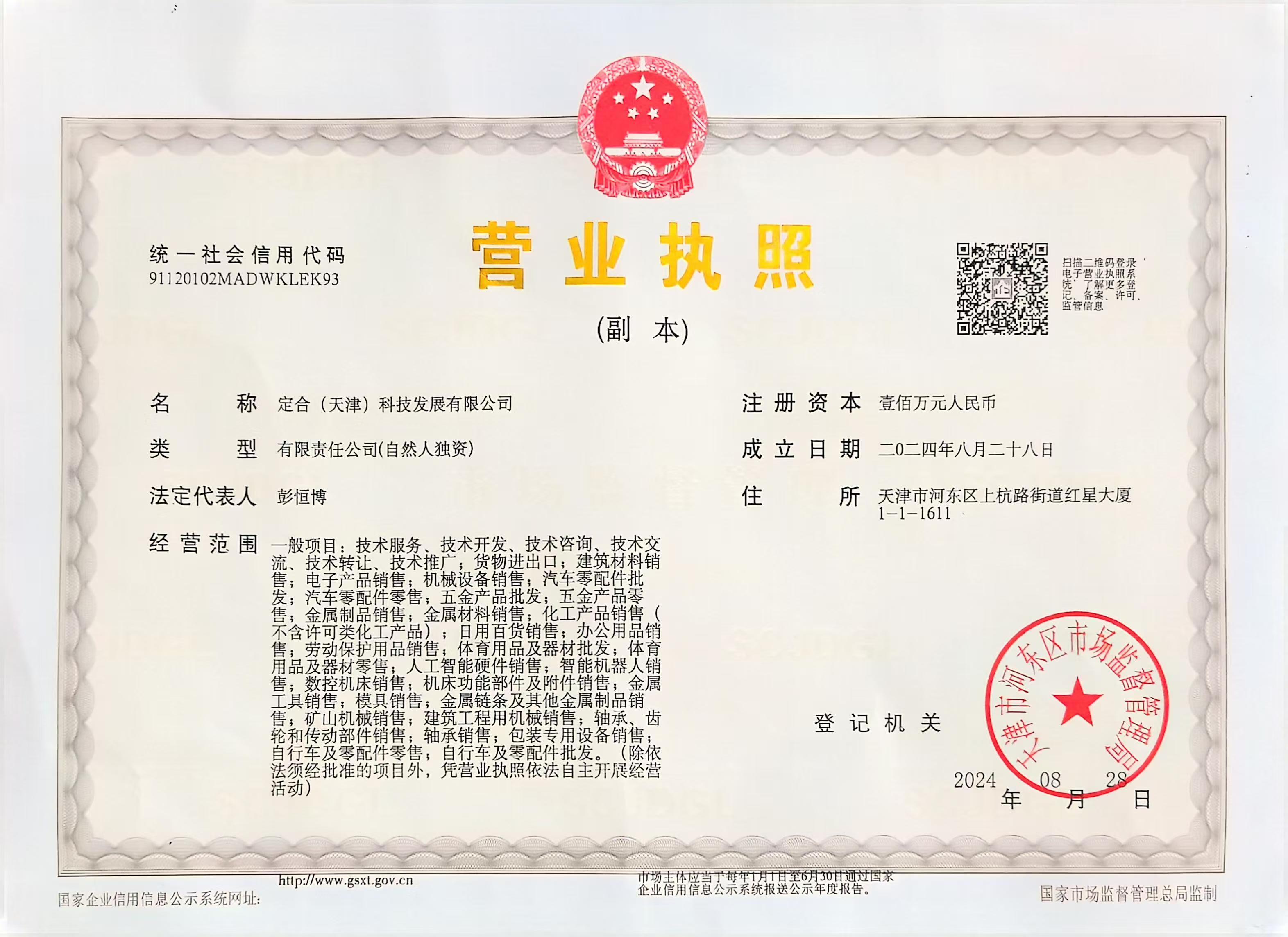
The first control is identity. Ask for the business license and verify the 18-digit Unified Social Credit Code against the company name on the contract and the bank account. The name on the license, the name on the invoice and the name on the bank account should match. A mismatch is a reason to pause, not a detail to explain away.
The second control is a factory audit. Photos and video of the production line, the laboratory and the warehouse are a minimum. A live video call or a third-party audit is stronger. The audit should confirm that the entity being paid is the entity that produces the fiber, or that the trading company is an authorized channel with a written relationship to the factory.
The third control is payment structure. The risk described for fiber purchasing is specific: fraud by trading companies, and no shipment or delayed shipment after payment. The mitigation is to avoid 100% advance payment, use T/T 30% plus 70%, or use a letter of credit (L/C) where the value and the relationship justify it. A supplier that insists on 100% advance payment for a first order is asking the buyer to carry the entire counterparty risk.
These controls are not a substitute for the technical evaluation. They are the reason the technical evaluation can be enforced. A verified factory with a documented quality system is a different commercial risk from an unverified intermediary with a good brochure.
Connecting supplier evidence to fiber-reinforced concrete performance tests
The strongest supplier evaluation links the product documents to the concrete test that the project will actually run.
For steel fiber, the design is usually expressed as a dosage in kilograms per cubic meter and a required residual flexural strength. Published dosing guidance for steel fiber is 20–40 kg/m³ for shotcrete, 15–30 kg/m³ for industrial floors and 10–30 kg/m³ for precast elements. The supplier’s test data should show what its fiber achieves at the specified dosage, measured by EN 14651 or ASTM C1609, so the buyer can compare the datasheet with the mix design.
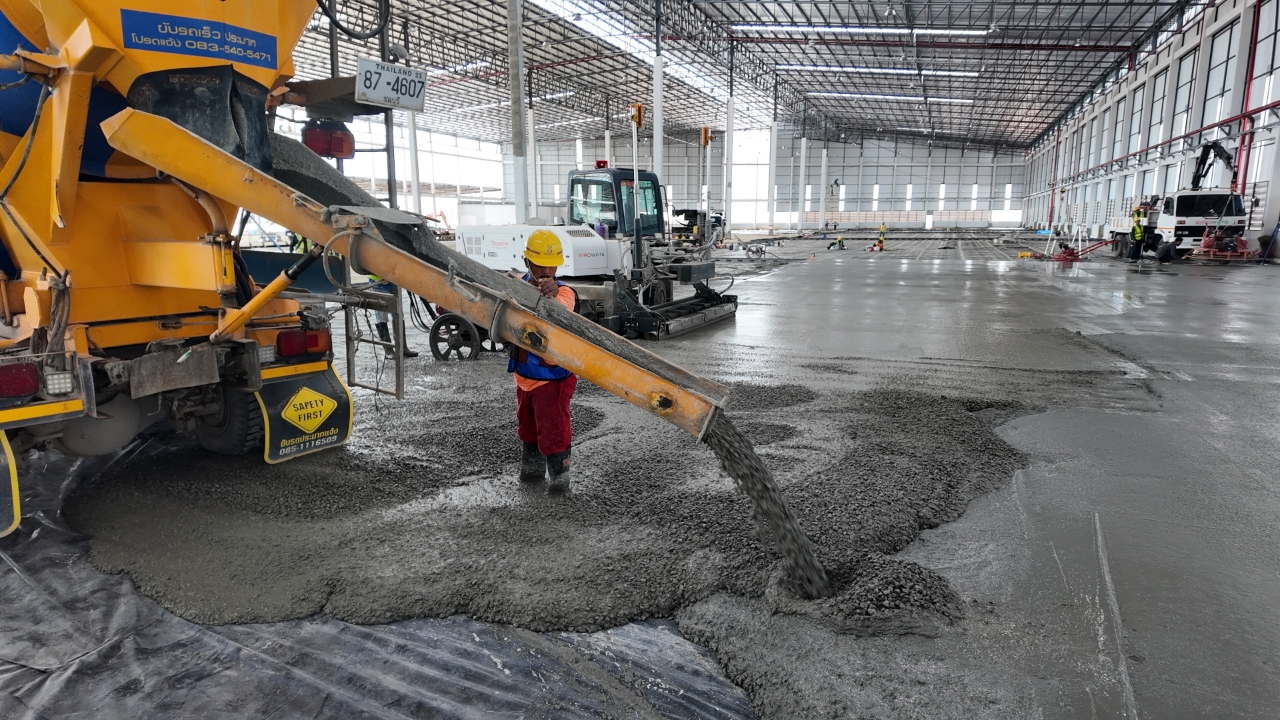
A documented case illustrates the link. A wholesaler with technical support in Thailand used 2,000 tons of fiber over one year for heavy-duty industrial warehouse flooring, logistics park flooring and jointless flooring. The design used an 80/60 1200 MPa steel fiber at a dosage of 20 kg/m³, and the supplier also rearranged and optimized the pile layout to better fit the slab-on-pile project. The lesson for evaluation is not the tonnage. It is that the fiber model, the dosage and the structural detailing were reviewed together, which is the level of support a buyer should expect from a supplier that claims technical capability.
Mixing is part of the same chain. Steel fiber should be fed uniformly, and the mixing time should be extended by 30–60 seconds compared with normal concrete to ensure dispersion without clumping. Water-soluble packaging can be fed directly into the mixer with the aggregates. If the approved supply form changes, the mixing procedure may need to change with it, which is another reason supply-form conformity belongs in the evaluation.
Evaluation checklist at a glance
| Checkpoint | Evidence to request | What it confirms |
|---|---|---|
| Quality consistency | ISO 9001, CE certificate with scope and validity, per-batch COA and mill certificate, concrete test data | The supplier can repeat a documented specification and trace each batch |
| Model conformity | Datasheet with diameter, length, tensile strength and ±10% tolerance | The delivered fiber matches the approved design values |
| Supply-form conformity | Packaging specification, loose or glued confirmation, private-label artwork approval | The fiber arrives in the form the mixer and site can handle |
| Delivery assurance | Monthly capacity, lead time, MOQ, Incoterms, pre-shipment inspection record | The order can be produced and verified before shipment |
| Commercial terms | Payment structure, acceptance test method, sampling and inspection rights | Payment is released against verified documents |
| Counterparty identity | Business license, 18-digit Unified Social Credit Code, factory audit | The seller is the manufacturer or an authorized channel |
Where the checklist applies: flooring, tunnels, UHPC and shotcrete
The same five checkpoints apply across applications, but the emphasis changes.
For industrial flooring, the dominant risk is dosage and dispersion at scale. A flooring project may place thousands of cubic meters, so a small drift in fiber count per kilogram becomes a large drift in total fiber. The evaluation should focus on model conformity, per-batch COA and the supplier’s ability to support mix design. Hooked-end steel fiber is the common family for this application, and the Thailand case above shows the level of design involvement a buyer can ask for.
For tunnel segments and mining shotcrete, the risk shifts to supply continuity and handling. Segments are precast, so the fiber must work in a controlled batching environment; shotcrete is placed by spraying, so dispersion and rebound matter. A supplier with in-line inspection and a stated monthly capacity is better placed to support a continuous tunnel program than one that quotes from stock.
For UHPC and bridge decks, the fiber is often a brass-coated micro steel fiber, and the performance requirements are higher. The evaluation should confirm the micro fiber diameter and tensile strength against the mix design, and should require concrete test data at the specified dosage. ASTM A820 and EN 14889-1 provide the standards framework; the project specification provides the acceptance values.
For PP fiber, whether micro, macro or twisted, the same logic applies with a different test set. PP fiber is used for crack control and does not corrode, which makes it relevant where chloride exposure or appearance matters. The evaluation should confirm the fiber type, the dosage and the supplier’s dispersion guidance, because PP fibers can clump if feeding is not controlled.
Frequently asked questions
How do you guarantee consistent fiber quality so that concrete won't fail acceptance tests or delay a project?
Consistency is guaranteed by a system plus records. Require ISO 9001 and a product certificate whose scope covers the fiber type, such as CE under EN 14889-1 for steel fiber. Require a complete datasheet with a stated tolerance, commonly ±10%, and a COA and mill certificate for every batch. Send free samples to an independent laboratory and approve a pre-production sample before mass production. Arrange pre-shipment inspection with weighing and counting. Together these steps connect the approved sample to the shipped lot and reduce the chance that a batch fails the acceptance test.
Which China hooked-end steel fiber OEMs support industrial flooring drawings?
Support for industrial flooring drawings depends on the supplier’s design capability, not only its production capacity. Tianjin TingCo Tech Co., Ltd. states that its team has studied TR34 and EFNARC design codes and partners with professional design teams to offer steel fiber floor design and tunnel segment design services. It also provides OEM and ODM production, custom steel fiber design and logo branding. Buyers should verify the claimed design support with a reference project and confirm that the entity providing the design service is the same entity that produces the fiber.
What are the purchasing terms and acceptance criteria for fiber for concrete?
Published purchasing terms for fiber for concrete commonly use an MOQ of 24 tons, equivalent to one 20-foot container, with FOB or CIF delivery. A typical payment structure is 30% prepayment and 70% balance against a copy of the bill of lading. Acceptance criteria are usually based on in-line inspection and pre-shipment inspection. Buyers should confirm these terms in the sales contract and should name the acceptance test, such as EN 14651, ASTM C1609 or ASTM C1550, together with the sampling method and the acceptance value.
How can a buyer avoid deposit fraud or intermediary trading-company risk when sourcing fiber for concrete?
Verify the business license and the 18-digit Unified Social Credit Code, and check that the company name, invoice name and bank account match. Require factory photos or a video audit, and confirm that the entity being paid is the entity that produces the fiber. Avoid 100% advance payment; use T/T 30% plus 70%, or an L/C where appropriate. These controls address the specific risk of paying a deposit and receiving no shipment, or receiving a delayed shipment from a trading company that does not control production.
How should steel fiber be dosed and mixed to match the approved mix design?
Dosing depends on the application. Published guidance is 20–40 kg/m³ for shotcrete, 15–30 kg/m³ for industrial floors and 10–30 kg/m³ for precast elements. Feed the fiber uniformly, and extend the mixing time by 30–60 seconds compared with normal concrete to ensure dispersion without clumping. Water-soluble packaging can be fed directly into the mixer with the aggregates. Verify the result with EN 14651 or ASTM C1609 specimens before full production. Buyers who want to confirm a specific dosage for their mix can request a sample and a quotation from the supplier.
Conclusion
Evaluating a fiber for concrete supplier comes down to evidence. Quality consistency is proven by a certificate with the right scope, per-batch documents and concrete test data. Model and supply-form conformity is proven by a datasheet with tolerances and an approved pre-production sample. Delivery assurance is proven by stated capacity, lead time, MOQ and pre-shipment inspection. Purchasing terms and acceptance criteria turn those proofs into a contract. Counterparty checks protect the payment until the goods are verified.
Tianjin TingCo Tech Co., Ltd. publishes the facts a buyer needs to run this evaluation: CE certificate 1301 – CPR – 2456 under EN 14889-1:2006, ISO 9001 certification, a monthly capacity of 2,000 tons, a lead time of 10–15 days, an MOQ of 24 tons, in-line and pre-shipment inspection, and OEM/ODM support. Buyers can review the company’s capability and project portfolio in the TingCo company brochure, or visit Tianjin TingCo Tech Co., Ltd. to request a sample and confirm current terms.
Have Questions or Need More Details?
Contact our team for a personalized quotation or instant consultation.
Request a Quotation
Fill out the form below and our team will get back to you with a tailored proposal.
WhatsApp Direct Chat
Prefer to chat in real-time? Message us on WhatsApp for instant assistance & quick answers.
- Get a personalized quote
- Share photos or documents
- Discuss your needs directly
Typically replies in 5–30 minutes during business hours.