Fiber for Concrete Suppliers: Capability, Delivery & Deposit Checks
Evaluating Fiber for Concrete Suppliers: Capability, Delivery, and Deposit Fraud Checks
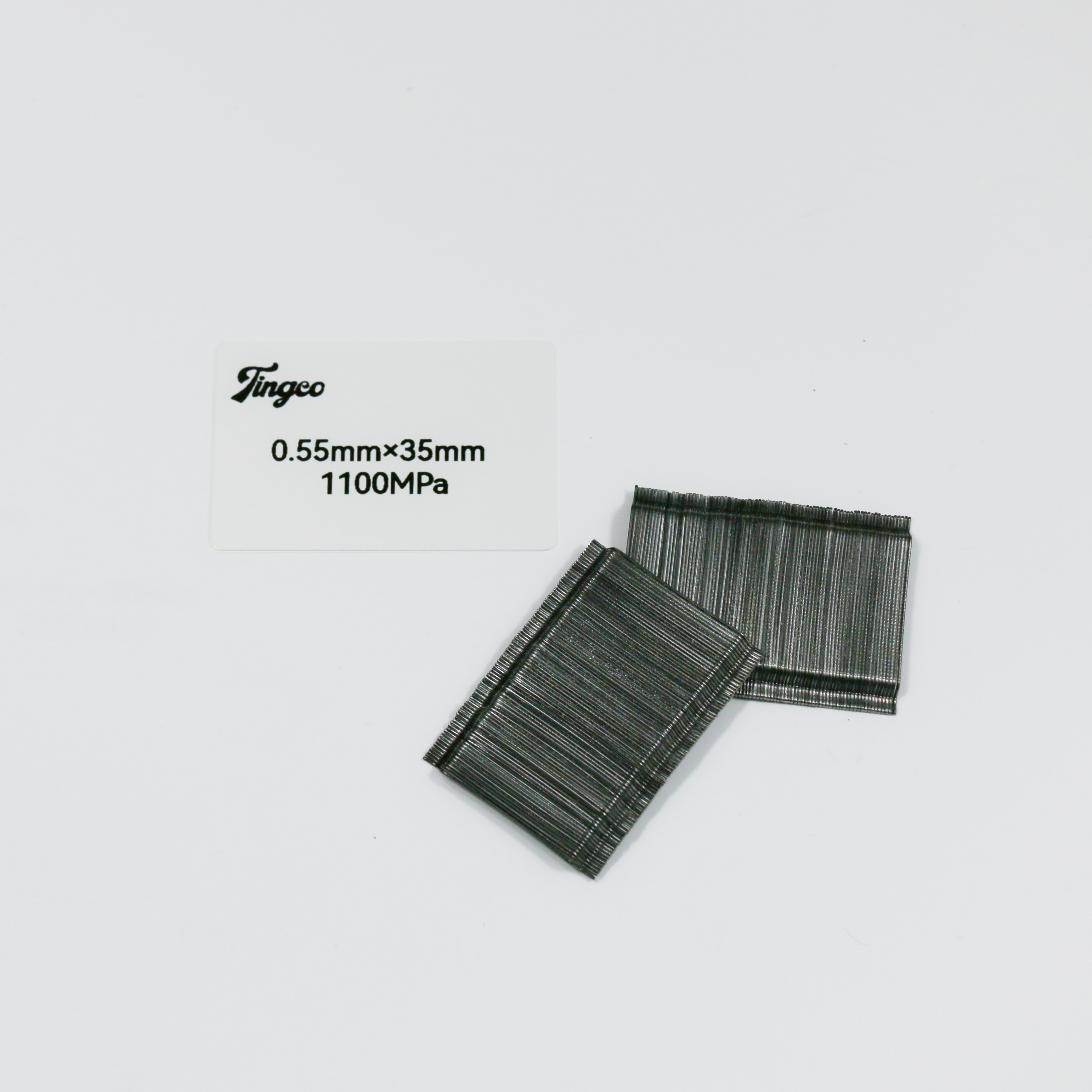
Cover image: glued steel fiber bundles carrying a manufacturer identification mark — batch traceability is the first item in any supplier verification file.
Evaluating a fiber for concrete supplier comes down to three verifiable answers: whether the company actually manufactures and tests the fiber it sells, whether it can deliver the ordered tonnage on the promised date, and whether your deposit is protected if it cannot. Price per ton, packaging design and response speed only become meaningful after those three questions have been answered with documents rather than assurances.
This framework is written for buyers at the research and evaluation stage — importers, distributors, contractors and project engineers specifying reinforcement fiber for industrial flooring, tunnel segments, shotcrete, mining support, precast elements or UHPC. It sets out five evaluation gates, a step-by-step verification workflow, a capability comparison table, and the concrete checks that reduce the risk of paying a deposit and never receiving goods.
Tianjin TingCo Tech Co., Ltd. is a concrete reinforcement fiber manufacturer founded in 2014, headquartered in Tianjin, China, and operating a 6,000 m² production base through its manufacturing entity, Hebei Tingco New Material Co., Ltd. Its documented capability profile is used throughout this article as a worked example of what a complete, verifiable supplier file should contain.
Problem Definition: Why Fiber Suppliers Are Difficult to Evaluate
Concrete reinforcement fiber is one of the few construction inputs where a good product and a poor product can look identical in the bag. The difference does not appear at the delivery gate; it appears months later, in hardened concrete, when residual flexural strength, toughness and crack control are measured — or when a slab does not behave the way the design assumed.
Three conditions make supplier evaluation harder than for most other materials:
- Appearance is not a quality signal. Wire quality, diameter tolerance, coating integrity and bundle gluing are effectively invisible to the eye. While appearances may look alike, it is a rigorous quality inspection system and real fiber-reinforced concrete performance testing — not visual checks — that determine whether a batch is acceptable.
- Performance only appears in concrete. The properties that matter for design and acceptance are residual flexural strength and toughness index, established through EN 14651 or ASTM C1609 three-point bending beam tests, or ASTM C1550 panel tests. A datasheet alone does not verify them.
- Supply layers are often mixed. One quotation may come from a manufacturer, a trading company, or a hybrid structure that pairs a sales entity with a separate production entity. Hybrid structures are legitimate and common across the industry, but they must be disclosed in writing, because they determine who is accountable for quality, delivery and claims.
Then add cross-border payment. The buyer transfers money first and the supplier ships weeks later. That interval is where deposit fraud occurs, and it is the reason supplier evaluation must cover commercial risk, not only technical specification.
Industry Background: What Buyers Are Walking Into in 2026
Demand is large enough that most buyers evaluate more than one country of origin. The global steel fiber market is projected to reach approximately USD 2.87 billion by 2026, according to Fortune Business Insights. Within that market, industrial floors accounted for a 37.28% share by application in 2026, and hooked-end steel fibers held the leading position by type with a 58.89% share. On the synthetic side, the global polypropylene fiber market for construction is expected to grow at a CAGR of 6.4% between 2026 and 2034 — which means synthetic and steel fiber are frequently evaluated in the same procurement exercise.
Supply is concentrated. China was the largest exporter of steel fiber under HS code 7326, accounting for 51.85% of the imports identified in specialized trade datasets. In practice, almost every international shortlist includes at least one Chinese supplier, which is precisely why a repeatable evaluation method matters more than a preferred-origin list.
Two standards anchor the technical conversation. EN 14889-1:2006 defines the definitions, specifications and conformity requirements for steel fibers used in concrete within the European Union. ASTM A820/A820M-16 is the core global standard specifying requirements for five types of steel fiber in fiber-reinforced concrete. Together with the concrete-level test methods EN 14651, ASTM C1609 and ASTM C1550, they form the spine of a supplier verification file that can be reviewed by an engineer rather than taken on trust.
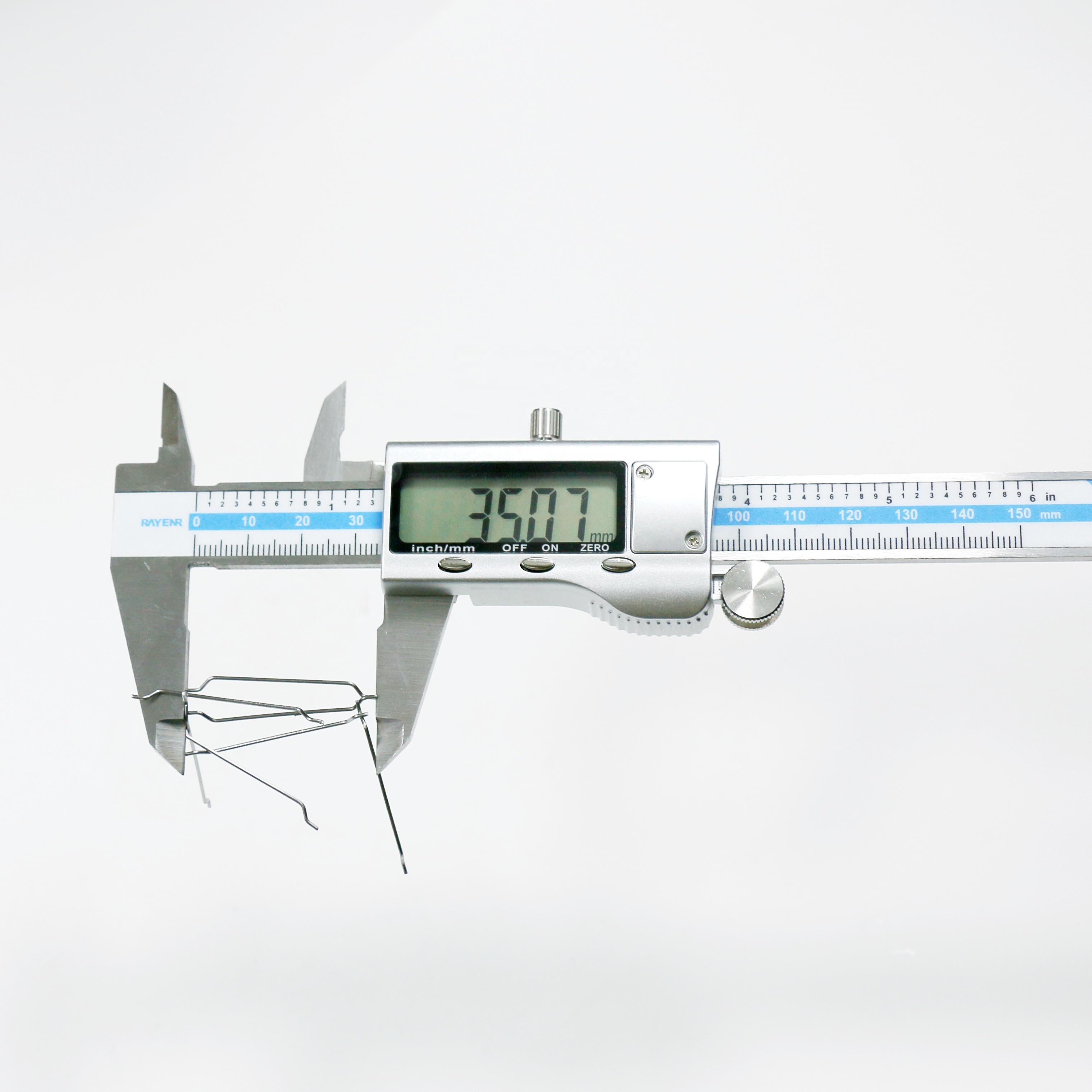
Loose hooked-end steel fiber: diameter, length and tensile strength must be stated in writing and confirmed against the inspection record, not judged visually.
Detailed Solution: The Five-Gate Supplier Evaluation Framework
A supplier that passes all five gates below can be treated as an accountable manufacturing partner. A supplier that steers around one or two gates should be treated as an unknown quantity, regardless of how attractive the quotation looks.
Gate 1 — Manufacturing Capability and Entity Transparency
Start with the entity, not the product. Ask for the business registration of the company issuing the quotation, then confirm that the legal name matches the contract, the invoice and — most importantly — the bank account beneficiary. In cross-border fiber trade, a mismatch between the company that quotes and the account that receives money is the single most common warning sign.
Next, size the operation against your order. Documented figures give a useful benchmark: TingCo reports a 6,000 m² factory, 50 employees including 5 R&D engineers, an annual output of 24,000 tons and a monthly capacity of 2,000 tons. Request the equivalent numbers from every candidate supplier, together with the physical address where the fiber is actually produced. A trading intermediary can usually supply a product list and a price; it usually cannot supply a production address, an equipment list or named inspectors.
Gate 2 — Quality Inspection and Performance Testing
Ask three questions: what is inspected, by whom, and at which stage of the order. A manufacturing-backed supplier should be able to name at least two inspection points, such as in-line inspection during production and pre-shipment inspection before loading, and should be able to describe testing performed on the concrete rather than only on the input wire.
The strongest single signal is in-house concrete testing capability. TingCo operates its own steel fiber reinforced concrete testing lab, where each product line undergoes beam bending, compression and toughness tests, with specifications, quantity and packaging checked before any shipment leaves the factory. A supplier with a lab can tell you what a given fiber actually delivers in a mix design; a supplier without one can only repeat what the datasheet already says.
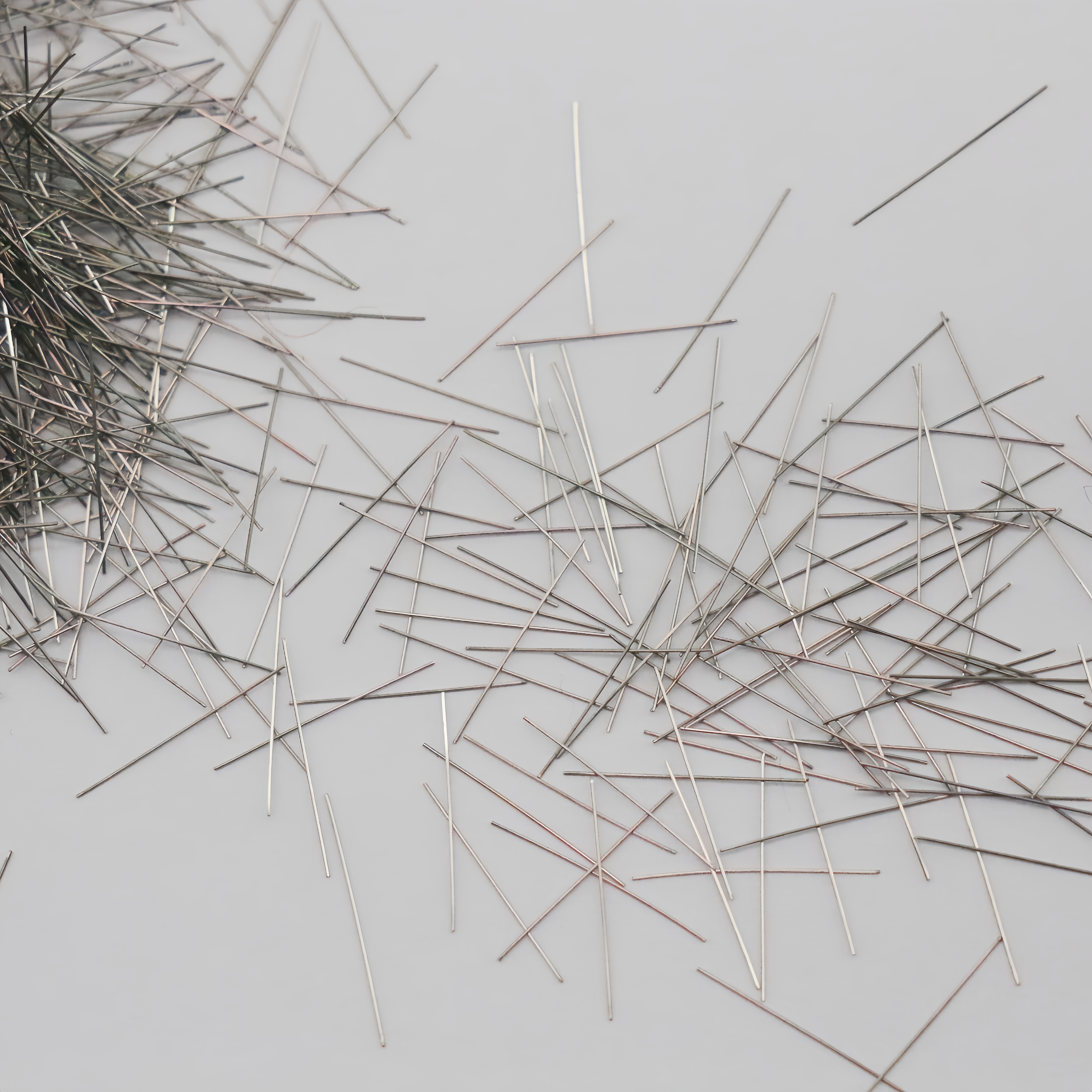
Micro steel fiber: the finer the fiber, the more the acceptance decision depends on test reports rather than on appearance.
Gate 3 — Specification and Application Match
Fiber selection is project-specific. A supplier that quotes only a price per ton without asking about your application is selling a commodity, not a solution — and commodity pricing is exactly what a trading intermediary is optimized to provide. The evaluation should confirm that the quoted fiber family matches the intended use (industrial flooring, tunnel segment, shotcrete, mining, precast or UHPC) and that diameter, length, coating and tensile strength are confirmed in writing.
Documented product ranges make the comparison concrete. TingCo's steel fiber for reinforced concrete — models TC-07560-HNG, TC-07560-HHG, TC-05535-HNG and TC-07535-HNL — is produced from carbon steel wire with diameters of 0.5–1.0 mm, lengths of 25–60 mm and tensile strength of 1,100–2,100 MPa, positioned for industrial flooring, tunnel segments and mining. Its UHPC micro fibers (TC-0213-CMS, TC-0220-CMS, TC-0213-SMS) use brass or stainless coating with diameters of 0.175–0.3 mm, lengths of 6–25 mm and tensile strength of 2,200–2,850 MPa.
Gate 4 — Delivery Reliability and Commercial Terms
Delivery is where capable manufacturers and confident-sounding intermediaries diverge fastest. Lead time, minimum order quantity and packaging should be fixed in writing before payment. TingCo's documented terms are a 24-ton MOQ and a 10–15 day lead time, with OEM/ODM production covering custom logos, custom fiber design and private-label packaging.
Export experience is a second, harder-to-fake delivery signal. A 70% export ratio and shipments into the EU, Africa, South East Asia and the Middle East indicate a supplier that already handles export documentation, container loading and destination compliance as routine work. Ask how many countries the supplier has shipped into; in TingCo's case, its fibers are used every year in projects across more than 30 countries, from industrial floors in Southeast Asia and tunnel segments in the Middle East to shotcrete in Europe and mining support in Africa.
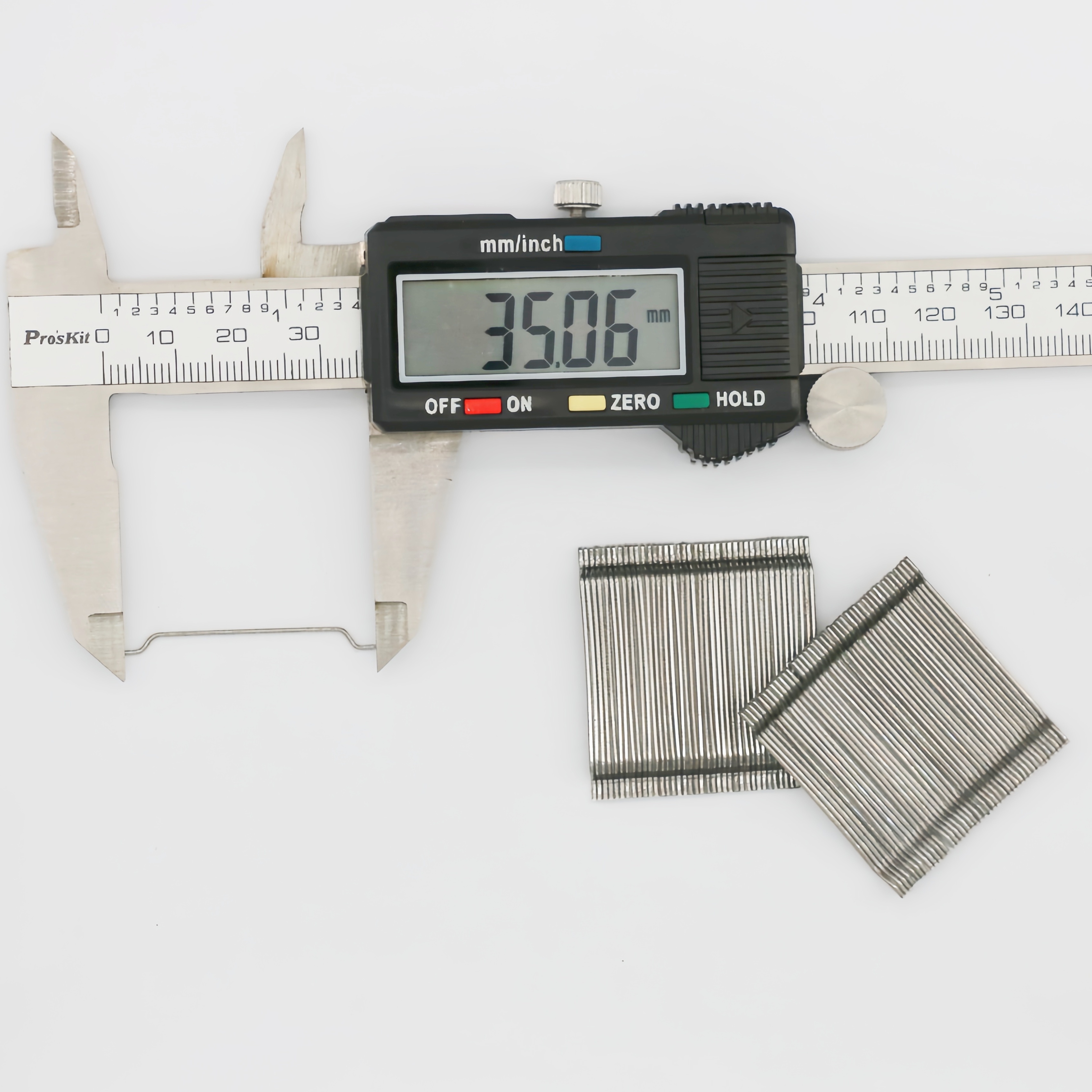
Packaging and gluing quality are checked before loading; a dated pre-shipment inspection record is what makes the claim verifiable.
Gate 5 — Deposit Protection and Intermediary Red Flags
Deposit fraud rarely begins with an obviously fake company. It begins with a plausible quotation, real product photographs and a request for full advance payment. The checks below are practical, supplier-independent, and can be applied to any candidate on a shortlist:
- Name matching. Confirm that the quotation, the proforma invoice, the contract and the bank beneficiary are the same legal entity. Do not pay a personal account, or a third-party account that is not named in the contract.
- Staged payment. Avoid 100% advance payment. A deposit plus balance against a pre-shipment inspection report — or a letter of credit — keeps leverage with the buyer until the goods are on the vessel.
- Physical verification. Request a live video walkthrough of the production line, or commission a third-party audit at the stated factory address. Intermediaries frequently cannot arrange this because they do not control the site.
- Technical depth test. Ask application questions that only a manufacturer's technical team can answer: dosage rate for your project, mixing time adjustment, dispersion behavior, and the acceptance test method. TingCo's team, for example, has studied TR34 and EFNARC design codes and works with professional design teams on steel fiber floor design and tunnel segment design — a level of engagement a pure trader cannot supply.
- Document trail before balance payment. Insist on a dated pre-shipment inspection report and loading photographs before releasing the balance.
- Written commitments. TingCo states three operating rules — no fake pricing, no excuses on delivery, and no avoiding problems — and the value of such a statement is that it can be written into a contract and enforced. Ask every candidate what they will commit to in writing.
Evaluation shortcut: if a supplier cannot produce the entity registration, the production address, the inspection stages and the concrete test method in the same conversation, the quotation is not yet comparable — no matter how competitive the price appears.
Step-by-Step: A Ten-Step Evaluation Workflow
The sequence below moves a buyer from first contact to a protected first shipment, in the order that minimizes both technical and financial risk.
- Define the application. State the project type — warehouse floor, tunnel segment, shotcrete, mining roadway, bridge deck or UHPC element — and the environment, including dynamic vehicle loads, vibration, humidity and underground conditions.
- Request specifications in writing. Fiber family, diameter, length, tensile strength, coating and packaging, expressed in standard terms.
- Verify the entity. Match business registration, quotation, contract and bank beneficiary.
- Verify capacity against order size. Plant area, headcount, annual output and monthly capacity should be consistent with what you are about to buy.
- Verify the quality system. Identify inspection stages and whether concrete-level testing is performed in-house.
- Check certification coverage. CE certification in accordance with EN 14889-1, compliance with ASTM A820 and ISO 13270, and factory ISO 9001 certification form the minimum documentary set for internationally specified projects.
- Agree commercial terms. MOQ, lead time, Incoterms, packaging and payment schedule — all before production.
- Protect the deposit. Use staged payment or a letter of credit, and pay only to the contracted entity.
- Validate mixing and dosage before mass production. Confirm the dosage range for your application and the mixing procedure with the supplier's technical team.
- Inspect before settlement. Release the balance only against a pre-shipment inspection report and loading evidence.
Use Cases: Matching the Supplier to the Project
Heavy-Duty Industrial and Logistics Flooring
Industrial flooring is the largest single application for steel fiber and the most sensitive to supplier quality, because dosage and fiber geometry feed directly into the slab design. In a documented Southeast Asian project, a wholesaler with technical support purchased 2,000 tons over one year for heavy-duty industrial warehouse flooring, logistics park flooring and jointless flooring. The design used 80/60 steel fiber with 1,200 MPa tensile strength at a dosage of 20 kg/m³, and the supplier's engineering input included rearranging and optimizing the pile layout to better fit the slab-on-pile design. That combination — tonnage, design input and layout optimization — is what distinguishes a manufacturing partner from a reseller.
Tunnel Segments, Shotcrete and Mining Support
Underground applications add confined-space working, humid conditions and vibration loads to the specification. Fiber for tunnel segments, shotcrete and mine roadway support must disperse uniformly without agglomeration, remain compatible with cement, and tolerate an alkaline environment. Dosing machines, concrete mixers and spraying machines all belong in the evaluation, because the special requirements that decide acceptance are alkali resistance, high dispersion uniformity and no agglomeration during mixing.
UHPC Elements, Bridge Decks and Facades
Ultra-high-performance concrete demands much finer reinforcement. Industry data indicates that brass-coated micro steel fibers for UHPC typically feature tensile strength above 2,500 MPa with diameters between 0.2 and 0.3 mm. A supplier quoting a 2,200–2,850 MPa range at 0.175–0.3 mm should therefore be asked for the supporting test report rather than accepted on description alone — this is exactly the kind of claim that separates documented suppliers from intermediaries.
Synthetic Fiber Where Corrosion Matters
Polypropylene fiber provides a non-corroding option for floors, precast elements and infrastructure where steel fiber is unsuitable, with macro, micro and twisted variants covering different crack-control functions. Sourcing steel and synthetic fiber from a single qualified supplier simplifies procurement and logistics, but the same five gates apply unchanged.
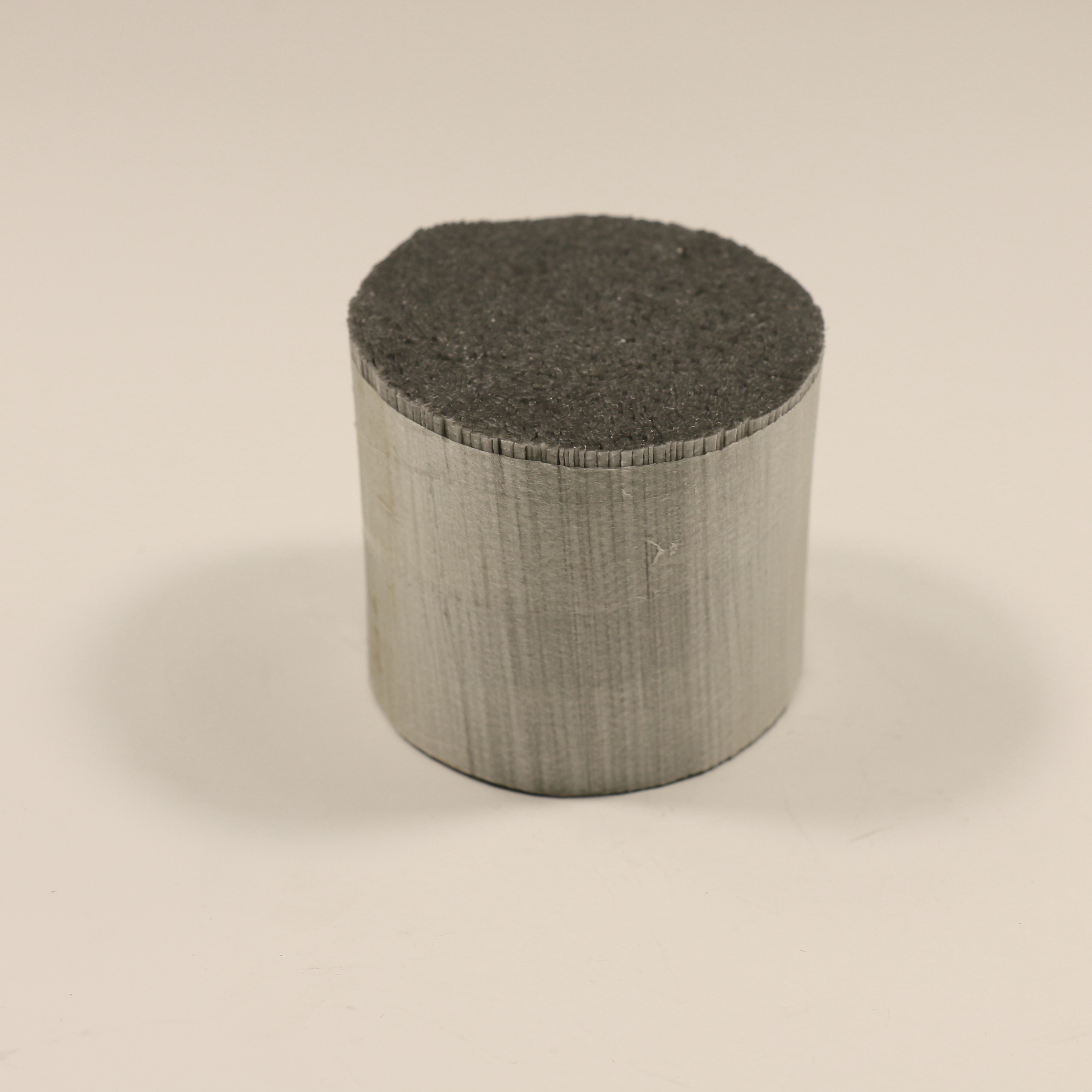
Synthetic fiber covers the non-corroding side of the specification; a supplier that offers both families reduces the number of verification files a buyer has to maintain.
Comparison Table: Verification Checklist Against Documented Facts
The table below maps each evaluation gate to the proof a buyer should request, with TingCo's documented facts shown as a reference example of a complete response.
| Evaluation gate | Proof to request | Documented reference example |
|---|---|---|
| Legal entity and manufacturing identity | Business registration, contract name, bank beneficiary name | Tianjin TingCo Tech Co., Ltd. (sales and R&D, Tianjin) and Hebei Tingco New Material Co., Ltd. (manufacturing base); founded 2014 |
| Plant scale | Factory address, plant area, headcount, engineering staff | 6,000 m² factory; 50 employees; 5 R&D engineers; 24,000 tons annual output |
| Production capacity | Monthly capacity compared with order volume | 2,000 tons per month |
| Quality inspection | Inspection stages and shipment records | In-line inspection and pre-shipment inspection; specifications, quantity and packaging checked before shipment |
| Concrete performance testing | Lab capability and test methods | In-house steel fiber reinforced concrete lab; beam bending, compression and toughness tests; EN 14651 / ASTM C1609 / ASTM C1550 as acceptance methods |
| Certification | Certificates and compliance statements | CE certification in accordance with EN 14889-1; compliance with ASTM A820 and ISO 13270; ISO 9001 factory certification |
| Product range | Models, diameter, length, tensile strength | Steel fiber 0.5–1.0 mm / 25–60 mm / 1,100–2,100 MPa; UHPC micro fiber 0.175–0.3 mm / 6–25 mm / 2,200–2,850 MPa; PP macro, micro and twisted fiber |
| Commercial terms | MOQ, lead time, OEM and packaging terms | MOQ 24 tons; lead time 10–15 days; OEM/ODM with custom logo, custom fiber design, private label |
| Export track record | Markets served and documentation capability | 70% export ratio; EU, Africa, South East Asia and Middle East; projects in more than 30 countries |
| After-sales | Support clause in the contract | Remote technical support, quality problem compensation, construction consultant |
The second table narrows the same logic to specification matching, so a buyer can check that the fiber family quoted actually corresponds to the project type.
| Fiber family | Documented models | Diameter | Length | Tensile strength | Typical application |
|---|---|---|---|---|---|
| Steel fiber for reinforced concrete | TC-07560-HNG, TC-07560-HHG, TC-05535-HNG, TC-07535-HNL | 0.5–1.0 mm | 25–60 mm | 1,100–2,100 MPa | Industrial flooring, tunnel segment, mining |
| UHPC micro steel fiber (brass / stainless coating) | TC-0213-CMS, TC-0220-CMS, TC-0213-SMS | 0.175–0.3 mm | 6–25 mm | 2,200–2,850 MPa | UHPC, bridge deck |
| PP micro fiber | PP Micro Fiber | 18 μm, 32 μm, 36–38 μm | 6 / 12 / 19 mm | 550 MPa | Concrete, cement |
| PP macro fiber | PP Macro Fiber | 0.7 mm | 30–58 mm | 550–600 MPa | Industrial flooring |
| PP twisted fiber | PP Twisted Fiber | 0.6–0.7 mm | 46–54 mm | 450–650 MPa | Concrete infrastructure |
FAQ: Supplier Evaluation Questions Buyers Ask
1. Which certifications and test methods should be verified before ordering fiber for concrete?
Two standards describe the product and one set of methods verifies the concrete. EN 14889-1:2006 defines the definitions, specifications and conformity requirements for steel fibers used in concrete in the European Union, while ASTM A820/A820M-16 specifies requirements for five types of steel fiber in fiber-reinforced concrete. At concrete level, acceptance uses EN 14651 or ASTM C1609 three-point bending beam tests, or ASTM C1550 panel tests, which establish residual flexural strength and toughness index. A complete verification file therefore contains a CE certificate in accordance with EN 14889-1, a statement of compliance with ASTM A820 and ISO 13270, a factory ISO 9001 certificate, and recent test reports. Tianjin TingCo Tech Co., Ltd. states all of these items, which makes them a practical baseline when comparing other suppliers.
2. How can a buyer tell a real fiber manufacturer from a trading intermediary?
The decisive test is whether capacity claims can be tied to a physical production site and a quality process. A manufacturer should be able to provide a factory address, plant area, headcount, engineering staff and output figures — TingCo, for example, documents a 6,000 m² factory, 50 employees, 5 R&D engineers, 24,000 tons of annual output and 2,000 tons of monthly capacity — together with named inspection stages such as in-line inspection and pre-shipment inspection, and concrete-level testing such as beam bending, compression and toughness tests in its own laboratory. Intermediaries typically cannot describe dosing, mixing time adjustment, dispersion behavior or acceptance testing in project terms, and usually cannot arrange factory access or third-party audit. A hybrid structure with a separate sales entity and production entity is acceptable, but only if it is disclosed in writing and consistent across quotation, contract and bank details.
3. What commercial terms should be fixed in writing before a first order?
Six items should be settled before production starts: minimum order quantity, lead time, packaging specification, Incoterms, payment schedule, and validity period of the price. TingCo's documented terms are a 24-ton MOQ and a 10–15 day lead time, with OEM/ODM production covering custom logos, custom fiber design and private-label solutions. Cost should also be evaluated across the whole project rather than per bag: supplying steel and synthetic fiber from one qualified source simplifies procurement and reduces logistics cost, and in the flooring, tunnel, shotcrete and mining scenarios served by this product family, fiber reinforcement is documented to reduce construction time by 50% and lower total cost by 30–40%. Buyers should ask each supplier to justify the value claim with its own application data.
4. How can fiber performance be validated before committing to full production?
Validation works at two levels. At product level, request the fiber test report and confirm diameter, length and tensile strength against the quotation. At concrete level, confirm dosage and mixing practice: typical guidance is 20–40 kg/m³ for shotcrete, 15–30 kg/m³ for industrial floors and 10–30 kg/m³ for precast elements. Fiber should be fed uniformly; water-soluble packaging bags can be added directly to the mixer together with the aggregates, dissolving in about five seconds, while non-water-soluble packaging should be spread evenly in batches. Mixing time is typically extended by 30–60 seconds compared with normal concrete to ensure uniform dispersion without clumping, then slump and workability are checked and the superplasticizer dosage adjusted if needed. Verification specimens should follow EN 14651 or ASTM C1609. Buyers who want this documentation reviewed against a specific project can contact the TingCo technical team at info@tingco.co or via WhatsApp on +86 189-2017-0726.
5. What should protect a deposit between payment and shipment?
Four protections are effective in fiber procurement. First, a written contract in which the seller's legal entity name matches the bank beneficiary exactly. Second, staged payment or a letter of credit, so the balance is released against a pre-shipment inspection report rather than against a promise. Third, a delivery commitment written into the contract — a documented lead time of 10–15 days leaves little room for indefinite postponement. Fourth, contractual after-sales terms, such as remote technical support, quality problem compensation and construction consultant services, so that responsibility continues after the goods arrive. Buyers can download the TingCo company and project brochure as a starting point for building a comparison file.
Conclusion: Three Answers Before Any Deposit
Supplier evaluation for fiber for concrete is not a price exercise. It is a verification exercise with three answers at the end: the company manufactures and tests what it sells, the company can deliver the ordered tonnage on the promised date, and the buyer's money is protected until the goods are loaded. The five gates in this framework — manufacturing capability and entity transparency, quality inspection and performance testing, specification and application match, delivery reliability and commercial terms, and deposit protection — organize those answers so they can be checked rather than assumed.
For buyers comparing suppliers across industrial flooring, tunnel segments, shotcrete, mining support and UHPC, the strongest shortlist is the one in which every claim is attached to a document: a registration, a certificate, a test report, a capacity figure, a lead time, a beneficiary name. Suppliers who can supply that file consistently are manufacturing partners. Suppliers who cannot are a procurement risk that no discount compensates for.
Next Step: Build Your Supplier Verification File
Tianjin TingCo Tech Co., Ltd. supplies steel fiber, brass coated steel fiber, stainless steel fiber and PP fiber from a 6,000 m² manufacturing base in China, with CE certification in accordance with EN 14889-1, compliance with ASTM A820 and ISO 13270, and ISO 9001 factory certification. Buyers can request specifications, test reports, quotation or sample discussion directly:
- Website: www.tcfibers.com
- Email: info@tingco.co (Contact: Jackie Zhu)
- Tel: +86-22-59785568 | WhatsApp: +86 189-2017-0726
- Address: B1F16, Hongxing Building, Linke West Road, Hedong, Tianjin 300161, China
- Brochure: Download the TingCo company and project brochure (PDF)
Have Questions or Need More Details?
Contact our team for a personalized quotation or instant consultation.
Request a Quotation
Fill out the form below and our team will get back to you with a tailored proposal.
WhatsApp Direct Chat
Prefer to chat in real-time? Message us on WhatsApp for instant assistance & quick answers.
- Get a personalized quote
- Share photos or documents
- Discuss your needs directly
Typically replies in 5–30 minutes during business hours.