Fiber for Concrete: Certification and Specification Limits Buyers Must Verify
Fiber for concrete is not one product. It is a category that spans carbon steel wire fibers, brass-coated micro steel fibers, stainless steel micro fibers and polypropylene (PP) fibers. Each has a different material, a different failure mode and a different certification path. The procurement risk is rarely "wrong category". It is ordering a fiber whose parameters fall outside the scope of the certificate the supplier shows you, or whose tolerance range was never put in writing.
This guide works through the constraints a buyer can actually verify before an order is placed: what a CE certificate for steel fibers covers, which dimensional and mechanical parameters can be specified in a tender document, what dosage and mixing limits apply on site, and which commercial terms reduce payment and acceptance risk. It draws on published standards and market data, together with first-party product, certification and capability information from Tianjin TingCo Tech Co., Ltd.
Why “Fiber for Concrete” Is a Constraint Problem, Not a Product Choice
The category name is broad enough that almost any supplier can say yes to it. That is exactly where projects go wrong. Three verification gaps account for most of the disagreements that surface later, at the batching plant or at acceptance testing.
- Certificate scope versus ordered scope. A CE certificate for steel fibers is normally written against a parameter window, not against a product family in general. If the ordered diameter, length or tensile strength sits outside that window, the certificate does not describe what is being shipped — even though the supplier legitimately holds it.
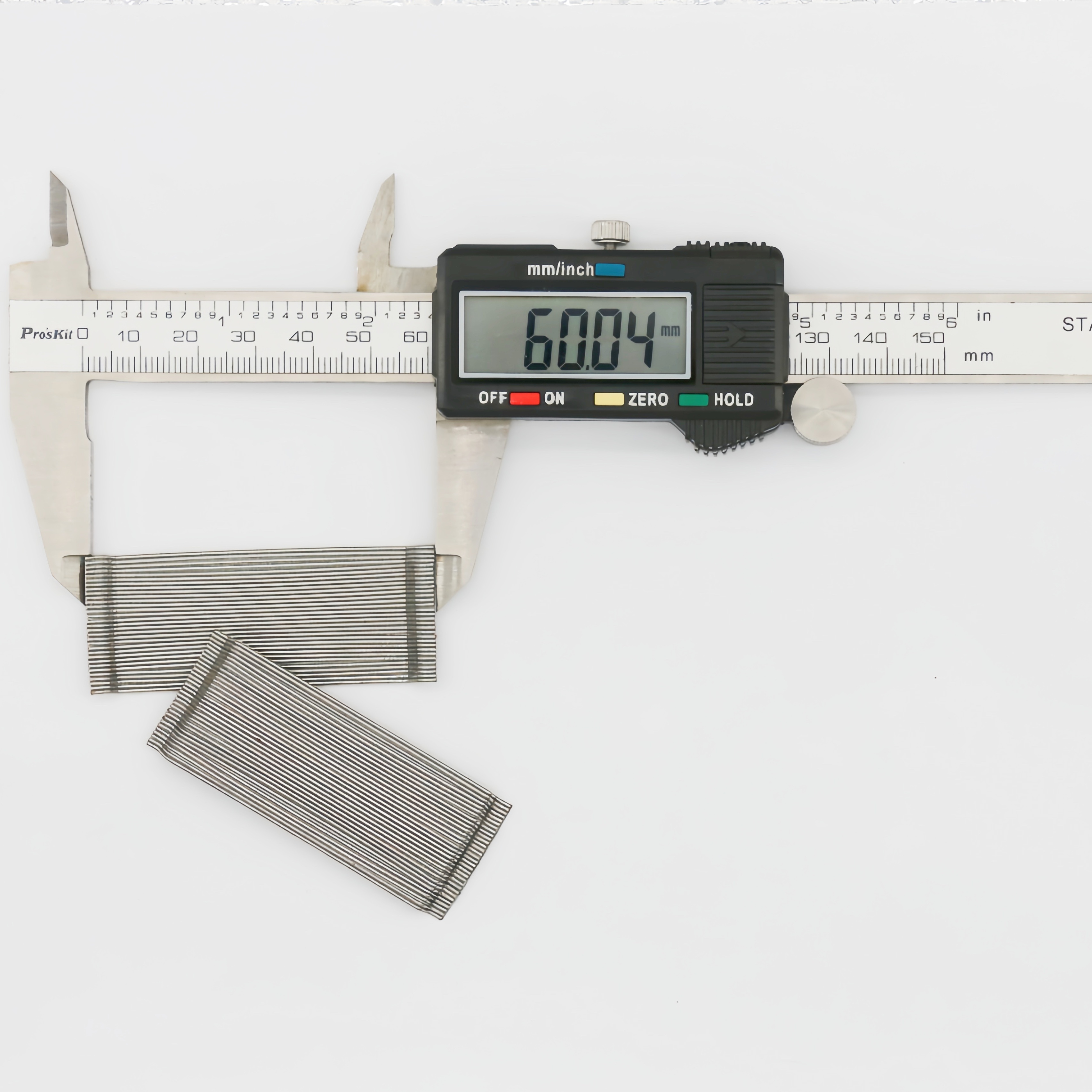
- Datasheets without tolerances. A specification that lists a diameter but not a tolerance cannot be inspected. Buyers should require a complete datasheet that states a ±10% tolerance, request free samples, and send those samples to an independent laboratory for testing before mass production is confirmed.
- No agreed acceptance method. Fiber-reinforced concrete is accepted on measured residual flexural strength or toughness, not on a supplier statement. The relevant test methods are the three-point bending beam test to EN 14651, the beam test to ASTM C1609, or the panel test to ASTM C1550.
There is a fourth, more commercial gap: supplier identity. Payment risk increases when the counterparty is a trading company presenting itself as a factory, or when 100% advance payment is demanded. Practical mitigations are to verify the business licence and the 18-digit Unified Social Credit Code, require factory photographs or a video factory audit, and settle through T/T 30% + 70% or L/C rather than full prepayment.
What the 2026 Market and Standards Picture Shows
Purchase constraints in this category are shaped by a market that is concentrated on both the supply side and the application side. Fortune Business Insights projects the global steel fiber market to reach approximately USD 2.87 billion by 2026, with industrial floors accounting for a 37.28% share of applications and hooked-end steel fibers holding a 58.89% share of the type segment. On the synthetic side, the same research house expects the global polypropylene fiber market for construction to grow at a CAGR of 6.4% from 2026 to 2034.
Supply is similarly concentrated. China was the largest exporter of steel fiber under HS 7326, accounting for 51.85% of total imports identified in specialised trade datasets (Zauba customs aggregation, commercial source). For a buyer, this is not a headline about volume; it is a reminder that sourcing decisions will usually be cross-border, which moves documentation and batch consistency ahead of unit price in importance.
Two standards do most of the specification work. ASTM A820/A820M is the core global standard specifying requirements for five types of steel fibers in fiber-reinforced concrete. EN 14889-1:2006 defines the definitions, specifications and conformity criteria for steel fibers used in concrete within the European Union. A tender document that names one or both of these, and then states the parameter window being ordered, is far easier to enforce than one that names a product description alone.
What Tianjin TingCo Tech Co., Ltd Can Certify and Spec
Tianjin TingCo Tech Co., Ltd is a manufacturer and technical partner for concrete reinforcement fibers, founded in 2014 and headquartered in Tianjin, China. The company operates through a sales and R&D centre in Tianjin and a manufacturing base, Hebei Tingco New Material Co., Ltd., covering research, production, quality control, technical support and export service. Its stated annual output is 24,000 tons from a 6,000 m² factory with 50 employees and 5 R&D engineers; approximately 70% of output is exported to the EU, Africa, South East Asia and the Middle East, and its products are reported in use across more than 30 countries.
Certification scope — what the CE certificate covers
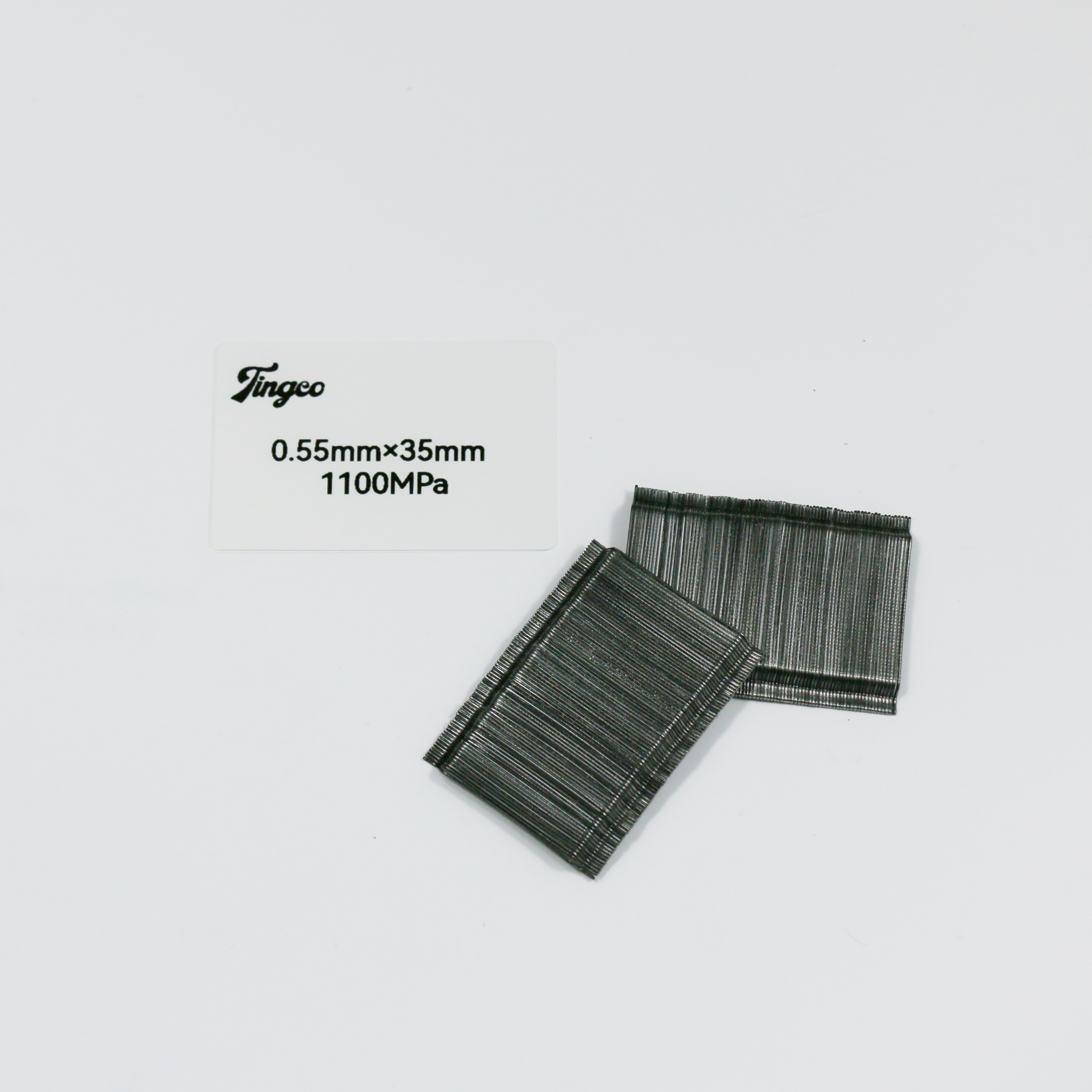
TingCo holds CE Certificate 1301 – CPR – 2456, issued by TSUS, based on EN 14889-1:2006, for the EU market. The certificate scope covers steel fibres for concrete (Group I), for reinforcement of concrete, mortars and cementitious mixes, and its issue and expiry dates are 2025-05-13 and 2030-05-12 respectively. Crucially, the certificate is tied to a parameter window: it applies to steel fiber products with diameter 0.5–1.0 mm, length 25–60 mm and tensile strength 1100–2100 MPa. Steel fiber supplied for industrial flooring, and for tunnel segment and mining applications, is covered by the same certificate to EN 14889-1:2006.
The same company states that its products comply with ASTM A820 and ISO 13270, and that its factory is ISO 9001 quality certified. For a buyer, the practical instruction is to map the tender specification against that parameter window before award, and to keep a copy of the certificate with the same certificate number in the project file.
Steel fiber parameters that can go into a specification
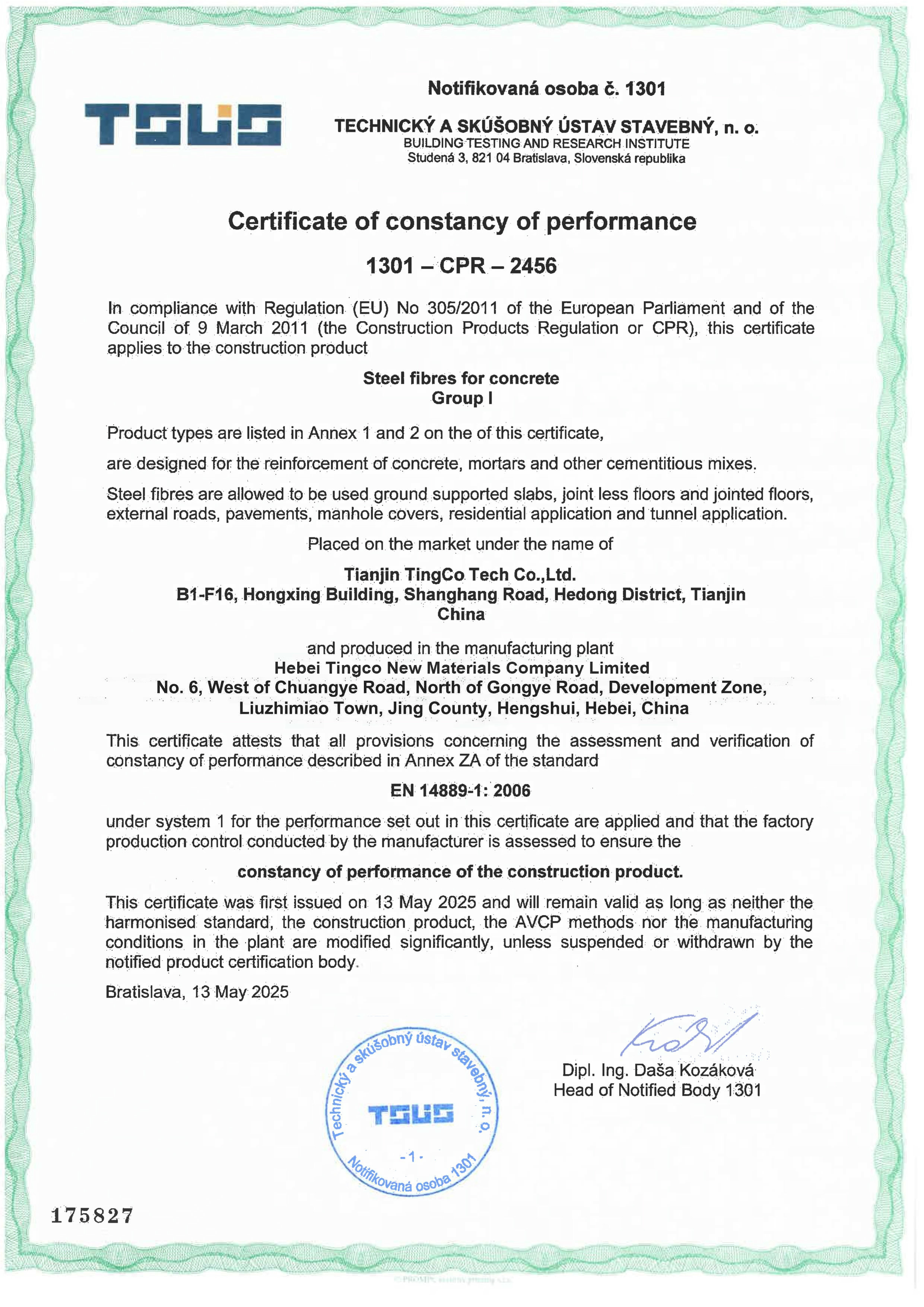
The carbon steel wire fiber range covers a diameter of 0.5–1.0 mm, a length of 25–60 mm and a tensile strength of 1100–2100 MPa. Available models for this product reference are TC-07560-HNG, TC-07560-HHG, TC-05535-HNG and TC-07535-HNL, and the intended industries are the tunnel segment industry and the mining industry, alongside industrial flooring. These are the same parameters that sit inside the CE scope, which means a specification written in this window can be supported by both product data and certification.
UHPC-grade micro steel fibers
For ultra-high-performance concrete and reactive powder concrete, the micro steel fiber models are TC-0213-CMS, TC-0220-CMS and TC-0213-SMS, with diameters of 0.175–0.3 mm, lengths of 6–25 mm and tensile strengths of 2200–2850 MPa. Materials used are brass coating and stainless coating. UHPC reinforced with the brass-coated micro steel fiber is stated to reach a compressive strength of up to 220 MPa, a tensile strength exceeding 2100 MPa and a fracture toughness 250 times that of ordinary concrete. The stainless steel micro-wire is stated to have a heat resistance of up to 600 °C, which is relevant where stainless fiber is selected for corrosion- or heat-exposed UHPC elements.

Polypropylene (synthetic) fiber parameters
Three PP fiber types are offered, and their parameters differ enough that they should never be written into a specification as a single line item.
- PP micro fiber: diameters of 18 µm, 32 µm and 36–38 µm; lengths of 6 mm, 12 mm and 19 mm; tensile strength of 550 MPa.
- PP macro fiber: diameter of 0.7 mm; lengths of 30–58 mm; tensile strength of 550–600 MPa.
- PP twisted fiber: diameter of 0.6–0.7 mm; lengths of 46–54 mm; tensile strength of 450–650 MPa.
The material is polypropylene, with a density of 0.91 g/cm³, and it is chemically resistant, non-absorbent and non-corroding — the reason synthetic fiber is often specified where a corrosion path through the concrete surface is unacceptable, or where the exposure environment is aggressive.
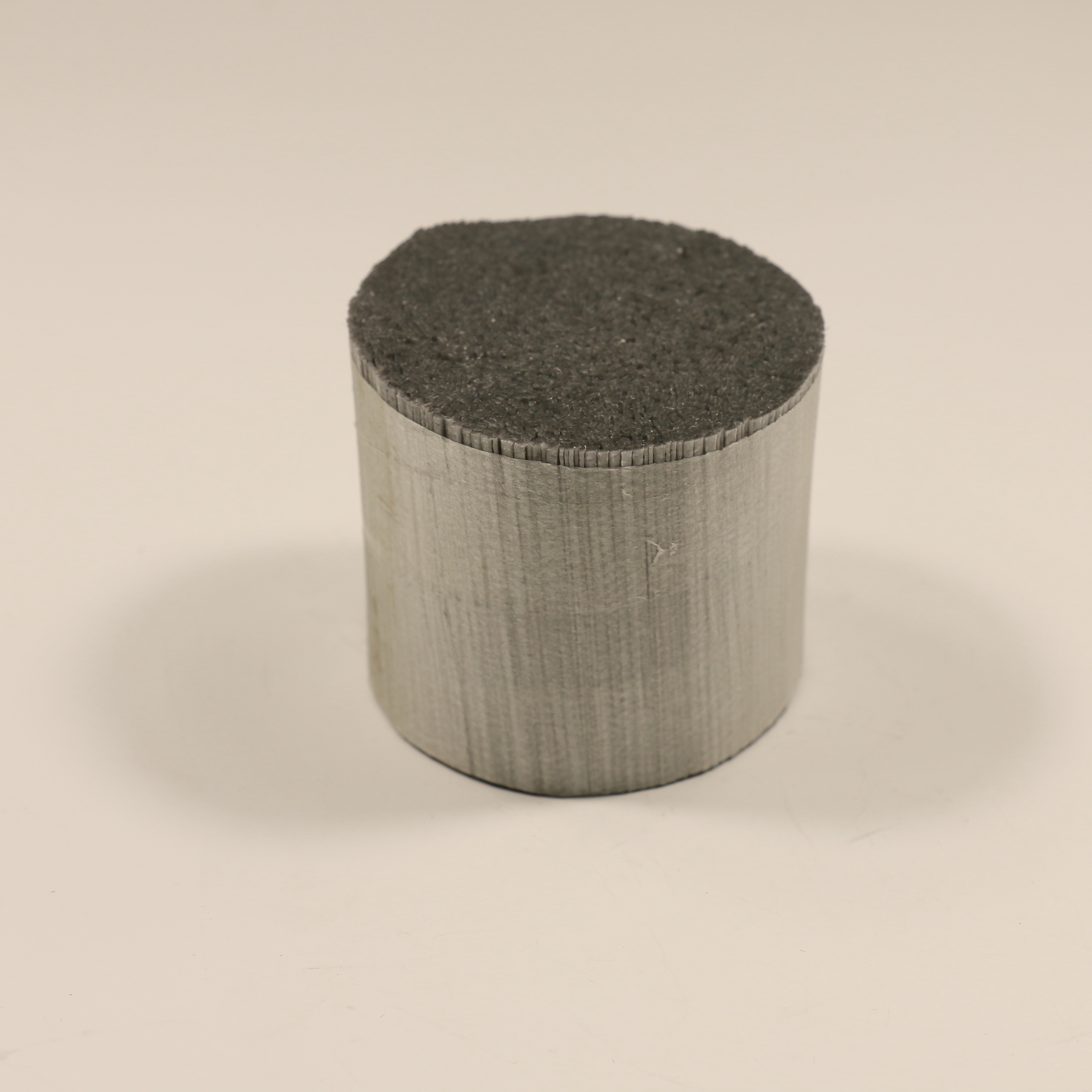
Dosage, mixing and verification constraints
Dosage is a design input, not a supplier preference. Working ranges are 20–40 kg/m³ for shotcrete, 15–30 kg/m³ for industrial floors and 10–30 kg/m³ for precast elements. Feeding practice matters as much as the number: uniform steel fiber feeding is recommended for both flooring and precast concrete segments, and water-soluble packaging bags can be fed directly into the mixer with the aggregates, dissolving in about 5 seconds; non-water-soluble packaging should be spread evenly in batches. Mixing time should be extended by 30–60 seconds compared with normal concrete to ensure uniform dispersion without clumping, after which slump and workability should be checked and the superplasticizer dosage adjusted if necessary. Operators should wear protective gloves and goggles.
Verification should be planned at the same time as the mix design. TingCo operates its own steel fiber reinforced concrete testing lab at the factory, where every product line undergoes beam bending, compression and toughness tests, and every shipment is inspected before leaving the factory for specification, quantity and packaging. On the buyer side, the corresponding controls are a Certificate of Analysis and a Mill Certificate for every batch, plus pre-shipment inspection with weighing and counting verification, and specimen preparation to EN 14651/ASTM C1609 requirements where acceptance testing is contractual.
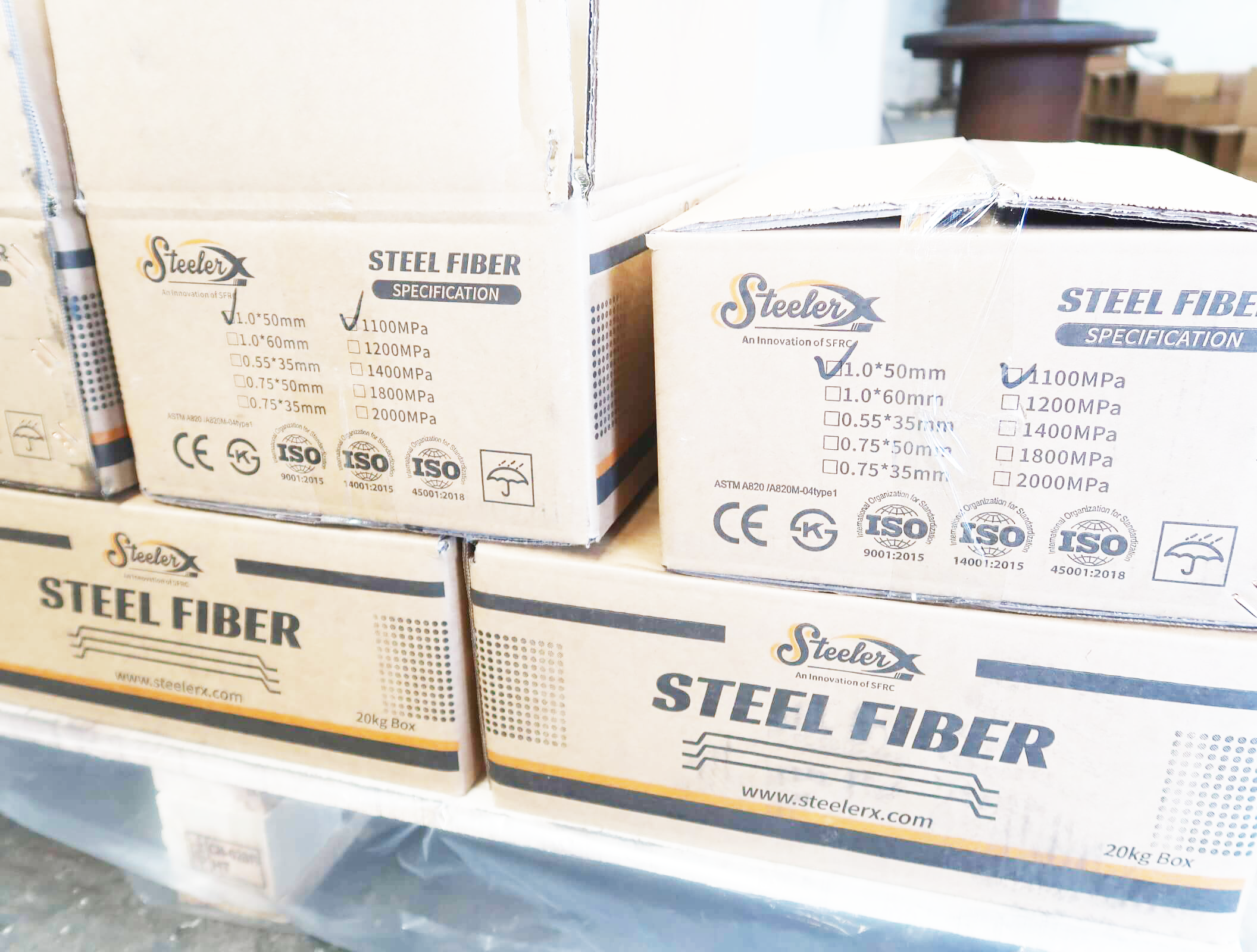
Commercial constraints: MOQ, lead time, capacity and payment
Production mode is OEM/ODM, with customisation covering logo and design of different steel fiber types. Monthly capacity is stated at 2,000 tons, minimum order quantity at 24 tons, and lead time at 10–15 days. Quality control is performed through in-line inspection and pre-shipment inspection, and after-sales support covers remote technical support, compensation for quality problems and construction consulting. Export markets are the EU, South East Asia and the Middle East. On payment, the recommended structures are T/T 30% + 70% or L/C, combined with business licence and Unified Social Credit Code verification — a combination that protects both sides without demanding full prepayment.
Step-by-Step: Locking Six Constraints Before You Request a Quote
The sequence below is designed so that each step produces a document you can attach to the purchase order, rather than a verbal understanding.
- Fix the acceptance test first. Choose EN 14651, ASTM C1609 or ASTM C1550 and write it into the specification before any fiber parameter is discussed. The test method determines what residual strength or toughness value the design actually relies on.
- Choose the fiber family and form. Steel fiber for industrial flooring, tunnel segments or mining; micro steel fiber for UHPC and bridge deck elements; or PP fiber where non-corroding reinforcement is required. Decide the form as well — loose or glued bundled — because form affects feed behaviour at the batching plant.
- Map parameters against the certificate window. For CE-covered steel fiber, confirm the ordered diameter, length and tensile strength sit inside 0.5–1.0 mm, 25–60 mm and 1100–2100 MPa. If the design requires values outside that window, treat certification as an open item to resolve, not an assumption.
- Request the datasheet with tolerances and the batch document set. A complete datasheet including the ±10% tolerance, plus samples of a Certificate of Analysis and a Mill Certificate, lets you judge whether the supplier can document a batch at all.
- Validate by sample. Send samples to an independent laboratory for testing, and confirm a pre-production sample before mass production begins. This is the cheapest point in the project to discover a parameter mismatch.
- Close the commercial terms in writing. MOQ, lead time, packaging and labelling, payment structure (T/T 30% + 70% or L/C) and pre-shipment inspection arrangements should all be in the contract, along with the supplier’s business licence details.
Use Case: 2,000 Tons of Hooked-End Fiber in a Thai Logistics Park Floor
A wholesaler with in-house technical support in Thailand ordered 2,000 tons of steel fiber over a one-year period for heavy-duty industrial warehouse flooring, logistics park flooring and jointless flooring. The design outcome was steel fiber for industrial flooring at a dosage of 20 kg/m³ using an 80/60 configuration at 1200 MPa. The technical work included rearranging and optimising the pile layout to better fit the slab-on-pile project, which is typical of the design support that sits between fiber selection and a workable floor detail.
The working conditions in this segment are consistent across projects of this type: humid environments, confined underground spaces for tunnel work, dynamic vehicle loading, alternating temperature and vibration load. Typical project types include warehouse floors, highway pavement, subway tunnels, mine roadways, bridge decks and underground parking lots, with matched equipment such as dosing machines, concrete mixers and spraying machines. Reported functional outcomes for fiber reinforcement in these applications are crack control, reduced construction time and lower total cost, with the caveat that both figures depend on the specific design and site conditions rather than being fixed by the fiber alone.
What this case illustrates for a buyer is sequencing: the fiber dosage and configuration were fixed against an acceptance requirement, and the design of the supporting structure was adjusted at the same time. Fiber selection is rarely a standalone decision.
Comparison Table: Parameter Ranges by Fiber Type
The ranges below are published product data from Tianjin TingCo Tech Co., Ltd, shown for specification planning. They do not replace a project-specific mix design or acceptance test.
| Fiber type | Models | Material | Diameter | Length | Tensile strength | Typical application |
|---|---|---|---|---|---|---|
| Hooked-end / steel fiber | TC-07560-HNG, TC-07560-HHG, TC-05535-HNG, TC-07535-HNL | Carbon steel wire | 0.5–1.0 mm | 25–60 mm | 1100–2100 MPa | Industrial flooring, tunnel segment, mining |
| Micro steel fiber (UHPC) | TC-0213-CMS, TC-0220-CMS | Brass coating | 0.175–0.3 mm | 6–25 mm | 2200–2850 MPa | UHPC / RPC, bridge deck, precast elements |
| Micro steel fiber (corrosion / heat) | TC-0213-SMS | Stainless coating | 0.175–0.3 mm | 6–25 mm | 2200–2850 MPa | UHPC elements exposed to heat (up to 600 °C) or corrosion |
| PP micro fiber | PP Micro Fiber | Polypropylene | 18 µm / 32 µm / 36–38 µm | 6 / 12 / 19 mm | 550 MPa | Plastic shrinkage crack control in flooring |
| PP macro fiber | PP Macro Fiber | Polypropylene | 0.7 mm | 30–58 mm | 550–600 MPa | Industrial flooring, non-corroding reinforcement |
| PP twisted fiber | PP Twisted Fiber | Polypropylene | 0.6–0.7 mm | 46–54 mm | 450–650 MPa | Flooring and precast elements |
Certification note: the CE scope held by TingCo (Certificate 1301 – CPR – 2456 to EN 14889-1:2006, issued by TSUS) applies to steel fiber products at 0.5–1.0 mm diameter, 25–60 mm length and 1100–2100 MPa tensile strength. Buyers should confirm certificate scope against the exact ordered parameters, and request the Certificate of Analysis and Mill Certificate for each batch.
FAQ: Certification, Capability, Budget, Sample and Lead Time
What certification should fiber for concrete carry for an EU project?
For EU projects, the most direct conformity evidence for steel fiber is a CE certificate issued to EN 14889-1:2006. TingCo holds CE Certificate 1301 – CPR – 2456, issued by TSUS, covering steel fibres for concrete (Group I) for the reinforcement of concrete, mortars and cementitious mixes, valid from 2025-05-13 to 2030-05-12. The certificate is tied to a parameter window — diameter 0.5–1.0 mm, length 25–60 mm, tensile strength 1100–2100 MPa — so the ordered specification should be checked against that window before award. Outside the EU, ASTM A820/A820M is the core global standard specifying requirements for five types of steel fibers in fiber-reinforced concrete; TingCo states compliance with ASTM A820 and ISO 13270, and its factory holds ISO 9001 certification.
What diameter, length and tensile strength ranges can be specified, and can the fiber be OEM-packaged?
For carbon steel wire fiber the ranges are 0.5–1.0 mm diameter, 25–60 mm length and 1100–2100 MPa tensile strength, in models TC-07560-HNG, TC-07560-HHG, TC-05535-HNG and TC-07535-HNL. UHPC-grade micro steel fiber runs at 0.175–0.3 mm diameter, 6–25 mm length and 2200–2850 MPa tensile strength in models TC-0213-CMS, TC-0220-CMS and TC-0213-SMS. PP properties are 18/32/36–38 µm at 6/12/19 mm and 550 MPa for micro fiber, 0.7 mm at 30–58 mm and 550–600 MPa for macro fiber, and 0.6–0.7 mm at 46–54 mm and 450–650 MPa for twisted fiber. Production mode is OEM/ODM with logo and custom steel fiber design, monthly capacity is 2,000 tons, and the minimum order quantity is 24 tons.
What drives the cost per cubic metre of fiber-reinforced concrete?
Three variables dominate. The first is dosage, because the fiber quantity per cubic metre is the largest single input: 20–40 kg/m³ for shotcrete, 15–30 kg/m³ for industrial floors and 10–30 kg/m³ for precast elements. The second is the fiber tier — a UHPC-grade micro steel fiber at 2200–2850 MPa tensile strength sits in a different cost category from a PP micro fiber at 550 MPa. The third is verification: independent laboratory testing, batch Certificates of Analysis and pre-shipment inspection add cost, but they reduce the far larger cost of a failed acceptance test or a rejected delivery. Because unverified pricing is itself a risk, the recommended practice is to fix specification, dosage and document requirements first, then compare quotations against that fixed scope.
How should fiber quality be validated before a bulk order?
Request a complete datasheet that includes the ±10% tolerance, because a nominal diameter without a tolerance cannot be inspected. Request free samples and send them to an independent laboratory for testing, then confirm a pre-production sample before mass production. For the production phase, require a Certificate of Analysis and a Mill Certificate for every batch, and arrange pre-shipment inspection with weighing and counting verification. TingCo runs beam bending, compression and toughness tests in its own steel fiber reinforced concrete testing lab and inspects specification, quantity and packaging before every shipment leaves the factory.
What are the lead time and payment terms when placing an order?
Lead time is stated at 10–15 days against a monthly capacity of 2,000 tons and a minimum order quantity of 24 tons. To reduce payment risk, the recommended structures are T/T 30% + 70% or L/C, supported by verification of the supplier’s business licence and 18-digit Unified Social Credit Code, and by factory photographs or a video factory audit where the supplier is unfamiliar. If you want to move from evaluation to a quotation, you can send your project parameters — application, required diameter, length, tensile strength and expected tonnage — and request matched samples; the full TINGCO company profile and project reference document is available for download at TINGCO company and project introduction (PDF).
Conclusion
Fiber for concrete rewards buyers who treat it as a set of constraints rather than a product name. The verifiable chain runs from the acceptance test method, to the fiber family and its parameter window, to the certificate that actually covers those parameters, to the batch documents that prove the delivered material matched the specification. When the ordered parameters sit inside a documented CE scope, when the datasheet states a ±10% tolerance, and when every batch arrives with a Certificate of Analysis and a Mill Certificate, most of the risk in this category disappears before concrete is ever poured.
For buyers evaluating steel and synthetic fiber from a single source, the practical entry point is a parameter-led enquiry: state the application, the required diameter, length and tensile strength, and the expected tonnage. That request can be matched against product data, certification scope and production capacity in one pass, and it produces a quotable, inspectable specification instead of a category-level conversation.
Next step: samples, specification matching and quotation
Tianjin TingCo Tech Co., Ltd — steel fiber, brass coated steel fiber, stainless steel fiber and PP fiber for concrete reinforcement.
Send your project parameters (application, diameter, length, tensile strength, tonnage) to request matched samples or a quotation. Email: info@tingco.co · Tel: +86-22-59785568 · WhatsApp: +86 189-2017-0726.
Download the full profile and project reference: TINGCO company profile and project introduction (PDF).