Fiber for Concrete: Spec and Certification Constraints
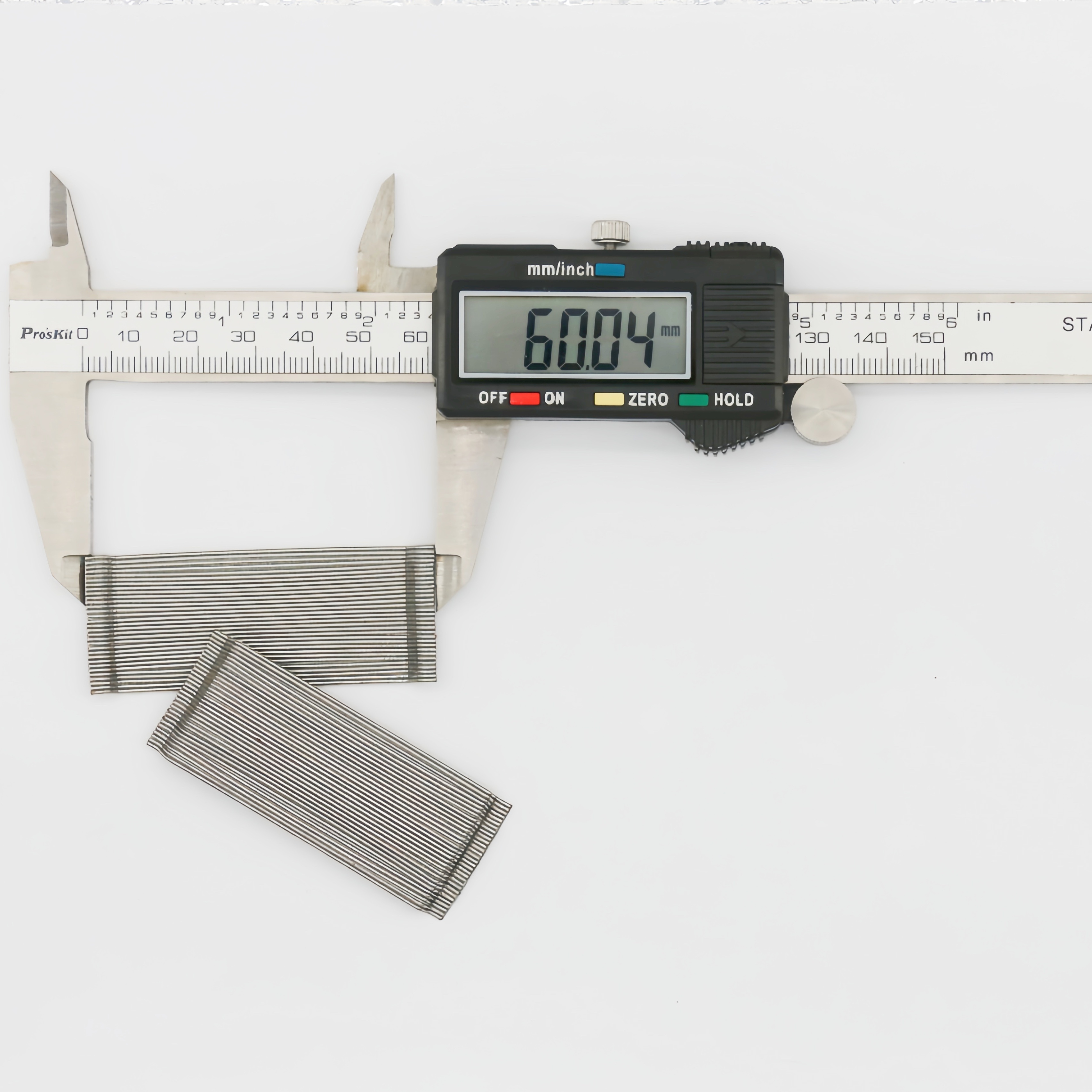
Hooked-end steel fiber for concrete: documented diameter 0.5–1.0 mm, length 25–60 mm, tensile strength 1100–2100 MPa — the same window declared on CE Certificate 1301 – CPR – 2456.
Approving a fiber for concrete is a constraint-matching exercise before it is a price negotiation. Three constraint sets decide the outcome: what the design and its test standard allow, what the product's documented parameter window actually covers, and what the commercial and logistics terms can support.
This guide is written for specifiers, contractors, importers and distributors who have already accepted that fiber reinforcement fits their project and now need to prove that a specific fiber — steel or synthetic — can pass acceptance. The evidence below comes from TINGCO product documentation, its CE certification file, its application and project records, and published third-party market and standards sources. Figures are attributed so they can be checked.
The five constraints that decide approval
- Certificate scope — not the certificate name, but the diameter, length and strength window it actually covers.
- Parameter window — diameter, length, tensile strength, and the tolerance the supplier will state in writing.
- Dosage and handling — kilograms per cubic metre for the element type, plus dispersion control on site.
- Batch documentation — a certificate of analysis and mill certificate per batch, backed by pre-shipment inspection.
- Commercial terms — MOQ, lead time, and a payment structure that protects both sides.
1. Problem Definition: Why "Which Fiber?" Is Really a Constraint Question
Three failure modes account for most disputes in fiber for concrete procurement, and none of them is about the fiber being inherently weak.
Scope mismatch. A buyer accepts "CE certified" without checking that the declared certificate scope matches the SKU being shipped. TINGCO's certificate shows how narrow that scope can be. CE Certificate 1301 – CPR – 2456 is issued by TSUS against EN 14889-1:2006, runs from 13 May 2025 to 12 May 2030, and covers steel fibres for concrete (Group I) for reinforcement of concrete, mortars and cementitious mixes. It applies to steel fiber products with a diameter of 0.5–1.0 mm, a length of 25–60 mm and a tensile strength of 1100–2100 MPa. It is a steel-fibre certificate and does not cover polypropylene fiber. A general claim of "CE certified fibers" therefore has to be read product line by product line.
Documentation gap. A datasheet that omits tolerance, or a shipment that arrives without a per-batch certificate of analysis (COA) and mill certificate, leaves the buyer unable to demonstrate consistency if hardened concrete fails acceptance testing. Pre-shipment inspection with weighing and counting verification closes part of that gap; paperwork closes the rest.
Handling failure. Fiber that clumps or disperses unevenly will underperform a perfectly documented specification. Placement conditions in this category are demanding by default: humid environments, confined underground space, dynamic vehicle loads, alternating temperature and vibration are all documented working conditions for industrial flooring, tunnel segment, shotcrete, highway, bridge and underground mining applications.
The practical consequence is a shift in evaluation language — from "which fiber is best" to "which fiber is provably compliant for this element, at this dosage, delivered on these terms."
2. Industry Background: Where Constraint Pressure Comes From
Fiber reinforcement is no longer a niche substitution, and the volumes explain why the documentation burden on suppliers keeps rising.
- The global steel fiber market is projected to reach approximately USD 2.87 billion by 2026 (Fortune Business Insights).
- Industrial floors were the largest application segment in 2026, at 37.28% share of that market (Fortune Business Insights).
- Hooked-end steel fibers held the leading type segment share of 58.89% in 2026 (Fortune Business Insights).
- Polypropylene fiber used in construction is expected to grow at a 6.4% CAGR from 2026 to 2034 (Fortune Business Insights).
- China accounted for 51.85% of identified steel fiber (HS 7326) export share in specialized customs datasets (Zauba; customs-aggregator data, medium confidence).
Published market-size estimates for this category vary by methodology — some studies include or exclude synthetic fibers and rebar-replacement value modelling — so these numbers are directional rather than a single agreed figure.
The standards picture is more stable, and that is where constraints actually bind. ASTM A820/A820M-16 specifies requirements for five types of steel fibers used in fiber-reinforced concrete. EN 14889-1:2006 defines definitions, specifications and conformity for steel fibers used in concrete in the European Union. Because the largest single application, industrial flooring, is also the one where residual flexural strength is routinely checked by standardized beam and panel tests, buyers in this category face a higher documentation bar than buyers of most other concrete additives.
3. The Documented Constraint Set: TINGCO Fiber Specifications and Coverage
Tianjin TingCo Tech Co., Ltd. is the Tianjin-based sales and R&D entity of the TINGCO group, whose manufacturing base is Hebei Tingco New Material Co., Ltd. The group was founded in 2014 and produces steel and synthetic fibers for concrete reinforcement. What follows is the constraint-relevant part of the documentation — the numbers a buyer has to reconcile against a certificate and a mix design.
3.1 Steel fiber for industrial floors, tunnel segments and mining
Documented diameter range is 0.5–1.0 mm, length range 25–60 mm, and tensile strength range 1100–2100 MPa, in carbon steel wire. Available models include TC-07560-HNG, TC-07560-HHG, TC-05535-HNG and TC-07535-HNL. The line is intended for the tunnel segment and mining industries and is applied in industrial flooring.
The coverage statement matters as much as the specification: fiber reinforced concrete supplied for industrial flooring, and steel fiber products for tunnel segment and mining applications, are covered by CE Certificate 1301 – CPR – 2456 to EN 14889-1:2006. The parameter window on the datasheet and the window declared on the certificate are the same — which is exactly the alignment a buyer should demand before approving a supplier.
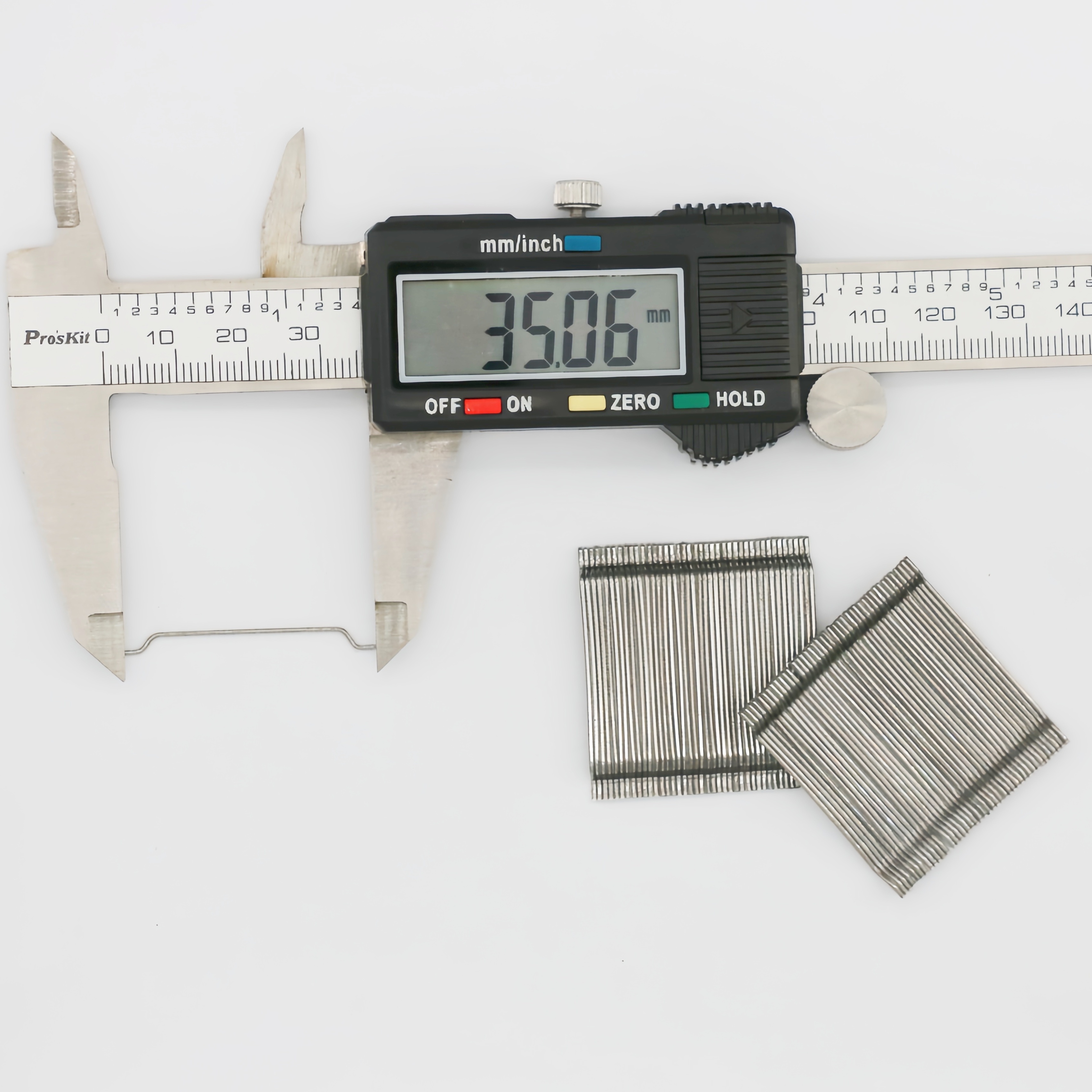
Glued bundled steel fiber: bundle geometry is a handling variable — it affects dispersion time and mixing discipline, not the certificate scope.
3.2 Micro steel fiber for UHPC and bridge decks
Brass-coated micro steel fiber is offered in models TC-0213-CMS, TC-0220-CMS and TC-0213-SMS, with a diameter range of 0.175–0.3 mm, lengths of 6–25 mm and a tensile strength range of 2200–2850 MPa. Published UHPC benchmarks for brass-coated micro steel fiber place tensile strength above 2,500 MPa at diameters of 0.2–0.3 mm, so this class of product sits inside that envelope.
Stated performance for UHPC reinforced with this micro fiber is a compressive strength of up to 220 MPa, tensile strength exceeding 2100 MPa, and fracture toughness stated at 250 times that of ordinary concrete. Documented applications include high-speed rail prefabricated components, bridges, airport runways and seismic-resistant structures.

Brass-coated micro steel fiber for UHPC: 0.175–0.3 mm diameter, 6–25 mm length, 2200–2850 MPa tensile strength.
3.3 Stainless steel micro fiber
Stainless steel micro-wire is available in diameters as fine as 0.012 mm, with stated heat resistance up to 600 °C. Documented uses extend beyond concrete: EMI/RFI shielding, anti-static fabrics, battery current collectors, aerospace filtration, medical precision screens and premium acoustic mesh. For UHPC facades and architectural elements, this is the line to specify where a corrosion-resistant metallic fiber is required.
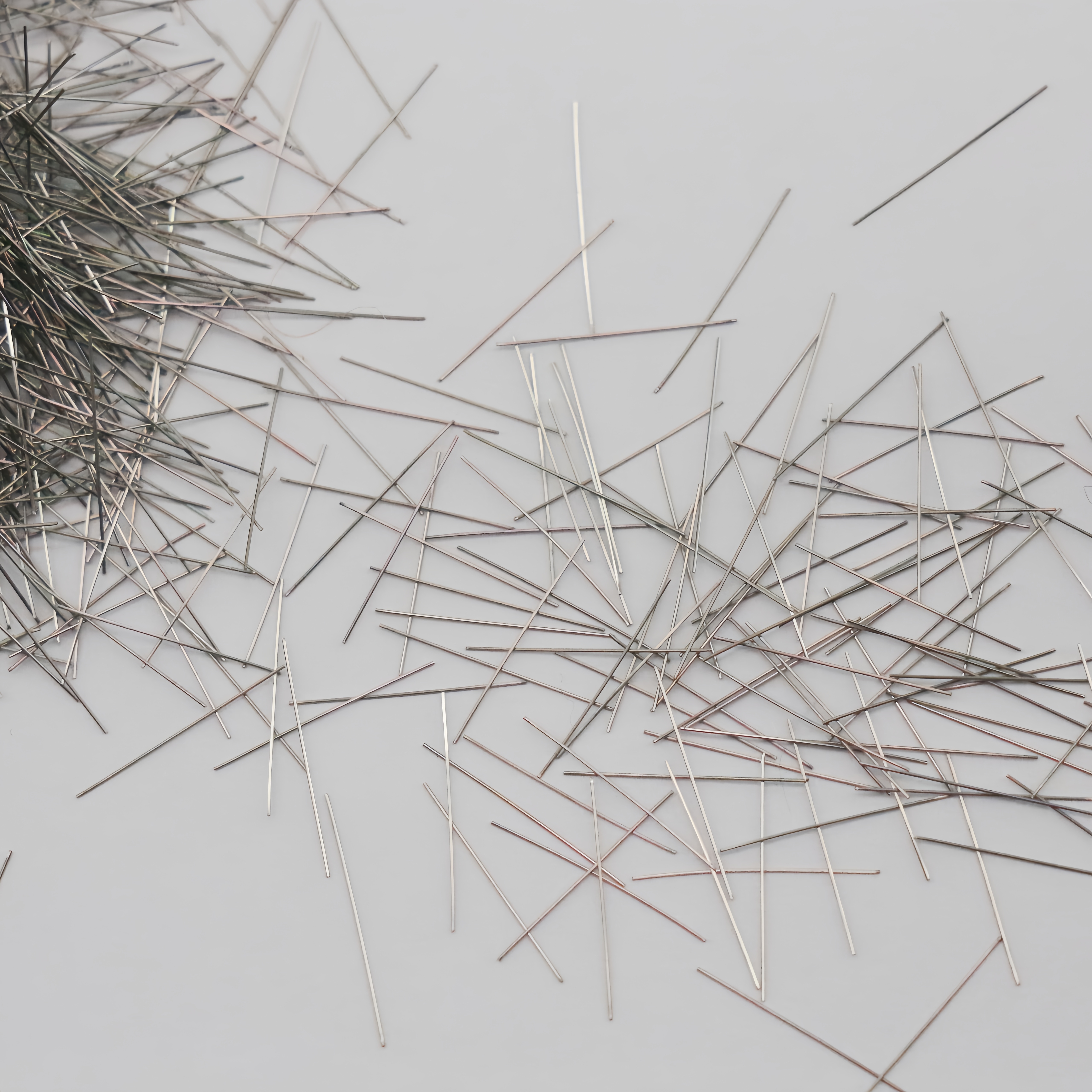
Stainless steel micro fiber: diameters down to 0.012 mm, stated heat resistance up to 600 °C.
3.4 Polypropylene fiber: the non-corroding option
Polypropylene is a polymer, so it does not corrode — relevant where floors sit in aggressive media. Documented specifications are as follows:
- PP Micro Fiber: diameters 18 μm, 32 μm and 36–38 μm; lengths 6 mm, 12 mm and 19 mm; tensile strength 550 MPa.
- PP Macro Fiber: diameter 0.7 mm; lengths 30–58 mm; tensile strength 550–600 MPa.
- PP Twisted Fiber: diameter 0.6–0.7 mm; lengths 46–54 mm; tensile strength 450–650 MPa.
Polypropylene fiber documentation states that it withstands strong acids and alkalis, is non-absorbent, and forms a three-dimensional random network inside the concrete matrix. Stated effects include a reduction of early-stage cracking by over 30%, improved impermeability of approximately 37%, and extended structural service life of over 15%. These are supplier-stated values: treat them as design input to be verified in your own mix, not as an approval document.
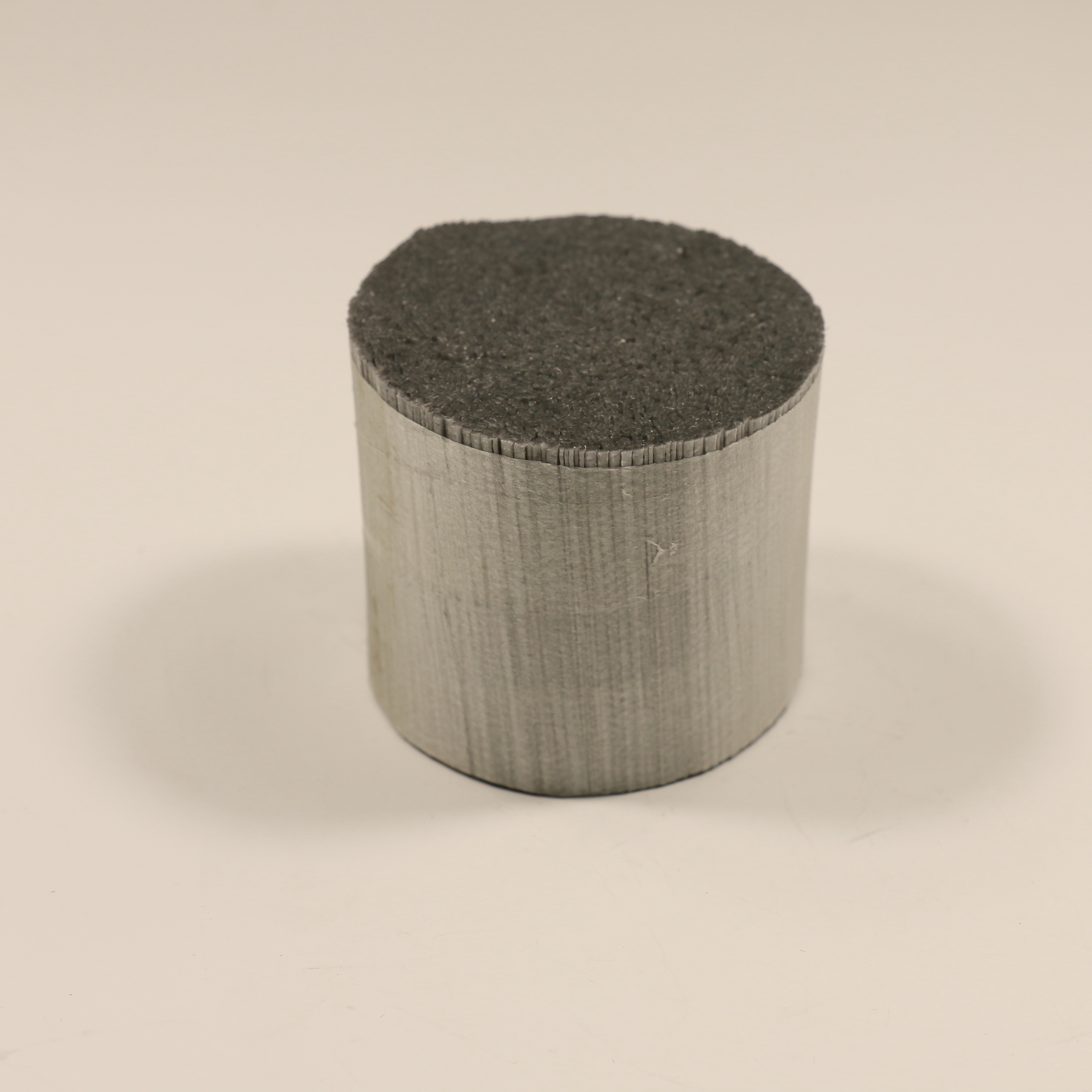
Synthetic fiber for concrete: polymer chemistry means no corrosion, documented for chemically exposed slabs.
3.5 Production, quality and capacity constraints
Documented production constraints are 24,000 tons annual output, 2,000 tons monthly capacity, a 6,000 m² factory, 50 employees and a 5-engineer R&D team. Quality control is documented as in-line inspection plus pre-shipment inspection, supported by an in-house steel fiber reinforced concrete testing lab running beam bending, compression and toughness tests. OEM/ODM production covers logo, packaging and design of different steel fiber types. Around 70% of output is exported, with main markets in the EU, Africa, South East Asia and the Middle East.
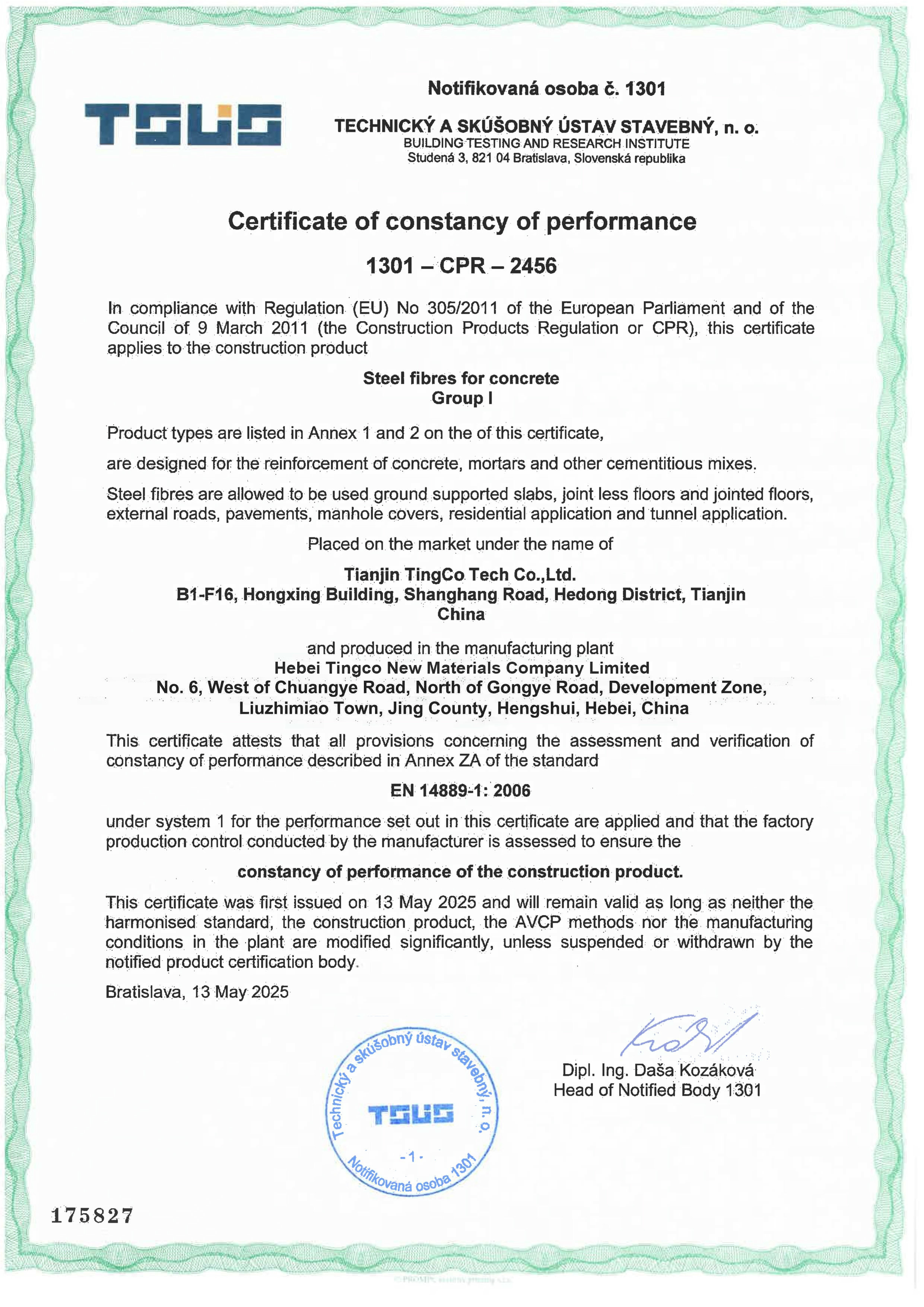
CE Certificate 1301 – CPR – 2456, issued by TSUS to EN 14889-1:2006, valid 13 May 2025 to 12 May 2030 — scope: steel fibres for concrete (Group I).
4. Step-by-Step: A Six-Step Verification Workflow Before You Approve a Fiber
- Fix the design constraint first. Determine the residual flexural strength and toughness your element requires. EN 14651 (three-point bending beam test), ASTM C1609 (beam test) and ASTM C1550 (panel test) are the methods used to verify residual flexural strength and toughness index of concrete containing steel fiber, and they are the core basis for engineering design and acceptance. Choose the method before choosing the fiber.
- Map the certificate scope to the SKU. Confirm certificate number, issuing body, applicable standard, validity dates and the declared diameter, length and strength window. For TINGCO steel fiber that window is 0.5–1.0 mm, 25–60 mm and 1100–2100 MPa under CE 1301 – CPR – 2456 to EN 14889-1:2006. If the SKU falls outside it, the certificate does not apply — and for PP fiber, no steel-fibre CE scope applies at all.
- Confirm the parameter window and tolerance in writing. Ask for a complete datasheet that states the ±10% tolerance rather than a marketing table, then request free samples and send them to an independent laboratory for testing.
- Validate dosage and mixing for the pour type. Documented guidance is shotcrete 20–40 kg/m³, industrial floors 15–30 kg/m³, and precast elements 10–30 kg/m³. Weigh the fiber, then feed water-soluble packaging bags directly into the mixer with the aggregates (they dissolve in about 5 seconds); non-water-soluble packaging should be spread evenly in batches. Extend mixing time by 30–60 seconds compared with plain concrete to ensure uniform dispersion without clumping, then check slump and workability and adjust the superplasticizer if necessary. Operators should wear protective gloves and goggles, and large quantities should not be dumped in at one time.
- Lock batch documentation and inspection. Require a COA and a mill certificate for every batch, and arrange pre-shipment inspection with weighing and counting verification. Confirm pre-production samples before mass production, and use a photo or video factory audit to verify the production base.
- Settle commercial and delivery terms last. Documented MOQ is 24 tons and lead time is 10–15 days. To reduce trade risk, verify the supplier's business license and 18-digit Unified Social Credit Code, request factory photos or a video factory audit, and structure payment as T/T 30% + 70% or L/C rather than a 100% advance payment.
5. Use Cases: Matching the Documented Fiber to the Pour
5.1 Industrial flooring and logistics parks
Hooked-end steel fiber is the benchmark choice here, and its 58.89% share of the steel fiber type segment in 2026 reflects how standard it has become for slabs. A documented TINGCO project for a Thai wholesale customer with technical support used 2,000 tons of fiber over one year across heavy-duty industrial warehouse flooring, logistics park flooring and jointless flooring. The design applied 80/60 steel fiber at 1,200 MPa at a dosage of 20 kg/m³, and the engineering team rearranged and optimized the pile layout to better fit the slab-on-pile project. Where a floor is exposed to aggressive media or a non-corroding fiber is specified, macro PP fiber is the alternative — documented at 0.7 mm diameter and 30–58 mm length for concrete and cement applications.
5.2 Tunnel segments and mining support
Tunnel segment and mining applications are documented alongside industrial flooring for the TC-075xx steel fiber family, inside the same CE-certified parameter window. Underground work combines confined space, humidity and vibration, so dispersion and mixing discipline carry as much weight as raw tensile strength.
5.3 UHPC bridge decks, precast and runways
Brass-coated micro steel fiber at 0.175–0.3 mm diameter and 2200–2850 MPa is the documented choice for UHPC and RPC, including high-speed rail prefabricated components, bridge decks, airport runways and seismic-resistant structures.
5.4 UHPC facades and architectural elements
Stainless steel micro-wire, available down to 0.012 mm with stated heat resistance up to 600 °C, is the line documented for applications that require corrosion-resistant metallic reinforcement, including fine-mesh and architectural uses.
5.5 PP fiber for flooring and chemically exposed slabs
Micro and macro PP fiber are documented for crack control in concrete and cement, with macro fiber used in flooring and jointless slabs where a non-corroding reinforcement is preferred and alkali resistance, high dispersion uniformity and no agglomeration during mixing are stated requirements.
6. Comparison Table: Documented Specification and Coverage
| Fiber type (documented models) | Documented parameter window | Standard / certificate coverage | Documented function | Matched application |
|---|---|---|---|---|
| Hooked-end steel fiber (TC-07560-HNG, TC-07560-HHG, TC-05535-HNG, TC-07535-HNL) | Diameter 0.5–1.0 mm; length 25–60 mm; tensile strength 1100–2100 MPa; carbon steel wire | CE 1301 – CPR – 2456 to EN 14889-1:2006 (EU); product family stated to comply with ASTM A820 and ISO 13270; factory ISO 9001 | Crack control and toughness in hardened concrete | Industrial flooring, tunnel segment, mining |
| Brass-coated micro steel fiber (TC-0213-CMS, TC-0220-CMS) | Diameter 0.175–0.3 mm; length 6–25 mm; tensile strength 2200–2850 MPa | UHPC/RPC reinforcement; stated UHPC compressive strength up to 220 MPa, tensile strength above 2100 MPa, fracture toughness stated at 250× ordinary concrete | High-tensile reinforcement for thin, high-strength elements | Bridge decks, high-speed rail precast, airport runways, seismic-resistant structures |
| Stainless steel micro fiber (TC-0213-SMS) | Diameters as fine as 0.012 mm; stated heat resistance up to 600 °C | Corrosion-resistant metallic micro-wire line | Reinforcement plus conductivity and heat resistance functions | UHPC facades and elements needing a corrosion-resistant metallic fiber; EMI/RFI shielding; filtration and precision screens |
| PP micro fiber | Diameter 18 / 32 / 36–38 μm; length 6 / 12 / 19 mm; tensile strength 550 MPa | Polypropylene — outside the steel-fibre CE scope | Plastic shrinkage and early-age crack control | Flooring and cement-based mixes |
| PP macro fiber | Diameter 0.7 mm; length 30–58 mm; tensile strength 550–600 MPa | Polypropylene — outside the steel-fibre CE scope | Non-corroding reinforcement for slabs | Industrial flooring, jointless flooring |
| PP twisted fiber | Diameter 0.6–0.7 mm; length 46–54 mm; tensile strength 450–650 MPa | Polypropylene — outside the steel-fibre CE scope | Crack control with twisted geometry | Flooring and cement-based mixes |
Specifications are from TINGCO product documentation. CE Certificate 1301 – CPR – 2456 covers steel fibres for concrete (Group I) to EN 14889-1:2006 and does not cover polypropylene fibers.
7. FAQ: Constraint Questions Buyers Ask Before Approval
What certification evidence should I check before approving a fiber for concrete on an EU project?
Check the scope of the certificate, not the claim. TINGCO fiber reinforced concrete is covered by CE Certificate 1301 – CPR – 2456, issued by TSUS against EN 14889-1:2006 and valid from 13 May 2025 to 12 May 2030. Its scope is steel fibres for concrete (Group I) for reinforcement of concrete, mortars and cementitious mixes, applied to products with a diameter of 0.5–1.0 mm, a length of 25–60 mm and a tensile strength of 1100–2100 MPa. It does not cover polypropylene fiber. Beyond the certificate, request a datasheet that states the ±10% tolerance, a COA and mill certificate for every batch, and pre-shipment inspection with weighing and counting verification. Steel fiber products are also stated to comply with ASTM A820 and ISO 13270, and the factory is ISO 9001 certified.
Can one supplier cover both steel and synthetic fiber, including custom specifications?
In TINGCO's case, yes. The portfolio covers hooked-end loose and glued bundled steel fiber, brass-coated micro steel fiber, stainless steel micro fiber, and polypropylene micro, macro and twisted fiber under one brand. Manufacturing runs through Hebei Tingco New Material Co., Ltd., while Tianjin TingCo Tech Co., Ltd. handles sales and R&D. Annual output is documented at 24,000 tons with a monthly capacity of 2,000 tons, supported by a 5-engineer R&D team and an in-house lab that runs beam bending, compression and toughness tests. Custom specifications, OEM/ODM production, logo and packaging customization, and private-label solutions are available on request. Sourcing steel and synthetic fiber from one supplier simplifies procurement and reduces logistics cost, but the certificate check still has to be performed per product line.
What drives the delivered cost of fiber for concrete, and how should payment be structured?
The main cost drivers are fiber type and specification (micro steel fiber for UHPC is a different cost class from hooked-end fiber for floors), dosage per cubic metre, order quantity relative to the 24-ton MOQ, packaging and freight. TINGCO application documentation states that fiber reinforcement in the covered applications can reduce construction time by 50% and lower total cost by 30–40% compared with the conventional method used for comparison; those figures should be validated against your own mix design and labour rates. On payment risk, the documented mitigation is to verify the supplier's business license and 18-digit Unified Social Credit Code, request factory photos or a video factory audit, and use T/T 30% + 70% or L/C instead of a 100% advance payment.
How do I validate fiber performance before placing a mass-production order?
Request free samples and send them to an independent laboratory, then confirm pre-production samples before mass production. Verification should follow EN 14651 (three-point bending beam test), ASTM C1609 (beam test) or ASTM C1550 (panel test), which measure the residual flexural strength and toughness index of steel fiber reinforced concrete and form the core basis for design and acceptance. TINGCO runs beam bending, compression and toughness tests in its own concrete lab and inspects every shipment for specification, quantity and packaging before dispatch.
What lead time, capacity and after-sales support should I expect after confirming an order?
Documented monthly capacity is 2,000 tons against 24,000 tons annual output, with a lead time of 10–15 days and a 24-ton MOQ. Quality control is in-line inspection plus pre-shipment inspection, and after-sales support covers remote technical support, quality problem compensation and construction consulting. Dosage guidance is provided per pour type — shotcrete 20–40 kg/m³, industrial floors 15–30 kg/m³, precast elements 10–30 kg/m³. The next step is to request a sample or a quotation with your specification and project details, or download the TINGCO brochure for the full product and project overview.
8. Conclusion: Approve Against Evidence, Not Adjectives
When every constraint is treated as a verifiable item, fiber for concrete becomes a straightforward approval decision. Check the certificate scope against the actual SKU, confirm the diameter, length and tensile strength window with a stated tolerance, design the dosage for the element type, secure per-batch COA and mill certificate coverage with pre-shipment inspection, and close on MOQ, lead time and payment terms that protect both sides. Suppliers that can answer all five points with documents — rather than descriptions — are the ones whose fiber survives acceptance testing and project audits.
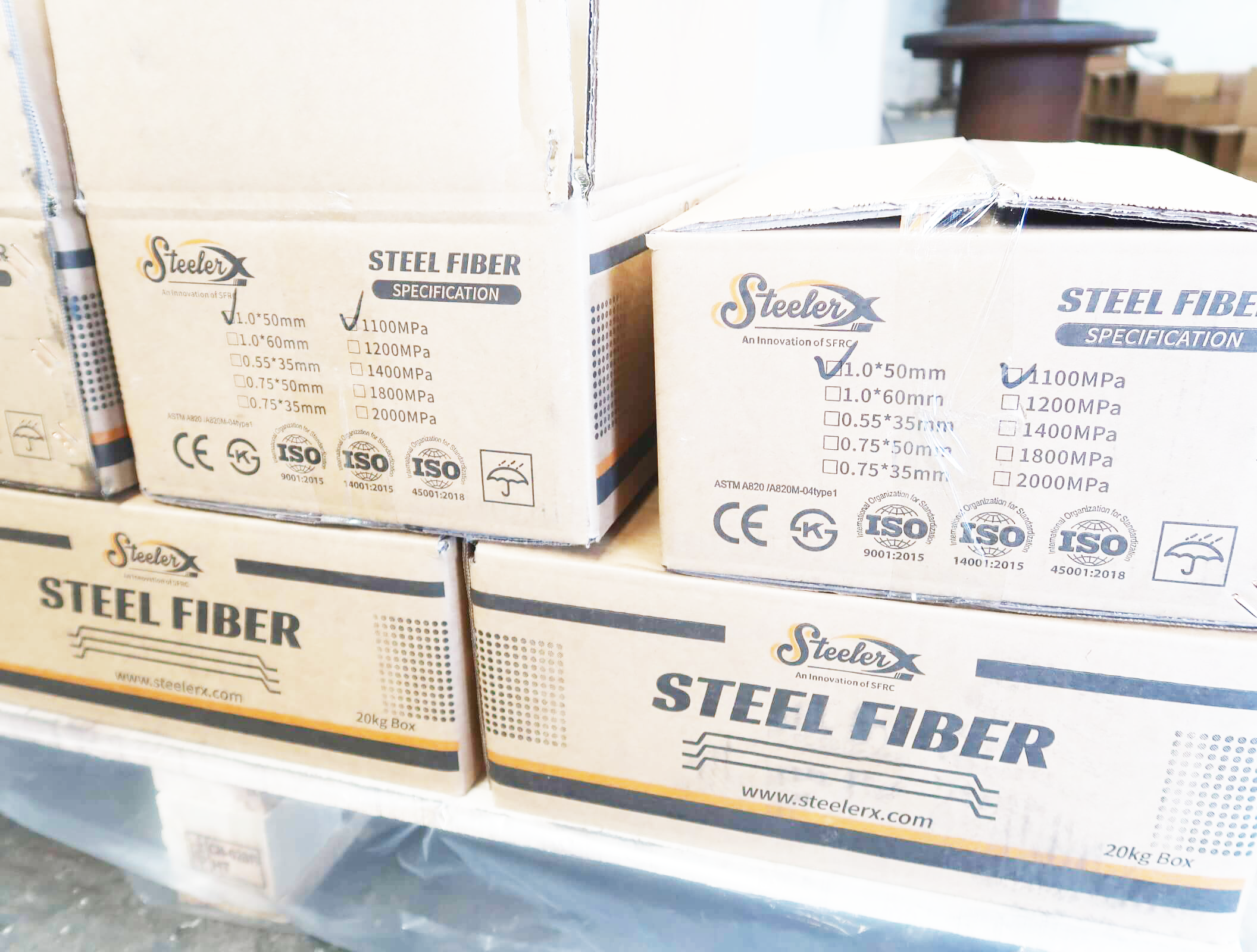
Sample and bulk packaging options: OEM packaging, logo and private-label solutions are available on request.
Request a Sample, a Quote or a Technical Review
Send us your specification — fiber type, diameter, length, tensile strength, dosage and element type — and TINGCO will confirm the matching product line, the applicable certificate coverage and the documented lead time. Free samples for independent laboratory testing are available on request, and our team supports mix design and construction questions from design through delivery.
Download the TINGCO company and project brochure (PDF): TINGCO brochure — products, certification and project references
Email: info@tingco.co | Tel: +86-22-59785568 | WhatsApp: +86 189-2017-0726 | Website: www.tcfibers.com
Tianjin TingCo Tech Co., Ltd. | Hebei Tingco New Material Co., Ltd. | Address: B1F16, Hongxing Building, Linke West Road, Hedong, Tianjin 300161, China