Fiber for Concrete: Specs, Certifications & Selection Rules
Fiber for Concrete: Specs, Certifications & Selection Rules
Fiber for concrete is a discrete reinforcement material — steel, brass-coated steel, stainless steel, or polypropylene — dosed into a mix to control cracking and carry tensile stress after the matrix cracks. For a buyer at the research and evaluation stage, the decisive question is rarely whether fiber improves concrete. It is whether one specific fiber can clear a specific set of project constraints: a certificate that covers the geometry you are buying, a diameter–length–tensile-strength combination that matches the mix design, corrosion behaviour that suits the service environment, and batch-level evidence that the delivered fiber matches the datasheet.
Tianjin TingCo Tech Co., Ltd is a manufacturer and technical partner for concrete reinforcement fibers — hooked-end and glued steel fibers, brass-coated and stainless steel micro fibers, and polypropylene (PP) fibers. Founded in 2014 and headquartered in Tianjin, China, the company operates through Tianjin TingCo Tech Co., Ltd. (sales and R&D center) and Hebei Tingco New Material Co., Ltd. (manufacturing base), and exports to the EU, Africa, South East Asia and the Middle East.
The sections below follow the order a procurement or engineering team actually works in: what the category contains, why specifications fail, what the 2026 market and standards picture looks like, how each fiber family answers a specific constraint, what the CE certificate genuinely covers, and how to verify a fiber before placing an order.
What “Fiber for Concrete” Actually Covers
Fiber for concrete describes short, discrete fibers dispersed through a cementitious mix. Commercially, the category splits into four product families, each defined by material and geometry rather than by brand:
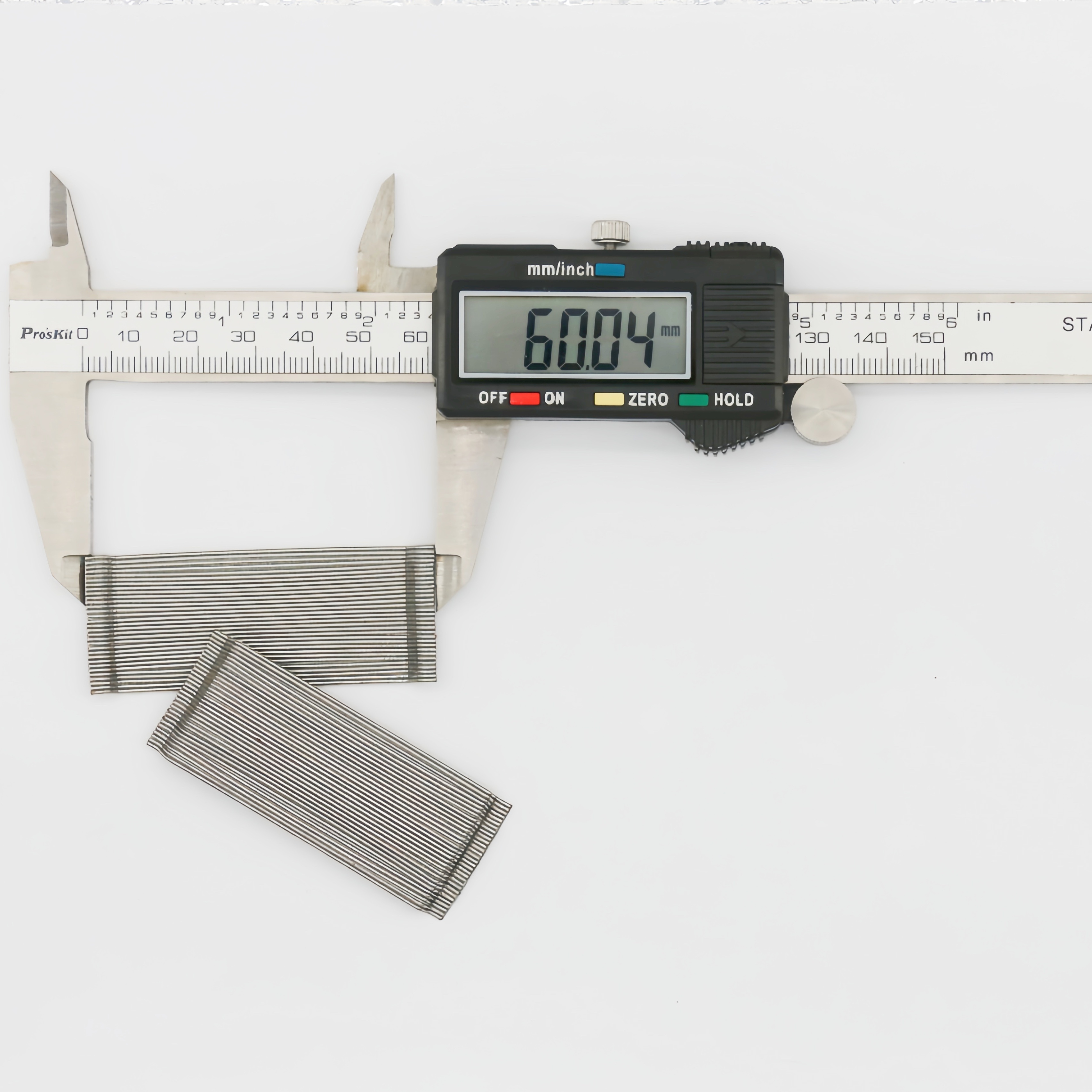
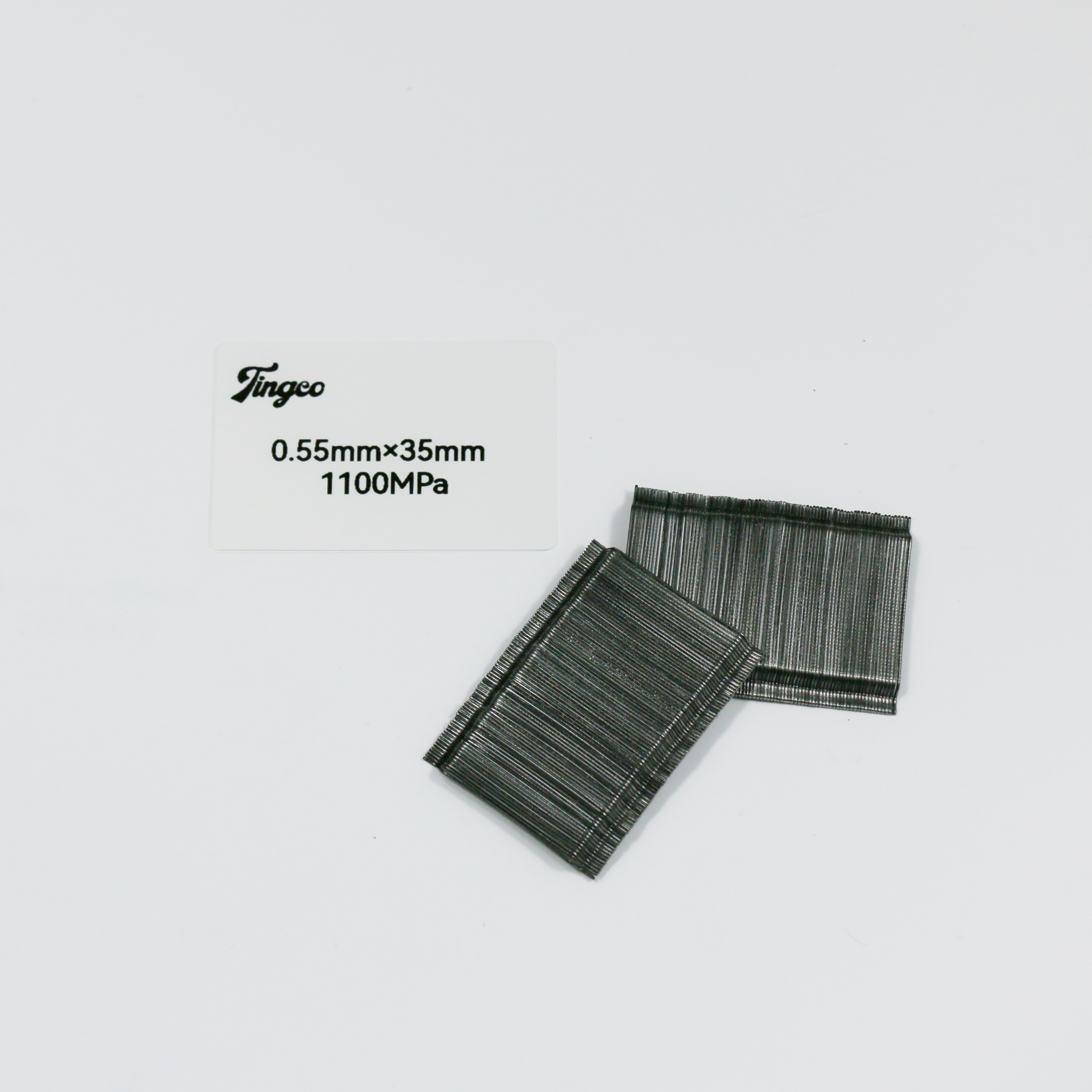
- Macro steel fiber — hooked-end or glued, made from carbon steel wire. TINGCO's steel fiber range is specified at 0.5–1.0 mm diameter, 25–60 mm length and 1,100–2,100 MPa tensile strength, in models TC-07560-HNG, TC-07560-HHG, TC-05535-HNG and TC-07535-HNL, for the industrial flooring, tunnel segment and mining industries.
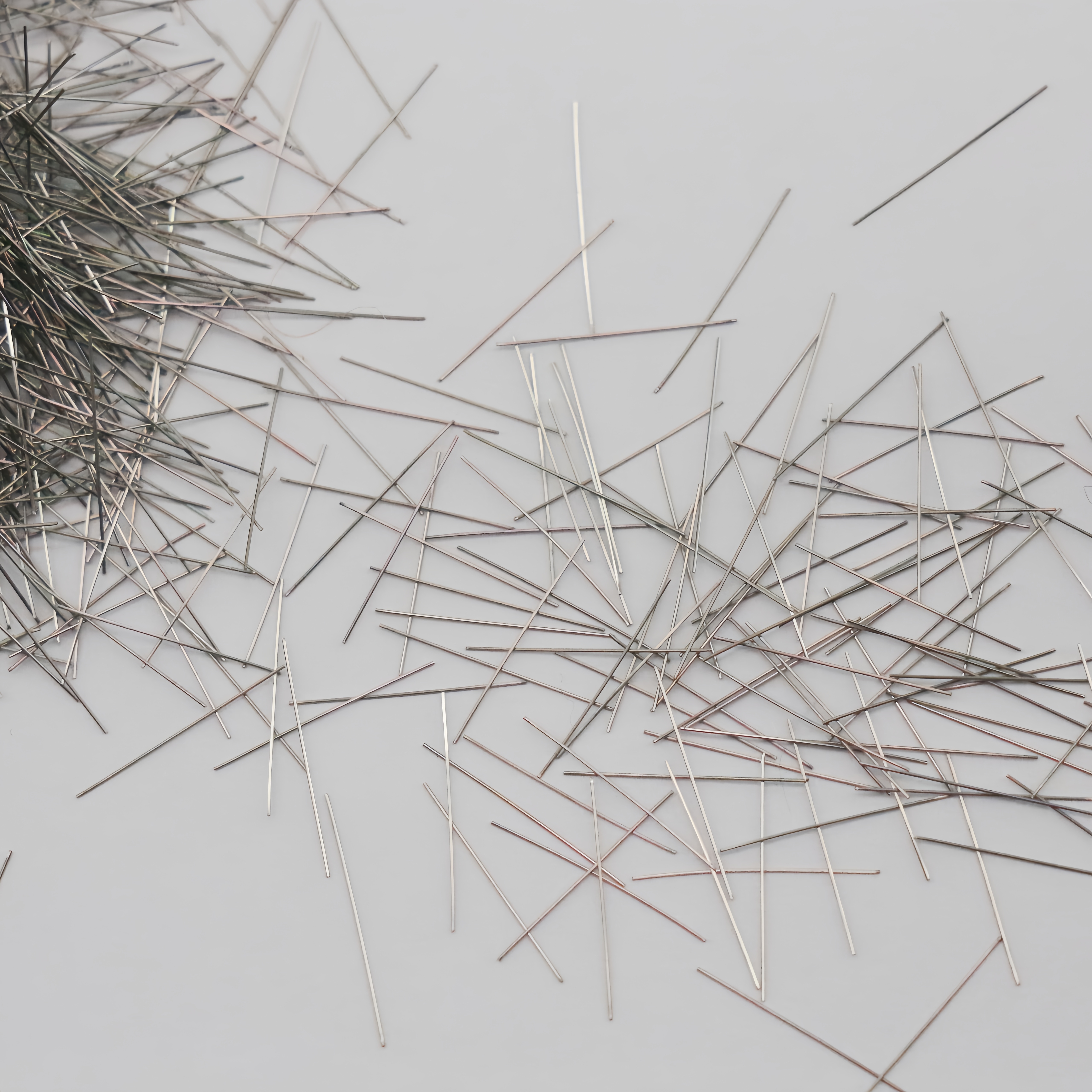
- Micro steel fiber — brass-coated or stainless-coated, for UHPC and RPC. TINGCO's micro steel fiber models TC-0213-CMS, TC-0220-CMS and TC-0213-SMS are specified at 0.175–0.3 mm diameter, 6–25 mm length and 2,200–2,850 MPa tensile strength.
- PP micro fiber — polypropylene, with diameters of 18 µm, 32 µm and 36–38 µm, lengths of 6 mm, 12 mm and 19 mm, and a tensile strength of 550 MPa.
- PP macro and twisted fiber — 0.7 mm diameter, 30–58 mm length, 550–600 MPa (macro); 0.6–0.7 mm diameter, 46–54 mm length, 450–650 MPa (twisted).
Third-party benchmark data for brass-coated micro steel fibers used in UHPC describes tensile strength above 2,500 MPa at diameters of 0.2–0.3 mm (PIONEER, cited in industry research). TINGCO's published micro fiber range overlaps that band at 2,200–2,850 MPa and 0.175–0.3 mm. Buyers should compare the exact grade quoted against the exact grade specified — not the category average.
Problem Definition: Five Constraint Failures That Block Fiber Approval
Fiber for concrete is rarely rejected because it performs badly. It is rejected because one of five constraints was never resolved before the order was placed.
1. Certificate scope mismatch
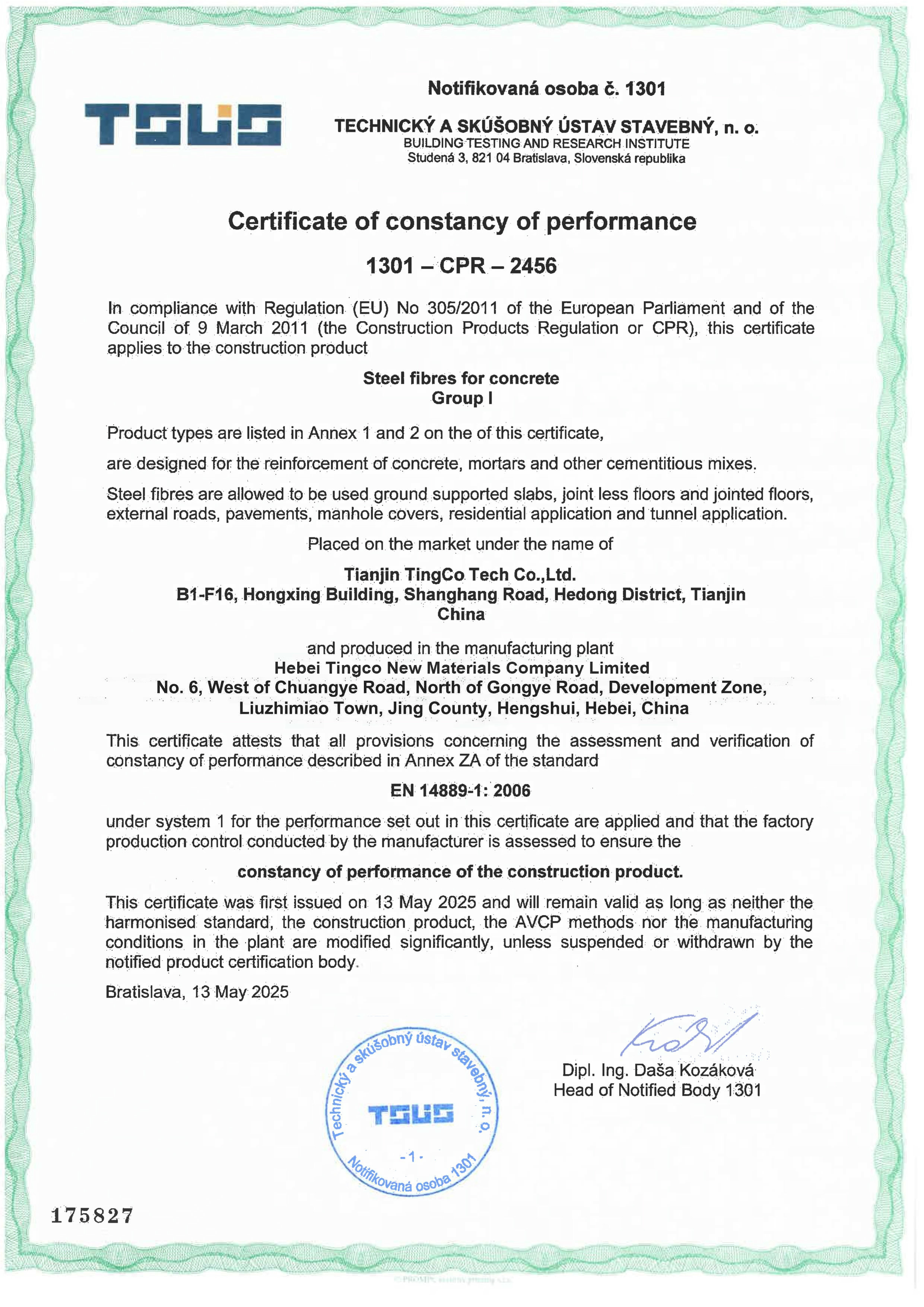
CE Certificate 1301 – CPR – 2456 applies to steel fiber products with diameter 0.5–1.0 mm, length 25–60 mm and tensile strength 1,100–2,100 MPa. A fiber quoted outside that geometry falls outside the certificate scope, even when it comes from the same supplier and the same factory line.
2. Application mismatch
Micro steel fiber at 6–25 mm length belongs in UHPC and thin precast sections. A hooked-end macro fiber in the 80/60 geometry belongs in slab and tunnel work. Swapping one for the other is not a substitution — it is a different mix design, a different dosage and a different acceptance test.
3. Corrosion and environment constraint
In chloride-bearing or otherwise corrosive service conditions, or where a non-metallic reinforcement is required, polypropylene fiber is specified because it does not corrode and resists strong acids and alkalis. Steel fiber selection must then account for coating, environment and cover.
4. Mixing and dosing incompatibility
Fibers agglomerate when feeding rate, dosing or mixing time is wrong. The stated requirement for these applications is alkali resistance, high dispersion uniformity, good compatibility with cement, and no agglomeration during mixing.
5. Evidence gap
Approval depends on documents as much as on fiber: a complete datasheet including the ±10% tolerance, a COA (Certificate of Analysis) and Mill Certificate for every batch, and pre-shipment inspection with weighing and counting verification. Without them, approval stalls regardless of the product.
Industry Background: Where Fiber Demand and Standards Sit in 2026
The demand picture explains why certain constraints appear so often in tender documents.
- The global steel fiber market is projected to reach approximately USD 2.87 billion by 2026 (Fortune Business Insights).
- Industrial floors accounted for a 37.28% share of the steel fiber market in 2026 — the single largest application segment.
- Hooked-end steel fibers held a leading 58.89% share of the type segment in 2026.
- The global polypropylene (PP) fiber market for construction is expected to grow at a CAGR of 6.4% from 2026 to 2034 (Fortune Business Insights).
- China was the largest exporter of steel fiber (HS 7326), accounting for 51.85% of total imports identified in specialised trade datasets (Zauba customs data — an indicative trade signal rather than an official statistic).
- ASTM A820/A820M-16 specifies requirements for five types of steel fibers in fiber-reinforced concrete (ASTM International). EN 14889-1:2006 defines definitions, specifications and conformity for steel fibers used in concrete in the EU (European Committee for Standardization).
Two structural signals matter for buyers. First, because hooked-end steel fiber and industrial flooring dominate volume, most specification templates and supplier catalogues are built around steel fiber — which is precisely why the certificate-scope question comes up so often. Second, the synthetic segment is expanding, largely on corrosion-free performance and early-age crack control, so more projects now compare a steel option and a PP option at the same time.
Detailed Solution: The TINGCO Fiber Range Mapped to Constraint Profiles
TINGCO's answer to these constraints is a portfolio rather than a single product — steel and synthetic fibers under one supplier, each quoted against a defined geometry, and supported by in-house concrete testing rather than datasheet claims alone. The company runs a steel fiber reinforced concrete testing lab at its factory, where every product line undergoes beam bending, compression and toughness tests.
Hooked-end and glued steel fiber — industrial flooring, tunnel segments, mining
Models TC-07560-HNG, TC-07560-HHG, TC-05535-HNG and TC-07535-HNL are specified at 0.5–1.0 mm diameter, 25–60 mm length and 1,100–2,100 MPa tensile strength, made from carbon steel wire, and intended for the industrial flooring, tunnel segment and mining industries. This is the family the CE certificate covers directly.
Brass-coated micro steel fiber — UHPC, bridge decks and precast
Models TC-0213-CMS and TC-0220-CMS use a brass coating and are specified at 0.175–0.3 mm diameter, 6–25 mm length and 2,200–2,850 MPa tensile strength. UHPC reinforced with this micro steel fiber is stated to reach a compressive strength of up to 220 MPa, a tensile strength exceeding 2,100 MPa, and a fracture toughness 250 times that of ordinary concrete. Typical applications are high-speed rail prefabricated components, bridges, airport runways and seismic-resistant structures.

Stainless steel micro fiber — UHPC facades and specialised environments
Model TC-0213-SMS uses a stainless coating. The stainless micro-wire is specified in diameters as fine as 0.012 mm with heat resistance up to 600 °C, and is used where metallic strength, conductivity and heat resistance are needed alongside textile-like flexibility — EMI/RFI shielding, anti-static fabrics, new-energy battery current collectors, aerospace filtration, medical precision screens and acoustic mesh. For concrete, the stainless variant is the choice where façade exposure and long-term durability make corrosion behaviour a design constraint rather than a detail.
PP fiber — micro, macro and twisted — the corrosion-free route
PP micro fiber is produced at 18 µm, 32 µm and 36–38 µm diameters with 6 mm, 12 mm and 19 mm lengths and 550 MPa tensile strength. PP macro fiber is 0.7 mm in diameter, 30–58 mm in length, at 550–600 MPa. PP twisted fiber is 0.6–0.7 mm in diameter, 46–54 mm in length, at 450–650 MPa. All three are polypropylene, with a density of 0.91 g/cm³. Because the material does not corrode and withstands strong acids and alkalis, PP fiber is specified where steel reinforcement is constrained by environment or by a non-metallic requirement, and it is a standard option for flooring crack control.
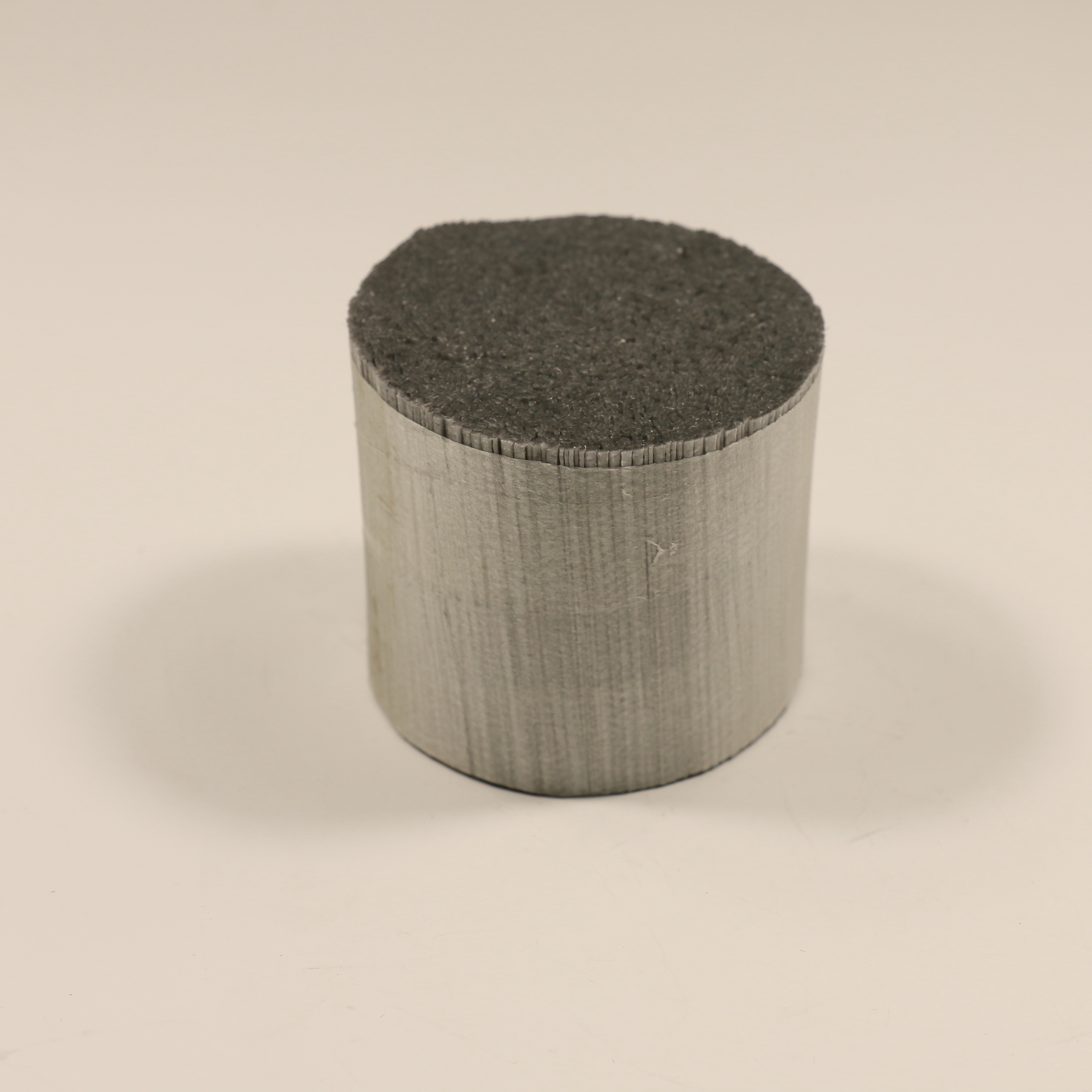
Specification summary
| Family | Material | Diameter | Length | Tensile strength | Models / grades |
|---|---|---|---|---|---|
| Macro steel fiber (hooked-end / glued) | Carbon steel wire | 0.5–1.0 mm | 25–60 mm | 1,100–2,100 MPa | TC-07560-HNG, TC-07560-HHG, TC-05535-HNG, TC-07535-HNL |
| Micro steel fiber (brass coated) | Brass coating | 0.175–0.3 mm | 6–25 mm | 2,200–2,850 MPa | TC-0213-CMS, TC-0220-CMS |
| Micro steel fiber (stainless) | Stainless coating | 0.175–0.3 mm (wire down to 0.012 mm) | 6–25 mm | 2,200–2,850 MPa | TC-0213-SMS |
| PP micro fiber | Polypropylene | 18 µm / 32 µm / 36–38 µm | 6 / 12 / 19 mm | 550 MPa | PP Micro Fiber |
| PP macro fiber | Polypropylene | 0.7 mm | 30–58 mm | 550–600 MPa | PP Macro Fiber |
| PP twisted fiber | Polypropylene | 0.6–0.7 mm | 46–54 mm | 450–650 MPa | PP Twisted Fiber |
Compliance and Certification: What the CE Certificate Actually Covers
CE Certificate 1301 – CPR – 2456 certifies steel fibres for concrete (Group I) for the reinforcement of concrete, mortars and cementitious mixes under EN 14889-1:2006, for the EU market. It was issued by TSUS on 13 May 2025 and expires on 12 May 2030. The certificate applies to steel fiber products with diameter 0.5–1.0 mm, length 25–60 mm and tensile strength 1,100–2,100 MPa, and it covers fiber reinforced concrete supplied for industrial flooring as well as tunnel segment and mining applications.
Beyond the CE mark, TINGCO states compliance with ASTM A820 and ISO 13270, and its factory holds ISO 9001 quality certification.
| Constraint | Evidence to request | TINGCO position |
|---|---|---|
| EU market placement | CE certificate under EN 14889-1:2006 whose scope matches the purchased geometry | CE 1301 – CPR – 2456; 0.5–1.0 mm diameter, 25–60 mm length, 1,100–2,100 MPa |
| Global steel fiber specification reference | Reference to ASTM A820/A820M-16, the standard covering five types of steel fibers | Stated compliance with ASTM A820 and ISO 13270; ISO 9001 certified factory |
| Batch consistency | COA and Mill Certificate per batch; datasheet with ±10% tolerance | In-line inspection and pre-shipment inspection on every shipment |
| Hardened-concrete acceptance | EN 14651 or ASTM C1609 beam test; ASTM C1550 panel test | In-house lab: beam bending, compression and toughness tests on every product line |
| Corrosion-free requirement | Material declaration and alkali-resistance data | PP fiber (polypropylene) — no corrosion, resistant to strong acids and alkalis |
| Factory versus intermediary | Business licence, 18-digit Unified Social Credit Code, factory photo or video audit | Manufacturing base at Hebei Tingco New Material Co., Ltd.; sales and R&D center at Tianjin TingCo Tech Co., Ltd. |
Step-by-Step: Verifying Fiber for Concrete Before You Order
Step 1 — Write the constraint set down first. Destination market (EU or outside), application (floor, tunnel segment, shotcrete, precast, UHPC), service environment (corrosive, humid, temperature-cycling, dynamic load) and the acceptance test. Every later decision follows from this list.
Step 2 — Match geometry and tensile strength to the mix design. TINGCO's steel fiber dosing guidance is 20–40 kg/m³ for shotcrete, 15–30 kg/m³ for industrial floors and 10–30 kg/m³ for precast elements. A fiber that reaches the design residual strength at a lower dosage changes the in-place cost more than the unit price does.
Step 3 — Check the certificate scope against the geometry you are buying. Confirm that the quoted diameter, length and tensile strength sit inside the certified band. If they do not, ask for the specific compliance route for that grade.
Step 4 — Confirm dosing, feeding and mixing compatibility. Weigh the fiber. Water-soluble packaging bags can be fed directly into the mixer with the aggregates and dissolve in about 5 seconds; non-water-soluble packaging should be spread evenly in batches. Extend mixing time by 30–60 seconds compared with normal concrete to ensure uniform dispersion without clumping, then check slump and workability and adjust the superplasticiser if necessary. Matched equipment includes the dosing machine, concrete mixer and spraying machine. Operators should wear protective gloves and goggles, and avoid dumping a large quantity at one time.
Step 5 — Test before you commit. Request a complete datasheet including the ±10% tolerance, ask for samples and send them to an independent laboratory, and confirm pre-production samples before mass production. Verify hardened performance with EN 14651 or ASTM C1609 beam tests, or ASTM C1550 panel tests, which measure residual flexural strength and toughness index — the core basis for engineering design and acceptance.
Step 6 — Lock commercial terms and documentation. TINGCO's commercial framework is a 24-ton MOQ, 10–15 days lead time and 2,000 tons monthly capacity, with OEM/ODM support covering custom logos and custom steel fiber design. Payment risk is managed with T/T 30% + 70% or L/C rather than 100% advance payment.
Step 7 — Confirm after-sales scope before shipment, not after. Remote technical support, quality problem compensation and construction consultancy form part of the offer, alongside technical guidance on TR34 and EFNARC design codes for steel fiber floors and tunnel segments.
Use Cases: How Constraint Decisions Look in Practice
Heavy-duty logistics flooring, Thailand
A wholesaler with technical support capability ordered 2,000 tons over one year for heavy-duty industrial warehouse flooring, logistics park flooring and jointless flooring. The design used steel fiber at a 20 kg/m³ dosage in the 80/60 geometry at 1,200 MPa. The engineering change that mattered most was not the fiber itself: the pile layout was rearranged to fit the slab-on-pile project better, which is the kind of adjustment a fiber supplier with design support can contribute to.
Industrial flooring and slab-on-pile work generally
Typical dosage is 15–30 kg/m³. TINGCO's application data records a 50% reduction in construction time and 30–40% lower total cost in these applications compared with conventional reinforcement. Where the service environment rules out steel — or where a non-metallic reinforcement is required — macro PP fiber replaces the steel option without changing the crack-control intent.
Tunnel segments and mining support
The 80/60 steel fiber geometry sits inside the CE-certified 0.5–1.0 mm / 25–60 mm / 1,100–2,100 MPa band, and the certificate scope explicitly covers tunnel segment and mining applications. For segment production, the constraint to verify first is dispersion uniformity: no agglomeration during mixing, alkali resistance, and compatibility with the cement system.
UHPC bridge decks and facades
Brass-coated micro steel fiber is used for bridge decks, high-speed rail precast elements, runways and seismic-resistant structures. Stainless micro fiber is used where façade exposure makes corrosion resistance part of the design. Both sit within the 0.175–0.3 mm diameter and 2,200–2,850 MPa specification band, so the design decision is the coating and the environment, not the base geometry.
Comparison: Steel Fiber vs. PP Fiber by Constraint Dimension
| Constraint dimension | Macro steel fiber (hooked-end / glued) | Micro steel fiber (UHPC) | PP fiber (micro / macro / twisted) |
|---|---|---|---|
| Material | Carbon steel wire | Brass-coated or stainless-coated steel | Polypropylene |
| Diameter | 0.5–1.0 mm | 0.175–0.3 mm | 18–38 µm (micro); 0.6–0.7 mm (macro and twisted) |
| Length | 25–60 mm | 6–25 mm | 6 / 12 / 19 mm; 30–58 mm; 46–54 mm |
| Tensile strength | 1,100–2,100 MPa | 2,200–2,850 MPa | 550 MPa; 550–600 MPa; 450–650 MPa |
| Corrosion behaviour | Steel — depends on environment, coating and cover | Coated steel — coating is selected for the environment | No corrosion; resistant to strong acids and alkalis |
| Typical applications (TINGCO scope) | Industrial flooring, tunnel segment, mining | UHPC, bridge decks, high-speed rail precast, runways, seismic-resistant structures | Flooring crack control; corrosive or non-metallic environments |
| CE certificate coverage | Covered when the geometry is 0.5–1.0 mm / 25–60 mm / 1,100–2,100 MPa (CE 1301 – CPR – 2456 to EN 14889-1:2006) | Outside that stated geometry — specify datasheet, COA and Mill Certificate | Outside the steel-fiber CE certificate — specify material declaration and batch documents |
FAQ
Which certificate proves steel fiber for concrete is compliant for EU projects?
CE Certificate 1301 – CPR – 2456, issued by TSUS under EN 14889-1:2006, covers steel fibres for concrete (Group I) for the reinforcement of concrete, mortars and cementitious mixes in the EU market. It applies to steel fiber products with a diameter of 0.5–1.0 mm, a length of 25–60 mm and a tensile strength of 1,100–2,100 MPa, and it covers fiber reinforced concrete supplied for industrial flooring as well as tunnel segment and mining applications. The certificate was issued on 13 May 2025 and is valid until 12 May 2030. If the fiber you are quoting falls outside that geometry, the certificate does not apply to it — ask for the specific compliance route for that grade before ordering.
Can one supplier cover both steel and synthetic fiber for the same project?
TINGCO manufactures hooked-end and glued steel fiber, brass-coated and stainless micro steel fiber, and PP fiber under one brand, with a monthly capacity of 2,000 tons and OEM/ODM support including custom logos and custom steel fiber design. Each product line is tested in the company's own steel fiber reinforced concrete lab — beam bending, compression and toughness tests — and every shipment is inspected in-line and pre-shipment. Sourcing both families from one supplier removes the need to split a project between a steel fiber vendor and a synthetic fiber vendor, which simplifies dosing decisions on sites where both are specified.
What drives the cost of fiber for concrete, and what are the commercial minimums?
Cost is driven by the material family (steel versus polypropylene), the fiber geometry and tensile strength grade, the dosage per cubic metre, and the documentation package. Dosage matters more than unit price: TINGCO's steel fiber guidance is 20–40 kg/m³ for shotcrete, 15–30 kg/m³ for industrial floors and 10–30 kg/m³ for precast elements, so a fiber that reaches the design residual strength at a lower dosage typically costs less in place. TINGCO's commercial minimum is a 24-ton MOQ, with payment handled through T/T 30% + 70% or L/C rather than 100% advance payment.
How can I test fiber before committing to a full order?
Request a complete datasheet including the ±10% tolerance, ask for samples and send them to an independent laboratory, and confirm pre-production samples before mass production. For hardened-concrete verification, the reference methods are EN 14651 or ASTM C1609 beam tests and ASTM C1550 panel tests, which measure residual flexural strength and toughness index — the core basis for engineering design and acceptance. Batch-level evidence continues after the order: a COA and Mill Certificate for every batch, plus pre-shipment inspection with weighing and counting verification.
What lead time and shipping documentation should I expect?
TINGCO's standard lead time is 10–15 days against a monthly capacity of 2,000 tons, with export markets covering the EU, South East Asia and the Middle East. Every shipment is inspected before it leaves the factory — specification, quantity and packaging must all be correct — and buyers can arrange pre-shipment inspection with weighing and counting verification alongside the COA and Mill Certificate. To reduce payment risk with any supplier, verify the business licence and the 18-digit Unified Social Credit Code, require factory photos or a video factory audit, and keep payment structured rather than paid in full in advance. For a sample request or a quotation against your mix design, contact Jackie Zhu at info@tingco.co.
Conclusion: Choosing Fiber by Constraint, Not by Category
Fiber for concrete is bought against constraints. Four checks decide approval: does the certificate cover the exact geometry you are buying, does the fiber family match the application and dosage band, does the material survive the service environment, and can the supplier document batch-level consistency from datasheet to pre-shipment inspection. On the TINGCO range, the CE certificate 1301 – CPR – 2456 to EN 14889-1:2006 answers the first question for macro steel fiber between 0.5–1.0 mm diameter, 25–60 mm length and 1,100–2,100 MPa; the micro steel fiber range at 0.175–0.3 mm and 2,200–2,850 MPa answers the UHPC and bridge-deck requirement; and the PP fiber range answers it where corrosion-free reinforcement is mandatory.
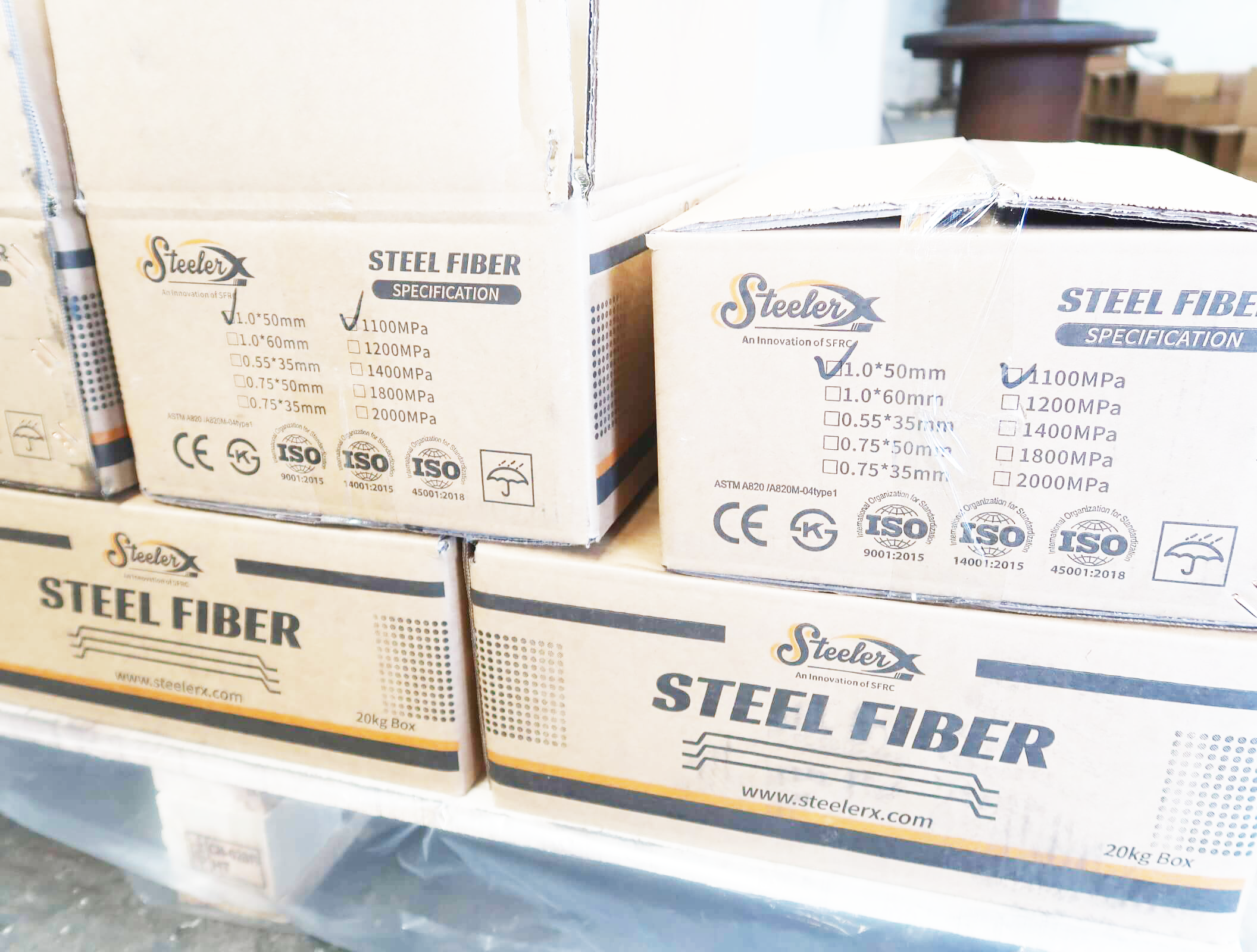
Next Step: Validate the Fiber Against Your Mix Design
Send your mix design, application and destination market, and TINGCO will confirm the correct fiber family, geometry and dosage band, then arrange samples for independent testing. Lead time is 10–15 days from a 24-ton MOQ, and technical support covers mix design advice through to construction guidance.
Download the TINGCO corporate and project brochure: TINGCO Company Profile & Project Introduction (PDF)
Contact: Jackie Zhu · Email: info@tingco.co · Tel: +86-22-59785568 · WhatsApp: +86 189-2017-0726
Address: B1F16, Hongxing Building, Linke West Road, Hedong, Tianjin 300161, China
Web: www.tcfibers.com · Blog: blog.tcfibers.com