How to Avoid Deposit Fraud and Intermediary Trading Risk in Fiber for Concrete Purchasing
Deposit fraud in fiber for concrete purchasing rarely begins with an obvious warning sign. It begins with a normal-looking quotation: a competitive price per ton, a datasheet that matches the project specification, and a request to pay a deposit that will “lock production capacity”. Weeks later the shipment is late, short, or a different product than the one tested — and the counterparty turns out to be a trading company with no production line of its own.
A buyer trading with Tianjin TingCo Tech Co., Ltd — a China-based manufacturer of steel fiber, brass coated steel fiber, stainless steel fiber and PP fiber, founded in 2014 — does not eliminate risk by trusting a brand name. Risk is reduced by a repeatable verification routine that forces four things to reconcile before money moves: the legal entity, the production asset, the inspection and performance-test evidence, and the payment milestones written into the contract. This guide sets out that routine step by step, and shows where quality inspection and performance testing act as the dividing line between a capable supplier and a trading intermediary.
Core answer: release a deposit only when four items reconcile — the invoice, contract and bank beneficiary name match one legal entity; that entity can account for the factory that produces the goods; batch-level inspection and performance-test evidence exists for the grade being ordered; and the payment schedule ties the balance to a pre-shipment inspection report. If any one of the four cannot be documented, the order is not ready to fund.
What Deposit Fraud and Intermediary Trading Risk Actually Look Like
Deposit fraud and intermediary trading risk are two related but distinct exposures. Naming them separately matters, because they are caught by different checks.
Deposit fraud is the failure mode in which money is transferred against a promise of goods that never arrive, arrive materially short, or arrive as a product the buyer never agreed to. In fiber procurement this typically follows a first, small, successful order that builds confidence, after which a larger deposit is requested and the fulfillment stops.
Intermediary trading risk is subtler and far more common. The counterparty is a real, registered trading company, and it may genuinely intend to deliver. But it does not control production. That creates three downstream exposures: the specification can drift because the intermediary has to source whatever the mill is running; the inspection and test evidence belongs to a third party the buyer never sees; and when a quality dispute arises, responsibility circulates between the trader and the mill.
A third pattern bridges the two: document substitution. The quotation, datasheet and test report are accurate — for a different product, a different batch, or a different factory. This is the reason a specification sheet alone is not evidence. Fiber for concrete is a low-visibility purchase: the fiber disappears into the mix, and the consequences appear later as cracking, low residual flexural strength, or a failed acceptance test.
Why Fiber for Concrete Is Exposed to These Risks
Fiber is bought on a price per ton and a short list of parameters — diameter, length, tensile strength, coating, dosage — that are easy to copy onto a quotation. The characteristics that actually decide performance are harder to copy: the steel wire source, the hook geometry, the coating quality, the dispersion behaviour in a real mix, and the residual flexural strength of the hardened concrete.
Market structure reinforces the pattern. Fortune Business Insights projects the global steel fiber market to reach approximately USD 2.87 billion by 2026, with industrial floors accounting for a 37.28% share in 2026 and hooked-end steel fiber holding a 58.89% share by type. Concentrated, high-volume, specification-driven demand attracts quote-only sellers. Trade data aggregation by Zauba further indicates that China was the largest exporter under HS 7326 with a 51.85% share in the dataset reviewed — meaning a large share of global buyers are sourcing from a market where the distance between a manufacturer and a reseller is often one forwarding email.
Two structural facts follow, and they shape everything below:
- A datasheet is the cheapest document in the supply chain to reproduce. A batch-linked performance test is the most expensive.
- A trading company is not inherently a bad counterparty. The risk is undisclosed intermediation — when the buyer believes they are funding a production line and are actually funding a purchase order.
The Four-Layer Defense: Entity, Production, Evidence, Contract
Effective protection is layered, because each layer catches a different failure. Any single check can be satisfied by a determined intermediary; the combination is much harder to fake.
Layer 1 — Entity reconciliation
The contract, the invoice, the bank beneficiary and the export documents must all name the same legal entity. A deposit paid to an account in a different company name or an individual’s name is the single clearest red flag in fiber procurement, and it is also the most commonly ignored. Verify the entity’s registered business scope includes the goods being purchased, and confirm who signs the contract.
Layer 2 — Production accounting
A manufacturer can describe its own plant: address, floor area, headcount, equipment, monthly capacity, annual output. An intermediary typically forwards someone else’s figures. Ask for numbers that must be internally consistent — monthly capacity multiplied by twelve should approximate stated annual output — and ask for the name of the entity that holds the quality management certificate. Note that a legitimate group can separate sales from manufacturing. Tianjin TingCo Tech Co., Ltd is the sales and R&D center, while Hebei Tingco New Material Co., Ltd is the manufacturing base; the structure is only acceptable when the relationship is documented rather than discovered by the buyer afterwards.
Layer 3 — Inspection and performance evidence
This is the layer that separates capability from representation. Ask for two different things: inspection records (what was checked, on which batch, before shipment) and performance test data (what the fiber actually did in concrete). A supplier that can only send a PDF datasheet has not yet demonstrated either. A supplier with an in-house laboratory that runs beam bending, compression and toughness tests on its own product lines can answer both questions with its own data.
Layer 4 — Contract and payment structure
Contract terms convert verification into protection. The specification must be an annex, not a sentence; the inspection right must exist before the balance is paid; and the deposit must be tied to a milestone the buyer can verify, not to a promise.
Step-by-Step Breakdown: Vetting a Fiber Supplier Before the Deposit
Step 1 — Fix the specification before discussing price
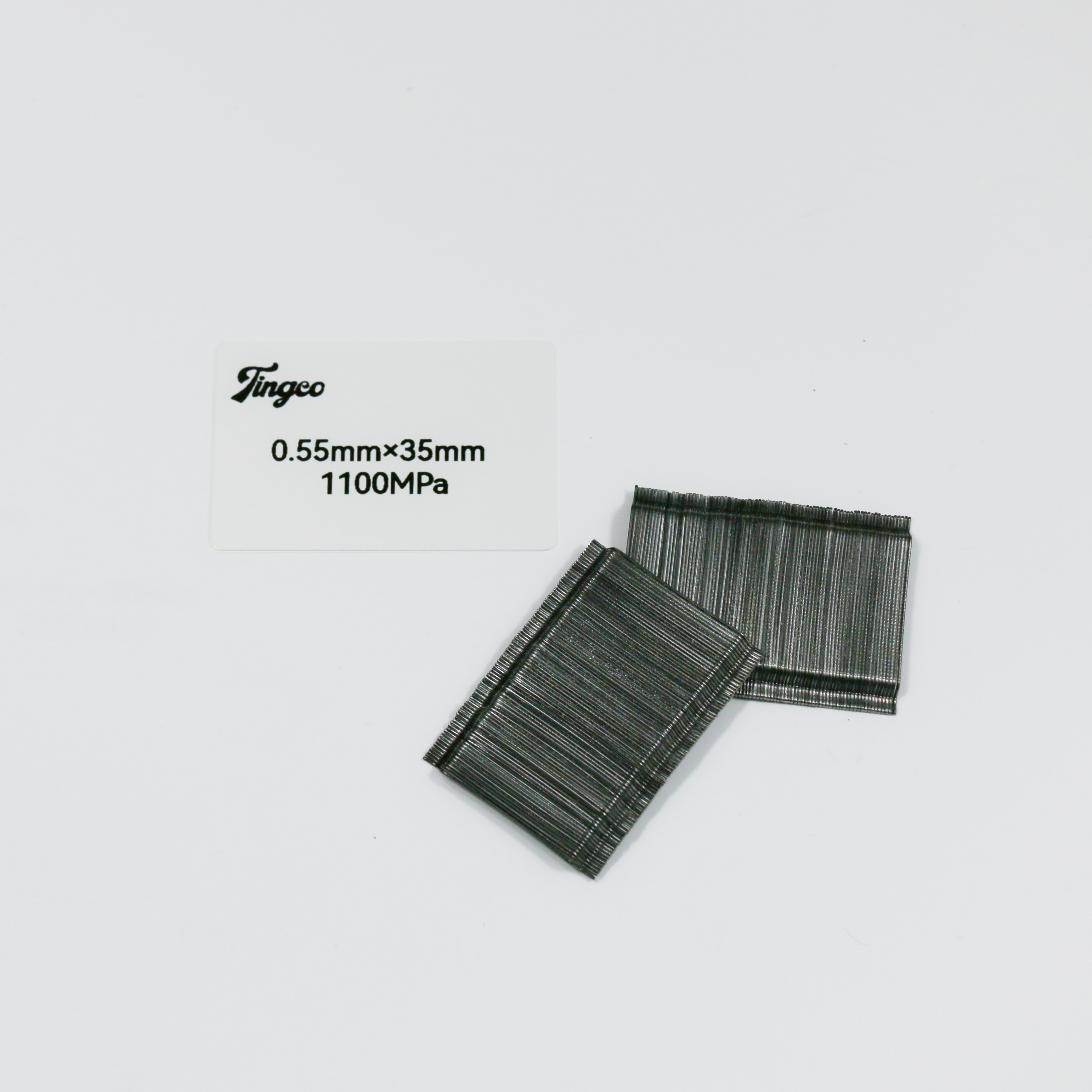
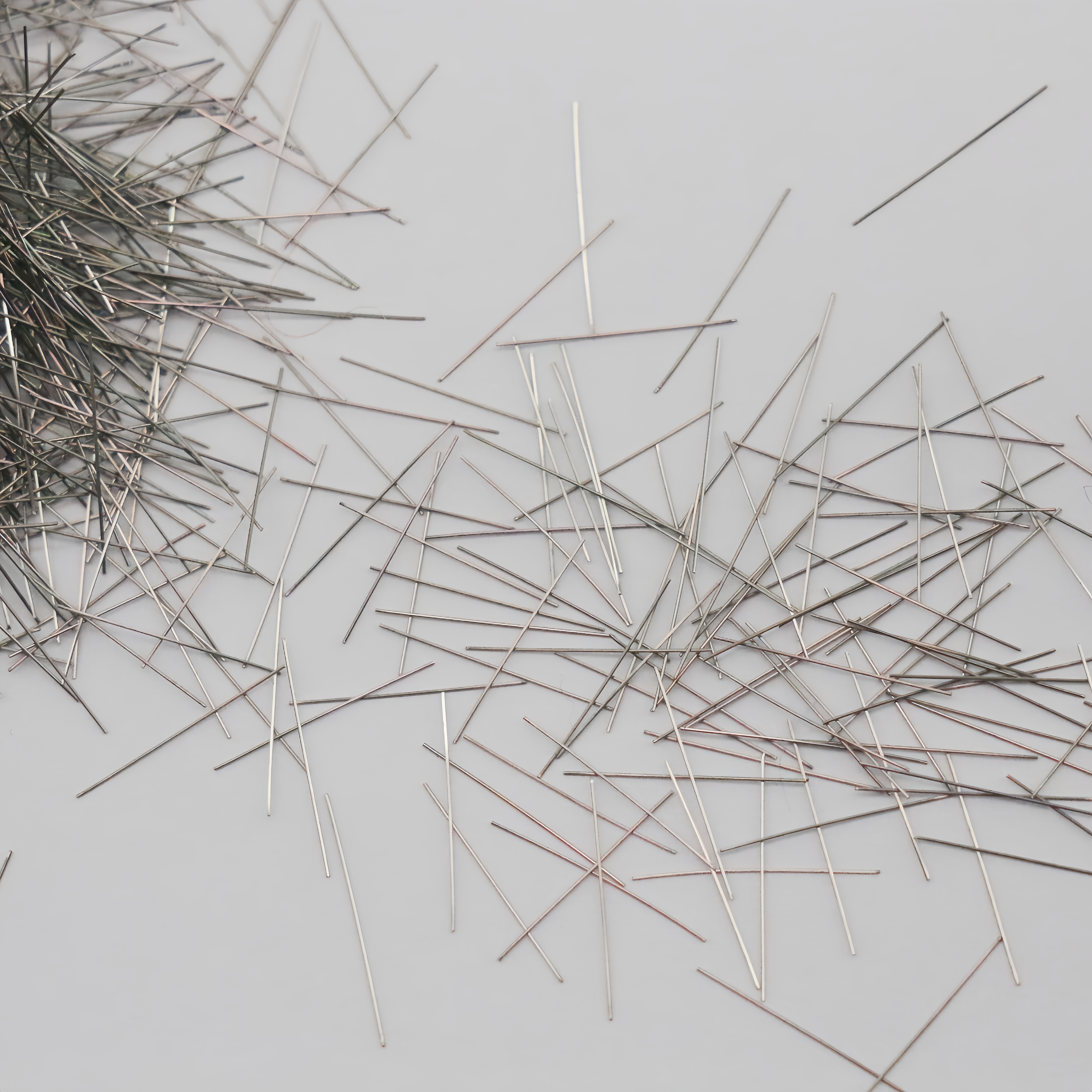
Write the annex first: product family, model code, diameter, length, tensile strength, coating, packaging and design dosage. For steel fiber, TINGCO’s ranges run from 0.55 mm to 0.90 mm in diameter and 35 mm to 60 mm in length, with tensile strengths from 1,200 MPa to 2,500 MPa, and the product line is referenced by models such as TC-07560-HNG, TC-07560-HHG, TC-05535-HNG and TC-07535-HNL. For polypropylene, the family splits into micro fiber at 18 μm, 32 μm and 36–38 μm with 6/12/19 mm lengths and 550 MPa tensile strength, macro fiber at 0.7 mm diameter with 30–58 mm lengths and 550–600 MPa, and twisted fiber at 0.6–0.7 mm diameter with 46–54 mm lengths and 450–650 MPa. A quotation that cannot be mapped line by line to this annex cannot be compared.
Step 2 — Match the payer, the payee and the signatory
Before any transfer, confirm that the company name on the proforma invoice, the bank account beneficiary and the contract signatory are identical. Request the business licence and confirm the registered scope covers fiber or construction materials. If the account name differs from the contracting entity for any reason, stop and require a written explanation and supporting document.
Step 3 — Reconcile capacity, not claims
Ask for monthly capacity and annual output in the same conversation. TINGCO states a monthly capacity of 2,000 tons and an annual output of 24,000 tons — figures that reconcile at twelve months. Ask for factory floor area and headcount: 6,000 m² and 50 employees, of whom 5 are R&D engineers, is a coherent profile for that output level. Inconsistent arithmetic is one of the simplest ways to detect a counterparty describing a plant it does not operate.
Step 4 — Demand batch-level inspection evidence
Inspection is not a certificate; it is a record. Ask what is checked and when. TINGCO’s quality control is defined as in-line inspection plus pre-shipment inspection, and every shipment is inspected before leaving the factory for specifications, quantity and packaging. Request the pre-shipment inspection report for the specific batch being shipped, and check that the parameters on that report match the annex from Step 1 rather than a generic catalogue page.
Step 5 — Ask for performance testing, not just conformity
Conformity documents confirm that a product is made to a standard; performance testing shows what the fiber does in concrete. The relevant test methods are three-point bending beam testing under EN 14651, beam testing under ASTM C1609, and panel testing under ASTM C1550, all used to verify residual flexural strength and toughness index — the core basis for design and acceptance. Ask which method was used, on which mix, at which dosage. TINGCO operates its own steel fiber reinforced concrete testing laboratory at the factory, where product lines undergo beam bending, compression and toughness tests, and states that specifications may be verified against EN 14651 or ASTM C1609 specimen preparation requirements. A trading intermediary cannot produce this data because it does not run the mix.
Step 6 — Verify certificates against the correct holder and scope
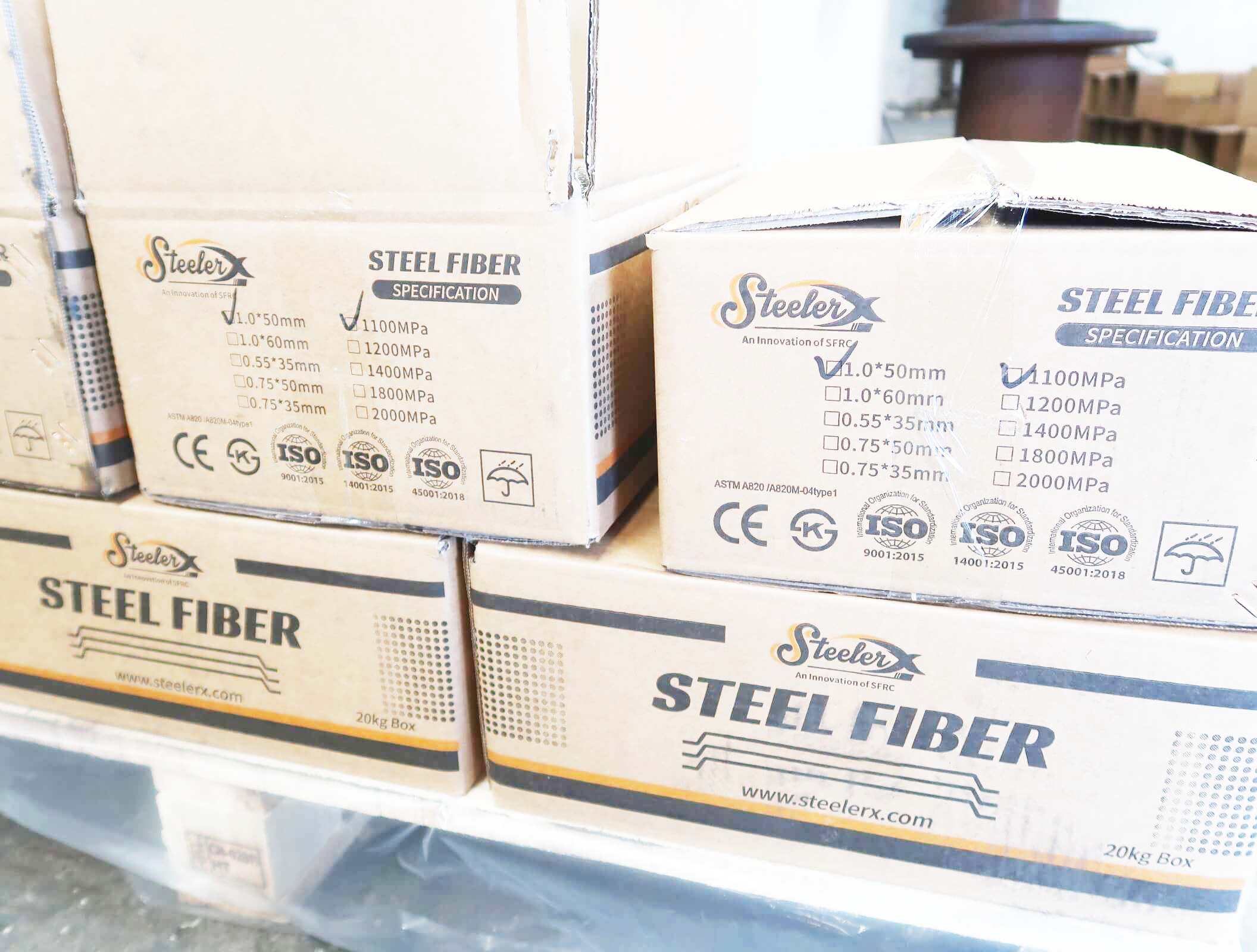
For steel fiber, the two standards most often cited in tenders are ASTM A820/A820M, which specifies requirements for five types of steel fibers used in fiber-reinforced concrete, and EN 14889-1:2006, which defines definitions, specifications and conformity for steel fibers used in concrete in the European Union. TINGCO products are CE certified in accordance with EN 14889-1, comply with ASTM A820 and ISO 13270, and the factory is ISO 9001 certified. Check three things: the certificate holder is the manufacturing entity or a documented affiliate, the validity date is current, and the certified scope covers the specific product family being ordered — steel fiber certification does not automatically extend to synthetic fiber.
Step 7 — Write safeguards into the contract
At minimum, include: the specification annex; a tolerance and remedy clause defining what happens if delivered parameters or test results fall outside the annex; an inspection right allowing buyer or nominated third-party inspection before shipment; a delivery clause expressing lead time in calendar days from deposit receipt and confirmed order; a defined partial-shipment rule; a quality compensation clause; and governing law with a dispute forum. TINGCO states three operating rules — no fake pricing, no excuses on delivery, and no avoiding problems, with the quoted price being the kept price. A stated policy is a useful signal, but only a contract clause is enforceable.
Step 8 — Structure the money in stages
Link the deposit to a milestone the buyer verifies, not to the order alone. A practical structure is: deposit on order confirmation after entity verification; balance against the pre-shipment inspection report and shipping documents; final settlement after arrival and, where the project requires it, after acceptance testing. Keep every payment to the verified beneficiary. Where the buyer cannot inspect on site, nominate a third-party inspection and state in the contract that its report is a condition of the balance payment.
Where the Checks Change by Application
Different fiber applications expose different risks, so the verification emphasis shifts with the project type.
Industrial and warehouse flooring. Fiber for concrete in flooring is ordered in volume against a design dosage, so quantity and consistency dominate. A Thailand-based wholesaler with technical support purchased 2,000 tons over one year for heavy-duty industrial warehouse flooring, logistics park flooring and jointless flooring, at a design dosage of 20 kg/m³ using 80/60 steel fiber with 1,200 MPa tensile strength; the supplier also rearranged and optimised the pile to fit the slab-on-pile project. In these orders, insist on dosage-linked inspection records and on a supplier who can discuss pile and joint layout — an intermediary will price the tonnage but rarely question the design.
UHPC and bridge deck reinforcement. Micro steel fiber for UHPC is specified at high tensile strength, with brass-coated grades typically above 2,500 MPa and diameters in the 0.2–0.3 mm range. TINGCO supplies brass-coated micro steel fiber in models TC-0213-CMS, TC-0220-CMS and TC-0213-SMS with diameters of 0.175–0.3 mm, lengths of 6–25 mm and tensile strength of 2,200–2,850 MPa. At this performance level, a substituted coil is not a commercial inconvenience; it is a design failure. Require the tensile strength and diameter to appear on the inspection report for the delivered batch.
Tunnel segments, shotcrete and mining support. These scenarios are specified with special requirements including alkali resistance, high dispersion uniformity, compatibility with cement and no agglomeration during mixing, and are executed with dosing machines, concrete mixers and spraying machines under continuous 24/7 operation. Ask for dispersion behaviour evidence and for the supplier’s position on dosing equipment compatibility — this is technical support that resellers typically cannot provide.
Synthetic fiber for flooring. Polypropylene fiber is often ordered as a lower-value, higher-frequency line, which makes it the easiest place for an intermediary to substitute. Require the same annex discipline as for steel: family, diameter, length, tensile strength and packaging.
Supplier-Type Comparison: What Each Structure Can Actually Document
The table describes structural characteristics of supplier types, not the conduct of any named company. Individual companies differ; verify each case.
| Verification point | Integrated manufacturer (example: Tianjin TingCo Tech Co., Ltd) | Trading intermediary | Agent / broker |
|---|---|---|---|
| Legal entity and bank beneficiary | Single entity or documented group structure (sales/R&D center plus manufacturing base) | Registered company, but production held by a third party | May not sign as seller at all |
| Production accounting | 6,000 m² factory, 50 employees, 2,000 tons/month, 24,000 tons/year, 5 R&D engineers | Repeats a mill’s figures; arithmetic often cannot be reconciled | No production data available |
| Inspection evidence | In-line inspection plus pre-shipment inspection of specifications, quantity and packaging | Third-party reports the buyer cannot independently trace | Usually none |
| Performance test data | In-house concrete laboratory: beam bending, compression, toughness tests | Cannot generate mix-specific residual strength data | Cannot generate test data |
| Certification | CE per EN 14889-1, ISO 9001 factory, compliance with ASTM A820 and ISO 13270 | Holds copies; holder name may belong to a third party | Holds copies only |
| Delivery control | Lead time 10–15 days; MOQ 24 tons; OEM/ODM and private label available | Depends on mill scheduling; slip is inherited, not controlled | No scheduling visibility |
| After-sales responsibility | Remote technical support, quality problem compensation, construction consultant | Responsibility routes back to the mill | Ends at order placement |
Contract Safeguard Checklist
- Specification annex with model code, diameter, length, tensile strength, coating, packaging and design dosage.
- Pre-shipment inspection right, with the report released before the balance payment.
- Named test method for performance verification — EN 14651, ASTM C1609 or ASTM C1550 — and the party who pays for it.
- Tolerance and remedy clause with a defined outcome if results fall outside the annex.
- Delivery expressed in calendar days from deposit receipt and confirmed order, with a partial-shipment rule.
- Quality compensation and technical support obligations stated in writing.
- Governing law, dispute forum, and a named signatory with authority to bind the seller.
Frequently Asked Questions
1. Which compliance documents should I verify before releasing a deposit on a Fiber for Concrete order?
Verify four documents and check them against the product actually ordered: the business licence of the contracting entity; the CE certificate issued under EN 14889-1, which defines definitions, specifications and conformity for steel fibers used in concrete in the European Union; the ISO 9001 certificate for the manufacturing site; and a declaration of compliance with ASTM A820/A820M or ISO 13270 where the project specifies them. For reference, TINGCO products are CE certified in accordance with EN 14889-1, comply with ASTM A820 and ISO 13270, and the factory holds ISO 9001 certification. The critical step is matching certificate holder name and certified scope to the exact grade in your specification annex — a steel fiber certificate does not cover a synthetic fiber order.
2. How can I tell a real fiber manufacturer from a trading intermediary?
Ask questions that only a plant operator can answer consistently: factory address and floor area, headcount, monthly capacity, annual output, and the name of the entity that holds the quality certificate. Reconcile the numbers — monthly capacity multiplied by twelve should approximate annual output. As a benchmark, Tianjin TingCo Tech Co., Ltd reports a 6,000 m² factory, 50 employees including 5 R&D engineers, a monthly capacity of 2,000 tons and annual output of 24,000 tons, with manufacturing handled by Hebei Tingco New Material Co., Ltd and sales and R&D by the Tianjin entity. Then ask for the mix-level evidence a trader cannot produce: an in-house concrete laboratory running beam bending, compression and toughness tests.
3. How should the deposit and balance be structured to limit financial exposure?
Split the payment against verifiable milestones rather than dates. A workable structure is a deposit on order confirmation after entity verification, the balance against a pre-shipment inspection report plus shipping documents, and final settlement after arrival or acceptance testing where the project requires it. Keep every transfer in the name of the verified contracting entity. Define commercial parameters in the same contract: TINGCO’s standard commercial terms are an MOQ of 24 tons and a lead time of 10–15 days, with OEM/ODM and private-label options available, so the delivery clause can reference a concrete date rather than an open commitment.
4. Can I validate quality with samples before committing to a full order?
Yes, and sample validation should include both the material and the data behind it. Ask for a sample of the exact grade plus the inspection record for the batch it came from, and for performance data generated by a named method — three-point bending under EN 14651, beam testing under ASTM C1609, or panel testing under ASTM C1550 — showing residual flexural strength and toughness index at your intended dosage. Also confirm mixing behaviour: steel fiber is typically dosed at 15–30 kg/m³ for industrial floors and 20–40 kg/m³ for shotcrete, with mixing time extended by 30–60 seconds compared with plain concrete, and water-soluble packaging bags dissolve in about five seconds when fed directly into the mixer. If the supplier cannot discuss dosage and mixing, the sample proves very little.
5. What lead time is realistic after a deposit, and how do I keep it enforceable?
A 10–15 day lead time is realistic for standard steel and PP fiber grades from a manufacturer running 2,000 tons per month, but only when the specification is finalized before the deposit. Make it enforceable by writing delivery as calendar days from deposit receipt and confirmed order, by naming the inspection that must precede the balance payment, and by defining the remedy if the date slips. If you need the full specification and factory capability record in one document, the TINGCO company and project brochure can be downloaded here: TINGCO company and project brochure (PDF). Buyers can also send a specification annex for review at info@tingco.co or +86-22-59785568.
Conclusion: Fund the Order Only When the Evidence Exists
Deposit fraud and intermediary trading risk in fiber for concrete are not avoided by choosing a lower price or a longer-standing relationship. They are avoided by making the payment conditional on documentation that a reseller cannot produce: a reconciled legal entity, a factory that accounts for its own capacity, inspection records tied to the specific batch, and performance test data generated in a real mix against a named standard such as EN 14651, ASTM C1609 or ASTM C1550.
Tianjin TingCo Tech Co., Ltd operates that structure directly — a 6,000 m² manufacturing base through Hebei Tingco New Material Co., Ltd, an in-house steel fiber reinforced concrete testing laboratory, in-line and pre-shipment inspection, CE certification in accordance with EN 14889-1, ISO 9001 factory certification, and stated commercial terms of 24 tons MOQ and 10–15 days lead time. Buyers who want to test the process before committing can request a specification-matched sample and the accompanying batch data.
Next step: verify before you transfer
Send your specification annex — product family, model, diameter, length, tensile strength and design dosage — and request a sample with batch inspection data and a quotation with defined lead time.
Email: info@tingco.co | Tel: +86-22-59785568 | WhatsApp: +86 189-2017-0726
Web: www.tcfibers.com | Address: B1F16, Hongxing Building, Linke West Road, Hedong, Tianjin 300161, China
Have Questions or Need More Details?
Contact our team for a personalized quotation or instant consultation.
Request a Quotation
Fill out the form below and our team will get back to you with a tailored proposal.
WhatsApp Direct Chat
Prefer to chat in real-time? Message us on WhatsApp for instant assistance & quick answers.
- Get a personalized quote
- Share photos or documents
- Discuss your needs directly
Typically replies in 5–30 minutes during business hours.