
Micro Steel Fiber Models for UHPC and Bridge Deck Reinforcement
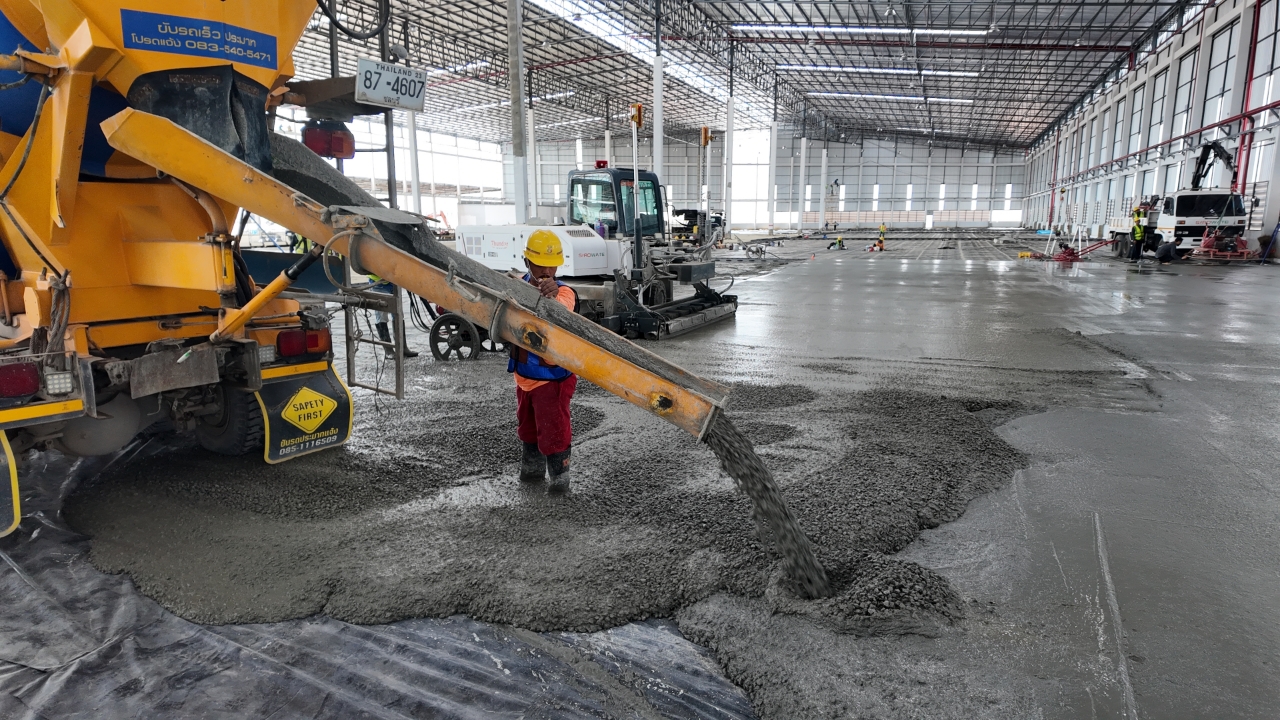
Steel fiber for concrete reinforcement — TINGCO supplies brass-coated and stainless micro steel fibers alongside hooked-end and synthetic fiber lines. Source: Tianjin TingCo Tech Co., Ltd.
Three micro steel fiber models cover the majority of specification calls for UHPC, RPC, bridge deck reinforcement, high-speed rail prefabricated components, airport runways and seismic-resistant structures: TC-0213-CMS, TC-0220-CMS and TC-0213-SMS. They belong to one product family with 0.175–0.3 mm fiber diameter, 6–25 mm cut length and 2,200–2,850 MPa tensile strength, available with brass-coated and stainless coating options. All three are produced by Tianjin TingCo Tech Co., Ltd. (TINGCO), a Tianjin-based manufacturer and technical partner specializing in steel fibers, synthetic fibers and concrete reinforcement solutions. This guide ranks the three models by application fit and sets out the coating, strength and geometry logic behind each recommendation.
If a project needs a single default starting point, it is TC-0213-CMS for UHPC and RPC. Where crack-bridging over a deck overlay or a long precast element governs the design, TC-0220-CMS is the better fit. Where chloride exposure or an architectural finish rules out a carbon-steel core, TC-0213-SMS is the correct specification. The ranking below is a fit ranking — not a claim that one model outranks the others in every project.
Why Model Choice Is a Decision, Not a Default
A micro steel fiber model is correctly chosen when its coating chemistry, geometry and tensile band match the matrix, the element thickness and the exposure condition. Tensile strength alone does not decide the outcome. Four variables determine whether a fiber performs in a UHPC or bridge deck mix:
- Matrix density and compressive class. UHPC matrices can reach compressive strengths up to 220 MPa. In a dense, low-water matrix, the fiber must bond to the cementitious system and disperse evenly, which is a different requirement from conventional steel-fiber concrete.
- Coating and core material. Brass-coated steel fiber is used to improve bond in cementitious systems. A stainless core changes how the fiber behaves in corrosive or architectural exposure, where a carbon-steel core would be a service-life concern.
- Geometry. Within the same mass of fiber, a shorter cut length produces a higher fiber count and better dispersion in thin elements, while a longer cut length provides more anchorage and crack-bridging across a joint, overlay or segment.
- Verification route. Performance is proven by residual flexural strength and toughness testing — not by a datasheet number. EN 14651 (three-point bending beam), ASTM C1609 (beam test) and ASTM C1550 (panel test) are the core design and acceptance basis for steel fiber reinforced concrete.
Buyer risk concentrates in three predictable places. Coating is chosen on unit price rather than exposure class, so a carbon-steel micro fiber ends up in a chloride or visible-architectural application. Geometry is chosen from habit rather than element thickness, so a fiber either clumps in a thin casting or fails to anchor across a joint. And verification is left to the datasheet, so there is no measurable residual flexural strength evidence when the acceptance test is requested. The three-model shortlist below is built specifically to remove those three risks.
Industry Background: What Is Driving Micro Steel Fiber Specifications
The global steel fiber market is projected to reach approximately USD 2.87 billion by 2026, according to Fortune Business Insights. Within that market, the industrial flooring application segment accounted for a 37.28% share in 2026, and hooked-end steel fibers held the leading type segment share at 58.89%. Those two figures explain the shape of the wider industry: most volumes are produced for slab and flooring work, where macro hooked-end and synthetic fibers are the workhorse products.
Micro steel fiber for UHPC, RPC, bridge decks and rail precast sits at the specification-driven edge of that market rather than its volume centre. Three forces shape purchasing decisions in this segment:
- Code-led specification. ASTM A820/A820M is the core global standard specifying requirements for five types of steel fibers in fiber-reinforced concrete. EN 14889-1:2006 defines definitions, specifications and conformity for steel fibers placed on the European market. ISO 13270 provides a further international reference. Buyers increasingly require documented conformity, not a datasheet claim.
- Performance-based acceptance. Flexural toughness testing per EN 14651, ASTM C1609 or ASTM C1550 has become the standard method for verifying what a fiber actually does in concrete, which pushes selection toward suppliers who can support test work.
- Thin, dense and exposed elements. UHPC facades, deck overlays, rail precast segments and seismic elements combine thin sections, high reinforcement demand and, in some cases, chloride exposure — conditions that a standard 0.55–0.90 mm macro fiber is not designed for.
Tianjin TingCo Tech Co., Ltd. was founded in 2014 and operates through two entities: the Tianjin-based sales and R&D center, and Hebei Tingco New Material Co., Ltd., the manufacturing base. The structure covers research, production, quality control, technical support and export service under one roof. The company runs a 6,000 m² factory with 50 employees, an annual output of 24,000 tons and a five-engineer R&D team. Fibers are exported to the EU, Africa, South East Asia and the Middle East, with an export ratio of around 70% and project experience in more than 30 countries. Products are CE certified in accordance with EN 14889-1, comply with ASTM A820 and ISO 13270, and the factory holds ISO 9001 quality certification. In-house testing includes beam bending, compression and toughness tests on steel fiber reinforced concrete.
The Three Recommended Models at a Glance
The shortlist below ranks the three models by fit for the application set in this article. All three share the same family envelope of 0.175–0.3 mm diameter, 6–25 mm cut length and 2,200–2,850 MPa tensile strength; they differ mainly by coating or core, by the geometry point they occupy inside the family, and by the exposure condition they are intended for.
| Fit ranking | Model | Coating / core | Family spec envelope | Primary application fit |
|---|---|---|---|---|
| 1 | TC-0213-CMS | Brass-coated micro steel fiber | 0.175–0.3 mm dia · 6–25 mm length · 2,200–2,850 MPa | UHPC and RPC mixes, thin precast, high-density matrix reinforcement |
| 2 | TC-0220-CMS | Brass-coated micro steel fiber | 0.175–0.3 mm dia · 6–25 mm length · 2,200–2,850 MPa | Bridge deck overlays, high-speed rail prefabricated components, airport runways, seismic-resistant elements |
| 3 | TC-0213-SMS | Stainless micro steel fiber | 0.175–0.3 mm dia · 6–25 mm length · 2,200–2,850 MPa | UHPC facades, chloride or marine exposure, architectural surfaces where staining is not acceptable |
Specification note: the diameter and cut length of a specific model code should be confirmed against that model's datasheet and the project specification before mix design. TINGCO supplies custom specifications, OEM packaging and private-label solutions on request.
Model 1 — TC-0213-CMS: Brass-Coated Micro Steel Fiber for UHPC and RPC
TC-0213-CMS is the first recommendation for UHPC and RPC because the combination of a brass coating and a short-cut geometry addresses the two dominant problems in dense, high-strength matrices: bond and dispersion.
Why the brass coating matters
Brass coating is used on micro steel fiber to improve the bond between fiber and cementitious matrix. In a UHPC mix where compressive strength can reach up to 220 MPa, the matrix is dense and the fiber must transfer stress efficiently at the interface. Industry benchmark data published for brass-coated micro steel fiber used in UHPC typically quote tensile strengths above 2,500 MPa and diameters in the 0.2–0.3 mm band. The TINGCO micro fiber family covers a comparable band, from 0.175 mm to 0.3 mm in diameter and 2,200 MPa to 2,850 MPa in tensile strength, with brass-coated and stainless options.
Why the short geometry helps in thin and dense elements
For a fixed mass of fiber, a shorter cut length produces a higher number of individual fibers, which is the mechanism that controls micro-cracking in UHPC and RPC. It also reduces the risk of balling and blocking in thin castings and in mixes with high powder content. The practical consequence for a buyer is fewer rejected batches, more consistent slump recovery and a shorter mixing adjustment window.
Where TC-0213-CMS fits best
- UHPC and RPC mixes for precast and cast-in-place elements
- Thin-section precast where dispersion and surface finish both matter
- Elements where the design assumes high fiber count rather than long anchorage
Boundary condition
TC-0213-CMS is not the right default where the governing design action is crack-bridging across a wide joint opening or a long anchorage path. In those cases the longer geometry within the family, TC-0220-CMS, is the better starting point.
Model 2 — TC-0220-CMS: Brass-Coated Micro Steel Fiber for Bridge Decks and Rail Precast
TC-0220-CMS is recommended second overall but first for bridge deck reinforcement, high-speed rail prefabricated components, airport runways and seismic-resistant structures. It uses the same brass-coated micro steel fiber technology and the same family specification envelope as TC-0213-CMS; the difference is the geometry point it occupies inside the 6–25 mm cut-length range and the resulting anchorage behaviour.
Why longer geometry is selected for deck and precast work
Deck overlays, runway pavements and rail precast segments are exposed to dynamic vehicle and train loads, thermal cycling and vibration. In these conditions the fiber must bridge cracks over a longer distance and anchor deeper into the surrounding matrix. A longer fiber within the same family delivers that anchorage while keeping the tensile band at 2,200–2,850 MPa and retaining the brass coating that supports bond in the cementitious system.
Compatibility with the exposure conditions of deck and rail work
Bridge decks, runways and rail precast commonly combine humid or alternating-temperature service conditions with dynamic loading. Because TC-0220-CMS is a brass-coated micro fiber, its role is mechanical reinforcement within the concrete rather than corrosion protection of the fiber itself. Where the design also requires a corrosion-resistant fiber in a chloride-exposed surface zone, the stainless alternative should be evaluated separately.
Where TC-0220-CMS fits best
- Bridge deck reinforcement and overlay layers
- High-speed rail prefabricated components and segment-type precast
- Airport runway and pavement concrete subject to dynamic loads
- Seismic-resistant structural elements where crack control under cyclic action is required
Boundary condition
Because the fiber is longer, dispersion control becomes more important. Dosing sequence, feeding method and mixing time must be managed deliberately — a longer micro fiber is less forgiving of a rushed batching procedure than a short one.
Model 3 — TC-0213-SMS: Stainless Micro Steel Fiber for Facades and Chloride Exposure
TC-0213-SMS is the stainless micro steel fiber option in the shortlist. It is ranked third by overall volume of application but first in the situations it is designed for: UHPC facades, chloride or marine exposure, and architectural surfaces where corrosion staining of the fiber is not acceptable.
What the stainless core changes
In a carbon-steel micro fiber, the coating and the concrete cover carry the durability argument. A stainless core changes the material behaviour of the fiber itself, which matters in visible facades and in elements exposed to chlorides. For a UHPC facade where the surface is the product, this is a design decision rather than a cost decision.
Where TC-0213-SMS fits best
- UHPC facades and architectural precast with exposed surfaces
- Elements in chloride, marine or de-icing salt exposure zones
- Repair and overlay work where long service life with minimal surface staining is required
Boundary condition
Stainless raw material generally carries a higher cost than brass-coated carbon steel. Specifying TC-0213-SMS for a buried or fully protected element that does not see chlorides usually adds cost without adding value. Stainless is justified by exposure and appearance, not by default.
Step-by-Step: Confirming a Model Before You Order
The sequence below is the selection and verification route TINGCO recommends for micro steel fiber in UHPC, RPC and bridge deck work. It is written so a procurement or engineering team can run it without a supplier present.
- Fix the exposure class first. Decide whether the element is buried, visible, or chloride-exposed. This single decision separates the brass-coated models from the stainless model.
- Fix the geometry envelope. Confirm element thickness, cover, reinforcement density and casting method, then select within the 0.175–0.3 mm diameter and 6–25 mm length family. Short geometry for dispersion in thin and dense elements; longer geometry where anchorage governs.
- Fix the tensile band against the design assumption. Match the 2,200–2,850 MPa family range to the value used in the structural design, and confirm the exact figure for the chosen model code on the datasheet.
- Verify compliance documentation. Request CE certification in accordance with EN 14889-1, conformity with ASTM A820 and ISO 13270, and evidence of ISO 9001 factory certification.
- Run a trial mix and confirm dosing. Use the fibre dosing reference across the TINGCO range as a starting point: industrial floors 15–30 kg/m³, shotcrete 20–40 kg/m³, precast elements 10–30 kg/m³. Weigh the fiber, feed it uniformly — water-soluble packaging bags can be fed directly into the mixer with the aggregates and dissolve in about five seconds — and extend mixing time by 30–60 seconds compared with plain concrete to ensure uniform dispersion without clumping. Check slump and workability, and adjust superplasticizer dosage if required.
- Verify performance by test, not by datasheet. Prepare specimens and test in accordance with EN 14651 or ASTM C1609 (beam) or ASTM C1550 (panel) to confirm residual flexural strength and toughness index. TINGCO operates its own steel fiber reinforced concrete testing lab, where every product line undergoes beam bending, compression and toughness testing.
- Confirm packaging, customization and delivery. Custom specifications, OEM packaging and private-label solutions are available on request, and every shipment is inspected for specification, quantity and packaging before it leaves the factory.
Safety during trial mixing: operators should wear protective gloves and goggles, because dry fibers can fly and cause puncture or eye injury. Avoid dumping a large quantity of fiber at one time, which causes clumping; for long transport distances with mixer trucks, pre-mixing at the batching plant is recommended.
Use Cases and Application Fit
The table below maps the six applications named in this guide to the recommended model and the reason for the match.
| Application | Recommended model | Reason for the match |
|---|---|---|
| UHPC and RPC mixes (compressive strength up to 220 MPa) | TC-0213-CMS | Short-cut brass-coated micro fiber for bond and high fiber count in a dense matrix |
| Bridge deck reinforcement and overlays | TC-0220-CMS | Longer geometry for anchorage and crack-bridging under dynamic vehicle load |
| High-speed rail prefabricated components | TC-0220-CMS | Anchorage and crack control in precast elements under vibration and thermal cycling |
| Airport runways and pavement concrete | TC-0220-CMS | Dynamic load resistance with a 2,200–2,850 MPa tensile band |
| Seismic-resistant structures | TC-0220-CMS | Crack-bridging capacity across joints and plastic hinge zones |
| UHPC facades and chloride exposure | TC-0213-SMS | Stainless core for corrosion behaviour and surface appearance |
When a micro steel fiber is the wrong choice
Micro fiber is not a universal answer, and the boundary should be stated clearly. For industrial flooring at high dosage, hooked-end steel fiber — such as the TC-07560-HNG, TC-07560-HHG, TC-05535-HNG and TC-07535-HNL models with 0.5–1.0 mm diameter, 25–60 mm length and 1,100–2,100 MPa tensile strength — is the conventional specification, and 80/60 hooked-end steel fiber is a common format for tunnel segments. Where corrosion of the reinforcement itself must be avoided altogether, synthetic fibers such as PP macro, micro and twisted fibers, and macro synthetic fiber for industrial flooring, do not corrode in the way steel does. TINGCO supplies steel and synthetic fibers under one brand so these alternatives can be compared within one procurement conversation.
Comparison Table: Fiber vs Wire Mesh Reinforcement
For buyers comparing reinforcement strategies rather than fiber types, TINGCO's own comparison data for steel-fiber-reinforced flooring against wire mesh reinforced flooring provides a documented cost and schedule reference. The same logic is what drives fiber selection in overlays and precast: the reinforcement is distributed through the concrete rather than placed as a separate mesh layer.
| Comparison metric | Steel-fiber-reinforced flooring | Wire mesh reinforced flooring |
|---|---|---|
| Cost | 30%–40% lower cost for flooring applications, including corrosion-free floor reinforcement comparisons | Baseline |
| Construction time | Reduces construction time by 50% | Baseline |
| Expected lifespan | Longer than wire mesh reinforced flooring, relevant for long-term industrial flooring contracts | Baseline |
| Crack behaviour and maintenance | Fewer post-construction cracks, less crack repair, long lifespan | More post-construction cracks and repair |
| Best-fit application noted in the comparison | Very narrow aisle (VNA) warehouse floors with high flatness and load-bearing requirements, including AMR operations | Conventional mesh-reinforced slabs |
Limits, Trade-offs and What Fiber Cannot Decide For You
- Stainless costs more than brass-coated carbon steel. Specify TC-0213-SMS where exposure and appearance justify it, not as a blanket upgrade.
- Longer geometry demands better batching discipline. TC-0220-CMS rewards controlled feeding and an extended mixing time; it does not tolerate clumped dosing.
- Micro fiber is not a drop-in replacement for macro fiber. Industrial flooring and tunnel segment work normally use 0.5–1.0 mm hooked-end steel fiber at 25–60 mm, a different design basis.
- Fiber selection does not replace structural design. TINGCO's team has studied TR34 and EFNARC design codes and works with professional design teams on steel fiber floor design and tunnel segment design, and provides mix design advice and construction guidance — but the project design remains the responsibility of the project engineer.
- Datasheet values are not acceptance evidence. Residual flexural strength and toughness must be confirmed on project specimens per EN 14651, ASTM C1609 or ASTM C1550.
FAQ: Micro Steel Fiber for UHPC and Bridge Decks
Which standards should micro steel fiber for UHPC and bridge decks comply with?
Four references apply. ASTM A820/A820M is the core global standard specifying requirements for five types of steel fibers in fiber-reinforced concrete. EN 14889-1:2006 defines definitions, specifications and conformity for steel fibers placed on the European market, and CE marking is issued in accordance with it. ISO 13270 provides a further international reference. For performance verification, EN 14651 (three-point bending beam test), ASTM C1609 (beam test) and ASTM C1550 (panel test) are the core basis for design and acceptance, because they measure residual flexural strength and toughness index rather than a datasheet tensile value. TINGCO fibers are CE certified in accordance with EN 14889-1, comply with ASTM A820 and ISO 13270, and the factory holds ISO 9001 certification.
Can TC-0213-CMS, TC-0220-CMS and TC-0213-SMS be supplied in project-specific specifications and packaging?
Yes. The three models sit inside a micro steel fiber family covering 0.175–0.3 mm diameter, 6–25 mm cut length and 2,200–2,850 MPa tensile strength, with brass-coated and stainless coating options. Custom specifications, OEM packaging and private-label solutions are available on request. Production runs through Hebei Tingco New Material Co., Ltd., the manufacturing base of Tianjin TingCo Tech Co., Ltd., in a 6,000 m² factory with 24,000 tons of annual output and a five-engineer R&D team. Every shipment is inspected for specification, quantity and packaging before dispatch, and each product line is tested for beam bending, compression and toughness in the company's own steel fiber reinforced concrete laboratory.
What drives the cost difference between the three models?
Three factors. First, coating and core: stainless raw material generally costs more than brass-coated carbon steel, which is why TC-0213-SMS should be reserved for exposure and appearance requirements rather than applied by default, while TC-0213-CMS and TC-0220-CMS share the brass-coated base. Second, geometry and dosage: the quantity required per cubic metre follows the mix design, so the effective cost is a function of dose, not of unit price alone. Third, verification scope: trial mixes and flexural toughness testing add project cost but replace the risk of a failed acceptance test. As a cost-architecture reference, TINGCO comparison data for slab applications shows steel-fiber-reinforced flooring at 30%–40% lower cost than wire mesh reinforced flooring and a 50% reduction in construction time.
How should we validate a model before committing to a full order?
Validate with a trial mix and physical testing, not with a datasheet. Use the TINGCO dosing reference as the starting point — industrial floors 15–30 kg/m³, shotcrete 20–40 kg/m³, precast elements 10–30 kg/m³ — weigh the fiber, feed it uniformly into the mixer, and extend mixing time by 30–60 seconds compared with plain concrete to achieve uniform dispersion without clumping. Water-soluble packaging bags can be fed directly with the aggregates and dissolve in about five seconds. Check slump and workability and adjust superplasticizer dosage if needed. Then prepare specimens and test per EN 14651, ASTM C1609 or ASTM C1550 to confirm the residual flexural strength and toughness index your design assumes. Operators should wear gloves and goggles during trial mixing, and large single-quantity dumps should be avoided to prevent clumping.
What supports lead time and supply continuity for these models?
Supply rests on the integrated structure of Tianjin TingCo Tech Co., Ltd. and Hebei Tingco New Material Co., Ltd., which covers research, production, quality control, technical support and export service under one roof. Annual output is 24,000 tons from a 6,000 m² factory, with an export ratio of around 70% to the EU, Africa, South East Asia and the Middle East, and project experience in more than 30 countries. Custom specifications, OEM packaging and private-label solutions are available. To move from specification to a confirmed schedule, request a micro steel fiber sample or a quote for TC-0213-CMS, TC-0220-CMS or TC-0213-SMS and specify the exposure class, element type, geometry and dosage so the technical team can confirm the model and lead time in one step — info@tingco.co or WhatsApp +86 189-2017-0726.
Conclusion: How to Rank the Three Models for Your Project
The ranking logic reduces to one question: what governs the design — dispersion in a dense matrix, anchorage across a loaded joint, or corrosion and appearance at an exposed surface? TC-0213-CMS answers the first with a short-cut brass-coated micro steel fiber for UHPC and RPC. TC-0220-CMS answers the second with the longer geometry of the same brass-coated technology for bridge decks, high-speed rail precast, airport runways and seismic-resistant elements. TC-0213-SMS answers the third with a stainless core for UHPC facades and chloride exposure. All three share a 0.175–0.3 mm diameter, 6–25 mm length and 2,200–2,850 MPa tensile strength envelope, and all three are verified through EN 14651, ASTM C1609 or ASTM C1550 testing rather than by datasheet claim alone.
Download the full TINGCO product and project brochure for the complete fiber range, including hooked-end and synthetic alternatives, or visit www.tcfibers.com for technical documentation.
Next step — sample or quote request
Send your exposure class, element type, target geometry and dosage to the TINGCO technical team and receive a model recommendation for TC-0213-CMS, TC-0220-CMS or TC-0213-SMS, together with sample availability and lead time.
Email: info@tingco.co · Tel: +86-22-59785568 · WhatsApp: +86 189-2017-0726
Address: B1F16, Hongxing Building, Linke West Road, Hedong, Tianjin 300161, China