PP Fiber in High-Speed Rail, Nuclear, and Hydraulic Projects: Application Guide
PP fiber (polypropylene fiber) is a synthetic reinforcement added to concrete and cementitious mixes to control cracking, reduce permeability, and extend service life. It is specified in high-speed rail, bridge, nuclear power plant, tunnel, and hydraulic engineering projects because it is non-absorbent, resistant to strong acids and alkalis, and does not introduce a corrosion path inside the concrete matrix. This application guide sets out the three PP fiber families — micro, macro, and twisted — with their stated diameters, lengths, and tensile strengths, together with density, elastic modulus, and the verification steps a specifier should complete before approving a fiber for a project.
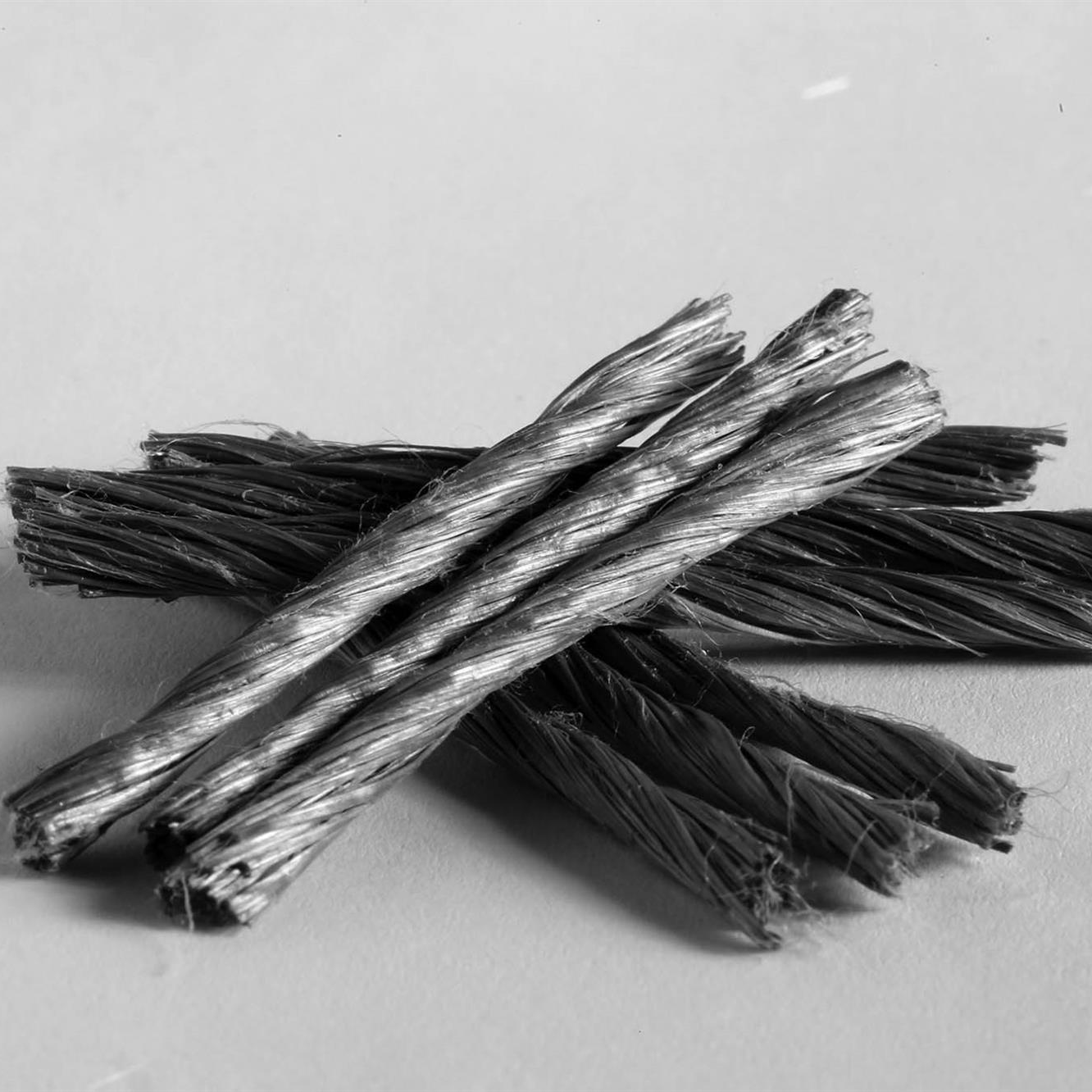
Tianjin TingCo Tech Co., Ltd. is a manufacturer and technical partner specializing in steel fibers, synthetic fibers, and concrete reinforcement solutions. Founded in 2014 and headquartered in Tianjin, China, TINGCO operates through two entities: Tianjin TingCo Tech Co., Ltd., the sales and R&D center, and Hebei Tingco New Material Co., Ltd., the manufacturing base. The product range covers steel fiber, brass coated steel fiber, stainless steel fiber, and PP fiber, with approximately 70% of output exported to the EU, Africa, South East Asia, and the Middle East.
What PP Fiber Solves in Concrete and Cement
PP fiber solves the crack-control problem that occurs in the plastic and early-age stage of concrete, when conventional reinforcement is not yet carrying load. Concrete is strong in compression but weak in tension, so two cracking mechanisms dominate the early life of a structural element: plastic shrinkage cracking in the hours after casting, when evaporation exceeds bleeding, and drying shrinkage combined with thermal gradients as the element matures and restrains its own movement.
In infrastructure with a design life measured in decades, micro-cracks are not cosmetic. They create pathways for water and aggressive agents, and they reduce the impermeability that protects embedded reinforcement. PP fiber addresses this by forming a three-dimensional random network of filaments inside the matrix, bridging micro-cracks as they initiate and preventing them from propagating.
Documented PP fiber performance in concrete:
- Early-stage cracking reduced by over 30%
- Impermeability improved by approximately 37%
- Freeze-thaw resistance and impact resistance enhanced
- Structural service life extended by over 15%
- Non-absorbent, and resistant to strong acids and alkalis
A further point matters in humid, coastal, or chemically aggressive environments: because PP fiber is non-absorbent and does not corrode, it does not create the expansive corrosion products that degrade embedded steel. It remains stable inside the matrix even where moisture and aggressive chemistry are unavoidable.
Why Infrastructure Programs Are Specifying Synthetic Fiber
The global polypropylene fiber market for construction is expected to grow at a compound annual growth rate of 6.4% from 2026 to 2034, according to Fortune Business Insights. That growth tracks the wider fiber-reinforced concrete category: the global steel fiber market is projected to reach approximately USD 2.87 billion by 2026, also per Fortune Business Insights.
The two categories are not substitutes for one another. Steel fiber contributes hardened-state flexural toughness and post-crack load capacity. PP fiber contributes early-age crack control, impermeability, and chemical resistance at low density. High-speed rail, nuclear, tunnel, and hydraulic programs frequently require both functions in the same mix design, and they increasingly require that the crack-control component be non-corrosive and stable in wet or aggressive service.
Three characteristics of these projects push the specification toward synthetic fiber:
- Long service life with restricted maintenance access. Track structures, containment-related mass concrete, tunnel linings, and hydraulic structures are difficult and expensive to repair once in service.
- Large surface-area and mass-concrete elements. Wide slabs, deck overlays, and thick sections generate plastic shrinkage and thermal restraint stresses that promote cracking before the element reaches design strength.
- Aggressive exposure. Underground humidity, hydraulic exposure, and alternating temperature and vibration loads demand a reinforcement component that will not absorb water or degrade chemically.
The PP Fiber Range: Micro, Macro, and Twisted Specifications
Three PP fiber families cover the practical range of crack-control requirements, and they differ mainly in filament diameter, cut length, and tensile strength. All three are produced from polypropylene and share the same material-level properties: density of 0.91 g/cm³ and elastic modulus of 3500 MPa or higher.
PP Micro Fiber
PP Micro Fiber has diameters of 18 μm, 32 μm, and 36–38 μm, lengths of 6 mm, 12 mm, and 19 mm, and a tensile strength of 550 MPa. The fine filament diameter creates a dense network at low addition levels, which is the mechanism behind plastic shrinkage crack control in wide slabs, overlays, and thin elements.
PP Macro Fiber
PP Macro Fiber has a diameter of 0.7 mm, lengths ranging from 30 mm to 58 mm, and a tensile strength between 550 MPa and 600 MPa. The larger filament cross-section bridges cracks that open in the hardened state, which is why macro fiber is specified where residual post-cracking performance matters as well as early-age control.
PP Twisted Fiber
PP Twisted Fiber has a diameter of 0.6–0.7 mm, lengths ranging from 46 mm to 54 mm, and a tensile strength between 450 MPa and 650 MPa. The twisted geometry increases mechanical anchorage along the filament, so the fiber resists pull-out rather than relying on surface friction alone.
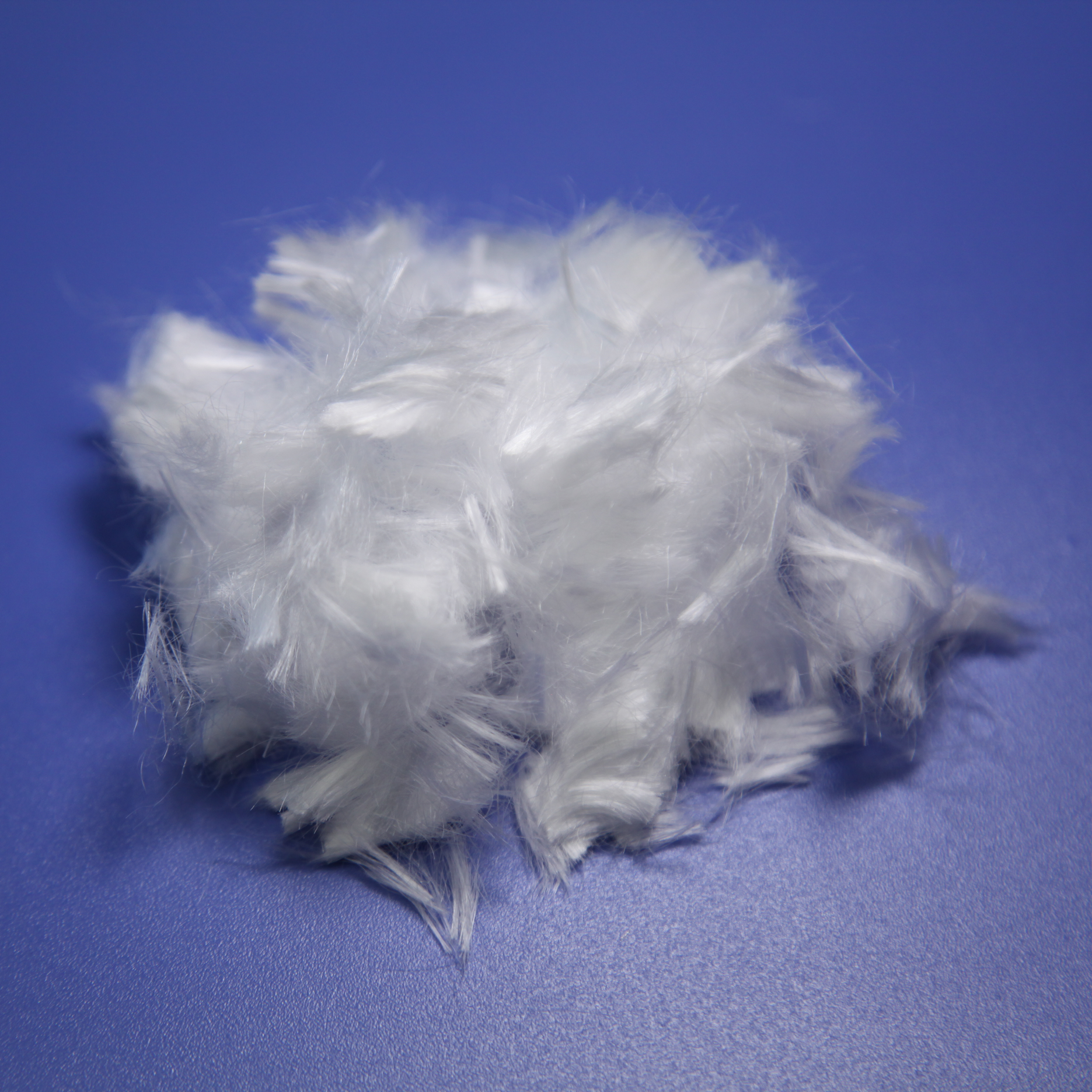
One property deserves separate emphasis for specifiers: surface hydrophilic modification. Polypropylene is naturally hydrophobic, so the fiber surface is modified to ensure uniform dispersion and strong bonding within the concrete. This is what prevents the fiber from balling up during mixing and what makes the documented dispersion and handling behavior repeatable from batch to batch.
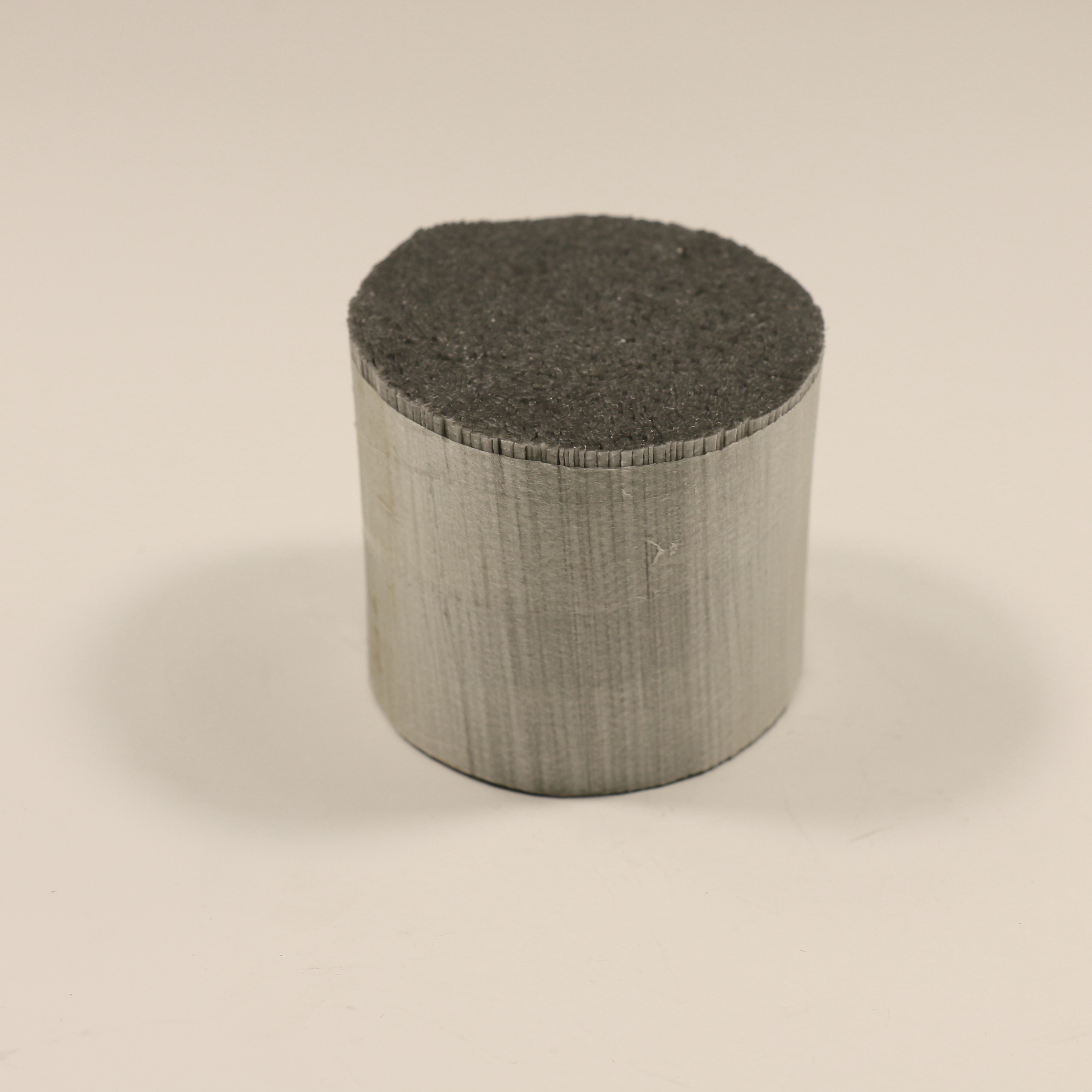
PP Fiber Type Comparison
| Parameter | PP Micro Fiber | PP Macro Fiber | PP Twisted Fiber |
|---|---|---|---|
| Material | Polypropylene | Polypropylene | Polypropylene |
| Diameter | 18 μm, 32 μm, 36–38 μm | 0.7 mm | 0.6–0.7 mm |
| Length | 6 mm, 12 mm, 19 mm | 30–58 mm | 46–54 mm |
| Tensile strength | 550 MPa | 550–600 MPa | 450–650 MPa |
| Typical design role | Plastic shrinkage micro-crack control | Hardened-state crack bridging | Crack bridging with mechanical anchorage from the twisted geometry |
| Material-level properties | Density 0.91 g/cm³; elastic modulus ≥3500 MPa; non-absorbent; acid and alkali resistant | Density 0.91 g/cm³; elastic modulus ≥3500 MPa; non-absorbent; acid and alkali resistant | Density 0.91 g/cm³; elastic modulus ≥3500 MPa; non-absorbent; acid and alkali resistant |
Step-by-Step: How to Specify and Verify PP Fiber
A PP fiber specification is only as reliable as the verification behind it. The sequence below reflects the order in which crack-control decisions affect project cost and risk, and it matches the documentation a supplier should be able to provide.
- Define which cracking stage the fiber must control. Decide whether the driver is plastic shrinkage cracking at early age, hardened-state crack width, or both. The answer determines whether a micro, macro, or twisted family is appropriate.
- Match the fiber family to the element. Thin elements and wide surfaces favor the fine network created by micro fiber. Thick sections and elements requiring post-cracking performance favor macro fiber. Where anchorage along the filament matters, the twisted geometry is the relevant option.
- Verify mechanical data against the submittal. Confirm diameter, cut length, and tensile strength, plus the material-level values of density 0.91 g/cm³ and elastic modulus ≥3500 MPa. These are the numbers that should appear identically on the data sheet, the certificate of analysis, and the order confirmation.
- Confirm dispersion and handling behavior. Hydrophilic surface modification supports uniform dispersion and strong bonding within the concrete. Documented fiber-feeding guidance for concrete reinforcement recommends uniform feeding, water-soluble packaging fed directly into the mixer with the aggregates (dissolving in about 5 seconds), extending mixing time by 30–60 seconds compared with normal concrete, and checking slump and workability. Operators should wear protective gloves and goggles.
- Confirm environmental fit. For humid, hydraulic, or chemically aggressive exposure, verify that the fiber withstands strong acids and alkalis and is non-absorbent. PP fiber meets this requirement without adding a corrosion risk to the matrix.
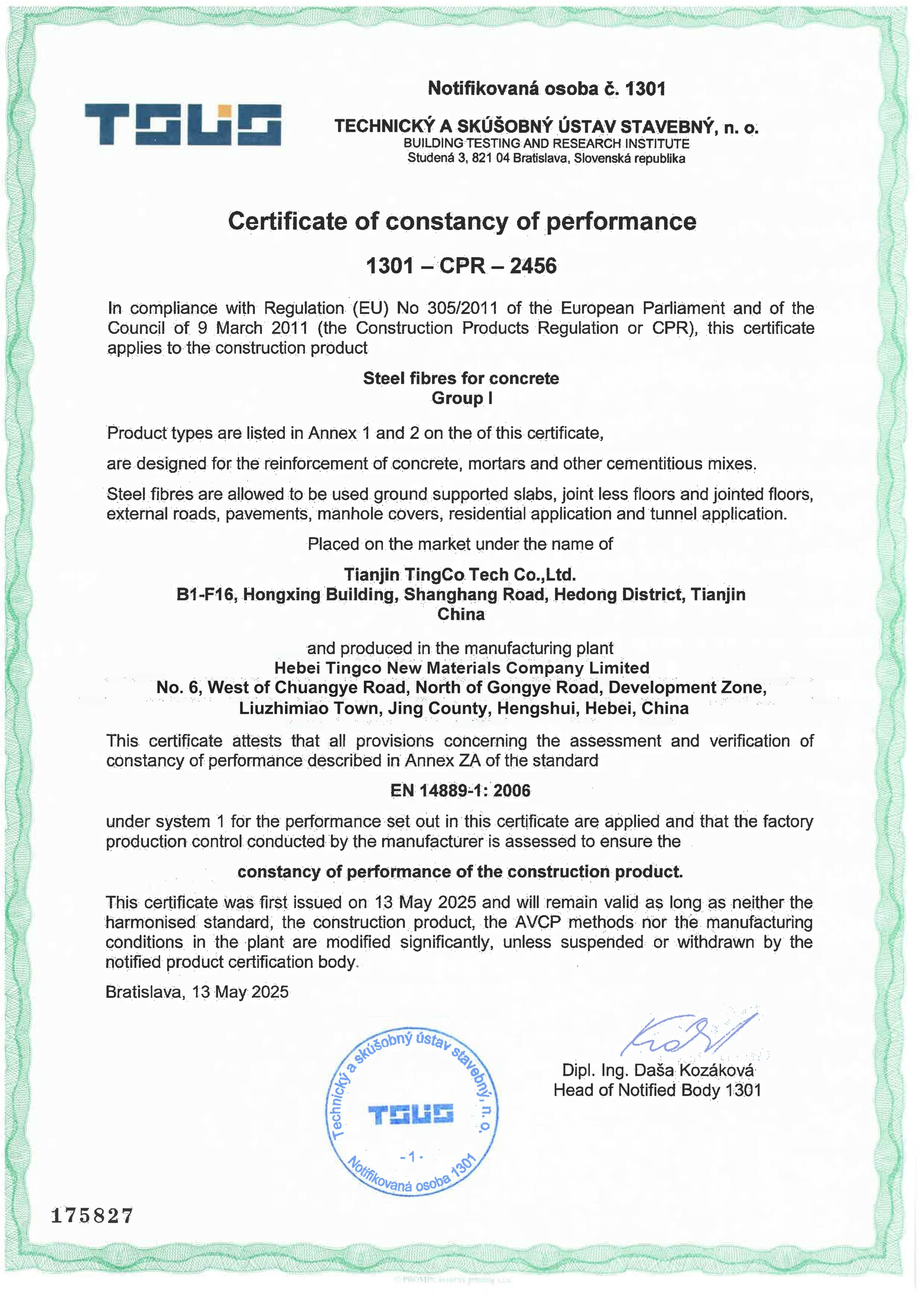
- Confirm documentation. Steel fiber production is covered by CE Certificate 1301 – CPR – 2456 to EN 14889-1:2006, issued by TSUS for the EU market. For PP fiber, request the product data sheet, batch records, and the market-specific conformity documentation applicable to synthetic fiber.
- Validate with a trial mix. Flexural toughness testing verifies the residual flexural strength and toughness index of fiber-reinforced concrete. Three-point bending per EN 14651, the beam test per ASTM C1609, or the panel test per ASTM C1550 are the recognized methods and the core basis for engineering design and acceptance.
- Lock supply and logistics. TINGCO operates with a monthly capacity of 2,000 tons, a minimum order quantity of 24 tons, and a lead time of 10–15 days, supported by in-line inspection and pre-shipment inspection.
Application Notes by Project Type
PP fiber is documented as being widely used in high-speed rail, bridges, nuclear power plants, tunnels, hydraulic engineering, and other major national infrastructure projects. The technical rationale differs by sector.
High-Speed Rail
High-speed rail construction combines precast elements and cast-in-place structures with tight crack-control and durability requirements. The early-age cracking reduction of over 30% is the primary reason PP fiber is specified in these elements, because cracking that forms before the concrete matures is difficult to remediate later in the asset life.
Bridges
Bridge decks and bridge elements present large exposed surface areas relative to their thickness, which is the classic condition for plastic shrinkage cracking. PP fiber's contribution here is twofold: crack control at early age, and an impermeability improvement of approximately 37% that reduces water ingress into the deck concrete. Because the fiber is non-absorbent and chemically resistant, it remains stable in the moisture and de-icing regimes typical of bridge service.
Nuclear Power Plants
Nuclear projects use large volumes of mass concrete, where heat of hydration and restrained shrinkage create early-age cracking risk in thick sections. PP fiber is used to control plastic shrinkage cracking in these elements, and its non-absorbent, acid and alkali resistant behavior suits structures designed for very long service life. Project-specific qualification requirements remain with the EPC contractor, so buyers should confirm the applicable submittal and documentation requirements before approval.
Tunnels and Underground Works
Tunnel segment lining and shotcrete place specific demands on a synthetic fiber: alkali resistance, high dispersion uniformity, good compatibility with cement, and no agglomeration during mixing. These are documented special requirements for the applications. The matched equipment set includes dosing machines, concrete mixers, and spraying machines, and typical working conditions cover humid environments, confined underground space, and vibration loads.
Hydraulic Engineering
Hydraulic structures are continuously exposed to water, alternating temperature, and aggressive chemistry. Three PP fiber properties align directly with that exposure: resistance to strong acids and alkalis, non-absorbent behavior, and the impermeability improvement of approximately 37%. Together with enhanced freeze-thaw resistance, these properties support the documented service-life extension of over 15%.
Submittal Verification Checklist
| Item to verify | What to check | Documented data |
|---|---|---|
| Diameter | Submittal matches project specification | Micro: 18 μm, 32 μm, 36–38 μm; Macro: 0.7 mm; Twisted: 0.6–0.7 mm |
| Cut length | Matches element thickness and mix design | Micro: 6 mm, 12 mm, 19 mm; Macro: 30–58 mm; Twisted: 46–54 mm |
| Tensile strength | Stated value confirmed on data sheet | Micro: 550 MPa; Macro: 550–600 MPa; Twisted: 450–650 MPa |
| Density | Material-level property confirmed | 0.91 g/cm³ |
| Elastic modulus | Material-level property confirmed | ≥3500 MPa |
| Dispersion | Hydrophilic surface modification; no agglomeration during mixing | Uniform dispersion and strong bonding in concrete |
| Chemical resistance | Fit for the exposure class | Withstands strong acids and alkalis; non-absorbent |
| Certification | Correct scope and validity | CE Certificate 1301 – CPR – 2456 to EN 14889-1:2006, issued by TSUS, covering steel fiber products of 0.5–1.0 mm diameter, 25–60 mm length, 1100–2100 MPa tensile strength; valid to 12 May 2030 for the EU market |
| Inspection | Batch and pre-shipment records available | In-line inspection and pre-shipment inspection |
Compliance Notes for Specifiers
Certification scope is the detail most often misread in fiber submittals. CE Certificate 1301 – CPR – 2456 is issued by TSUS against EN 14889-1:2006, and its scope covers steel fibres for concrete (Group I), for reinforcement of concrete, mortars and cementitious mixes. It applies to the EU market, was issued on 13 May 2025, and remains valid until 12 May 2026 — please confirm the current validity dates with the supplier at the time of order. The certificate covers steel fiber products with a diameter of 0.5–1.0 mm, a length of 25–60 mm, and a tensile strength of 1100–2100 MPa, and it is the certification referenced for Fiber Reinforced Concrete supplied for industrial flooring, tunnel segment, and mining applications.
EN 14889-1 is the European standard for steel fibres in concrete, so a PP fiber submittal is not certified under it. When PP fiber sits alongside steel fiber in the same mix design, the two product families are documented separately. For PP fiber, request the product data sheet showing diameter, cut length, tensile strength, density of 0.91 g/cm³ and elastic modulus of 3500 MPa or higher, together with the factory quality certificate and batch inspection records.
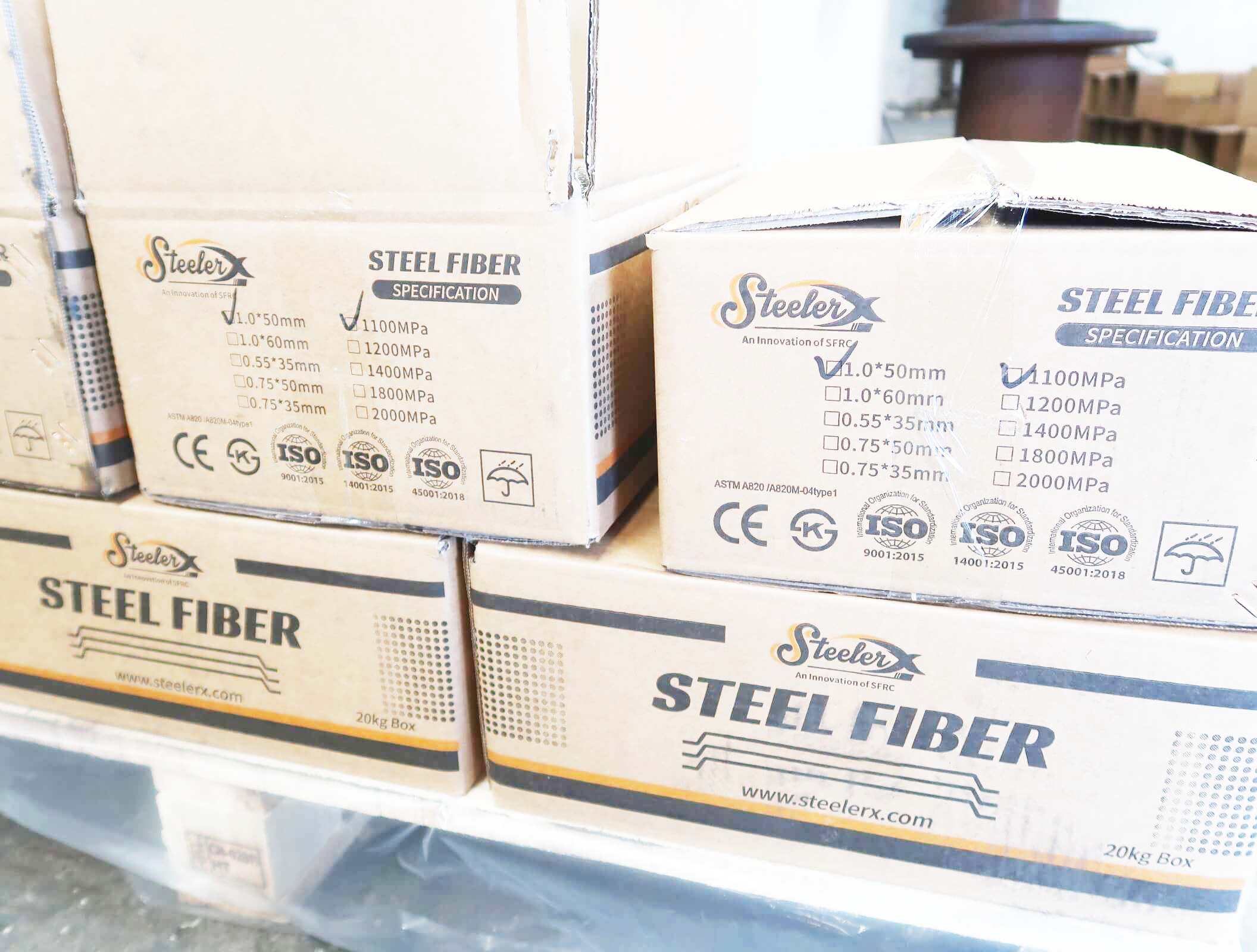
At the factory level, TINGCO products comply with ASTM A820 and ISO 13270, and the factory holds ISO 9001 quality certification. ASTM A820/A820M is the core global standard specifying requirements for five types of steel fibers in fiber-reinforced concrete. TINGCO operates its own steel fiber reinforced concrete testing laboratory, where every product line undergoes beam bending, compression, and toughness tests before shipment.
Frequently Asked Questions
1. Is PP fiber covered by the same CE certificate as steel fiber?
No, and this distinction matters at submittal stage. CE Certificate 1301 – CPR – 2456 is issued by TSUS to EN 14889-1:2006 and applies to the EU market. Its scope covers steel fibres for concrete (Group I) for reinforcement of concrete, mortars and cementitious mixes, and it applies to steel fiber products with a diameter of 0.5–1.0 mm, a length of 25–60 mm, and a tensile strength of 1100–2100 MPa. EN 14889-1 is a steel fiber standard, so PP fiber is not certified under it. For PP fiber, request the product data sheet stating diameter, length, tensile strength, density of 0.91 g/cm³ and elastic modulus of 3500 MPa or higher, together with batch inspection records and the factory ISO 9001 quality certificate.
2. Can PP fiber specifications and packaging be customized for a project?
Yes. TINGCO operates an OEM/ODM production mode with customization covering LOGO and custom design. The relevant production parameters for planning are a monthly capacity of 2,000 tons, a minimum order quantity of 24 tons, and a lead time of 10–15 days. Quality control runs as in-line inspection plus pre-shipment inspection, so specifications, quantity, and packaging are checked before the order leaves the factory. After-sales support includes remote technical support, quality problem compensation, and construction consulting.
3. What drives the cost of a PP fiber package for a project?
Four variables dominate. The first is the fiber family and the addition level set by the project mix design, since micro, macro, and twisted fibers are supplied at different diameters, lengths, and tensile strengths. The second is whether the design needs both steel fiber for hardened-state toughness and PP fiber for early-age crack control, because those decisions change the mix cost rather than just the fiber cost. The third is packaging format — water-soluble packaging can be fed directly into the mixer with the aggregates and dissolves in about 5 seconds, which changes site handling time. The fourth is order volume and freight, with a minimum order quantity of 24 tons and a lead time of 10–15 days. Because TINGCO manufactures steel and synthetic fibers under one brand and sells factory-direct, buyers can consolidate both fiber categories into a single procurement package.
4. How can a project team validate PP fiber before full-scale use?
Validation follows three steps. First, review the data sheet against the specification: diameter, cut length, tensile strength, density of 0.91 g/cm³, and elastic modulus of at least 3500 MPa. Second, run a trial mix and check dispersion — hydrophilic surface modification is what ensures uniform dispersion and strong bonding, and the documented fiber-feeding procedure recommends uniform feeding, water-soluble packaging fed with the aggregates, and a mixing time extended by 30–60 seconds compared with normal concrete. Third, verify flexural performance with three-point bending per EN 14651, the beam test per ASTM C1609, or the panel test per ASTM C1550, which give the residual flexural strength and toughness index used for design and acceptance.
5. What is the lead time and minimum order quantity for PP fiber, and how do I start?
Standard lead time is 10–15 days, with a minimum order quantity of 24 tons and a monthly production capacity of 2,000 tons. To start, request a PP fiber sample and the technical data sheet for your target application — high-speed rail, bridge, nuclear, tunnel, or hydraulic works — and our engineers will review the fiber family, diameter, length, and dispersion requirements against your mix design. Send your application details to info@tingco.co, call +86-22-59785568, or message +86 189-2017-0726 on WhatsApp, and you will receive a specification-matched sample and quotation.
Conclusion
PP fiber earns its place in high-speed rail, bridge, nuclear, tunnel, and hydraulic projects for a specific and verifiable set of reasons: a density of 0.91 g/cm³, an elastic modulus of 3500 MPa or higher, resistance to strong acids and alkalis, non-absorbent behavior, and a hydrophilic surface modification that keeps dispersion uniform in the mixer. The measurable outcomes are early-stage cracking reduced by over 30%, impermeability improved by approximately 37%, and service life extended by over 15%.
Choosing between micro, macro, and twisted fiber comes down to the cracking stage the design must control and the element geometry. Verifying the choice comes down to documentation: a data sheet that matches the submittal, dispersion behavior confirmed in a trial mix, flexural toughness tested to a recognized method, and certification whose scope is read correctly.
Next step for specifiers and buyers
Request a PP fiber sample matched to your project, or download the full company and project brochure covering steel fiber, brass coated steel fiber, stainless steel fiber, and PP fiber ranges.
Brochure: TINGCO company and project introduction (PDF)
Website: www.tcfibers.com | Email: info@tingco.co | Tel: +86-22-59785568 | WhatsApp: +86 189-2017-0726
Tianjin TingCo Tech Co., Ltd. | Hebei Tingco New Material Co., Ltd. — Built on Trust. Proven in Concrete.
Have Questions or Need More Details?
Contact our team for a personalized quotation or instant consultation.
Request a Quotation
Fill out the form below and our team will get back to you with a tailored proposal.
WhatsApp Direct Chat
Prefer to chat in real-time? Message us on WhatsApp for instant assistance & quick answers.
- Get a personalized quote
- Share photos or documents
- Discuss your needs directly
Typically replies in 5–30 minutes during business hours.