PP Macro vs PP Micro vs PP Twisted Fiber for Concrete: Buyer Comparison Guide
PP macro, PP micro and PP twisted fiber are three different tools, and the fastest way to buy the wrong one is to treat them as three price points of the same product. The deciding variable is geometry, and geometry determines which cracking stage a fiber can influence.
PP micro fiber is a micrometre-scale filament — 18 μm, 32 μm and 36–38 μm in diameter, cut to 6 mm, 12 mm and 19 mm, at 550 MPa tensile strength. PP macro fiber is far thicker at 0.7 mm diameter, supplied in 30–58 mm lengths at 550–600 MPa. PP twisted fiber sits at 0.6–0.7 mm diameter, runs longer at 46–54 mm, and spans a wider tensile strength band of 450–650 MPa.
That spread decides the specification. Micro fiber is sized for plastic shrinkage and early-age cracking. Macro and twisted fiber are sized to bridge cracks that open after the concrete has hardened. This guide compares all three on data a buyer can verify — diameter, length, tensile strength, shared polypropylene properties, test evidence, and supply-side constraints such as certification scope, minimum order quantity and lead time — and then maps each geometry to the projects where it belongs.
Why “PP Fiber” Is Not One Specification
All three types are sold under a single category term, and that is where most specification errors begin. Three failure patterns recur in fiber procurement:
- Scale mismatch. A micro fiber at 18–38 μm is written into an element where the design intent is post-crack residual capacity. The fiber is present in the mix, the concrete still cracks, and the failure is attributed to the supplier rather than to the geometry.
- Tensile strength compared in isolation. A 650 MPa twisted fiber is not automatically the better buy than a 550 MPa micro fiber. Tensile strength alone says nothing about fiber count per kilogram, dispersion behaviour, or whether anchorage develops across a crack face.
- Synthetic and steel treated as interchangeable. Both answer to “fiber for concrete”, but they operate under different standards, different dosage logic and different certification documents.
The useful question is narrower: which cracking stage must this element survive, and which fiber geometry delivers that at a dosage the mix design can actually carry? Everything below answers that question with data instead of category names.
Where the PP Fiber Market Is Moving
Polypropylene fiber demand in construction is expanding. Fortune Business Insights projects the global PP fiber market for construction to grow at a CAGR of 6.4% from 2026 to 2034.
Two structural drivers sit behind that growth.
- Corrosion is a design constraint, not an afterthought. Polypropylene does not corrode in concrete and resists both acid and alkali exposure — properties that matter in hydraulic, industrial, mining and other aggressive environments where steel reinforcement would need extra protection or is unsuitable.
- Flooring and slab work dominate fiber volume. Fortune Business Insights reports industrial floors at a 37.28% share of the 2026 steel fiber market, and the same application logic — crack control across large jointless areas — is what places synthetic fiber into floors.
For scale context, the global steel fiber market is projected to reach approximately USD 2.87 billion by 2026 (Fortune Business Insights). Polypropylene fiber competes for a specific portion of that demand rather than all of it.
The material profile explains the fit: a density of 0.91 g/cm³, an elastic modulus of at least 3500 MPa, acid and alkali resistance, and hydrophilic dispersion behaviour that helps filaments wet out and separate in fresh concrete rather than clump together.
PP Macro, PP Micro and PP Twisted Fiber: Geometry and What It Delivers
PP Micro Fiber — 18/32/36–38 μm, 6/12/19 mm, 550 MPa
PP micro fiber is defined by a very small filament diameter — 18 μm, 32 μm and 36–38 μm — combined with short cut lengths of 6 mm, 12 mm and 19 mm, at a tensile strength of 550 MPa. The high surface area per unit mass is the point: at low addition rates, a large number of short filaments intercept plastic-settlement cracks before they open.
Where it fits: thin sections, screeds, mortars and renders, surface layers, and slabs where the design intent is early-age crack control rather than structural post-crack capacity. The 6 mm and 12 mm lengths suit thin elements and mortar; 19 mm is the practical upper end where section depth and aggregate size allow.
Where it does not fit: elements designed to carry load after cracking. Micro geometry does not substitute for macro or twisted fiber in that role, regardless of the dosage used.
PP Macro Fiber — 0.7 mm, 30–58 mm, 550–600 MPa
PP macro fiber is the coarse end of the polypropylene range: 0.7 mm diameter, 30–58 mm cut length, and a tensile strength between 550 MPa and 600 MPa. The thicker, longer filament is designed to bridge cracks that form after hardening and to keep transferring stress across the crack face.
Where it fits: slabs on grade, jointless and heavy-duty industrial floors, tunnel linings and precast elements where a synthetic fiber is selected to eliminate corrosion risk while retaining post-crack ductility.
What to check before ordering: 30–58 mm lengths require adequate section depth and cover, and the dosage has to come from the mix design. A fiber that is dimensionally suitable can still be under-dosed for the load case.
PP Twisted Fiber — 0.6–0.7 mm, 46–54 mm, 450–650 MPa
PP twisted fiber combines a 0.6–0.7 mm diameter with longer 46–54 mm lengths and a wider tensile strength band of 450–650 MPa. The twisted geometry is intended to add mechanical anchorage along the filament, which is why this type appears in specifications that pair synthetic chemistry with a demand for higher post-crack performance.
Where it fits: high-speed rail, bridges, nuclear power plants, tunnels and hydraulic engineering — projects where a non-corroding fiber is required and the hardened concrete still has to perform after cracking.
What All Three PP Fiber Types Share
Family-level properties are the same across the three geometries:
- Density of 0.91 g/cm³ and elastic modulus of at least 3500 MPa.
- More than 30% reduction in early-stage cracking.
- Approximately 37% improvement in impermeability.
- More than 15% extension of service life.
- Acid and alkali resistance, plus hydrophilic dispersion in fresh concrete.
- Non-corrosive behaviour in concrete — the core reason synthetic fiber is specified at all.
These properties justify choosing PP fiber over steel fiber in a given environment. They do not justify choosing between micro, macro and twisted. That decision is driven by geometry and crack stage, not by the family datasheet.
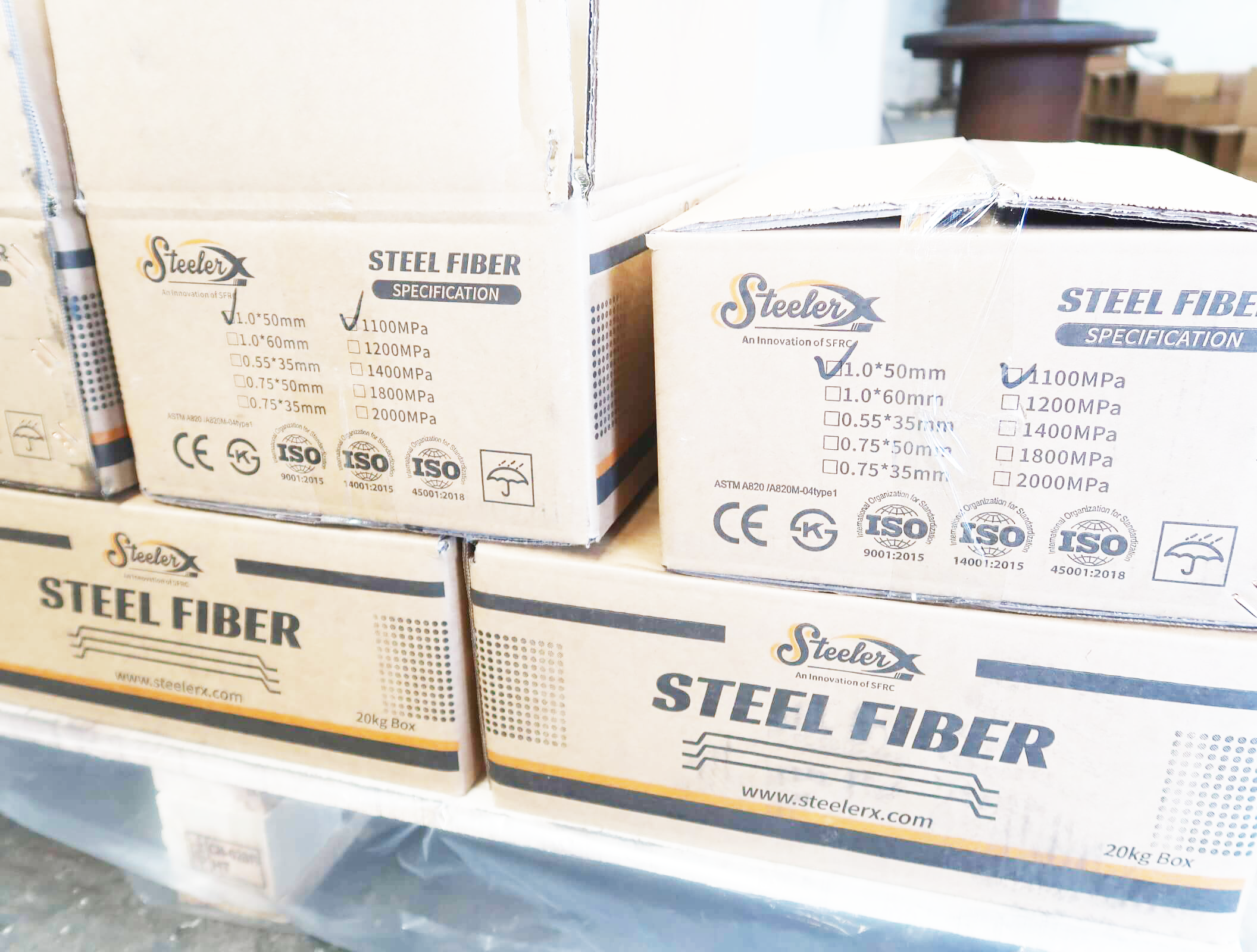
Decision boundary: steel fiber remains the appropriate choice where high post-crack residual strength is the governing requirement. TINGCO steel fibers range from 0.55 mm to 0.90 mm in diameter and 35 mm to 60 mm in length, with tensile strengths from 1200 MPa to 2500 MPa, and the steel fiber range is CE certified under EN 14889-1. PP fiber answers a different question — corrosion-free crack control and durability in aggressive environments.
How to Select Between the Three Types: A Five-Step Buyer Workflow
Step 1 — Identify the cracking stage you are designing for
Plastic shrinkage and settlement cracking before hardening points to micro fiber. Post-crack load transfer and ductility after hardening points to macro or twisted fiber. Resolve this before comparing suppliers, because it eliminates two-thirds of the catalogue.
Step 2 — Match fiber length to element geometry and cover
Micro fiber at 6 mm, 12 mm and 19 mm suits thin sections, screeds, mortar and surface layers. Macro fiber at 30–58 mm and twisted fiber at 46–54 mm need enough section depth and cover for anchorage to develop. A 54 mm fiber specified into a section that cannot accommodate it is a specification error, not a product defect.
Step 3 — Define the performance evidence you will accept
Where residual flexural strength data is required for steel fiber reinforced concrete, the reference test set is three-point bending beam testing to EN 14651, beam testing to ASTM C1609, and panel testing to ASTM C1550 — the methods used to verify residual flexural strength and toughness index. Specify evidence before price, so that quotations are compared on the same basis.
Step 4 — Confirm the dosing and mixing procedure
Uniform fiber feeding is the operating principle. Water-soluble packaging can be charged directly into the mixer with the aggregates and dissolves in about 5 seconds; non-water-soluble packaging should be spread evenly in batches. Extend mixing time by 30–60 seconds compared with plain concrete to ensure uniform dispersion without clumping, then check slump and workability and adjust the superplasticizer if needed. Operators should wear protective gloves and goggles, and large quantities should never be dumped in at once. For reference, documented steel fiber dosage ranges are 20–40 kg/m³ for shotcrete, 15–30 kg/m³ for industrial floors and 10–30 kg/m³ for precast elements; PP fiber dosage is set separately by the mix designer.
Step 5 — Verify the supplier, not just the datasheet
Datasheets describe a product; they do not describe the order. Confirm the certificate scope against the exact fiber family being quoted, the monthly production capacity, the inspection regime, the minimum order quantity, the lead time, and the after-sales terms in writing before the purchase order is raised.
Project Fit and Real Procurement Reference Points
Geometry maps to project type in a fairly consistent way once the crack stage and the environment are known.
- High-speed rail and bridges: twisted fiber at 0.6–0.7 mm diameter and 46–54 mm length, where non-corroding behavior and post-crack performance are both required.
- Nuclear power plants: twisted fiber, where polypropylene's non-corrosive and non-magnetic character suits the environment and the specification still demands post-crack behavior.
- Tunnels: macro fiber for linings and precast segments, with twisted fiber where higher post-crack demand applies.
- Hydraulic engineering: macro or twisted fiber, where continuous wet–dry cycling and alkali exposure make corrosion resistance decisive.
- Industrial flooring, jointless slabs and logistics parks: macro fiber at 30–58 mm where the slab must retain ductility; micro fiber where the objective is limited to early-age crack control in thin or surface layers.
A flooring procurement reference point
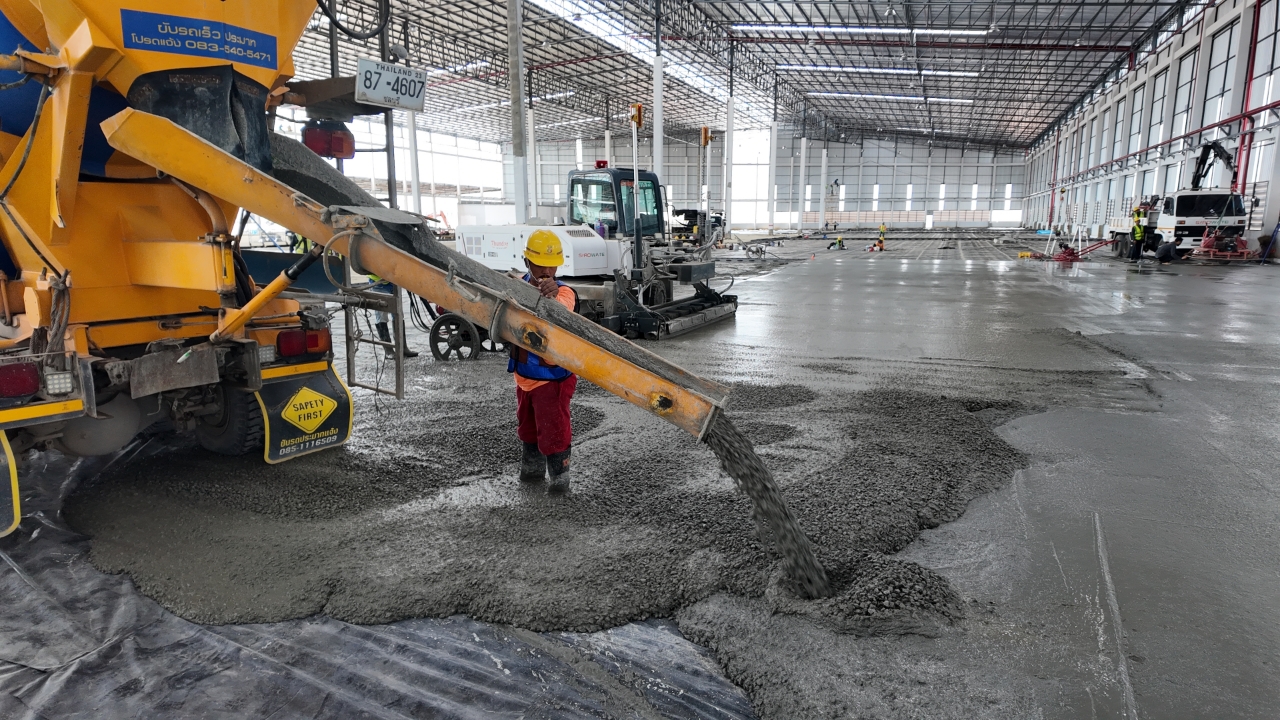
A TINGCO project in Thailand supplied 2,000 tons of steel fiber over a one-year period for heavy-duty industrial warehouse flooring, logistics park flooring and jointless flooring. The client was a wholesaler with technical support capability distributing in Thailand. The design used 80/60 geometry at 1200 MPa at a dosage of 20 kg/m³, and the pile layout was rearranged to better fit the slab-on-pile project. The case is useful for PP buyers as an evaluation template rather than a product comparison: geometry, dosage, section design and supply continuity were resolved as one package, and the same four variables govern a PP macro fiber floor specification.
PP Macro vs PP Micro vs PP Twisted Fiber: Side-by-Side Comparison
| Parameter | PP Micro Fiber | PP Macro Fiber | PP Twisted Fiber |
|---|---|---|---|
| Fiber diameter | 18 μm, 32 μm, 36–38 μm | 0.7 mm | 0.6–0.7 mm |
| Fiber length | 6 mm, 12 mm, 19 mm | 30–58 mm | 46–54 mm |
| Tensile strength | 550 MPa | 550–600 MPa | 450–650 MPa |
| Primary function | Plastic shrinkage and early-age crack control | Post-crack bridging and ductility after hardening | Post-crack performance with mechanical anchorage |
| Typical placement | Thin sections, screeds, mortars, renders, surface layers | Slabs on grade, jointless industrial floors, linings, precast | High-speed rail, bridges, tunnels, nuclear power plants, hydraulic works |
| Corrosion behaviour | Non-corrosive in concrete | Non-corrosive in concrete | Non-corrosive in concrete |
| Selection trigger | Early-age cracking risk in thin or surface elements | Need for post-crack ductility without steel corrosion risk | Post-crack demand plus aggressive environment |
Shared properties across all three polypropylene fiber types:
| Shared PP fiber property | Value |
|---|---|
| Density | 0.91 g/cm³ |
| Elastic modulus | ≥3500 MPa |
| Early-stage cracking reduction | More than 30% |
| Impermeability improvement | Approximately 37% |
| Service life extension | More than 15% |
| Chemical resistance | Acid and alkali resistant |
| Dispersion | Hydrophilic dispersion in fresh concrete |
Frequently Asked Questions
Does CE certification for steel fiber also cover PP macro, micro and twisted fiber?
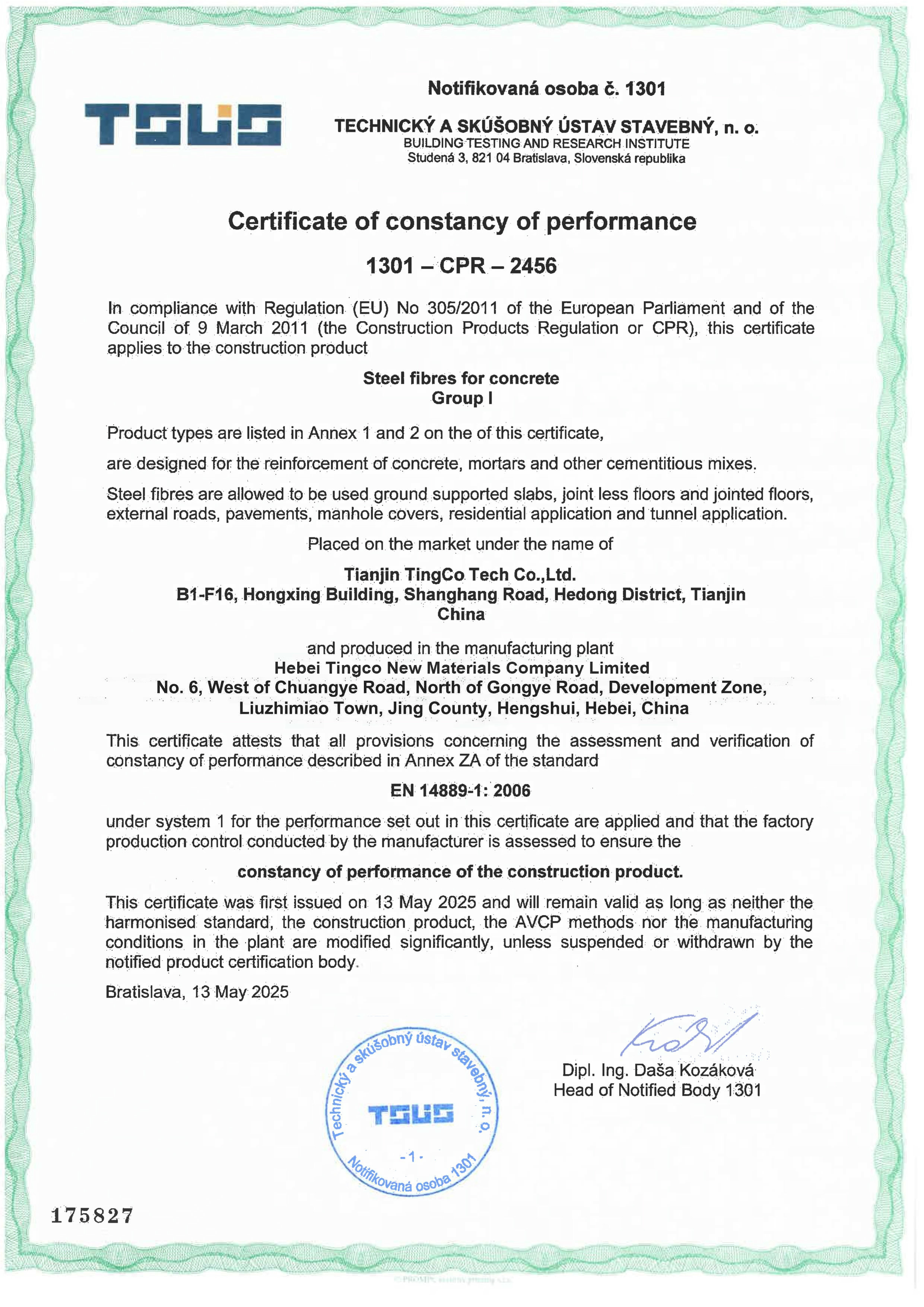
No — certificate scope must be read literally. TINGCO's CE certificate 1301 – CPR – 2456, issued by TSUS under EN 14889-1:2006, is valid from 13 May 2025 to 12 May 2030 and covers steel fibres for concrete (Group I) for the reinforcement of concrete, mortars and cementitious mixes. EN 14889-1:2006 defines definitions, specifications and conformity for steel fibres used in concrete within the European Union, and ASTM A820/A820M-16 is the core global standard specifying requirements for five types of steel fibers. Because those documents are written around steel fibre, a buyer specifying PP fiber should confirm that the certificate or test report in the offer names the polymer fiber product within its scope. A steel-fibre CE certificate does not transfer to polypropylene fiber.
What production and quality capability sits behind a TINGCO fiber order?
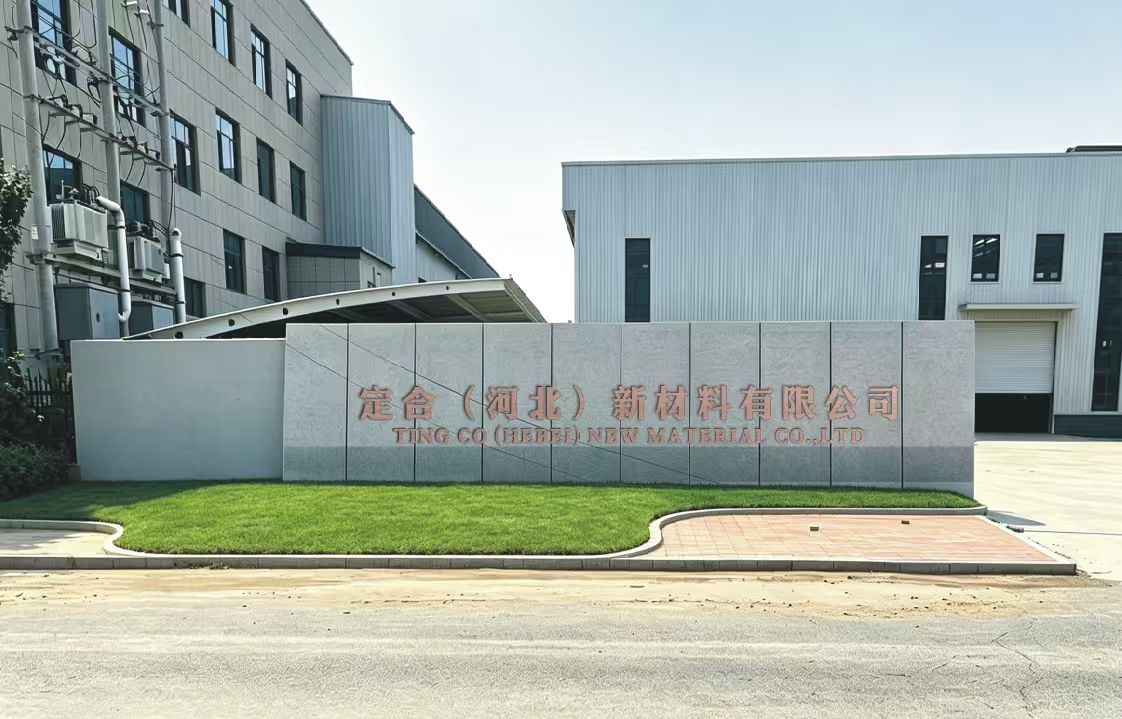
Tianjin TingCo Tech Co., Ltd. (TINGCO) was founded in 2014 and operates through two entities: the Tianjin sales and R&D center and the Hebei manufacturing base. The operation covers a 6,000 m² facility with 50 employees, annual output of 24,000 tons, monthly production capacity of 2,000 tons, and a five-engineer R&D team. The product range covers steel fiber, brass coated steel fiber, stainless steel fiber and PP fiber. Quality control follows in-line inspection plus pre-shipment inspection, and the factory runs its own testing lab for beam bending, compression and toughness testing. OEM/ODM supply is available, including logo and custom fiber design, and approximately 70% of output is exported to the EU, Africa, South East Asia and the Middle East.
What actually drives cost in a PP fiber order?
Four variables move the number: fiber geometry (micro, macro or twisted), the dosage fixed by the mix design, packaging and OEM requirements, and freight combined with order volume against the 24-ton minimum order quantity for trial project orders. A portfolio that carries both steel and synthetic fibers allows a project to be consolidated into one procurement line and one freight arrangement instead of two. TINGCO's stated commercial policy is that the quoted price is the price kept, with no last-minute markups and no substitution of lower-grade product.
Can a buyer validate fiber performance before committing to a full order?
Trial project orders start at the 24-ton minimum order quantity, with a typical production lead time of 10–15 days. Technical validation can be supported in several ways: the in-house lab runs beam bending, compression and toughness tests; the team works to TR34 and EFNARC design codes and partners with professional design teams on steel fiber floor design and tunnel segment design; and remote technical support plus construction consulting is available. Where residual flexural strength data forms part of the acceptance criteria, the reference test methods are three-point bending beam testing to EN 14651, beam testing to ASTM C1609 and panel testing to ASTM C1550, which verify residual flexural strength and toughness index.
What is the lead time, and can supply be sustained across a long project?
Typical production lead time is 10–15 days, supported by a monthly production capacity of 2,000 tons and in-line plus pre-shipment inspection on every batch. For continuity reference, a TINGCO project in Thailand supplied 2,000 tons of steel fiber over a one-year period for heavy-duty industrial warehouse flooring, logistics park flooring and jointless flooring, through a wholesaler client with technical support capability. After-sales support covers remote technical support, quality problem compensation and construction consulting. To request a quotation, technical data or the full company and project brochure, contact info@tingco.co, telephone +86-22-59785568, or WhatsApp +86 189-2017-0726.
Conclusion: Choose the Geometry First, Then Verify the Supplier
The selection rule reduces to three lines. Where the risk is early-age cracking in thin or surface elements, specify PP micro fiber at 18/32/36–38 μm and 6/12/19 mm at 550 MPa. Where the slab or lining must keep carrying load after cracking in a normal environment, specify PP macro fiber at 0.7 mm and 30–58 mm at 550–600 MPa. Where post-crack performance and a non-corroding filament are both required — high-speed rail, bridges, nuclear power plants, tunnels, hydraulic engineering — specify PP twisted fiber at 0.6–0.7 mm and 46–54 mm at 450–650 MPa.
Whichever geometry is selected, the same four supplier checks decide whether the order arrives as specified: certificate scope that names the actual fiber product, capacity that matches the project schedule, an inspection regime documented in writing, and a lead time confirmed against the construction programme.
Next Step
TINGCO (Tianjin TingCo Tech Co., Ltd.) manufactures steel fibers and PP macro, micro and twisted fibers in one portfolio, under a 6,000 m² operation with 24,000 tons of annual output, 2,000 tons of monthly capacity, a 24-ton minimum order quantity and a 10–15 day typical lead time.
Contact: Jackie Zhu — Email: info@tingco.co — Tel: +86-22-59785568 — WhatsApp: +86 189-2017-0726
Address: B1F16, Hongxing Building, Linke West Road, Hedong, Tianjin 300161, China — Web: www.tcfibers.com
Download the full product and project brochure: TINGCO Company & Project Brochure (PDF)