Steel Fiber Dosing and Mixing for Concrete: Diameter, Length, and Tensile Strength Guide
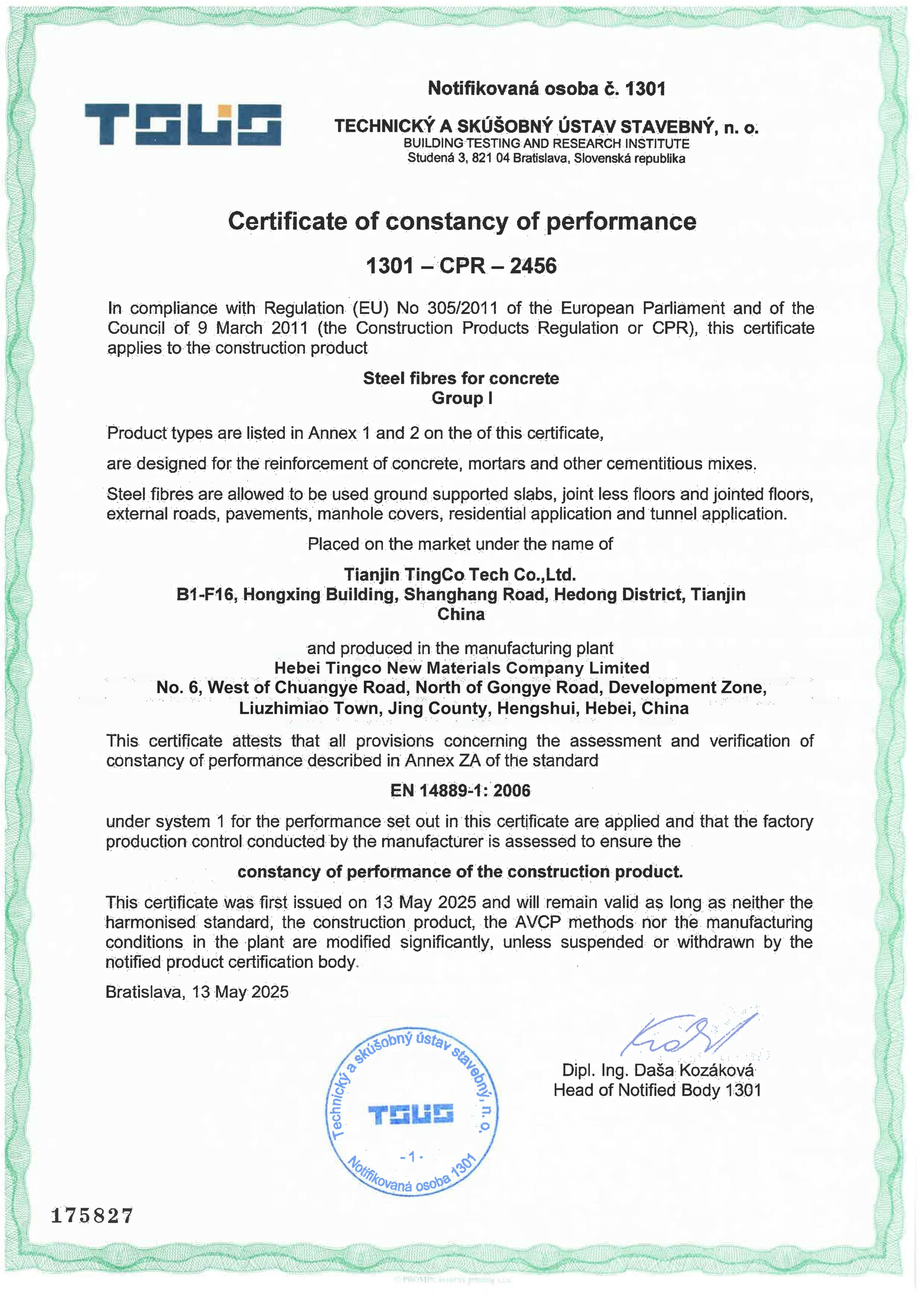
CE conformity in line with EN 14889-1 is one of the verification points buyers check before a steel fiber mix design is approved for a long-term program.
Steel fiber performance in concrete is decided by two things that happen before the first truck arrives: the dose you specify, and the way the fiber enters the mixer.
Diameter, length, and tensile strength describe what a fiber can do after the concrete cracks. Dosing and mixing decide whether it ever gets that chance. This guide covers all three specification variables, the full dosing and mixing sequence, the quality inspection system behind each shipment, and the performance tests that verify a fiber-reinforced mix — for industrial flooring, tunnel segments, and mining support.
It is written for buyers, engineers, and contractors who need the same result on the first pour and on the fiftieth — the situation most long-term flooring, tunnel, and mining programs actually face.
Why Steel Fiber Dosing and Mixing Fail on Site
The most common cause of a rejected steel fiber pour is not the fiber grade. It is a dosing or mixing decision that was never locked down before production started.
Four failure modes account for most of the problems:
- Wrong dosage for the application. A shotcrete dose applied to a precast element, or a thin-floor dose applied to a heavy-duty slab, changes crack control, cost, and workability at the same time.
- Uneven dispersion and balling. Fiber dumped into the mixer in one load, or fed too fast, forms clumps that never open. The result is local weak zones that a beam test may not even capture.
- Insufficient mixing time. Standard concrete mixing time is not enough to open fiber bundles and distribute them uniformly through the batch.
- Geometry mismatch. Diameter, length, and tensile strength selected without reference to section thickness, the crack-control demand, or the placing method.
The working conditions of these projects make the margin small. Industrial floors, tunnel segments, shotcrete, highway pavement, bridge decks, and mine roadways operate in humid environments, underground confined spaces, dynamic vehicle loads, alternating temperatures, and vibration loads. Fibers must deliver alkali resistance, high dispersion uniformity, good compatibility with cement, and no agglomeration during mixing — or the mix design does not hold.
The practical rule: treat dosing and mixing as part of the specification, not as a site instruction. If the dose, the feed method, and the mixing time are not written into the mix design before the first batch, the result varies from truck to truck — which is exactly what long-term programs cannot tolerate.
What Is Driving Steel Fiber Demand in Flooring, Tunnels, and Mining
Steel fiber is no longer a specialist alternative. Fortune Business Insights projects the global steel fiber market to reach approximately USD 2.87 billion by 2026. Industrial floors alone accounted for a 37.28% share of steel fiber applications in 2026, and hooked-end steel fibers held 58.89% of the type segment in the same year.
Published market estimates vary between research houses, partly because some studies fold synthetic fibers into the same category and value rebar replacement differently. The direction is consistent even where the totals differ: flooring, tunneling, and mining remain the volumes that matter.
Two standards sit underneath almost every specification and acceptance decision:
- ASTM A820/A820M-16 — the core global standard specifying requirements for five types of steel fibers in fiber-reinforced concrete.
- EN 14889-1:2006 — the European standard defining definitions, specifications, and conformity for steel fibers used in concrete within the EU.
On the supply side, customs-based trade datasets place China's share of steel fiber exports under HS 7326 at 51.85%, which is why so many flooring, tunnel, and mining programs are structured around Chinese manufacturers — and why supplier verification, not product availability, is the real constraint.
Synthetic fibers are growing alongside steel. The global polypropylene (PP) fiber market for construction is expected to grow at a CAGR of 6.4% from 2026 to 2034, largely because macro synthetic fiber offers a corrosion-free option where steel is not the right answer.
The Three Specification Variables: Diameter, Length, and Tensile Strength
Diameter, length, and tensile strength are not independent settings. Each one changes how many fibers you get per kilogram, how they bond, and how the fresh concrete behaves.
Diameter: How Many Crack-Arresting Points Per Kilogram
TINGCO steel fibers are supplied in diameters from 0.55 mm to 0.90 mm across the production range, while the TC model family listed for flooring, tunnel, and mining applications is specified at 0.5–1.0 mm. Smaller diameter means more individual fibers per kilogram, which means more crack-arresting points distributed through the same volume of concrete. That matters in thin sections, overlays, and UHPC, where a small number of large fibers cannot bridge the crack pattern effectively.
At the fine end of the market, brass-coated micro steel fibers for UHPC typically feature high tensile strength above 2,500 MPa and diameters ranging from 0.2–0.3 mm — a different product class from standard 0.5–1.0 mm hooked-end fiber, used where flow and surface finish dominate.
Larger diameters sit at the other end: fewer fibers per kilogram, more stiffness per fiber, and better performance in thick slabs and high-impact traffic areas.
Length: Aspect Ratio and Placing Method
The TC model family covers lengths from 25 mm to 60 mm, with the broader TINGCO production range running from 35 mm to 60 mm. Length is normally matched to the maximum aggregate size so fibers can bridge across coarse particles rather than sit behind them, and to the placing method: shorter fibers pump and spray more easily, longer fibers develop more anchorage in slab and segment sections.
60 mm options are the standard choice where anchorage length matters most — tunnel segment casting, thick industrial slabs, and heavily loaded joints. Both loose fiber and glued bundled formats are available across the range, and the format you choose changes how the fiber behaves at the feeder.
Tensile Strength: What the Fiber Carries After Cracking
The TC family is specified at 1100–2100 MPa, and the TINGCO steel fiber range overall spans 1,200 MPa to 2,500 MPa. Tensile strength matters most where the fiber is expected to carry load after the concrete has cracked — segment linings, industrial slabs under racking and vehicle loads, and mining support in dynamic ground. Where the objective is early-age crack control rather than structural post-crack capacity, the higher tensile grades are not automatically the better purchase.
Model Reference: TC Family for Flooring, Tunnel, and Mining
| Model | Material | Diameter | Length | Tensile strength | Target applications |
|---|---|---|---|---|---|
| TC-07560-HNG | Carbon steel wire | 0.5–1.0 mm | 25–60 mm | 1100–2100 MPa | Industrial flooring, tunnel segment, mining |
| TC-07560-HHG | Carbon steel wire | 0.5–1.0 mm | 25–60 mm | 1100–2100 MPa | Industrial flooring, tunnel segment, mining |
| TC-05535-HNG | Carbon steel wire | 0.5–1.0 mm | 25–60 mm | 1100–2100 MPa | Industrial flooring, tunnel segment, mining |
| TC-07535-HNL | Carbon steel wire | 0.5–1.0 mm | 25–60 mm | 1100–2100 MPa | Industrial flooring, tunnel segment, mining |
Dosing and Mixing: Step-by-Step Breakdown
The following sequence applies to steel fiber mixed into concrete for both flooring and precast concrete segments, and it is the sequence TINGCO recommends to customers before production starts.
Step 1 — Fix the Dosage From the Mix Design
| Application | Typical steel fiber dosage |
|---|---|
| Shotcrete | 20–40 kg/m³ |
| Industrial floors | 15–30 kg/m³ |
| Precast elements (including tunnel segments) | 10–30 kg/m³ |
These are working ranges. The final figure comes from the structural design of the slab, segment, or lining — not from a default value.
Step 2 — Weigh the Fiber
Weigh the fiber as a batch component. Estimating by bag count on a large pour is one of the fastest ways to lose control of the dose.
Step 3 — Feed the Fiber Correctly
- Water-soluble packaging bags can be fed directly into the mixer together with the aggregates; the bag dissolves in about 5 seconds.
- Non-water-soluble packaging should be opened and the fiber spread evenly in batches rather than discharged in one load.
Uniform feeding is the single control that keeps the fiber count consistent through the batch and prevents the clumping that shows up later as weak zones.
Step 4 — Extend Mixing Time by 30–60 Seconds
Steel fiber concrete needs a longer mix than plain concrete — typically 30 to 60 seconds longer — to ensure uniform dispersion without clumping. This extension is a specification requirement, not a site preference.
Step 5 — Check Slump and Workability
Verify slump and workability after mixing and adjust the superplasticizer dosage if necessary. Fiber reduces workability; adding water to compensate is the wrong correction and changes the mix design you were trying to protect.
Transport, Safety, and Specimen Preparation
Long transport distances: where mixer trucks travel a significant distance to site, pre-mixing at the batching plant is recommended so the fiber is already uniformly dispersed before the truck leaves.
Operator safety: protective gloves and goggles should be worn. Avoid dumping a large quantity of fiber at one time — it causes clumping and increases the risk of fibers flying into the eyes or causing puncture injuries.
Verification: prepare specimens in line with the EN 14651 / ASTM C1609 requirements so the mix can be tested against the design assumption.
Matched equipment matters too. Industrial flooring, tunnel segment, shotcrete, highway, bridge, and underground mining applications typically run with a dosing machine, a concrete mixer, and a spraying machine, and each of those units behaves differently with 25 mm fiber than with 60 mm fiber.
Quality Inspection System and Performance Tests That Verify the Mix
Dosing and mixing can only be trusted if they are measured. TINGCO operates an in-house steel fiber reinforced concrete testing lab where every product line undergoes beam bending, compression, and toughness tests — so the performance of each fiber is established in real concrete, not only declared on a datasheet.
Every shipment is inspected before leaving the factory for specifications, quantity, and packaging.
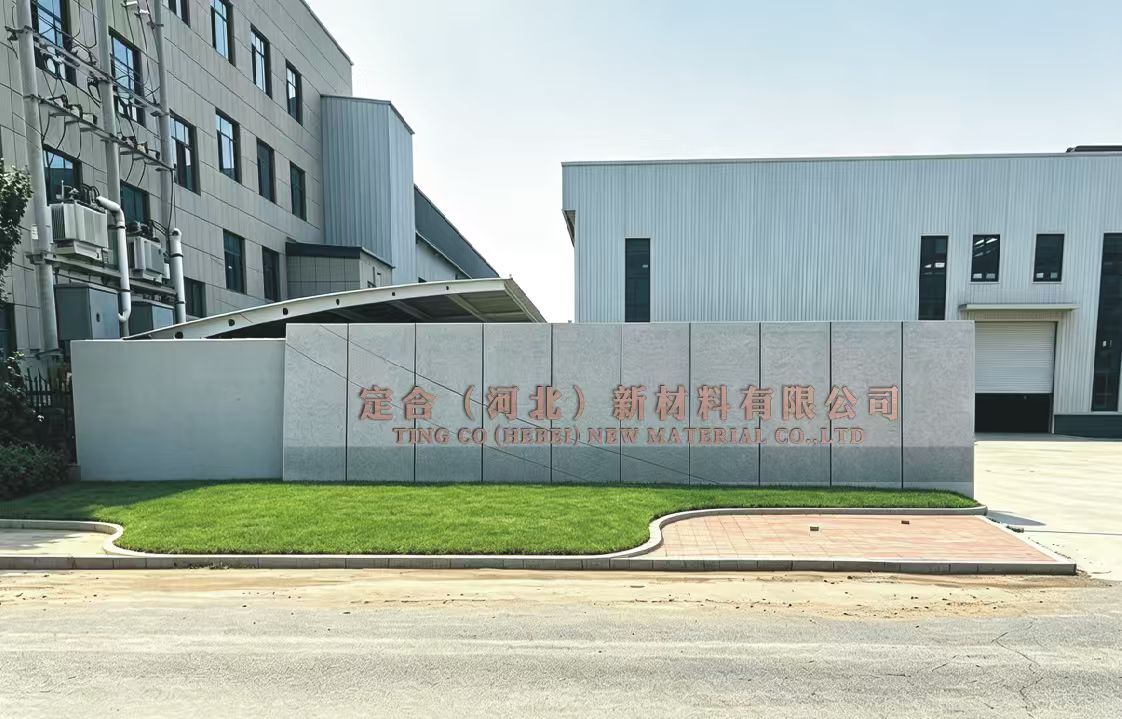
TINGCO — Tianjin TingCo Tech Co., Ltd., manufacturer and technical partner for steel fiber, synthetic fiber, and concrete reinforcement solutions.
The Performance Tests That Matter for Acceptance
Three test methods form the core basis for engineering design and acceptance of fiber-reinforced concrete:
- EN 14651 — three-point bending beam test, used to determine residual flexural strength.
- ASTM C1609 — beam test, used to determine flexural performance and toughness.
- ASTM C1550 — panel test, used to determine toughness and energy absorption under a plate load.
These tests verify the residual flexural strength and toughness index of concrete containing steel fiber. They are the link between what you specified on paper and what is actually in the slab, segment, or lining.
Compliance Behind the Product
TINGCO products are CE certified in accordance with EN 14889-1, comply with ASTM A820 and ISO 13270, and the factory holds ISO 9001 quality certification. For buyers running long-term programs, those documents are the baseline, not the differentiator.
Buyer-Side Verification Steps
Compliance is verified twice: once by the supplier and once by the buyer.
- Require a complete datasheet, including the ±10% tolerance on stated values.
- Request free samples and send them to an independent laboratory for testing.
- Confirm pre-production samples before mass production begins.
- Require a Certificate of Analysis (COA) and a Mill Certificate for every batch.
- Arrange pre-shipment inspection (PSI) with weighing and counting verification.
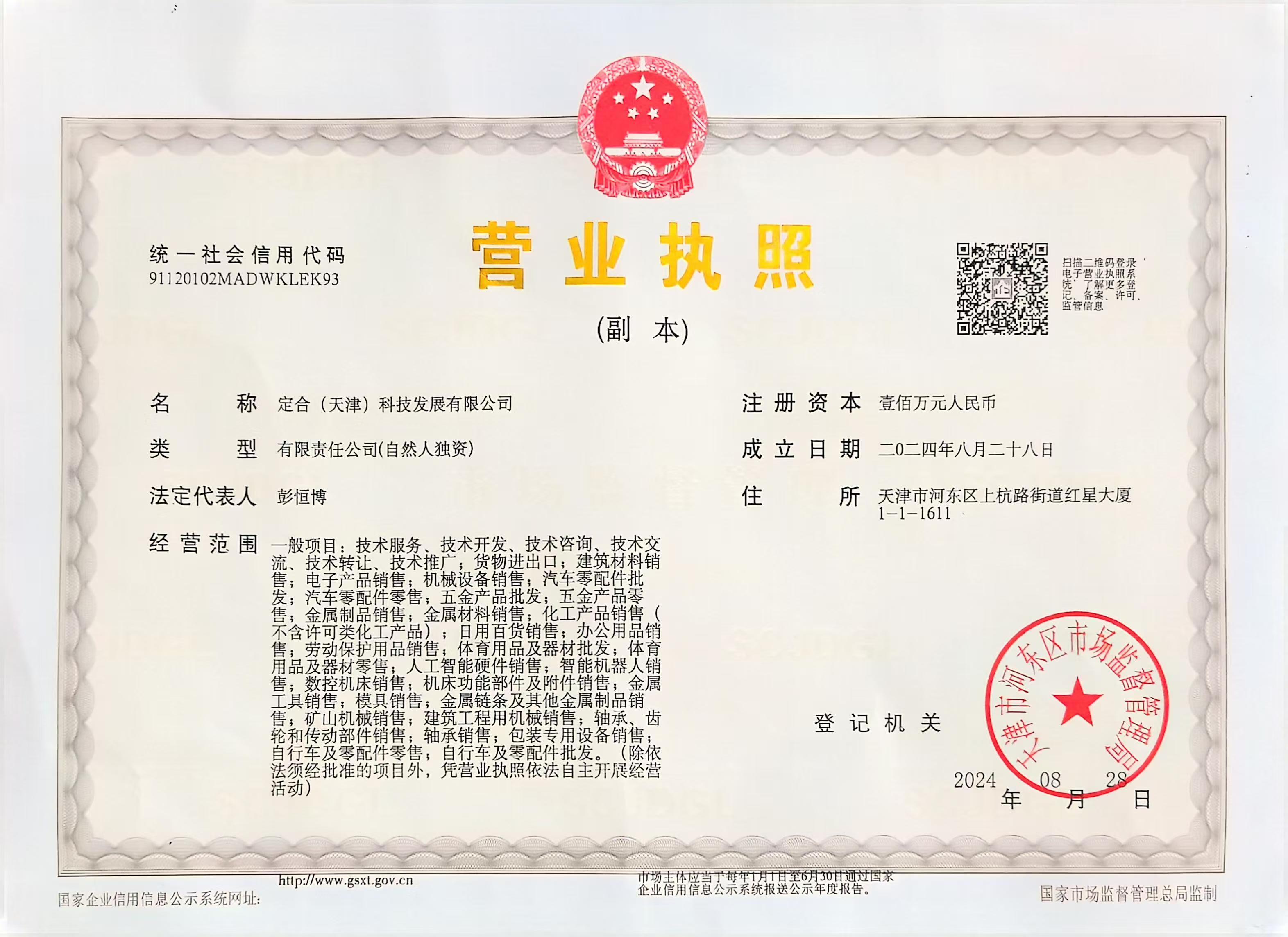
Supplier verification documents — business license and, on request, factory audit material — are part of the pre-contract checklist for recurring fiber programs.
Use Cases: Flooring, Tunnel Segments, Mining, and UHPC
The same three variables are weighted differently depending on the application.
Industrial Flooring
Industrial floors are the largest single application for steel fiber, and the performance demand is specific: flatness and load-bearing capacity for high-bay racking and autonomous mobile robot (AMR) operations, including very narrow aisle (VNA) layouts. Hooked-end steel fiber at typical doses of 15–30 kg/m³ is the standard approach, and the maintenance profile is part of the business case — fewer post-construction cracks, less crack repairing, and a longer service life than a jointed mesh-reinforced slab.
Floor design work also depends on the design code being used. TINGCO's team has studied TR34 and EFNARC design codes and partners with professional design teams to provide steel fiber floor design and tunnel segment design services, from mix design advice through construction guidance.
Tunnel Segments and Linings
Precast tunnel segments typically run at 10–30 kg/m³, with 60 mm length options and glued bundled or loose formats depending on the casting line. The acceptance route here is usually a combination of segment casting trials and residual flexural strength testing, which makes the quality inspection system and the batch documentation as important as the fiber itself.
Mining Support and Shotcrete
Underground mining combines confined space, humidity, vibration, and dynamic load. Shotcrete doses of 20–40 kg/m³ are typical, and the safety procedure around fiber feeding matters as much as the mix design — no single large dump into the mixer, gloves and goggles for operators, and uniform feeding to keep dispersion even through the spray line.
Bridge Decks, UHPC, and Facades
Where flow, finish, and corrosion resistance dominate, the fiber choice shifts. Brass-coated micro steel fiber is used for UHPC and bridge deck applications, and TINGCO also supplies stainless steel micro fibers for UHPC facade elements. For environments where steel corrosion is the binding constraint, macro synthetic fiber and other synthetic fiber families provide a corrosion-free reinforcement option.
Where Synthetic Fiber Fits Alongside Steel
PP macro, micro, and twisted fibers cover flooring, shotcrete, and precast applications where a corrosion-free or non-metallic solution is preferred, or where plastic shrinkage cracking is the primary concern. Holding both steel and synthetic fibers under one supplier simplifies procurement and logistics for contractors running mixed portfolios — but it does not change the dosing discipline: dosage, feed method, mixing time, and verification apply exactly the same way.
Comparison: Steel Fiber Flooring vs Wire Mesh Flooring
The decision between a steel fiber reinforced floor and a conventionally mesh-reinforced floor is usually made on cost, program, and maintenance — not on fiber price per kilogram.
| Comparison dimension | Steel fiber reinforced flooring | Wire mesh reinforced flooring |
|---|---|---|
| Cost | 30–40% lower cost | Baseline |
| Construction time | Reduced by 50% | Baseline |
| Crack behavior | Fewer post-construction cracks, less crack repairing | Baseline |
| Service life | Long lifespan | Baseline |
| Best fit | VNA and high-bay racking layouts | Conventional jointed slabs |
| Design requirement | Optimally designed to meet stringent flatness and load-bearing requirements of high-bay racking and AMR operations | Mesh detailing and lap placement govern performance |
The construction-time advantage is the part buyers underestimate. A 50% reduction in floor construction time compresses the whole program, and it removes one of the biggest sources of site risk — mesh placement errors that are invisible until the slab is loaded.
Long-Term Supply: What Repeat Programs Depend On
A dosing and mixing specification is only repeatable if the fiber arriving in month twelve matches the fiber in month one. That is a supply question, not a mixing question.
TINGCO, formally Tianjin TingCo Tech Co., Ltd., was founded in 2014 and operates through two entities: Tianjin TingCo Tech Co., Ltd., the sales and R&D center, and Hebei Tingco New Material Co., Ltd., the manufacturing base. The integrated structure covers research, production, quality control, technical support, and export service under one roof, so each order is managed end to end.
| Long-term program factor | Verified detail |
|---|---|
| Annual production capacity | 24,000 tons of concrete reinforcement fibers |
| Steel fiber production range | 0.55–0.90 mm diameter, 35–60 mm length, 1,200–2,500 MPa tensile strength |
| Certification | CE in accordance with EN 14889-1; ASTM A820; ISO 13270; ISO 9001 factory certification |
| Repeat-order commercial terms | MOQ 24 tons = 1x20'GP container; FOB or CIF delivery |
| Payment terms | 30% prepayment, 70% balance against copy of Bill of Lading |
| Acceptance criteria | In-line inspection and pre-shipment inspection |
| Customization | Custom specifications, OEM packaging, and private-label solutions available on request |
| Export markets | EU, Africa, South East Asia, and the Middle East; export business accounts for 70% of total sales, with fibers used annually in projects across more than 30 countries |
For buyers, the practical effect is that annual supply contracts can be planned against a known output figure and a known container unit, rather than against a spot quotation. Tens of thousands of tons of TINGCO fibers are supplied annually to projects in more than 30 countries, supporting repeat and recurring orders — the operating model these programs depend on.
Payment risk is a separate matter and should be handled explicitly: verify the business license and the 18-digit Unified Social Credit Code, require factory photos or a video factory audit, and use T/T 30% + 70% or L/C rather than accepting a 100% advance payment demand in a first order.
Frequently Asked Questions
1. Which standards should steel fiber for concrete comply with, and how is batch-to-batch consistency verified?
Two standards frame most specifications: ASTM A820/A820M-16, which specifies requirements for five types of steel fibers in fiber-reinforced concrete, and EN 14889-1:2006, which defines definitions, specifications, and conformity for steel fibers used in concrete within the EU. TINGCO products are CE certified in accordance with EN 14889-1, comply with ASTM A820 and ISO 13270, and the factory holds ISO 9001 quality certification. Consistency is verified by an in-house steel fiber reinforced concrete testing lab where every product line undergoes beam bending, compression, and toughness tests, plus pre-shipment inspection of specifications, quantity, and packaging. Buyers can require a Certificate of Analysis and Mill Certificate for every batch, and can request third-party test reports.
2. How do you properly dose and mix steel fiber into concrete?
The sequence is fixed: determine the dosage from the mix design (shotcrete 20–40 kg/m³, industrial floors 15–30 kg/m³, precast elements 10–30 kg/m³); weigh the fiber; feed it uniformly, either in water-soluble bags that dissolve in the mixer in about 5 seconds or spread evenly in batches if the packaging is not water-soluble; extend mixing time by 30–60 seconds compared with normal concrete to ensure uniform dispersion without clumping; then check slump and workability and adjust the superplasticizer dosage if necessary. Operators should wear protective gloves and goggles, and a large quantity should never be dumped in at one time. Where transport distances are long, pre-mixing at the batching plant is recommended, and specimens should follow EN 14651 / ASTM C1609 preparation requirements.
3. What are the purchasing terms and acceptance criteria for a recurring steel fiber order?
For Fiber Reinforced Concrete including models TC-07560-HNG, TC-07560-HHG, TC-05535-HNG, and TC-07535-HNL, the MOQ is 24 tons, equal to one 20-foot GP container load. Delivery terms are FOB or CIF. Payment terms are 30% prepayment and 70% balance against copy of Bill of Lading. Acceptance criteria are in-line inspection and pre-shipment inspection. Because the container unit and payment structure stay constant on repeat orders, long-term programs can be planned per container rather than per quotation.
4. Can we test the fiber before committing to a long-term supply contract?
Yes, and it should be part of the selection process. Ask for a complete datasheet including the ±10% tolerance on stated values, request free samples and send them to an independent laboratory for testing, and confirm pre-production samples before mass production. Once production starts, require a COA and Mill Certificate for every batch and arrange pre-shipment inspection with weighing and counting verification. For suppliers without quality certification such as ISO 9001 or CE, or without an adequate testing system, these verification steps are the appropriate response.
5. What should buyers look for in China steel fiber suppliers for long-term industrial flooring programs?
Look past the unit price and check four things: production capacity that can support an annual contract, certification coverage (CE in accordance with EN 14889-1, ASTM A820, ISO 13270, ISO 9001), a documented acceptance process (in-line and pre-shipment inspection, COA and Mill Certificate per batch), and technical support that continues past delivery. TINGCO produces 24,000 tons of concrete reinforcement fibers annually, supplies tens of thousands of tons of fibers every year to projects in more than 30 countries, and provides custom specifications, OEM packaging, and private-label solutions on request across steel and synthetic fiber families. To move from evaluation to execution, you can download the TINGCO company and project brochure, request a sample for independent testing, or send your mix design and flooring, tunnel, or mining specifications for a quotation.
Conclusion
Diameter, length, and tensile strength tell you what a steel fiber can do. Dosing and mixing decide whether the concrete actually delivers it. The specification that survives a long-term program is the one that fixes all of it before production: a dosage drawn from the mix design, uniform feeding, a 30–60 second extension of mixing time, a workability check that does not involve adding water, and a verification route through EN 14651, ASTM C1609, or ASTM C1550.
On the supply side, the variables that protect a recurring order are equally concrete — annual capacity of 24,000 tons, a fixed 24-ton container unit, FOB or CIF delivery, 30% prepayment with 70% balance against copy of B/L, and batch documentation that lets your engineer confirm the fiber in month twelve matches month one.
Next step: verify before you specify.
Upload your flooring, tunnel segment, or mining mix design and TINGCO will match it to the right TC model, diameter, length, and tensile strength — or send a sample for independent testing first.
Brochure: TINGCO company and project introduction (PDF)
Web: www.tcfibers.com | Blog: blog.tcfibers.com
Email: info@tingco.co | Tel: +86-22-59785568 | WhatsApp: +86 189-2017-0726
B1F16, Hongxing Building, Linke West Road, Hedong, Tianjin 300161, China
Have Questions or Need More Details?
Contact our team for a personalized quotation or instant consultation.
Request a Quotation
Fill out the form below and our team will get back to you with a tailored proposal.
WhatsApp Direct Chat
Prefer to chat in real-time? Message us on WhatsApp for instant assistance & quick answers.
- Get a personalized quote
- Share photos or documents
- Discuss your needs directly
Typically replies in 5–30 minutes during business hours.