
Steel Fiber Specs: Diameter, Length, and Tensile Strength
A steel fiber datasheet puts four fields in front of a buyer: diameter, length, tensile strength and supply form. None of them selects the fiber on its own. The decision is the combination that survives the project's acceptance test in the project's own mix, at a dose the batching plant can disperse without balling.
This guide turns that datasheet into a selection procedure. It uses the four hooked-end models from Tianjin TingCo Tech Co., Ltd. — TC-07560-HNG, TC-07560-HHG, TC-05535-HNG and TC-07535-HNL — as worked examples. TingCo is a Tianjin-based manufacturer and technical partner for steel, brass-coated, stainless and polypropylene concrete fibers, founded in 2014, operating a 6,000 m² factory with 50 employees and 2,000 t of monthly fiber capacity. Every parameter discussed below stays inside the manufacturer's published range for these hooked-end products: 0.55 mm to 0.90 mm diameter, 35 mm to 60 mm length, and 1,200 MPa to 2,500 MPa tensile strength.
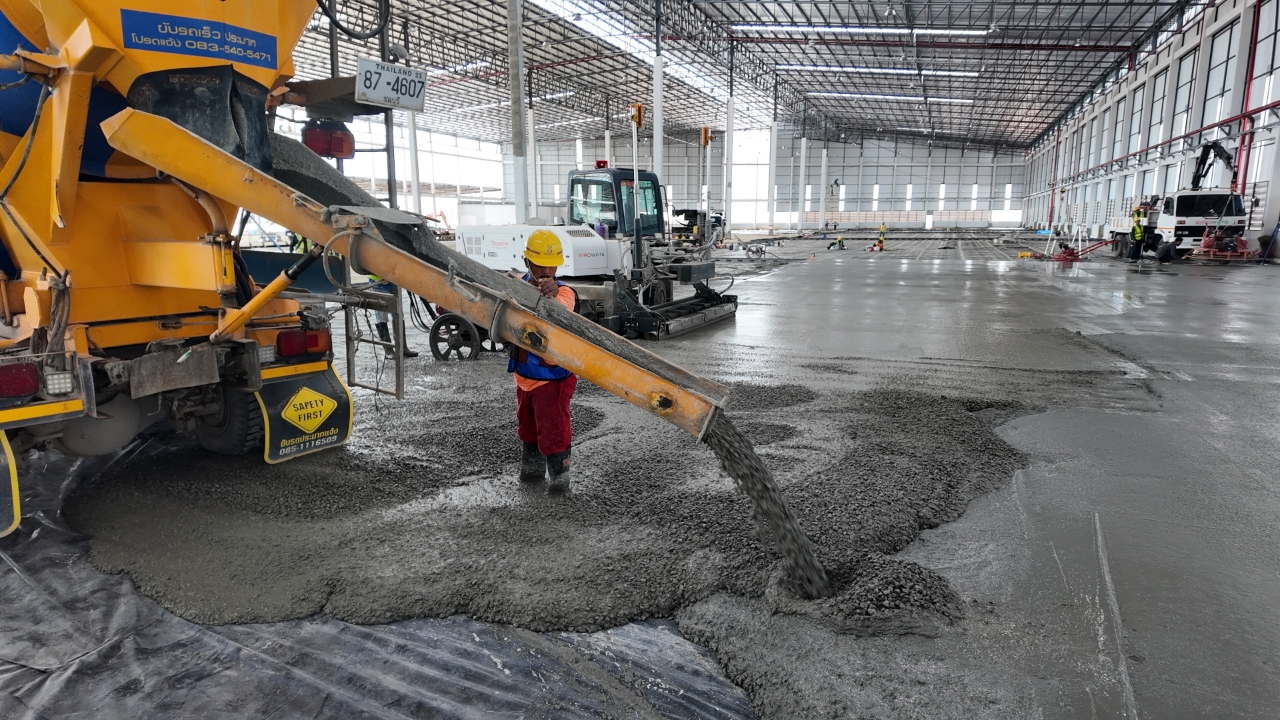
Steel fiber for concrete reinforcement — read the size pair and the tensile grade before the dose is fixed.
Why a Datasheet Is Harder to Read Than It Looks
The numbers on a steel fiber datasheet are coupled, not independent. Diameter and length together decide whether the fiber can pass through the narrowest gap in the placing route and whether the mixer can open and disperse it. Tensile strength sets a ceiling on what the wire can contribute before it ruptures — a ceiling that only matters when the fiber's anchorage in the matrix holds. Supply form decides how the fiber enters the mixer and how evenly it reaches the fresh concrete.
The second difficulty is scope. Catalogue pages publish a family range; a purchase order must name one combination. A buyer who quotes a range on the inquiry and accepts a range on the confirmation has not specified anything. The model code, the datasheet line and the batch certificate should all describe the same single combination.
The third difficulty is that the datasheet describes the wire, while the project is accepted on the concrete. Residual flexural strength and toughness are measured on the composite — by three-point bending under EN 14651, beam test under ASTM C1609, or panel test under ASTM C1550. No wire specification replaces that test, and no tensile strength figure predicts its result without the mix design, the dose and the curing behind it.
Reading Diameter, Length and Tensile Strength in the Right Order
Read the fields in the order the constraints bind: length and diameter first (geometry and process), tensile strength second (performance inside that geometry), supply form last (how the chosen fiber is fed). Reading tensile strength first is the most common way to pay for wire performance that the mix cannot develop.
Diameter: how many fibers carry the load
Diameter controls the number of individual fibers in a kilogram and the total surface area the paste has to wet. At the same weight and length, a thinner fiber produces more separate fibers per cubic metre of concrete, so a crack meets more bridging elements; the trade-off is a larger total surface area, which shows up as a stiffer mix and a higher risk of balling when feeding is uneven. A thicker fiber gives fewer, stiffer elements and disperses more readily at high doses.
TingCo's hooked-end range runs from 0.55 mm to 0.90 mm. The two diameter steps in this guide are 0.55 mm (TC-05535-HNG) and 0.75 mm (TC-07560-HNG, TC-07560-HHG and TC-07535-HNL). The 0.55 mm option belongs in the conversation when the section is thin, the reinforcement is congested, or the mix needs a fine, well-distributed network; the 0.75 mm options belong in the conversation when the placing method can handle a stiffer fiber and the design is governed by slab or segment bending.
What to verify: the nominal diameter and the tolerance band around it. Ask for a complete datasheet that states the tolerance it works to — procurement guidance in this category commonly refers to a ±10% tolerance — because a diameter quoted without a band cannot be checked against a delivered batch.
Length: anchorage against clearance
Length buys anchorage. A longer fiber embeds deeper into the matrix on both sides of a crack, so each fiber resists pull-out over a longer distance. That is the mechanical reason a 60 mm option exists alongside a 35 mm one at the same 0.75 mm diameter. Length also costs clearance: the fiber has to travel through the mixer, the pump line, the spray nozzle or the narrowest gap between reinforcing bars without bridging into a ball, and the longer the fiber, the less tolerant the process becomes.
In practice, the 35 mm models (TC-05535-HNG and TC-07535-HNL) are the shorter-clearance options — thin sections, congested reinforcement, pumped or sprayed placement, precast units with limited cover. The 60 mm models (TC-07560-HNG and TC-07560-HHG) are the longer-anchorage options, specified where section depth and placing method leave room for a longer fiber and the design wants more pull-out resistance per fiber.
A documented project shows how the length choice is fixed in practice. A wholesale customer with technical support in Thailand bought 2,000 t of steel fiber over one year for heavy-duty industrial warehouse flooring, logistics park flooring and jointless flooring. The floor design specified 20 kg/m³ of a steel fiber recorded in the project as 80/60 at 1,200 MPa, and the supplier also rearranged and optimised the pile layout to suit the slab-on-pile construction. Where a specification uses a combined designation such as 80/60, ask the supplier to map it to diameter, length and tensile strength on the datasheet before the first batch — a designation that is not decoded is not a specification.
Tensile strength: a ceiling, not a promise
Tensile strength is the stress at which the wire itself breaks. In a normal-strength concrete mix, a hooked-end fiber of adequate length usually pulls out before it reaches that stress, so the residual strength of the concrete is governed by anchorage and matrix strength rather than by the wire's ultimate value. The number becomes decisive only when both other conditions are met: the anchorage holds, and the matrix is strong enough to transfer stress to the fiber without crushing around it.
That produces a working rule. A higher tensile grade is justified when the fiber has enough embedment to develop it and the mix is strong enough to load it; in a mix where pull-out governs, the extra grade buys nothing that the acceptance test will show. The reverse also holds — a long fiber in a weak matrix does not convert length into residual strength.
TingCo's hooked-end family spans 1,200–2,500 MPa, and the four models in this guide sit inside that band. The exact grade is a model-level datasheet field, not something the model code states, so the purchase order should carry the grade explicitly. For context on where the upper end of the market sits, third-party benchmarks for brass-coated micro steel fibers used in UHPC cite tensile strengths above 2,500 MPa at diameters of 0.2–0.3 mm (PIONEER benchmark data) — a different product family with a different anchorage mechanism from the hooked-end models discussed here.
Loose versus Glued: A Supply-Form Decision, Not a Spec Decision
Supply form appears next to diameter, length and tensile strength on most quotations, but it answers a different question: not what the fiber does in hardened concrete, but how it behaves between the bag and the mixer. TingCo supplies both hooked-end loose steel fiber and glued bundled steel fiber, and the choice should follow the batching plant's equipment and discipline rather than the datasheet's headline numbers.
Loose fiber is individual filament. It is simple to weigh and adjust when the dose changes between pours, and it suits plants that charge the mixer under direct control. Its weakness is the charging point: fiber tipped in too fast, or in one lump, tangles into balls that survive mixing and later appear as voids or surface blemishes.
Glued fiber is bundled with a binder that opens during mixing. The bundle format is designed for controlled, metered feeding — the fiber stream stays regular, which matters at higher doses and on automated dosing lines — but it needs enough mixing energy and time to break the bundles apart. Neither form removes the need for a mixing-time extension: TingCo's mixing guidance calls for 30–60 seconds beyond normal concrete, plus a slump and workability check with superplasticiser adjustment if required.
Packaging belongs to the same decision. Water-soluble bags can be charged directly into the mixer with the aggregates and dissolve in about five seconds, which removes a manual feeding step and reduces operator exposure; non-water-soluble packaging has to be opened and the fiber spread evenly in batches. Operators should wear protective gloves and eye protection either way, and long transport distances favour pre-mixing at the batching plant rather than relying on the truck drum.
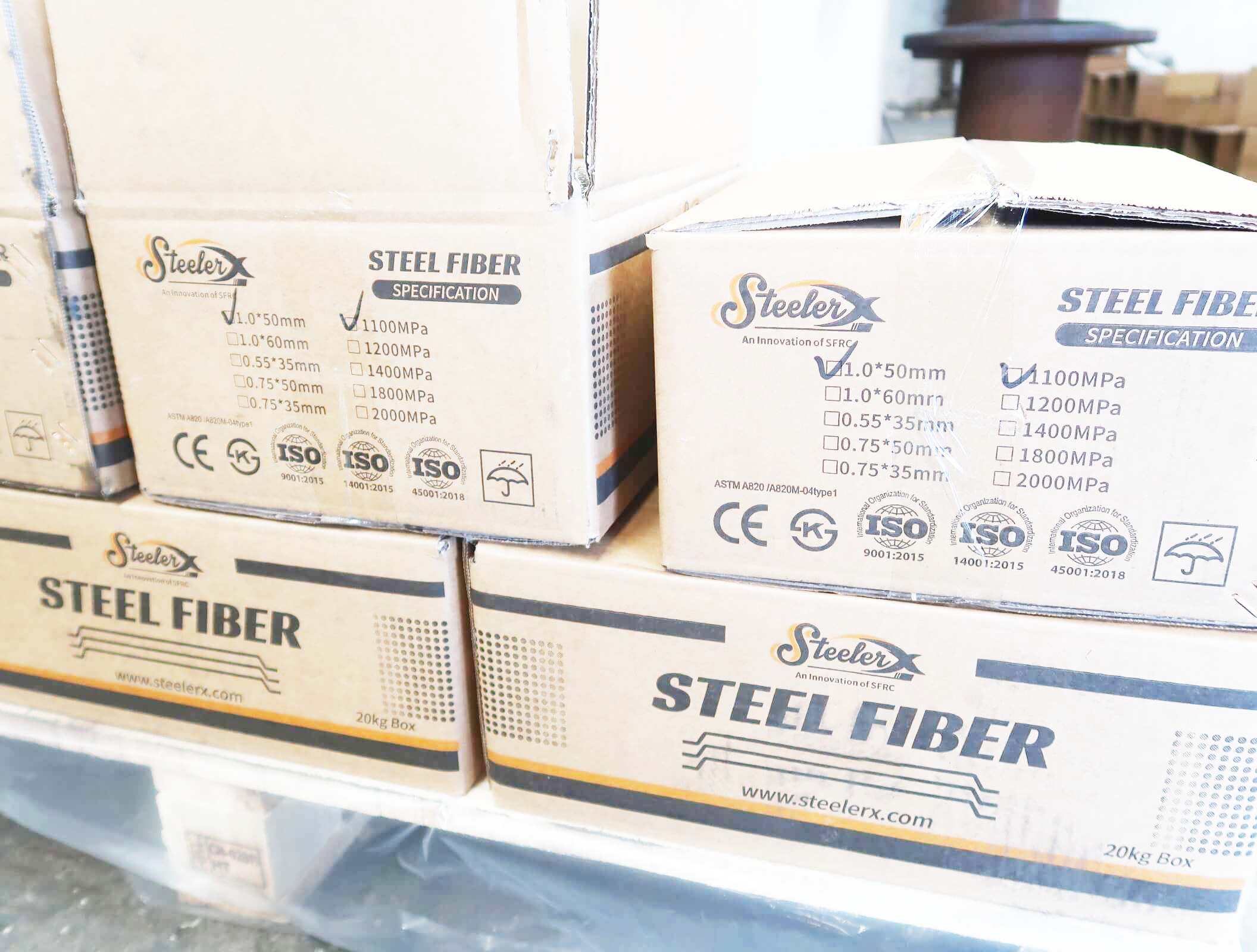
Supply form and packaging are order-line fields: state loose or glued, and the packaging type, on the same quotation as the size pair.
The four model codes do not specify a supply form on their own. TC-07560-HNG, TC-07560-HHG, TC-05535-HNG and TC-07535-HNL each need the supply form written on the quotation, because the same nominal size can reach a project through different feeding routes.
The Four Models Read as Size Pairs
Read the four codes as size pairs and the family becomes easier to navigate. Two models carry the 0.75 mm / 60 mm pair, one carries 0.55 mm / 35 mm, and one carries 0.75 mm / 35 mm. That gives a buyer two length choices at the stiffer diameter and one thinner option at the shorter length — a small matrix that covers the common flooring, precast and sprayed-concrete conversations.
| Model | Size pair carried by the code | What that pair implies | Confirm before the PO |
|---|---|---|---|
| TC-07560-HNG | 0.75 mm × 60 mm | Longer embedment per fiber for thicker sections and slab work where the placing route allows a 60 mm fiber | Tensile grade; loose or glued; packaging |
| TC-07560-HHG | 0.75 mm × 60 mm | Same size envelope as TC-07560-HNG; the suffix marks a different variant inside that envelope | What the suffix changes; tensile grade; supply form |
| TC-05535-HNG | 0.55 mm × 35 mm | Thinner and shorter: more fibers per kilogram for fine distribution in thin or congested sections | Tensile grade; supply form; dosing calibration |
| TC-07535-HNL | 0.75 mm × 35 mm | Stiffer fiber in the short length, where the placing route offers tighter clearance | Tensile grade; supply form; mixing time |
Size pairs as carried in the model codes. Tensile grade, supply form and packaging are separate datasheet and order fields and must be confirmed in writing.
The table also shows how much of the purchase decision sits outside the code. The size pair is visible; the tensile grade, supply form, packaging and batch documentation are not. An inquiry that quotes only a model code is incomplete, and a confirmation that answers only with a model code should be sent back.
A Six-Step Selection Procedure
The sequence below follows the constraint order described above and produces a specification a batching plant can execute.
Step 1 — Fix the application and the acceptance test
Name the element and the test before naming a fiber. A warehouse slab, a precast tunnel segment, a sprayed tunnel lining and a UHPC deck are accepted on different evidence, and the test method — EN 14651 three-point bending, ASTM C1609 beam test or ASTM C1550 panel test — should be written into the inquiry so the supplier knows which residual strength basis the design uses.
Step 2 — Set the length against the placing route
Trace the fiber's path: silo or bag, dosing unit, mixer, pump or spray gun, and the narrowest gap in the formwork or reinforcement. If that path cannot pass a 60 mm fiber without bridging, the 35 mm models are the realistic candidates. If the section is deep, the reinforcement is open and the design wants maximum pull-out resistance per fiber, the 60 mm models are the ones to price.
Step 3 — Set the diameter against distribution and workability
Choose the thinner 0.55 mm option when distribution density matters more than fiber stiffness and the mix can carry the extra surface area; choose 0.75 mm when the mix is coarse, the dose is high, or the placing crew needs a fiber that disperses predictably. Then check the consequence on the mix: workability, superplasticiser demand and finishing behaviour.
Step 4 — Set the tensile grade against the matrix and the anchorage
Match the grade to what the composite can develop. A strong matrix with well-anchored fiber rewards a higher grade; a mix where pull-out governs does not. Write the grade on the order line and confirm it on the certificate of analysis, because the model code alone does not carry it.
Step 5 — Set the supply form and the feeding method
Decide loose or glued on the basis of the dosing equipment, the dose per batch and the plant's charging discipline. Fix the dose with the mix design at the same time — TingCo's dosing guidance works within 15–30 kg/m³ for industrial floors, 20–40 kg/m³ for shotcrete and 10–30 kg/m³ for precast elements — and confirm whether water-soluble bags will be charged directly with the aggregates.
Step 6 — Lock the documents and run the trial
Confirm the pre-production sample before mass production, then require a certificate of analysis and a mill certificate for every batch, with pre-shipment inspection covering weighing and counting. Send free samples to an independent laboratory when the acceptance risk is high, and compare the measured residual strength against the design basis rather than against the datasheet.
Where the Size Pair Changes the Answer
Different applications load the same three parameters in different proportions. The notes below show which field usually dominates.
Industrial and jointless flooring
Slab work is governed by crack control over large areas, so length and dose carry the decision and the 60 mm models are the natural starting point where the placing route allows them. The Thai flooring project cited above is a template: one fiber, one dose, one test basis, agreed before the pour rather than after it.
Tunnel segments and lining
Precast segments are cast in rigid steel moulds with dense reinforcement and tight cover, so clearance and dispersion dominate; sprayed lining adds rebound to the calculation. The size pair has to be checked against the actual mould geometry, and the supply form against the segment plant's dosing line, before the model is fixed.
UHPC and bridge decks
High-performance mixes shift the weight of the decision to dispersion and fiber count per unit volume. Micro fibers with diameters well below the hooked-end range and tensile strengths above 2,500 MPa are the reference point in third-party UHPC benchmarks; within TingCo's hooked-end family, the thinner 0.55 mm option is the closer fit where a fine distribution matters.
Shotcrete and mining support
Sprayed application punishes long fibers and inconsistent feeding. Doses run higher than in slab work — 20–40 kg/m³ in TingCo's guidance — so the supply form and the dosing equipment matter as much as the wire specification.
Precast elements
Precast covers a wide range of sections and cover depths. Doses of 10–30 kg/m³ are the working band in TingCo's guidance, and the length decision usually follows the thinnest section in the product family rather than the average.
Verification Before the Container Leaves
Specification is only half of the control; the other half is documentary and physical verification of what was actually produced.
- Datasheet: one model, one diameter with tolerance, one length, one tensile grade, one supply form, one packaging type.
- Batch documents: certificate of analysis and mill certificate per batch, not a single file reused across shipments.
- Inspection: in-line inspection plus pre-shipment inspection with weighing and counting.
- Certification: CE certificate 1301-CPR-2456 issued by TSUS under EN 14889-1:2006, Group I, covering steel fibres for the reinforcement of concrete, mortars and cementitious mixes, valid from 2025-05-13 to 2030-05-12; compliance with ASTM A820 and ISO 13270; ISO 9001 factory certification.
- Counterparty checks: business licence and 18-digit Unified Social Credit Code verification, factory photos or a video audit, and payment terms such as T/T 30% advance with 70% against a copy of the bill of lading, or L/C.
- Commercial baseline: MOQ 24 t, equivalent to one 20 ft container; lead time 10–15 days; FOB or CIF terms.

CE certificate 1301-CPR-2456 under EN 14889-1:2006 — confirm the scope covers the product group you are ordering.
FAQ
Which standards should a hooked-end steel fiber datasheet reference for EU or US projects?
For EU projects, EN 14889-1:2006 defines the definitions, specifications and conformity requirements for steel fibers in concrete, and CE marking under that standard is the entry document; TingCo's certificate 1301-CPR-2456 covers Group I steel fibres for reinforcement of concrete, mortars and cementitious mixes. For US-facing projects, ASTM A820/A820M is the core specification covering five types of steel fibers for fiber-reinforced concrete. ISO 13270 is also cited in this category. The datasheet should name the standard, the product group and the certificate number, not just the word "certified".
China hooked-end steel fiber OEMs for industrial flooring drawings
Send the drawing set, not a model code. A supplier working from drawings needs slab thickness and joint layout, pile grid and slab-on-pile arrangement, load class, pour sequence, required residual strength basis and test method, plus any finishing or flatness requirements. A capable OEM returns a fiber model, a dose in kg/m³, the test basis the design relies on, the supply form and packaging, and a delivery schedule. TingCo runs OEM and ODM production for private-label concrete fiber orders with custom steel fiber designs and logo branding, produces 2,000 t per month with a 10–15 day lead time on a 24 t minimum order, and supports flooring and segment work technically — the team has studied TR34 and EFNARC design codes and works with design teams on steel fiber floor design and tunnel segment design.
Should I order loose or glued fiber for an automated dosing line?
Glued bundled fiber is the format built for metered feeding: the bundles keep the fiber stream regular and open during mixing, which matters at higher doses. Loose fiber is easier to weigh and adjust and suits plants that charge the mixer under direct control, but it needs disciplined, uniform feeding to avoid balling. Either way the mixing time extends by 30–60 seconds over normal concrete, and the supply form must be stated on the order line for the specific model.
Can I test a 60 mm and a 35 mm model in the same mix before choosing?
Yes, and it is the most reliable way to settle the length question. Request free samples of both sizes, keep the mix design, dose and curing identical, and send the specimens to an independent laboratory for EN 14651, ASTM C1609 or ASTM C1550 testing so the residual strength comparison is on the composite rather than on the datasheet. Confirm the pre-production sample before mass production, then require a certificate of analysis and a mill certificate per batch.
What are the MOQ, lead time and payment terms?
MOQ is 24 t, equivalent to one 20 ft container; lead time is 10–15 days; delivery terms are FOB or CIF. Acceptance rests on in-line inspection and pre-shipment inspection, and standard payment terms are 30% prepayment with 70% balance against a copy of the bill of lading. Buyers who want more detail on models, packaging and project references can download the TingCo company and project brochure or send a drawing set with the required test basis for a model and dose recommendation.
Conclusion
The three numbers on a steel fiber datasheet do different jobs. Diameter and length decide what the mix and the placing route can accept; tensile strength sets a ceiling that only pays when anchorage and matrix strength allow the fiber to develop it; supply form decides whether the chosen fiber reaches the mixer evenly. Read in that order, the four hooked-end models become a workable matrix — 0.75 mm / 60 mm for longer anchorage in slab and segment work, 0.55 mm / 35 mm for fine distribution in thin or congested sections, and 0.75 mm / 35 mm for a stiffer fiber where clearance is tight.
The last step is always the same: confirm the grade, the supply form and the packaging in writing, then prove the combination on the project's own mix through the specified acceptance test. A specification that cannot be tested is only a preference.
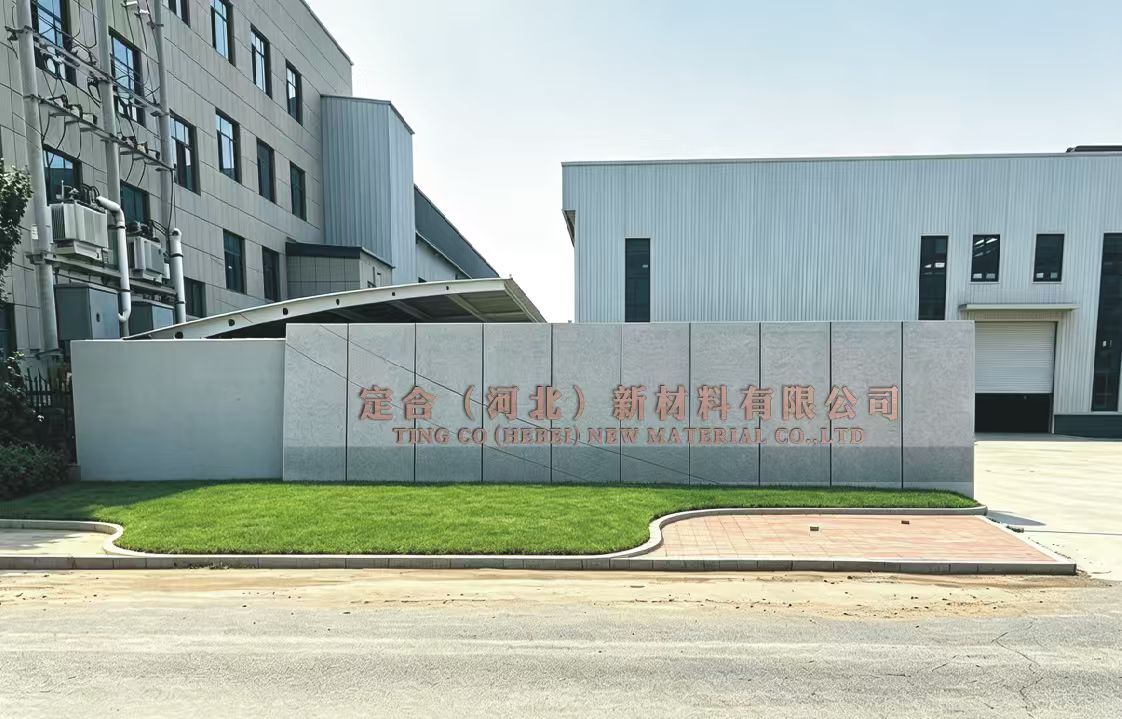
Tianjin TingCo Tech Co., Ltd. — steel, brass-coated, stainless and PP fibers with OEM/ODM production and a 2,000 t monthly capacity.
Have Questions or Need More Details?
Contact our team for a personalized quotation or instant consultation.
Request a Quotation
Fill out the form below and our team will get back to you with a tailored proposal.
WhatsApp Direct Chat
Prefer to chat in real-time? Message us on WhatsApp for instant assistance & quick answers.
- Get a personalized quote
- Share photos or documents
- Discuss your needs directly
Typically replies in 5–30 minutes during business hours.