Steel Fiber vs PP Fiber for Tunnel Segments and Mining: A Buyer Comparison Guide
Steel fiber and PP fiber are not two versions of the same product. Steel fiber — carbon steel wire, 0.5–1.0 mm in diameter, 25–60 mm in length, with 1,100–2,100 MPa tensile strength, supplied loose or glued — is specified when hardened concrete must keep carrying load after it cracks. PP fiber is specified when the controlling risks are early-age cracking, water ingress and long-term durability in aggressive ground: it is acid and alkali resistant, non-absorbent, disperses hydrophilically in the mix, reduces early-stage cracking by more than 30%, improves impermeability by around 37% and extends service life by more than 15%. Tunnel segment and mining specifications usually need to decide which of these two jobs governs the project — and some projects need both.
The Buyer's Problem: Two Fibers Solve Two Different Failure Modes
The decision is easier once you stop comparing fiber types and start comparing the failure mode you are buying protection against. A tunnel segment or a mining lining fails in different ways depending on where the weakness appears: after the concrete cracks and must still carry load, or before the concrete has finished maturing and is already cracking.
Failure mode 1 — the concrete cracks but must keep carrying load
Precast tunnel segments are stripped, lifted, stacked, transported and finally assembled into a ring under load. Mining shotcrete and mine roadways take dynamic vehicle load, vibration and alternating temperatures in a humid, confined underground environment. Where the design assumes a residual flexural strength after cracking, the specification is written around a fiber that bridges the crack and keeps transferring stress. This is the job of steel fiber, and it is why the acceptance testing is built on flexural toughness rather than on visual crack inspection.
Failure mode 2 — the concrete cracks early, then lets water through
The second failure mode appears earlier in the life of the concrete: plastic and early-age cracking during curing, followed by water ingress, reinforcement corrosion and a shorter service life. In aggressive ground and in mining environments where acid and alkali exposure is normal, this is a durability problem rather than a strength problem. PP fiber is specified here, because it reduces early-stage cracking, improves impermeability and does not corrode.
The expensive mistake is not choosing the wrong fiber type — it is assuming the two can substitute for each other. Substituting PP fiber where the design calls for residual flexural strength leaves the structure below its design assumption. Specifying only steel fiber where the governing risk is early-age cracking and permeability leaves the durability case unresolved. Both errors tend to appear after the concrete has been placed, when correction is costly.
Industry Background: Why Tunnel and Mining Specifications Are Tightening
Fiber reinforcement for concrete is no longer a niche substitution for steel mesh. Published market research indicates that the global steel fiber market is projected to reach approximately USD 2.87 billion by 2026 (Fortune Business Insights), and within that market, industrial flooring accounts for a 37.28% share of applications while hooked-end steel fibers hold the leading type segment share at 58.89% (Fortune Business Insights, 2026). On the synthetic side, the global polypropylene fiber market for construction is expected to grow at a CAGR of 6.4% from 2026 to 2034 (Fortune Business Insights).
Supply is concentrated. According to customs trade data aggregated by Zauba, China was the largest exporter of steel fiber under HS code 7326, accounting for 51.85% of total imports identified in that dataset. For buyers in the EU, Africa, Southeast Asia and the Middle East, that concentration makes supplier verification — not fiber selection — the harder part of procurement.
Standards have also become explicit. EN 14889-1:2006 defines the definitions, specifications and conformity rules for steel fibers used in concrete within the European Union, and ASTM A820/A820M-16 is the core global standard specifying requirements for five types of steel fibers in fiber-reinforced concrete. For structural applications, EN 14651 and ASTM C1609 (three-point bending beam test) and ASTM C1550 (panel test) are the standard methods used to verify residual flexural strength and toughness index — the core basis for design and acceptance.
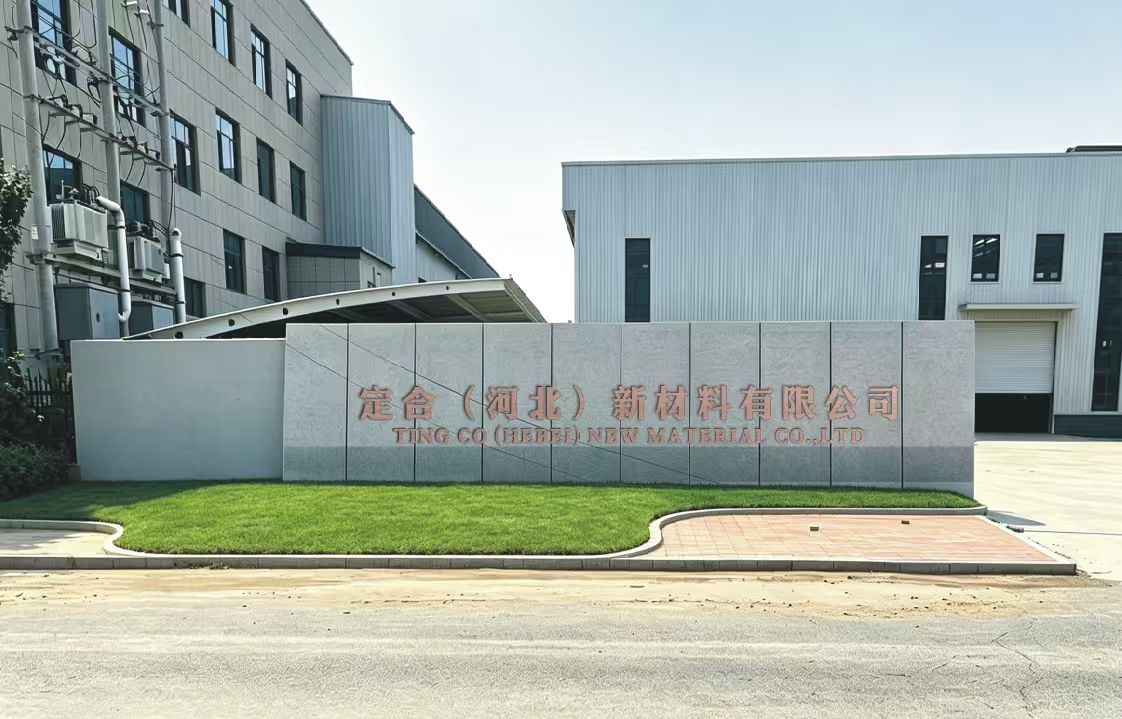
Tianjin TingCo Tech Co., Ltd. is a manufacturer and technical partner for steel fibers, synthetic fibers and concrete reinforcement solutions, founded in 2014 and headquartered in Tianjin, China. Its structure combines Tianjin TingCo Tech Co., Ltd. (sales and R&D) with Hebei Tingco New Material Co., Ltd. (manufacturing base), across a 6,000 m² factory with 50 employees and 24,000 tons of annual output. Its steel fiber range covers hooked-end loose fiber, glued bundled fiber, brass-coated micro steel fiber and stainless steel micro fiber, alongside polypropylene (PP) macro, micro and twisted fibers. Approximately 70% of output is exported to the EU, Africa, Southeast Asia and the Middle East.
Steel Fiber: The Specification Values That Decide a Tunnel or Mining Order
For steel fiber reinforced concrete used in industrial flooring, tunnel segments and mining, the certified product parameters are the starting point for any technical comparison: carbon steel wire base material, 0.5–1.0 mm diameter, 25–60 mm length, and 1,100–2,100 MPa tensile strength. Those four values are what a tunnel or mining specification should be checked against before any commercial discussion.
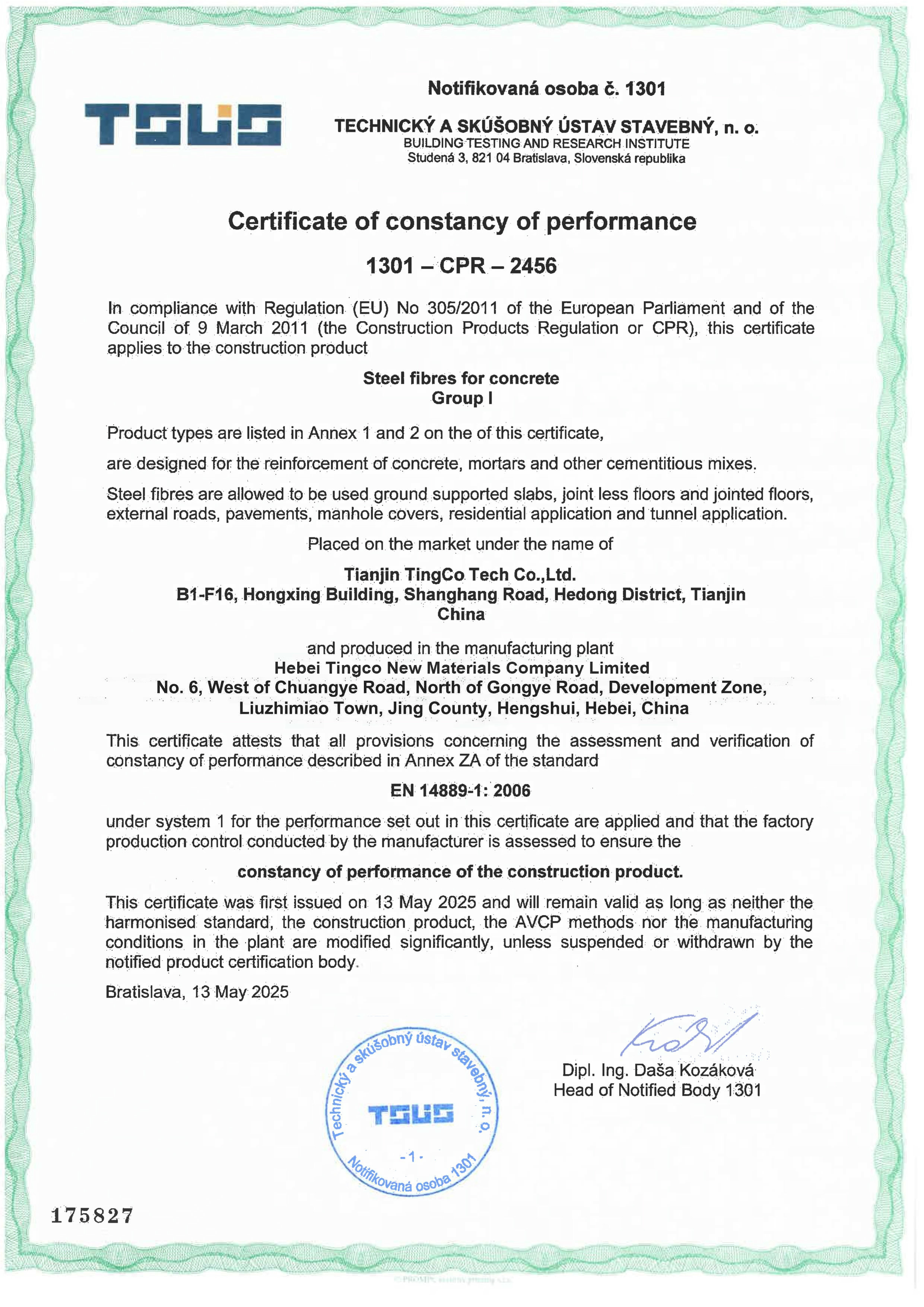
Certification coverage for this range is documented. CE certificate 1301 – CPR – 2456, issued by TSUS on 13 May 2025 and valid to 12 May 2030, covers steel fibres for concrete (Group I) for the reinforcement of concrete, mortars and cementitious mixes under EN 14889-1:2006, and applies to models TC-07560-HNG, TC-07560-HHG, TC-05535-HNG and TC-07535-HNL. The factory is ISO 9001 certified, and the range is aligned with ASTM A820 and ISO 13270.
Loose versus glued supply: a dispersion decision, not a price decision
Steel fiber for segment and mining work is normally supplied either loose or glued into bundles. Glued bundles are designed to open inside the mixer, which supports uniform dispersion in precast production where fiber balling would create weak zones in a segment. Loose fiber is the common choice for floors and shotcrete, where dosing equipment and mixing time can be controlled directly. In practice the choice follows the production line, not the datasheet: precast plants value dispersion control, while site-based shotcrete work values simple feeding.
Hooked-end and 80/60 geometry in segment and shotcrete work
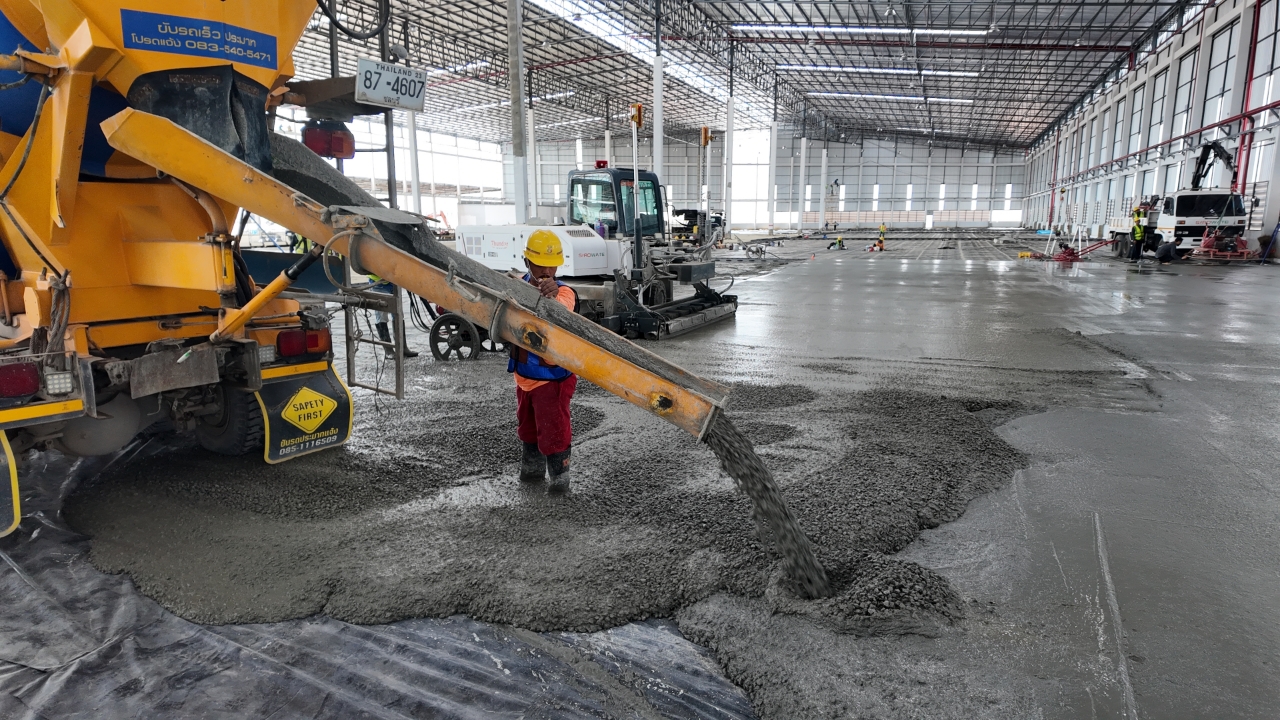
Hooked-end fiber remains the dominant steel fiber type, with a 58.89% share of the type segment in 2026. A documented TingCo project in Thailand used 80/60 steel fiber at 1,200 MPa tensile strength, designed into industrial flooring at a 20 kg/m³ dosage. In tunnel segment and mining applications, the same logic applies to mixing and dosing: shotcrete dosage guidance of 20–40 kg/m³, industrial flooring at 15–30 kg/m³ and precast elements at 10–30 kg/m³, with mixing time extended by 30–60 seconds compared with plain concrete to avoid clumping.
Micro steel fiber: UHPC, bridge decks and facades
Where the concrete is UHPC rather than conventional segment or shotcrete concrete, the geometry changes. Industry benchmark data for brass-coated micro steel fiber for UHPC lists tensile strength above 2,500 MPa with diameters of 0.2–0.3 mm (PIONEER MS-6013). Brass-coated micro steel fiber is used for UHPC and bridge deck applications, and stainless steel fiber is used for UHPC facades where surface appearance and corrosion resistance matter. These products sit outside the 0.5–1.0 mm certified range above and should be specified and certified separately.
PP Fiber: Where Synthetic Reinforcement Earns Its Place
Polypropylene fiber works on a different mechanism and therefore against a different risk. Its performance profile is built around chemical inertness and early-age behavior rather than post-crack load carrying: acid and alkali resistance, non-absorbent behavior under wet conditions, and hydrophilic dispersion that spreads the filaments through fresh concrete instead of letting them float or clump.
What PP fiber does well in tunnel and mining concrete
- Early-age crack control. Reported early-stage cracking reduction exceeds 30%, which directly addresses plastic shrinkage and early thermal cracking in segments, linings and slabs.
- Impermeability. Reported improvement in impermeability is around 37%, which supports watertightness in tunnels and in wet underground mining conditions.
- Service life. Reported service-life extension exceeds 15%, driven by the reduction of crack paths for water and aggressive agents.
- No corrosion. As a synthetic fiber with no corrosion behaviour, PP fiber does not rust, does not stain exposed surfaces and does not depend on cover depth for durability.
- Chemical resistance. Acid and alkali resistance matters in mining environments and in aggressive ground where steel can be attacked.
Because of this profile, PP fiber is widely used in flooring and slabs — including PP fiber for flooring and macro synthetic fiber for industrial flooring — and macro PP fiber for concrete reinforcement has become a standard option where crack control and durability, not residual flexural strength, are the design drivers.
Where PP fiber is not a substitute for steel fiber
The limitation is straightforward and worth stating plainly for anyone writing a segment or mining specification: PP fiber is specified for crack control, impermeability and durability, while steel fiber is specified for post-crack load carrying. Where EN 14651 or ASTM C1609 flexural toughness values are part of the acceptance criteria, the fiber choice has to be made against those values. PP fiber can be added for early-age and durability reasons alongside a steel fiber design — it does not replace the structural function of the steel fiber.
Step-by-Step: How to Specify, Sample and Accept Fiber for a Tunnel or Mining Project
The following sequence reflects how a fiber order moves from design intent to accepted shipment, and each step is a place where buyers lose time or money when it is skipped.
- Define the governing requirement first. Decide whether the specification is written around residual flexural strength and toughness (steel fiber territory) or around early-age cracking, permeability and durability (PP fiber territory). If both, plan for both.
- Match the fiber geometry to the application. For segment, flooring and mining concrete, confirm diameter, length and tensile strength against the certified range: 0.5–1.0 mm, 25–60 mm and 1,100–2,100 MPa for the CE-certified steel fiber models. For UHPC and facade applications, treat micro fiber specifications as a separate product decision.
- Choose loose or glued supply against your production line. Glued bundles for dispersion control in precast segment production; loose fiber where site dosing and mixing control are reliable.
- Set the dosage from the mix design, not from a catalogue. Documented guidance is 20–40 kg/m³ for shotcrete, 15–30 kg/m³ for industrial floors and 10–30 kg/m³ for precast elements, with adjustment based on the required performance in the actual mix.
- Confirm mixing and dosing practice. Uniform fiber feeding is required for both flooring and precast concrete. Water-soluble packaging bags can be fed directly into the mixer with the aggregates and dissolve in about 5 seconds; non-water-soluble packaging should be spread evenly in batches. Mixing time should be extended by 30–60 seconds versus plain concrete, then slump and workability checked and superplasticizer dosage adjusted if needed.
- Require the full evidence pack before production. A complete datasheet including tolerances (for example ±10%), a Certificate of Analysis and a Mill Certificate for every batch, and the applicable certification — CE 1301 – CPR – 2456 under EN 14889-1:2006 for steel fiber, plus ISO 9001 factory certification.
- Validate with samples before mass production. Request samples and send them to an independent laboratory for testing, then confirm pre-production samples before the mass production run. Flexural toughness verification follows EN 14651 or ASTM C1609, or ASTM C1550 for panel tests.
- Inspect before shipment and close the commercial terms. Pre-shipment inspection with weighing and counting verification; in-line inspection and pre-shipment inspection as the acceptance basis; MOQ 24 tons (1×20'GP); FOB/CIF delivery terms; 30% prepayment with 70% balance against copy of B/L. Typical lead time is 10–15 days against a monthly capacity of 2,000 tons.
Safety note for site teams: operators handling steel fiber should wear protective gloves and goggles to prevent fibers from flying into the eyes or causing puncture injuries. Avoid dumping large quantities at one time, which causes clumping, and pre-mix at the batching plant if transport distances with mixer trucks are long.
Use Cases: Where Each Fiber Fits
The practical split between the two fibers becomes clear when the applications are placed side by side.
- Precast tunnel segments and linings. Steel fiber, typically glued bundle for dispersion control, with the segment designed for residual flexural strength. PP fiber can be added where early-age cracking during curing and handling is a recurring defect.
- Mining shotcrete and mine roadways. Steel fiber shotcrete at 20–40 kg/m³ is the structural option under dynamic load, vibration and alternating temperatures. Acid and alkali resistance and non-corrosive reinforcement become relevant where groundwater chemistry is aggressive — the point at which PP fiber enters the specification.
- Jointless industrial and logistics flooring. A documented TingCo project for a wholesaler with technical support in Thailand covered 2,000 tons over one year across heavy-duty industrial warehouse flooring, logistics park flooring and jointless flooring. The flooring was designed with 80/60 steel fiber at 1,200 MPa and a 20 kg/m³ dosage, and the pile layout was rearranged and optimized to better fit the slab-on-pile project. Both PP fiber for flooring and macro synthetic fiber for industrial flooring are used where corrosion-free crack control is the priority.
- UHPC and facade elements. Brass-coated micro steel fiber for UHPC and bridge deck work, and stainless steel fiber for UHPC facades.
- Bridge decks and highway pavement. Fiber-reinforced concrete is applied in bridge deck and highway construction where crack control and durability under dynamic load govern.
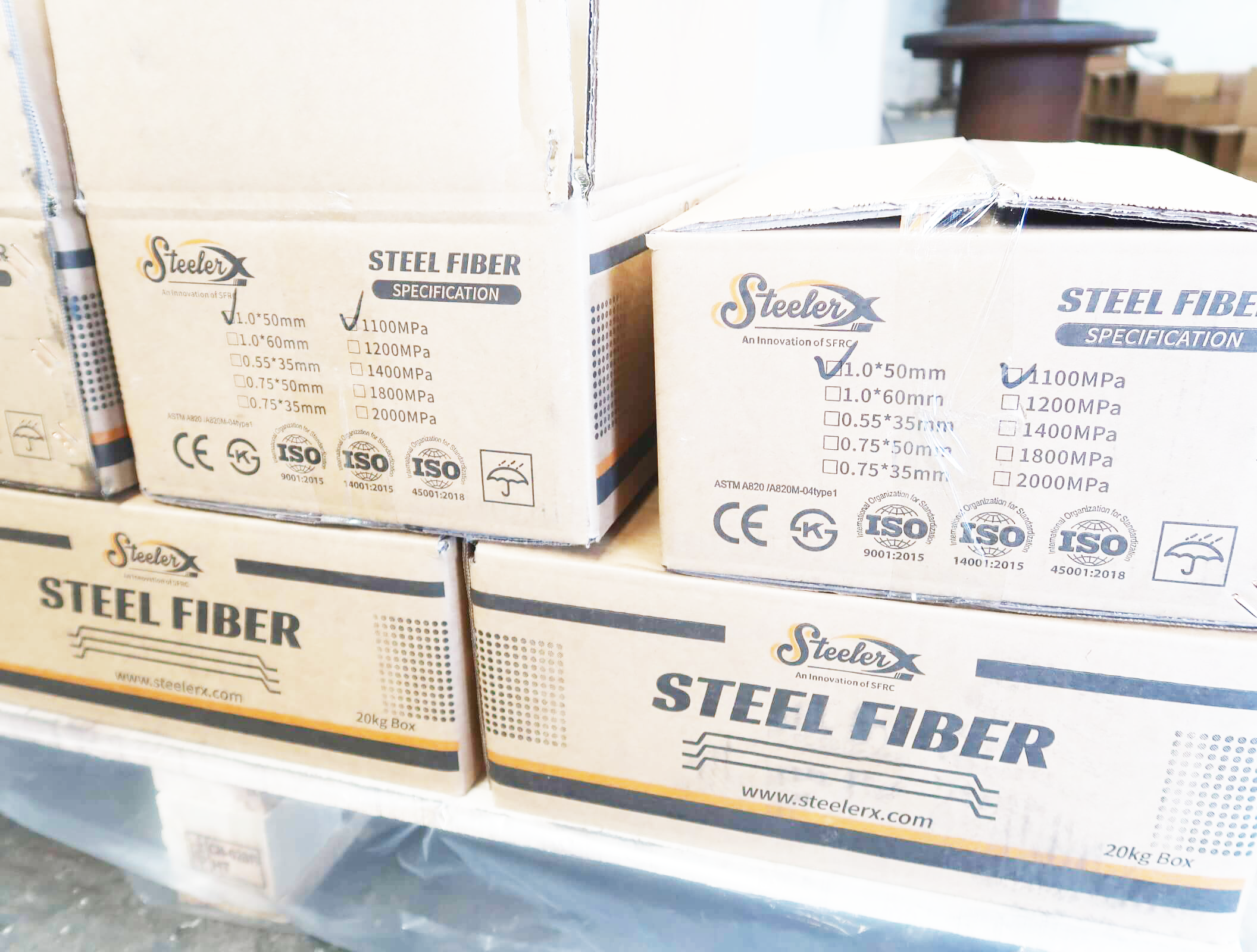
Steel Fiber vs PP Fiber: Comparison Table
The table below compares the two fiber families only on parameters that are documented for this product range and its certification. Where a value is not part of the verified specification, the correct action is to request it from the supplier rather than to assume it.
| Decision factor | Steel fiber (certified range) | PP fiber |
|---|---|---|
| Base material | Carbon steel wire | Polypropylene (synthetic) |
| Diameter | 0.5–1.0 mm | Confirm per supplier |
| Length | 25–60 mm | Confirm per supplier |
| Tensile strength | 1,100–2,100 MPa | Not part of the steel fiber specification |
| Supply form | Loose, or glued bundles | Confirm per supplier |
| Corrosion behaviour | Steel — governed by design, cover and crack width | No corrosion; acid and alkali resistant; non-absorbent |
| Dispersion mechanism | Controlled feeding and extended mixing time (30–60 s) | Hydrophilic dispersion in fresh concrete |
| Primary function | Post-crack load carrying (residual flexural strength) | Early-age crack control, impermeability, durability |
| Early-stage cracking | Dosage-dependent contribution | Reported reduction over 30% |
| Impermeability | Mix-design and dosage dependent | Reported improvement around 37% |
| Service life | Design and exposure dependent | Reported extension over 15% |
| Certification evidence | CE 1301 – CPR – 2456 (EN 14889-1:2006); ISO 9001; ASTM A820; ISO 13270 | Request the applicable standard and supplier declaration |
| Verified dosage guidance | Shotcrete 20–40 kg/m³; industrial floors 15–30 kg/m³; precast 10–30 kg/m³ | Set per application with the supplier |
| Acceptance testing | EN 14651 / ASTM C1609 / ASTM C1550 flexural toughness | Confirm test basis with the supplier |
| Commercial terms | MOQ 24 tons (1×20'GP); FOB/CIF; 30% prepayment, 70% against copy of B/L | Same order framework applies |
Frequently Asked Questions
1. Which certifications should a buyer verify before ordering steel fiber or PP fiber for tunnel segments and mining projects?
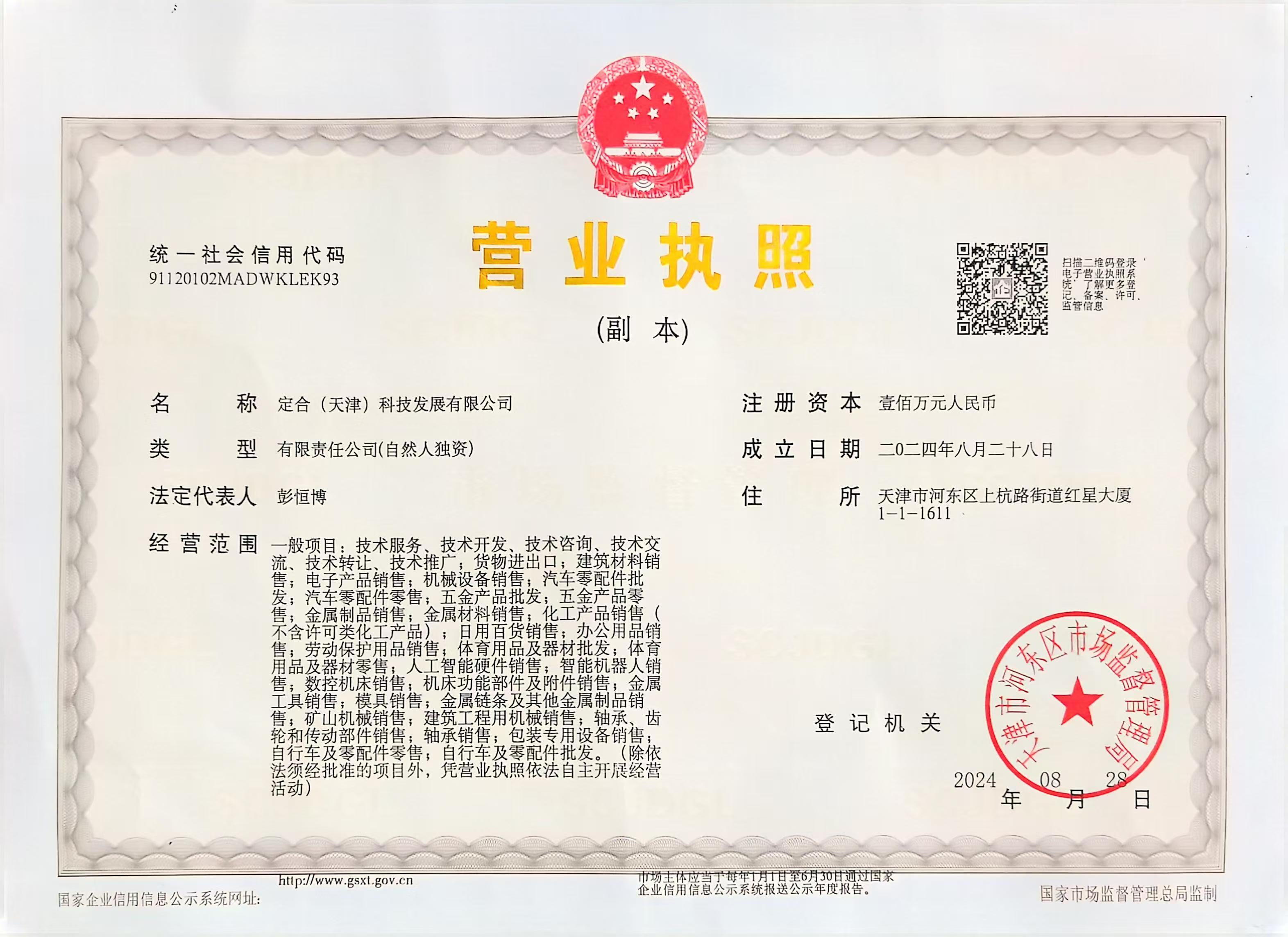
For steel fiber, the primary document is the CE certificate issued under EN 14889-1:2006. TingCo's CE certificate 1301 – CPR – 2456, issued by TSUS and valid from 13 May 2025 to 12 May 2030, covers steel fibres for concrete (Group I) for the reinforcement of concrete, mortars and cementitious mixes, and applies to models TC-07560-HNG, TC-07560-HHG, TC-05535-HNG and TC-07535-HNL. Buyers should also confirm ISO 9001 factory certification and alignment with ASTM A820 and ISO 13270, then require a Certificate of Analysis and a Mill Certificate for every batch. For PP fiber, request the applicable standard declaration directly from the supplier, along with a datasheet stating tolerances (for example ±10%). Buyers who need additional risk protection should verify the supplier's business license and 18-digit Unified Social Credit Code, request factory photos or a video factory audit, and structure payment as T/T 30% + 70% or L/C.
2. Can a China hooked-end steel fiber OEM work from my industrial flooring drawings?
Yes, where the supplier has both production capability and engineering support. TingCo provides OEM and ODM production services, including OEM production for private-label concrete fiber orders and custom steel fiber designs with logo branding, backed by a monthly production capacity of 2,000 tons. On the technical side, the team has studied TR34 and EFNARC design codes and partners with professional design teams to provide steel fiber floor design and tunnel segment design services, covering mix design advice and construction guidance. A documented example is the Thailand project for a wholesaler with technical support, where 2,000 tons of fiber were supplied over one year for heavy-duty industrial warehouse flooring, logistics park flooring and jointless flooring; the flooring was designed at a 20 kg/m³ dosage using 80/60 steel fiber at 1,200 MPa, and the pile layout was rearranged and optimized to suit the slab-on-pile structure. In practice, drawings-based OEM work should always be confirmed through a pre-production sample before mass production.
3. What drives the cost difference between steel fiber and PP fiber in tunnel and mining concrete?
Cost is driven by dosage and by the function the specification requires, not by price per kilogram alone. Steel fiber quantities are set by the mix design for the required performance: documented guidance is 20–40 kg/m³ for shotcrete, 15–30 kg/m³ for industrial floors and 10–30 kg/m³ for precast elements, and the project example cited above used 20 kg/m³ in industrial flooring. PP fiber is specified for early-age crack control, impermeability and durability rather than for residual flexural strength, so it enters the specification under a different set of requirements. On the commercial side, the order framework is the same regardless of fiber type at TingCo: MOQ 24 tons, which equals one 20'GP container, FOB or CIF delivery terms, and payment at 30% prepayment with 70% balance against copy of B/L. The lowest total cost therefore comes from specifying the correct fiber for the governing failure mode rather than from the lowest unit price.
4. Can we test both fibers before committing to mass production?
Yes, and the validation path is well defined. Buyers should request samples and send them to an independent laboratory for testing, then confirm pre-production samples before mass production begins. TingCo operates its own steel fiber reinforced concrete testing laboratory at the factory, where each product line undergoes beam bending, compression and toughness testing, so performance data comes from real concrete rather than from a datasheet claim alone. Flexural toughness is verified using EN 14651 three-point bending beam tests or ASTM C1609 beam tests, with ASTM C1550 panel tests as an alternative. Every shipment is then inspected before it leaves the factory — specifications, quantity and packaging — with in-line inspection and pre-shipment inspection including weighing and counting verification as the acceptance criteria.
5. What is the lead time for a steel fiber or PP fiber order, and what is the next step?
TingCo quotes a typical lead time of 10–15 days against a monthly production capacity of 2,000 tons, with a minimum order quantity of 24 tons (1×20'GP). After-sales support includes remote technical support, quality problem compensation and construction consulting, which matters most for first-time fiber projects where dosing, mixing or slab design is still being finalized. The practical next step for a tunnel segment or mining project is to send the design requirement — application, required performance, and any existing drawings — and request samples or a quotation so that the fiber type, dosage and certification path can be confirmed against the actual mix design.
Conclusion: Choose by Function, Then Verify by Evidence
Steel fiber and PP fiber are complementary tools for tunnel segments and mining concrete, not competing substitutes. Steel fiber — carbon steel wire, 0.5–1.0 mm diameter, 25–60 mm length, 1,100–2,100 MPa tensile strength, loose or glued — carries the load after cracking and is verified through EN 14651, ASTM C1609 or ASTM C1550 flexural toughness testing. PP fiber — acid and alkali resistant, non-absorbent, hydrophilically dispersing, with reported early-stage cracking reduction over 30%, impermeability improvement around 37% and service-life extension over 15% — controls early-age cracking, reduces water ingress and removes corrosion from the durability equation.
For a buyer, the sequence that prevents expensive mistakes is consistent: define the governing failure mode, match the fiber type to it, confirm the certified specifications and certification scope, validate with samples and independent testing, and only then confirm dosage, packaging and delivery terms. Where a project needs both functions, specify both and document each one separately in the acceptance criteria.
Request Samples, a Quotation or the Full Catalog
Tianjin TingCo Tech Co., Ltd. manufactures steel fiber (hooked-end loose, glued bundled, brass-coated micro and stainless steel micro), PP fiber and concrete reinforcement solutions, CE certified under EN 14889-1:2006, ISO 9001 certified, with 24,000 tons of annual output and 70% of production exported to the EU, Africa, Southeast Asia and the Middle East.
Website: www.tcfibers.com
Company brochure (download): TINGCO company profile and project introduction (PDF)
Email: info@tingco.co | Tel: +86-22-59785568 | WhatsApp: +86 189-2017-0726
Contact: Jackie Zhu | Address: B1F16, Hongxing Building, Linke West Road, Hedong, Tianjin 300161, China
Send us your tunnel segment or mining application details — fiber type, required performance and drawings if available — and we will confirm the specification, dosage recommendation and sample plan.