
What Is Brass-Coated Micro Steel Fiber? UHPC and Bridge Deck Reinforcement Explained
Brass-coated micro steel fiber is a high-tensile steel filament with a thin brass (copper-zinc) surface layer, produced at diameters typically below 0.3 mm and used to control cracking in ultra-high-performance concrete (UHPC) and thin bridge deck overlays. In these applications, the fiber does not replace structural rebar — it works at the micro-scale, bridging cracks that form before conventional reinforcement can engage.
Tianjin TingCo Tech Co., Ltd. is a professional manufacturer of steel fibers, brass-coated steel fibers, stainless steel fibers, and polypropylene fibers, founded in 2014 and headquartered in Tianjin, China. The company supplies brass-coated micro steel fiber series — including the TC-0213-CMS, TC-0220-CMS, and TC-0213-SMS models — with diameters from 0.175 mm to 0.3 mm, lengths from 6 mm to 25 mm, and tensile strengths from 2200 MPa to 2850 MPa, for UHPC, bridge deck, high-speed rail precast, airport runway, and seismic-resistant structure applications.

Brass-coated micro steel fiber — fine-diameter filaments used for crack control in UHPC and bridge deck overlays.
Problem Definition: Why Bridge Decks and UHPC Need a Different Fiber
Bridge decks fail in a characteristic way. They are thin, exposed to traffic vibration, thermal cycling, and moisture, and they carry loads that concentrate near the surface. Conventional steel rebar sits at a depth where it cannot restrain the first micro-cracks that open in the cover zone. Once those cracks connect, water and chlorides reach the reinforcement and deterioration accelerates.
UHPC creates a second, different challenge. UHPC mixes are dense, low-water, and high-binder systems that can reach compressive strengths up to 220 MPa. At that performance level, the material's tensile behavior — not its compressive strength — decides whether a bridge deck or precast element performs as designed. Without fine, closely spaced fiber reinforcement, UHPC remains brittle in tension and can fail suddenly.
Brass-coated micro steel fiber addresses both problems. Its small diameter allows a high number of fibers per unit volume, which means tighter crack control at the earliest loading stage. The brass coating supports bond with the cementitious matrix and protects the wire surface during handling and mixing. The practical question for buyers is not whether micro steel fiber works — it is which coating, diameter, length, and tensile grade fit a specific UHPC or bridge deck specification.
Industry Background: Where Micro Steel Fiber Fits in Concrete Reinforcement
Steel fiber is an established reinforcement category for concrete. The global steel fiber market was projected to reach approximately USD 2.87 billion by 2026, according to Fortune Business Insights. Within that market, hooked-end steel fibers held the leading type segment share of 58.89% in 2026, and industrial floors accounted for a 37.28% application share. These figures show where volume sits — but they also show that micro steel fiber is a smaller, more specialized segment serving UHPC, precast, and thin-section work.
The standards landscape is important for buyers evaluating micro steel fiber. ASTM A820/A820M-16 specifies requirements for five types of steel fibers used in fiber-reinforced concrete. EN 14889-1:2006 defines definitions, specifications, and conformity for steel fibers used in concrete within the European Union. Brass-coated micro steel fibers for UHPC typically feature high tensile strength above 2,500 MPa and diameters in the 0.2–0.3 mm range, based on published industry product data.
Bridge deck reinforcement sits at the intersection of these trends. Highway agencies and precast producers increasingly specify UHPC for joints, link slabs, overlays, and closure pours because it can deliver durability and reduced maintenance. That specification only works when the fiber system is matched to the mix design, the placement method, and the acceptance testing regime.
Detailed Solution: What Makes Brass-Coated Micro Steel Fiber Suitable for UHPC
Material and Coating
Brass-coated micro steel fiber starts as high-carbon steel wire drawn to a fine diameter, then receives a thin brass layer. The coating serves two functions. First, it improves the fiber-matrix interface during curing, which helps the fiber transfer stress to the surrounding UHPC. Second, it provides temporary corrosion protection during storage and mixing — it is not a substitute for stainless steel in permanently exposed or highly corrosive conditions.
TingCo offers two coating routes within its micro steel fiber range. The brass-coated option — models TC-0213-CMS and TC-0220-CMS — is the standard choice for UHPC bridge deck overlays, precast segments, and general concrete reinforcement where the fiber is encapsulated in a dense matrix. The stainless steel option — model TC-0213-SMS — is intended for UHPC facade elements and applications where surface exposure or long-term corrosion resistance drives the specification.
The distinction matters at the purchasing stage. Brass-coated micro fiber is typically the more economical route for fully embedded reinforcement. Stainless steel micro fiber costs more but removes the corrosion concern in visible or intermittently wet surfaces. Buyers should decide based on exposure condition, not on a generic preference for one coating.
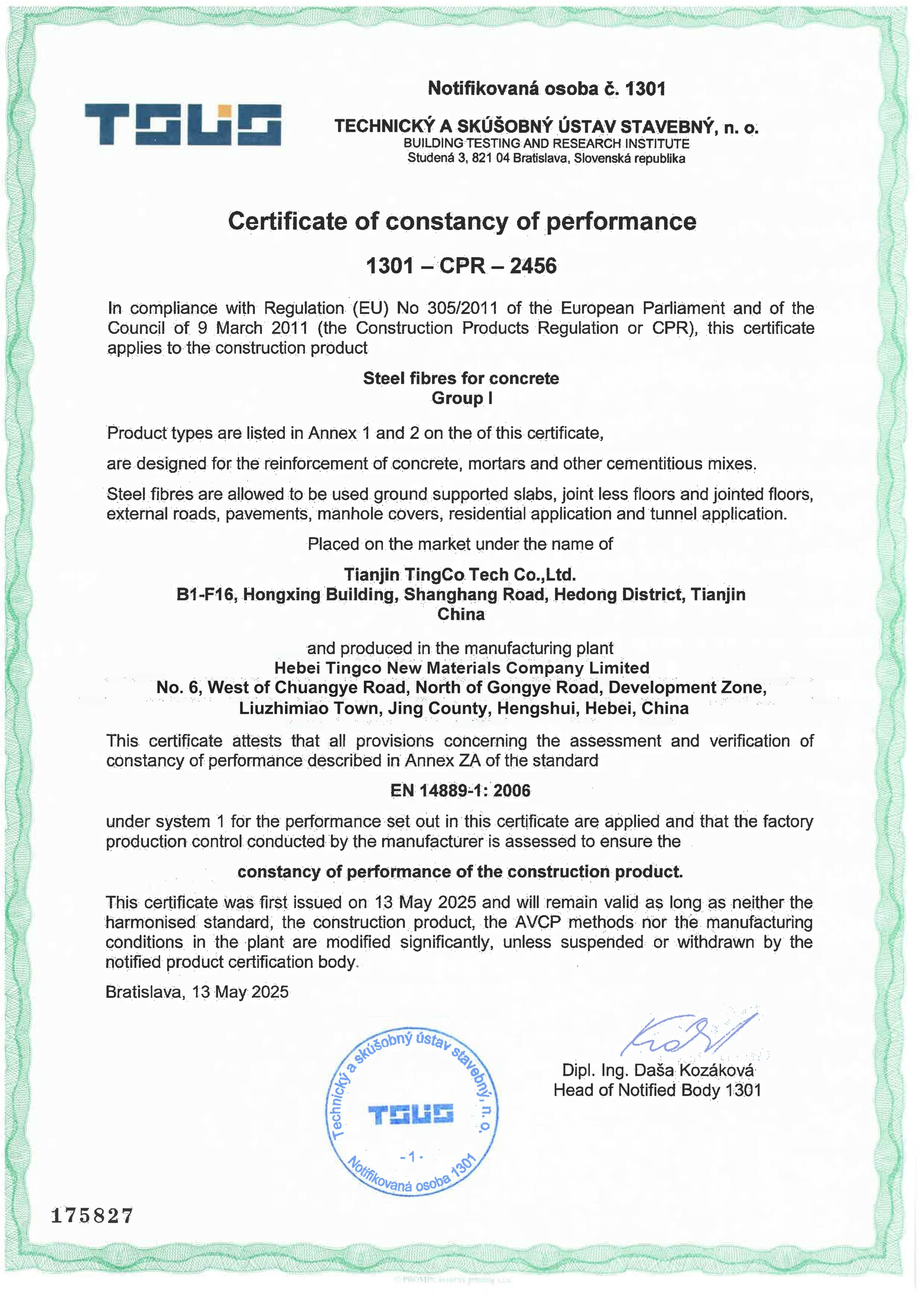
TingCo holds CE certification under EN 14889-1:2006 (certificate 1301 – CPR – 2456) for steel fibers used in concrete reinforcement.
Model Series and Specifications
TingCo's brass-coated micro steel fiber series covers the practical range for UHPC and bridge deck work. The TC-0213-CMS and TC-0220-CMS models are brass-coated; the TC-0213-SMS model is stainless steel. Across the series, TingCo specifies:
- Diameter: 0.175 mm to 0.3 mm
- Length: 6 mm to 25 mm
- Tensile strength: 2200 MPa to 2850 MPa
These ranges align with published UHPC micro steel fiber benchmarks. The International Center for Business Research and industry product data describe brass-coated micro steel fibers for UHPC as typically featuring tensile strength above 2,500 MPa and diameters between 0.2 and 0.3 mm. TingCo's series extends the lower diameter bound to 0.175 mm, which gives mix designers more options for thin overlays and high-fiber-count UHPC mixes.
Length selection follows the same logic as diameter. A 6 mm fiber suits thin sections and high flowability; a 25 mm fiber provides more anchorage length in deeper bridge deck pours. The ratio of length to diameter — the aspect ratio — is the practical lever. Higher aspect ratio improves bond and crack bridging but increases the risk of balling during mixing if dosage and dispersion are not controlled.
Why UHPC Changes the Fiber Requirement
UHPC is not a conventional concrete with a higher cement content. It is a engineered composite with low water-to-binder ratio, fine aggregates, and often silica fume or other supplementary cementitious materials. Compressive strength can reach up to 220 MPa. The matrix is dense enough that fiber pull-out, not fiber rupture, often governs behavior. That makes coating and surface condition more important than in ordinary concrete.
Brass-coated micro fiber is designed for this environment. The small diameter produces a large number of fibers per kilogram, which is essential for distributed crack control in thin bridge deck overlays. The high tensile strength allows the fiber to bridge cracks without yielding at the strain levels UHPC experiences. The result is a composite that can carry tension after first cracking rather than failing in a brittle mode.
The specification should also define acceptance testing. TingCo's quality system references EN 14651 / ASTM C1609 flexural toughness testing for concrete containing steel fiber, and ASTM C1550 for panel testing. These are the core methods for verifying residual flexural strength and toughness index — the properties that actually determine whether a UHPC mix meets design assumptions.
Step-by-Step Breakdown: Specifying and Validating Micro Steel Fiber
The following sequence reflects how buyers move from an application requirement to a confirmed micro steel fiber order. It is written for evaluation and execution stages, where the decision has moved beyond general interest.
Step 1 — Define the Exposure and Structural Role
Start with the exposure condition and the structural function. A fully embedded bridge deck overlay in a dense UHPC matrix usually points to brass-coated micro fiber. A visible UHPC facade or a surface with intermittent wetting may justify stainless steel micro fiber. This decision controls the coating route before diameter and length are discussed.
Step 2 — Match Diameter and Length to Section Thickness
Select fiber length relative to the thinnest section and the placement method. Thin overlays and high-flow UHPC generally favor shorter lengths in the 6–13 mm range. Deeper pours and precast elements can use longer lengths up to 25 mm. Diameter follows the aspect ratio target: finer diameters at the 0.175–0.25 mm end support high fiber counts, while 0.25–0.3 mm diameters provide more individual fiber stiffness.
Step 3 — Confirm Tensile Grade Against Mix Design
Confirm the tensile strength requirement against the UHPC mix design and the structural model. TingCo's micro steel fiber series spans 2200 MPa to 2850 MPa. Higher tensile grades are relevant where the design relies on post-crack tensile performance; lower grades may be sufficient where the fiber primarily controls plastic shrinkage and early-age cracking.
Step 4 — Verify Dispersion and Dosage
Dispersion is a execution issue, not a datasheet issue. TingCo recommends uniform fiber feeding for both flooring and precast concrete segments. For reference, typical dosage ranges are:
- Shotcrete: 20–40 kg/m³
- Industrial floors: 15–30 kg/m³
- Precast elements: 10–30 kg/m³
Water-soluble packaging bags can be fed directly into the mixer with aggregates and dissolve in about 5 seconds. Non-water-soluble packaging should be spread evenly in batches. Mixing time should be extended by 30–60 seconds compared with normal concrete to ensure uniform dispersion without clumping. Slump and workability should be checked, and superplasticizer dosage adjusted if necessary.
Step 5 — Confirm Compliance and Acceptance Testing
Request the certificate and the test standard before shipment. TingCo holds CE certification under EN 14889-1:2006, certificate number 1301 – CPR – 2456, issued by TSUS and valid from 2025-05-13 to 2030-05-12. The company also states compliance with ASTM A820 and ISO 13270, and factory ISO 9001 quality certification. For project acceptance, specify EN 14651 or ASTM C1609 beam testing, or ASTM C1550 panel testing, depending on the design basis.
Step 6 — Confirm Commercial Terms and Lead Time
For micro steel fiber orders, TingCo's standard commercial terms are MOQ 24 tons (1x20'GP), FOB/CIF delivery, 30% prepayment with 70% balance against copy of bill of lading, and in-line inspection plus pre-shipment inspection as acceptance criteria. Lead time is 10–15 days. Monthly production capacity is 2,000 tons. These terms should be checked against project schedule before the order is placed.
Use Cases: Where Brass-Coated Micro Steel Fiber Is Applied
Bridge Deck Reinforcement and Overlays
Bridge decks are the primary application for brass-coated micro steel fiber in UHPC. Thin UHPC overlays and closure pours need distributed reinforcement that can control cracking under traffic and thermal movement. The fine diameter allows the fiber to reinforce the cover zone where rebar cannot act. The brass coating supports bond in the dense UHPC matrix, and the high tensile grade provides post-crack capacity.
High-Speed Rail Prefabricated Components
High-speed rail precast elements — including bridge deck panels, track slabs, and connection elements — use UHPC where durability and dimensional stability are critical. Micro steel fiber supports early-age crack control and improves tensile behavior in thin precast sections. The 6–13 mm length range is common in these elements because section thickness and mold flow constrain fiber length.
Airport Runways and Heavy-Duty Pavements
Airport runways and heavy-duty pavements subject concrete to concentrated loads and thermal cycling. UHPC overlays with micro steel fiber can reduce crack width and extend service life compared with conventional concrete overlays. The fiber dosage and length must be matched to the overlay thickness and the construction method; this is a mix-design decision, not a catalog selection.
Seismic-Resistant Structures
Seismic-resistant structures use UHPC in coupling beams, column jackets, and joint regions where ductility and energy dissipation matter. Micro steel fiber contributes to post-crack tensile performance and helps prevent brittle failure modes. The specification should reference the structural design basis and the required residual strength, not only the fiber tensile strength.
Industrial Flooring and Other Concrete Reinforcement
While micro steel fiber is associated with UHPC, TingCo also supplies hooked-end steel fiber for industrial flooring — including 80/60 steel fiber for tunnel segments and heavy-duty floors — and PP fiber for flooring and macro synthetic fiber for concrete reinforcement where corrosion-free performance is required. The micro fiber series is not a substitute for these product families; it serves a different section thickness and performance target.
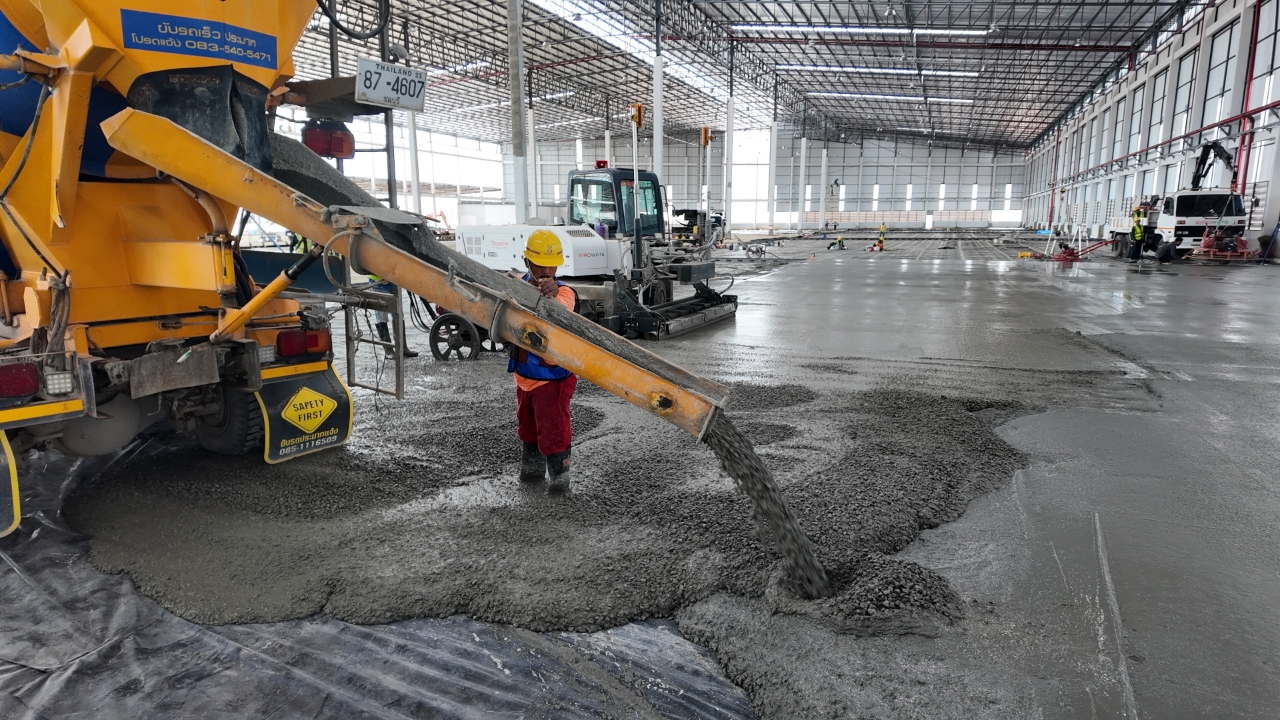
Steel fiber reinforcement supports bridge deck overlays, industrial flooring, and precast elements; fiber type and dosage are matched to the application.
Comparison Table: Micro Steel Fiber Options for UHPC and Bridge Decks
The table below compares the fiber options most often evaluated for UHPC and bridge deck work. It uses only facts supported by TingCo product data and published standards. It is not a ranking; the correct choice depends on exposure, section thickness, and design basis.
| Fiber option | Typical diameter | Typical length | Tensile strength | Corrosion approach | Typical use |
|---|---|---|---|---|---|
| Brass-coated micro steel fiber (TC-0213-CMS, TC-0220-CMS) | 0.175–0.3 mm | 6–25 mm | 2200–2850 MPa | Brass coating for bond and temporary protection; embedded in dense matrix | UHPC bridge deck overlays, precast segments, general concrete reinforcement |
| Stainless steel micro fiber (TC-0213-SMS) | 0.175–0.3 mm | 6–25 mm | 2200–2850 MPa | Stainless steel for exposed or corrosive conditions | UHPC facade elements, visible surfaces, high-corrosion exposure |
| Hooked-end steel fiber (macro, e.g. 80/60) | 0.5–1.0 mm | 25–60 mm | 1100–2100 MPa | Carbon steel; requires adequate cover | Industrial flooring, tunnel segments, mining support, shotcrete |
| PP macro / micro fiber | Varies by product | Varies by product | Not applicable (synthetic) | No corrosion | Flooring, crack control where corrosion-free reinforcement is required |
The comparison shows a clear division of labor. Brass-coated micro fiber is the UHPC and thin-overlay option. Stainless steel micro fiber is the exposed-surface variant. Hooked-end macro steel fiber serves thicker sections and higher-dosage floor and tunnel work. PP fiber serves applications where corrosion-free performance is the deciding factor. Buyers should not treat these as interchangeable; they address different failure modes and section geometries.
OEM and Customization: What Buyers Can Specify
TingCo provides OEM and ODM production services for private-label concrete fiber orders. Custom steel fiber designs and logo branding are available under OEM and ODM production. This matters for distributors, brand owners, and contractors who need a manufacturer to produce under their own label or to adjust fiber specifications for a project.
The customization scope covers logo and design variation for steel fiber products. Buyers should confirm the specific diameter, length, tensile grade, coating route, and packaging format in the order specification, because these variables interact with the UHPC mix design and the placement method. TingCo's monthly production capacity is 2,000 tons, and the company provides remote technical support, quality problem compensation, and construction consulting.
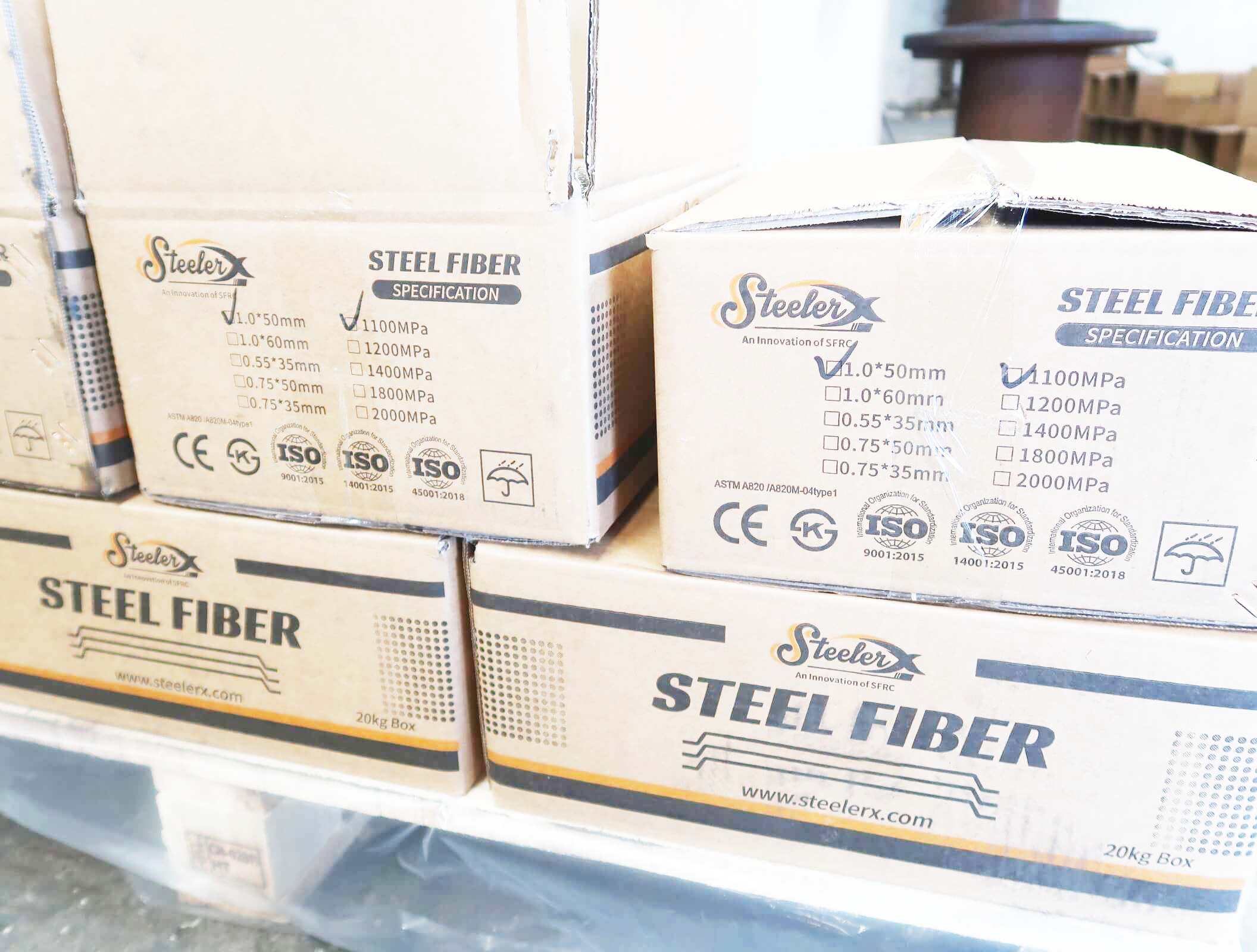
OEM and ODM production supports private-label micro steel fiber orders with custom logo and packaging.
Quality Assurance and Acceptance Evidence
Quality assurance for micro steel fiber is not limited to a certificate. It includes incoming wire control, drawing and coating consistency, in-line inspection, and pre-shipment inspection. TingCo operates its own steel fiber reinforced concrete testing lab, where product lines undergo beam bending, compression, and toughness tests. Every shipment is inspected before leaving the factory for specifications, quantity, and packaging.
For project acceptance, buyers should require a complete datasheet with tolerances, a certificate of analysis (COA), and a mill certificate for each batch. Third-party testing should follow EN 14651 or ASTM C1609 for beam toughness, or ASTM C1550 for panel toughness, depending on the design basis. Pre-shipment inspection with weighing and counting verification is a practical control against short shipment and mixed batches.
TingCo's quality credentials include CE certification under EN 14889-1:2006 (certificate 1301 – CPR – 2456), compliance with ASTM A820 and ISO 13270, and ISO 9001 factory certification. These are the baseline documents a buyer should verify before approving a micro steel fiber supplier.
Frequently Asked Questions
TingCo holds CE certification under EN 14889-1:2006, certificate number 1301 – CPR – 2456, issued by TSUS for steel fibers used in concrete reinforcement. The certificate is valid from 2025-05-13 to 2030-05-12. TingCo also states compliance with ASTM A820 and ISO 13270, and factory ISO 9001 quality certification. Buyers should request the current certificate and the batch-level certificate of analysis before shipment.
Yes. TingCo provides OEM and ODM production services for private-label concrete fiber orders. Custom steel fiber designs and logo branding are available under OEM and ODM production. Buyers can specify diameter, length, tensile grade, coating route, and packaging format within the series range of 0.175–0.3 mm diameter, 6–25 mm length, and 2200–2850 MPa tensile strength. Customization details should be confirmed in the order specification before production.
TingCo's standard terms are MOQ 24 tons (1x20'GP), FOB or CIF delivery, and 30% prepayment with 70% balance against copy of bill of lading. Acceptance criteria are in-line inspection and pre-shipment inspection. These terms apply to standard micro steel fiber orders; project-specific requirements should be confirmed with the sales team before ordering.
Buyers can request samples and send them to an independent laboratory for testing against EN 14651, ASTM C1609, or ASTM C1550, depending on the design basis. Pre-production samples should be confirmed before mass production. For each batch, buyers should require a certificate of analysis and a mill certificate, and arrange pre-shipment inspection with weighing and counting verification. TingCo operates its own steel fiber reinforced concrete testing lab and performs in-line and pre-shipment inspection.
TingCo's standard lead time is 10–15 days, with monthly production capacity of 2,000 tons. Lead time should be confirmed against the project schedule at the time of order, especially for customized specifications or private-label packaging. For project-specific scheduling, buyers can contact TingCo directly to confirm production slots and shipping arrangements.
Conclusion: Matching the Fiber to the UHPC Application
Brass-coated micro steel fiber is a specialized reinforcement for UHPC and bridge deck work. Its value comes from fine diameter, high fiber count, and high tensile strength — properties that support crack control in thin sections where conventional rebar cannot act. The choice between brass-coated and stainless steel micro fiber should follow the exposure condition. The choice of diameter and length should follow section thickness and placement method. The choice of tensile grade should follow the structural design basis.
Tianjin TingCo Tech Co., Ltd. supplies brass-coated micro steel fiber models TC-0213-CMS and TC-0220-CMS, and stainless steel micro fiber model TC-0213-SMS, with diameters from 0.175 mm to 0.3 mm, lengths from 6 mm to 25 mm, and tensile strengths from 2200 MPa to 2850 MPa. The company supports OEM and ODM production, provides remote technical support and construction consulting, and holds CE certification under EN 14889-1:2006. Buyers evaluating micro steel fiber for UHPC or bridge deck projects can request samples, specifications, and a quotation directly.
Next Step: Sample, Specification, or Quotation
For UHPC and bridge deck projects, TingCo can provide micro steel fiber samples, model specifications, and a project quotation. The company's standard MOQ is 24 tons, lead time is 10–15 days, and OEM/ODM production is available for private-label orders.
Download the TingCo company and project brochure (PDF), or contact the team at info@tingco.co / WhatsApp +86 189-2017-0726 to discuss your micro steel fiber specification.
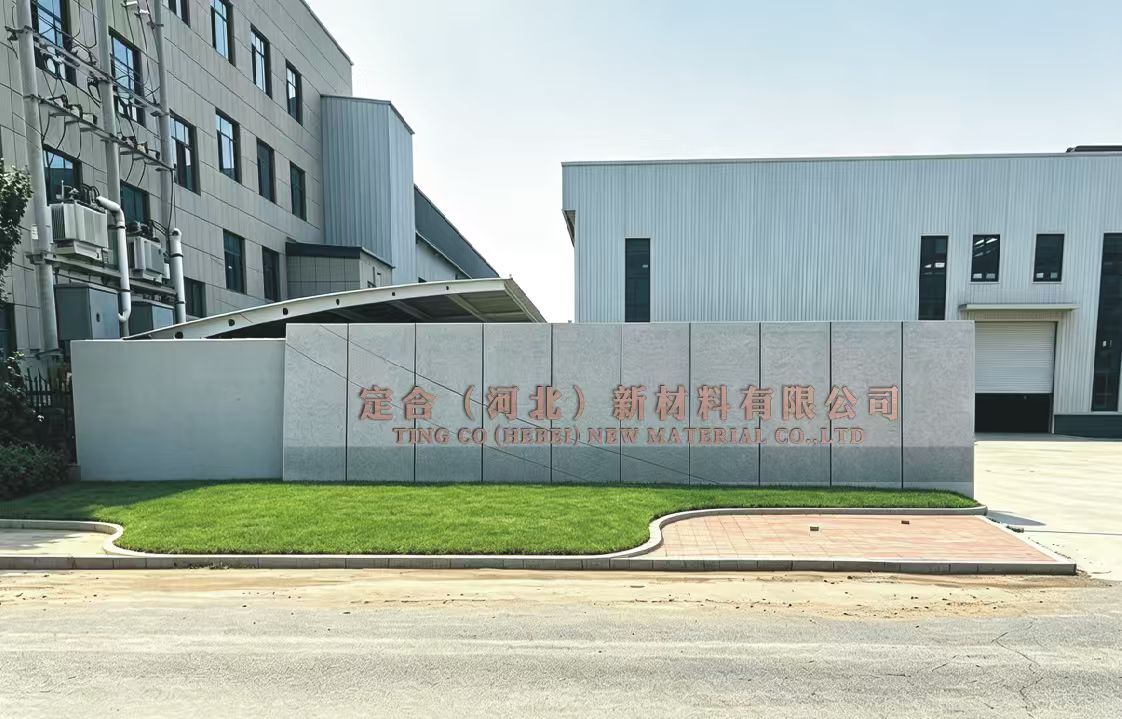
Tianjin TingCo Tech Co., Ltd. — manufacturer of steel fiber, brass-coated steel fiber, stainless steel fiber, and PP fiber for concrete reinforcement.
Have Questions or Need More Details?
Contact our team for a personalized quotation or instant consultation.
Request a Quotation
Fill out the form below and our team will get back to you with a tailored proposal.
WhatsApp Direct Chat
Prefer to chat in real-time? Message us on WhatsApp for instant assistance & quick answers.
- Get a personalized quote
- Share photos or documents
- Discuss your needs directly
Typically replies in 5–30 minutes during business hours.