
25/50 kg PP Bags vs Custom Packaging for Magnesium Sulphate
Fertilizer Orders
The packaging question is not really a branding question at the start. It is an order-shape question. The right format depends on who sells the material onward, how large the order is, whether the order is built around a full container load, how lead time is quoted, and whether the buyer needs the supplier to produce under the buyer's own brand (OBM production).
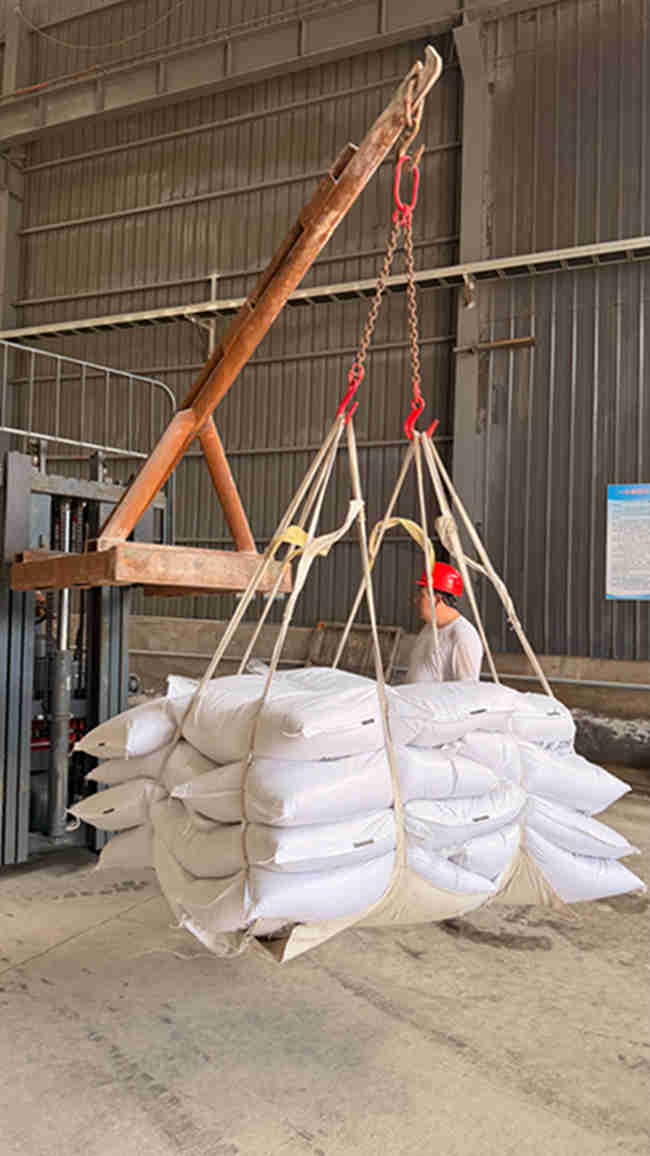
Tianjin Xingyu Fertilizer Industry Co., Ltd. (XYF) is a magnesium sulphate manufacturer established in 1993 and located in Chenguantun Town Industrial Park, Jinghai District, Tianjin, China. The company produces magnesium sulphate anhydrous, Kieserite, magnesium sulphate monohydrate and magnesium sulphate heptahydrate, and packs them in 25 kg or 50 kg PP woven bags or as per customer requirements.
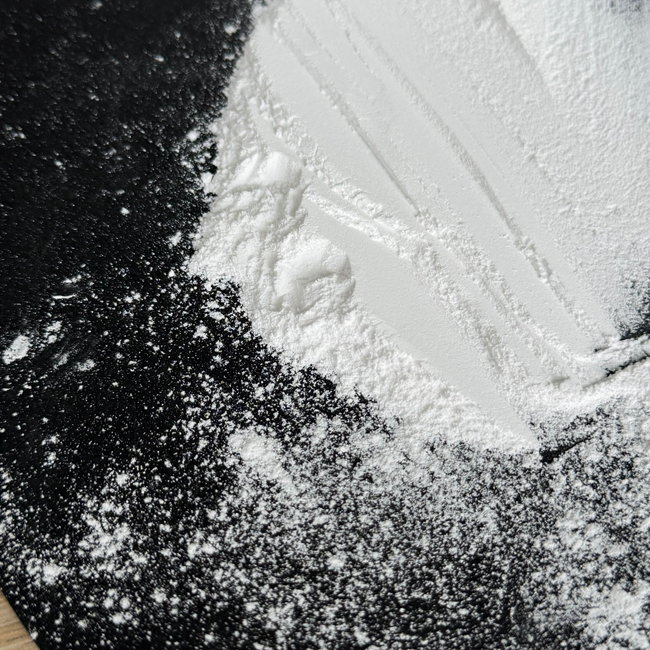
What Counts as Standard and What Counts as Custom
The two options are easier to compare once both are defined in operational terms rather than visual terms.
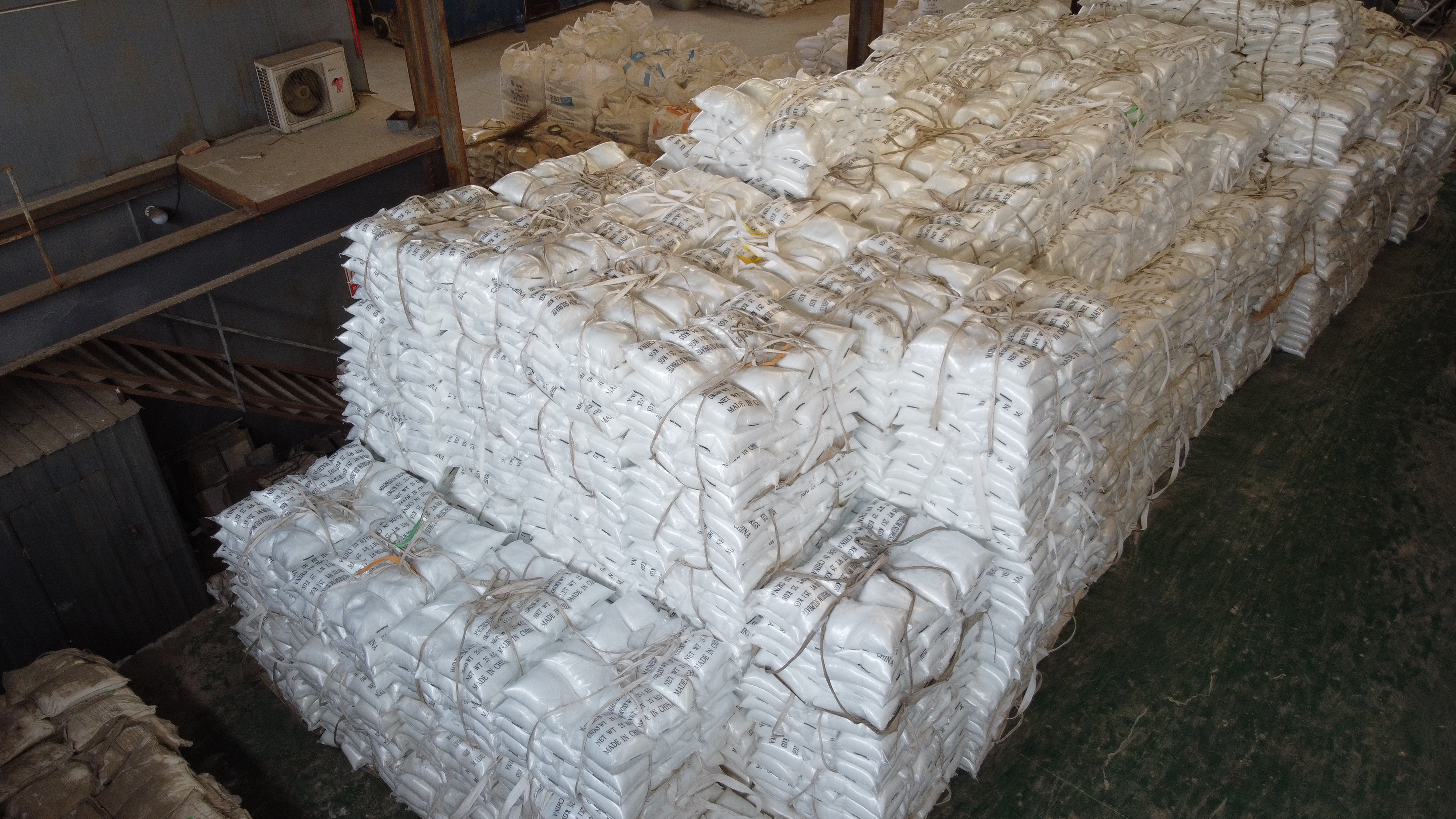
Standard packaging is the factory default: a 25 kg or 50 kg PP woven bag used across the magnesium sulphate range, with the manufacturer's own bag print. Nothing has to be approved before production, the bag is already in use across multiple grades, and the buyer receives a pack that is consistent with the supplier's normal export flow.
Custom packaging is any departure from that default. Because the packing specification is 25 kg or 50 kg PP woven bags customizable per customer requirements, customization can include buyer-branded print, buyer-specified labels, buyer artwork, or shipping marks that comply with destination requirements. The material inside does not change; the identity of the pack does.
The distinction matters because the cost and the delay sit almost entirely on the packaging side, not the chemistry side. A grade change is a production scheduling question. A bag change is an artwork, printing and approval question.
Why This Decision Shows Up in Real Orders
Buyers tend to arrive at this decision after one of two failures.
Over-customizing a trial order. A first order is printed with a specific brand, a specific language and a specific analysis panel before the buyer knows which grade actually moves in that market. Printed bags are grade-specific and market-specific. If the monohydrate sells and the heptahydrate does not, the leftover printed bags cannot simply be moved to another product line.
Under-customizing a resale order. A distributor receives 25 kg bags carrying the manufacturer's standard print, with no buyer brand and no local-language application guidance. To present the product under its own label, the distributor then repacks — which means opening sealed moisture-proof packaging, exposing the product to ambient humidity, and adding a handling step that the original packing was designed to avoid.
Industry Background: A Commodity Where the Bag Travels Further Than the Product
Magnesium sulphate is a specification-driven commodity. Global market value was reported at USD 1.8 billion in 2025 and projected at USD 1.9 billion in 2026, according to aggregated market research published in 2026. Agriculture and fertilizers accounted for approximately 41.6% of global magnesium sulfate market share in 2025, and heptahydrate (Epsom salt) accounted for 54% of global commercial production in the same year.
Trade is concentrated. In 2024, China was the leading exporter of magnesium sulphate, accounting for USD 149 million in export value, according to OEC data based on UN Comtrade. For EU-bound volumes, magnesium sulphate is registered in the ECHA REACH database with an annual tonnage band of 100,000 to 1,000,000 tonnes.
What this means for packaging is simple: the product is largely interchangeable between qualified suppliers, and the pack is where the buyer's identity, the destination market's requirements and the end user's application instructions actually live. That is why packaging choices surface so early in sourcing conversations, well before price is finalized.
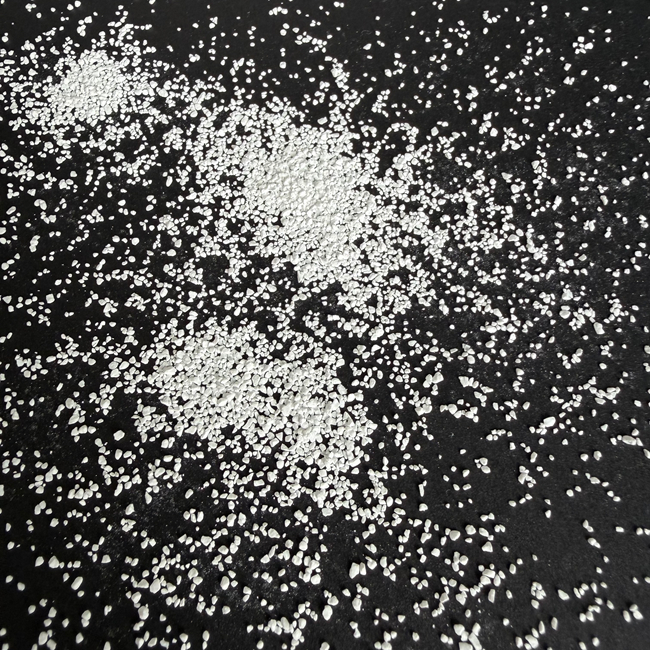
The four grades also behave differently in a bag. Magnesium sulphate anhydrous is a white powder or granular material used for soil application and as an industrial raw material. Kieserite is an off-white granular material used for soil application, with low hygroscopicity and anti-caking behaviour that suits bulk blending. Magnesium sulphate monohydrate is a white powder or granular material used for soil application, foliar spray and as an industrial raw material. Magnesium sulphate heptahydrate is a white granular crystal used for soil application, foliar spray, fertigation and as an industrial raw material, and is suitable for fertigation systems.
Option A: Standard 25 kg / 50 kg PP Woven Bags
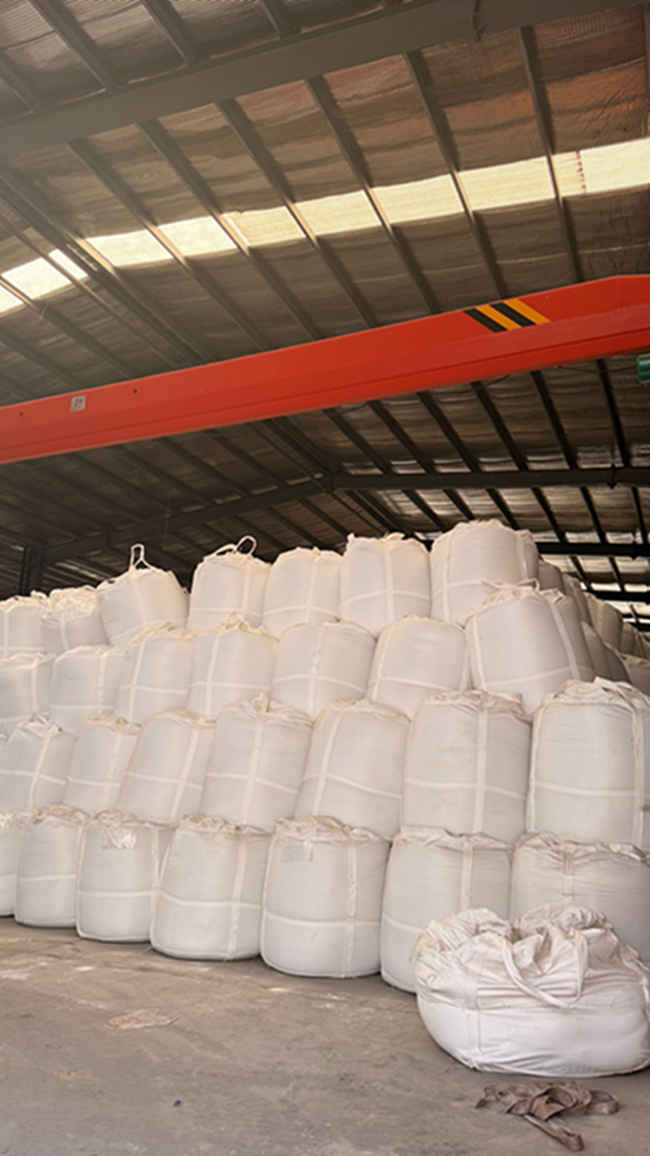
Standard PP woven bags are the default for production orders because they remove decisions from the critical path.
- No artwork dependency. Nothing needs to be designed, proofed or approved, so the quotation and the production slot are not waiting on a design file.
- Grade-agnostic. One bag format covers anhydrous, Kieserite, monohydrate and heptahydrate, which keeps a multi-grade container simple to plan.
- Correct for internal use. Industrial raw material buyers, compound fertilizer blenders and water treatment users typically consume the material inside their own process, where the bag print has no commercial function.
- Safer for first orders. A trial container can be booked before the buyer has committed to a brand, a language or an analysis panel design.
- Faster to quote. Lead time can be quoted directly against grade, quantity and packing format, without an intermediate artwork milestone.
The limitation is equally clear: a standard bag carries no buyer identity. If the product is going onto a shelf, into a dealer network, or into a tender where the label is part of the deliverable, the standard bag will need repacking or over-labeling downstream.
Option B: Custom Packaging and Labels
Customization is where the supplier relationship becomes a production relationship rather than a commodity purchase. The packing specification is 25 kg or 50 kg PP woven bags customizable per customer requirements, which means the buyer can define the pack instead of accepting it.
- Brand control. The buyer's name, logo and product designation appear on the bag that reaches the end user, not on an over-label.
- Language and application fit. A foliar spray or fertigation product needs different on-pack guidance than a soil application product, and the label can be written for the destination market.
- Market-specific versions. Where the same grade ships to several markets, label versions allow one production run to serve several destinations without changing the material.
- Shipping mark compliance. Sealed moisture-proof packaging with shipping marks that comply with destination requirements can be built into the packing step rather than added at the port.
- Documentation alignment. COA and MSDS are supplied with the order, and a custom label can be checked against the COA before printing so the declared analysis and the bag print do not diverge.
The limitation is timing and commitment. Custom packaging introduces an artwork milestone, which means the lead time clock starts later, and it usually needs a larger run to be economically sensible. It also front-loads market decisions: a printed bag is a bet on a grade, a language and a design at the same time.
Side-by-Side Comparison
| Decision factor | Standard 25 kg / 50 kg PP woven bags | Custom packaging and labels |
|---|---|---|
| What the buyer receives | Factory-standard PP woven bag in 25 kg or 50 kg | PP woven bag with buyer print or label, as per customer requirements |
| Brand control at the end user | Supplier identity only | Buyer brand, language and product designation |
| Artwork approval | Not required | Required before printing |
| Quotation path | Quoted directly against grade, quantity and bag format | Quoted against confirmed artwork, grade, quantity and label version |
| Order sizing | Fits a container-based production order with mixed grades | Needs a larger run to absorb print set-up and label versions |
| Flexibility across markets | One bag serves all destinations | Separate label version per market or language |
| Repacking risk | Higher, if the buyer resells under its own brand | Lower, because the pack arrives sale-ready |
| Documentation | COA and MSDS supplied with the order | COA and MSDS supplied, plus label content checked against the COA |
| Best fit | Industrial raw material users, blenders, first orders, internal consumption | Distributors, brand owners, dealer networks, tender supply |
| Main risk | No differentiation; downstream repacking | Artwork error; longer lead time; printed stock tied to one grade |
Step-by-Step: How to Decide in Seven Steps
A short sequence removes most of the ambiguity. Each step narrows the packaging choice rather than reopening it.
Step 1 — Define what the bag has to do
If the material is consumed inside the buyer's own process, the bag is a handling unit and standard packing is sufficient. If the bag is resold, presented to a dealer, or submitted in a tender, the bag is a marketing and compliance asset and the format has to be decided before the order is placed.
Step 2 — Fix the grade and the physical form
Powder and granular grades behave differently in handling, and the four magnesium sulphate grades have different physical forms: anhydrous as white powder or granular, Kieserite as off-white granular, monohydrate as white powder or granular, and heptahydrate as white granular crystal. The grade determines whether the order is a single-SKU container or a mixed one, which directly affects how many bag versions are needed.
Step 3 — Choose the bag weight
Both 25 kg and 50 kg formats are standard. The choice is normally a handling decision in the destination market rather than a cost decision, and it does not change the chemistry or the documentation.
Step 4 — Decide print versus label
Printed bags give the strongest brand presence but lock the pack to one design. Labels allow the same physical bag to serve several markets and can be revised between runs. For a buyer supplying multiple destinations from one factory, the label route usually keeps more options open.
Step 5 — Size the order against the container
Production orders are planned around full container loads rather than loose pallets, and the exact minimum for a given grade and bag format is confirmed in the quotation, because it moves with bag size, print set-up and the number of SKUs in the container. A buyer comparing a standard bag quote with a custom packaging quote should confirm that both are quoted on the same container basis.
Step 6 — Ask for the lead time to be itemized
For standard bags, lead time is essentially production and shipping time. For custom packaging, the total includes artwork confirmation and print set-up before production. Asking for the split — artwork, production, loading — makes the two options comparable instead of merely different.
Step 7 — Confirm documentation and pre-shipment checks
COA and MSDS are supplied with the order. Sealed moisture-proof packaging and shipping marks that comply with destination requirements should be confirmed in writing. Where the buyer's procurement policy requires third-party inspection before shipment, that requirement should be raised at the quotation stage so it can be scheduled into the pre-shipment timeline rather than added afterwards.
When Each Option Fits
The following situations reflect the applications where magnesium sulphate fertilizers are actually used: soil application, foliar spray and fertigation, plus industrial raw material use, water-soluble fertilizer formulation, NPK blending and water treatment.
Private-label distributor supplying dealers
Custom packaging is the correct choice. The distributor's brand, local-language dosage guidance and shipping marks have to arrive on the bag, and repacking at the destination adds cost and exposes the material to humidity after the moisture-proof seal is opened.
NPK blender or compound fertilizer producer
Standard bags usually fit. The material is consumed inside the blending process, and granular Kieserite or granular monohydrate is bought on analysis and particle behaviour rather than on bag design.
Fertigation and foliar product formulator
Standard bags are adequate as an input, but if the formulator sells the finished soluble product, the pack of the input does not need branding. Heptahydrate, which is suitable for fertigation systems, is commonly ordered this way.
Industrial raw material buyer
Standard bags, almost without exception. Anhydrous magnesium sulphate used as an industrial raw material moves into a process, not onto a shelf, and the buyer's internal handling labels are applied at the plant.
First trial order in a new market
Standard bags first, custom packaging second. A trial container confirms the grade that moves before the buyer commits to a printed design that cannot be transferred to another product.
Tender or institutional supply
Custom packaging is usually mandated, because the buyer's name, the delivery lot and the shipping marks are contractual requirements rather than marketing preferences.
Frequently Asked Questions
1. What documents are supplied with a magnesium sulphate fertilizer order, and do they match the bag?
COA and MSDS are supplied with the order. Packaging is sealed and moisture-proof, and shipping marks are prepared to comply with destination requirements. For EU destinations, magnesium sulphate is registered in the ECHA REACH database with an annual tonnage band of 100,000 to 1,000,000 tonnes. Where a custom label is used, the declared analysis on the label should be checked against the COA before printing, so the bag and the certificate state the same specification.
2. Can the bags and labels be customized, and can production be run under the buyer's own brand?
Yes. The packing specification is 25 kg or 50 kg PP woven bags customizable per customer requirements. Tianjin Xingyu Fertilizer Industry Co., Ltd. is an original manufacturer that handles R&D, production and sales of magnesium sulphate series products, with automated production lines, an ISO quality management system and an independent standardized testing laboratory. Custom print, labels and shipping marks are defined per order, which is what allows a buyer to run an OBM-style production order rather than buying a generic pack.
3. How does the packaging choice affect the order budget?
The material cost is the same in both cases; the difference sits in set-up and commitment. Standard bags carry no artwork cost and can be quoted immediately. Custom packaging adds an artwork and print set-up step and generally needs a larger run to be economic, and printed bags are tied to one grade and one market. On a per-tonne basis the comparison only becomes meaningful when both quotes are built on the same container volume and the same number of label versions.
4. Can a buyer check the bag and label before mass production?
A buyer should request an artwork proof before printing, and a filled bag sample where the pack design is new to the market. Because the material itself is tested in the company's own standardized laboratory, the sample review can cover two separate questions: whether the product matches the declared analysis, and whether the bag matches the approved artwork. Keeping those two checks separate prevents a label issue from being mistaken for a quality issue.
5. How is lead time quoted for a custom packaging order, and what makes it longer than a standard bag order?
Lead time for a custom packaging order is quoted after the artwork is confirmed, because printing cannot be scheduled against an unapproved design. A standard bag order skips that milestone, so the quoted time reflects production and shipping only. The practical way to compare the two is to ask for the lead time broken into artwork confirmation, production and loading, then match it against the date the container has to be booked. Tianjin Xingyu Fertilizer Industry Co., Ltd. is located 80 km from Tianjin Port and 15 km from the railway freight yard, which keeps the loading stage short once production is complete. To confirm the packing format, artwork route and container basis for a specific grade, send the requirement through the quotation request and the packing details will be confirmed against the order.
Conclusion
Standard 25 kg or 50 kg PP woven bags reduce complexity, and that is their value: no artwork milestone, faster quotation, one bag format across four grades, and a clean fit for industrial users, blenders and first orders. Custom packaging justifies the production order when the bag has to carry the buyer's brand, language and shipping marks to the end user, and when the buyer is prepared to commit to a grade-specific print run in exchange for pack-level control.
The deciding test is not visual. It is whether the bag is opened again before the product is sold. If it is, customize. If it is not, keep the standard bag and put the effort into grade selection, documentation and container planning instead.
Next step: confirm the packing format against your order
Send the grade, bag weight (25 kg or 50 kg), order volume and whether the pack needs buyer print, labels or destination shipping marks. The reply will confirm the packing specification, the documentation set (COA and MSDS) and the lead time split between artwork, production and loading.
Product catalogue (PDF): XYF-Catalogue.pdf
Website: www.xyfertilizer.com
Email: Jenny@xingyufertilizer.com | Tel / WhatsApp: +86 155-2237-7326
Tianjin Xingyu Fertilizer Industry Co., Ltd. — Chenguantun Town Industrial Park, Jinghai District, Tianjin, China. Established 1993. Main markets include Pakistan, Japan, Korea and New Zealand.
Have Questions or Need More Details?
Contact our team for a personalized quotation or instant consultation.
Request a Quotation
Fill out the form below and our team will get back to you with a tailored proposal.
WhatsApp Direct Chat
Prefer to chat in real-time? Message us on WhatsApp for instant assistance & quick answers.
- Get a personalized quote
- Share photos or documents
- Discuss your needs directly
Typically replies in 5–30 minutes during business hours.