
Agricultural vs Feed Grade Magnesium Sulphate Fertilizer: Head-to-Head Sourcing Decision
Agricultural grade and feed grade magnesium sulphate belong to the same chemical family, are often sold under the same product name, and can arrive in look-alike white powder, granular or crystal forms — yet they are qualified for two different jobs. Agricultural grade magnesium sulphate fertilizer is a dual-nutrient source that supplies both magnesium and sulfur, blends with most NPK fertilizers, dissolves completely in water with no residue, and is applied to soil, through fertigation systems or as a foliar spray to correct magnesium-deficiency leaf chlorosis. Feed grade magnesium sulphate is a feed additive used to supplement magnesium for livestock and poultry, support bone health and reduce magnesium-deficiency stress. This head-to-head guide compares the two grades on application fit, solubility, compliance documents, quality limits, packaging and supplier proof, so the grade is locked before the first container is booked.
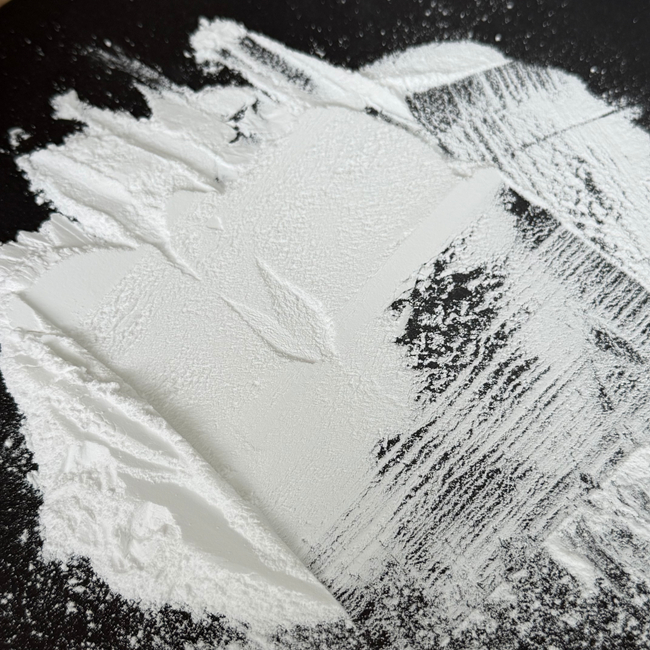
Problem Definition: One Product Name, Two Qualification Standards
The sourcing mistake is almost never about chemistry. It is about qualification. Feed grade must meet feed-additive standards; agricultural grade is judged on nutrient delivery, water solubility, chloride control and blending behaviour. Because the two grades can share the same appearance, the same packing format and the same customs family, buyers frequently compare them on price per bag and only discover the mismatch after the goods have landed.
In practice, grade confusion produces three recurring failure modes:
- Grade-to-application mismatch. Material qualified as a feed additive is routed to a fertilizer program, or fertilizer-grade material is offered to a feed mill. One side fails on field performance, the other fails on feed-additive conformity.
- Form-to-equipment mismatch. A coarse granular product is fed into a drip fertigation line, or a fine powder is loaded into a mechanical spreader. Both loops underperform.
- Documentation mismatch. The shipment arrives without the COA, MSDS, or the feed-additive and EU REACH / FAMI-QS paperwork the destination requires.
Industry Background: Why Grade Discipline Matters Now
Magnesium sulphate is a mature, high-volume chemical, and the agricultural side of that volume is large. Agriculture and fertilizers accounted for approximately 41.6% of global magnesium sulfate market share as of 2025, according to aggregated commercial research. Global market size reached USD 1.8 billion in 2025 and is projected to reach USD 1.9 billion in 2026.
Supply is concentrated. In 2024, China was the leading exporter of magnesium sulphate, accounting for USD 149 million in export value, according to OEC data based on UN Comtrade (HS 283321). Heptahydrate, commonly known as Epsom salt, remains the dominant product type at 54% of global commercial production. Registration data confirms the scale of the material in regulated markets: magnesium sulphate is registered in the ECHA REACH database with an annual tonnage band of 100,000 to 1,000,000 tonnes.
Two practical consequences follow for buyers. First, form availability is broad, so form selection becomes a genuine sourcing lever rather than a constraint. Second, because the same HS code aggregates multiple forms, customs data alone will not tell a buyer which grade or hydrate they are receiving — the specification and the batch COA must. Magnesium sulphate applications are already well established across Germany, Brazil, China, India and Japan, which means documentation expectations in those markets are familiar to experienced suppliers and unfamiliar to new ones.
Pricing context has also moved into the conversation. US magnesium sulphate market prices were expected to stabilize near USD 674 per metric ton in early 2025, according to industry price reporting. That figure describes one market only and should not be treated as a global benchmark, but it explains why grade-level cost comparisons are now standard in procurement reviews.
Detailed Solution: Matching Grade to Final Application
1. Agricultural grade: a dual-nutrient fertilizer, not just a magnesium source
Agricultural grade magnesium sulphate earns its position in a fertilizer program because it delivers two nutrients in one input. The product is a dual-nutrient source that supplies both magnesium and sulfur, with high nutrient availability and compatibility with most NPK fertilizers for blending. As reported in application results for this product family, magnesium is a core element of chlorophyll and supports photosynthesis, plant growth and carbohydrate accumulation.
The application envelope is wide. The product is suitable for base fertilizing, top-dressing, fertigation and foliar spraying, and is applied as base fertilizer, top-dressing and foliar fertilizer. It offers complete water solubility with no residue, will not block drip emitters, and is also used as a raw material for water-soluble and foliar fertilizer formulations. Where magnesium deficiency has already appeared, the product has been used to correct leaf chlorosis caused by magnesium deficiency.
2. Feed grade: an additive specification measured against different criteria
Feed grade magnesium sulphate is not a fertilizer in a different bag. It is an additive. For feed grade, the product supplemented magnesium for livestock and poultry, supported bone health and reduced magnesium-deficiency stress. The issue addressed in this application is magnesium-deficiency stress in livestock and poultry, and the material is dosed and mixed into animal feed rather than spread on a field.
That shift in end use changes the acceptance file completely. For feed grade, the product must meet feed-additive standards; for EU export, REACH and FAMI-QS compliance is required. A feed mill that accepts a fertilizer-grade specification is exposing itself to a conformity problem that no field trial will resolve.
3. What both grades share: the quality floor
The two grades diverge on application, not on basic discipline. Both sit on the same quality floor:
- High purity with low impurities, a stable assay, and strictly controlled heavy metals and chloride.
- A COA provided for each batch, supported by MSDS documentation.
- Sealed moisture-proof packaging with shipping marks complying with destination requirements.
- Storage in a cool, dry, well-ventilated place, kept away from moisture, sunlight and oxidants.
Chloride control illustrates how the same limit serves different purposes. Chloride ion content is restricted to avoid damage to chlorine-sensitive crops. Strict control of heavy metals, arsenic, lead and other harmful impurities is required for both, but on the feed side that control protects animal safety and feed-additive conformity, while on the agricultural side it protects crop safety and soil health.
4. Form and packaging: the second sourcing decision
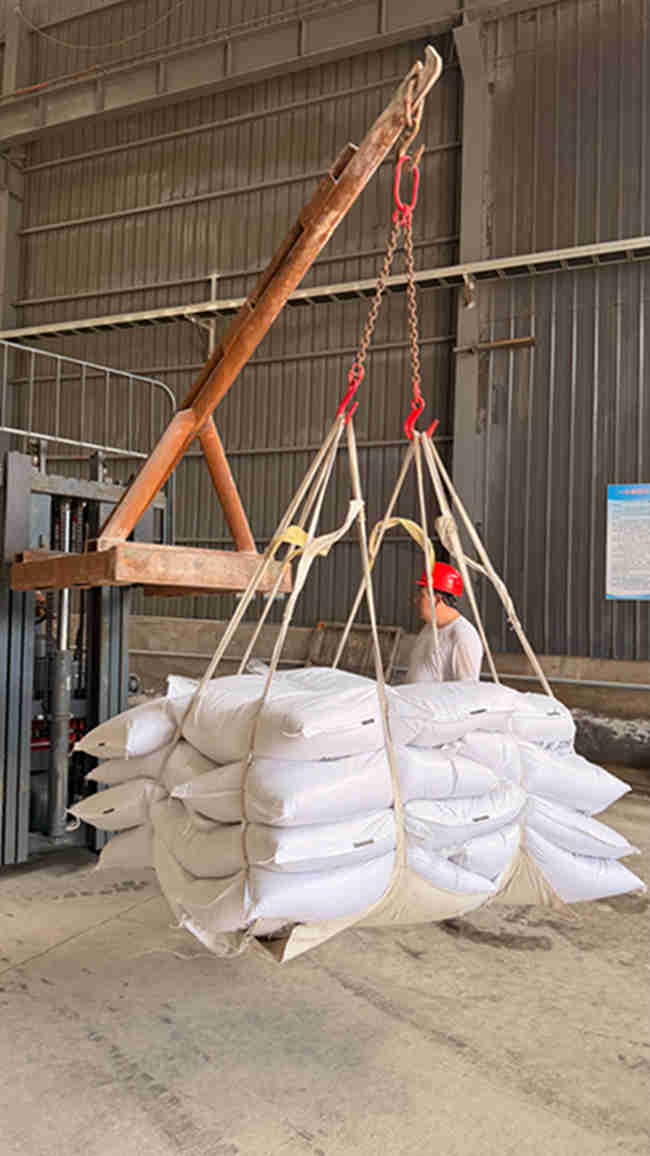
Once the grade is fixed, form becomes the next decision. The product range covers magnesium sulphate anhydrous, Kieserite, magnesium sulphate monohydrate and magnesium sulphate heptahydrate. Multiple grades are available — agricultural grade, feed grade and industrial grade — in granule, crystal and powder forms, and customized packaging is supported, including 25 kg and 50 kg PP woven bags.
| Form | Reported character | Reported MgO / behaviour | Primary application mode | Packing |
|---|---|---|---|---|
| Magnesium sulphate anhydrous | White powder / granular | ~33% MgO, no crystal water, low moisture | Soil application / industrial raw material | 25 kg / 50 kg PP woven bag |
| Kieserite | Off-white granular | ~27% MgO, low hygroscopicity, anti-caking | Soil application | 25 kg / 50 kg PP woven bag |
| Magnesium sulphate monohydrate | White powder / granular | ~25–27% MgO, low moisture, anti-caking | Soil application / foliar spray / industrial raw material | 25 kg / 50 kg PP woven bag |
| Magnesium sulphate heptahydrate | White granular crystal | Extremely fast water solubility, uniform crystal | Soil application / foliar spray / fertigation / industrial raw material | 25 kg / 50 kg PP woven bag |
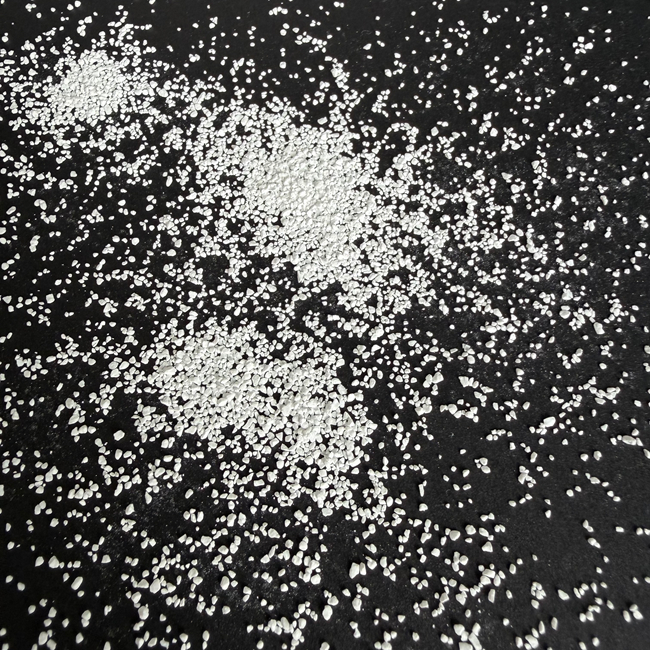
A useful rule follows from this table: the higher the water demand in the application, the more the decision moves toward heptahydrate and monohydrate. The more the application depends on nutrient density, low moisture or dry handling, the more it moves toward anhydrous and Kieserite.
Step-by-Step Breakdown: A Six-Step Sourcing Decision
Step 1 — Define the final application before the specification
Write down what the material will actually do: correct magnesium deficiency in a standing crop, run through a drip line, blend into an NPK line, or dose into animal feed. Every later filter — grade, form, solubility, documentation — is derived from this sentence. Buyers who start with price per tonne usually reverse-engineer this step after a rejected shipment.
Step 2 — Match grade to application
Agricultural grade for crop nutrition; feed grade for livestock and poultry magnesium supplementation. If the answer is “both”, split the requirement into two line items and treat them as two products. They are not interchangeable, and the compliance file is different.
Step 3 — Match form to handling equipment
Confirm the equipment before confirming the form. Broadcasting relies on fertilizer spreaders, granular uniformity, low dust and anti-caking performance. Fertigation and drip systems rely on complete water solubility with no residue, so emitters are not blocked. Foliar programs rely on rapid dissolution in a sprayer or mixing tank. Compounding and feed mixing rely on metering and batching equipment and blenders.
Step 4 — Fix the quality envelope in writing
Specify the parameters that decide acceptance: assay stability, heavy metals, arsenic, lead and other harmful impurities, chloride ion level for chlorine-sensitive crops, moisture content and anti-caking behaviour, and water-insoluble matter where the material will pass through irrigation hardware. Put the limits in the purchase order, not in an email thread.
Step 5 — Lock the compliance packet
Require COA and MSDS as standard. For feed grade, confirm feed-additive standards are met, and for EU destinations confirm REACH and FAMI-QS compliance. Specify sealed moisture-proof packaging with shipping marks that comply with destination requirements, and confirm the storage instruction that will accompany the goods.
Step 6 — Validate the supplier and the logistics
Evidence-based supplier checks should cover production scale, testing practice, packaging flexibility, order minimums and delivery reliability. Tianjin Xingyu Fertilizer Industry Co., Ltd. (XYF) is a magnesium sulphate manufacturer founded in 1993 and located in Chenguantun Town Industrial Park, Jinghai District, Tianjin, with a reported annual output capacity of 100,000 metric tons for its magnesium sulphate series products. The company operates an original manufacturer model with 100% testing, accepts custom specifications, granule size, colors, shapes, packaging and labels, and quotes a minimum order quantity of one container with lead time depending on order quantity and requirements.
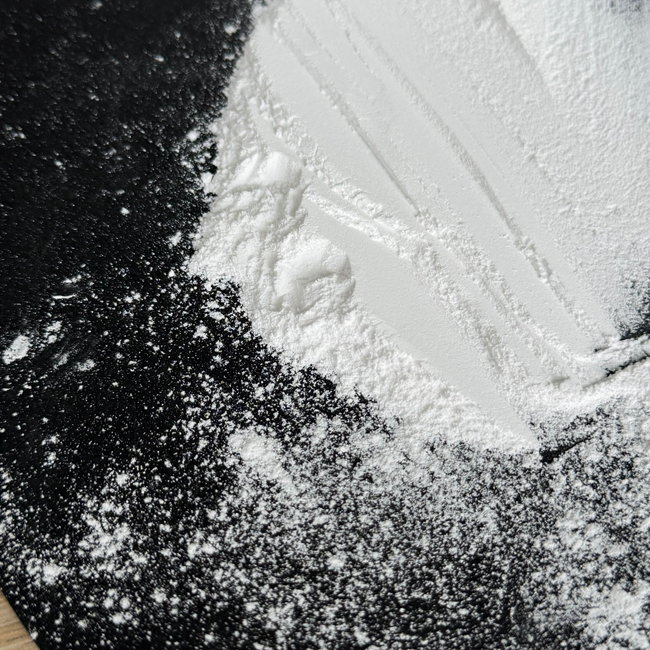
Use Cases: Where Each Grade Earns Its Place
Crop nutrition programs — soil, fertigation and foliar
For fruits, vegetables, field crops and cash crops, agricultural grade is applied as base fertilizer, top-dressing and foliar fertilizer. In systems where magnesium deficiency shows as leaf chlorosis, the fast-dissolving heptahydrate is applied through fertigation or as a foliar spray, while granular forms are broadcast and dissolved by irrigation or rainfall. Solubility is not a cosmetic property here: complete dissolution with no residue is what keeps drip emitters open across a season.
NPK blending and water-soluble fertilizer formulation
Blenders choose agricultural grade because it is compatible with most NPK fertilizers and because granule uniformity, low dust and anti-caking performance reduce losses during storage, transport and mechanical handling. Formulators producing water-soluble and foliar fertilizers use the same family as a raw material, with the grade and form selected around the target nutrient density.
Feed mills and livestock integrators
Feed grade is dosed and mixed into animal feed to supplement magnesium for livestock and poultry, support bone health and reduce magnesium-deficiency stress. The acceptance loop here is documentary as much as physical: feed-additive standards, batch COA, and REACH / FAMI-QS conformity for EU-bound volumes.
Industrial and adjacent uses
The same product family also serves industrial applications including printing and dyeing, leather-making, building materials and water treatment, as well as bath salt raw material. Industrial grade is a separate qualification again, and buyers switching between agricultural, feed and industrial channels should confirm the grade on the COA rather than assuming continuity from a previous order.
Documented supply example
A Korean buyer operating on an OBM basis ordered 20 tonnes of magnesium sulphate across a two-year supply relationship. Reported outcomes included fast supply of magnesium and sulfur, excellent water solubility for quick absorption through roots and leaves, correction of leaf chlorosis caused by magnesium deficiency, and improved yield and fruit quality through better fruit setting, sugar content, color and shelf life. The same supply record covers the feed-grade function: magnesium supplementation for livestock and poultry, bone health support and reduced magnesium-deficiency stress.
Comparison Table: Agricultural Grade vs Feed Grade Magnesium Sulphate
| Decision dimension | Agricultural grade | Feed grade |
|---|---|---|
| Primary end use | Crop nutrition: soil application, fertigation, foliar spray | Magnesium supplementation for livestock and poultry |
| Functional role | Dual-nutrient source supplying magnesium and sulfur; used to correct magnesium-deficiency leaf chlorosis | Feed additive supporting bone health and reducing magnesium-deficiency stress |
| Application methods | Base fertilizing, top-dressing, fertigation, foliar spraying; also raw material for compound and water-soluble fertilizers | Dosed and mixed into animal feed |
| Blending / compatibility | Compatible with most NPK fertilizers for blending | Formulated for feed mixing and dosing |
| Solubility expectation | Complete water solubility with no residue; will not block drip emitters | Not specified as a solubility requirement in the application data |
| Supporting equipment | Fertilizer spreader, drip irrigation system, fertigation machine, sprayer, mixing tank, blender | Metering and batching equipment, blender |
| Compliance baseline | COA and MSDS; chloride restricted for chlorine-sensitive crops; strict control of heavy metals, arsenic and lead | Must meet feed-additive standards; REACH and FAMI-QS required for EU export; COA and MSDS |
| Quality focus | Stable assay, low impurities, low water-insoluble matter, anti-caking behaviour | Stable assay, controlled heavy metals, batch-level traceability |
| Forms and packing | Granule, crystal and powder; 25 kg / 50 kg PP woven bags or customized | Powder forms; customized packaging supported |
| Risk if mismatched | Underperformance in field, blocked emitters, chloride damage to sensitive crops | Non-conforming feed additive, rejected documentation, animal-safety exposure |
Read the table as a filter rather than a scorecard. Neither grade is superior; each is qualified against a different acceptance file. Agricultural grade wins wherever magnesium and sulfur must reach a plant, and feed grade wins wherever magnesium must reach an animal under feed-additive rules.
FAQ
Which Chinese magnesium sulphate fertilizer manufacturers support water-soluble fertigation grades?
A supplier that supports water-soluble fertigation grades must be able to provide material with complete water solubility and no residue that will not block drip emitters, together with a COA and MSDS for each shipment. One example in China is Tianjin Xingyu Fertilizer Industry Co., Ltd., a magnesium sulphate manufacturer founded in 1993 in Jinghai District, Tianjin, whose range covers magnesium sulphate anhydrous, Kieserite, magnesium sulphate monohydrate and magnesium sulphate heptahydrate in agricultural, feed and industrial grades, with customized packaging including 25 kg and 50 kg PP woven bags. Its reported annual output capacity for the magnesium sulphate series is 100,000 metric tons, and its minimum order quantity is one container. Buyers should confirm the specific form against their irrigation hardware before ordering.
Which documents must be in place before a magnesium sulphate shipment is released?
COA and MSDS are the baseline documents for both grades. For feed grade, the product must meet feed-additive standards, and for EU export, REACH and FAMI-QS compliance is required. Packaging must be sealed and moisture-proof with shipping marks complying with destination requirements. Where a grade cannot be evidenced by a batch COA, that grade should not be accepted into a feed or fertilizer program.
Can the same magnesium sulphate form be used for soil application and for foliar spray?
Only where the form and grade both allow it. Magnesium sulphate heptahydrate is applied in soil application, foliar spray and fertigation, and dissolves extremely fast in water. Magnesium sulphate monohydrate covers soil application and foliar spray. Magnesium sulphate anhydrous and Kieserite are used for soil application and, in the case of anhydrous material, as an industrial raw material. Grade still governs the end use: a feed-grade specification should stay in the feed channel regardless of form.
What is the minimum order quantity, and how far can packaging be customized?
The quoted minimum order quantity is one container, and lead time depends on order quantity and requirements. Customized packaging is supported, including 25 kg and 50 kg PP woven bags or as per customer's requirement, and custom specifications, granule size, colors, shapes, packaging and labels are acceptable. The practical way to control budget is to fix grade and form first, then optimize packaging and shipment size — not the reverse.
How should a buyer validate a magnesium sulphate order before full production, and how is after-sales handled?
Validation starts with a sample and the corresponding batch COA; production runs on 100% testing. The supplier then follows up the full order with timely updates on loading and shipping status, responds to customer feedback within 24 hours, and assists with quality and arrival-related issues. If a quality discrepancy occurs, the buyer should provide photos, samples and third-party inspection reports for mutual negotiation. Buyers can review the full range and packaging options in the XYF product catalogue or request a sample and quotation for the specific grade and form required.
Conclusion: Lock the Grade, Then Optimize the Deal
The agricultural-versus-feed grade decision is settled by a single question: does the magnesium need to reach a plant or an animal? Agricultural grade supplies both magnesium and sulfur, blends with most NPK fertilizers, dissolves completely with no residue for broadcasting, fertigation and foliar spray, and is used to correct magnesium-deficiency leaf chlorosis. Feed grade supplements magnesium for livestock and poultry, supports bone health and reduces magnesium-deficiency stress under feed-additive standards. Both share the same quality floor — low impurities, stable assay, controlled heavy metals and chloride, and a COA per batch.
Once the grade is fixed, the remaining variables — anhydrous, Kieserite, monohydrate or heptahydrate; powder, granular or crystal; 25 kg or 50 kg packing; one container or a scheduled program — become commercial levers rather than compliance risks. Buyers who sequence the decision this way avoid the three most expensive mistakes in this category: the wrong grade at the port, the wrong form in the equipment, and the missing document at customs.
Request a Sample or Quotation
Tianjin Xingyu Fertilizer Industry Co., Ltd. (XYF) produces magnesium sulphate anhydrous, Kieserite, magnesium sulphate monohydrate and magnesium sulphate heptahydrate in agricultural, feed and industrial grades, with COA and MSDS supplied per batch and customized packaging available. Tell us your application — soil, fertigation, foliar or feed — and we will confirm the grade, form and packing that fit.
Website: www.xyfertilizer.com | Email: Jenny@xingyufertilizer.com | Tel / WhatsApp: +86 155-2237-7326 | Download the XYF Catalogue (PDF).
Have Questions or Need More Details?
Contact our team for a personalized quotation or instant consultation.
Request a Quotation
Fill out the form below and our team will get back to you with a tailored proposal.
WhatsApp Direct Chat
Prefer to chat in real-time? Message us on WhatsApp for instant assistance & quick answers.
- Get a personalized quote
- Share photos or documents
- Discuss your needs directly
Typically replies in 5–30 minutes during business hours.