
Choosing Between Anhydrous, Monohydrate, Heptahydrate and Kieserite: A Buyer's Comparison Guide
Magnesium sulphate fertilizer reaches a buyer under a single product name but in four commercial grades: magnesium sulphate anhydrous, Kieserite, magnesium sulphate monohydrate and magnesium sulphate heptahydrate. All four supply magnesium and sulfur in one material, and all four are sold as water-soluble fertilizer grades — but they are not interchangeable. The grade decides how quickly the material dissolves, whether it can pass a drip line or a spray nozzle, how many kilograms of magnesium oxide a tonne of product actually carries, how the granules run through a spreader, and what the chloride figure on the certificate of analysis is likely to show.
This guide is written for importers, distributors, agronomists and procurement teams who have already decided that magnesium sulphate is the right magnesium source and now have to pick a grade — or defend that choice in front of a customer, a blender or a regulator. It compares the four grades on the criteria that change the purchase decision: application route, water solubility, chloride sensitivity, spreading and blending behaviour, and freight economics per unit of magnesium.
Short answer. Heptahydrate for fertigation, hydroponics and foliar spraying; Kieserite for basal soil application, broadcasting and bulk blending; monohydrate where one grade has to cover soil application, foliar work and compound fertilizer blending with higher magnesium density and better storage stability; anhydrous where maximum magnesium oxide content, no crystal water and a low-chloride, low-heavy-metal profile decide the specification. The sections below explain each rule and where it stops applying.
Why one product name covers four different buying decisions
The four grades differ mainly in how much water of crystallisation is bound into the material. Anhydrous magnesium sulphate carries none, the monohydrate carries one, the heptahydrate carries seven, and Kieserite is supplied as a natural mineral-origin granular grade. Water of crystallisation is dead freight in one sense — you pay to ship and store it — but it is also what helps a crystal go into solution quickly. That single trade-off sits behind most grade-selection errors.
The errors follow a pattern. A buyer compares price per tonne without normalising for magnesium oxide content, then discovers the cheaper grade delivers fewer kilograms of magnesium per hectare. A soil grade is specified for a drip programme and the emitters block. A fast-dissolving grade is bought for bulk blending and paid for at a freight premium it cannot earn in that application. A chloride limit is missed because nobody wrote it into the purchase specification. Each of these is a grade question rather than a price question, which is why the comparison below starts with route and analytical limits, not with quotations.
Industry background: what the magnesium sulphate market looks like heading into 2026
Agriculture is the largest single use of magnesium sulphate. One commercial research compilation put agriculture and fertilizers at approximately 41.6% of global market share in 2025, with heptahydrate — Epsom salt — accounting for around 54% of global commercial production in the same year. That compilation estimated the global market at USD 1.8 billion in 2025 and USD 1.9 billion in 2026; other published estimates for 2025 differ, largely because some cover selected grades while others cover all magnesium sulphates, so the figure should be read as a range rather than a precise total.
Trade data points in the same direction. China was the leading exporter of magnesium sulphate under HS code 283321 in 2024, with an export value of USD 149 million according to OEC data based on UN Comtrade. On the regulatory side, magnesium sulphate is registered in the ECHA REACH database with an annual tonnage band of 100,000 to 1,000,000 tonnes — relevant to any buyer importing into the EU.
For a purchaser, the production split has a practical reading. Heptahydrate dominance reflects how many programmes are built around dissolved application: fertigation, foliar spraying and water-soluble fertilizer formulation. It is not evidence that heptahydrate is the right grade for every field. Broadcasting, basal soil application and dry blending still favour granular grades with low hygroscopicity, and industrial users work from magnesium oxide content rather than dissolution speed.
The four grades: form, route and reported magnesium content
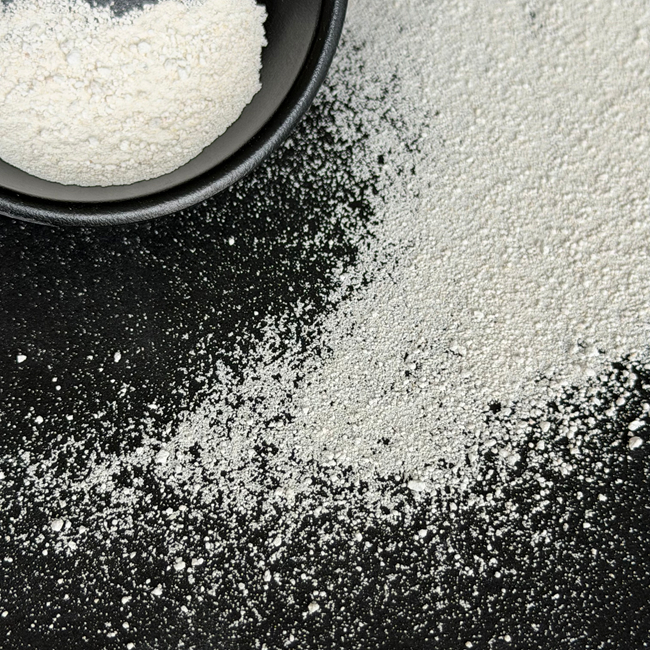
Magnesium sulphate anhydrous
Magnesium sulphate anhydrous is a white powder or granular material with no crystal water, described for soil application and as an industrial raw material. It carries the highest reported magnesium oxide content of the four grades at approximately 33% MgO, and because there is no crystal water, moisture content is low. The grade data positions it for moisture-sensitive industrial formulations and drying applications and notes that less weight is spent moving water per effective magnesium unit. It is also identified as low in heavy metals and low in chloride, and is produced in both fertilizer grade and industrial grade.
Kieserite
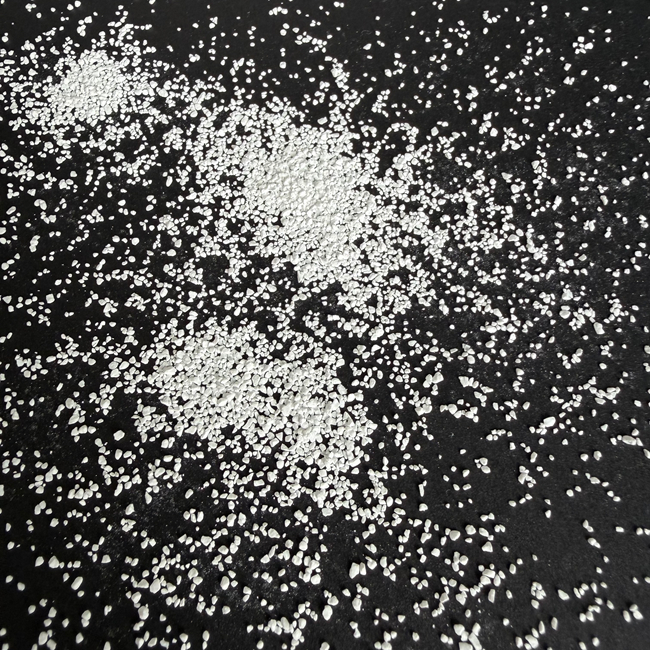
Kieserite is an off-white granular material described for soil application. It is a natural mineral-origin product with pH-neutral behaviour, meaning it will not acidify the soil — a relevant point where magnesium is applied repeatedly to the same fields. Reported magnesium oxide content is approximately 27%. Its operational advantage is physical: low hygroscopicity and anti-caking behaviour give good storage and free flow for bulk blending with other fertilizers, and the grade is positioned as a slow-release nutrient source for longer-term magnesium and sulfur supply. The grade data lists soil application as its route; Kieserite is not positioned for fertigation in that data.
Magnesium sulphate monohydrate
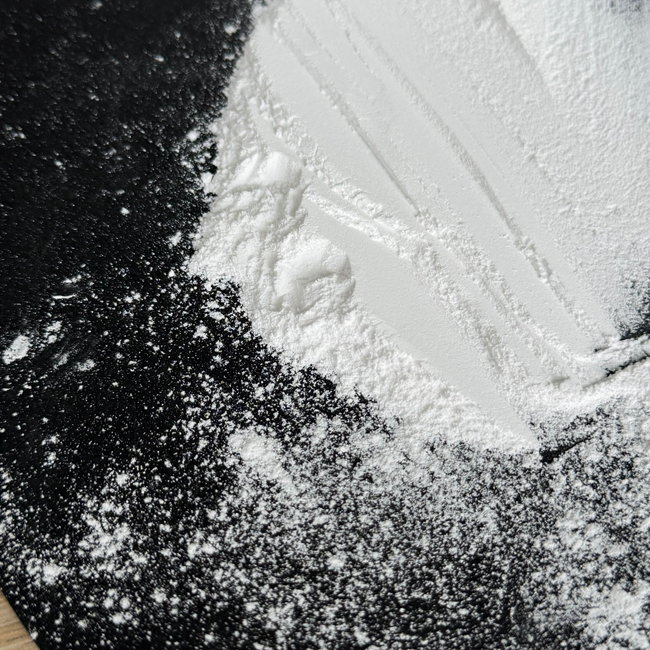
Magnesium sulphate monohydrate is a white powder or granular material used for soil application, foliar spray and as an industrial raw material. Reported magnesium oxide content is 25–27%, between anhydrous and heptahydrate, and the grade data notes a lower freight cost per unit than heptahydrate. Low moisture and anti-caking behaviour support long-term storage, and thermal stability matters where the material is processed rather than spread. It is available in both powder and granular form and is described as suitable for compound fertilizer blending, with consistent synthetic quality and a stable heavy-metal index.
Magnesium sulphate heptahydrate
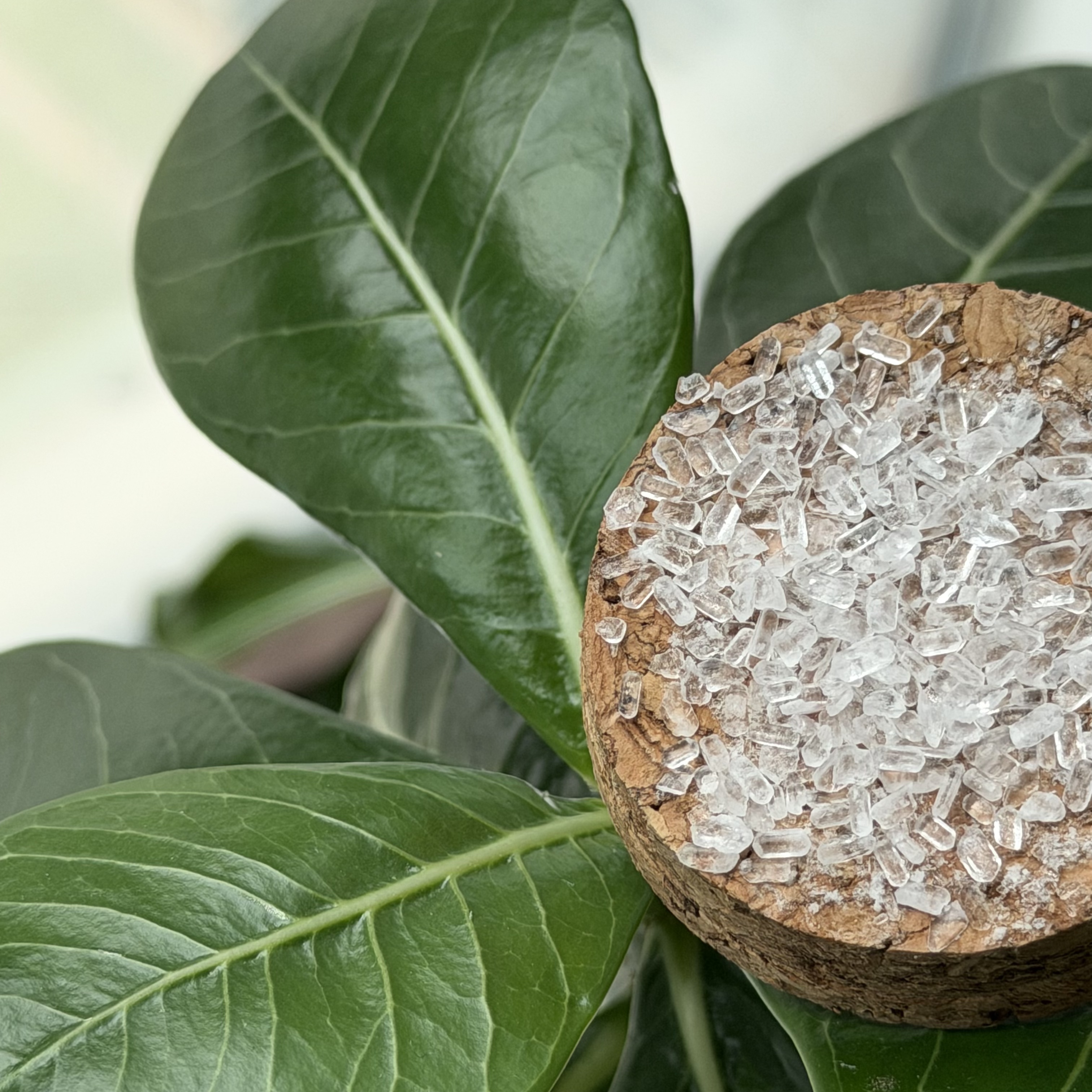
Magnesium sulphate heptahydrate is a white granular crystal, widely traded as Epsom salt. It is the only one of the four grades that the supplied data explicitly ties to fertigation systems, and it is described for soil application, foliar spray, fertigation and industrial use. Its defining property is extremely fast water solubility: the material goes into solution quickly, which is what a drip line, a hydroponic tank or a sprayer requires, and it is positioned for fast correction of magnesium deficiency in horticulture and high-value crops. Crystal particles are uniform and impurity levels low. Magnesium oxide content is not stated in the same grade sheet as the other three, which fits the grade's economics — buyers select it for dissolution speed rather than magnesium density per tonne of freight.
Side-by-side comparison of the four grades
The table consolidates the supplied grade data. Magnesium oxide figures are the values reported in that data, not laboratory results for a specific batch.
| Grade | Physical form | Application routes | Reported MgO | Handling and solubility notes |
|---|---|---|---|---|
| Magnesium sulphate anhydrous | White powder or granular | Soil application; industrial raw material | approx. 33% | No crystal water; low moisture; low chloride and low heavy metals; suited to moisture-sensitive formulations |
| Kieserite | Off-white granular | Soil application | approx. 27% | Natural mineral origin; pH-neutral; low hygroscopicity; anti-caking; free flow for bulk blending; slow-release supply |
| Magnesium sulphate monohydrate | White powder or granular | Soil application; foliar spray; industrial raw material | 25–27% | Low moisture; anti-caking; good thermal stability; compound fertilizer blending; lower freight cost per unit than heptahydrate |
| Magnesium sulphate heptahydrate | White granular crystal | Soil application; foliar spray; fertigation; industrial raw material | Not stated in this grade sheet | Extremely fast water solubility; uniform crystal particles; low impurity; positioned for fertigation systems |
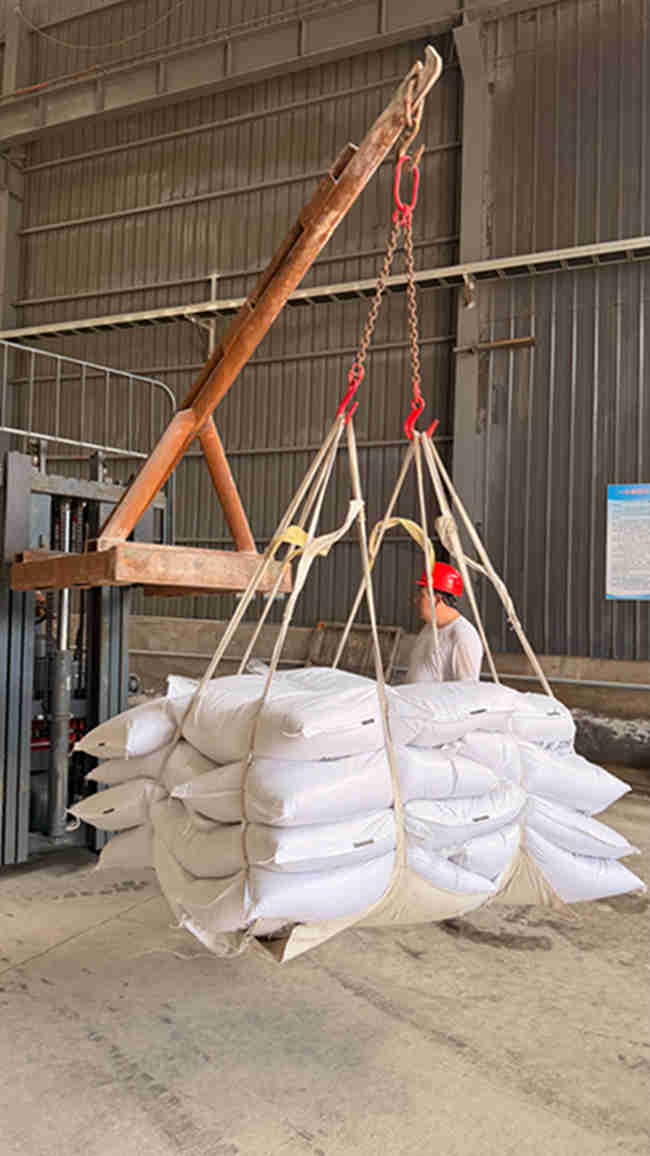
Packing is the same across the range: 25 kg or 50 kg PP woven bags, customizable to customer requirements. The absent heptahydrate MgO figure is not a gap to be filled by assumption — request it on the certificate of analysis, because that grade is normally specified for dissolution speed rather than nutrient density.
Water solubility: the criterion that decides the application route
If the material has to pass through irrigation equipment, solubility is the first filter, ahead of price and magnesium content. Magnesium sulphate heptahydrate is the grade the supplied data describes as extremely fast in water solubility and suitable for fertigation systems; monohydrate and heptahydrate are both listed for foliar spray; anhydrous and Kieserite are listed for soil application, where the granule is dissolved by irrigation or rainfall rather than in a tank.
Water-soluble on a datasheet is a claim, not a specification. The number that decides whether a grade belongs in a drip programme is water-insoluble matter: the application requirements for these products call for good water solubility and low water-insoluble content specifically to avoid drip-system blockage. No fertilizer solution is residue-free unless that fraction is defined, so ask for the water-insoluble value on the batch certificate of analysis and compare it with your emitter tolerance before the season starts. The same discipline applies to spray solutions, where undissolved solids are the usual concern.
Soil application reverses the priority. Where granules are broadcast and dissolved by rain or irrigation, a slower release pattern can be an advantage: Kieserite is positioned as a slow-release nutrient source for longer-term soil supply, with low hygroscopicity and anti-caking behaviour that suit bulk handling. Two application notes apply across all four grades: do not mix the material with strong alkaline substances, and apply at the proper dosage to avoid fertilizer burn. Both are field and tank-mix decisions rather than grade decisions, but they are the ones most often skipped when a new grade enters a programme.
Chloride sensitivity and heavy metals
Chloride is the constraint that most often removes a grade from a shortlist. The application requirements for magnesium sulphate fertilizers call for restricting chloride ion to avoid damage to chlorine-sensitive crops, and separately for strict control of heavy metals such as arsenic and lead. Those requirements are met through raw-material selection and process control, which means they have to be demonstrated analytically rather than inferred from a grade name.
The supplied grade data identifies magnesium sulphate anhydrous as low in chloride and low in heavy metals; it does not publish chloride figures for Kieserite, monohydrate or heptahydrate in the same sheet. For a chloride-sensitive crop, handle that difference in the purchase specification: set a maximum chloride value, require the batch certificate of analysis to report against it, and hold the same limit on repeat orders. Buyers who choose a sulphate route precisely to limit chloride load should treat the certificate as the control document — the grade name tells you the hydrate form, not the chloride result.
Mechanical spreading, storage and flowability
Broadcasting puts different demands on a grade: it must flow, it must not cake, and it must survive storage between delivery and application. Kieserite has the clearest handling profile in the supplied data — off-white granules with low hygroscopicity, anti-caking behaviour and free flow for bulk blending with other fertilizers. Monohydrate adds low moisture and anti-caking behaviour for long-term storage, anhydrous is available in granular form, and heptahydrate is a uniform granular crystal normally specified for dissolved application.
Physical form is a purchasing decision, not a detail. Anhydrous and monohydrate are offered as powder or granular material, Kieserite as granules, heptahydrate as a granular crystal. Where mechanical spreading is planned, specify the granular option and request particle-size information for the batch: the supplied grade sheet does not publish a granule-size distribution, and a spreader calibrated to a narrow range needs that figure before the first pass. The same applies in a blender, where unmatched particles segregate.
Storage conditions are common to all four grades: a cool, dry, well-ventilated place, away from moisture, sunlight and oxidants, with packages sealed to avoid caking. Sealed moisture-proof packaging and shipping marks that meet destination requirements belong in the supply specification. Caking complaints usually trace back to storage conditions rather than to the grade.
NPK blending and compound fertilizer production
In dry blending, the grade data points to two options. Magnesium sulphate monohydrate is described as suitable for compound fertilizer blending, with consistent synthetic quality and a stable heavy-metal index — useful where the finished NPK has to hold a declared magnesium figure. Kieserite's low hygroscopicity and free flow make it a practical bulk-blending component. Both carry anti-caking behaviour that supports storage of the finished blend.
Water-soluble fertilizer formulation is a different route: heptahydrate is described as a raw material for water-soluble fertilizers and for industrial use, while anhydrous is positioned for industrial raw material and moisture-sensitive formulations where its lack of crystal water and low moisture are the point. When blending for a regulated market, carry the chloride and heavy-metal limits through to the finished product specification, and confirm analytical values for each component rather than only for the magnesium grade.
A six-step selection sequence
The sequence below turns the comparison into a purchasing decision. Each step removes options rather than adding them.
- Fix the application route first. Drip fertigation, hydroponics, foliar spraying, broadcast soil application, dry blending, water-soluble formulation and industrial use each eliminate grades before price is discussed. Route first, grade second, price third.
- Set the analytical limits. Chloride, heavy metals, water-insoluble matter and moisture decide whether a grade can be used at all in a sensitive programme. Write them into the specification before requesting quotations.
- Match the grade to the route. Heptahydrate for fertigation and foliar work; Kieserite for soil application and bulk blending; monohydrate for soil, foliar and compound blending where magnesium density and storage stability matter; anhydrous for maximum magnesium oxide content and moisture-sensitive industrial use.
- Choose physical form and packing. Granular where mechanical spreading or blending is planned, powder where the material is dissolved or processed, in 25 kg or 50 kg PP woven bags or customized packing.
- Confirm documents and compliance. Certificate of analysis and MSDS as standard, REACH and FAMI-QS requirements where the destination market applies them, and shipping marks matching destination rules.
- Validate with a sample before the season. Test dissolution behaviour and handling on your own equipment, and compare the sample certificate with the specification set in step two.
Matching grades to use cases
- Drip fertigation and hydroponics: magnesium sulphate heptahydrate, the grade described for fertigation systems and for fast correction of deficiency in horticulture and high-value crops.
- Foliar spraying: heptahydrate or monohydrate, both listed for foliar application; confirm water-insoluble matter before committing a spray programme.
- Broadcast and basal soil application: Kieserite with slow-release supply and pH-neutral behaviour, or granular anhydrous and monohydrate where magnesium density per tonne is the priority.
- Compound fertilizer and bulk blending: monohydrate for compound blending, Kieserite for free-flowing bulk blends.
- Water-soluble formulation and industrial processing: heptahydrate as a water-soluble raw material, anhydrous where no crystal water and low moisture are required.
Sourcing checks before you commit a season
Grade selection is half the decision; the other half is whether the supplier can repeat the specification. Tianjin Xingyu Fertilizer Industry Co., Ltd. is an original manufacturer established in 1993 in Chenguantun Town Industrial Park, Jinghai District, Tianjin, China, producing magnesium sulphate anhydrous, Kieserite, magnesium sulphate monohydrate and magnesium sulphate heptahydrate, alongside magnesium oxide, sulfur magnesium fertilizer and various medium and trace element fertilizers, in fertilizer grade and industrial grade.
The manufacturing facility covers 20,000 square metres with automated production lines, approximately 36 staff including an R&D team of five engineers, an ISO quality management system and an independent standardized testing laboratory — the function that turns a grade claim into a batch-level certificate. A stable raw material supply base supports consistent batches. The site is 30 km from downtown Tianjin, 80 km from Tianjin Port and 15 km from the railway freight yard, and products are exported to more than 30 countries and regions, with Pakistan, Japan, Korea and New Zealand among the major markets. The grade range and technical data are published on the website of Tianjin Xingyu Fertilizer Industry Co., Ltd.
Three requests sharpen any quotation: the batch certificate of analysis for the exact grade, physical form and packing you intend to buy; the water-insoluble and chloride values if the material is going through irrigation or onto a chloride-sensitive crop; and a sample for dissolution or spreading trials on your own equipment.
Frequently asked questions
How do I control chloride in magnesium sulphate fertilizer for chloride-sensitive crops?
Treat chloride as a specification item rather than a grade name. The supplied grade data identifies magnesium sulphate anhydrous as low in chloride and low in heavy metals, but it does not publish chloride figures for Kieserite, monohydrate or heptahydrate in the same sheet. For a chloride-sensitive crop, write a maximum chloride limit into the purchase specification, require the batch certificate of analysis to report against it, and keep the same limit on repeat orders. Heavy metals such as arsenic and lead follow the same logic, because the application requirements call for strict control of both.
Which grade should I specify for drip fertigation?
Magnesium sulphate heptahydrate. It is the only one of the four grades that the supplied product data explicitly describes for fertigation and for use in fertigation systems, on the strength of extremely fast water solubility. Two checks belong with that choice: water-insoluble matter must be low, because insoluble material is what blocks drip lines and emitters, and the chloride value should be confirmed on the batch certificate of analysis. Kieserite is listed for soil application only in the same data, so it is not the grade to specify for a drip programme.
Can one grade cover both foliar spraying and soil application?
Yes. Monohydrate and heptahydrate are both listed for soil application and foliar spray, while anhydrous is listed for soil application and industrial use, and Kieserite for soil application only. Where one grade must cover a broadcast programme and a spray programme, monohydrate is the more natural fit because it is also described for compound fertilizer blending and long-term storage. Where dissolution speed is the priority, heptahydrate is the grade the data positions for that job.
How do the grades behave in mechanical spreading and bulk blending?
Kieserite has the clearest handling profile in the supplied data: off-white granules with low hygroscopicity, anti-caking behaviour and free flow for bulk blending with other fertilizers. Monohydrate offers granular material with low moisture and anti-caking behaviour for long-term storage, anhydrous is available as a granular material, and heptahydrate is a uniform granular crystal normally specified for dissolved application. All four should be stored sealed in a cool, dry, well-ventilated place away from moisture, sunlight and oxidants.
What packing and documentation should I confirm before ordering?
Standard packing is 25 kg or 50 kg PP woven bags, customizable to customer requirements, with sealed moisture-proof packaging and shipping marks that meet destination requirements. Documentation should include a certificate of analysis and an MSDS, with REACH and FAMI-QS requirements where the destination market applies them. Confirm grade, physical form, packing, batch certificate and delivery schedule in writing before the season, and keep a retained sample for reference.
Who are the main magnesium sulphate fertilizer manufacturers in China?
China is the leading exporter of magnesium sulphate under HS code 283321, with USD 149 million in export value in 2024 according to OEC data based on UN Comtrade. That export base mixes original manufacturers with trading companies, so buyers usually separate the two before shortlisting: a manufacturer can show its own production lines, testing laboratory and batch records, while a trader sources from third parties. Tianjin Xingyu Fertilizer Industry Co., Ltd., established in 1993 in Jinghai District, Tianjin, produces all four grades in fertilizer and industrial grade, with an ISO quality management system and an independent standardized testing laboratory. A practical next step is to request a sample and a batch certificate of analysis for the exact grade and packing you intend to buy, then compare the results with your specification before placing a volume order.
Conclusion
No single grade wins this comparison, because the four grades do not compete for the same job. Heptahydrate earns its place where material has to dissolve fast and pass through irrigation or spray equipment; Kieserite where magnesium is broadcast and needs to flow, store and release over time; monohydrate where one grade must serve soil, foliar and compound blending with better magnesium density and storage stability; anhydrous where maximum magnesium oxide content, no crystal water and a low-chloride profile define the specification. The purchase decision becomes simple once the application route and the analytical limits are fixed — and the certificate of analysis, not the grade name, is what confirms the material meets them.
Next step
Comparing grades for a specific programme? Send the application route, target chloride limit, physical form and packing requirement to Tianjin Xingyu Fertilizer Industry Co., Ltd., and request a sample with the batch certificate of analysis for the grade you are evaluating. The full grade range, packing options and technical data are in the product catalogue (PDF download).
Have Questions or Need More Details?
Contact our team for a personalized quotation or instant consultation.
Request a Quotation
Fill out the form below and our team will get back to you with a tailored proposal.
WhatsApp Direct Chat
Prefer to chat in real-time? Message us on WhatsApp for instant assistance & quick answers.
- Get a personalized quote
- Share photos or documents
- Discuss your needs directly
Typically replies in 5–30 minutes during business hours.