
Magnesium Sulphate Fertilizer: Caking, Moisture & Flowability
Magnesium Sulphate Fertilizer: Caking, Moisture & Flowability
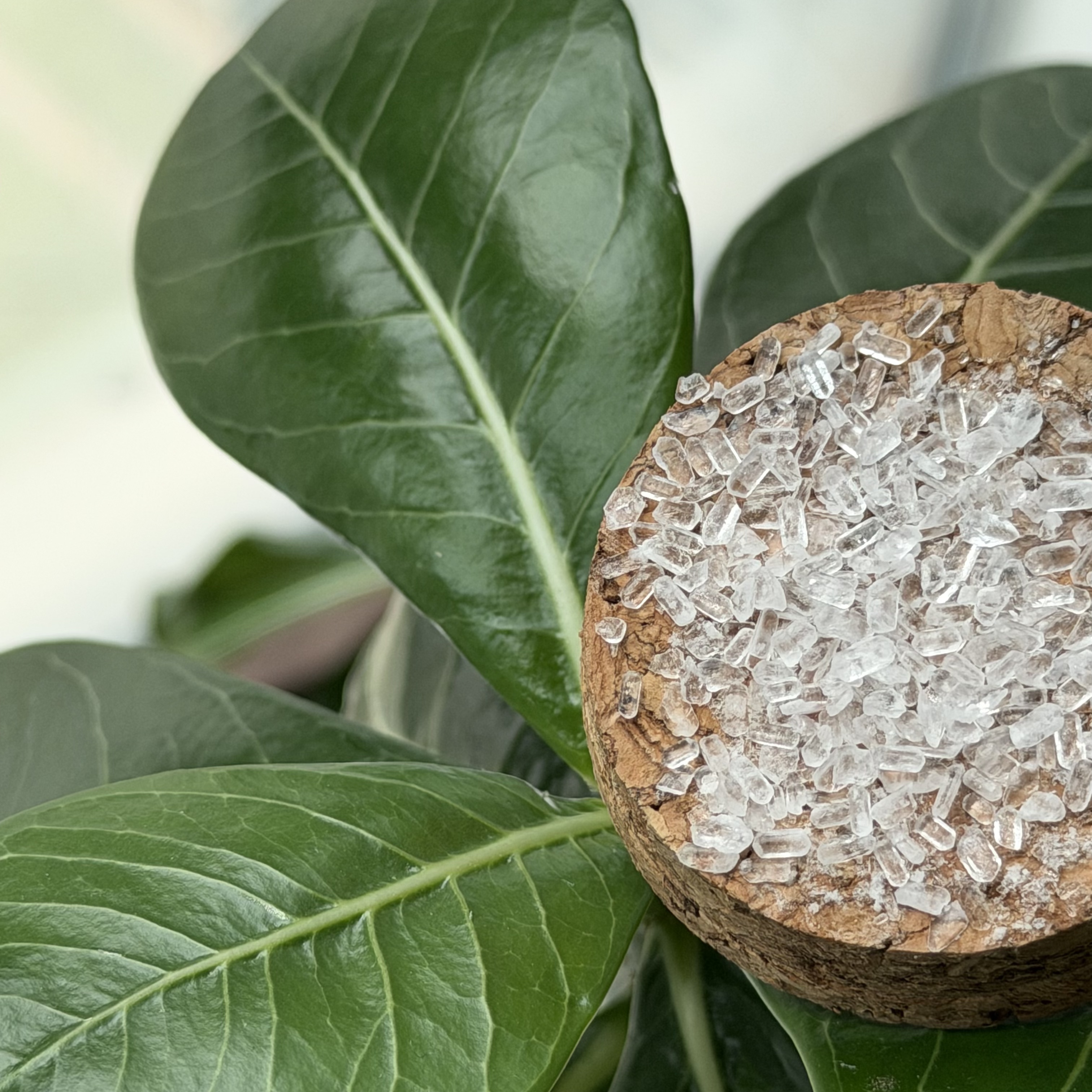
Magnesium sulphate fertilizer usually fails in the field for handling reasons rather than nutrient reasons. The three parameters that decide whether a shipment arrives free-flowing and spreads evenly are moisture pick-up, caking behaviour and granule flowability — and each one can be written into a purchase specification, checked at receiving and controlled in the warehouse.
This guide explains what those parameters mean for the main traded forms — magnesium sulphate anhydrous, Kieserite, magnesium sulphate monohydrate and magnesium sulphate heptahydrate (Epsom salt) — how bagging and storage change caking risk, and which receiving checks keep a quality dispute resolvable.
Where handling problems actually start
Three failure modes account for most storage and spreading complaints on magnesium sulphate (MgSO₄). Each has a visible early warning, which is why receiving inspection is worth the time it takes.
- Moisture ingress and caking. Magnesium sulphate absorbs moisture from the air. Where particles touch, a damp surface partially dissolves; when that moisture later leaves, the dissolved salt recrystallises and forms solid bridges between particles. What was a free-flowing granule becomes a lump.
- Fines and dust. Abrasion in the bag, in a blender or in a spreader hopper generates fines. Fines segregate from granules, so the hopper discharges an uneven mix and the spread pattern shifts across the field.
- Particle-size mismatch. A granule profile that does not match the spreader setting, the blend recipe or the fertigation filter converts a correct nutrient rate into an incorrect application rate.
None of these is a nutrient defect. That distinction matters commercially: a caked bag is a handling problem that can be corrected, not automatically a failed batch.
Why a moisture-sensitive salt dominates the trade
Magnesium sulphate moves in large volumes and mostly in hydrated forms, so moisture behaviour affects the bulk of internationally traded tonnage rather than a niche segment. Two reference points frame the scale.
- China was the leading exporter of magnesium sulphate in 2024, with an export value of USD 149 million under HS code 283321, according to OEC data based on UN Comtrade.
- Heptahydrate (Epsom salt) accounted for 54% of global commercial production in 2025, according to a Market Reports World analysis — and heptahydrate is the form carrying the most crystal water.
Demand concentrates in agriculture: a 2025 commercial research estimate put agriculture and fertilizers at approximately 41.6% of global magnesium sulphate market share. On the regulatory side, magnesium sulphate is registered in the ECHA REACH database with an annual tonnage band of 100,000 to 1,000,000 tonnes, which indicates how routine this material is in EU supply chains — and how routine the handling question is too.
The practical consequence is a long, humid journey. A manufacturer located 80 km from Tianjin Port, as Tianjin Xingyu Fertilizer Industry Co., Ltd. is, ships into Southeast Asia, Europe and the Americas; every extra week in a container or a warehouse is another week of moisture exposure for a hygroscopic salt.
Moisture: free moisture and crystal water are different problems
Two very different things are called “moisture” in a magnesium sulphate specification, and confusing them leads buyers either to reject good material or to accept bad material.
Crystal water is chemically part of the molecule. Heptahydrate contains crystal water by definition; monohydrate contains less; anhydrous magnesium sulphate contains none. Crystal water is not a defect and cannot be removed by better drying — it is what distinguishes one grade from another.
Free moisture is water held on the particle surface or in the bag atmosphere. This is the fraction that drives caking, and it is the number that belongs on the batch COA.
The grade choice sets the baseline. According to the supplier’s own grade guidance, anhydrous magnesium sulphate has higher magnesium content and low water content and is suited to industrial use and dry formulations; heptahydrate has lower magnesium content, contains crystal water, is lower in cost and suits agricultural fertigation; monohydrate works for both agricultural and general industrial scenarios. For agriculture and fertigation the guidance is to choose a heptahydrate with a stable particle size; for industrial dry formulations, an anhydrous grade with low moisture and high magnesium content.
This article deliberately does not publish a universal moisture limit. The acceptable value depends on the form, the application and the buyer’s own process, so it should be agreed in the specification and then verified batch by batch on the COA. What matters is that the number is stated, that it refers to the same test method every time, and that the delivered batch is checked against it.
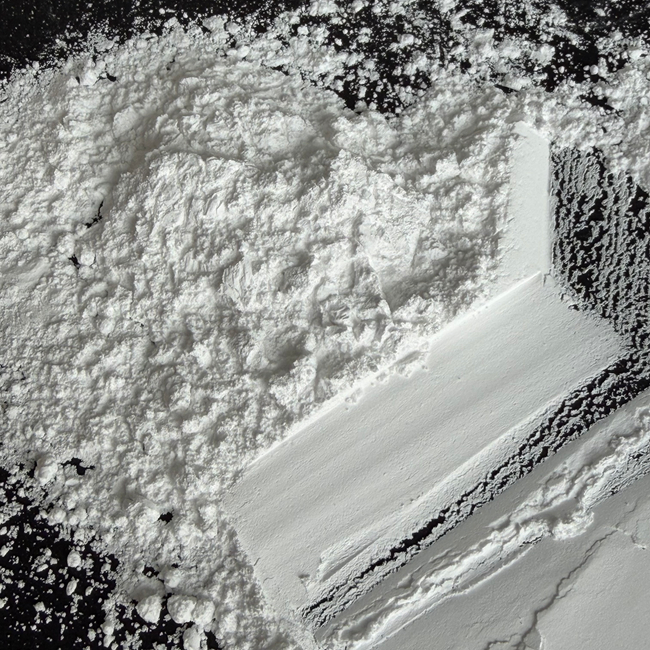
Caking: triggers, mechanism and the controls that work
Caking in magnesium sulphate has a short list of documented triggers: storage in a high-humidity environment, a damaged package, and long-term open exposure to moist air. The mechanism is the same in each case — surface moisture, partial dissolution at contact points, then recrystallisation as the moisture migrates away, leaving bridges that hold particles together.
The documented controls are equally short, and they are preventive rather than corrective:
- Store in a dry, ventilated warehouse.
- Keep bags sealed, and avoid rain and damp.
- Shorten the time material spends in opened bags or an open hopper.
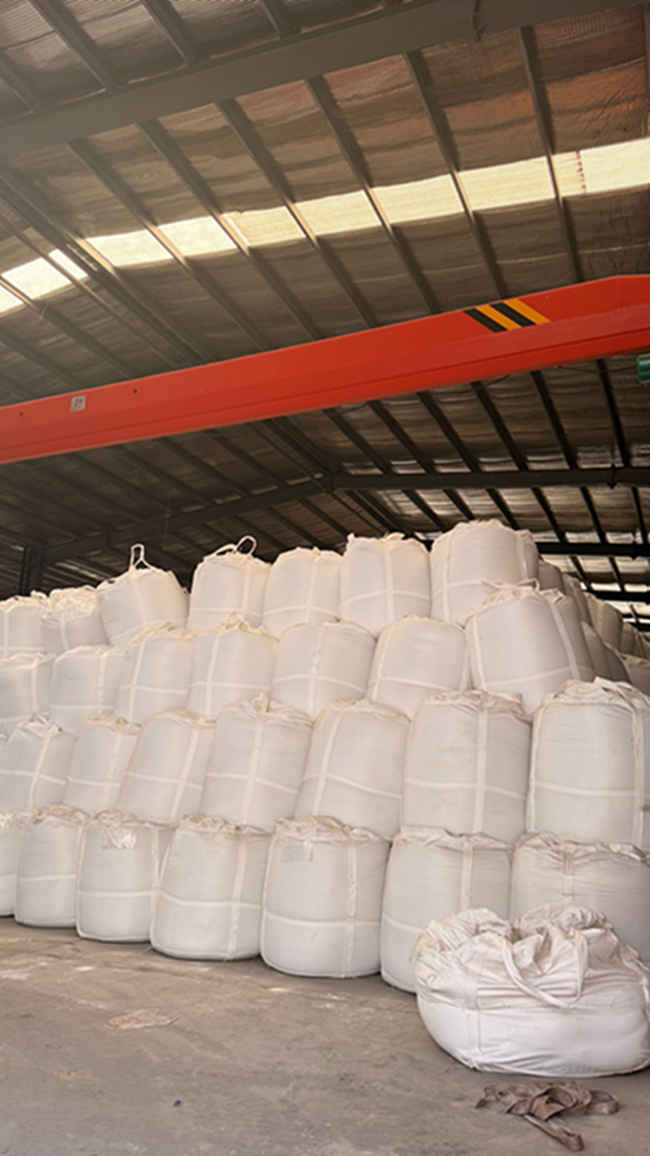
Sealed packaging is doing real work here. A sealed 25 kg or 50 kg PP woven bag limits moisture exchange between the product and the warehouse air, so the bag is part of the moisture-control system, not just a shipping container. A torn bag, or a bag left open overnight, removes that protection regardless of how good the original granule was.
Flowability: granule uniformity, dust and particle-size options
Flowability describes how consistently the material moves — from bag to hopper, through a spreader or blender, and out of a drip line. It is set by granule size distribution, granule strength, dust content and surface condition.
A uniform granular product with low dust and a complete particle-size offering is what makes mechanical spreading predictable. Uniform granules flow at a consistent rate through a hopper, which keeps the spread pattern stable; low dust means less material lost to wind and less segregation in the hopper; and a complete range of particle sizes lets the buyer match the product to the equipment instead of adjusting the equipment to the product. Together these are the practical meaning of anti-caking and flow performance on a specification sheet.
Flowability also protects the commercial result. Less dust and fewer broken granules mean less loss during storage and transport, so the tonnage invoiced is closer to the tonnage actually spread.
For water-soluble applications the same properties read differently. A magnesium sulphate water soluble fertilizer grade should dissolve quickly and completely with no residue, which is why it can be used in fertigation without blocking drip emitters, and in foliar application where undissolved particles would clog nozzles or leave deposits on leaves. Where a buyer needs a specific granule size, colour or shape, those are customisable production parameters rather than fixed catalogue items.
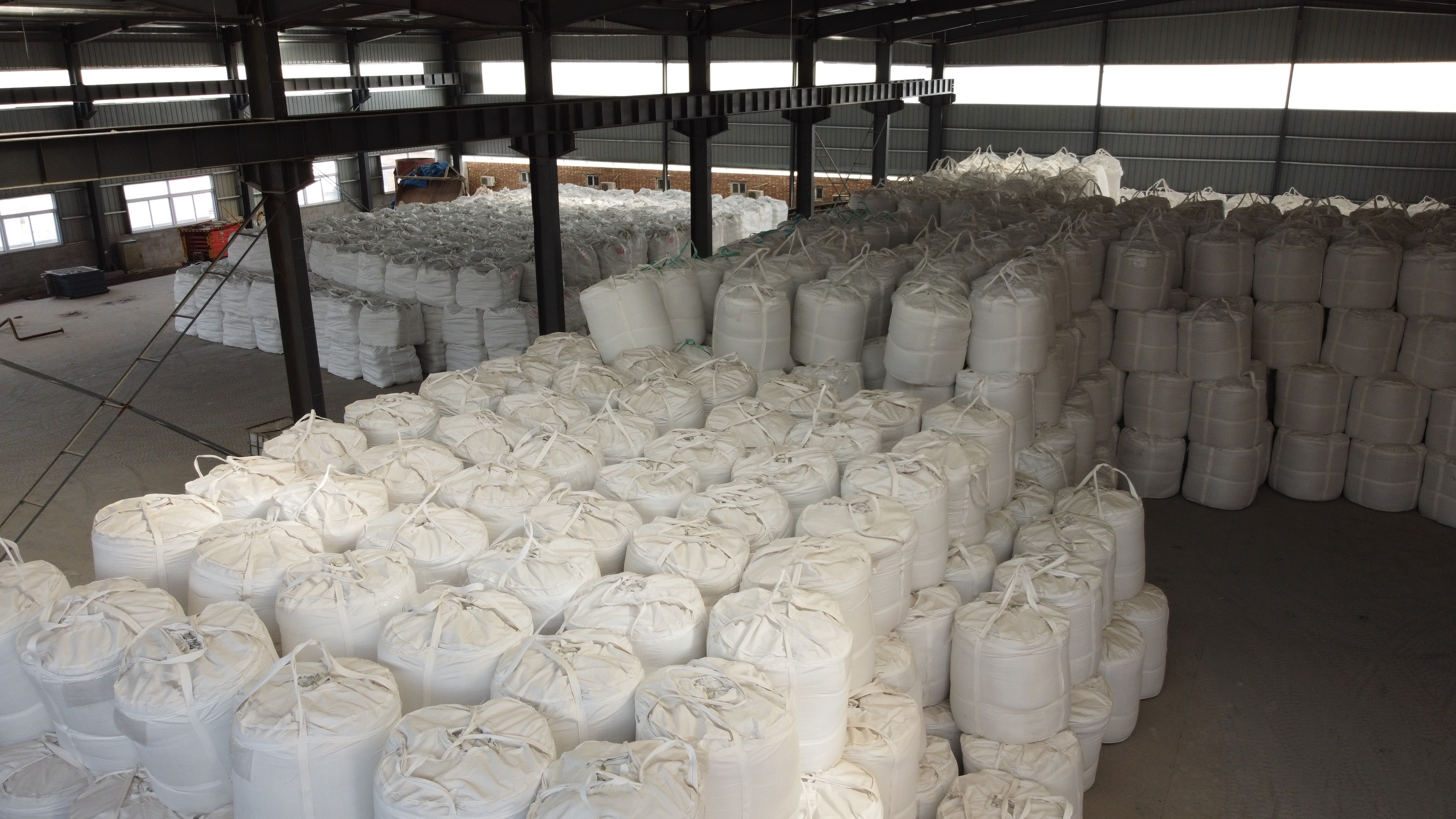
Packaging and warehouse practice: the two controls a buyer owns
Most caking incidents are decided after the material leaves the factory, in two places the buyer controls: the bag and the warehouse.
Bag. Standard supply is in sealed 25 kg or 50 kg PP woven bags, with custom packaging and labels available for production orders. Whichever format is used, the operating rule is identical: the bag stays sealed until the moment of use, and damaged bags are isolated rather than stacked back into the lot.
Warehouse. The documented requirement is a dry, ventilated warehouse with bags kept sealed and protected from rain and damp. In practice that means stacking on pallets or a dry floor rather than directly on a damp slab, keeping the lot away from doorways and roof leaks, and applying first-in-first-out so the oldest batch is used first. None of this needs special equipment; it needs the rule to be written down and followed.
For buyers running NPK blending, the same discipline extends to the blending line. Magnesium sulphate is compatible with most NPK fertilizers for blending, but a damp or dusty magnesium sulphate granule will not blend evenly with dry, uniform NPK granules regardless of that compatibility.
From specification to spreading: seven execution steps
- Fix the form against the application. Anhydrous for industrial and moisture-sensitive dry formulations; heptahydrate for agricultural fertigation where cost performance matters; monohydrate where one material must serve both agricultural and general industrial use. Crystal-water content and magnesium content follow from this decision.
- Write the handling parameters into the specification. Name the form, the granule size range, the acceptable fines and dust level, the moisture value to be reported on the COA, the bag type and sealing requirement, and the label content. Custom granule size, colour, shape, packaging and label requirements can be built into the order at this stage.
- Confirm the commercial frame. The minimum order quantity is one container, and custom specifications are accepted for production orders — so the specification agreed in step two becomes the production instruction rather than a request.
- Agree acceptance testing before shipment. Pre-shipment testing is the acceptance mechanism, supported by the batch COA and test reports.
- Check at receiving. Compare the batch COA with the agreed specification, inspect bag integrity, and take a retained sample before the lot goes into storage.
- Control the warehouse. Dry, ventilated, sealed bags, first-in-first-out, and no open bags left standing.
- Check before application. Confirm the material flows freely, screen or crush any caked portion, and verify the spreader or blender setting against the granule size actually delivered — not the granule size assumed at ordering.
Receiving checks and quality discrepancies
A COA per batch is the backbone of receiving inspection: it ties a specific delivered lot to reported values, which is what makes a later comparison possible. The document set supplied with export orders — MSDS, COA, test reports and application guidance — supports that check, and third-party inspection is accepted where the buyer wants independent confirmation.
When a discrepancy appears, the evidence path matters more than the complaint. The documented after-sales process asks the buyer to provide photographs, samples and third-party inspection reports so the issue can be negotiated on facts. Customer feedback is answered within 24 hours, and order follow-up covers loading and shipping status updates, so the buyer knows which batch is where.
Two practical notes. First, photograph bags and lumps before breaking them open further — bag condition is the evidence of whether caking started in transit or in the buyer’s own warehouse. Second, keep the retained sample sealed and labelled with the batch number; without it, a moisture dispute becomes a comparison of memories.
Where these parameters matter most
- NPK blending. Uniform granules and low dust limit segregation in the blend; moisture control keeps the finished bag from caking.
- Mechanical spreading and broadcasting. A stable granule profile holds the spread pattern, and low dust reduces wind loss.
- Fertigation. Complete dissolution with no residue protects drip emitters and filters.
- Foliar application. A fully soluble grade avoids nozzle blockage and leaf deposits.
- Soil application. Free-flowing material can be metered accurately as base fertilizer or top-dressing.
- Export and long storage. Sealed bags plus a dry warehouse are the difference between a usable lot and a crushed one.
Form comparison: how each grade behaves in storage and handling
| Form | Documented profile | Storage and caking behaviour | Handling fit |
|---|---|---|---|
| Magnesium sulphate anhydrous | Higher magnesium content; low water content; higher price | Lowest moisture load of the four forms, so the least free moisture available to drive caking — provided the bag stays sealed | Industrial raw material and moisture-sensitive dry formulations |
| Kieserite | Mineral magnesium sulphate monohydrate form | Carries crystal water; still needs dry, ventilated storage and sealed bags | Agricultural use and general industrial scenarios |
| Magnesium sulphate monohydrate | Works for both agricultural and general industrial scenarios | Intermediate crystal-water content; caking risk follows bag condition and warehouse humidity | Dual-purpose sourcing where one grade must cover several lines |
| Magnesium sulphate heptahydrate (Epsom salt) | Lower magnesium content; contains crystal water; lower cost | Most sensitive to humid storage and damaged packaging; the form where sealed bags matter most | Agricultural fertigation and cost-sensitive field programmes |
The table compares documented characteristics, not measured performance in a specific warehouse. Which form works better for a given buyer depends on the application and on the storage actually available — a low-moisture grade stored in a damp shed will still cake, and a hydrated grade stored correctly will not.
OEM and customization: what to confirm with the manufacturer
Handling parameters are only controllable if the supplier can hold them batch after batch, which makes production capability part of the technical evaluation rather than a separate commercial question.
Tianjin Xingyu Fertilizer Industry Co., Ltd. (XYF) is an original manufacturer of magnesium sulphate series products, founded in 1993 and based in Chenguantun Town Industrial Park, Jinghai District, Tianjin, with a 20,000 m² factory, 36 employees and a five-engineer R&D team. The range covers magnesium sulphate anhydrous, Kieserite, magnesium sulphate monohydrate and magnesium sulphate heptahydrate, plus magnesium oxide and medium and trace element fertilizers, in fertilizer grade and industrial grade.
For handling-sensitive orders, four capability points are worth confirming:
- Customization scope. Custom specifications, granule size, colours, shapes, packaging and labels are accepted for production orders under OBM production.
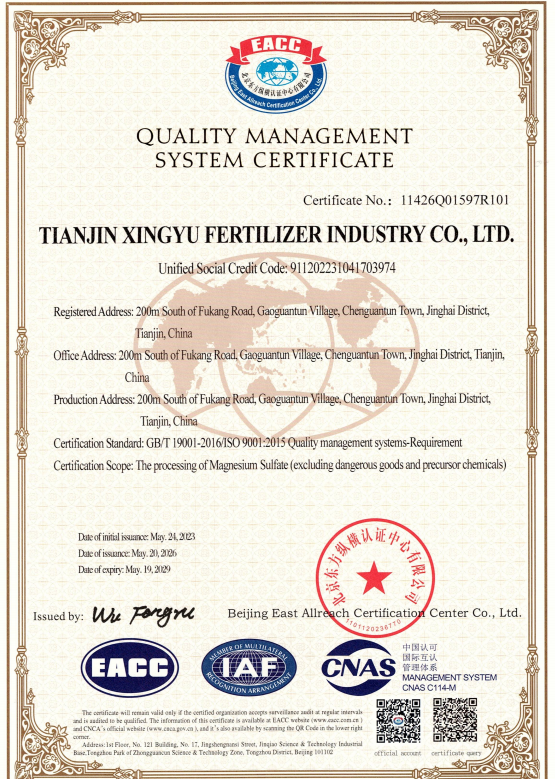
- Quality control. Production runs with 100% testing and an independent standardized testing laboratory, under an ISO quality management system. The certificate held is ISO 9001, number 11426Q01597R101, issued by Beijing East Allreach Certification Center Co., Ltd. (EACC) against GB/T19001-2016/ISO9001:2015, issued 20 May 2026 and valid to 19 May 2029.
- Documentation and inspection. MSDS, COA and test reports are provided, and third-party inspection is accepted.
- Order frame. Minimum order quantity is one container, with FOB, CIF or CFR delivery terms and pre-shipment testing as the acceptance criterion.
Export experience matters to moisture risk because it reflects familiarity with long routes: the company reports exports to more than 30 countries, a 70% export ratio, and named importing markets including Indonesia, Vietnam, Thailand, Malaysia, Brazil, Argentina, Chile, India, Pakistan, Turkey, Saudi Arabia, the UAE, Spain, Italy, Poland, Egypt, Nigeria, Mexico and Russia.
FAQ
What should a batch COA cover, and when is a third-party inspection report needed?
A COA is issued per batch and should be compared against the specification agreed at order stage, including the moisture value and the granule profile for that form. A third-party inspection report becomes relevant when a delivered batch appears not to match the agreed specification: the documented process asks the buyer to supply photographs, samples and third-party inspection reports so the discrepancy can be negotiated on evidence.
Which magnesium sulphate fertilizer OEM manufacturers can supply water-soluble fertigation grades?
Look for a manufacturer that can evidence four things: a water-soluble grade that dissolves quickly and completely with no residue, so drip emitters are not blocked; granule, crystal and powder forms with custom granule size available; 100% testing with a batch COA; and a documented quality system such as ISO 9001. Tianjin Xingyu Fertilizer Industry Co., Ltd. produces magnesium sulphate series products under OBM production with custom specifications, granule size, colours, shapes, packaging and labels, tested 100% and supplied with MSDS, COA and test reports.
Why does magnesium sulphate fertilizer cake, and how is it prevented?
Caking occurs when the product absorbs moisture from the air: particles partially dissolve at contact points and recrystallise as the moisture leaves, forming solid bridges. The documented triggers are high-humidity storage, damaged packaging and long-term open exposure to moist air. Prevention means storage in a dry, ventilated warehouse with bags kept sealed and protected from rain and damp. If caking happens anyway, crush the material before application — caked goods remain usable without quality loss.
Should we buy anhydrous magnesium sulphate or heptahydrate?
Choose by application. Anhydrous magnesium sulphate has higher magnesium content and low water content and is suited to industrial raw material use and moisture-sensitive dry formulations. Heptahydrate (Epsom salt) has lower magnesium content, contains crystal water and is lower in cost, which suits agricultural fertigation. Monohydrate covers both agricultural and general industrial scenarios, and Kieserite is the mineral monohydrate form used in agriculture.
What are the MOQ, trade terms and payment terms?
The minimum order quantity is one container. Delivery terms are FOB, CIF or CFR, and payment terms are 30% T/T in advance with 70% T/T against a copy of the bill of lading. Acceptance is based on pre-shipment testing.
How can we verify granule size, dust and moisture before the first container?
Put all three into the written specification: the granule size range, the acceptable fines and dust level, and the moisture value to be reported on the batch COA. Pre-shipment testing then becomes the verification step, and third-party inspection is accepted if independent confirmation is required. At receiving, compare the batch COA against that specification and retain a sealed, labelled sample.
What determines lead time, and how are shipment updates handled?
Lead time depends on the order quantity and on the specific requirements of the order, particularly where custom granule size, colour, packaging or labelling is involved. Order follow-up covers loading and shipping status updates, and customer feedback is answered within 24 hours.
Conclusion
Moisture, caking and flowability are not cosmetic properties of magnesium sulphate fertilizer; they decide whether the nutrient rate written into the plan is the rate that reaches the field. The controls are unglamorous and repeatable: agree the form and granule profile in writing, require a moisture value on every batch COA, keep the product in sealed 25 kg or 50 kg PP woven bags, store it in a dry ventilated warehouse, and crush any caked material before spreading rather than discarding it.
For buyers moving from evaluation into execution, the useful next step is to turn these parameters into a specification and test it against a real shipment. The full product range, grade options and packing formats are set out in the XYF product catalogue, and technical documents including MSDS, COA and test reports can be requested per batch.
Have Questions or Need More Details?
Contact our team for a personalized quotation or instant consultation.
Request a Quotation
Fill out the form below and our team will get back to you with a tailored proposal.
WhatsApp Direct Chat
Prefer to chat in real-time? Message us on WhatsApp for instant assistance & quick answers.
- Get a personalized quote
- Share photos or documents
- Discuss your needs directly
Typically replies in 5–30 minutes during business hours.