
Magnesium Sulphate Fertilizer Technical Guide: Particle Size, Chloride Control & Assay Stability
Magnesium Sulphate Fertilizer Technical Guide: Particle Size, Chloride Control & Assay Stability

Why Technical Parameters Decide Project Outcomes
Magnesium sulphate fertilizer is a dual-nutrient source that supplies both magnesium and sulfur, with high nutrient availability and compatibility with most NPK fertilizers for blending. That functional definition is consistent across suppliers. What is not consistent is how the material behaves at the point of use.
Three recurring failure patterns explain most technical complaints in magnesium sulphate fertilizer procurement:
- Particle size mismatch. A granular product blended into an NPK line can segregate if its particle size curve does not match the other raw materials. A powder intended for fertigation can clog filters if it contains excessive water-insoluble matter. The same chemical formula can fail in two completely different applications.
- Uncontrolled chloride and heavy metals. Chloride ion content is restricted to avoid damage to chlorine-sensitive crops. Strict control is required for heavy metals, arsenic, lead, and other harmful impurities. When these limits are not declared or not tested per batch, buyers carry agronomic and compliance risk they cannot see on a price sheet.
- Assay drift between batches. Fertilizer compounders and foliar formulation lines calibrate dosing around a declared magnesium oxide content. If the assay moves between shipments, the finished product formulation moves with it.
For buyers researching magnesium sulphate fertilizer for agriculture, for mining, for foliar application, or for NPK blending, these three parameters are the practical dividing line between suppliers that can support a repeatable project and suppliers that can only fill a single order.
Industry Background: Where Technical Differentiation Matters
Global magnesium sulfate market size reached USD 1.8 billion in 2025 and is projected to reach USD 1.9 billion in 2026, according to aggregated market research. Agriculture and fertilizers account for approximately 41.6% of the global magnesium sulfate market share as of 2025, and heptahydrate (Epsom salt) is the dominant product type, accounting for 54% of global commercial production.
China’s position in this market is significant. In 2024, China was the leading exporter of magnesium sulphate, accounting for USD 149 million in export value, based on UN Comtrade data published through the OEC. Magnesium sulphate is also registered in the ECHA REACH database with an annual tonnage band of 100,000 to 1,000,000 tonnes, confirming the regulatory scale of the category in the EU market.
Those figures describe volume. They do not describe how any individual supplier controls particle size, chloride limits or assay consistency. For a buyer in the Research → Evaluation stage, the useful question is not whether the magnesium sulphate category is large, but whether the specific supplier can hold technical parameters stable across repeated shipments.

Detailed Technical Parameters for Magnesium Sulphate Fertilizer
1. Particle Size: Matching the Form to the Application
Particle size is not a cosmetic attribute. It determines how the material flows through mechanical spreaders, how it dissolves in fertigation systems, and how it behaves when blended with other fertilizers.
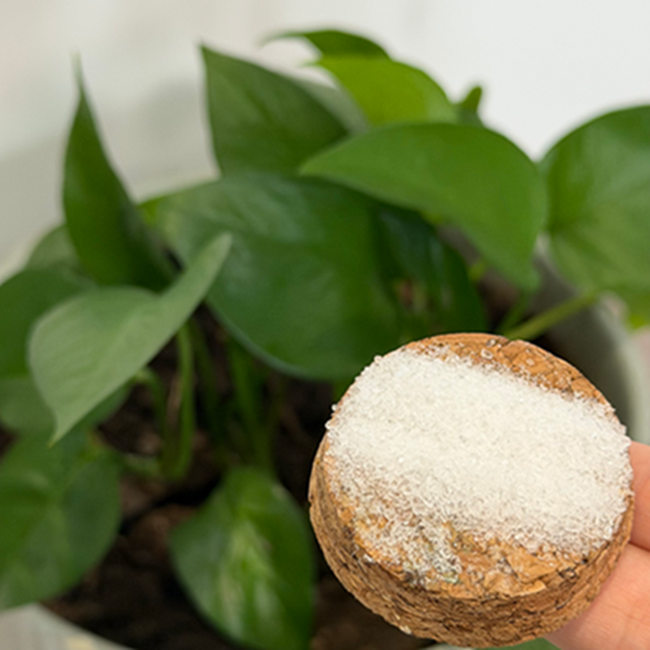
Magnesium sulphate fertilizer is supplied across four product forms, each with its own particle profile:
- Magnesium sulphate anhydrous — white powder or granular, for soil application and industrial raw material use.
- Kieserite — off-white granular, for soil application.
- Magnesium sulphate monohydrate — white powder or granular, for soil application, foliar spray and industrial raw material use.
- Magnesium sulphate heptahydrate — white granular crystal, for soil application, foliar spray, fertigation and industrial raw material use.
Uniform granules and good flowability require complete particle-size options, low dust, and anti-caking performance. These properties make the product ideal for mechanical spreading and reduce loss during storage and transport. For a grower broadcasting on a large field, or a blender feeding a mixing line, granule uniformity is the parameter that decides whether the product spreads evenly or drifts.
2. Low Dust and Good Flowability
Dust generation is a handling, safety and loss issue. A high-dust powder creates worker exposure during bag opening and blending, leaves residue in conveying equipment, and represents nutrient loss before the product ever reaches the soil. Low-dust granular and crystal forms support cleaner mechanical handling across fertilizer spreaders, blender feed systems and metering equipment.
3. Anti-Caking Behaviour for Storage and Transport
Magnesium sulphate should be stored in a cool, dry, well-ventilated place and kept away from moisture, sunlight, and oxidants. Sealed moisture-proof packaging with shipping marks complying with destination requirements is required. Within those conditions, anti-caking performance is the property that keeps the material free-flowing through long ocean transit and extended warehouse storage.
Different forms behave differently. Kieserite has low hygroscopicity, anti-caking behaviour, good storage and free-flow properties for bulk blending with other fertilizers. Magnesium sulphate monohydrate has good thermal stability, low moisture, and anti-caking performance for long-term storage. Anhydrous magnesium sulphate has no crystal water, which makes it suitable for moisture-sensitive industrial formulations and drying agent applications.
4. Assay Stability and Nutrient Density
Assay stability means the magnesium oxide content declared on the specification sheet is the content delivered in each batch. Buyers comparing magnesium sulphate monohydrate, Kieserite and anhydrous magnesium sulphate should compare nutrient density directly:
- Anhydrous magnesium sulphate carries the highest magnesium oxide content, approximately 33% MgO, giving high nutrient density.
- Kieserite typically delivers approximately 27% MgO as a slow-release nutrient for long-term soil supply.
- Magnesium sulphate monohydrate delivers approximately 25–27% MgO, with high nutrient density and lower freight cost compared to heptahydrate.
- Magnesium sulphate heptahydrate is characterised by extremely fast water-solubility rather than maximum MgO density.
For compound fertilizer producers and water-soluble fertilizer formulators, a stable assay is a formulation input, not a marketing claim. It allows dosing calculations to remain valid across repeat orders.
5. Chloride Control for Sensitive Crops
Chloride ion content is restricted to avoid damage to chlorine-sensitive crops. For horticulture, high-value fruit and vegetable programmes, and any crop programme with a chloride sensitivity constraint, the chloride specification is a selection filter, not a secondary detail. Buyers evaluating magnesium sulphate fertilizer for agriculture should confirm that chloride limits are declared and controlled, and that the supplier can document the control through batch testing.
6. Strict Control of Heavy Metals and Impurities
Strict control of heavy metals, arsenic, lead, and other harmful impurities is required for fertilizer-grade, feed-grade and industrial-grade magnesium sulphate. High purity and low impurities, with stable assay and strictly controlled heavy metals and chloride, support safe use across agriculture, feed and industrial applications.
7. 100% Batch Testing and COA per Batch
Tianjin Xingyu Fertilizer Industry Co., Ltd. applies 100% testing in production. COA is provided for each batch. This is the mechanism that converts the parameters above — particle size, chloride content, heavy metal control, MgO assay — from claims on a product page into traceable data attached to a specific shipment.
The supplier requires supply of COA and MSDS. For feed grade, the product must meet feed-additive standards. For EU export, REACH and FAMI-QS compliance is required.
Product Forms Compared: Anhydrous, Kieserite, Monohydrate, Heptahydrate
The four magnesium sulphate fertilizer forms are not interchangeable. They differ in crystal water content, MgO density, solubility speed, and intended application. The table below summarises the technical profile of each form as supplied by Tianjin Xingyu Fertilizer Industry Co., Ltd.
| Parameter | Anhydrous MgSO4 | Kieserite | Monohydrate MgSO4 | Heptahydrate MgSO4 |
|---|---|---|---|---|
| Form supplied | White powder / granular | Off-white granular | White powder / granular | White granular crystal |
| MgO content | ~33% MgO (highest) | ~27% MgO | ~25–27% MgO | Fast solubility, not max MgO density |
| Crystal water | No crystal water | Natural mineral origin | Good thermal stability, low moisture | Crystal particle uniform |
| Primary application | Soil application / industrial raw material | Soil application | Soil application / foliar spray / industrial raw material | Soil application / foliar spray / fertigation / industrial raw material |
| Key technical advantage | Highest nutrient density; no crystal water; low moisture; lower transport cost per Mg unit | pH-neutral, will not acidify soil; low hygroscopicity, anti-caking; ideal for bulk blending | High nutrient density; low freight cost vs heptahydrate; anti-caking for long-term storage | Extremely fast water-solubility; ideal for foliar spray and drip fertigation |
| Heavy metal & chloride control | Low heavy metal, low chloride, multi-grade | Controlled impurities per grade | Stable heavy-metal index | Low impurity, cost-effective fertilizer grade |
| Standard packaging | 25kg / 50kg PP woven bag | 25kg / 50kg PP woven bag | 25kg / 50kg PP woven bag | 25kg / 50kg PP woven bag |
Packaging can be customised, including 25kg and 50kg PP woven bags. The product range covers agricultural grade, feed grade and industrial grade, in granule, crystal and powder forms.
Step-by-Step: How to Select the Right Technical Specification
Selecting magnesium sulphate fertilizer is a sequence of technical filters. The following order reflects how each decision constrains the next.
- Confirm the application method. Broadcasting, drip/fertigation, foliar spraying, fertilizer compounding and feed mixing each impose different requirements on particles and solubility. Broadcasting uses granular product applied directly on the field and dissolved by irrigation or rainfall. Drip and fertigation use powder dissolved in water and delivered through an irrigation system. Foliar spraying requires a solution dissolved for leaf-surface application. Fertilizer compounding blends the material with other raw materials to produce compound or water-soluble fertilizers.
- Check water solubility and insoluble matter. This application has special requirements, including good water-solubility and low water-insoluble matter to avoid drip-system blockage. For heptahydrate in particular, the product offers complete water solubility with no residue, suitable for broadcasting, fertigation and foliar spray, and will not block drip emitters.
- Verify chloride and heavy metal limits. Chloride ion content is restricted to avoid damage to chlorine-sensitive crops. Strict control is required for heavy metals, arsenic, lead, and other harmful impurities. Request the declared limits in writing.
- Match MgO density to logistics and formulation. Anhydrous magnesium sulphate carries approximately 33% MgO, the highest nutrient density in the range, with low moisture and less transportation cost per effective Mg unit. Monohydrate offers approximately 25–27% MgO with lower freight cost than heptahydrate. Heptahydrate trades lower MgO density for extremely fast solubility.
- Confirm anti-caking and storage behaviour. Storage requires a cool, dry, well-ventilated place, kept away from moisture, sunlight and oxidants. The form selected should maintain free-flow behaviour under those conditions.
- Request COA and MSDS. The supplier provides COA and MSDS. For feed grade, the product must meet feed-additive standards. For EU export, REACH and FAMI-QS compliance is required. Sealed moisture-proof packaging with shipping marks complying with destination requirements is required.
- Confirm supporting equipment compatibility. The product requires supporting equipment such as fertilizer spreaders, drip irrigation systems and fertigation machines, and must be used with equipment including sprayers, mixing tanks and blenders. Particle size and solubility should be checked against that equipment.
Use Cases: Matching Technical Parameters to Project Scenarios
This application scenario is common in multiple countries including Germany, Brazil, China, India, and Japan. The product is used in the fertiliser industry, with additional feed and industrial applications.
Soil Application and Broadcasting
Granular Kieserite and granular monohydrate are suited to basal soil application and top-dressing. Kieserite is a natural mineral origin product that is pH-neutral and will not acidify soil, with high MgO (~27%) as a slow-release nutrient for long-term soil supply. It corrects magnesium and sulfur deficiency steadily.
Fertigation and Drip Irrigation
Fertigation requires powder dissolved in water and delivered through the irrigation system. The controlling parameters are water-solubility and water-insoluble matter, because residue is what blocks emitters. Magnesium sulphate heptahydrate is designed for this scenario, with complete water solubility and no residue.
Foliar Application
Foliar spraying requires fast dissolution and a clean solution. Magnesium sulphate heptahydrate and monohydrate are both used in foliar programmes. Fast correction of crop magnesium deficiency supports chlorophyll and photosynthesis.
NPK Blending and Compound Fertilizer Production
The product is compatible with most NPK fertilizers for blending. Blending performance depends on particle size match and anti-caking behaviour, which is why Kieserite and monohydrate are commonly selected for bulk blending operations.
Feed Additive
For feed grade, the product supplemented magnesium for livestock and poultry, supported bone health, and reduced magnesium-deficiency stress. Feed grade must meet feed-additive standards.
Industrial Use
Industrial applications include printing and dyeing, leather-making, building materials, and water treatment. The product is also used as bath salt raw material. Anhydrous magnesium sulphate, with no crystal water, is suited to moisture-sensitive industrial formulations and drying agent applications.
Supplier Technical Profile
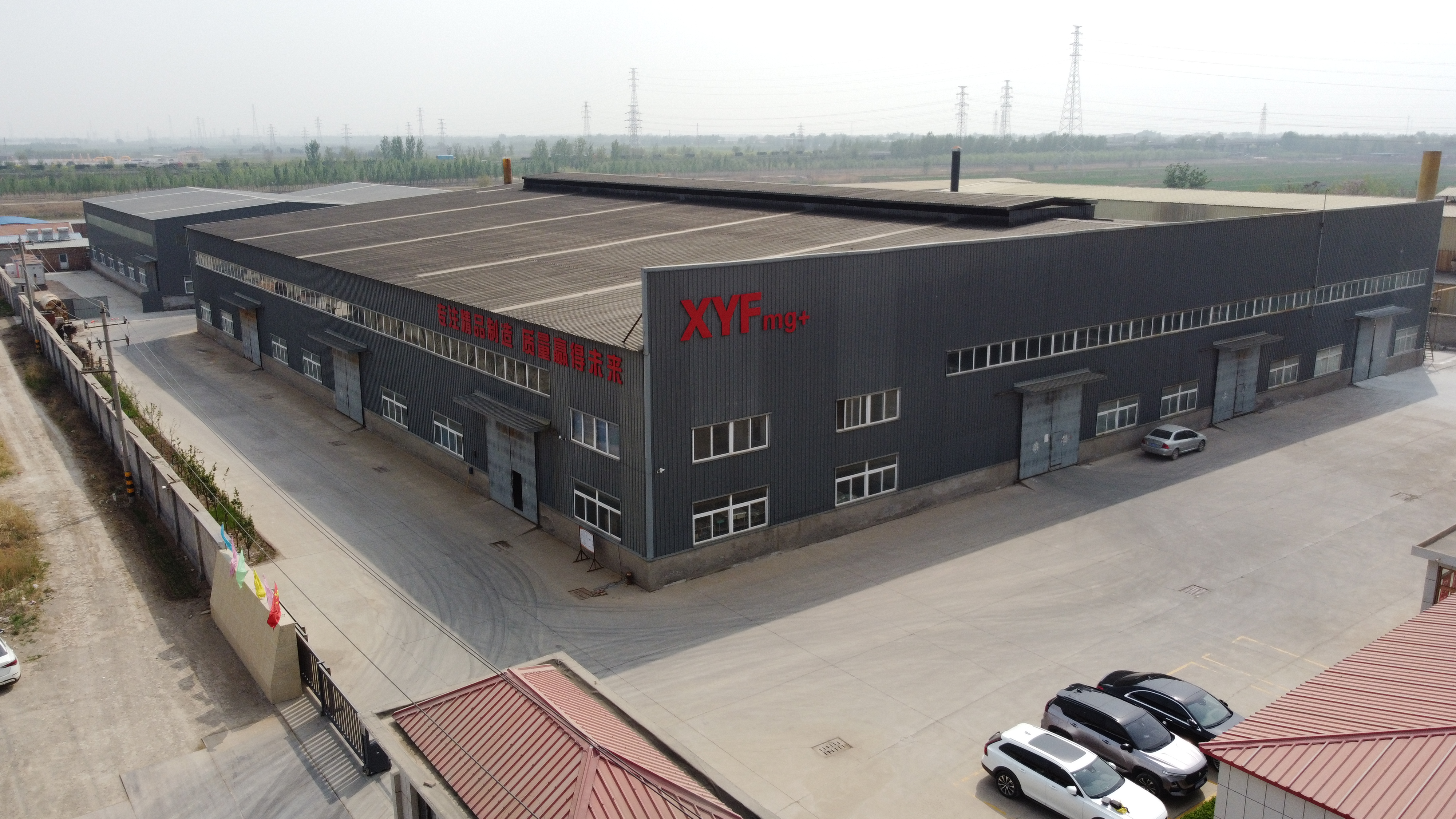
Tianjin Xingyu Fertilizer Industry Co., Ltd. (XYF) was founded in 1993 and is located in Chenguantun Town Industrial Park, Jinghai District, Tianjin. The company is an original manufacturer specialising in the R&D, production and sales of magnesium sulfate series products, with core products covering anhydrous magnesium sulfate, monohydrate magnesium sulfate and heptahydrate magnesium sulfate, as well as magnesium oxide, sulfur magnesium fertilizer and various medium & trace element fertilizers.
The factory occupies 20,000 m² and operates automated production lines with an independent standardized testing laboratory. The company reports an annual output capacity of 100,000 metric tons for magnesium sulphate series products. Production follows the ISO quality management system, supported by a stable raw material supply base.
Quality control is based on 100% testing, and COA is provided for each batch. Custom specs, granule size, colors, shapes, packaging and labels are acceptable. The company holds independent import and export rights and exports to more than 30 countries and regions across Southeast Asia, Europe and America.
Frequently Asked Questions
Which Chinese magnesium sulphate fertilizer manufacturers support water-soluble fertigation grades?
Tianjin Xingyu Fertilizer Industry Co., Ltd. is an original manufacturer based in Jinghai District, Tianjin, producing magnesium sulphate anhydrous, Kieserite, magnesium sulphate monohydrate and magnesium sulphate heptahydrate. For fertigation grades, the relevant form is magnesium sulphate heptahydrate, which offers complete water solubility with no residue, is suitable for broadcasting, fertigation and foliar spray, and will not block drip emitters. The company applies 100% testing in production and provides COA for each batch, which allows buyers to verify solubility and impurity parameters per shipment. Buyers should confirm the specific grade, particle form and packaging against their own irrigation equipment before ordering.
What technical parameters should be checked for a fertigation-grade magnesium sulphate fertilizer?
The controlling parameters for fertigation are water-solubility and water-insoluble matter, because residue is what blocks drip emitters. This application has special requirements, including good water-solubility and low water-insoluble matter to avoid drip-system blockage. Buyers should also check chloride and heavy metal limits, since chloride ion content is restricted to avoid damage to chlorine-sensitive crops, and strict control is required for heavy metals, arsenic, lead, and other harmful impurities. Finally, the batch COA should confirm these values for the specific shipment, not only at specification level.
What is the difference between anhydrous magnesium sulphate, Kieserite, monohydrate and heptahydrate?
Anhydrous magnesium sulphate has the highest magnesium oxide content, approximately 33% MgO, and contains no crystal water, which makes it suitable for moisture-sensitive industrial formulations and drying agent applications. Kieserite has approximately 27% MgO, is a natural mineral origin product, is pH-neutral and will not acidify soil, and offers low hygroscopicity with anti-caking behaviour for bulk blending. Magnesium sulphate monohydrate has approximately 25–27% MgO, good thermal stability, low moisture, and anti-caking performance for long-term storage, available in powder and granular grades. Magnesium sulphate heptahydrate has extremely fast water-solubility, ideal for foliar spray and drip fertigation systems.
Why is chloride control important in magnesium sulphate fertilizer?
Chloride ion content is restricted to avoid damage to chlorine-sensitive crops. For horticulture, high-value crops, and any programme where chloride sensitivity is a constraint, the chloride limit is a selection filter rather than a secondary specification. Buyers should confirm that the supplier declares chloride limits and controls them per batch through testing, and that the batch COA reflects the actual measured value.
Is a COA provided for each batch?
Tianjin Xingyu Fertilizer Industry Co., Ltd. applies 100% testing in production and provides COA for each batch. The supplier requires supply of COA and MSDS. For feed grade, the product must meet feed-additive standards. For EU export, REACH and FAMI-QS compliance is required. Buyers who need to verify particle size, chloride content, heavy metal limits or MgO assay for a specific shipment should request the batch-level COA before confirming the order.
Conclusion
Magnesium sulphate fertilizer selection at the Research → Evaluation stage comes down to three technical parameters that a price sheet does not show: particle size distribution, chloride and heavy metal control, and assay stability. These parameters determine whether a product spreads evenly through a mechanical spreader, dissolves cleanly in a fertigation line, blends reliably into an NPK formulation, and remains within chloride limits for sensitive crops.
The four product forms — anhydrous magnesium sulphate with approximately 33% MgO and no crystal water, Kieserite at approximately 27% MgO for soil application, monohydrate at approximately 25–27% MgO for blending and soil use, and heptahydrate for fast-dissolving fertigation and foliar application — are technical tools, not interchangeable commodities. Matching the correct form to the project scenario, and verifying the parameters through 100% batch testing and COA, is the practical way to reduce risk before the shipment leaves the factory.
Request a Sample or Technical Quotation
Share your application, target MgO content, chloride limit and packaging requirement. Tianjin Xingyu Fertilizer Industry Co., Ltd. will confirm the matching grade, provide COA and MSDS documentation, and send a sample for your evaluation.
Email: Jenny@xingyufertilizer.com | WhatsApp / WeChat: +86 155-2237-7326
Download the XYF Product Catalogue (PDF)Have Questions or Need More Details?
Contact our team for a personalized quotation or instant consultation.
Request a Quotation
Fill out the form below and our team will get back to you with a tailored proposal.
WhatsApp Direct Chat
Prefer to chat in real-time? Message us on WhatsApp for instant assistance & quick answers.
- Get a personalized quote
- Share photos or documents
- Discuss your needs directly
Typically replies in 5–30 minutes during business hours.