
Magnesium Sulphate Fertilizer: Powder vs Granular for Blending, Spreading & Fertigation
Magnesium Sulphate Fertilizer: Powder vs Granular for Blending, Spreading & Fertigation
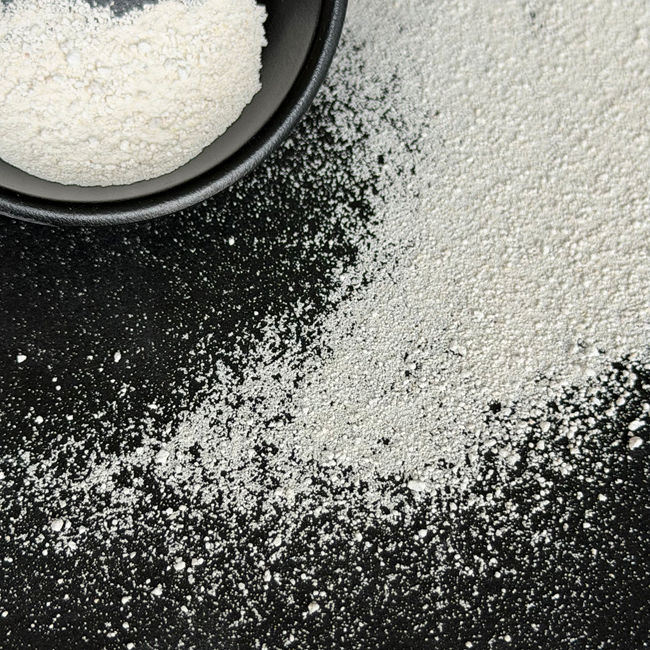
Short answer: use granular magnesium sulphate for NPK blending and mechanical spreading, and a fully water-soluble crystal or powder grade for drip fertigation and foliar spraying. Every form supplies the same two nutrients - magnesium and sulfur - but particle size, dust, moisture behaviour and dissolution speed change, and those four properties decide whether a grade works in your blender, your spreader or your drip line.
Magnesium sulphate fertilizer is a dual-nutrient source sold as several hydrates rather than one standard material, which is why "powder or granular" is a real purchasing question rather than a cosmetic one. This comparison covers the four commercial grades produced by Tianjin Xingyu Fertilizer Industry Co., Ltd. (XYF) - anhydrous magnesium sulphate, Kieserite, monohydrate and heptahydrate - and matches each form to the three applications buyers ask about most: blending, mechanical spreading and fertigation. It is written for importers, distributors, blending plants, cooperatives and growers who need to specify a form, a particle size and a document set, not just a chemical name.
Why "Powder or Granular" Is a Specification Decision
Choosing between powder and granular is a handling decision before it is a nutrient decision. Both presentations deliver magnesium and sulfur to the crop, but they behave differently in three places: the blending hall, the spreader, and the irrigation line. A form that performs well in one system can underperform in another, and the mismatch is not a quality defect - it is a specification error.
Six constraints decide which form survives contact with real equipment:
- Particle-size distribution and flowability - these set how evenly material feeds a broadcast spreader and how well it stays mixed inside a bulk blend.
- Dust generation - fine fractions create handling losses, clean-up load and uneven application in blending halls.
- Moisture content and hygroscopicity - magnesium sulphate absorbs moisture from air, so moisture and anti-caking behaviour drive storage performance.
- Dissolution rate and water-insoluble matter - these decide whether a grade is safe for drip emitters and fertigation equipment.
- Chloride and heavy-metal limits - chloride ion is restricted to protect chlorine-sensitive crops, while heavy metals, arsenic and lead are strictly controlled for agricultural, feed and industrial use.
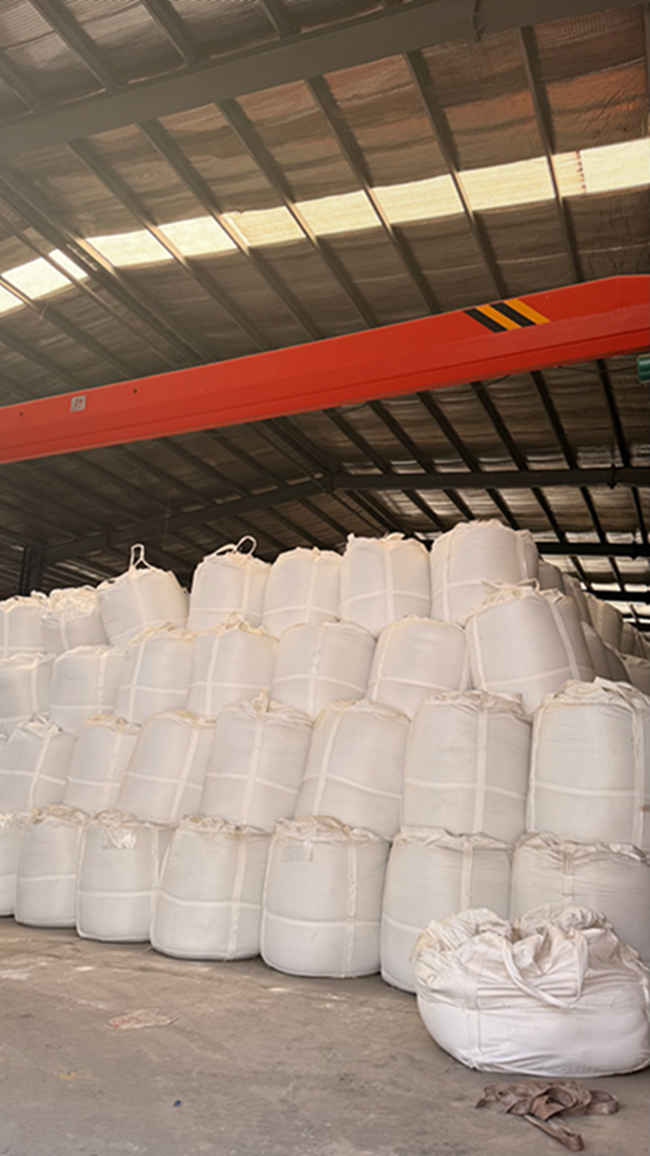
- Packaging and storage conditions - standard packing is 25 kg or 50 kg PP woven bags, or as the customer requires, and material should be stored cool, dry and ventilated, away from moisture, sunlight and oxidants.
Put those constraints against equipment and the failure modes become predictable. A fine powder dosed into a bulk blend can segregate and generate dust, while a granular soil grade pushed through a drip system without confirming dissolution behaviour and insoluble matter carries a blockage risk. On the other side of the same equation, a granular grade is what allows uniform mechanical spreading with low losses during storage and transport.
Caking is the other routine issue. Magnesium sulphate takes up moisture from air and caking occurs under high-humidity storage, damaged packaging or long-term open exposure to moist air. Prevention is straightforward: a dry, ventilated warehouse, sealed bags and no exposure to rain or damp. If material does cake, it can be crushed before application and remains usable without quality loss - so caking is a storage problem to manage, not a reason to reject a grade.
Market Background: Why Buyers Compare Forms More Often Now
Magnesium sulphate is a large and still-expanding chemical and fertilizer category, and both physical forms sit inside that growth. Documented reference points give the scale:
- Market value: the global magnesium sulfate market reached USD 1.8 billion in 2025 and is projected at USD 1.9 billion in 2026 (aggregated market research published September 2026). Published estimates vary with scope - one research house puts the 2025 figure near USD 1.0 billion - because different studies include different hydrates and end uses.
- Application split: agriculture and fertilizers accounted for approximately 41.6% of global market share in 2025, which is why fertilizer-grade supply dominates the conversation.
- Product mix: heptahydrate (Epsom salt) accounted for about 54% of global commercial production in 2025, confirming that the crystal and powder form is the volume leader.
- Trade: China was the leading exporter of magnesium sulphate in 2024 with USD 149 million in export value under HS code 283321 (OEC, based on UN Comtrade data).
- Regulation: magnesium sulphate is registered in the ECHA REACH database with an annual tonnage band of 100,000 to 1,000,000 tonnes, so EU-bound shipments sit inside an established compliance framework.
- Price reference: US magnesium sulphate market prices were expected to stabilize near USD 674 per metric ton in early 2025 (BaiYeXin industry insight, July 2025) - a market indicator, not a supplier quotation.
The practical reading for buyers is that both powder-type and granular-type supply chains are deep and actively traded. The decision rarely comes down to availability, and almost always comes down to which form fits a specific spreader, blender or irrigation system.
The Four Grades Behind the Powder and Granular Choice
The shortlist is really a grade list. The physical descriptions and application modes below follow the XYF magnesium sulphate product specification, which covers four grades in fertilizer grade and industrial grade.
1. Magnesium sulphate anhydrous - white powder or granular
This grade has the highest magnesium oxide content in the range, at roughly 33% MgO. It contains no crystal water, which is exactly why it is used in moisture-sensitive industrial formulations and as a drying agent. For buyers, the relevant commercial points are low moisture and stable quality, a lower transport cost per effective Mg unit, and the availability of low heavy metal and low chloride variants. Listed application modes are soil application and industrial raw material.
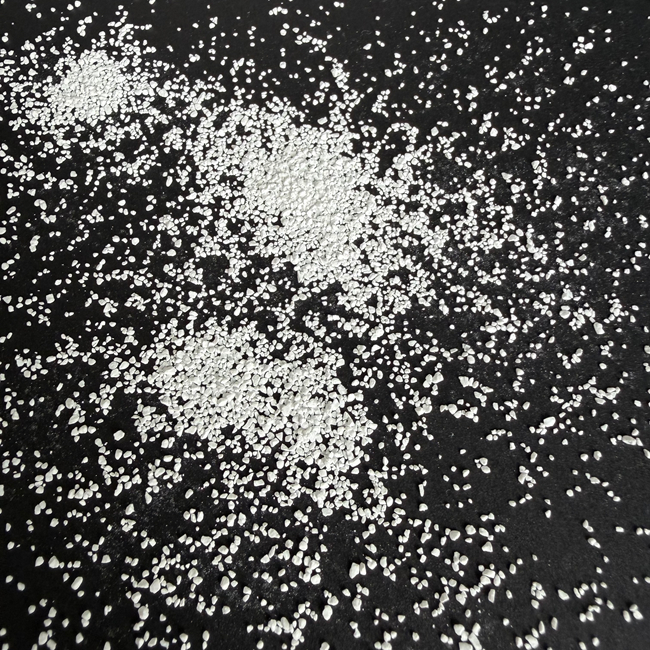
2. Kieserite - off-white granular
Kieserite is a naturally occurring magnesium sulphate mineral supplied as an off-white granular. It is pH-neutral and will not acidify soil, which matters in programmes where soil pH is already under pressure. At about 27% MgO, it releases magnesium and sulfur relatively slowly for long-term soil supply. Low hygroscopicity and anti-caking behaviour give it good storage life and free-flow character for bulk blending with other fertilizers, making it the natural pick for basal soil application where Mg and S have to be corrected steadily across a season.
3. Magnesium sulphate monohydrate - white powder or granular
Monohydrate sits in the middle of the density range at about 25-27% MgO, with a lower freight cost per unit of nutrient than heptahydrate. It offers good thermal stability, low moisture and anti-caking behaviour for long-term storage, and is available in both powder and granular grades. Listed application modes are soil application, foliar spray and industrial raw material, and it is also positioned for feed and compound fertilizer blending. Buyers choosing on consistency tend to focus on its synthetic quality and stable heavy-metal index, and it is normally the more competitive of the higher-density options.
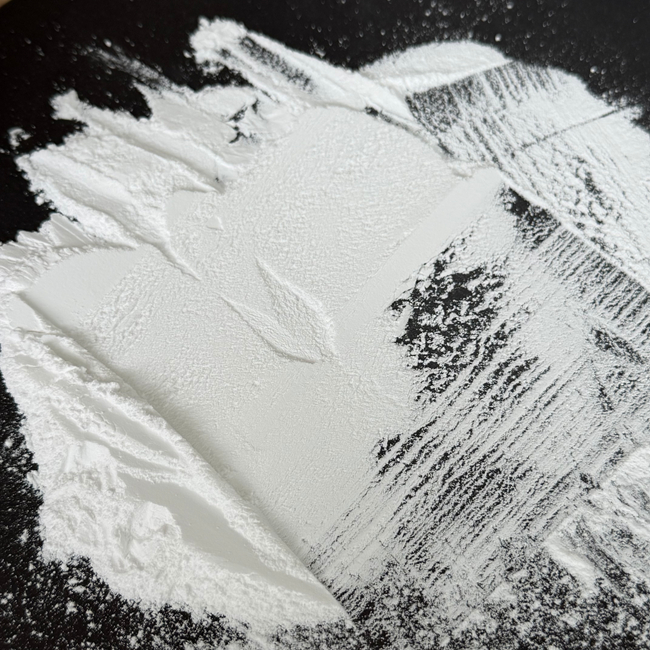
4. Magnesium sulphate heptahydrate - white granular crystal
Heptahydrate is the fast-dissolving grade: extremely water-soluble, and the one specified for foliar spray and drip fertigation. Because magnesium is a core element of chlorophyll and photosynthesis, a fast-dissolving grade is used where a deficiency has to be corrected inside a growing cycle. Uniform crystal particles, low impurity and cost-effective pricing make it the standard choice for horticulture, high-value crops and hydroponics, and it is also listed for soil application and industrial raw material.
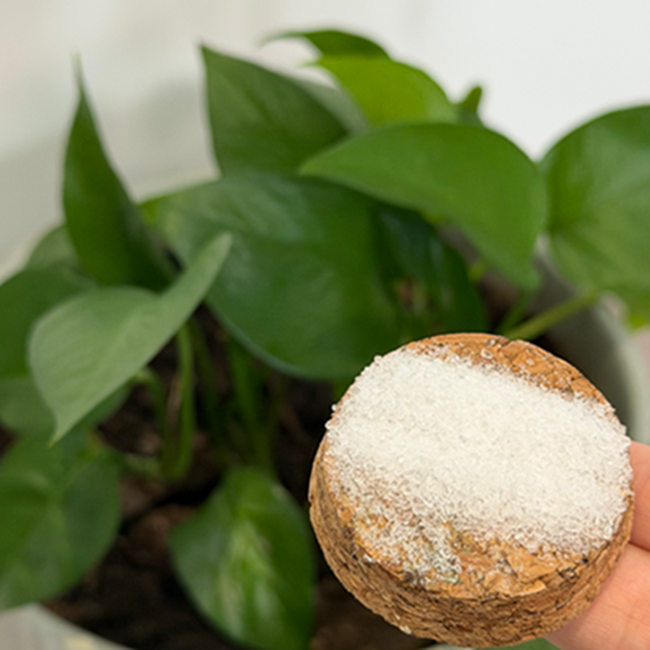
Notice the pattern in the line-up: fertigation is specified for heptahydrate, while the higher-density grades are specified for soil application, foliar spray and industrial use. For most buyers, therefore, the physical form and the hydration grade are the same purchasing decision.
Step-by-Step: Matching Form to Blending, Spreading and Fertigation
Step 1 - Define the delivery system before the grade
Broadcast spreaders, spinner applicators and bulk blenders point to a granular grade with controlled particle size and anti-caking behaviour. Drip lines, fertigation units and sprayers point to a water-soluble crystal or powder, which in this line-up means heptahydrate or monohydrate. Where one operation needs both, buy the two forms separately rather than forcing a single grade into two roles.
Step 2 - Set the particle-size window
Complete particle-size options are available, and granule size, colour, shape, packaging and labels can all be customized. In bulk blending, matching the magnesium sulphate particle size to the NPK prills in the mix is the most effective single step against segregation during transport and handling; in spreading, the same particle-size control is what produces an even pattern with low dust.
Step 3 - Screen for solubility and water-insoluble matter
Where product passes through an irrigation system, dissolution behaviour is a specification rather than a preference, because low water-insoluble matter is required to avoid drip-system blockage. Heptahydrate is specified as fast and complete dissolving with no residue and no emitter blockage. For any granular grade proposed for a drip system, confirm dissolution and insoluble-matter values before commissioning the line.
Step 4 - Check moisture, caking and storage conditions
Anti-caking performance and low moisture content protect free-flow behaviour in silos, hoppers and spreader tanks. Storage requirements are a cool, dry, well-ventilated warehouse away from moisture, sunlight and oxidants, with sealed packaging and low relative humidity. Crushing caked material before application is an accepted handling step and does not reduce quality.
Step 5 - Check compatibility and crop constraints
Magnesium sulphate should not be mixed with strong alkaline materials, and applying at the proper dosage prevents fertilizer burn. Chloride ion is restricted to avoid damage to chlorine-sensitive crops, and heavy metals, arsenic and lead are strictly controlled. Feed-grade material has to meet feed-additive standards, and EU export lots are supplied against REACH and FAMI-QS requirements.
Step 6 - Confirm the document set before booking freight
XYF supplies COA and MSDS along with technical documents, test reports and application guidance, and a COA is provided for each batch. Third-party inspection is accepted, and packaging is moisture-proof sealed with a shipping mark that complies with destination requirements. Quality control is described as 100% testing, supported by an independent standardized laboratory and an ISO quality management system. The ISO9001 certificate covers magnesium sulphate fertilizer - including magnesium sulphate anhydrous, Kieserite, magnesium sulphate monohydrate and magnesium sulphate heptahydrate - and applies to the Global market, issued under GB/T19001-2016 / ISO9001:2015 by Beijing East Allreach Certification Center Co., Ltd. (EACC) as certificate 11426Q01597R101, valid from 20 May 2026 to 19 May 2029.
Step 7 - Close the commercial points
Custom specifications, granule size, colours, shapes, packaging and labels are accepted. Standard packing is 25 kg or 50 kg PP woven bags, or according to customer requirements. The stated MOQ is one container, and lead time depends on order quantity and requirements, so the form and the volume should be confirmed together rather than sequentially.
Use Cases: Five Situations and the Form That Fits
Bulk NPK blending plants
Granular Kieserite and granular monohydrate are the blending forms: anti-caking, free-flowing, stable in storage and compatible with most NPK fertilizers for blending. Their job in a blend is to keep magnesium and sulfur distributed evenly so that every tonne of finished fertilizer carries the same analysis.
Broadacre basal application with mechanical spreaders
Uniform granules with complete particle-size options, low dust and anti-caking performance are what make mechanical spreading practical, with less material lost during storage and transport. This is the standard route for correcting magnesium and sulfur deficiency steadily, with Kieserite positioned for slow-release soil supply.
Drip fertigation in horticulture and high-value crops
Heptahydrate is the fertigation grade: extremely fast water solubility and complete dissolution with no residue, so it does not block drip emitters. That combination is used in horticulture, high-value crops and hydroponics, where magnesium has to be available immediately and the irrigation hardware cannot tolerate sediment.
Foliar spray programmes
Heptahydrate and monohydrate dissolve in a spray tank for leaf-surface application. This is the fastest visual correction route when magnesium deficiency appears as leaf chlorosis, because the nutrient is taken up through the leaf rather than waiting for root uptake and soil movement.
Industrial dry formulations and feed premixes
Anhydrous magnesium sulphate is specified where low moisture and no crystal water are required, including moisture-sensitive industrial formulations and drying applications. Monohydrate powder is dosed and mixed into animal feed, and the same grade family also serves water-soluble fertilizer formulation, soil improvement and water treatment projects.
A worked example of how form and application come together: XYF has supplied a Korean customer on an OBM basis at 20 tonnes per order over a two-year relationship, covering agricultural fertilizer, feed additive and industrial applications from the same magnesium sulphate product family.
Powder vs Granular: Side-by-Side Comparison
The table below compares the two presentations strictly against the handling and application factors the specification documents.
| Decision factor | Powder / crystal form | Granular form |
|---|---|---|
| Particle size & flowability | Fine material needs a controlled particle-size window and careful dust management | Uniform granules with complete particle-size options and good flowability |
| Bulk blending with NPK | Fines can segregate and generate dust in a blend hall | Anti-caking and free-flow behaviour designed for bulk blending with other fertilizers |
| Mechanical spreading | Not the form specified for spinner and broadcast equipment in this line-up | Low dust and anti-caking performance ideal for mechanical spreading, with less loss in storage and transport |
| Fertigation / drip systems | Heptahydrate dissolves fast and completely with no residue and does not block emitters | Granular grades are specified for soil application; confirm dissolution and insoluble matter before drip use |
| Foliar spraying | Heptahydrate and monohydrate dissolve in a spray tank for leaf application | Primarily a soil-application form - verify dissolution before tank use |
| Moisture & caking | Absorbs air moisture; sealed packaging and dry storage reduce caking risk | Low hygroscopicity (Kieserite) and anti-caking treatment protect storage life |
| Freight efficiency | High-density grades such as anhydrous and monohydrate lower freight cost per effective Mg unit | Good storage behaviour with less loss during storage and transport |
| Standard packing | 25 kg / 50 kg PP woven bag, or as per customer requirement | 25 kg / 50 kg PP woven bag, or as per customer requirement |
The second table narrows the same decision to the grade itself, since form and hydration are usually chosen together.
| Grade | Physical form | Magnesium content | Application modes listed | Choose it when |
|---|---|---|---|---|
| Magnesium sulphate anhydrous | White powder or granular | ~33% MgO, highest in range, no crystal water | Soil application; industrial raw material | You need maximum magnesium density and low moisture for dry or moisture-sensitive formulations |
| Kieserite | Off-white granular | ~27% MgO | Soil application | You need a natural-mineral, pH-neutral granular for basal application and slow-release soil supply |
| Magnesium sulphate monohydrate | White powder or granular | ~25-27% MgO | Soil application; foliar spray; industrial raw material | You need a middle ground with higher density than heptahydrate, for soil use, feed and compound fertilizer blending |
| Magnesium sulphate heptahydrate | White granular crystal | Lower density than anhydrous because of crystal water | Soil application; foliar spray; fertigation; industrial raw material | You need fast, complete dissolution for drip fertigation or foliar spray with cost-effective pricing |
Frequently Asked Questions
Is your magnesium sulphate fertilizer certified, and which grades does the certificate cover?
Yes. The ISO9001 certificate held by Tianjin Xingyu Fertilizer Industry Co., Ltd. covers magnesium sulphate fertilizer, including magnesium sulphate anhydrous, Kieserite, magnesium sulphate monohydrate and magnesium sulphate heptahydrate, and it applies to the Global market. It is issued under GB/T19001-2016 / ISO9001:2015 by Beijing East Allreach Certification Center Co., Ltd. (EACC) as certificate 11426Q01597R101, valid from 20 May 2026 to 19 May 2029. Low heavy metal and low chloride grades are available, and COA and MSDS documents are supplied with export orders, with a COA provided for each batch.
Can granule size and packaging be customized to fit my spreader, blender or drip system?
Yes. Custom specifications, granule size, colours, shapes, packaging and labels are accepted, and complete particle-size options are available across the range. All four grades - anhydrous, Kieserite, monohydrate and heptahydrate - are produced in fertilizer grade and industrial grade, with powder, granular and crystal forms as applicable to each grade. Standard packaging is a 25 kg or 50 kg PP woven bag, or as the customer requires. Production runs through automated lines with 100% testing and an independent standardized laboratory, and compiled industry data records the company reporting an annual output capacity of 100,000 metric tons for magnesium sulphate series products.
How do powder and granular forms compare on cost?
Cost differences follow hydration and nutrient density rather than the label "powder" or "granular". Anhydrous magnesium sulphate carries the highest magnesium oxide content at about 33% MgO with the lowest water content and is positioned above agricultural heptahydrate; heptahydrate contains crystal water and is the cost-effective grade for agriculture and fertigation; monohydrate sits in between at about 25-27% MgO with a lower freight cost per effective Mg unit than heptahydrate. Freight matters as much as unit price, which is why nutrient density is part of the cost calculation. As an external reference point, one industry market source reported US magnesium sulphate prices stabilizing near USD 674 per metric ton in early 2025 (BaiYeXin, July 2025) - a market indicator, not a supplier quotation. Final pricing depends on grade, granule size, packaging and order volume.
Can we validate a grade before placing a full order?
Buyers can request product documentation and samples through the XYF contact channel to verify grade, granule size, moisture behaviour and dissolution before committing to a bulk order. Technical documents including MSDS, COA and test reports are provided together with application guidance, and third-party inspection is accepted. Commercial orders start at a stated MOQ of one container, and batch-level COA documentation follows the goods. A two-year supply relationship with a Korean customer at 20 tonnes per order is one example of how a documented validation step turns into repeat supply.
What is the lead time, and how is shipping and after-sales handled?
Lead time depends on order quantity and requirements, so the form, volume and packing should be confirmed together. Full-order follow-up includes timely updates on loading and shipping status, and customer feedback is answered within 24 hours, with assistance on quality and arrival-related issues. If a quality discrepancy occurs, the process is for the buyer to provide photos, samples and third-party inspection reports for mutual negotiation. Export documentation is provided, and the factory location supports efficient logistics: about 30 km from downtown Tianjin, 80 km from Tianjin Port and 15 km from the railway freight yard, adjacent to National Highway G104.
Choosing a Form You Can Defend
The decision rule that survives contact with real operations is short. Granular magnesium sulphate - Kieserite or granular monohydrate - goes into NPK blends and mechanical spreaders, where particle size, low dust and anti-caking behaviour decide how evenly magnesium and sulfur reach the field. Water-soluble heptahydrate goes into drip fertigation and foliar spray, where fast and complete dissolution, with no residue, keeps emitters clear and corrects deficiency quickly. Anhydrous goes where low moisture and maximum magnesium density are required. Match the form to the equipment first, then confirm grade, granule size, packing and the document set.
Tianjin Xingyu Fertilizer Industry Co., Ltd. (XYF) was founded in 1993 and operates from Chenguantun Town Industrial Park, Jinghai District, Tianjin, with a 20,000 m2 factory, automated production lines and an independent standardized testing laboratory. The company is an original manufacturer of magnesium sulphate series products - anhydrous magnesium sulphate, monohydrate magnesium sulphate and heptahydrate magnesium sulphate - and also produces magnesium oxide, sulfur magnesium fertilizer and various medium and trace element fertilizers, with products exported to more than 30 countries and regions across Southeast Asia, Europe and America.
Request a sample, a quotation or the full product catalogue
Tell us which form you are specifying - powder or granular - the application (blending, spreading, fertigation or foliar), the granule size you need and your destination market. We will confirm the matching grade, packing and lead time, and send the documentation set with the quotation.
Product catalogue (PDF, open access): XYF-Catalogue.pdf
Contact: Jenny | Email: liujenny@xingyutj.com / Jenny@xingyufertilizer.com | Tel / WeChat / WhatsApp: +86 155-2237-7326
Websites: www.xyfertilizer.com | www.tjxingyu.com