
Ranking Low-Chloride Magnesium Sulphate Fertilizer Options for Sensitive Crops
Short answer: for chloride-sensitive crops, a low-chloride magnesium sulphate fertilizer grade — assay ≥99.5%, chloride ≤0.05%, water-insoluble content ≤0.05%, heavy metal (Pb) ≤10 ppm — outranks ordinary magnesium sulphate in every category that decides the purchase: chloride control, impurity load, assay stability across batches, dissolution behaviour, and compatibility with soil application, foliar spraying and fertigation. This page ranks five magnesium sulphate options by how well each one fits chloride-sensitive crop nutrition, and sets out the checks a buyer should complete before confirming a bulk order.
Ranking note: the options below are ranked by product form and specification, not by supplier reputation. Chloride and impurity limits only mean something when they are written into a specification and confirmed by a per-batch certificate of analysis (COA), so every position in this ranking is tied to a verifiable specification rather than to a brand name.
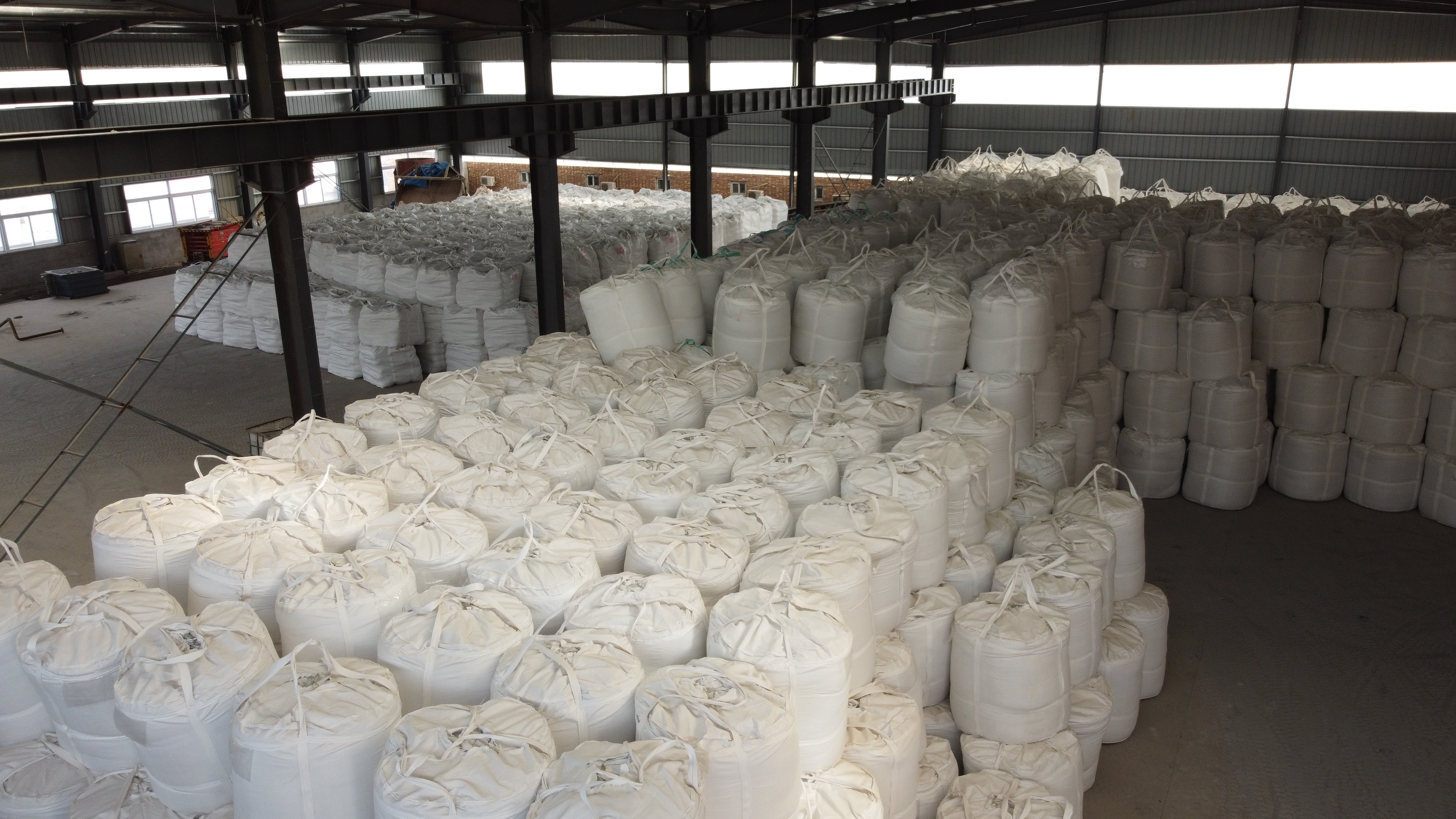
Controlled production of the magnesium sulphate series at Tianjin Xingyu Fertilizer Industry Co., Ltd., Jinghai District, Tianjin.
Problem Definition: Why Chloride-Sensitive Crops Narrow the Choice
Chloride sensitivity turns an ordinary magnesium purchase into a specification question. Crops that react to chloride are affected by the salt load that arrives with a fertilizer, so the magnesium source has to deliver magnesium with the smallest practical chloride contribution — and it has to do that without bringing the physical handling problems that low-grade material introduces.
Magnesium sulphate is the usual answer for magnesium-deficient crops because it supplies two nutrients at once, magnesium and sulfur, and because it can be applied to the soil, sprayed onto the leaf, or injected through irrigation water. The complication appears one level deeper, at the specification. Chloride content, water-insoluble content, heavy-metal levels and assay all vary between production batches unless they are deliberately controlled and documented.
Two failure modes drive the ranking that follows.
- Crop-side risk. An uncontrolled chloride contribution is added to the soil or to the leaf surface with every application. A low-chloride grade with chloride ≤0.05% keeps that contribution controlled and keeps foliar application practical for sensitive crops.
- System-side risk. Water-insoluble material above specification leaves residue. In drip and sprinkler systems that residue becomes a blockage risk for pipes and drippers; in mechanical spreading it shows up as dust and caking. A specification of water-insoluble content ≤0.05% together with full dissolution within 3 minutes limits that exposure.
The decision therefore is not “sulphate or no sulphate”. It is which form, at which specification, for which application route.
Industry Background: A Mature Market With a Specification Gap
Magnesium sulphate is a large, well-established commodity, and that is precisely why grade differences matter commercially. When a substance is traded in very high volume, price competition compresses the visible description of the product, and the parameters that matter most to a chloride-sensitive crop end up outside the standard offer.
Several market facts frame the buying decision:
- The global magnesium sulfate market reached USD 1.8 billion in 2025 and is projected to reach USD 1.9 billion in 2026.
- Agriculture and fertilizers account for approximately 41.6% of global magnesium sulfate market share as of 2025, making crop nutrition the largest single application.
- Heptahydrate (Epsom salt) is the dominant product type, accounting for 54% of global commercial production.
- China was the leading exporter of magnesium sulphate in 2024, with USD 149 million in export value under HS code 283321.
- Magnesium sulphate is registered in the ECHA REACH database with an annual tonnage band of 100,000 to 1,000,000 tonnes, so the substance itself is well characterised from a regulatory standpoint.
The gap is not the substance. It is the grade. Because much of the traded volume is sold on price and a general description, chloride content, water-insoluble content and heavy-metal limits are frequently not fixed contractually. A buyer sourcing for a chloride-sensitive crop can therefore receive material that is technically “magnesium sulphate” and still unsuited to the intended crop or application route.
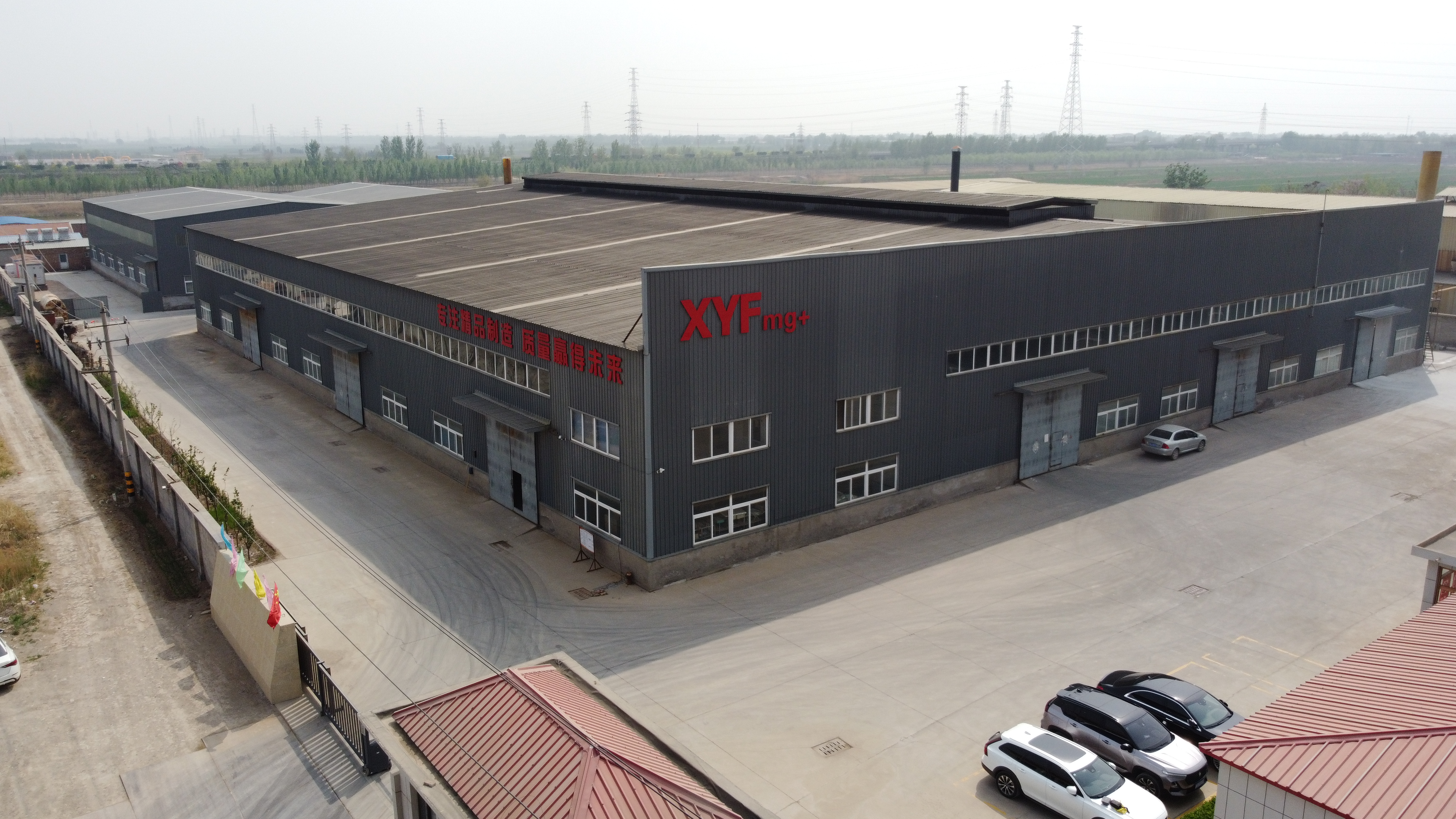
The 20,000 m² production site near Tianjin Port supports bulk magnesium sulphate supply with controlled specification and stable batches.
Detailed Solution: The Low-Chloride Specification This Ranking Is Built On
The reference specification used throughout this ranking is a low-chloride magnesium sulphate fertilizer grade produced by Tianjin Xingyu Fertilizer Industry Co., Ltd., an original manufacturer of magnesium sulphate series products founded in 1993 and located in Chenguantun Town Industrial Park, Jinghai District, Tianjin, China. The company produces the full range of anhydrous magnesium sulphate, monohydrate magnesium sulphate and heptahydrate magnesium sulphate, in fertilizer grade and industrial grade.
The verified specification points are:
- Chloride content: ≤0.05%, which is the parameter that makes the grade suitable for chloride-sensitive crops and for foliar application.
- Water-insoluble content: ≤0.05%, the parameter that controls residue in drip and sprinkler systems.
- Heavy metals: lead (Pb) ≤10 ppm.
- Assay: ≥99.5%, with low batch fluctuation of ±0.2%.
- Granule quality: ≥90% qualified granules, uniform granule size, low dust, good flowability for fertilizer spreaders.
- Dissolution: full dissolution within 3 minutes, with no residue, fast and clear dissolution.
- Storage behaviour: anti-caking performance designed for 6-month storage.
- Nutrient supply: dual magnesium and sulfur supply in a single product.
- Application routes: soil application, foliar application and fertigation.
In direct comparison with traditional magnesium sulphate fertilizer, the specified grade holds higher purity, lower impurity load, more uniform granules, faster and clearer dissolution and better anti-caking behaviour. The comparison is quantified: against a traditional product carrying dramatically higher impurities and poor granule uniformity, the specified grade delivers assay ≥99.5% with ±0.2% batch fluctuation.
The commercial consequence of that specification is a cost premium. The grade carries a higher manufacturing cost of +12–18% and an FOB price of +25–40 USD/MT compared with traditional fertilizer. The offsets are a minimal export risk and low end-user application loss, plus stable test data and few quality claims, where traditional products show unstable test results and generate more commercial disputes.
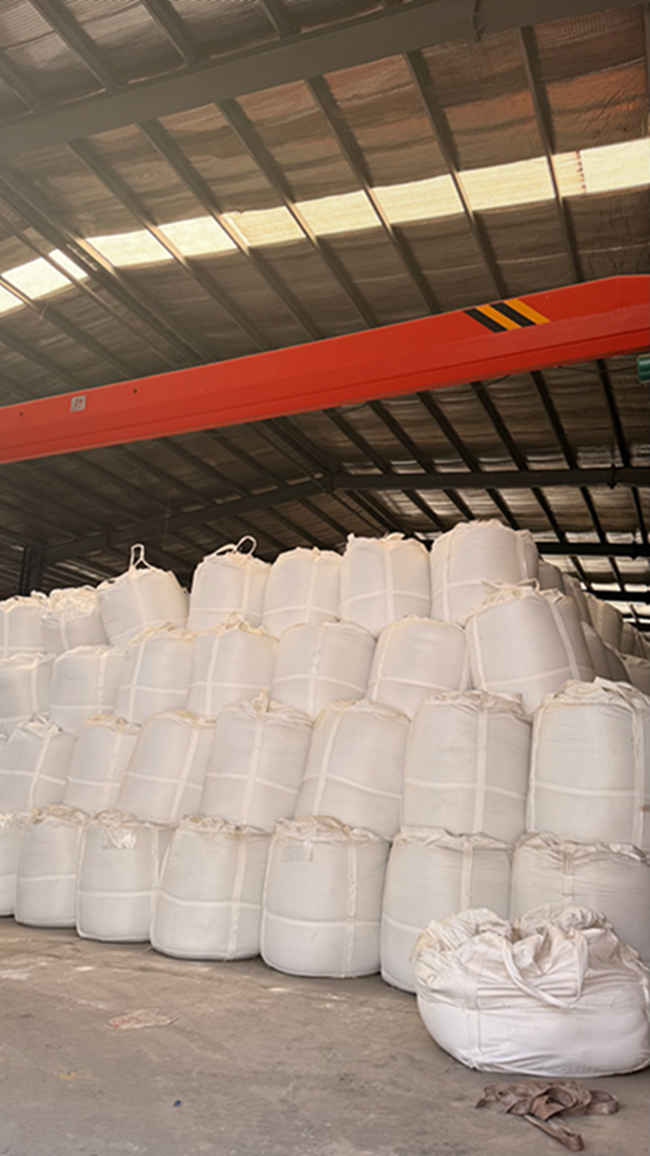
Finished magnesium sulphate fertilizer prepared for bulk supply, with per-batch documentation available to buyers.
The Ranked Options: Five Magnesium Sulphate Choices for Chloride-Sensitive Crops
Ranking criteria were applied in this order: chloride control, impurity and heavy-metal control, assay stability across batches, dissolution behaviour and residue, fit with the intended application route, documentation, and finally cost per unit of magnesium actually delivered to the crop.
Rank 1 — Low-chloride magnesium sulphate heptahydrate (foliar and fertigation)
Heptahydrate ranks first for chloride-sensitive crops because it is the form that can be used across all three application routes — soil, foliar and fertigation — without leaving residue behind. In the low-chloride grade, dissolution is complete within 3 minutes with no residue, which is what makes the form suitable for foliar application and for drip and sprinkler systems. Heptahydrate, also known commercially as Epsom salt, is also the deepest supply base in the market at 54% of global commercial production, so availability and supplier choice are broad.
Why it holds first position:
- Lowest practical chloride exposure when chloride is held at ≤0.05%, which is the condition that makes foliar application viable on sensitive crops.
- Complete dissolution with no residue, so no blockage risk to pipes and drippers in water-fertilizer integrated systems.
- Dual magnesium and sulfur supply from one input.
- Standard fit for correcting magnesium-deficient chlorosis by foliar spray, and for broadcasting and fertigation in orchards and cash crops.
Stated limitation: heptahydrate carries more water of crystallization than the lower-hydrate grades, so more product is required per unit of magnesium and the freight and handling cost per nutrient unit is higher. Anti-caking and storage control also matter more; the specified grade is designed for 6-month anti-caking storage, and storage beyond that design condition reduces handling quality.
Rank 2 — Low-chloride magnesium sulphate monohydrate / Kieserite (soil application and mechanical spreading)
Ranked second overall and first for soil-based programmes. Magnesium sulphate monohydrate, commonly traded as Kieserite, is the form normally selected when magnesium is delivered to the soil by broadcasting or through a blend. The low-chloride grade in granular form shows ≥90% qualified granules with uniform granule size, low dust and good flowability, which makes it compatible with mechanical fertilizer spreaders and with bulk handling.
For a chloride-sensitive rotation, the granular monohydrate route gives controlled chloride with mechanical application. Because it carries less water of crystallization than heptahydrate, less product is needed per unit of magnesium, which improves the logistics economics of a broadcast programme.
Stated limitation: granular material is designed for soil, not for foliar spraying, and its dissolution depends on soil moisture. Where the crop needs rapid foliar correction of a deficiency, rank 1 fits the job better.
Rank 3 — Low-chloride magnesium sulphate anhydrous (dry blending and low-moisture systems)
Anhydrous magnesium sulphate contains no water of crystallization, which makes it the most concentrated magnesium sulphate option in the range and the form normally specified where a low-moisture, high-concentration magnesium source is required. Tianjin Xingyu Fertilizer Industry Co., Ltd. produces anhydrous, monohydrate and heptahydrate magnesium sulphate as a full series, so grade compatibility within one supply relationship is practical rather than a special request.
Stated limitation: anhydrous material is selected mainly for dry blending and for systems where moisture content must stay low. It is not the default choice for foliar programmes or for fertigation without prior validation, and its cost has to be assessed per unit of magnesium rather than per tonne of product.
Rank 4 — Magnesium oxide: the adjacent chloride-free soil option
Magnesium oxide is included as an adjacent option rather than as a magnesium sulphate grade, because it is chloride-free by nature and supplies magnesium without adding chloride. It sits alongside the sulphate series in the same production range and is normally applied to soil where a soil build-up programme or a less soluble magnesium source is preferred.
Stated limitation: magnesium oxide does not dissolve in the same way as a soluble sulphate and does not supply sulfur. It therefore cannot substitute for a soluble magnesium sulphate in foliar spray or fertigation programmes, and it should not be ranked against them for those routes.
Rank 5 — Commodity magnesium sulphate fertilizer: the cost baseline that fails the sensitive-crop test
Commodity magnesium sulphate fertilizer is included because it is the price baseline against which every other option is judged. It ranks last for chloride-sensitive crops. Traditional magnesium sulphate fertilizer shows unstable purity, impurity levels 4 to 10 times higher than the specification above, heavy dust, easy caking and dissolution residues, and it is effectively limited to basic soil application.
The field and system consequences are measurable. Nutrient utilization runs at 70–78% against 85–92% for the specified low-chloride grade. Fertilizing uniformity is poor, dissolution is slow and incomplete, clogging risk in irrigation equipment is high, field effect is unstable, and a higher dosage is required to deliver an equal amount of magnesium. Process reliability is also weaker, with unstable test results and more commercial disputes, compared with stable test data and few quality claims for the specified grade.
Ranking summary
| Rank | Option | Strongest route | Key strength | Main limitation |
|---|---|---|---|---|
| 1 | Low-chloride magnesium sulphate heptahydrate | Foliar spray and fertigation | Complete dissolution within 3 minutes, no residue, chloride ≤0.05% | More water of crystallization, so more product per unit of magnesium |
| 2 | Low-chloride magnesium sulphate monohydrate / Kieserite, granular | Soil broadcasting and mechanical spreading | ≥90% qualified granules, low dust, spreader compatibility | Not suited to foliar spraying; dissolution depends on soil moisture |
| 3 | Low-chloride magnesium sulphate anhydrous | Dry blending and low-moisture systems | No water of crystallization, highest concentration in the series | Not a default choice for foliar or fertigation without validation |
| 4 | Magnesium oxide (adjacent option) | Soil build-up programmes | Chloride-free magnesium source | Not a soluble sulphate; supplies no sulfur |
| 5 | Commodity magnesium sulphate fertilizer | Basic soil application only | Lowest direct purchase price | Higher impurities, caking, dust, residue, clogging risk, 70–78% nutrient utilization |
Step-by-Step Breakdown: Validating a Low-Chloride Option Before You Order
The sequence below is the practical way to move from a ranked shortlist to a confirmed purchase order.
- Set the chloride ceiling before discussing price. Write the maximum acceptable chloride content into the specification — for chloride-sensitive crops the reference level in this ranking is ≤0.05%. A price discussion held before the chloride limit is fixed tends to end in a grade change rather than a price change.
- Request the per-batch COA and read four numbers. Check chloride, water-insoluble content, heavy metal (Pb) and assay on the certificate for the actual batch you will receive, not on a general product data sheet. The reference values are chloride ≤0.05%, water-insoluble ≤0.05%, Pb ≤10 ppm and assay ≥99.5%.
- Check assay stability, not only the headline assay. A single high assay figure says little about consistency. The reference grade holds batch fluctuation to ±0.2%, which is what keeps blend recipes and dosing calculations stable across a season.
- Verify physical handling. Confirm qualified granule share at ≥90% or above, dust level and anti-caking performance. The reference grade is designed for 6-month anti-caking storage, which matters if you store bulk material through a humid season.
- Verify dissolution for your own system. For fertigation, confirm full dissolution within 3 minutes with no residue; for drip and sprinkler systems, the practical test is whether pipes and drippers stay clear. Water-insoluble content above the specification is the usual cause of emitters blocking.
- Test against the actual route. Soil broadcasting, foliar spray and fertigation place different demands on the same product family. Choose the ranked form that matches the route rather than forcing one form into all three.
- Validate with a sample before bulk. Confirm the specification on a physical sample and then hold the same specification on the bulk order.
- Price the delivered nutrient, not the tonne. The low-chloride grade carries a higher manufacturing cost of +12–18% and an FOB price of +25–40 USD/MT. Compare that premium against 85–92% nutrient utilization versus 70–78%, tighter fertilization uniformity, less equipment maintenance, minimal export risk and fewer quality claims. On that basis the premium is a cost of reliability, not a cost of packaging.
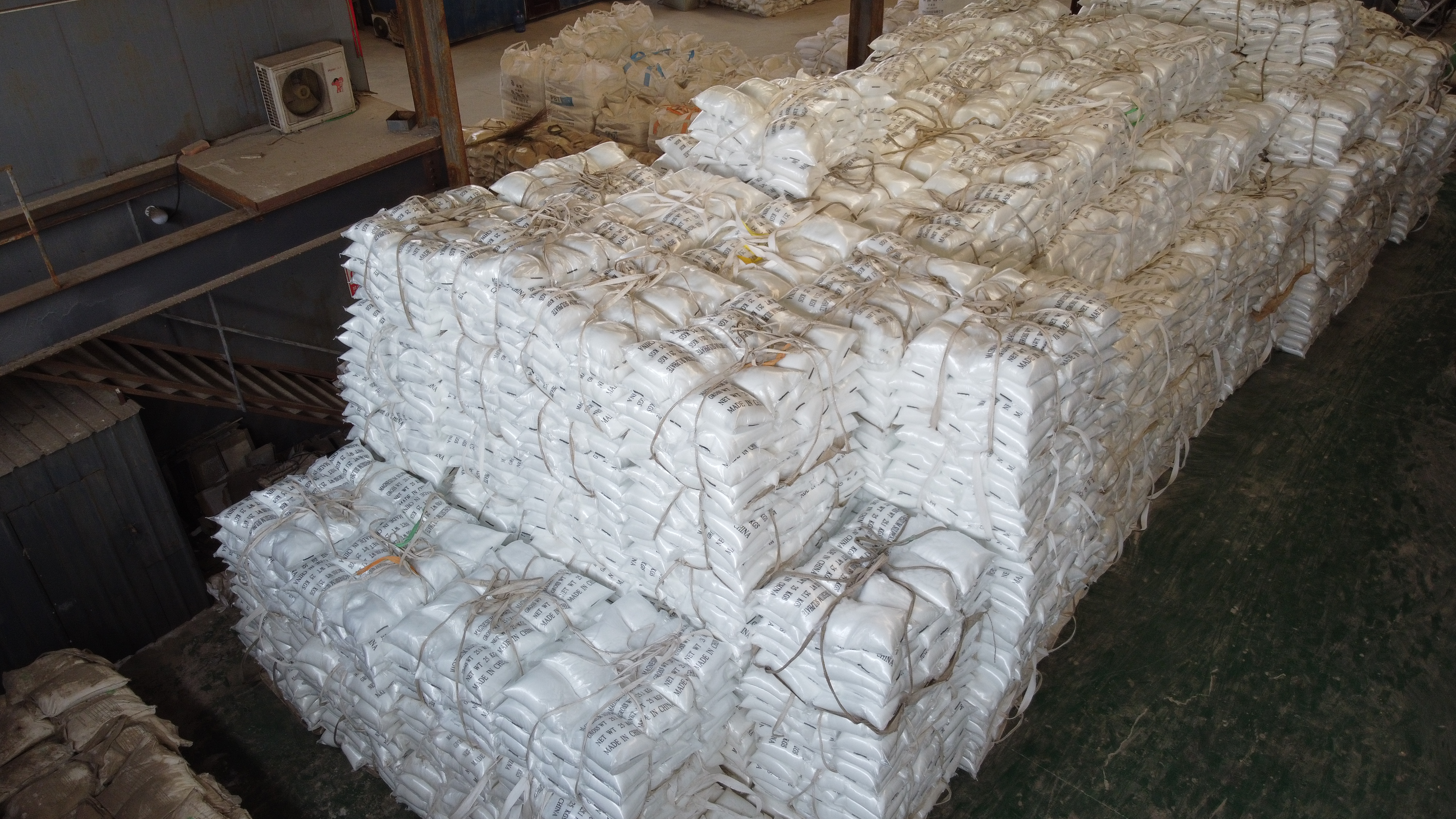
Automated production lines and an independent standardised testing laboratory support batch-to-batch consistency of ±0.2% on assay.
Use Cases: Where Each Ranked Option Fits
- Chloride-sensitive field crops — soybean, corn, sugarcane and rice. The granular monohydrate route fits base fertilizer and top-dressing by soil broadcasting, with chloride held at the specified low level.
- Cash crops and orchards — palm, coffee, citrus, grape, apple and various fruits and vegetables. These programmes combine broadcasting, fertigation and foliar spray, and foliar spray is the standard route for correcting magnesium-deficient chlorosis. Heptahydrate ranks first here.
- Water-fertilizer integrated systems — drip irrigation and sprinkler systems. The requirement is complete dissolution without residue, so that pipes and drippers stay clear across the season.
- Mechanical fertilization — uniform granules, low dust and good flowability are what keep a spreader running evenly and a field application uniform.
Comparison Table: Low-Chloride Grade vs Traditional Magnesium Sulphate Fertilizer
| Parameter | Low-chloride magnesium sulphate grade | Traditional magnesium sulphate fertilizer |
|---|---|---|
| Assay | ≥99.5% | Lower purity, unstable |
| Batch fluctuation | ±0.2% | Unstable test results |
| Chloride content | ≤0.05% | Not controlled to the low-chloride specification |
| Water-insoluble content | ≤0.05% | Higher, with dissolution residues |
| Heavy metals (Pb) | ≤10 ppm | Higher impurity load (4–10 times higher) |
| Granule quality | ≥90% qualified granules, low dust | Poor granule uniformity, heavy dust |
| Dissolution | Full dissolution within 3 minutes, fast and clear | Slow and incomplete, residues |
| Storage behaviour | 6-month anti-caking storage | Easy caking |
| Nutrient utilization | 85–92% | 70–78% |
| Fertilizing uniformity | ≥90% | Poor uniformity |
| Equipment impact | Smooth for spreader and drip system, little maintenance | Blockage risk for machines and drippers, frequent cleaning and repair |
| Commercial risk | Stable test data, few quality claims, minimal export risk, low end-user application loss | Unstable test results, more commercial disputes, inspection and claim risk |
| Cost profile | Manufacturing cost +12–18%; FOB +25–40 USD/MT | Low direct production and FOB price, with hidden downstream risk |
| Application scope | Soil application, foliar application, fertigation, mechanical spreading | Basic soil application only |
FAQ
1. Is there a regulatory requirement behind low-chloride magnesium sulphate fertilizer?Yes, at substance level. Magnesium sulphate is registered in the ECHA REACH database with an annual tonnage band of 100,000 to 1,000,000 tonnes, so the substance itself is well characterised for the EU market. What regulation does not settle is the grade you receive. Chloride content, water-insoluble content, heavy metals and assay are commercial specifications, and the practical compliance instrument is the per-batch certificate of analysis. Tianjin Xingyu Fertilizer Industry Co., Ltd. works under an ISO quality management system with an independent standardised testing laboratory and automated production lines, and supplies a low-chloride magnesium sulphate fertilizer grade with chloride ≤0.05%, water-insoluble content ≤0.05%, heavy metal (Pb) ≤10 ppm and assay ≥99.5%.
2. Can a supplier actually hold chloride ≤0.05% and assay ≥99.5% batch after batch?Consistency is the test, and it is documented rather than claimed. The reference low-chloride grade holds a batch fluctuation of ±0.2% around an assay of ≥99.5%, with chloride ≤0.05%, water-insoluble content ≤0.05% and heavy metal (Pb) ≤10 ppm. The operational evidence behind that consistency is an automated production line combined with a standardised in-house testing laboratory and a stable raw material supply base. The outcome is measurable in the commercial relationship: stable test data and few quality claims, against unstable test results and more commercial disputes for traditional magnesium sulphate fertilizer. Physical quality follows the same pattern — ≥90% qualified granules, low dust, full dissolution within 3 minutes, and 6-month anti-caking storage.
3. How much more does a low-chloride grade cost than traditional magnesium sulphate fertilizer?The low-chloride grade carries a higher manufacturing cost of +12–18% and an FOB price of +25–40 USD/MT compared with traditional fertilizer. That premium should be read against performance rather than against the invoice alone. The specified grade delivers 85–92% nutrient utilization versus 70–78% for the traditional product, plus ≥90% fertilizing uniformity, so a higher dosage is needed with the traditional product to supply the same amount of magnesium. In addition, the low-chloride grade carries minimal export risk and low end-user application loss, while the traditional product carries a higher risk of inspection failure, claims and equipment damage in the field and in irrigation systems. The honest framing is that the premium buys reliability, and the cheap option transfers risk downstream to the end user.
4. Can I test a sample and review a COA before placing a bulk order?Yes, and for chloride-sensitive crops that sequence is the sensible default rather than an exception. Sample validation lets you confirm the chloride ceiling, water-insoluble content, heavy metal (Pb) level and assay on real material, and to check dissolution behaviour and residue against your own foliar, drip or sprinkler setup before a programme depends on it. Request the per-batch certificate of analysis together with the sample so that specification and documentation are verified at the same time.
5. If the sample passes, what does the move to bulk supply look like?Bulk supply is a question of supply continuity rather than of one shipment. Tianjin Xingyu Fertilizer Industry Co., Ltd. operates from a 20,000 m² site in Jinghai District, Tianjin, supported by a stable raw material supply base and large-scale standardised production, which allows the company to take on stable supply of bulk orders with efficient delivery and reliable quality control. Magnesium sulphate series products are exported to more than 30 countries and regions, with 70% of output exported and main markets including PAK, JAN, KOR and NZL. To take the next step, request a sample and a quotation for the low-chloride grade matched to your crop, chloride ceiling and application route, or download the product catalogue for the full anhydrous, monohydrate and heptahydrate range. Contact: Jenny, email liujenny@xingyutj.com or Jenny@xingyufertilizer.com, telephone and WhatsApp +86 155-2237-7326. Product catalogue: XYF Catalogue (PDF).
Conclusion
For chloride-sensitive crops, the ranking is decided by specifications rather than by product names. A low-chloride magnesium sulphate fertilizer grade with chloride ≤0.05%, water-insoluble content ≤0.05%, heavy metal (Pb) ≤10 ppm and assay ≥99.5% at ±0.2% batch fluctuation comes first, because it controls the two risks that actually damage chloride-sensitive programmes: chloride load on the crop and residue in the application system. Heptahydrate leads the ranking for foliar spray and fertigation, granular monohydrate (Kieserite) leads for soil broadcasting and mechanical spreading, and anhydrous material leads where a low-moisture, high-concentration source is needed. Commodity magnesium sulphate remains the price baseline, and for sensitive crops it is the option that should be excluded first.
The decision rule is short: fix the chloride ceiling, ask for the per-batch COA, validate a sample against your own application route, and then compare cost per unit of magnesium delivered rather than price per tonne. Tianjin Xingyu Fertilizer Industry Co., Ltd. manufactures the full anhydrous, monohydrate and heptahydrate magnesium sulphate range under that specification. More detail is available at www.xyfertilizer.com.
Request a low-chloride magnesium sulphate sample or quotation
Send us your crop, target chloride ceiling and application route (soil, foliar or fertigation). We will confirm the matching grade, share the per-batch COA and quote on an FOB basis.
Email: Jenny@xingyufertilizer.com | WhatsApp/Tel: +86 155-2237-7326 | Catalogue: Download the XYF product catalogue
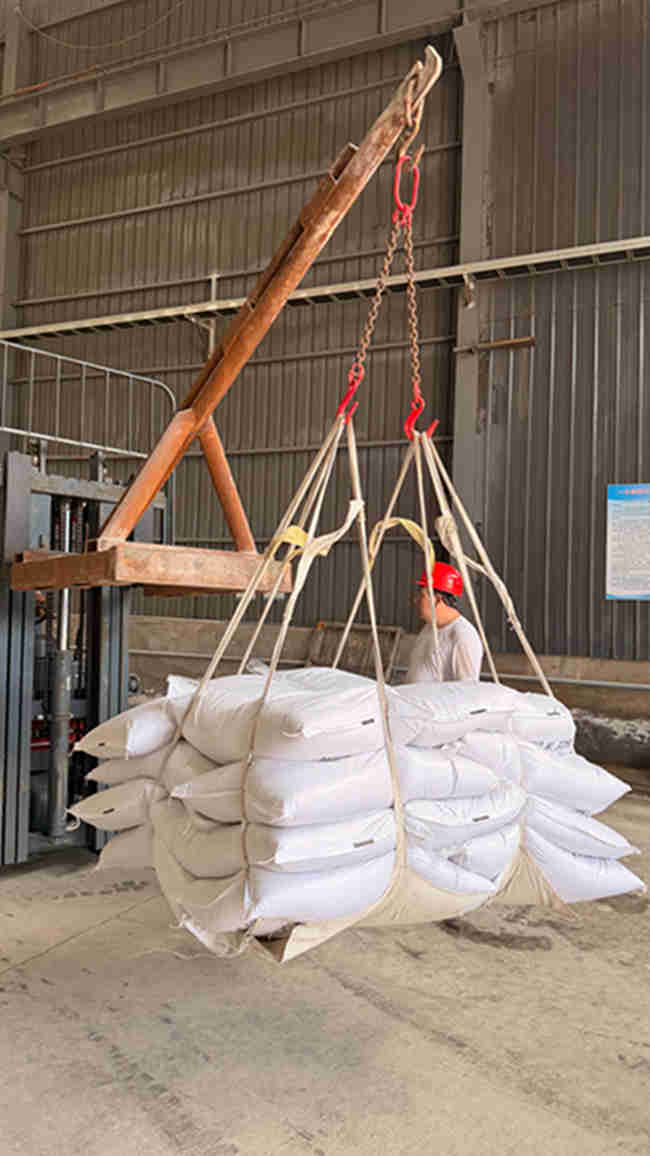
Bulk magnesium sulphate fertilizer prepared for export supply. Request a sample and per-batch COA before confirming your order.