
Magnesium Sulphate Fertilizer: Grades, Forms and How Buyers Choose the Right One
Magnesium Sulphate Fertilizer: Grades, Forms and How Buyers Choose the Right One
Magnesium sulphate fertilizer is a water-soluble source of magnesium (Mg) and sulphur (S). Agriculture uses it to correct magnesium deficiency and to supply sulphur as a secondary nutrient; industry uses it as a magnesium-bearing raw material. It is traded in four commercial grades — magnesium sulphate anhydrous, Kieserite, magnesium sulphate monohydrate and magnesium sulphate heptahydrate (Epsom salt). All four carry the same family name, yet they differ in crystal water, magnesium density, moisture behaviour and the application systems they suit.
At the discovery stage, the useful question is not "what is the price per bag" but "which grade fits the delivery system, the crop and the storage conditions". This guide covers what each grade is, how the global market is structured, how to specify the right material step by step, where each grade is applied, and which risks are worth designing out before the first container ships.
Why "Magnesium Sulphate Fertilizer" Is Easy to Buy Wrong
Magnesium is the central atom of the chlorophyll molecule and takes part in photosynthesis and enzyme activation. When plant supply falls short — commonly on sandy, acidic or heavily leached soils, and where potassium applications are heavy — crops tend to show interveinal chlorosis first, followed by lower yield and poorer quality. Sulphur, the second nutrient in the compound, supports protein synthesis and overall crop development. A magnesium sulphate programme therefore delivers two nutrients in one input.
The purchasing difficulty is naming, not chemistry. A purchase order that says only "magnesium sulphate" can be filled with any of four materials that behave differently in the field and in the plant.
- Different magnesium density. Anhydrous material reports roughly 33% MgO, Kieserite around 27% and monohydrate around 25–27%, while heptahydrate carries crystal water and therefore less magnesium per tonne of product. Freight cost per effective magnesium unit moves with the grade, not with the bag price.
- Different dissolution behaviour. Heptahydrate dissolves extremely fast and suits fertigation and foliar spray. Anhydrous material contains no crystal water and is chosen where low moisture matters, such as moisture-sensitive dry industrial formulations. Particle size matters as much as grade, because powder and granular fractions behave differently in a spreader, a blender and a drip line.
- Different storage behaviour. Magnesium sulphate absorbs moisture from the air and can cake in humid storage, in damaged packaging, or after long exposure of opened bags. Low-moisture grades and sealed, moisture-proof packaging reduce that risk.
Two neighbouring product names add to the confusion. Ammonium sulphate is a nitrogen-and-sulphur fertilizer and supplies no magnesium at all. Magnesium oxide is a different magnesium source with its own handling and solubility characteristics; it is a separate product line, not an interchangeable substitute. Specification documents should therefore name the exact grade, physical form and packaging, rather than simply "Mg fertilizer".
Where the Magnesium Sulphate Market Stands
Published market research values the global magnesium sulfate market at USD 1.8 billion in 2025, with a projected value of USD 1.9 billion in 2026. Estimates for the same period vary by source — from roughly USD 1.1 billion to USD 1.8 billion — largely because different reports include different grade scopes, such as anhydrous and monohydrate versus total sulphates. Any single headline figure should therefore be read as a scope-dependent estimate rather than an exact measure.
- Agriculture dominates demand. Agriculture and fertilizers accounted for approximately 41.6% of global magnesium sulfate market share as of 2025.
- Heptahydrate leads production. Epsom salt (heptahydrate) is the dominant product type, accounting for 54% of global commercial production.
- China is the largest exporter. In 2024, China was the leading exporter of magnesium sulphate, with USD 149 million in export value under HS code 283321.
- Regulatory scale. Magnesium sulphate is registered in the ECHA REACH database with an annual tonnage band of 100,000 to 1,000,000 tonnes, which reflects its position as a mainstream agricultural and industrial chemical rather than a niche additive.
One consequence of trade statistics matters at the inquiry stage. Customs data for HS 283321 aggregates all magnesium sulphates, so the split between Kieserite-type material and Epsom salt is not visible in trade records. Grade-level information has to come from the specification and the supplier's documents, not from customs summaries.
The Four Magnesium Sulphate Fertilizer Grades, Explained
Tianjin Xingyu Fertilizer Industry Co., Ltd. (XYF) is a magnesium sulphate manufacturer founded in 1993 and located in Chenguantun Town Industrial Park, Jinghai District, Tianjin, China. The company produces the four grades below in fertilizer grade and industrial grade. The characteristics described here are the grade data attached to that product line.
Magnesium Sulphate Anhydrous
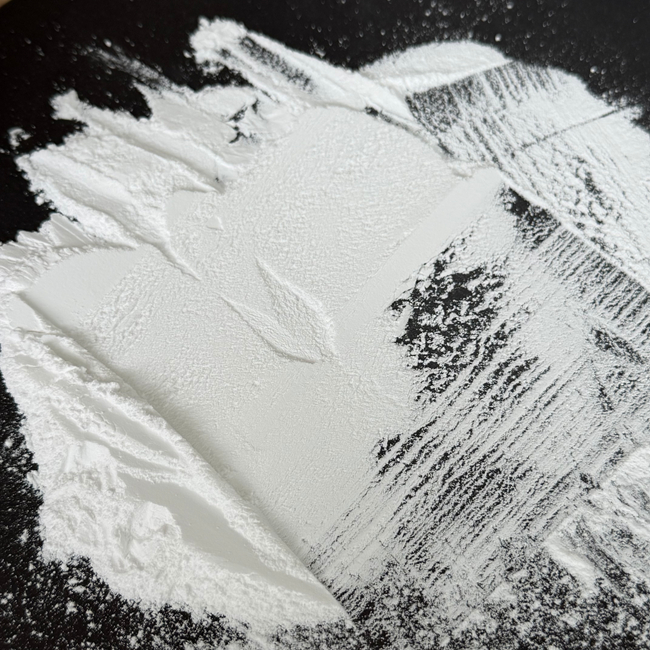
A white powder or granular material used for soil application and as an industrial raw material. Reported MgO content is the highest in the range, at approximately 33%. Because it contains no crystal water, it is the natural choice for moisture-sensitive industrial formulations and for use as a drying agent. Low moisture keeps quality stable and reduces freight cost per effective magnesium unit, while low heavy metal and low chloride levels make the grade usable across agricultural, feed and industrial applications.
Kieserite
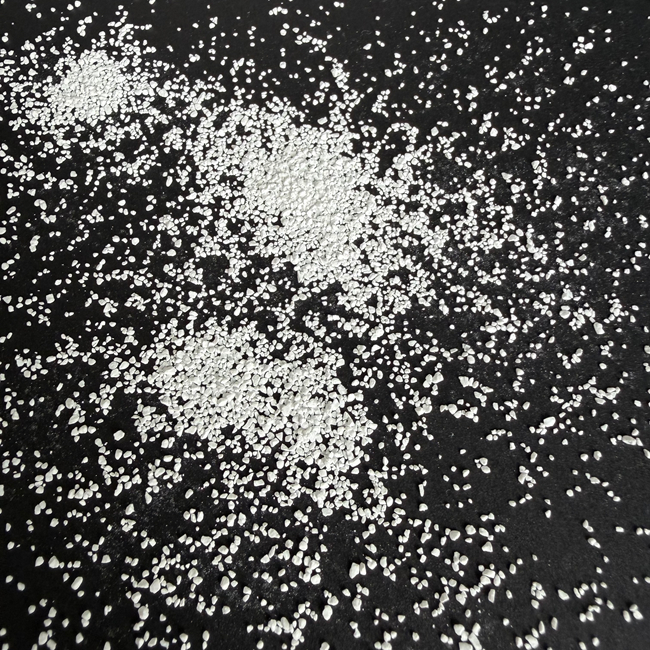
An off-white granular material applied to the soil. Kieserite is of natural mineral origin and pH-neutral, so it does not acidify soil. Reported MgO content is around 27%, released slowly for longer-term soil supply. Low hygroscopicity and good anti-caking behaviour keep it free-flowing, which is useful when blending with other fertilizers. It is most often specified for basal soil application where magnesium and sulphur need to be corrected steadily across the season.
Magnesium Sulphate Monohydrate
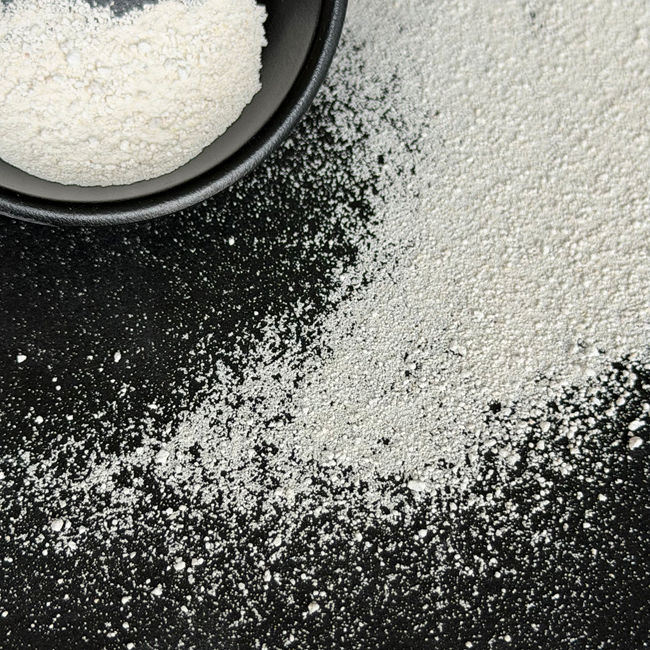
A white powder or granular material used for soil application, foliar spray and as an industrial raw material. Reported MgO content is approximately 25–27%, giving higher nutrient density and lower freight cost than heptahydrate. Thermal stability, low moisture and anti-caking behaviour support long storage periods. The grade is available as powder and granular material and fits soil application, feed use and compound fertilizer blending, with consistent synthetic quality and a stable heavy-metal index.
Magnesium Sulphate Heptahydrate (Epsom Salt)
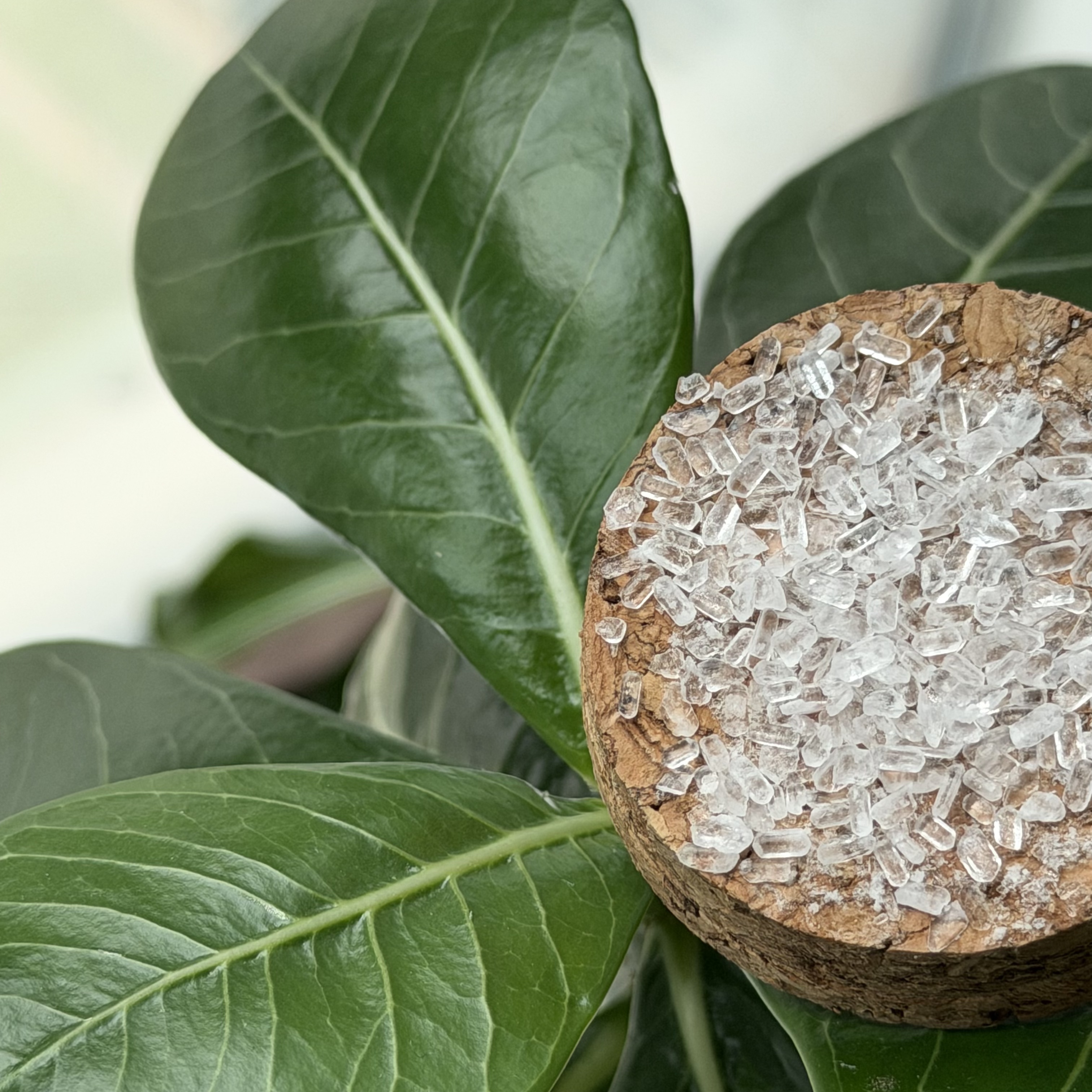
A white granular crystal used for soil application, foliar spray, fertigation and as an industrial raw material. It is the grade built for fertigation systems. Water solubility is extremely fast, which makes it the usual selection for foliar spraying and drip irrigation, and it corrects magnesium deficiency quickly, supporting chlorophyll formation and photosynthesis. Typical applications include horticulture, high-value crops and hydroponics. Uniform crystal particles, low impurity and a cost-effective profile explain why heptahydrate holds the largest share of global commercial production.
Comparing the Four Grades at a Glance
| Grade | Physical form | Reported MgO content | Application modes | Packing |
|---|---|---|---|---|
| Magnesium sulphate anhydrous | White powder or granular | Approximately 33% | Soil application; industrial raw material | 25 kg / 50 kg PP woven bag, customizable |
| Kieserite | Off-white granular | Approximately 27% | Soil application | 25 kg / 50 kg PP woven bag, customizable |
| Magnesium sulphate monohydrate | White powder or granular | Approximately 25–27% | Soil application; foliar spray; industrial raw material | 25 kg / 50 kg PP woven bag, customizable |
| Magnesium sulphate heptahydrate | White granular crystal | Not stated in the supplier data; fast water solubility | Soil application; foliar spray; fertigation; industrial raw material | 25 kg / 50 kg PP woven bag, customizable |
Reported MgO contents are typical supplier-stated values for orientation during grade selection. Batch-specific figures should be confirmed against the certificate of analysis (COA) issued for the shipment.
Specifying Magnesium Sulphate Fertilizer: A Step-by-Step Buyer Workflow
Sourcing becomes simpler when the specification is built in a fixed order, starting from the delivery system and moving outward to commercial terms.
- Start from the delivery system, not the price list. Soil broadcasting, drip fertigation, foliar spraying, compound fertilizer blending and industrial processing each impose different requirements for solubility, particle size and moisture.
- Match the grade to that system. Heptahydrate for fertigation and foliar work; Kieserite or monohydrate for basal soil application; monohydrate or anhydrous where moisture-sensitive dry blending or industrial formulation is involved.
- Fix the physical form and particle size. The grades are offered as powder or granular material where the application allows. Granular material is normally used for broadcast spreading and blending, while powder dissolves more readily in liquid systems. Particle size also affects caking behaviour and flow through metering equipment.
- Confirm documentation and compliance before discussing price. Standard supply documents are the COA and MSDS. Feed-grade material must meet feed-additive standards, and EU-bound shipments require REACH / FAMI-QS compliance. The supplier's own quality system matters as well: a plant operating an ISO quality management system with an independent standardized testing laboratory can demonstrate batch consistency instead of asserting it.
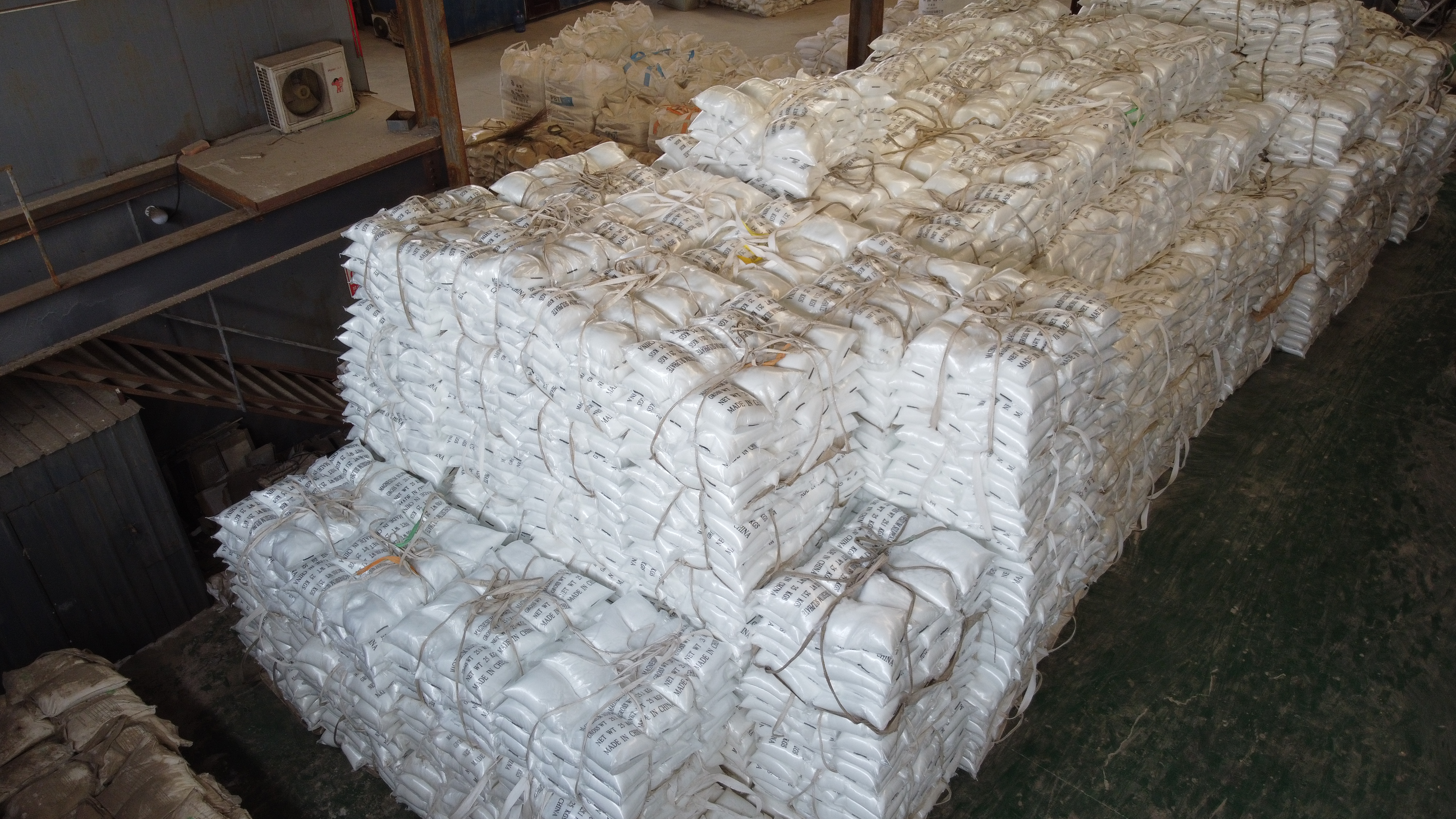
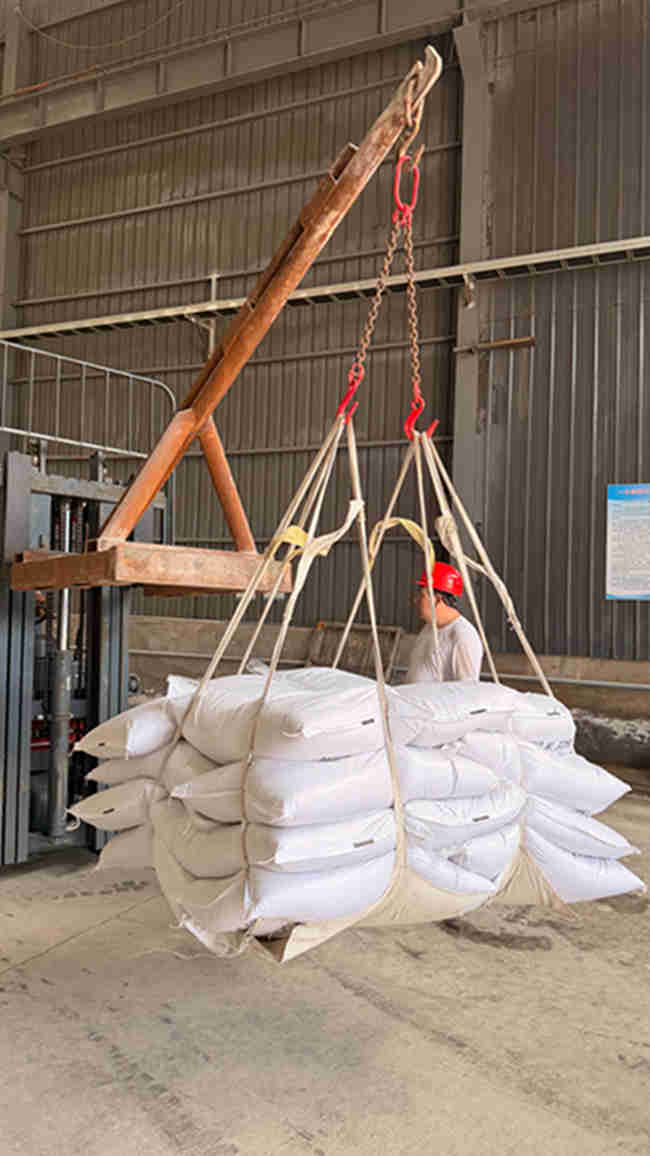
- Specify packing, shipping marks and storage conditions. Standard packing is 25 kg or 50 kg PP woven bags, customizable on request. Sealed moisture-proof packaging and shipping marks that follow destination requirements prevent both caking and documentation problems. Storage guidance belongs in the specification too: a cool, dry, well-ventilated place, away from moisture, sunlight and oxidants, under normal ambient temperature and low relative humidity.
- Validate with a sample before the bulk order. A pre-shipment sample lets agronomists and production engineers confirm dissolution, particle size and handling in their own equipment rather than on paper.
Application Modes and Use Cases
The same four grades serve very different operating environments. The table below maps common application modes to the grades used and the equipment normally involved.
| Application mode | Grades used | Typical equipment |
|---|---|---|
| Broadcasting on soil | Kieserite, anhydrous, monohydrate, heptahydrate | Fertilizer spreader; irrigation or rainfall dissolves the granular product |
| Drip / fertigation | Heptahydrate (powder dissolved in water) | Drip irrigation system, fertigation machine, mixing tank, metering and batching equipment |
| Foliar spraying | Heptahydrate, monohydrate | Sprayer |
| Compound / water-soluble fertilizer blending | Monohydrate, Kieserite | Blender, crusher, metering and batching equipment |
| Industrial raw material and moisture-sensitive dry formulation | Anhydrous, monohydrate, heptahydrate | Blender and metering equipment |
| Feed mixing | Monohydrate powder, dosed into animal feed | Blender and metering equipment |
In soil application, granular product is broadcast directly onto the field and dissolves through irrigation or rainfall. In drip and fertigation systems, powder is dissolved in water and delivered through the irrigation line, which is why water solubility and low water-insoluble matter matter more than appearance: insoluble residue is what blocks emitters. Foliar spraying uses a dissolved solution applied to the leaf surface for fast correction of magnesium deficiency. In fertilizer compounding, magnesium sulphate is blended with other raw materials to produce compound or water-soluble fertilizers, and in feed mixing the powder is dosed into animal feed.
Quality requirements differ by mode but share a common core: good water solubility and low water-insoluble matter, strict control of heavy metals including arsenic and lead, appropriate particle size and limited moisture to prevent caking, and restricted chloride ion where chlorine-sensitive crops are involved. During application, magnesium sulphate should not be mixed with strongly alkaline materials, and dosage should be controlled to avoid fertilizer burn. For EU-destined feed applications, feed-additive standards and REACH / FAMI-QS documentation apply.
Storage, Caking and Handling Risks
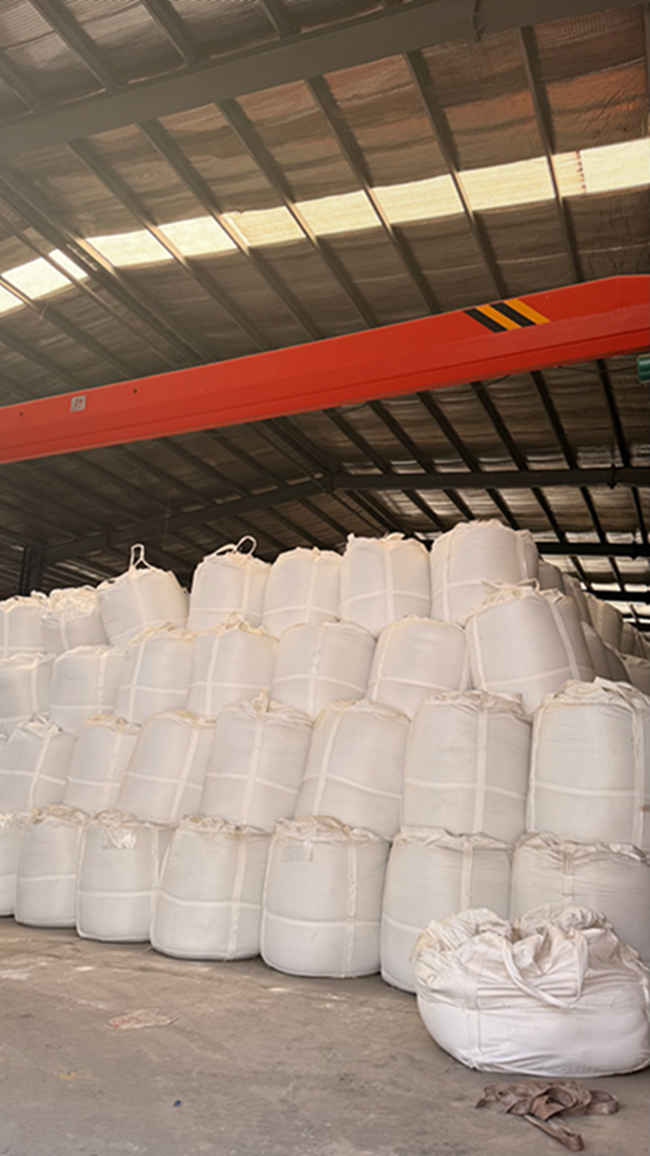
Caking is the most common practical complaint about magnesium sulphate, and it is a storage problem rather than a quality loss. The material readily absorbs moisture from the air, and caking typically occurs in high-humidity warehouses, in damaged packages, or after long open exposure of bags to moist air. Prevention is straightforward: store in a dry, ventilated warehouse, keep bags sealed, and protect stock from rain and damp. If caking has already happened, the material can be crushed before application and remains usable without quality loss.
Two operational notes are worth passing to the end user. First, chloride ion levels should be restricted where chlorine-sensitive crops are grown. Second, magnesium sulphate should not be mixed with strongly alkaline materials, and application rates should be respected to avoid fertilizer burn.
How to Evaluate China Magnesium Sulphate Fertilizer Manufacturers
China was the leading exporter of magnesium sulphate in 2024 with USD 149 million in export value, which means the supply base includes both original manufacturers and trading companies. The two are not equivalent for a buyer who needs stable batches, flexible grades and accurate documents.
Practical evaluation criteria include:
- Production basis. Does the supplier operate automated production lines and a stable raw material supply base, or only resell material sourced elsewhere?
- Quality system. Is there an ISO quality management system and an independent standardized testing laboratory that issues batch-level test data?
- Grade range. Can the supplier deliver anhydrous, Kieserite, monohydrate and heptahydrate from one source, in the physical form and particle size the application requires?
- Documentation. Are COA and MSDS supplied routinely, and are REACH / FAMI-QS documents available for EU markets and feed-additive standards met for feed-grade use?
- Packing flexibility. Can packing follow 25 kg or 50 kg PP woven bags or a customer-specific format, with shipping marks that match destination requirements?
- Logistics and track record. Distance to port and rail, export experience and existing market coverage indicate how reliably repeat orders will be handled.
Tianjin Xingyu Fertilizer Industry Co., Ltd. illustrates what this profile looks like in practice. The company was established in 1993 and its 20,000 square metre manufacturing facility is located in Chenguantun Town Industrial Park, Jinghai District, Tianjin, China — 30 km from downtown Tianjin, 80 km from Tianjin Port and 15 km from the railway freight yard. It employs approximately 36 staff, including an R&D team of 5 engineers, runs automated production lines under an ISO quality management system, and operates an independent standardized testing laboratory. Products are supplied in fertilizer grade and industrial grade for agricultural planting, chemical production and building material processing, and are exported to more than 30 countries and regions, with major markets including Pakistan, Japan, Korea and New Zealand. The company holds independent import and export rights, which shortens the route from factory to shipment.
Buyers who want to review the full grade list, packing options and specification sheet can download the XYF product catalogue (PDF) or visit the company website at www.xyfertilizer.com.
FAQ: Magnesium Sulphate Fertilizer Questions Buyers Ask
Is magnesium sulphate fertilizer regulated for export to the EU?
Magnesium sulphate is registered in the ECHA REACH database with an annual tonnage band of 100,000 to 1,000,000 tonnes. For EU-bound shipments, suppliers normally provide a COA and MSDS, and feed-grade material must meet feed-additive standards with REACH / FAMI-QS documentation where applicable. Because document requirements are set by the importing country and the end use rather than by the product name, buyers should confirm the required document set at the inquiry stage.
Which grade should I choose — anhydrous magnesium sulphate or heptahydrate magnesium sulphate?
Anhydrous magnesium sulphate has higher magnesium content and low moisture, and suits industrial use and dry-formula blending. Heptahydrate magnesium sulphate (Epsom salt) contains crystal water, dissolves extremely fast and is cost-effective for farm fertilization and irrigation systems. Choose anhydrous for industrial raw material and moisture-sensitive formulations; choose heptahydrate for soil application through fertigation, foliar spray and high-value horticulture. Magnesium sulphate monohydrate covers both agricultural and general industrial scenarios.
What drives the cost of magnesium sulphate fertilizer?
The main cost drivers are grade, crystal water content, magnesium content, moisture value, particle size, packaging and freight. Because heptahydrate carries crystal water, more tonnes are required per unit of magnesium than with anhydrous or monohydrate material, so the effective cost per nutrient unit is the number that matters rather than the bag price. As a market reference point, US magnesium sulphate prices were reported to stabilize near USD 674 per metric ton in early 2025; actual quotations depend on grade, quantity, packing, destination and freight at the time of order.
Why does magnesium sulphate cake, and how is it handled?
Magnesium sulphate readily absorbs moisture from the air and can form caking in high-humidity storage, in damaged packages, or after long open exposure to moist air. Prevention is storage discipline: a dry, ventilated warehouse, sealed bags and protection from rain and damp. If caking occurs, the material can be crushed before application and remains usable without quality loss. Selecting a low-moisture grade and moisture-proof packaging reduces the risk at source.
How do buyers evaluate China magnesium sulphate fertilizer manufacturers?
China was the leading exporter of magnesium sulphate in 2024 with USD 149 million in export value, so the market contains both original manufacturers and trading entities. Useful criteria are whether the supplier actually operates production lines, whether it runs an ISO quality management system and an independent standardized testing laboratory, how many grades and physical forms it can supply from one source, whether packing can be customized to 25 kg or 50 kg PP woven bags with destination shipping marks, and whether it provides COA, MSDS and the compliance documents the destination market requires. Tianjin Xingyu Fertilizer Industry Co., Ltd. was established in 1993 and operates a 20,000 square metre facility in Jinghai District, Tianjin, with automated production lines, an R&D team of 5 engineers, and exports to more than 30 countries and regions. Buyers can request the catalogue or send their grade, packing and destination details for a quotation.
Next Step: Confirm the Grade Before You Confirm the Price
Send the delivery system (broadcast, fertigation, foliar or blending), the required grade, the packing format and the destination port. XYF will respond with a specification, COA and packing confirmation so the sample and the bulk order are built on the same document set.
Contact: Jenny — Email: liujenny@xingyutj.com — Tel / WhatsApp: +86 155-2237-7326. Product catalogue: download the XYF catalogue (PDF). Website: www.xyfertilizer.com.
Conclusion
Magnesium sulphate fertilizer is a two-nutrient input, and its four grades are not interchangeable. Anhydrous material brings the highest reported magnesium density and the lowest moisture, which makes it the industrial and moisture-sensitive choice. Kieserite is a pH-neutral, slow-release granular option for basal soil application. Monohydrate balances nutrient density, storage stability and blending flexibility. Heptahydrate, the largest share of global commercial production, is the fertigation and foliar grade because of its fast water solubility.
The decision rule is simple: define the delivery system first, then choose the grade, then fix physical form, particle size, packing and documents, and finally validate with a sample. Buyers who build the specification in that order avoid the two most common costs in this category — paying freight for crystal water they do not need, and discovering a handling problem after the container has arrived.